
啤酒

Search documents
“顾问”转正!华润啤酒原“一把手”侯孝海入职正大集团
Nan Fang Du Shi Bao· 2026-01-09 03:32
Group 1 - Hou Xiaohai has officially joined Charoen Pokphand Group as the Chief Operating Officer for its China region, responsible for daily operations [1] - Charoen Pokphand Group, founded in 1921 by Thai-Chinese brothers, is one of the largest Chinese multinational companies globally, with a projected revenue of 208 billion RMB for its China operations in 2024 [1] - Hou Xiaohai's involvement with Charoen Pokphand Group was hinted at during the 2025 China International Import Expo, where he appeared as a senior expert consultant [1] Group 2 - Hou Xiaohai has remained active in the alcohol industry after leaving China Resources Beer, participating in various industry events and serving as the founding president of the China Alcohol Industry International Promotion Association [2] - The industry will continue to monitor Hou Xiaohai's future actions and strategies regarding the alcohol sector following his appointment at Charoen Pokphand Group [2]

华泰证券:继续布局春季行情,成长和周期均衡配置
Xin Lang Cai Jing· 2026-01-09 00:07
Core Viewpoint - The report from Huatai Securities indicates that the industry prosperity index shows initial signs of a turning point in December, corroborated by an unexpected rebound in PMI [1] Sector Summaries - **Upstream Resources and Public Industries**: Significant improvement in the last three months, particularly in sectors such as non-ferrous metals, coal, certain chemical products, paper, and ordinary steel driven by price increases [1] - **TMT (Technology, Media, and Telecommunications)**: Accelerated progress in AI applications, leading to improved conditions in gaming and software, with a positive trend in computing power storage and passive components [1] - **Capital Goods and Intermediate Products**: Improvement noted in sectors like new energy, automation equipment, and engineering machinery, with export orders potentially being advanced due to the later timing of the 2026 Spring Festival [1] - **Consumer Goods**: Recovery observed in dairy products, beer, and livestock sectors [1] - **Infrastructure Chain**: The construction PMI rose above the threshold in December, indicating a recovery in the construction industry [1] - **Independent Prosperity Cycle**: Notable performance in sectors such as military electronics [1] Investment Recommendations - The report suggests continuing to position for the spring market with a balanced allocation between growth and cyclical sectors, recommending a focus on non-ferrous metals, chemicals, military, storage, gaming, new energy (batteries/wind power), and pharmaceuticals at a monthly level [1] - Additionally, short-term thematic investments are favored, with a focus on humanoid robots, brain-machine interfaces, and domestic computing power, considering trading congestion [1]

专访中国酒业协会工坊啤酒专业委员会副秘书长孟路:个性化场景释放京城精酿啤酒消费情怀
Xin Lang Cai Jing· 2026-01-08 16:57
Core Insights - The Chinese craft beer market is projected to reach approximately 41.5 billion yuan in 2024, with expectations to exceed 100 billion yuan within three years, and a market size of 30-40 billion yuan by 2025 [3] - The penetration rate of craft beer in China is expected to rise to 6.3% by 2025, with consumption volume increasing from 143,000 kiloliters in 2022 to 230,000 kiloliters, reflecting a compound annual growth rate of 17% [3] Market Trends - The craft beer market in Beijing has evolved from a niche hobby to a mainstream consumer choice over the past decade, with a significant increase in the number of craft beer bars [5] - Despite the growth, many craft beer bars are facing challenges of homogenization in product offerings and venue experiences, leading to a lack of differentiation [4][6] Challenges - The craft beer concept lacks a clear definition, resulting in market confusion, while high rental costs and regulatory constraints hinder the survival of self-brewing brands [7] - The rise of e-commerce poses a challenge for craft beer bars, as they must compete on price while maintaining the unique value of the in-person experience [7] Future Development - Craft beer bars are increasingly focusing on high cost-performance ratios to attract price-sensitive consumers, which may dilute brand identity but expand the customer base [8] - There is a clear trend towards differentiation between chain and independent craft beer bars, with chains leaning towards a standardized dining experience, while independent bars focus on community engagement and unique offerings [9]


专访丨中国酒业协会工坊啤酒专业委员会副秘书长孟路:个性化场景释放京城精酿啤酒消费情怀
Bei Jing Shang Bao· 2026-01-08 12:52
Core Insights - The craft beer market in Beijing has evolved from a niche hobby to a mainstream consumer choice over the past decade, with a significant increase in the number of craft beer bars and brands [1][6] Market Overview - According to a report by CICC, the craft beer market in China is projected to reach approximately 41.5 billion yuan in 2024, with expectations to exceed 100 billion yuan within three years, and a market size of 30 to 40 billion yuan by 2025 [4] - The penetration rate of craft beer in China is expected to rise to 6.3% by 2025, with consumption volume surging from 143,000 kiloliters in 2022 to 230,000 kiloliters, reflecting a compound annual growth rate of 17% [4] Current Challenges - Many craft beer bars in Beijing are experiencing severe homogenization in both product offerings and venue design, which diminishes the unique consumer experience [4][8] - The craft beer concept lacks a clear definition, leading to market confusion, while high rental costs and regulatory constraints hinder the survival of self-brewing brands [9] Consumer Trends - There is a growing consumer sensitivity to price, prompting many craft beer bars to adopt a high-frequency, low-price model to attract a broader audience, which may sacrifice brand identity [10] - Some bars are focusing on unique experiences by offering limited-edition products or highly rated international beers to cater to consumers willing to pay for exclusivity [10] Future Development - The differentiation between chain and independent craft beer bars is becoming more pronounced, with chains leaning towards a standardized dining experience while independent bars focus on community engagement and personalized offerings [11]
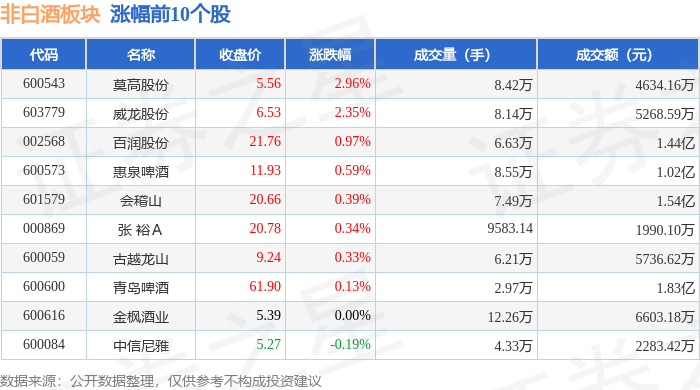
非白酒板块1月8日涨0%,莫高股份领涨,主力资金净流出1210.82万元
Zheng Xing Xing Ye Ri Bao· 2026-01-08 08:51
Market Overview - On January 8, the non-liquor sector remained unchanged from the previous trading day, with Mogao Co., Ltd. leading the gains [1] - The Shanghai Composite Index closed at 4082.98, down 0.07%, while the Shenzhen Component Index closed at 13959.48, down 0.51% [1] Stock Performance - Mogao Co., Ltd. (600543) closed at 5.56, up 2.96% with a trading volume of 84,200 shares and a turnover of 46.34 million yuan [1] - Weilang Co., Ltd. (603779) closed at 6.53, up 2.35% with a trading volume of 81,400 shares and a turnover of 52.69 million yuan [1] - Other notable stocks include: - Bairun Co., Ltd. (002568) at 21.76, up 0.97% [1] - Huichuan Beer (600573) at 11.93, up 0.59% [1] - Kweichow Moutai (600084) at 5.27, down 0.19% [1] Capital Flow - The non-liquor sector experienced a net outflow of 12.11 million yuan from institutional investors, while retail investors saw a net outflow of 25.51 million yuan [2] - Conversely, speculative funds recorded a net inflow of 37.62 million yuan [2] Detailed Capital Flow Analysis - Yanjing Beer (000729) had a net inflow of 45.01 million yuan from institutional investors, while it faced a net outflow of 55.60 million yuan from retail investors [3] - Mogao Co., Ltd. (600543) saw a net inflow of 6.47 million yuan from institutional investors, with a slight net outflow from retail investors [3] - Other stocks like Zhujiang Beer (002461) and Huichuan Beer (600573) also showed varied capital flows, indicating mixed investor sentiment [3]

港股收评:恒指跌1.17%连跌2日,科技、金融齐挫,“中国版OpenAI”智谱首日上市涨13.17%
Ge Long Hui· 2026-01-08 08:21
Market Performance - The Hong Kong stock market indices continued to decline for the second consecutive day, with significant volatility observed in just five trading days since the beginning of the year [1] - The Hang Seng Tech Index dropped by 1.05%, while the Hang Seng Index and the China Enterprises Index fell by 1.17% and 1.09% respectively [1] Sector Performance - Major sectors such as large technology stocks, financials (including banks, insurance, and brokerage firms), and state-owned enterprises showed weak performance, contributing to market pressure [1] - Notable declines were seen in individual stocks, with Meituan and Baidu both falling over 3%, and other financial stocks like China Silver Group, China Merchants Securities, China Taiping, and Xinhua Insurance also declining [1] Commodity and Other Stocks - The performance of non-ferrous metal stocks, including copper and aluminum, was generally weak, while gaming stocks continued to decline, with Sands China, Wynn Macau, and others hitting new lows [1] - Consumer stocks, including dairy, beer, and dining sectors, also experienced collective declines, alongside drops in solar, home appliance, automotive, and oil stocks [1] Contrasting Trends - In contrast, military stocks surged due to a significant increase in the U.S. military budget, while semiconductor stocks rose as China reportedly requested tech companies to pause orders for H200 chips [1] - Active trading was noted in coal and paper stocks, indicating some sector resilience [1] New Listings - Three new stocks were listed today, with Tian Shuo Zhi Xin rising by 8.44%, Jingfeng Medical-B increasing by 30.9%, and "China's version of OpenAI" Zhipu gaining 13.17% [1]
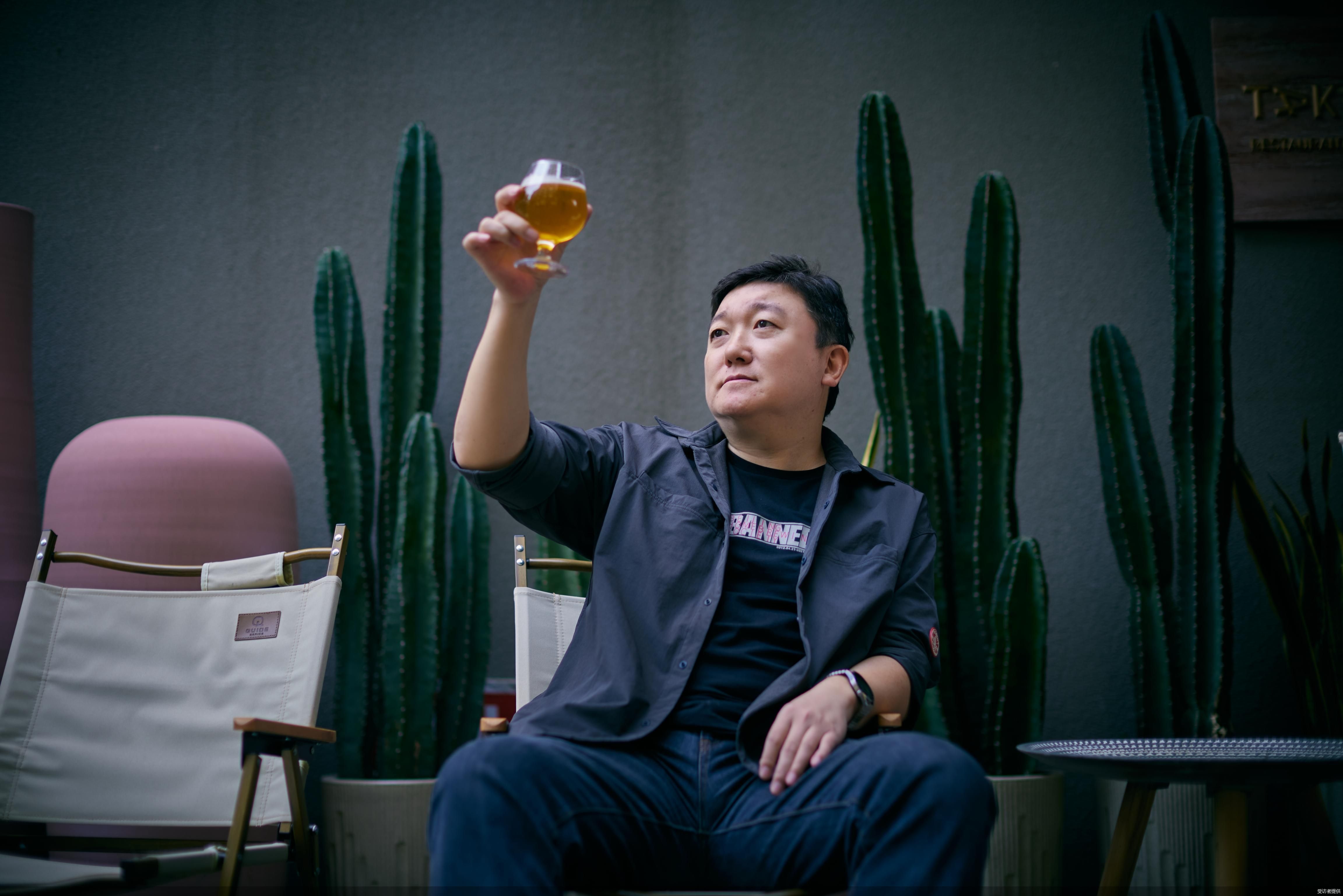
吴向东的“啤酒执念”:从30年不喝到酿出“牛市”
Jin Rong Jie· 2026-01-08 07:52
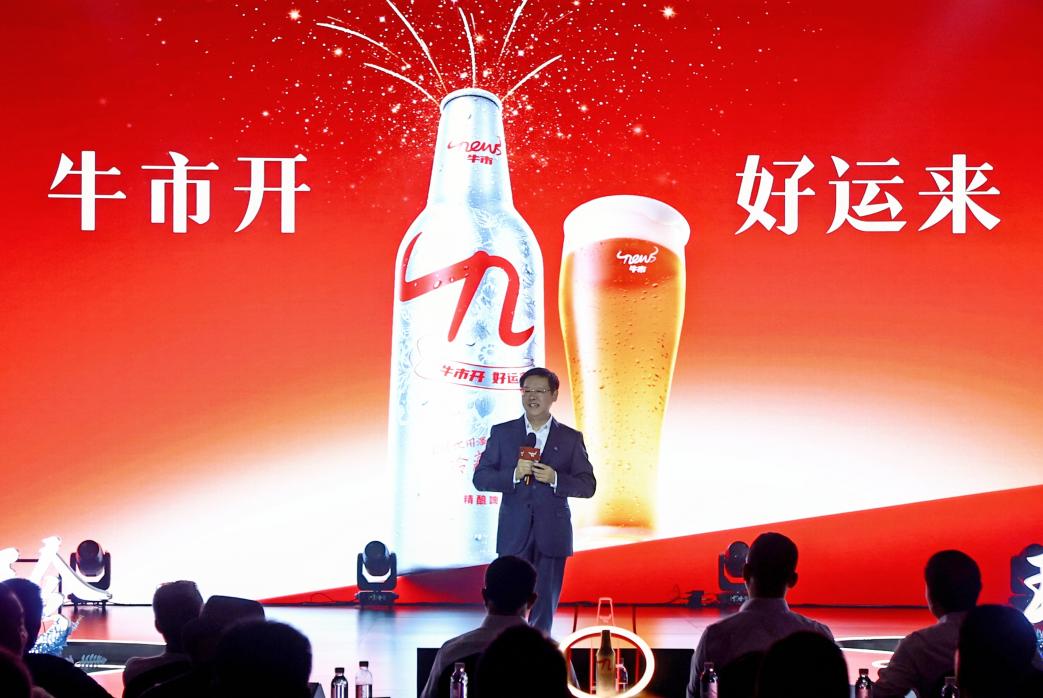
Core Viewpoint - The launch of "Bull Market" beer by Zhenjiu Liduo Group represents a significant shift in the beverage industry, showcasing a high-end craft beer that has quickly gained popularity and market traction [1][3][14] Group 1: Product Development and Market Positioning - The "Bull Market" beer was introduced through a highly successful live-stream event, attracting over 1.9 million viewers and receiving more than 6.8 million likes [1] - The beer has quickly risen to the top of sales charts on platforms like Tmall and JD, indicating strong consumer interest and market demand [3] - The product is positioned as a high-end offering, with a focus on quality ingredients and a unique drinking experience, appealing to consumers seeking premium products [10][12] Group 2: Founder’s Journey and Philosophy - Wu Xiangdong, the chairman of Zhenjiu Liduo Group, transitioned from a long-standing career in baijiu to craft beer after a surprising personal experience with beer, which sparked his interest in the category [4][5] - The development process involved significant deliberation, with Wu emphasizing the importance of taste and quality, leading to a three-year development cycle for the beer [9] - The beer's name, "Bull Market," was carefully chosen for its financial connotations and positive associations, reflecting the brand's aspirations [8] Group 3: Consumer Trends and Market Strategy - The beer is priced at 88 yuan per bottle, significantly higher than typical beers, targeting consumers who prioritize quality and experience over quantity [10][12] - The product aims to cater to a growing demographic that values self-care and quality experiences, moving away from traditional large-group drinking scenarios [12] - The launch of "Bull Market" beer aligns with the broader trend of premiumization in consumer goods, where consumers are willing to pay more for perceived quality and lifestyle enhancement [10][13] Group 4: Strategic Implications for the Company - The introduction of "Bull Market" beer is seen as a strategic move for Zhenjiu Liduo Group to diversify its product offerings and create a second growth curve amidst challenges in the baijiu market [13] - The beer complements the existing product line of the company, enhancing customer engagement and loyalty by providing a broader range of options [12][13] - The initial success of "Bull Market" beer validates the company's strategy and indicates potential for future growth in the craft beer segment [14]
“爱你老己”:当热词遇上真实消费,TA们如何用买买买好好爱自己
凯度消费者指数· 2026-01-08 04:24
Group 1 - The core viewpoint of the article highlights a growing trend of self-love among consumers, reflected in their spending on health, quality, and self-expression products [1][2] - The "self-love" mindset is increasingly influencing purchasing decisions, moving from online discussions to actual shopping behaviors, particularly in categories like personal care and health beverages [1][2] Group 2 - In the personal care sector, liquid soap is experiencing significant growth, with sales expected to increase by 55% by 2025, driven largely by high-income new middle-class consumers [4] - The primary consumer demographics for liquid soap include young families and older households, with a focus on health protection and convenience [4] - The body care segment is seeing a notable rise in scented products, with double-digit growth for body lotions that offer emotional experiences [4] Group 3 - Consumers are becoming more discerning in their beverage choices, with 46% regularly checking ingredient labels and nutritional information, indicating a shift towards valuing transparency and real value [6] - The low-temperature yogurt market is witnessing a decline in consumer trust regarding health claims, necessitating brands to adopt clearer communication and professional endorsements [6] Group 4 - Beer consumption is growing in both home and out-of-home markets, with home consumption driven by heavy drinkers seeking quality and value, while younger consumers are pushing for a more social and relaxed drinking experience [7] Group 5 - In the beauty sector, consumers are making more informed choices based on specific scenarios, with different skincare needs for morning and evening routines [9] - Medical beauty consumers spend approximately 1.4 times more on skincare than non-medical beauty consumers, showing a preference for high-efficacy products [9] Group 6 - The approach to self-love varies by life stage and household structure, with single young adults favoring a "prudent" purchasing model focused on quality and value [11] - Older households show a strong preference for essential goods and health products, with a notable demand for quality in their purchases [11]

喜获“2025非凡竞争力公司”奖项,这家公司如何做到?
Sou Hu Cai Jing· 2026-01-07 07:25
Group 1 - The global economic landscape is undergoing deep adjustments by 2025, with accelerated technological innovation and vigorous industrial transformation, making it essential for China to cultivate world-class enterprises with global competitiveness to drive high-quality economic development and participate in international competition [2] - Strong competitiveness for enterprises means aligning with national strategies, creating value on a high-quality development track, and possessing the ability to accurately recognize changes, scientifically respond, and proactively seek transformation amid profound changes [2] - The "2025 Eighth Golden Jubilee Award Annual Selection" aims to identify benchmark forces in the business and financial sectors, having been held since 2018, with the award based on comprehensive data analysis and evaluations by third-party research institutions [2] Group 2 - The award recognizes innovative entities focused on technological breakthroughs and model innovations, leading enterprises that drive industrial upgrades, and teams with quality practices in new productive forces, finance, and ESG [3] - Qingdao Beer Co., Ltd. won the "2025 Extraordinary Competitiveness Company" award after intense competition and meticulous selection, highlighting its core competitiveness built on technological innovation, brand development, green low-carbon initiatives, safety resilience, and global expansion [3] - The company has established a forward-looking core competitiveness by leveraging technology for new productive forces, gaining market recognition through brand building, and shaping future advantages with green initiatives [3]

燕京啤酒涨2.00%,成交额2.30亿元,主力资金净流出661.48万元
Xin Lang Cai Jing· 2026-01-07 05:35
Core Viewpoint - Yanjing Beer has shown a positive stock performance with an 8.99% increase year-to-date and a 2.00% increase on January 7, 2025, indicating strong market interest and potential growth in the beverage sector [1]. Group 1: Stock Performance - As of January 7, 2025, Yanjing Beer shares rose by 2.00% to 12.24 CNY per share, with a trading volume of 2.30 billion CNY and a market capitalization of 34.499 billion CNY [1]. - The stock has increased by 8.99% since the beginning of the year, with a 5-day increase of 8.70%, a 20-day decrease of 0.81%, and a 60-day increase of 1.58% [1]. Group 2: Financial Performance - For the period from January to September 2025, Yanjing Beer reported a revenue of 13.433 billion CNY, reflecting a year-on-year growth of 4.57%, and a net profit attributable to shareholders of 1.770 billion CNY, which is a 37.45% increase compared to the previous year [2]. - The company has distributed a total of 4.791 billion CNY in dividends since its A-share listing, with 1.325 billion CNY distributed over the last three years [3]. Group 3: Shareholder Structure - As of December 31, 2025, Yanjing Beer had 54,900 shareholders, an increase of 23.76% from the previous period, with an average of 45,705 circulating shares per shareholder, a decrease of 19.20% [2]. - The second-largest shareholder, Hong Kong Central Clearing Limited, holds 74.576 million shares, a decrease of 21.016 million shares from the previous period [3].
