
智能驾驶

Search documents
百亿独角兽的溃败始末
虎嗅APP· 2025-11-27 13:37
Core Insights - The article discusses the sudden downfall of Haomo Zhixing, once hailed as a pioneer in China's autonomous driving sector, culminating in a work stoppage announcement that signals its likely closure [2][3] - The company's crisis is attributed to high product costs, an imbalanced business model, and intensified competition, highlighting the survival challenges faced by non-leading firms in the autonomous driving industry [2][3] Company Overview - Haomo Zhixing was established in November 2019 and quickly became a unicorn with a valuation exceeding 10 billion yuan after raising nearly 1 billion yuan in A-round financing by the end of 2021 [4] - The company’s diverse shareholder structure includes major investors like Meituan, Hillhouse, and Qualcomm, with total financing exceeding 2 billion yuan [4] - The appointment of former Baidu executive Gu Weishao as CEO in 2021 aimed to integrate automotive resources with tech flexibility, but this led to a "positioning dilemma" [4] Business Performance - Haomo achieved significant milestones, including the mass production of its HPilot system, with over 100,000 units installed, becoming the first in China to implement autonomous driving technology [5] - However, the company struggled with over-reliance on a single client and failed to capitalize on announced partnerships due to insufficient product competitiveness [7] - The company’s diversification into passenger vehicle assistance, logistics vehicles, and smart hardware led to resource dilution, with logistics vehicle sales stagnating and hardware business failing to gain traction [7] Financial Challenges - The financing environment for the autonomous driving sector cooled significantly post-2023, with total financing dropping from 93.2 billion yuan at its peak to 20 billion yuan in 2024, concentrating capital among leading firms [7] - Haomo only secured 300 million yuan in 2024, and by 2025, industry financing was expected to decline by another 40%, exacerbating the cash flow issues for independent suppliers like Haomo [7] Technological Misalignment - Haomo's technological strategy became misaligned as it clung to high-precision mapping solutions while competitors shifted towards "map-free" and end-to-end model approaches, leading to a significant lag in technological advancement [9][10] - The company’s commitment to high-precision mapping resulted in delays in achieving its urban coverage goals, with only 8 cities operational by 2025 compared to over 200 for leading firms [10] - Haomo's data collection efforts were limited to 250 million kilometers, while competitors amassed over 1 billion kilometers, further widening the technological gap [10] Competitive Landscape - The rapid evolution of the automotive intelligence sector left little room for adjustment, with Haomo's cost structure at 8,000 yuan per unit compared to competitors' 4,000-7,000 yuan [12] - The lack of vertical integration in chip, algorithm, and hardware development hindered Haomo's ability to reduce costs and compete effectively in the mainstream market [12] - Competitors like Momenta captured over 60% of the market share through aggressive data accumulation and product delivery capabilities, further marginalizing Haomo [14] Industry Implications - Haomo's decline reflects systemic challenges faced by independent suppliers in the autonomous driving sector, as many companies have ceased operations since 2025, indicating a deep industry reshuffle [16] - The shift in automotive manufacturers towards self-developed solutions and the adoption of third-party technologies by major players like BYD and Geely highlights the changing dynamics in the market [16][17] - Independent suppliers must establish unique value propositions in cost control or advanced technology to avoid becoming interchangeable commodities in a competitive landscape [17][18] Future Outlook - To survive, Tier 1 independent suppliers must build irreplaceable technological barriers or cost advantages, and foster open, win-win ecosystems to mitigate risks associated with manufacturer dependencies [20] - The industry is expected to transition towards a multi-dimensional competition focused on cost control, data efficiency, and scenario penetration, with successful players either achieving full-stack capabilities or excelling in specific verticals [22]


中国智驾打响残酷突围战
Hua Er Jie Jian Wen· 2025-11-27 12:17
Core Insights - The Chinese intelligent driving industry is undergoing a significant reshuffle, highlighted by the suspension of the once-prominent unicorn, Haomo Zhixing, while competitors like Yuanrong Qixing and Zhuoyu are gaining market share and investment support [1][2][5] Company Analysis - Haomo Zhixing, originally a spin-off from Great Wall Motors, received substantial early-stage funding but has struggled to maintain momentum, with its last financing round occurring in early 2024 without support from its former backer [2][3] - The company's choice of Qualcomm Snapdragon Ride chips over the industry-standard NVIDIA Orin has hindered its ability to adapt to new technological trends, leading to operational inefficiencies [3][4] - Great Wall Motors has shifted its focus to other suppliers, notably investing $100 million in Yuanrong Qixing, indicating a loss of confidence in Haomo Zhixing's capabilities [5][6] Industry Trends - The competitive landscape has evolved, with a focus on achieving a scale of one million vehicles to generate valuable data for algorithm development, moving beyond flashy demonstrations to practical data-driven solutions [7][10] - Companies like Yuanrong Qixing and Horizon Robotics are positioning themselves as strategic partners rather than mere component suppliers, emphasizing the importance of data access and integration [8][9] - The industry is witnessing a consolidation of market share among leading players, with predictions that only a few companies will dominate the market by 2025 [14][15] Future Outlook - The intelligent driving sector is transitioning from an optional feature to a core asset for automotive companies, with a clear divide emerging between those who can leverage large-scale data and those who cannot [14][15] - The ultimate goal for many companies is to develop systems that not only enhance vehicle performance but also contribute to broader applications in robotics and artificial intelligence [12][13]
智驾下一个关键挑战,是不被别人摘“桃子”?
虎嗅APP· 2025-11-27 09:46
Core Insights - The automatic driving industry in China is experiencing a resurgence, with significant financing activities indicating a renewed focus on commercialization [4][5] - Companies must ensure they do not become marginalized as the industry evolves, particularly regarding pricing power and competitive positioning [6][10] Financing and Market Activity - In October and November 2025, there were 12 financing events in the broad autonomous driving sector in China, totaling over 41.1 billion RMB, surpassing the total for 2022 and 2024 [4] - The renewed investment interest is driven by advancements in underlying technologies, particularly in large models and cognitive chains [5] Competitive Landscape - The industry faces three main threats: 1. Original equipment manufacturers (OEMs) developing in-house capabilities that marginalize suppliers 2. Large platforms leveraging cost and ecosystem advantages to attract users 3. Capital re-defining industry winners at a later stage [6] Company Performance - Yuanrong Qixing has achieved notable success, delivering 150,000 units of its urban NOA autonomous driving solution by October 2025, with a monthly delivery of 31,900 units in October alone [9][10] - The company has formed deep partnerships with major OEMs like Great Wall, which has integrated Yuanrong's technology into its flagship models [9] Strategic Focus - Yuanrong Qixing's strategy includes focusing on a few key models to create "blockbuster" products, which enhances sales and brand reputation [11] - The company aims for a production target of one million units by 2026, leveraging data from current deliveries to improve its foundational models [14] Future Business Directions - The company plans to expand into three core business areas: production vehicle assistance, Robotaxi services, and Road AGI [18] - A strategic partnership with the Wuxi government aims to establish a testing and development base for Robotaxi operations [18] Technological Approach - Yuanrong Qixing supports a Tesla-like model that emphasizes consumer-grade mass production vehicles combined with end-to-end large models, avoiding reliance on high-precision maps [18][20] - The integration of visual-language-action (VLA) and visual-language-navigation (VLN) models aims to enhance the capabilities of autonomous systems in complex environments [20] Capital and Market Position - The company is navigating capital challenges, with recent changes in shareholder structure indicating a potential move towards a red-chip structure for overseas listing [23] - The ability to address competitive threats from OEMs and large platforms will be crucial for Yuanrong Qixing to qualify for future capital opportunities [23]
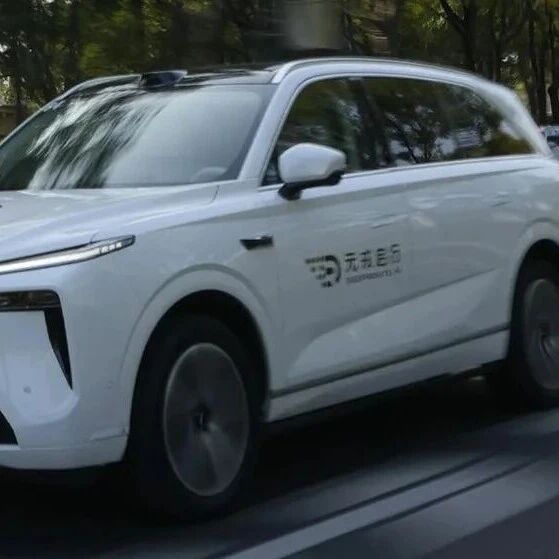
智驾行业进入淘汰赛,毫末智行绝不是最后一个
3 6 Ke· 2025-11-27 08:43
Core Viewpoint - The decline of Haomo Zhixing, a prominent player in the intelligent driving sector, highlights the harsh realities of market competition and the consequences of insufficient technological capabilities [4][31][34] Company Overview - Haomo Zhixing, once valued over $1 billion and backed by Great Wall Motors, has faced significant operational challenges, culminating in a company-wide shutdown [4][6][31] - The company has seen a drastic reduction in workforce, from over 600 employees at its peak to fewer than 300, alongside unpaid year-end bonuses [8][10] Operational Challenges - A recent notice indicated that all employees were to stop working, with no clear timeline for resumption, reflecting the company's dire situation [4][6] - The company has struggled with product performance and failed to keep pace with competitors in the intelligent driving market, leading to its current state of inactivity [6][10][31] Market Position and Competition - The intelligent driving industry is characterized by fierce competition, with many companies rapidly advancing their technologies, leaving Haomo Zhixing behind [6][14][34] - Haomo Zhixing's reliance on high-precision mapping has hindered its ability to adapt to the industry's shift towards lighter mapping and perception-based technologies [17][34] Financial Backing and Investment - The company has undergone several funding rounds, raising nearly 2 billion RMB, but these efforts have not been sufficient to reverse its declining fortunes [19][34] - Despite securing investments, the lack of a diverse customer base, primarily relying on Great Wall Motors, has limited its growth potential [21][24] Future Outlook - The company's inability to innovate and respond to market demands has led to its downfall, serving as a cautionary tale for other intelligent driving suppliers [31][34] - The intelligent driving sector is expected to continue evolving, with many companies moving towards self-developed systems, further marginalizing third-party suppliers like Haomo Zhixing [32][34]


魏建军的智驾独角兽,倒下了
3 6 Ke· 2025-11-27 07:26
Core Points - The sudden announcement of a work stoppage at Haomo Zhixing highlights the company's operational difficulties and potential dissolution, with no clear communication regarding compensation or future plans [1][8] - Haomo Zhixing, once valued at over $1 billion and backed by major investors, has faced significant challenges, including account freezes, unpaid wages, and executive departures, leading to a drastic reduction in workforce from over 1,000 to less than 300 [1][7][11] - The company's reliance on a single client, Great Wall Motors, has proven detrimental as shifts in Great Wall's strategy have directly impacted Haomo's cash flow and operational viability [9][10] Company Background - Haomo Zhixing originated from Great Wall Motors' intelligent driving division and was established as an independent entity in November 2019, with significant backing from various investors [3][5] - The company initially thrived in the capital market, securing nearly 2 billion RMB in funding and achieving a peak valuation of 9 billion RMB by April 2024 [5][6] Business Operations - Haomo's business model primarily revolves around providing intelligent driving solutions for passenger vehicles, heavily relying on Great Wall Motors as its main customer [6][7] - The company also ventured into low-speed unmanned logistics vehicles, aiming to diversify its revenue streams, but this segment has not met expectations [7][11] Industry Context - The challenges faced by Haomo Zhixing reflect a broader trend in the Chinese intelligent driving sector, where many companies are struggling to survive amid tightening capital and increased competition [2][13] - In 2024, 37 companies in the autonomous driving field declared bankruptcy or ceased operations, indicating a significant industry contraction [13][16] - The market is becoming increasingly concentrated, with the top five companies capturing 78% of the market share by 2025, suggesting a shift towards fewer, more robust players [14][15] Conclusion - The downfall of Haomo Zhixing serves as a cautionary tale within the intelligent driving industry, emphasizing the need for sustainable business models and diversified client bases to withstand market fluctuations [16][18] - The industry is moving away from speculative investments towards a focus on profitability and operational efficiency, with only a few companies likely to emerge as leaders in the future [17][19]
佑驾创新拟按每股14.88港元配售H股 筹资净额2.04亿港元
Zheng Quan Ri Bao Zhi Sheng· 2025-11-27 05:37
Core Viewpoint - Shenzhen Youjia Innovation Technology Co., Ltd. plans to issue 14.01 million H-shares at a price of HKD 14.88 per share, aiming to raise a net amount of HKD 204 million for business development and research upgrades [1] Group 1: Fund Allocation - Approximately 70% of the raised funds will be used for the development of L4 unmanned logistics vehicles, including next-generation product research, operational platform upgrades, and sales network expansion [1] - About 30% of the funds will be allocated for upgrading the foundational research platform, focusing on improving the efficiency of the data closed-loop system and enabling the development of multiple product lines for L4 unmanned vehicles [1] Group 2: Stock Performance - As of November 26, the stock price of Youjia Innovation closed at HKD 14.67 per share, which is a decline of 62.86% from its highest price of HKD 39.50 per share recorded on March 28, 2025 [1] Group 3: Financial Performance - From 2021 to 2023, Youjia Innovation's revenue has shown annual growth, with figures of RMB 175 million, RMB 279 million, and RMB 476 million respectively [1] - However, during the same period, the company has accumulated a net loss exceeding RMB 500 million, with losses of RMB 132 million, RMB 215 million, and RMB 197 million respectively [1] - For 2024, the projected revenue is RMB 654 million, with a net loss attributable to shareholders of RMB 216 million [1]
第一批倒下的智驾独角兽,给幸存者留下什么教训?
3 6 Ke· 2025-11-27 02:08
Core Insights - The sudden halt of Haomo Zhixing, China's first company to achieve mass production of autonomous driving technology, highlights structural issues within the autonomous driving industry, indicating that it is not an isolated failure but part of a broader trend [2][4] Industry Overview - The autonomous driving sector in China has transitioned from a "trial and error" phase to a "clearing" phase, with the collapse of Haomo Zhixing serving as a significant indicator of this shift [4][5] - The industry previously thrived in a "vacuum" environment where capital was abundant, car manufacturers were willing to invest in technology, and consumers were eager to try new innovations [5] Market Dynamics - The narrative around "software subscription monetization" has collapsed, with consumers' willingness to pay for advanced driving features at an all-time low, as many features have become standard or free [5][6] - Major players like Tesla are also facing challenges, with only about 12% of their existing fleet utilizing the Full Self-Driving (FSD) service, indicating a broader trend of declining subscription revenues [5][6] Competitive Landscape - The market is witnessing a shift towards "free" autonomous driving features, with companies like BYD offering advanced driving capabilities at significantly lower prices, thus altering the pricing structure of the industry [6][7] - The competitive landscape is evolving, with a clear division emerging between top-tier players with comprehensive ecosystems and smaller companies struggling to find their place [14][15] Company-Specific Issues - Haomo Zhixing's downfall is attributed to its inability to adapt to the rapidly changing industry dynamics, including a failure to scale operations and innovate in a timely manner [8][10] - The company experienced significant leadership turnover and a drastic reduction in workforce, which hindered its ability to respond to market changes effectively [9][10] Future Outlook - The autonomous driving industry is entering a phase where sustainable business models and cost efficiency will be critical for survival, moving away from reliance on capital investment [14][15] - Companies that can balance cost structures while providing quality experiences will be better positioned to thrive in the new market environment [15]

第一批倒下的智驾独角兽,给幸存者留下什么教训?
36氪· 2025-11-27 00:09
毫末智行只是第一批倒下的独角兽, 却不会是最后一个。 今年11月下旬,中国首个实现自动驾驶技术量产的公司——毫末智行突然宣布全员停工。 这家成立六年,估值曾炒到10亿美元的智能驾驶独角兽,最终没能挺过这个冬天。在不少人看来,毫末智行倒在了技术掉队、订单被抢的行业攻防战之 中。但如果只把毫末智行的"停摆"理解为某家公司的失败,反而忽略了智能驾驶行业真正的结构性问题——支撑中国智驾过去五年高歌猛进的几乎所有前 提,都在同一时间"失效"。 毫末智行只是第一批倒下的独角兽,却不会是最后一个。 智能驾驶: 从"试错期"进入"清算期" 面对毫末智行的"停摆",外界的第一反应大多是"怎么会来得这么突然?"但在行业内部,真正了解自动驾驶商业逻辑的人反而不会那么意外。要理解毫末 智行迎来"停摆"的必然性,需要从行业本身的周期变化说起。过去五年,中国智能驾驶跑在一个"真空"环境里。资本愿意补贴未来,车企愿意押注技术, 用户愿意尝鲜技术。 这三大基础像是三根支撑整个赛道的梁木,虽然独木难支却互相牵引、制衡,让整个行业维持着高速发展。然而到了2024年,这三根梁木同时"断裂"。 当标配成为主流,行业也对订阅商业模式的前景彻底"祛魅" ...

行业组织放风,“车路云一体化”细节政策有望年底出台
Xuan Gu Bao· 2025-11-26 23:24
Group 1 - The Chinese government is emphasizing the construction of a vehicle-road-cloud collaborative system, with a complete top-level design framework established through systematic and phased policy deployments [1][2] - The integration of vehicle-road-cloud is expected to play a more significant role in infrastructure development, supported by policies aimed at building a strong transportation nation [1][2] - The current stage of vehicle-road-cloud construction is still in a phased approach, indicating substantial market potential for future development [1][2] Group 2 - Short-term, roadside construction is expected to accelerate, leading to an increase in vehicle-mounted terminals, while long-term, operational services will have broad market potential [2] - Companies like Four-dimensional Map and Zhonghaidah are actively involved in the vehicle-road-cloud projects, with Four-dimensional Map being one of the earliest players in this industry [3][4] - Four-dimensional Map has secured contracts in multiple cities, including Beijing, Shenzhen, and Wuxi, and is currently working on pilot city deployments [3]


11月27日热门路演速递 | 低空经济、慢牛新阶段、Robotaxi盈利前景,一次把握
Wind万得· 2025-11-26 22:36
Group 1 - The article discusses the emerging trends in the military and aerospace sectors, particularly focusing on low-altitude flight opportunities and the potential of eVTOL (electric Vertical Take-Off and Landing) aircraft [2] - It highlights the participation of various experts and commentators in the aviation field, indicating a collaborative effort to explore these trends [2] - The event aims to showcase nearly 30 eVTOL aircraft, emphasizing the competition and innovation in defining the future of low-altitude travel [2] Group 2 - The article outlines the upcoming 2026 investment strategy conference by Zhejiang Merchants Asset Management, focusing on the second phase of a "systematic slow bull" market and the role of technology growth [5] - It raises questions about asset allocation in low-volatility dividend assets and the investment opportunities in the new cycle starting from the 14th Five-Year Plan [5] - The conference will feature insights from a prominent fund manager, indicating a focus on strategic investment planning [5] Group 3 - The UBS presentation on the Chinese smart driving industry for 2026 aims to identify key breakthroughs and the timeline for the large-scale deployment of Robotaxi [7] - It discusses the growth logic of the lidar market and identifies core players within this sector, highlighting investment opportunities [7] - The event will feature a range of experts from UBS, showcasing a comprehensive analysis of the smart driving landscape [7] Group 4 - The CITIC Construction Investment report focuses on the collaboration between the electric, mechanical, and automotive industries in 2026, exploring how they can initiate a new cycle [9] - It addresses the impact of high proportions of renewable energy integration on energy storage demand and the potential of humanoid robots and solid-state battery technology to lead a new wave in high-end manufacturing [9] - The report also examines how the globalization of automotive intelligence may reshape industry chain dynamics and valuation logic [9]

