
纺织服装

Search documents
立法为民企鼓劲 《福建省民营经济促进条例》2026年1月1日施行
Xin Lang Cai Jing· 2025-12-02 12:05
Core Viewpoint - The newly passed "Fujian Province Private Economy Promotion Regulations" aims to enhance the development of the private economy in Fujian, effective from January 1, 2026, by breaking down barriers and creating a fair market environment for private enterprises [1][19]. Group 1: Implementation of the Regulations - The Fujian Provincial Development and Reform Commission will coordinate and guide the implementation of the regulations, emphasizing the importance of promoting the private economy as part of the provincial strategy [20]. - The regulations establish responsibilities for local governments and departments to ensure equal market access for private enterprises, addressing issues like local protectionism and discriminatory practices [21][22]. Group 2: Support for Technological Innovation - The Fujian Provincial Science and Technology Department will focus on encouraging private enterprises to increase R&D investments, providing financial support and access to major research facilities to lower R&D costs [23][24]. - The regulations promote the establishment of innovation platforms and support private enterprises in leading or participating in significant technological projects [24][25]. Group 3: Digital Transformation of Private Enterprises - The Fujian Provincial Industry and Information Technology Department will accelerate the digital transformation of private enterprises, supporting the establishment of specialized industrial internet platforms and promoting cloud services [26][27]. - The department aims to enhance data security and provide guidance for industrial network security to protect private enterprises during their digital transition [27]. Group 4: Employment and Talent Development - The Fujian Provincial Human Resources and Social Security Department will facilitate the participation of private enterprises in setting professional title evaluation standards and provide guidance on employment practices [28][29]. - The department will implement policies to reduce employment costs and enhance recruitment efforts, including a series of job fairs and collaborations with other provinces to facilitate labor mobility [29][30]. Group 5: Legal and Judicial Support - The Fujian Provincial Justice Department will strengthen legal protections for private enterprises, ensuring the effective implementation of the regulations and enhancing public legal services [31]. - The Fujian Provincial Court will focus on providing judicial services that support the private economy, ensuring fair treatment of all ownership types and protecting intellectual property rights [32][33].
买股票送门票送温泉,股东体验后舍不得卖票才是真的成功
Mei Ri Jing Ji Xin Wen· 2025-12-02 09:44
Core Viewpoint - Emei Mountain A announced a shareholder reward program offering free benefits such as tickets and discounts for shareholders holding 500 shares or more, which has positively impacted its stock price, demonstrating a strong market response to the initiative [1][2]. Group 1: Shareholder Benefits - From December 1, 2025, to January 31, 2026, shareholders with 500 or more shares will receive free access to various attractions and discounts for family members, enhancing the appeal of the investment [1]. - The stock price surged to a limit up on the first trading day after the announcement, indicating strong market approval and investor interest in the reward program [1]. Group 2: Cost Management - The reward program is cost-effective for Emei Mountain A, as the marginal cost of accommodating additional visitors is nearly zero due to fixed operational costs, allowing for efficient utilization of idle capacity [2]. - The initiative is expected to drive additional revenue through secondary spending by shareholders and their families, rather than negatively impacting profits [2]. Group 3: Market Trends - Shareholder reward activities have become common in the A-share market, with other companies also offering various incentives to engage shareholders and enhance brand loyalty [2]. - These activities serve as a means of market management, transforming shareholders into customers and potentially increasing revenue [2]. Group 4: Long-term Relationship Building - Engaging shareholders through product and service experiences fosters a deeper understanding of the company's value proposition, leading to more informed investment decisions and a stable trust relationship [3]. - The ultimate goal of such initiatives should be to convey company value and ensure long-term shareholder retention, rather than merely boosting short-term stock prices [3][4].



可选消费行业2026年投资策略:产业链出海制造确定性,先锋行业恢复创造弹性
Guoyuan Securities2· 2025-12-02 05:44
Group 1 - The investment logic for the optional consumption sector focuses on the certainty brought by the outbound manufacturing industry chain and the recovery of leading brands [3][37][79] - The strategy emphasizes the acceleration of the industry chain moving to Southeast Asia, leading to a surge in orders and a supply-demand imbalance in the textile and apparel sector [3][43][52] - The terminal consumption environment is stabilizing, with a focus on the recovery of the luxury goods industry, which is expected to show resilience [3][73][76] Group 2 - In 2025, the textile and apparel industry is witnessing a clear trend of manufacturing moving to Southeast Asia, particularly Vietnam, driven by factors such as labor cost differences and tariff impacts [38][43][51] - The investment in Vietnam's manufacturing sector has seen significant growth, with FDI reaching $31.2 billion from mainland China, indicating a strong shift in production capabilities [43][44] - The supply chain dynamics are changing, with brands increasingly transferring orders to Southeast Asia to manage costs and mitigate risks, leading to a potential supply-demand imbalance in the region [52][57] Group 3 - The luxury goods market is experiencing structural changes, with a shift from ostentatious consumption to experiential consumption, which is expected to drive growth in 2026 [73][76] - Companies in the luxury sector, such as LVMH and Richemont, are showing signs of recovery, particularly in the Chinese market, which is crucial for their growth [76][78] - The overall consumer sentiment is gradually improving, which may lead to a recovery in high-net-worth consumer spending in the luxury sector [64][76] Group 4 - Recommended companies for investment include Shenzhou International, which is a leading player in the knitwear industry with a strong presence in China and Southeast Asia, benefiting from supply chain shifts [81] - Another focus is on Superwin International Holdings, a head supplier of functional fabrics, which is well-positioned to capitalize on the growing demand in Southeast Asia due to its early investments in the region [82]
稳规模、优结构、促创新——威海外贸“十四五”交出亮眼答卷
Qi Lu Wan Bao· 2025-12-02 05:10
Core Viewpoint - Weihai's foreign trade has shown strong resilience and growth during the "14th Five-Year Plan" period, achieving significant milestones in both scale and quality, contributing to the local economy and establishing a competitive advantage in international markets [1][2]. Group 1: Scale Growth - Weihai's total import and export volume has remained above 200 billion yuan for four consecutive years, projected to reach 204.02 billion yuan in 2024, marking a 26.4% increase from the end of the "13th Five-Year Plan" in 2020 [2]. - The contribution of foreign trade to the local economy is significant, with export value accounting for over 40% of the regional GDP, maintaining the top position in Shandong province [2]. - The number of enterprises engaged in import and export activities has surpassed 5,000, setting a historical record [2]. Group 2: Structural Optimization - The focus on structural optimization has led to a comprehensive upgrade in product and market layout, with a shift towards high-value-added exports [3]. - The export of high-tech mechanical and electrical products has increased from 48.1% in 2020 to 61.5% in 2024, with an annual growth rate of 15.3% [3]. - Weihai has established trade relations with 227 countries and regions, with exports to countries involved in the Belt and Road Initiative reaching 111.23 billion yuan, accounting for 54.5% of the city's foreign trade [3]. Group 3: Business Model Innovation - Weihai has leveraged the opportunity of being a national cross-border e-commerce pilot zone, developing a unique "Weihai model" that focuses on breakthroughs in trade with South Korea [4]. - The retail export scale to South Korea has consistently ranked first in Shandong province and is projected to become the largest in the country by 2024 [4]. - The establishment of 16 overseas warehouses in various countries has facilitated logistics and increased foreign trade volume by over 5 billion yuan annually [4]. Group 4: Industry Integration and Cluster Upgrading - Weihai has initiated actions to cultivate cross-border e-commerce in key industries, accelerating the digital transformation of traditional sectors [5]. - There are over 1,000 cross-border e-commerce entities in the city, with 21 recognized as key provincial cultivators, creating a diverse development landscape across different districts [5]. - The innovative business models have been recognized in international forums, highlighting Weihai's role in the transformation and high-quality development of foreign trade [5].
中国制造“换挡提速”步伐铿锵
Jing Ji Wang· 2025-12-02 03:09
Core Insights - The integration of industrial internet platforms is transforming traditional industries by enhancing efficiency and enabling data-driven decision-making [1][2][3][4] - The "14th Five-Year Plan" emphasizes the importance of advancing the productive service industry through digitalization and intelligent upgrades [1][3] - Companies are leveraging AI and digital tools to streamline processes, reduce production cycles, and improve overall productivity [4][5][6] Group 1: Industrial Internet and Digital Transformation - Industrial internet platforms, such as the one developed by Kaos, are key enablers for the deep integration of modern service industries and advanced manufacturing [3] - The application of AI in traditional sectors, like oil extraction, has led to a 70% increase in equipment diagnostic efficiency and a significant reduction in maintenance cycles [2][4] - The shift from experience-based to data-driven operations is reshaping the roles of workers, turning them into decision-makers rather than mere operators [2][4] Group 2: AI and Production Efficiency - AI applications in the fashion industry, such as Fashion Mind, have drastically reduced design time from one month to mere seconds, enhancing overall workflow efficiency [4][5] - The use of AI in garment design has resulted in a 60% reduction in production costs and a ninefold increase in design efficiency for collaborating brands [5] - The integration of AI and automation in the textile industry is expected to drive a complete overhaul of the production chain, enhancing efficiency from design to manufacturing [5][6] Group 3: Flexible Manufacturing and Supply Chain Solutions - Companies like Yunhan Xincheng are addressing the challenges faced by small and medium-sized manufacturers by providing flexible manufacturing solutions that adapt to small batch orders [6][7] - The implementation of data-driven systems has transformed operations, allowing for proactive resource management and improved delivery times by at least 50% for clients [6][7] - The focus on digital supply chain services and collaborative manufacturing models is set to continue, with companies investing in AI and big data to enhance service capabilities [7]
浙商证券浙商早知道-20251202
ZHESHANG SECURITIES· 2025-12-01 23:30
Market Overview - On December 1, 2025, the Shanghai Composite Index rose by 0.65%, the CSI 300 increased by 1.1%, the STAR 50 gained 0.72%, the CSI 1000 was up by 0.72%, and the ChiNext Index climbed by 1.31%. The Hang Seng Index also saw an increase of 0.67% [3]. Coal Industry Insights - The core viewpoint for the coal industry is that the price center is expected to rise, prioritizing value. The forecast for 2026 indicates stable domestic economic conditions with anticipated demand growth, while supply will balance between production limits and supply guarantees. The average price for thermal coal is projected to be between 800-850 RMB/ton, and for coking coal, it is expected to be between 1500-1700 RMB/ton [4]. - Key driving factors include growth in coal demand, weather changes, and fluctuations in coal inventory [4]. Textile and Apparel Industry Insights - The textile and apparel sector is optimistic about the recovery of the export chain and stable growth in domestic demand. The market lacks significant upward catalysts, but there is a strong belief in the recovery of export demand due to low inventory levels and stable overseas demand. Additionally, there are growth opportunities in niche domestic markets such as running, outdoor activities, and home textiles [5]. - The analysis includes a review of the textile industry's performance over the past three years and insights into the inventory situation of leading companies in the export chain [5]. Media and Entertainment Sector Insights - The film "Zootopia 2" has exceeded expectations with a cumulative box office of over 1.94 billion RMB within five days of its release as of December 1, 2025. This performance is seen as beneficial for film distribution, cinema chains, IP derivatives, and co-branded products [6]. - Investment opportunities are highlighted in key distributors such as China Film and Huaxia Film, as well as cinema investment firms like Wanda Film and Hengdian Film. Additionally, IP derivative companies like Pop Mart and Miniso are noted as potential investment targets [7].
前三季度京津冀区域出口破万亿元创历史同期新高
Zhong Guo Jing Ji Wang· 2025-12-01 14:36
Core Viewpoint - The export performance of the Beijing-Tianjin-Hebei region shows a positive trend, with significant growth in various sectors and a notable increase in trade with Belt and Road countries [1] Export Performance - In the first three quarters, the Beijing-Tianjin-Hebei region's exports reached 1.07 trillion yuan, marking a year-on-year increase of 5.2% [1] - From April to September, the region experienced six consecutive months of both year-on-year and month-on-month export growth [1] - In September, exports amounted to 134.23 billion yuan, representing a year-on-year growth of 13% and a month-on-month increase of 5.4%, with the monthly export scale surpassing 130 billion yuan for the first time [1] Product Categories - In the first three quarters, the export of electromechanical products totaled 608.4 billion yuan, up 7.1%, accounting for 56.7% of the region's total export value [1] - Specific product exports included auto parts at 45.31 billion yuan (up 14.2%), integrated circuits at 32.63 billion yuan (up 4%), and ships at 29.05 billion yuan (up 170.1%) [1] - Textile and apparel exports reached 40.97 billion yuan (up 2.6%), while medicinal materials and pharmaceuticals totaled 26.62 billion yuan (up 29%) [1] Trade Partners - The region's exports to Belt and Road countries amounted to 621.56 billion yuan, increasing by 7.5% and representing 57.9% of the total export value [1] - Exports to ASEAN, the Middle East, Latin America, and Africa were 180.24 billion yuan (up 3.9%), 103.53 billion yuan (up 10.4%), 98.84 billion yuan (up 15.2%), and 84.22 billion yuan (up 31%), respectively [1]
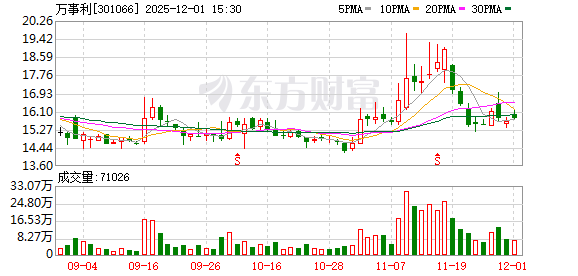
万事利:公司的产品主要聚焦于产品消费场景与中国文化中重要节日、仪式相结合
Zheng Quan Ri Bao· 2025-12-01 14:25
Group 1 - The company focuses on product consumption scenarios combined with important Chinese festivals and rituals [2] - The product design incorporates elements of Chinese culture and meets customer personalization needs [2] - The product lines cater to customers of all age groups [2]

波司登(03998):上半财年稳健增长,下半财年经营有望提速
Orient Securities· 2025-12-01 14:14
Investment Rating - The report maintains a "Buy" rating for the company [4][9] Core Views - The company is expected to achieve steady growth in the first half of FY2026, with a notable performance in its main product line, down jackets, which showed resilience during the off-season [8] - The company’s revenue and profit are projected to accelerate in the second half of FY2026, supported by favorable inventory levels and an extended sales season due to the late Chinese New Year [8] - The company aims to maintain sustainable growth over the next three years through a dual-focus strategy on its down jacket core business and a multi-brand matrix [8] Financial Performance Summary - Revenue for FY2024A is projected at 23,214 million, with a year-on-year growth of 38.4%, and is expected to reach 34,759 million by FY2028E, with a CAGR of approximately 10.6% [3] - Operating profit is forecasted to grow from 4,398 million in FY2024A to 6,711 million in FY2028E, reflecting a steady increase in profitability [3] - Net profit attributable to the parent company is expected to rise from 3,074 million in FY2024A to 4,879 million in FY2028E, with a CAGR of 11.8% [3] - Earnings per share are projected to increase from 0.26 in FY2024A to 0.42 in FY2028E [3] Valuation Metrics - The target price is set at 6.36 HKD, based on a 17x PE ratio for FY2026 [3][9] - The company’s PE ratio is expected to decrease from 17.1 in FY2024A to 10.7 in FY2028E, indicating improving valuation attractiveness [3] - The PB ratio is projected to decline from 4.0 in FY2024A to 2.5 in FY2028E, suggesting a potential undervaluation over the forecast period [3]
南极电商:南极人保暖内衣为公司核心品类
Zheng Quan Ri Bao Wang· 2025-12-01 10:15
Core Viewpoint - Nanji E-commerce (002127) emphasizes the strong consumer base and positive feedback for its core product, Nanji thermal underwear, while also highlighting its diverse product range including self-heating thermal underwear, wool sweaters, and down jackets [1] Group 1 - Nanji thermal underwear is identified as the company's core product with a substantial consumer user base [1] - The product quality of Nanji thermal underwear has received favorable feedback from consumers [1] - In addition to thermal underwear, the company offers a variety of products such as self-heating thermal underwear, wool sweaters, and down jackets [1]
