
高等教育

Search documents
新高教集团(02001)发布年度业绩 股东应占溢利8.29亿元 同比增加9.67%
智通财经网· 2025-11-28 10:45
Core Insights - New Higher Education Group (02001) reported a revenue of 2.599 billion RMB for the fiscal year ending August 31, 2025, representing a year-on-year increase of 7.78% [1] - The profit attributable to shareholders was 829 million RMB, an increase of 9.67% year-on-year, with basic earnings per share at 0.49 RMB [1] Employment Quality and Graduate Outcomes - The employment quality and rate for graduates remained high, with a final graduate placement rate of 98.03% for the 2024 cohort, marking the fifth consecutive year above 95% [1] - The initial placement rate for the 2025 graduates reached 98.22%, an increase of 3.13 percentage points compared to the previous year, with 53.94% of high-quality employment positions filled by graduates, and a significant increase of 110.32% in employment at prestigious companies [1] Student Enrollment and Academic Growth - For the 2025/2026 academic year, the total number of students across the group's schools is approximately 133,000, with an increasing proportion of undergraduate students [1] - The number of new undergraduate students grew by 3.9% year-on-year, and the proportion of undergraduates among total students increased by 4.5 percentage points [1] - The group has been enhancing its brand competitiveness through a rising proportion of cross-province admissions and increasing minimum admission scores across multiple schools [1]
新高教集团(02001.HK)年度经调整净利润同比增长5.2%至8.1亿元
Ge Long Hui· 2025-11-28 10:32
于2025/2026学年,集团旗下学校总在校生人数约13.3万人,本科学生占比持续提升,新生本科人数同 比增长3.9%,总在校生中本科层次占比提升4.5个百分点。此外,集团旗下院校跨省招生比例持续提 高,多校最低录取分数线持续提升,品牌竞争力持续增强,高质量发展战略稳步推进。 格隆汇11月28日丨新高教集团(02001.HK)公告,截至2025年8月31日止年度,集团主营收入同比增长 7.8%至人民币26.0亿元,经调整净利润同比增长5.2%至人民币8.1亿元。母公司普通股股东应占每股盈 利0.49人民币元。 集团是一家领先的高等教育集团,专注高等教育二十余年,率先提出并长期推动应用型大学办学模式。 集团高校遍及全国多地,累计向社会输送50万余名高素质应用型和技术技能型人才。作为高质量就业的 引领者,集团院校获教育部颁发"全国就业工作50强",各院校就业率在各省区均名列前茅,高质量就业 率持续提升。 ...
“十四五”首都高校答卷|北京物资学院:培养应用型卓越物流人才
Xin Jing Bao· 2025-11-28 10:17
Core Viewpoint - Beijing Wuzi University is in a critical phase of development during the "14th Five-Year Plan" period, focusing on becoming a high-level application-oriented university that serves the education power and the socio-economic development of the capital [1] Group 1: Educational Philosophy and Achievements - The university emphasizes moral education as its fundamental task, implementing comprehensive reforms in ideological and political education, and has received multiple accolades for its "curriculum ideological and political education" initiatives [2][3] - The institution has established a "five educations" system, achieving significant success in sports and cultural activities, including winning numerous awards in competitions and producing original cultural works [2][3] Group 2: Integration of Industry and Education - The university has proposed a new paradigm for industry-education integration, focusing on a multi-chain coupling approach that enhances talent cultivation through deep integration with industry [3][5] - It has established various alliances and practical training bases, ensuring that students engage with real industry projects, with 97% of student thesis topics derived from actual industry needs [5][6] Group 3: International Collaboration and Global Perspective - The university is expanding its international educational framework, establishing partnerships with foreign institutions and offering programs in collaboration with universities in the United States [7][8] - It has developed a robust international cooperation network, engaging with 149 international organizations and institutions across 30 countries, and has introduced international standards into its curriculum [8] Group 4: Cultural and Social Responsibility - The university promotes cultural education through initiatives that integrate historical and cultural resources, fostering a sense of responsibility and mission among students [9][10] - Students actively participate in significant national events and community service projects, enhancing their practical skills and professional spirit [9][10] Group 5: Overall Development and Future Vision - Over the past five years, the university has made substantial progress, improving its rankings and contributing to national standards and educational experiences [10][11] - The institution has trained nearly 20,000 application-oriented talents, maintaining a high employment rate for graduates, particularly in the logistics and supply chain sectors [11][12]

“十四五”首都高校答卷|中国石油大学(北京)助力建设能源强国
Xin Jing Bao· 2025-11-28 10:17
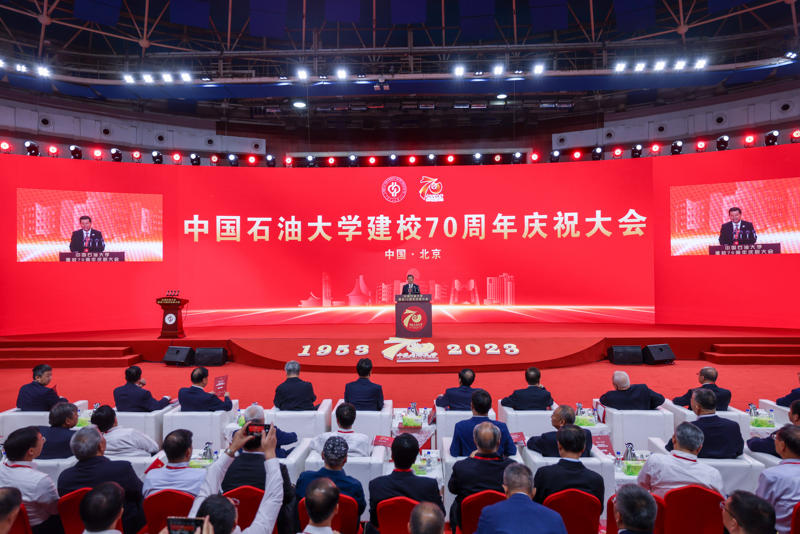
Core Insights - China University of Petroleum (Beijing) has made significant contributions to national strategies and energy security over the past decade, particularly through its development in the Xinjiang region [1][10] - The university has established new academic programs and research initiatives focused on carbon neutrality and energy transition, aligning with national energy policies [3][4] - The institution aims to cultivate top-tier talent in energy sectors, enhancing its educational framework to meet the demands of the industry and national needs [6][8] Group 1: Educational Development - The university has expanded its academic offerings, including the establishment of the Carbon Neutral Future Technology College and the Smart Oil and Gas Modern Industry College, to address future energy transformation needs [3] - New undergraduate programs such as Carbon Storage Science and Engineering have been approved, positioning the university among the first to offer such courses in China [4] - The institution has implemented innovative training models, focusing on project-based education to develop urgently needed talents in the energy sector [6] Group 2: Research and Innovation - The university has developed a comprehensive energy discipline layout, including new fields like clean energy and intelligent technology, to support national strategic tasks [3][4] - It has established key laboratories and research centers focusing on critical technologies in oil and gas, contributing to national projects and enhancing its research capabilities [7] - The university's efforts in carbon neutrality and clean energy have positioned it as a leader in sustainable technology, ranking 17th globally in this field [3] Group 3: Regional and National Impact - The university is actively contributing to the development of the Beijing region's energy industry, aligning its educational programs with local industrial needs [4][8] - It has fostered partnerships with major energy companies to create a collaborative educational ecosystem, enhancing the practical training of students [6] - The university's initiatives in Xinjiang aim to support local development and retain talent in the region, with a significant percentage of graduates choosing to work in the area [8][10]

8368万元!西安电子科技大学3-12月仪器采购意向
仪器信息网· 2025-11-28 09:07
Core Insights - Xi'an University of Electronic Science and Technology has announced procurement intentions for 39 items of laboratory equipment, with a total budget of 83.68 million yuan [2][3]. Procurement Overview - The procurement includes advanced instruments such as a multi-dimensional high-precision quantum fluorescence measurement system, fluid mechanics comprehensive experimental system, semiconductor parameter analyzer, power device characteristic analyzer, large-size wafer testing equipment, antenna environmental information monitoring platform, high-precision desktop CT detection system, and multi-position multi-modal imaging detection integrated platform [3][4]. - The expected procurement timeline is from March to December 2025 [3]. Detailed Equipment Specifications - **Multi-dimensional High-Precision Quantum Fluorescence Measurement System**: This system utilizes an integrating sphere combined with a spectrometer for high-precision fluorescence measurement, achieving a measurement error reduced to ±2% [4]. - **Semiconductor Parameter Analyzer**: Designed for testing electrical characteristics of semiconductor devices, it supports various measurement modes with a current measurement resolution of 10 fA and voltage measurement resolution of 0.5 μV [5]. - **Fluid Mechanics Comprehensive Experimental System**: This system is capable of conducting multiple experiments related to fluid dynamics, including Reynolds experiments and Bernoulli equation experiments, with specific requirements for pipe dimensions and pressure sampling rates [8]. Budget Allocation - The total budget for the procurement is 83.68 million yuan, with individual items having specific budget allocations, such as 1.65 million yuan for the quantum fluorescence measurement system and 1.15 million yuan for the fluid mechanics system [3][8].

海外消费周报:海外社服:携程和同程旅行3Q25业绩稳健增长-20251128
Shenwan Hongyuan Securities· 2025-11-28 08:15
Investment Rating - The report maintains a "Buy" rating for both Ctrip and Tongcheng Travel, indicating a positive outlook for their performance in the online travel industry [2][3]. Core Insights - Ctrip's 3Q25 revenue increased by 16% year-on-year to 18.4 billion yuan, with a non-GAAP operating profit of 6.1 billion yuan, exceeding expectations due to lower marketing expenses [2][7]. - Tongcheng Travel's 3Q25 revenue grew by 10% year-on-year to 5.5 billion yuan, with adjusted net profit rising 17% to 1.06 billion yuan, driven by better-than-expected accommodation business performance [3][8]. - Both companies are expected to benefit from the recovery in outbound tourism, with Ctrip's international OTA platform bookings increasing over 60% year-on-year and inbound tourism bookings more than doubling [2][7]. - The report highlights the stability of the online travel industry and the potential for market share growth for both companies, particularly in international markets [2][3]. Summary by Sections 1. Overseas Social Services: Ctrip and Tongcheng Travel 3Q25 Performance - Ctrip's accommodation booking revenue rose by 18%, transportation revenue by 12%, and business travel management revenue by 15% [2][7]. - Tongcheng Travel's core OTA business revenue increased by 15%, with accommodation booking revenue also up by 15% [3][8]. - Both companies are positioned well for future growth, particularly in outbound travel, with expectations for international flight and hotel contributions to increase significantly by 2027 [3][8]. 2. Overseas Pharmaceuticals: CSPC Pharmaceutical Group - CSPC's revenue for the first three quarters of 2025 decreased by 12.3% to 19.89 billion yuan, but third-quarter revenue grew by 3.4% to 6.62 billion yuan, aligning with expectations [4][13]. - The report notes a decline in gross margin and a decrease in the contribution of the prescription drug segment to total sales [4][13]. 3. Overseas Education: Profitability Management Conditions Mature - The education index rose by 2% this week, with a year-to-date increase of 7.3% [19]. - The report suggests focusing on Hong Kong higher education companies, anticipating a recovery in profitability and expansion potential [21][29].

专业聚焦 | 马海涛校长为师生作“构建中国财政学自主知识体系”专题讲座
Sou Hu Cai Jing· 2025-11-28 05:16
11月19日下午,校长马海涛教授在沙河校区为经济学院数字经济时代经济学拔尖学生培养基地班师生作"构建中国财政学自主知识体系"专题讲座。讲座由 经济学院院长郭冬梅主持。 马海涛从基地育人使命出发,强调财政学研究要扎根中国现实。他指出,作为国家首批基础学科拔尖学生培养计划2.0基地,基地始终秉持 "时代化、本土 化、国际化、理论化"的育人理念,构建了 "顶天—立地—强基"三位一体的培养体系,旨在培养学生立足国情、解决中国问题的能力,造就真正熟悉中国 经济、勇于自主创新的栋梁之材。 讲座现场师生反响热烈,基地师生深刻认识到,构建中国财政学自主知识体系,必须以学术自信立足现实,以历史自觉传承精神,以时代担当开拓未来。 郭冬梅在总结中勉励基地学子珍惜学习机会,积极为经济学自主知识体系建设贡献青春力量。 马海涛系统梳理了中国财政职能的演进脉络,指出其伴随经济体制的深刻变革,历经不断发展,逐步形成"收、支、管、调、防"五位一体的综合体系。他 强调,中国财政学的演进并非简单照搬西方理论,而是始终立足国情、回应时代需求的自主创新过程。在阐述中国财政现实的基础上,马海涛进一步指 出,构建自主知识体系不仅需要立足国情,更需要严谨治 ...
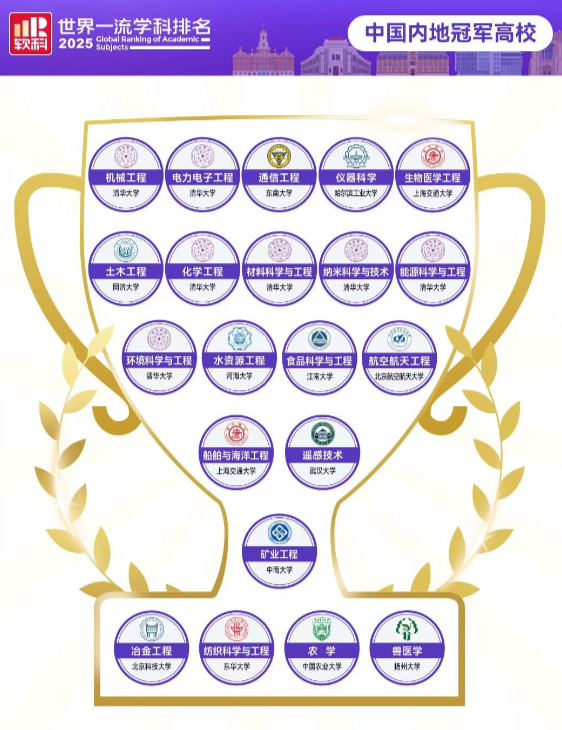
中国高校三个学科首度问鼎世界第一
第一财经· 2025-11-28 03:00
Core Viewpoint - The article discusses the latest "Soft Science World-Class Discipline Ranking" (GRAS) released by a higher education evaluation agency, highlighting the significant progress of Chinese universities in various disciplines, particularly in emerging fields like artificial intelligence and biomedical engineering [3][4]. Group 1: Ranking Overview - In the 2025 GRAS ranking, Chinese universities achieved first place in three disciplines: Power Electronics Engineering, Biomedical Engineering, and Materials Science and Engineering, increasing the total number of world champion disciplines to 21 [3][6]. - The ranking includes over 3,000 universities globally, showcasing more than 20,000 discipline points from over 2,000 universities across 92 countries and regions [4]. Group 2: Performance of Chinese Universities - Chinese universities ranked second globally with 3,747 total appearances in various disciplines, with 359 universities listed. The United States led with 4,281 appearances across 27 disciplines [6]. - Tsinghua University has seven champion disciplines, ranking second only to Harvard University, which has eleven. Shanghai Jiao Tong University has two champion disciplines, while twelve other universities each have one [6][8]. Group 3: Emerging Disciplines - The newly added champion disciplines of Power Electronics Engineering and Biomedical Engineering reflect the growing importance of interdisciplinary studies in driving technological advancements [8][9]. - The Power Electronics Engineering discipline at Tsinghua University has a strong historical foundation, consistently ranking first in national assessments [8]. - Shanghai Jiao Tong University achieved first place in Biomedical Engineering, marking a significant milestone for Chinese universities in this field [9]. Group 4: Educational Reforms and Future Directions - Recent adjustments in academic disciplines, as outlined in the "Reform Plan" by the Ministry of Education, aim to optimize and adjust 20% of higher education programs by 2025, leading to the establishment of 3,229 new undergraduate programs and the cancellation of 2,534 [10]. - The focus on artificial intelligence and integrated circuits in educational reforms indicates a strategic push towards cultivating top-tier innovative talent in critical fields [10][11]. Group 5: Artificial Intelligence and Robotics - The demand for professionals in artificial intelligence is projected to increase sixfold by 2030 compared to 2022, prompting rapid development in related academic programs [12]. - Tsinghua University and Shanghai Jiao Tong University are leading in artificial intelligence education, with Tsinghua establishing an AI college and Shanghai Jiao Tong launching an AI talent program [13][14]. - The newly ranked Robotics Science and Engineering discipline features 100 universities globally, with Shanghai Jiao Tong University and Tsinghua University among the top in China [14].
中国高校三个学科首度问鼎世界第一,AI专业清华国内领先
Di Yi Cai Jing· 2025-11-27 12:19
Core Insights - The number of global champion disciplines in Chinese mainland universities has increased to 21, with three new disciplines achieving world firsts in 2025 GRAS rankings [1][2] - The rankings reflect the growing emphasis on interdisciplinary studies in response to technological revolutions and industrial transformations [1][2] Group 1: Rankings and Achievements - Chinese mainland universities ranked first in three disciplines: Power Electronics Engineering, Biomedical Engineering, and Materials Science and Engineering [1][2] - The total number of disciplines ranked in the GRAS has reached 57, covering five major fields: natural sciences, engineering, life sciences, medicine, and social sciences [1][2] - The United States maintains the lead with 27 disciplines ranked first, totaling 4,281 mentions, while Chinese universities follow with 3,747 mentions across 21 disciplines [2] Group 2: Institutional Highlights - Tsinghua University leads with seven champion disciplines, followed by Harvard University with eleven [2] - Shanghai Jiao Tong University and Beijing University of Aeronautics and Astronautics each have one champion discipline [2] - The increase in champion disciplines indicates a shift from follower to leader status for several Chinese universities in their respective fields [2] Group 3: New Disciplines and Trends - The newly added champion disciplines include Artificial Intelligence and Robotics Science and Engineering, reflecting the growing importance of these fields [1][2] - The demand for professionals in Artificial Intelligence is projected to increase sixfold by 2030, highlighting the urgency for educational institutions to adapt [9][10] - The establishment of interdisciplinary research platforms and funding initiatives at institutions like Shanghai Jiao Tong University is driving innovation in health technology [5][9] Group 4: Policy and Structural Changes - The Ministry of Education's reform plan aims to optimize and adjust 20% of academic programs by 2025, leading to the establishment of 3,229 new undergraduate programs and the discontinuation of 2,534 [5][6] - The focus on strategic emerging industries and foundational disciplines is part of a broader initiative to cultivate top-tier innovative talent [6][7]
江苏高等教育按下智能化“快进键”
Xin Hua Ri Bao· 2025-11-27 07:30
Core Insights - The integration of generative AI into daily life is accelerating, with a focus on "embodied intelligence" as part of the national strategy to implement "AI+" in higher education [1] - Jiangsu province is actively responding to national strategies to seize opportunities in "AI+ higher education" [1] Group 1: AI Education Ecosystem - Jiangnan University has introduced an AI course that combines virtual and physical classroom experiences, allowing AI to assess student engagement and generate comprehensive analyses [2] - Over the past three years, Jiangsu's education department has issued multiple policies to create a comprehensive "AI+ education" reform ecosystem, covering all educational stages [2] - A total of 36 undergraduate institutions in Jiangsu have established AI majors, with 7 universities offering "AI+" dual degree programs, and several new interdisciplinary undergraduate programs have been launched [2] Group 2: Vertical AI Models - Jiangnan University released the world's first AI model dedicated to food science, named FoodSeek, while Southeast University introduced an ethical AI model called "Wendao" [3] - Nanjing University has built a smart computing center and a data center to support AI applications, focusing on algorithms, computing power, and data [3] Group 3: Classroom Innovations - Southeast University's "Future Robotics" course emphasizes practical skills in robot manufacturing, integrating AI assistance for problem-solving [4] - Nanjing University will offer an AI core course to all undergraduate freshmen starting in the fall of 2024, with other universities following suit [4] - Educators are encouraged to use AI as a teaching assistant to enhance student engagement and problem-solving skills [4] Group 4: Industry Collaboration - Nanjing University is creating a practical education ecosystem by collaborating with local industries to address real-world challenges [5] Group 5: AI Usage Guidelines - The increasing use of generative AI among students raises questions about setting reasonable boundaries for its application in education [7] - Internationally, educational institutions are shifting from banning to guiding the use of generative AI tools, emphasizing ethical and responsible usage [7] - There is a focus on developing students' comprehensive skills, critical thinking, and innovation capabilities through AI integration in various academic activities [7]