
调味品

Search documents
日本味之素股价一度下跌16% 跌幅为2011年3月来最大
Mei Ri Jing Ji Xin Wen· 2025-11-07 00:40
(文章来源:每日经济新闻) 11月7日,日本味之素股价一度下跌16%,跌幅为2011年3月来最大。 ...
存量博弈下,酱油企业各寻出路
Bei Jing Shang Bao· 2025-11-06 14:09
Core Insights - The soy sauce market in China is experiencing a cooling trend, with significant performance differentiation among leading companies [2][4] Group 1: Company Performance - Haitian Flavor Industry (海天味业) is the only company to achieve both revenue and net profit growth in the first three quarters, with revenue of 21.628 billion yuan, up 6.02%, and net profit of 5.322 billion yuan, up 10.54% [2][3] - Zhongju High-tech (中炬高新) reported its largest revenue decline since 2016, with revenue of 3.156 billion yuan, down 20.01%, and net profit of 380 million yuan, down 34.07% [2][3] - ST Jiajia (ST加加) remains in a loss position, with revenue of 1.009 billion yuan, down 2.65%, and a net loss of 18.0368 million yuan [3][5] Group 2: Market Trends - The soy sauce market is projected to reach 104.1 billion yuan by 2024, with a five-year compound annual growth rate of only 2.3%, lower than the overall seasoning industry growth rate of 4.5% [3][4] - The industry is facing a "Matthew Effect," where stronger companies continue to dominate, making it challenging for others to find new growth points in a saturated market [1][4] Group 3: Strategic Initiatives - Haitian Flavor Industry plans to use 20% of its fundraising for overseas market expansion, starting with Southeast Asia, where a production base in Indonesia is under construction [4][5] - Zhongju High-tech is enhancing its marketing efforts by signing celebrity endorsements and increasing the number of distributors, although this has led to rising sales expenses [4][5] - ST Jiajia is focusing on a "low-salt strategy" and has developed new low-salt products, but its recent change in ownership structure adds uncertainty to its future [5]


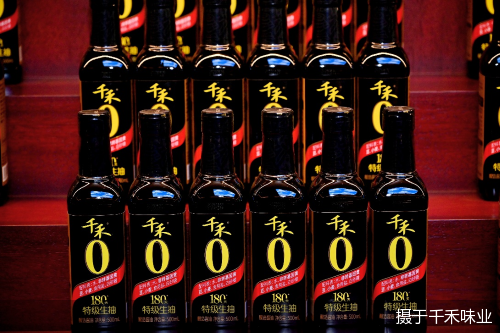
千禾味业获行业首个清洁标签产品0级认证,加速配料干净酱油消费普及
Bei Jing Shang Bao· 2025-11-06 06:01
Core Insights - Qianhe Flavor Industry has achieved the first "Clean Label Product Level 0 Certification" in the Chinese seasoning industry, marking a significant milestone in the production of clean ingredient soy sauce and indicating a shift towards health and transparency in the industry [1][3]. Group 1: Product Development and Certification - The Qianhe 0 series soy sauce is made with only 4 to 5 clean ingredients, free from additives, and has passed rigorous audits and testing by the China Quality Certification Center [3]. - The company is the first to implement the new national standards for pre-packaged food and the "Double Reduction" initiative for additives, set to begin in September 2025, which includes placing the ingredient list prominently on the packaging [3]. Group 2: Production Process and Quality Control - Qianhe Flavor Industry benefits from a unique geographical location in Sichuan, which provides optimal conditions for soy sauce fermentation, including ideal temperature, humidity, and water quality [4]. - The company employs a "6+6" dual fermentation strategy, where the soy sauce undergoes a total of 12 months of fermentation to enhance flavor [6]. Group 3: Market Trends and Consumer Demand - The Chinese soy sauce market is projected to reach 104.1 billion yuan by 2024, with a shift from basic to quality-driven consumer demand [7]. - Clean ingredient soy sauce is expected to become the preferred choice for Chinese households, with leading brands capturing 50% of the market share, and its retail market share is anticipated to rise to 63.9% in the next three years [7]. Group 4: Business Focus and Financial Performance - Qianhe Flavor Industry is concentrating on four main product categories: soy sauce, vinegar, oyster sauce, and cooking wine, without diversifying into other categories [8]. - In the first three quarters of 2025, the company reported revenue of 2 billion yuan, with a gross margin of 37.41%, reflecting a year-on-year increase of 1.21 percentage points [8].


【广发金工】关注指数成分股调整的投资机会
广发金融工程研究· 2025-11-06 00:32
Core Viewpoint - The article emphasizes the growing recognition of index-based investment among investors, highlighting the potential investment opportunities arising from significant changes in index constituents due to the periodic rebalancing of major indices like the SSE 50, CSI 300, and CSI 500 [1][4]. Group 1: Index Fund Growth - The total scale of passive index funds (including ETFs and off-market passive index funds) reached 4.5 trillion yuan as of October 31, with 2,294 funds, while enhanced index funds totaled 265.3 billion yuan, surpassing the scale of equity mixed funds at 2.53 trillion yuan [2][15]. - The total scale of equity ETFs grew from approximately 200 billion yuan in 2014 to 3.72 trillion yuan by October 2025, indicating significant growth [15]. Group 2: Historical Adjustment Effects of Index Constituents - Historical analysis from 2019 to mid-2025 shows that stocks added to indices tend to outperform the index in the two weeks prior to their inclusion, while those removed tend to underperform [2][24]. - The average excess return for stocks added to the index in the two weeks before inclusion was 4.89%, with a success rate of 66.67% [25]. Group 3: Latest Adjustment Impact Estimation - The expected adjustments for December 2025 indicate that the SSE 50 will adjust 4 stocks with an estimated passive buy amount of 5.5 billion yuan, the CSI 300 will adjust 10 stocks with an estimated net buy of 24.5 billion yuan, and the CSI 500 will adjust 50 stocks with an estimated buy of 3.3 billion yuan [3][33].

中金2026年展望 | 食品饮料:复苏深化,聚焦高质量增长(要点版)
中金点睛· 2025-11-05 23:52
Group 1: Industry Overview - The food and beverage industry has entered a new normal in 2023, with a weak overall consumption environment, emphasizing high quality-price ratios, functionality, health, and emotional consumption trends [3] - Leading companies are focusing on stable operations and high-quality development, improving shareholder returns and operational quality [3] - The liquor industry continues to experience weak demand, compounded by new regulations, leading to significant adjustments in supply and demand [4] Group 2: Liquor Industry Insights - The liquor sector is expected to see a turning point in the first half of 2026, with a focus on leading companies that show early recovery in fundamentals and long-term growth potential [4][7] - The impact of policies on business demand is gradually weakening, and consumer demand is expected to stabilize, leading to a potential recovery in liquor sales [7] - The strategic focus of liquor companies has shifted from inventory pressure to exploring new growth opportunities, particularly targeting younger consumers [8] Group 3: Consumer Goods Trends - Overall demand for mass-market food is stabilizing at low levels, with sub-sectors showing varied performance; trends of quality-price ratio, health, and emotional value consumption continue [4][10] - The beer industry is experiencing stable sales among leading domestic brands, with a focus on upgrading products and improving efficiency [11] - The snack food sector is seeing significant channel differentiation, with growth in membership stores and snack wholesale channels, while traditional channels face pressure [11] Group 4: Beverage Sector Developments - The soft drink industry is benefiting from travel, innovation, and investments in frozen products, maintaining steady growth despite increased competition [12] - The dairy industry is expected to see a mild recovery in 2026, driven by potential consumer stimulus policies and improved supply-demand balance [12] - The condiment sector is facing stable demand in 2025, with expectations for innovation among leading companies in 2026 [13]
千禾味业产品包装全新升级 配料干净酱油进入消费普及市场拐点
Bei Ke Cai Jing· 2025-11-05 11:01
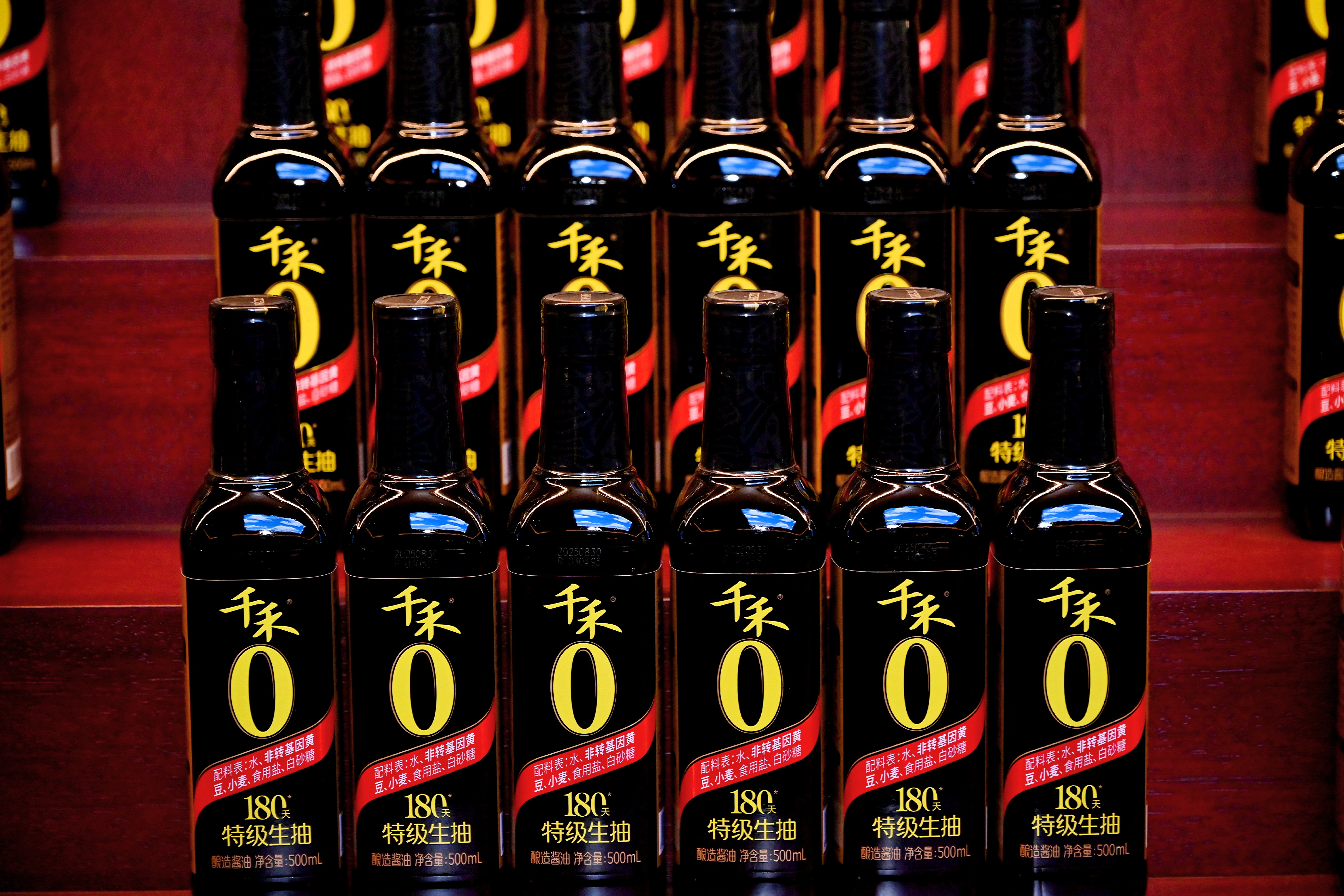
Core Viewpoint - Qianhe Flavor Industry emphasizes the importance of clean ingredients and transparency in food labeling, aligning with consumer trends towards healthier choices and regulatory standards [7][9][10]. Group 1: Product Innovation - Qianhe Flavor Industry has launched the Qianhe 0 series soy sauce, featuring a minimalist ingredient list prominently displayed on the front of the packaging, which includes water, non-GMO soybeans, wheat, edible salt, and white sugar [3][6][10]. - The company has completed the packaging upgrade for the Qianhe 0 series by the end of September, ceasing production of old label products to ensure compliance with new food safety standards [8][9]. Group 2: Commitment to Quality and Safety - The company utilizes non-GMO soybeans and high-quality water sources from the Minshan region to ensure the authentic flavor of its products [2][11]. - Qianhe Flavor Industry employs an automated production line and contactless operations to enhance product safety and quality, minimizing human contact during the manufacturing process [11][15]. Group 3: Regulatory Compliance and Market Trends - The new food safety standards issued by the National Health Commission and the State Administration for Market Regulation will take effect in March 2027, promoting clearer labeling practices [8][9]. - The market research indicates that the share of clean ingredient soy sauce in the retail quality soy sauce market is expected to rise to 63.9% over the next three years, marking a significant shift in consumer preferences [11][16]. Group 4: Future Expansion - Qianhe Flavor Industry plans to extend its clean ingredient philosophy beyond soy sauce and vinegar to high-quality oyster sauce, recognizing the growth potential in this category [16].
“配料干净”成调味品行业升级新趋势
Zhong Guo Jing Ji Wang· 2025-11-05 08:45
Core Insights - Qianhe Flavor Industry has announced the acquisition of China's first clean label product Level 0 certification in the condiment industry, indicating a potential industry trend towards cleaner ingredient standards [1][2] - The Chinese soy sauce market is projected to reach a scale of 104.1 billion yuan by 2024, with a shift from basic demand to quality demand among consumers [1] - Clean label soy sauce is expected to become the preferred choice for Chinese households, with leading brands currently holding a 50% market share, and this segment's share in the retail quality soy sauce market is anticipated to rise to 63.9% over the next three years [1] Industry Developments - The State Administration for Market Regulation and other ministries have introduced multiple policies to guide the development of the condiment industry, advocating for a reduction in food additives and promoting the use of natural ingredients [1] - The clean label product certification standard, derived from the EU, requires companies to establish a comprehensive risk control system from raw material selection to packaging and storage, with Level 0 being the highest certification level [2] - The market demand for healthy and safe food is driving the transformation of the supply side, accelerating the popularization of clean ingredient condiments [1][2]
净利增速跑赢营收,海天味业为何仍遭市场“冷眼”?
Da Zhong Ri Bao· 2025-11-05 03:12
Core Viewpoint - The financial performance of Haitian Flavor Industry (603288.SH) shows revenue and net profit growth, but the market response has been lukewarm due to concerns over slowing growth in the soy sauce segment and overall restaurant consumption pressures [1][3]. Financial Performance - In the first three quarters of 2025, the company achieved revenue of 21.628 billion yuan, a year-on-year increase of 6.02%, and a net profit attributable to shareholders of 5.322 billion yuan, up 10.54% [1]. - The third quarter revenue was 6.398 billion yuan, growing by 2.48%, with net profit of 1.408 billion yuan, a 3.40% increase, both showing a significant slowdown compared to the first half of the year [3]. Soy Sauce Business - The soy sauce segment, which accounts for 51.6% of total revenue, generated 11.156 billion yuan in the first three quarters, up 7.91%. However, the growth rate for the third quarter was only 4.9%, a sharp decline from 9.2% in the first half [3]. - The overall market for soy sauce is entering a phase of stock competition, limiting growth potential [7]. Market Challenges - The decline in restaurant consumption, with a national growth rate of only 3.3% in the first three quarters and a mere 0.9% in September, has put pressure on sales channels for Haitian [3]. - The company faces increased competition from niche products that appeal to health-conscious consumers, impacting its market share [3]. Strategic Adjustments - To counteract traditional channel pressures, the company is focusing on "channel sinking" and "product upgrading," targeting community retail and online sales [4]. - Online channel revenue reached 1.245 billion yuan in the first three quarters, a 32.11% increase, indicating a shift towards digital sales strategies [4]. Cost Management - Despite slowing revenue growth, the company improved its profitability, with a gross margin of 39.97%, up 3.19 percentage points year-on-year, and a net profit margin of 24.64%, up 0.97 percentage points [5]. - The improvement in profitability is attributed to cost optimization, particularly in raw materials like soybeans and sugar, which have seen price declines [5]. International Expansion - The company has been investing in overseas market development, with less than 5% of revenue coming from international sales as of June 2025 [8]. - Plans include establishing production bases in Indonesia and Europe, with a focus on localizing supply chains to reduce costs [8][9]. Long-term Outlook - The company’s overseas business is expected to take 2-3 years to mature, with minimal short-term revenue contributions anticipated [9]. - Investors are concerned about the company's ability to find new growth drivers in high-end products and overseas markets amidst a saturated soy sauce market [10].

中炬高新:董事长黎汝雄增持10.05万股,增持金额达182.66万元
Sou Hu Cai Jing· 2025-11-05 02:22
Core Viewpoint - The chairman of Zhongju High-tech Industry (Group) Co., Ltd. has increased his stake in the company, reflecting confidence in its future development and value recognition [2]. Group 1: Shareholding Activity - Chairman Li Ruxiong purchased 100,500 shares, representing 0.0129% of the total share capital, for a total amount of RMB 1,826,590.00 [2]. - Li Ruxiong committed to not reducing his shareholding within the legal timeframe, and this transaction does not trigger any obligation for a report on equity changes [2]. Group 2: Company Overview - Zhongju High-tech was established on January 16, 1993, with a registered capital of RMB 77,899.1206 million, and is located in Zhongshan Torch High-tech Industrial Development Zone [2]. - The company specializes in seasoning food, park operation, and urban development, employing 3,910 people [2]. - It has 18 subsidiaries, including Shenzhen Meiwai Xian Trading Co., Ltd. and Guangdong Meiwai Xian Seasoning Food Co., Ltd. [2]. Group 3: Financial Performance - The company's revenue for 2022, 2023, 2024, and the first three quarters of 2025 were RMB 5.341 billion, RMB 5.139 billion, RMB 5.519 billion, and RMB 3.156 billion, with year-on-year growth rates of 4.41%, -3.78%, 7.39%, and -20.01% respectively [3]. - The net profit attributable to shareholders for the same periods were -RMB 0.592 billion, RMB 1.697 billion, RMB 0.893 billion, and RMB 0.380 billion, with year-on-year growth rates of -179.82%, 386.53%, -47.37%, and -34.07% respectively [3]. - The company's asset-liability ratios were 44.33%, 22.60%, 29.95%, and 27.36% for the respective years [3].

2025年中国咖喱行业市场政策汇总、产业链图谱、市场规模、竞争格局及发展趋势研判:外资品牌占据主导地位[图]
Chan Ye Xin Xi Wang· 2025-11-05 01:41
内容概要:近年来,我国餐饮业快速发展,东南亚菜系、日式料理、印度菜等异国风味餐厅的数量不断 增加,带动咖喱市场需求快速增长,此外,得益于我国消费者对精致生活的不断追求,厨房调味品市场 整体发展蒸蒸日上,除了酱油等传统调味料外,咖喱等舶来品也深受光大消费者的欢迎,近年来,我国 咖喱市场均保持两位数的增速,据统计,2024年我国咖喱行业市场规模达10.26亿元,同比增长 12.80%,但由于地理、气候、饮食习惯等原因,国内多数消费者仅将其作为日常改换口味的调味产 品,而非日常必需品,因此,咖喱在我国调味品市场占比较低,不足1%,未来,随着消费者对于饮食 的多样化和个性化需求不断增加,咖喱作为一种具有独特风味的异国调味品,市场渗透率有望不断提 高。 上市企业:安记食品(603696) 相关企业:好侍食品(中国)投资有限公司、上海味好美食品有限公司、上海大塚食品有限公司、上海 可达怡贸易有限公司、李锦记(新会)食品有限公司、广东妙多食品科技有限公司、山东苏伯食品有限 责任公司 关键词:咖喱市场政策汇总、咖喱产业链图谱、咖喱市场规模、咖喱竞争格局、咖喱发展趋势 一、概述 咖喱是以姜黄为主料,加入芫荽籽、桂皮、辣椒、白胡 ...

