
生物医药

Search documents
头部私募 积极入场
Shang Hai Zheng Quan Bao· 2026-02-05 15:04
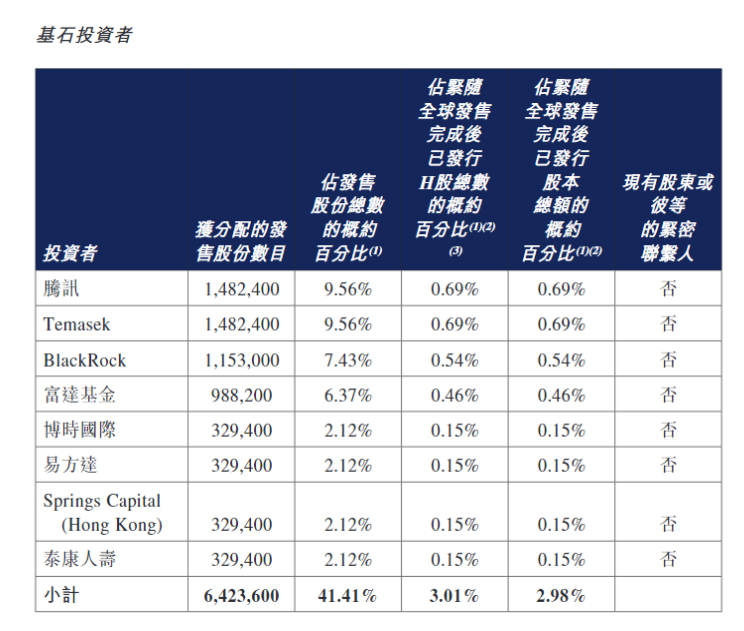
Group 1 - The core viewpoint of the articles highlights a significant influx of capital into the Hong Kong stock market, particularly in cornerstone investments, with over 20 billion HKD invested by institutions as of February 5 this year [1][5] - Major domestic private equity firms such as Jinglin Asset, Gao Yi Asset, and Waterfall Capital are actively participating, alongside international investors like the Abu Dhabi Investment Authority and UBS Global Asset Management [1][6] - The growing interest in Hong Kong IPOs is attributed to the listing of numerous new economy companies and the anticipated growth in sectors like AI, pharmaceuticals, and high-dividend stocks, which are expected to attract more capital [1][8] Group 2 - The IPO of Hunan Mingming Henbang Commercial Chain Co., known as "Mingming Henbang," successfully raised 3.336 billion HKD at an issue price of 236.6 HKD per share, drawing cornerstone investments from major institutions totaling 195 million USD [2] - Other recent IPOs, such as that of Zhaoyi Innovation, have also attracted significant cornerstone investors, indicating a trend of increasing participation from both domestic and international funds [4][6] - Analysts suggest that the Hong Kong market is becoming a key entry point for foreign capital looking to invest in China's growth, particularly in promising sectors like AI and biotechnology [8][9] Group 3 - The influx of large institutional funds is expected to continue, with predictions that opportunities in internet, innovative pharmaceuticals, and high-dividend stocks will emerge in the Hong Kong market by 2026 [9] - Despite a rebound in the Hong Kong market in 2025, valuations remain relatively low compared to other global markets, suggesting potential for further growth [9] - The rise of AI technology is anticipated to significantly benefit Hong Kong internet companies, with ongoing performance exceeding market expectations, indicating that related investment opportunities should be closely monitored [9]

上海给未来五年加了什么buff?5个指标提前剧透
Di Yi Cai Jing· 2026-02-05 14:09
Group 1 - Shanghai aims for an average annual GDP growth rate of 5% over the next five years, up from 4.9% during the "14th Five-Year Plan" period, indicating significant progress despite a seemingly small numerical difference [1][3] - The growth strategy focuses on three key areas: stronger support from new drivers, greater release of core functions from five centers, and substantial backing from major projects, particularly in emerging industries [1][4] - The three leading industries—integrated circuits, biomedicine, and artificial intelligence—are expected to maintain an annual growth rate of over 10%, contributing significantly to Shanghai's economic development [4][5] Group 2 - By 2030, if the 5% growth target is met, Shanghai's GDP is projected to exceed 7 trillion yuan, positioning it among the top three global cities, following New York and Los Angeles [3] - The "15th Five-Year Plan" outlines specific targets, including a labor productivity exceeding 520,000 yuan per person and a digital economy's core industry value-added accounting for over 20% of GDP by 2030 [4][10] - Shanghai plans to establish a modern industrial system characterized by "2+3+6+6," focusing on advanced manufacturing and the development of six emerging pillar industries and six future industries [5][10] Group 3 - The city is committed to enhancing its international competitiveness and supporting technological innovation, with a focus on maintaining a stable industrial output value that aligns with GDP growth [7][8] - Recommendations include optimizing industrial land use and ensuring that industrial planning aligns with Shanghai's development needs, particularly in the biomedicine sector [8][9] - The emphasis on research and development is evident, with R&D expenditure expected to reach 5% of GDP by 2030, and a focus on fostering a culture of innovation among scientists and entrepreneurs [11][15]
复旦大学最新Cell:邵志敏/江一舟团队揭示感觉神经元助力乳腺癌免疫逃逸新机制,提出老药新用策略
生物世界· 2026-02-05 14:00
Core Viewpoint - Triple-negative breast cancer (TNBC) is the most aggressive subtype of breast cancer, characterized by the absence of estrogen receptors, progesterone receptors, and HER2 expression. Recent studies indicate that sensory neurons play a significant role in the tumor microenvironment (TME) of TNBC, contributing to immune exclusion and tumor progression [2][4][15]. Group 1: Role of Sensory Neurons in TNBC - Sensory neurons are identified as the dominant neuron type in the TNBC ecosystem, comprising approximately 70% of the nerve fiber area in TNBC tissues, significantly higher than sympathetic and parasympathetic neurons [7]. - Patients with positive perineural invasion (PNI) exhibit worse prognoses, including higher rates of lymph node and bone metastases, alongside reduced immune cell infiltration and increased collagen deposition in the TME [7]. Group 2: Mechanism of Immune Exclusion - The study outlines a clear signaling pathway where tumor cells secrete nerve growth factor (NGF) to attract sensory neurons, which then release the neuropeptide CGRP, activating cancer-associated fibroblasts (CAFs) [9]. - The CGRP-RAMP1 signaling axis promotes the transformation of CAFs into myofibroblasts, leading to significant collagen deposition that physically obstructs immune cell infiltration [9]. Group 3: Therapeutic Strategies - Targeting the CGRP-RAMP1 signaling axis with the FDA-approved migraine medication Rimegepant shows promise in TNBC treatment, as it significantly inhibits tumor growth, reduces collagen deposition, and enhances the infiltration of immune cells like CD8+ T cells [10][13]. - Clinical data suggest that high CGRP expression correlates with poorer prognosis and reduced response to immunotherapy, indicating its potential as a biomarker for selecting patients who may benefit from combination therapies [13]. Group 4: Conclusion and Future Directions - The findings reveal that sensory neurons are not mere bystanders but active participants in tumor progression by facilitating immune evasion in TNBC [15]. - The research opens new avenues for cancer neurobiology, emphasizing the need for multi-faceted approaches that target both cancer cells and their surrounding ecosystems [16].

内资加码助力恒指稳住阵脚 空头活跃度短线攀升
Xin Lang Cai Jing· 2026-02-05 13:42
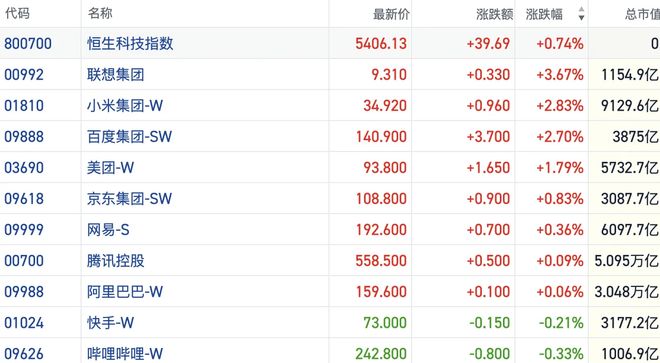
Core Viewpoint - The Hong Kong stock market showed signs of recovery with major indices turning positive, supported by domestic capital inflows and a mixed performance across sectors, particularly in technology and traditional industries [1][4]. Group 1: Market Performance - The Hang Seng Technology Index reached a new low during the day but closed up by 0.74% at 5406.13 points [2] - The Hang Seng Index and the National Enterprises Index increased by 0.14% and 0.5%, respectively [1] - Major tech stocks such as Xiaomi and Baidu rose nearly 3%, while Meituan increased by nearly 2% [1] Group 2: Sector Movements - Consumer sectors including dining, dairy, and beer stocks collectively rose, while telecommunications, biomedicine, home appliances, automotive, banking, and brokerage stocks also strengthened [2] - In contrast, sectors like gold and non-ferrous metals experienced downward volatility, with semiconductor and AI-related industries undergoing continued adjustments [3] Group 3: Trading Activity - The total trading volume for the Hang Seng Index reached 315.11 billion HKD, indicating a certain level of market activity [4] - Southbound capital saw a net purchase of nearly 25 billion HKD, becoming a key driver for market support [4] - Short selling reached a record high of 40.17 billion HKD, accounting for 12.75% of the trading volume, indicating ongoing market volatility [4] Group 4: Investment Trends - There is a notable shift in market focus from high-tech sectors like AI to more traditional industries [4] - Hedge funds are reportedly increasing short positions in software stocks, contributing to a significant sell-off in that sector [6] - Goldman Sachs forecasts a 3% appreciation in the nominal effective exchange rate of the RMB, which may benefit cyclical traditional industries [6] Group 5: Future Outlook - Analysts expect the market to maintain a volatile trend, with potential rotation in investment styles and themes [8] - The current valuation expansion space for Hong Kong stocks is limited, with earnings performance likely to dictate market trends [8] - A "technology + dividend" strategy remains effective in the short term, with an emphasis on defensive sectors such as banking, insurance, telecommunications, and utilities [8]
股票行情快报:中关村(000931)2月5日主力资金净卖出262.23万元
Sou Hu Cai Jing· 2026-02-05 13:21
Company Overview - Zhongguancun (000931) reported a closing price of 5.2 yuan on February 5, 2026, with a decrease of 0.38% and a turnover rate of 1.22% [1] - The company’s main business segments include biopharmaceuticals and health products, elderly medical services, commercial concrete, and other businesses [1] Financial Performance - For the first three quarters of 2025, Zhongguancun's main revenue was 1.882 billion yuan, a year-on-year decrease of 2.46% [1] - The net profit attributable to shareholders was 49.49 million yuan, down 4.14% year-on-year, while the net profit after deducting non-recurring items increased by 8.99% to 43.64 million yuan [1] - In Q3 2025, the company reported a single-quarter main revenue of 644 million yuan, a decrease of 1.96% year-on-year, and a net profit attributable to shareholders of 10.68 million yuan, down 29.9% year-on-year [1] - The company’s debt ratio stood at 51.09%, with investment income of -1.68 million yuan and financial expenses of 36.13 million yuan, while the gross profit margin was 59.64% [1] Capital Flow Analysis - On February 5, 2026, the net outflow of main funds was 2.62 million yuan, accounting for 5.48% of the total transaction amount, while retail funds saw a net inflow of 1.11 million yuan, representing 2.32% of the total transaction amount [1]


荃信生物-B(02509)已购回248.78万股普通股作为库存股
智通财经网· 2026-02-05 12:47
Core Viewpoint - The company believes its current stock price is significantly undervalued and aims to enhance market confidence and investment value through share buybacks [1] Group 1: Share Buyback Details - The company has repurchased a total of 2.4878 million ordinary shares as treasury stock from November 6, 2025, to the date of the announcement [1] - The repurchased shares represent approximately 1.10% of the company's existing issued share capital as of the announcement date [1] - The total amount involved in the buyback is approximately HKD 50.75 million, excluding commissions and other expenses [1]
浙江:到2030年基本建成高质量发展高品质生活先行区
Guo Ji Jin Rong Bao· 2026-02-05 12:26
Group 1 - The core objective of the "14th Five-Year Plan" for high-quality development in Zhejiang is to establish a leading area for high-quality development and high-quality living by 2030, with GDP per capita and urban-rural income levels approaching those of developed economies [1] - Zhejiang aims to promote high-quality economic development and implement an employment-first strategy as two core approaches, focusing on industrial innovation and employment quality to ensure the benefits of development are shared [1][5] - The plan emphasizes deep integration into the Yangtze River Delta's development, aiming to carve out a unique path towards common prosperity with Zhejiang characteristics [1] Group 2 - The "Chip-Model Linkage" strategy is crucial for integrating technological innovation with industrial upgrading, positioning Zhejiang as a hub for artificial intelligence and advanced manufacturing [2] - The plan includes the establishment of a multi-level computing power service system and the creation of a world-class model group, fostering an open-source ecosystem [2] - Collaboration with neighboring provinces like Jiangsu and Anhui is highlighted to leverage complementary advantages in computing resources, avoiding resource competition [2] Group 3 - The "415X" project will be implemented to promote the upgrade of traditional industries and the growth of emerging sectors, ensuring a coordinated approach to future industry layout [3] - Key traditional industries such as green petrochemicals and textiles will be enhanced, while classic industries like tea and silk will undergo innovative development [3] - Emerging sectors like biomedicine will be targeted for growth, focusing on original research drugs and high-end medical devices, with a collaborative ecosystem established for humanoid robots [3] Group 4 - The integration of the digital economy with the real economy is a priority, with plans to establish a national digital economy innovation development pilot zone [4] - The focus will be on upgrading AI and integrated circuit industry clusters and accelerating the development of AI-enabled products [4] Group 5 - High-quality and sufficient employment is identified as a core pathway to achieving common prosperity, with a focus on translating industrial development outcomes into tangible benefits for residents [5] - By 2025, the per capita disposable income in Zhejiang is projected to reach 70,240 yuan, with the urban-rural income gap narrowing to 1.81 [5] - The province aims to create a friendly employment environment by aligning fiscal, financial, and industrial policies with employment strategies, expanding job opportunities in manufacturing, services, and emerging sectors [5][6] Group 6 - A long-term mechanism for "large enterprises helping small shops" will be established, and local initiatives like the "15-minute employment service circle" in Hangzhou will enhance job placement and career guidance [6] - Legislative measures will be introduced to strengthen labor rights protection for new employment forms, ensuring that flexible workers can share in the development benefits [6] - Urban development initiatives will be undertaken to improve employment absorption capacity and public service levels, furthering the goal of common prosperity [6]
开局定胜势,北京“十五五”蓄力突破|北京经济新航标
Xin Lang Cai Jing· 2026-02-05 12:19
Economic Growth Target - Beijing aims for a GDP growth of around 5% in 2026, aligning with the "14th Five-Year Plan" target of 4.5%-5% annual growth [1][20] - In 2025, Beijing's GDP reached 5.2 trillion yuan, a year-on-year increase of 5.4%, with per capita GDP at 239,000 yuan [1][20] High-Quality Development - The growth target reflects a deep understanding of the capital's economic development, emphasizing quality and structural optimization rather than mere numerical growth [20] - Beijing has established a development pattern centered on high-tech industries, modern services, and deep integration of the digital economy, with all ten high-tech industries exceeding 100 billion yuan [20] New Productive Forces - New productive forces will be a core focus, with simultaneous efforts in high-tech industries, digital economy, and future industries [21] - The automotive sector, particularly in new energy vehicles, is expected to see significant production increases, with over 200 upstream and downstream companies attracted to the ecosystem [21] - The integrated circuit industry is also thriving, with major production lines operating at full capacity and significant advancements in quantum computing and biomedicine [21][22] Digital Economy - By the end of 2025, the digital economy's added value in Beijing surpassed 2.4 trillion yuan, accounting for 46.4% of GDP, becoming a crucial growth driver [22] - Innovations in digital services, such as autonomous driving and virtual reality, are enhancing operational efficiency and reducing costs [22][24] Regional Collaboration - The completion of major transportation projects, such as the Beijing-Tangshan intercity railway, is enhancing regional connectivity and facilitating industrial collaboration [25] - The establishment of complete industrial chains in technology parks is fostering innovation and increasing the number of registered enterprises [25] Investment and Infrastructure - Beijing plans to accelerate 160 major projects with a total investment of 518.8 billion yuan, focusing on industrial upgrades and infrastructure [30] - The city is also promoting private capital participation in significant projects, enhancing investment in new energy and digital economy sectors [30] Employment and Social Welfare - In 2026, Beijing will launch initiatives to create 150,000 job opportunities, particularly for graduates and migrant workers [32] - The city is enhancing social welfare measures, including increasing minimum wage standards and expanding public housing availability [32][31] Business Environment - The optimization of the business environment is evident, with 95% of government services available online and reduced business registration times [33] - Policies aimed at supporting enterprises are being implemented, ensuring that market vitality continues to grow [33]
展望“十五五” | 云南国资国企以改革创新激活发展动能 为“十五五”开局注入国资力量
Xin Lang Cai Jing· 2026-02-05 12:18
云南省国资国企将围绕"3815"战略发展目标,深化改革发展,因地制宜发展新质生产力,全面提高省属企业价值创造能力,更好发挥省属企业在构建现代 化产业体系中的引领作用,为中国式现代化贡献云南力量。 内容来源 | 国务院国资委网站 今年是"十五五"规划开局之年,云南省国资委引导省属企业高质量发展,不断增强核心功能、提升核心竞争力,更好地发挥国资国企在全省经济社会发展 中的"顶梁柱"和"压舱石"作用,为未来五年改革发展勾画蓝图。 "十四五"时期,云南省属企业主动担当、积极作为,有序开展了一系列工作,取得一系列新成效,为"十五五"高质量发展奠定了坚实基础。截至2025年12 月,云南省属企业总资产达3.46万亿元,较2020年增长7900亿元。尤其是云南省属工业企业营收利润实现大幅增长,分别占云南省属企业营收利润的63% 和85%,6家云南省属企业跻身"2025中国企业500强",云天化股份、云南华联锌铟被国务院国资委评为对标世界一流标杆企业,贵研铂业、锡业股份被国 务院国资委评定为创建世界一流专业领军专精特新示范企业,行业影响力持续扩大。云锡控股、云天化集团、云南能源集团等企业在各自领域形成了较强 的市场竞争力,为 ...
首都都市圈规划发布,天津迎三重发展新机遇
Zhong Guo Xin Wen Wang· 2026-02-05 12:01
Core Viewpoint - The approval of the "Modern Capital Urban Circle Spatial Collaborative Planning (2023-2035)" marks a new phase in the coordinated development of the Beijing-Tianjin-Hebei region, aiming to build a world-class urban circle [1] Group 1: Strategic Goals - Tianjin aims to leverage the strategy of promoting coordinated development with Beijing as a primary focus, transitioning from a "defensive" role to a "frontline" position in enhancing its competitiveness [1] - The planning outlines a spatial structure of "one core, two wings, dual cities, multiple points, dual corridors, and multiple circles," emphasizing high-quality development in the Beijing-Tianjin urban relationship [1] Group 2: Industrial Innovation - The planning proposes a "two corridors, four belts" industrial collaborative innovation framework, positioning the "Beijing-Tianjin Corridor" as a hub for intellectual density and open innovation [2] - Tianjin is embedding itself into the innovation network centered around Beijing, accelerating the "Beijing R&D, Tianjin transformation" model, particularly in emerging industries like biomedicine and aerospace [2] Group 3: Transportation Hub - The planning emphasizes the construction of "eight corridors and two rings" for transportation, solidifying Tianjin's role as a maritime gateway and comprehensive transportation hub for the Beijing-Tianjin-Hebei region [2] - The designation of Tianjin as the "Northern International Shipping Core Area" aims to elevate Tianjin Port to a first-class smart and green port, enhancing economic activity through integrated logistics and trade [2] Group 4: Urban Functionality - The planning integrates Tianjin's central urban area and Binhai New Area into the capital urban circle's "functional circle," promoting internal and external functional collaboration [3] - Tianjin is set to enhance public services and business environments, thereby increasing its overall urban capacity and attractiveness [3] Group 5: Action Pathways - Tianjin's "14th Five-Year Plan" outlines a clear action path focused on integrating into the three major "circles" of the capital urban area, enhancing collaborative interfaces in industrial, commuting, and functional spheres [3][4] - The city aims to strengthen its unique advantages by developing a world-class smart green port and modern industrial systems, while also fostering financial services related to aircraft and ship leasing [3] Group 6: Soft Connectivity - The planning encourages "soft connectivity" with Beijing and Hebei in terms of rules, standards, and administrative services, facilitating cross-province operations [4] - The transition from "physical docking" to "institutional integration" is expected to enhance the efficiency of resource allocation within the urban circle [4]