
奶业

Search documents
现代牧业研讨会成功举办 共商产业链高效破局之道
Zheng Quan Ri Bao Zhi Sheng· 2025-07-15 12:12
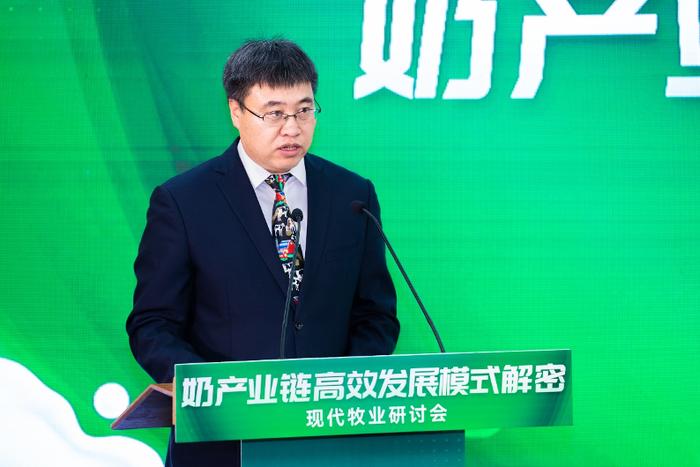
Core Viewpoint - The conference highlighted the importance of a collaborative full industry chain approach as a key to overcoming challenges in the dairy industry, emphasizing technological innovation and sustainable development as essential for future growth [3][5]. Group 1: Industry Insights - Modern Dairy's President, Sun Yugang, emphasized the significance of full industry chain collaboration for breaking through challenges in the dairy sector, showcasing the company's 20 years of experience in building a comprehensive industry chain system [3]. - The Vice President and Secretary-General of the China Dairy Industry Association, Liu Yaqing, acknowledged Modern Dairy's leadership in large-scale farming and integration of breeding and cultivation, outlining directions for the dairy industry's development, including strengthening milk source foundations and optimizing breeding structures [3]. - Experts presented insights on various aspects of the dairy industry, including carbon efficiency and low-carbon transformation strategies, highlighting the need for a collaborative approach across the entire supply chain to enhance green competitiveness [3][4]. Group 2: Technological Innovations - Modern Dairy's Vice President and Chief Engineer, Zhang Xue, discussed the dual drive of full industry chain layout and technological innovation, providing integrated pathways for cost reduction and sustainable development based on 30 years of practical experience [3]. - The Senior General Manager of Modern Dairy's Grain Source Technology Division, Jia Yutao, illustrated the potential of financial technology in reducing costs and increasing efficiency within the dairy sector [3]. - The Executive President of Inner Mongolia Cloud Raising Cattle Technology Co., Ltd., Wu Rina, emphasized the concept of "data as the new granary," which is crucial for improving ranch efficiency through streamlined information flow [3]. Group 3: Future Directions - The forum included discussions on overcoming challenges and exploring future development, with guests analyzing cost reduction, efficiency enhancement, and resilience in the dairy industry from various perspectives, including national strategy and technological innovation [4]. - The successful hosting of the seminar provided a valuable learning and exchange opportunity for dairy practitioners, reinforcing the idea that technological innovation, collaborative development, and sustainable practices are vital for the industry's long-term progress [5].

“强科普,拓销路,提信心” 第六届乳品消费研讨会成功举办
Xin Hua Wang· 2025-07-15 01:13
Core Viewpoint - The conference emphasized the importance of high-quality development in the dairy industry, addressing challenges such as consumer awareness, production standards, and trust in domestic dairy products [2][3]. Group 1: Conference Overview - The 6th Dairy Consumption Seminar was held during the 16th China Dairy Conference in Xiamen, focusing on "Strengthening Science Popularization, Expanding Sales Channels, and Enhancing Confidence" [1]. - Key figures from the National Food and Nutrition Consultation Committee, Ministry of Agriculture and Rural Affairs, and major dairy companies attended and delivered speeches [1]. Group 2: Challenges and Strategies - The dairy industry faces challenges including insufficient consumer awareness of nutritional needs, mismatched production levels, and a lack of trust in domestic dairy quality [2]. - Strategies proposed include enhancing science popularization, improving traditional and emerging sales channels, and strengthening quality control and brand building [2][3]. Group 3: Industry Development and Opportunities - The dairy industry is transitioning from rapid growth to high-quality development, with ongoing challenges in production and supply chain balance [3]. - Key industry players highlighted the need to build trust through quality, understand consumer demands, and promote health awareness through science popularization [3][4]. Group 4: Expert Insights and Reports - Various experts presented reports on topics such as AI-driven innovation, supply-demand dynamics, and opportunities in deep processing within the dairy sector [3]. - The roundtable forum featured discussions on market innovation and the importance of science communication to boost consumer confidence and consumption [4]. Group 5: Participation - Over 100 representatives from government departments, research institutions, industry associations, and dairy companies participated in the conference [5].
2024年全国牛奶产能缩减,乳品质量保持较高水平
Xin Jing Bao· 2025-07-14 13:47
Core Insights - The Chinese dairy industry is undergoing a critical transformation and upgrade period in 2024, with a slight reduction in production capacity aligned with market demand, an increase in the proportion of large-scale farming, and a sustained enhancement in overall industry quality [1] Group 1: Production and Quality - The total milk production in China reached 40.794 million tons, a year-on-year decrease of 2.8%, while dairy product output was 29.62 million tons, down 1.9% [1] - The inspection pass rate for fresh milk reached 99.96%, with quality safety indicators such as milk protein and milk fat remaining at high levels, and key monitored banned additives like melamine have not been detected for 16 consecutive years [1] Group 2: Industry Structure and Efficiency - The proportion of large-scale farms with over 100 cows has increased to 78%, up 2 percentage points year-on-year, with an average milk yield per cow of 9.9 tons, an increase of 0.5 tons from the previous year [1] - Over 99% of large-scale farms are equipped with total mixed ration (TMR) mixers, and 100% of raw milk production has achieved mechanized milking [1] Group 3: Consumption and Market Dynamics - The main business revenue of large-scale dairy processing enterprises reached 510.48 billion yuan, a year-on-year increase of 9.6%, while per capita dairy product consumption fell to 40.5 kg, a decrease of 1.9 kg from the previous year [2] - The average purchase price of raw milk in major dairy-producing provinces was 3.32 yuan per kilogram, down 13.5% year-on-year [2] Group 4: Competitive Positioning - The competitiveness of the domestic dairy industry continues to strengthen, with domestic milk testing showing compliance with Chinese, American, and EU standards for aflatoxin M1, and a 100% pass rate for heavy metal contaminants like lead, chromium, mercury, and arsenic [2] - Indicators such as lactoferrin, lactoglobulin, and glycomacropeptide in domestic milk outperform similar imported products [2]
中国奶业协会:力争2030年奶源自给率保持在70%以上
news flash· 2025-07-14 13:47
Core Viewpoint - The China Dairy Industry Association has released the "China Dairy Industry Progress 2030" report, aiming to solidify production capacity and ensure reasonable growth in dairy production [1] Production Goals - The target dairy production volume is approximately 45 million tons [1] - The self-sufficiency rate of milk sources is expected to remain above 70% [1] Industry Quality Improvement - The proportion of dairy farms with more than 100 heads of cattle is aimed to reach around 85% [1] - The average annual milk yield per cow is projected to exceed 10 tons [1]
我国力争到2030年奶业现代化水平得到全面提升
Xin Hua Wang· 2025-07-14 13:27
Core Viewpoint - The China Dairy Association has released the "China Dairy Industry Advancing Towards 2030" report, aiming for significant achievements in high-quality development and modernization of the dairy industry by 2030 [1] Group 1: Goals and Objectives - By 2030, the self-sufficiency rate of milk sources in China is expected to remain above 70%, with an average annual milk yield per cow exceeding 10 tons [1] - The product supervision and inspection pass rate is targeted to maintain above 99%, with a significant improvement in the green total factor productivity of dairy production [1] Group 2: Industry Chain Initiatives - Production initiatives include establishing a modern forage production supply system and developing high-yield, high-quality forage varieties [2] - A modern and efficient dairy cow breeding system will be established, along with suitable resource allocation for grass and livestock [2] - Processing initiatives focus on optimizing the dairy product processing and sales system, achieving breakthroughs in core raw material production and key equipment supply [2] - The integration of digital technology with production technology in dairy processing will be accelerated [2] Group 3: Consumption Strategies - The report emphasizes innovative health promotion for dairy products, enhancing domestic dairy brand development, and guiding the consumption of cheese and other dairy products [2] - The implementation of the national "Student Drinking Milk" program and stimulating health-oriented dairy consumption for the elderly are also highlighted [2] - The China Dairy Association has also released strategic development plans to guide the dairy industry's growth over the next five years [2]
20年跑赢百年差距!中国奶业逆袭之路,单产跃居全球领先梯队
Xin Lang Cai Jing· 2025-07-14 09:53
Core Insights - The report highlights China's remarkable progress in the dairy industry, showcasing that the milk yield per cow has significantly improved over the past two decades, reaching levels comparable to the United States by 2024 [1][6] - The quality of Chinese milk has also seen substantial enhancement, with key indicators surpassing EU standards, marking a shift in the global dairy competition landscape [1][7] Industry Development - The dairy industry in China has evolved from a historical context where per capita dairy consumption was low, to a critical sector for national health and economic stability, emphasizing the importance of high-quality milk supply for public health [3] - In the early 2000s, China's dairy production faced significant challenges, with average milk yield per cow at only 2,605 kg, less than one-third of the U.S. level of 8,254 kg [3][5] Technological Advancements - The transition to high-quality dairy production has been driven by technological advancements, including the introduction of mechanized milking and improved feeding practices, which have led to a notable increase in milk quality [5][8] - Leading companies like Yili have adopted advanced technologies, such as precision nutrition and automated systems, to enhance production efficiency and milk quality, positioning themselves at the forefront of the global dairy industry [8][9] Market Performance - By 2024, China's milk production is projected to reach 40.79 million tons, with a per capita consumption of 40.5 kg, a significant increase from just 0.4 kg in 1949 [9] - The self-sufficiency rate for milk has surpassed 70%, and the market share of domestic dairy products has increased to 68%, reflecting a strong domestic industry [9] Quality Assurance - Continuous monitoring of raw milk quality has been implemented for 17 years, ensuring comprehensive safety checks and compliance with international standards, with Yili's milk quality indicators consistently outperforming EU benchmarks [7][10] - The advancements in quality control have led to a significant reduction in bacterial counts in milk, demonstrating the effectiveness of modern management practices in Chinese dairy farms [7][10]
核心指标优于欧盟标准!中国奶业演绎“中国速度”
Hua Xia Shi Bao· 2025-07-14 06:21
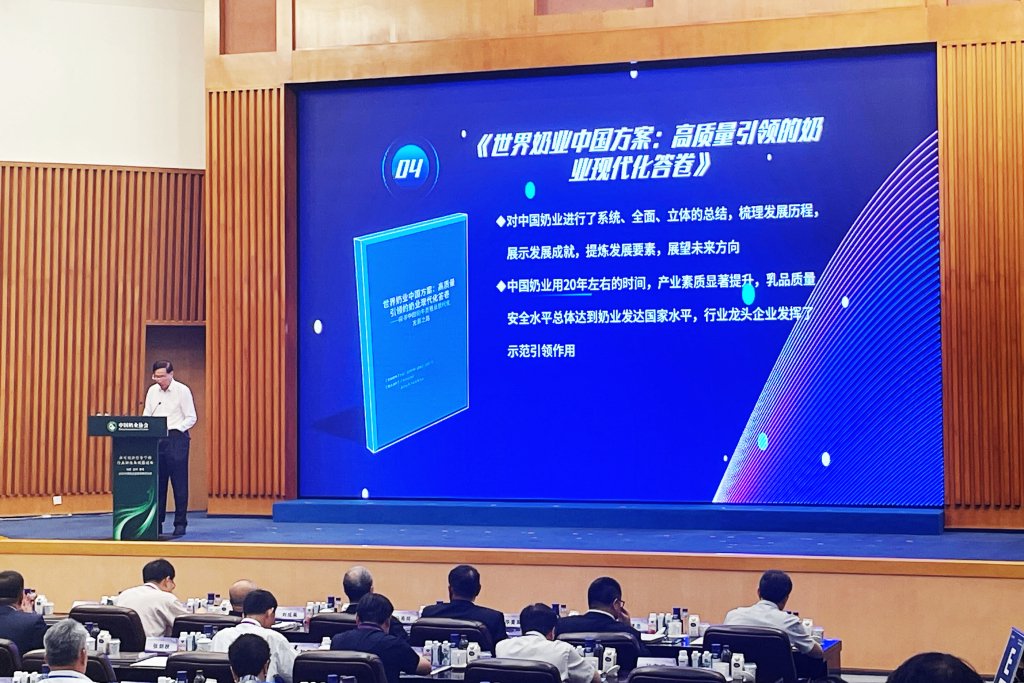
Core Insights - The Chinese dairy industry has made significant advancements over the past 20 years, closing the gap with developed countries and achieving world-class quality standards in key metrics such as protein, fat, and bacterial counts [1][3][15] - The report presented at the conference highlights the transformation of the Chinese dairy sector from a laggard to a leader, emphasizing the role of leading enterprises in driving this change [3][6][13] Industry Development - The average milk yield per cow in China has dramatically improved, reaching levels comparable to those in the United States, with projections indicating that by 2024, large-scale farms will achieve an average yield of over 10 tons per cow [5][6] - Key indicators such as protein and fat content in milk produced by large-scale farms now meet or exceed EU standards, showcasing the industry's commitment to quality [6][9] Quality Assurance - The quality of Chinese milk has become a hallmark of the industry, with rigorous monitoring systems in place that ensure safety and quality, including comprehensive testing of fresh milk for 17 consecutive years [9][10] - The bacterial count in milk from leading companies like Yili has achieved groundbreaking results, with averages significantly below the EU standard, indicating superior management and hygiene practices [10][15] Consumer Confidence - There has been a notable shift in consumer perception of Chinese milk, moving from skepticism to confidence, as evidenced by a significant increase in per capita dairy consumption, which has risen to 40.5 kg in 2024 from just 0.4 kg in 1949 [11][12] - The diversification of dairy products available in China, including cheese and butter, reflects changing consumer preferences and a growing acceptance of domestic dairy products [12] Future Outlook - Industry leaders, such as Yili, are committed to maintaining high-quality development and further enhancing consumer trust in Chinese dairy products, positioning the industry for continued growth and innovation [13][15]

原奶菌落总数迈入“千位数”时代,伊利向世界奶业提供中国方案
Cai Jing Wang· 2025-07-13 13:09
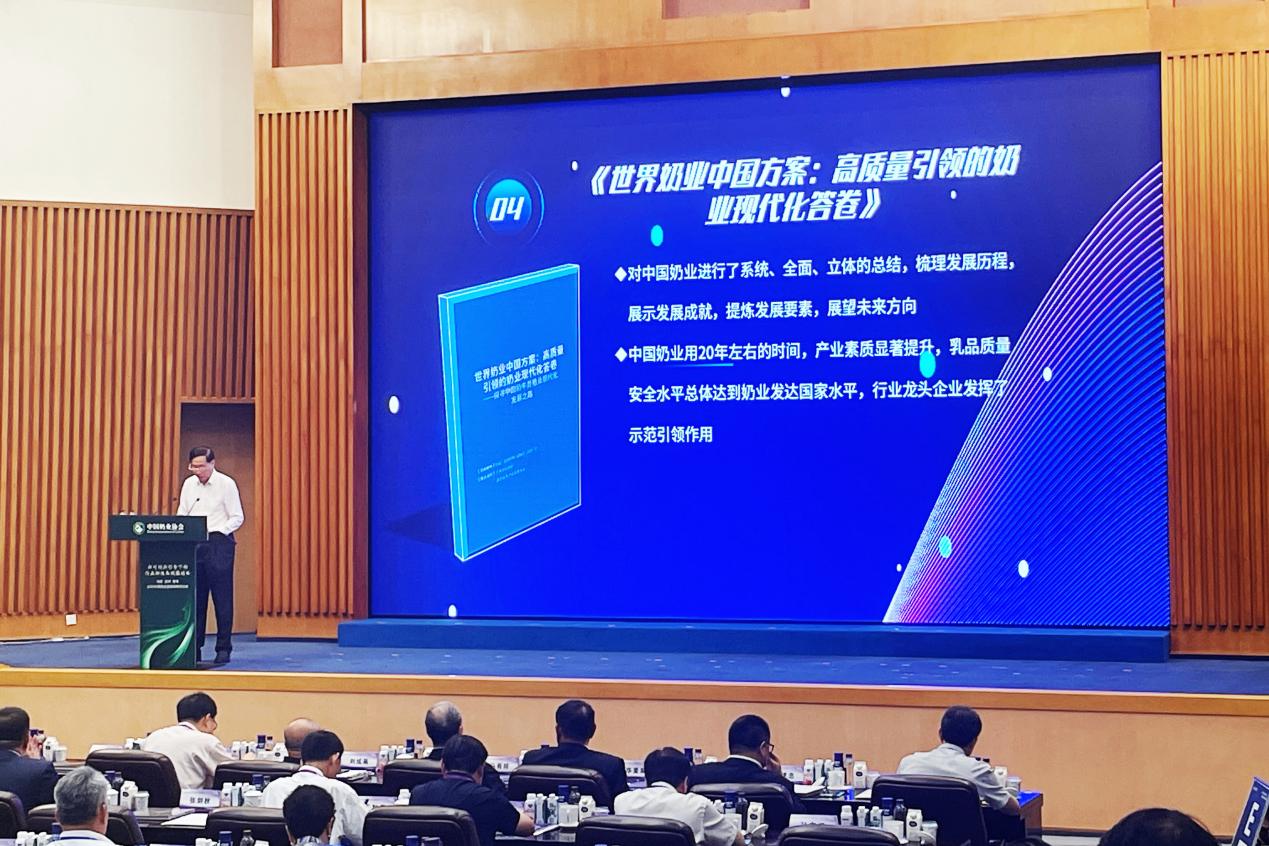
Core Viewpoint - The Chinese dairy industry has made significant advancements in scale, milk yield per cow, and raw milk quality, achieving a transformation from "catching up" to "keeping pace" and even "leading" within approximately twenty years, compared to the century-long industrialization process in developed countries [1][4]. Group 1: Dairy Production and Quality - China's milk production has stabilized among the top four globally, with a 32% increase in milk output from 2012 to 2024, reaching 40.79 million tons, while the number of dairy cows has remained relatively constant [4][5]. - The average milk yield per cow has risen from 5,500 kg/year in 2012 to 9,900 kg/year in 2024, indicating a substantial improvement in dairy farming efficiency [4][5]. - The quality of raw milk produced in China now meets EU standards for fat and protein content, with bacterial counts significantly lower than the EU limit, reflecting enhanced management and hygiene practices [1][12]. Group 2: Industry Transformation and Technological Advancements - The shift towards large-scale farming has increased the proportion of dairy farms with over 100 cows to 78%, marking a transition from small-scale to large-scale operations [5][7]. - The adoption of mechanization and digitalization in dairy farming has led to improved production efficiency and quality control, with 100% mechanization in large-scale farms [7][13]. - The integration of advanced technologies, such as automated monitoring systems and precision feeding, has further enhanced the quality of raw milk and overall farm management [13]. Group 3: Market Dynamics and Future Outlook - The domestic market for dairy products is projected to grow significantly, with retail sales expected to reach 151.6 billion yuan for liquid milk, 136.7 billion yuan for infant formula, and 99.9 billion yuan for yogurt by 2024 [14]. - Despite the positive trends, the industry faces challenges in demand stimulation and the need for continued support measures to enhance competitiveness and value addition [14]. - The Chinese dairy sector aims to establish a global presence with high-quality milk, positioning itself as a "Chinese model" in the international dairy market [14].
第一创业晨会纪要-20250711
First Capital Securities· 2025-07-11 06:24
Advanced Manufacturing Group - In June 2024, China's power battery sales reached 94.1 GWh, with a month-on-month increase of 7.6% and a year-on-year increase of 34.9% [3] - The export volume of power batteries was 15.8 GWh, showing a month-on-month growth of 17.1% and a year-on-year growth of 16.6% [3] - The installed capacity of power batteries in June was 58.2 GWh, with a month-on-month increase of 1.9% and a year-on-year increase of 35.9% [3] - Lithium iron phosphate (LFP) batteries accounted for 81.5% of the total installed capacity, with a year-on-year growth of 49.7%, indicating a strong market position [3] - The significant growth rate of LFP batteries is attributed to their cost advantages and improved performance, making them the preferred choice for most mid-to-low range electric vehicles [3] Consumer Group - The National Health Commission approved D-Allulose and other new food ingredients, which could drive the development of low-sugar and low-calorie products in the sugar substitute market [7] - The Ministry of Agriculture emphasized the need to support the dairy industry, which is showing signs of stabilization and recovery due to various supportive measures [7] - Factors such as potential production decreases due to heat stress on dairy cows and increased consumption of cold drinks are expected to positively impact the dairy market in the upcoming months [7]
去产能、进口冲击减弱后,原奶价格何时回升?
Di Yi Cai Jing· 2025-05-24 05:37
Group 1 - The raw milk industry is expected to improve in the second half of 2025 compared to the first half, following a prolonged downturn that has lasted over three years [1][3] - In 2024, the industry is projected to face a 90% loss rate, with the purchase price of raw milk falling below that of New Zealand, leading to a significant decline in domestic milk prices [1][2] - The average price of fresh milk in major producing provinces was reported at 3.07 yuan per kilogram, reflecting a 10.5% year-on-year decrease, indicating that while prices have bottomed out, there is no clear sign of recovery [2] Group 2 - The domestic milk price has fallen below international levels, with New Zealand's price at approximately 3.2 yuan per kilogram, and the prices in the US and Europe at 3.6 yuan and 4.2 yuan per kilogram respectively [3] - The number of dairy cows in China is expected to decrease by 200,000 to 300,000 heads in 2024, reversing a five-year growth trend, with total raw milk production projected to decline by 2.8% to 40.79 million tons [3] - The average daily spray-dried fresh milk from leading dairy companies decreased from 20,000 tons in April 2024 to 13,000 tons in April 2025, indicating a positive trend in supply adjustment [3] Group 3 - The market is anticipated to reach a supply-demand balance in the third quarter of 2025, driven by the exit of small farms and consumer stimulus policies [4] - The industry is advised to explore potential milk consumption, continue to reduce production capacity to achieve supply-demand balance, and expand controllable milk sources to stabilize the market [4] - Recommendations include establishing a raw milk supply quota system based on agricultural resources in various provinces to protect the interests of farmers [4]