
智能汽车

Search documents
大雨解读理想L9搞全线控底盘底层逻辑
理想TOP2· 2026-02-08 04:51
Core Viewpoint - The article emphasizes the transition from 2D Vision Transformers (ViT) to 3D ViT, highlighting the advantages of processing continuous video streams for better understanding of the physical world and improved response times in autonomous vehicles [1][2]. Group 1: Transition to 3D ViT - The traditional 2D ViT processes images in a sliced manner, limiting the information captured from each frame, while 3D ViT processes video clips, integrating spatial and temporal data for enhanced feature extraction [1][2]. - The shift to 3D ViT is not merely a conversion from 2D to 3D in terms of perspective but involves a fundamental change in feature extraction dimensions, focusing on height, width, and time [2]. Group 2: Technical Advancements - The new chip architecture, referred to as a data flow architecture, allows for direct connections between layers on the silicon chip, minimizing the need for external memory reads and writes, thus optimizing latency [2]. - The self-developed chip by the company is designed to be data-driven rather than instruction-driven, achieving higher parallelism and integrating hardware and software design from the outset [4]. Group 3: Implications for Autonomous Vehicles - The advancements in chip technology necessitate corresponding improvements in vehicle control systems, leading to the development of a fully controlled chassis for the L9 model to match the enhanced processing capabilities [3].


【AI智能汽车2月投资策略】北美L4或松绑,第三方智驾供应商多点开花,看好智能化
东吴汽车黄细里团队· 2026-02-05 11:37
Core Viewpoint - The article emphasizes the potential for L4 autonomous driving commercialization in North America, with regulatory changes allowing for a significant increase in vehicle deployment limits from 2,500 to 90,000 units. It highlights Tesla's launch of a no-safety-driver Robotaxi service in Austin and the advancements in L2-L3 autonomous driving technologies by various companies [3][10]. Investment Highlights - January's summary indicates that L4 commercialization in North America may be relaxed, with discussions on increasing the annual deployment cap for vehicles without traditional controls. Tesla has launched a no-safety-driver Robotaxi in Austin and plans to eliminate the FSD buyout model. In the L2-L3 segment, Nvidia has released an open-source autonomous driving model, Alpamayo, while companies like WeRide and Qianli Technology are launching or upgrading end-to-end solutions [3][10]. - February's focus is on monitoring the implementation of overseas L4 policies and the user experience of domestic L2-L3 intelligent vehicles. The results of the U.S. hearings are crucial, as they may lead to unified federal and state regulations. Tesla's no-safety-driver service will be closely observed for safety and reliability during this critical period [4][10]. Investment Recommendations - The company maintains a strong outlook for the L4 RoboX theme by 2026, favoring B-end software companies over C-end hardware firms. Preferred H-shares include Xpeng Motors, Horizon Robotics, WeRide, Cao Cao Mobility, and Black Sesame Intelligence, while A-shares include Qianli Technology, Desay SV, and Jingwei Hirain [5][10]. - Downstream application-related stocks are categorized into three perspectives: - Robotaxi perspective includes integrated models like Tesla and Xpeng Motors, and technology providers with revenue-sharing models such as Horizon Robotics and Baidu [5][10]. - Robovan perspective includes Desay SV and other emerging companies [6][10]. - Other autonomous vehicle perspectives cover mining trucks, ports, sanitation vehicles, and buses [6][10]. Supply Chain Insights - The upstream supply chain includes B-end autonomous vehicle OEMs like BAIC BluePark, GAC Group, and Jiangling Motors, as well as core suppliers for testing services, chips, domain controllers, sensors, and other components [6][10]. - Key suppliers for chips include Horizon Robotics and Black Sesame Intelligence, while domain controllers involve Desay SV and other companies [6][10]. Key Events Summary - Significant events in January include Nvidia's release of the open-source autonomous driving model Alpamayo and discussions in the U.S. regarding regulatory changes for autonomous vehicles. Tesla's FSD v14.2 achieved a milestone of 2 days and 20 hours of zero intervention driving across the U.S. [46][10].


雷军:新一代SU7预计2026年4月上市,小订现已开启
Sou Hu Cai Jing· 2026-02-05 04:04
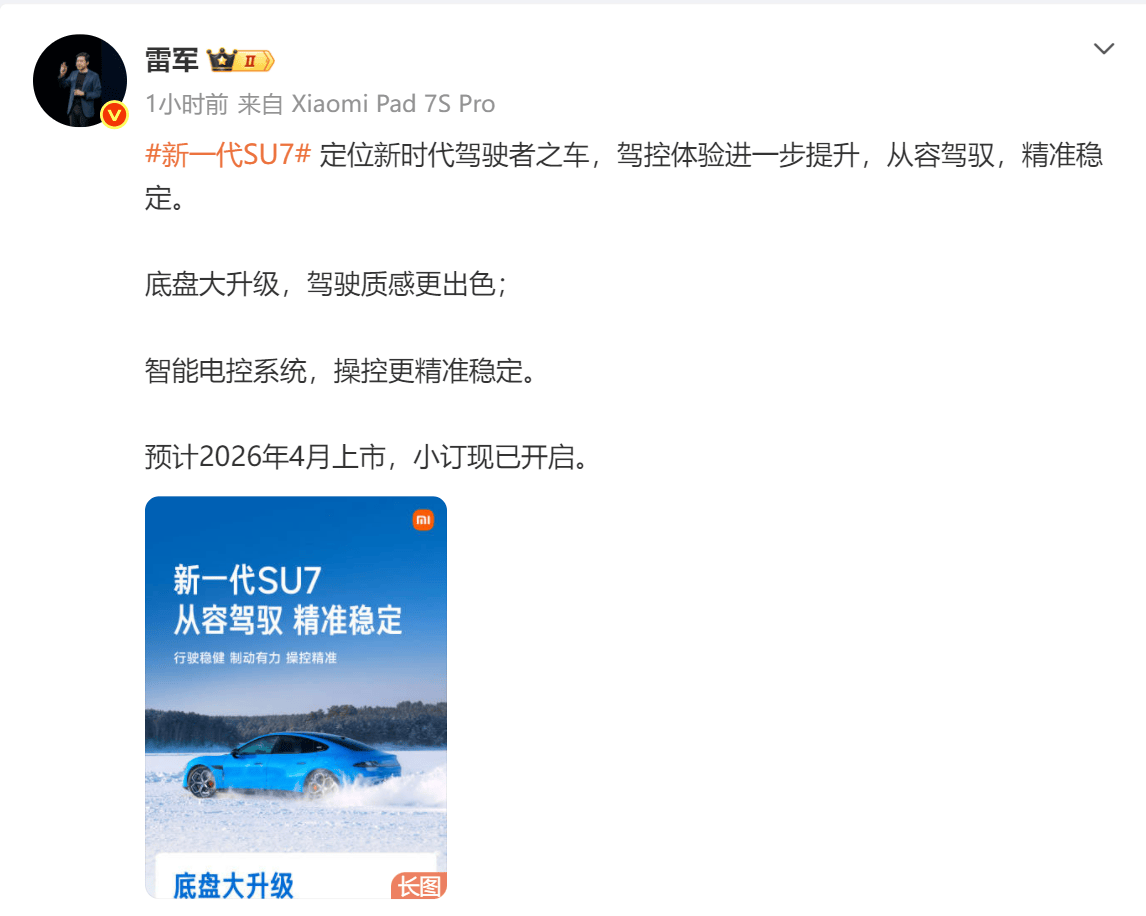
Core Viewpoint - Xiaomi's founder Lei Jun announced on Weibo that the new generation SU7 is positioned as a vehicle for the new era of drivers, emphasizing enhanced driving control and experience [1] Group 1: Product Features - The SU7 features significant upgrades to its chassis, resulting in improved driving quality [1] - The intelligent electronic control system allows for more precise and stable handling [1] Group 2: Market Launch - The SU7 is expected to be launched in April 2026, with pre-orders already open [1]

AI智能汽车2月投资策略:北美L4或松绑,第三方智驾供应商多点开花,看好智能化
Soochow Securities· 2026-02-04 13:13
Core Conclusions - The report highlights a potential loosening of regulations for L4 commercialization in North America, with discussions to increase the annual deployment limit of vehicles without traditional controls from 2,500 to 90,000 [2] - The report emphasizes the importance of monitoring the outcomes of the U.S. hearings and the potential unification of federal and state regulations, as well as the initial operational safety and reliability of Tesla's no-safety-driver Robotaxi service launched in Austin [2][11] - Investment recommendations favor B-end software companies over C-end hardware companies, with specific stock picks in both H-shares and A-shares [2] AI Smart Car Investment Framework - The report outlines a spiral upward iteration of hardware and software, indicating that each significant capability upgrade represents a paradigm shift in thinking [7] - The timeline for L1 to L4 development is projected, with significant advancements expected by 2030, particularly in the areas of E/E architecture upgrades and high-computing chips [8][10] L4 RoboX Monthly Tracking - Tesla's Robotaxi business is rapidly advancing, particularly in Austin, with plans for expansion into other regions like California and New York [22] - The report details the growth of Tesla's Robotaxi fleet, with a notable increase in operational area from 20 square miles to 243 square miles in Austin [24] - Comparatively, Waymo's operational area expansion is characterized by a more gradual approach, with a broader geographic footprint but less rapid growth in individual regions [25] L2-L3 Smartization C-end Monthly Tracking - The report forecasts a total retail sales volume of 22 million vehicles in 2026, reflecting a year-on-year decrease of 3.2% [39] - It provides detailed projections for passenger car sales, including a breakdown of domestic and new energy vehicle sales, with expected penetration rates for new energy vehicles reaching 60% by 2026 [39][41] Smartization Supply Chain Tracking - The report identifies key players in the smart vehicle supply chain, including B-end unmanned vehicle manufacturers and core upstream suppliers such as chip manufacturers and sensor providers [2] - It emphasizes the importance of collaboration between technology providers and vehicle manufacturers to enhance the overall smart vehicle ecosystem [20]
赛力斯,需要浴“火山”重生
Sou Hu Cai Jing· 2026-02-04 12:20
Core Viewpoint - The company, Seres, is at a critical juncture as it faces market challenges despite strong financial and delivery performance, leading to the establishment of a new subsidiary, "Phoenix," focused on artificial intelligence and robotics [2][18]. Group 1: Market Position and Challenges - In early 2026, Seres' stock price showed a strange divergence despite impressive sales and delivery data, indicating market anxiety [1]. - The once-dominant position of Seres' vehicle, the AITO Wenjie, is being challenged by newer models from competitors, leading to a dilution of its market appeal [5][6]. - The shift in market perception is moving Seres from a "technology stock" valuation to a "manufacturing" valuation, which could significantly impact its market value [8][12]. Group 2: Strategic Responses - The establishment of Shanghai Seres Phoenix Intelligent Technology Co., Ltd. signifies a strategic pivot towards AI and robotics, aiming to diversify beyond traditional vehicle manufacturing [2][18]. - The collaboration with ByteDance's Volcano Engine indicates a defensive strategy to enhance capabilities in AI and human-robot interaction, while still maintaining ties with Huawei [20][24]. - Seres is pursuing a dual strategy: leveraging its existing vehicle sales for cash flow while investing in AI and robotics through Phoenix and partnerships [26]. Group 3: Future Outlook - The transition from a vehicle manufacturer to a provider of intelligent systems is fraught with risks, particularly given the longer development cycles in robotics compared to automotive [27]. - The urgency for Seres to adapt is underscored by the potential for its valuation to stagnate if it remains solely focused on traditional manufacturing [26]. - The company's future hinges on its ability to innovate and maintain relevance in a rapidly evolving market, where losing the "imagination" factor could be detrimental [27].

辽宁营口一SU7起火,小米回应
Guan Cha Zhe Wang· 2026-02-04 11:47
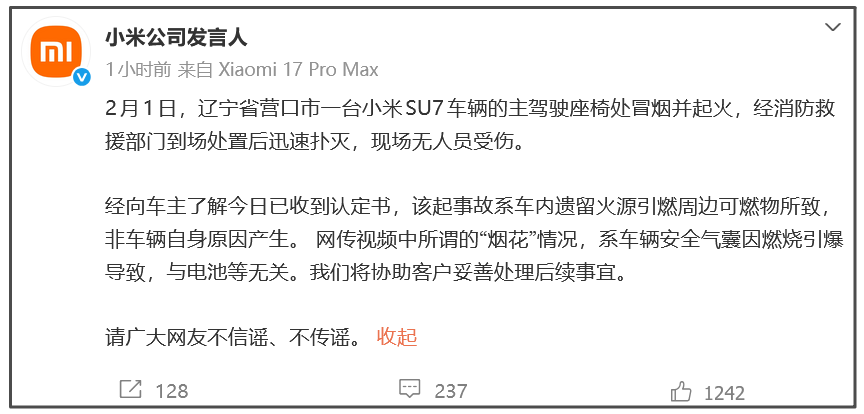
经向车主了解今日已收到认定书,该起事故系车内遗留火源引燃周边可燃物所致,非车辆自身原因产生。 网传视频中所谓 的"烟花"情况,系车辆安全气囊因燃烧引爆导致,与电池等无关。我们将协助客户妥善处理后续事宜。 请广大网友不信谣、不传谣。 2月4日,@小米公司发言人 回应"辽宁营口一SU7起火": 2月1日,辽宁省营口市一台小米SU7车辆的主驾驶座椅处冒烟并起火,经消防救援部门到场处置后迅速扑灭,现场无人员 受伤。 ...
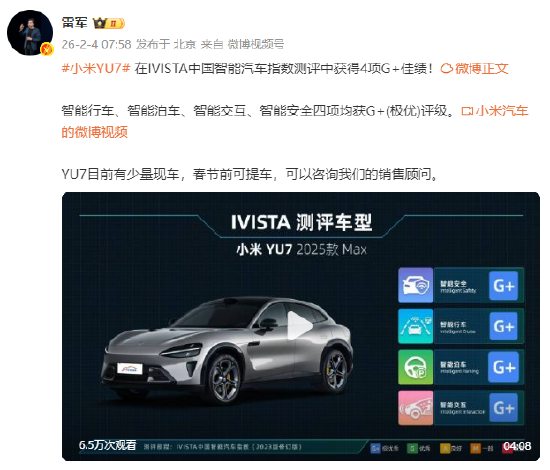
雷军:小米YU7在IVISTA中国智能汽车指数测评中获得4项G+佳绩
Xin Lang Cai Jing· 2026-02-04 01:56
小米创办人雷军今日发文称,小米YU7在IVISTA中国智能汽车指数测评中获得4项G+佳绩! 据悉,该项测评包括智能安全(主动安全)、智能行车(行车辅助、领航行车辅助)、智能泊车(泊车 辅助、记忆泊车)、智能交互(语音触屏、乘员检测)等四大分指数测评。小米YU7 获得4项全部G+ (极优)的成绩。 责任编辑:王翔 小米创办人雷军今日发文称,小米YU7在IVISTA中国智能汽车指数测评中获得4项G+佳绩! 据悉,该项测评包括智能安全(主动安全)、智能行车(行车辅助、领航行车辅助)、智能泊车(泊车 辅助、记忆泊车)、智能交互(语音触屏、乘员检测)等四大分指数测评。小米YU7 获得4项全部G+ (极优)的成绩。 责任编辑:王翔 ...
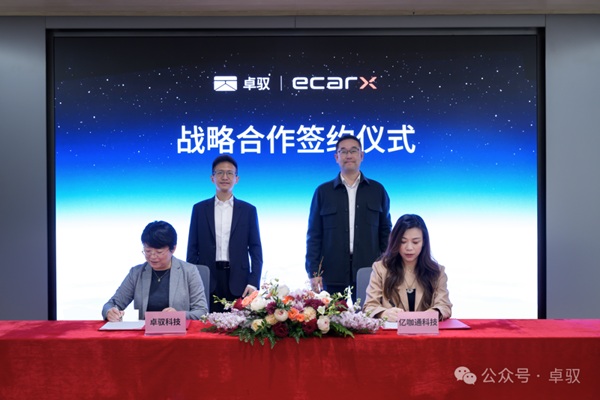
卓驭科技:携手亿咖通、芯擎科技 共研下一代智能汽车中央计算平台
Zhong Guo Qi Che Bao Wang· 2026-02-03 10:04
Core Viewpoint - Zhuoyu Technology has signed strategic cooperation agreements with Yikaton Technology and Chipking Technology to advance the development and mass production of next-generation intelligent automotive electronic and electrical architectures, focusing on central computing platforms and high-level intelligent solutions [1][6]. Group 1: Cooperation with Yikaton Technology - The collaboration with Yikaton Technology focuses on the joint development of high-performance central computing platforms, integrating both companies' core technological advantages [3]. - Zhuoyu Technology will leverage its expertise in intelligent driving assistance systems and self-developed hardware platforms, while Yikaton Technology will contribute its leading capabilities in vehicle chip integration and the Flyme Auto intelligent cockpit system [3]. - The partnership aims to create highly integrated, AI-driven cross-domain products and develop cost-competitive mass production solutions to maximize market value [3]. Group 2: Cooperation with Chipking Technology - The partnership with Chipking Technology aims to deeply integrate "chip computing power + system algorithms" to create a sustainable, high-security integrated platform for advanced intelligent vehicles [5]. - This collaboration represents a key synergy between the intelligent driving assistance system sector and the high-performance automotive chip sector, establishing a solid computing foundation for central computing architectures [5]. - The agreement emphasizes the development of high-performance, reliable, and long-evolving mass production solutions for the intelligent automotive sector [5]. Group 3: Industry Ecosystem and Future Plans - Zhuoyu Technology adheres to an open and collaborative industry ecosystem philosophy, actively engaging with excellent partners in the industry to promote the innovation and popularization of intelligent driving technology [6]. - The strategic partnerships with Yikaton Technology and Chipking Technology are part of Zhuoyu Technology's efforts to build a diversified cooperation ecosystem, achieving technological complementarity and resource sharing [6]. - The company expresses its commitment to continue fostering open cooperation and looks forward to collaborating with more industry partners to provide flexible and implementable intelligent solutions for global automotive manufacturers [6].
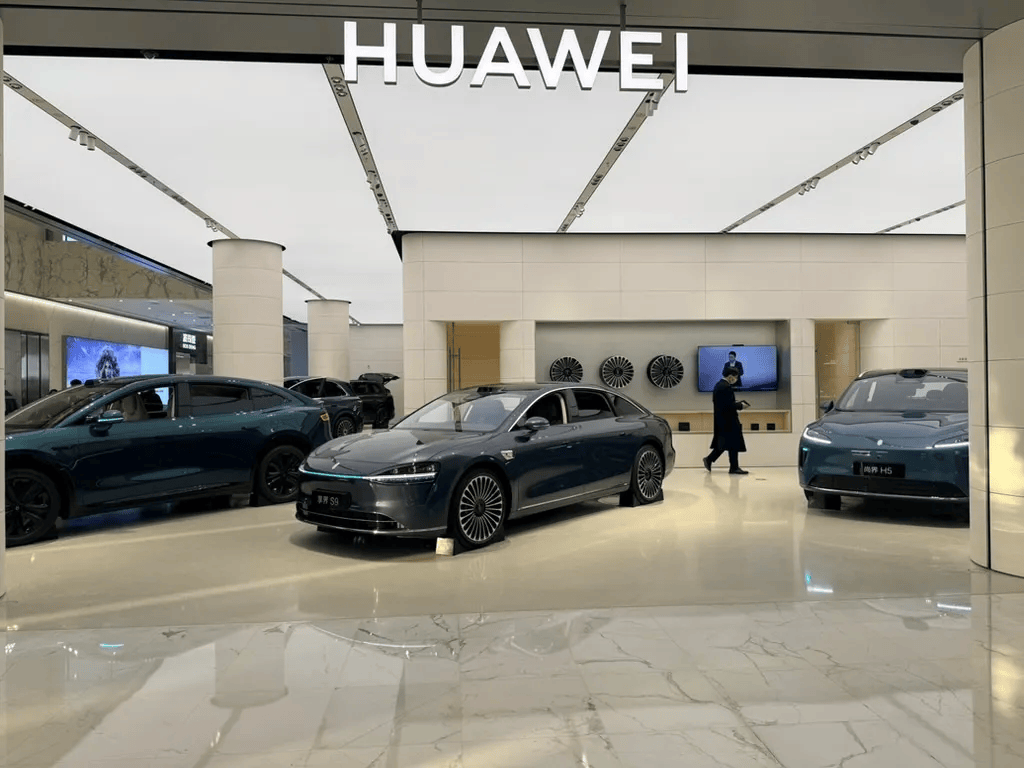
鸿蒙智行生态持续扩容
Zheng Quan Ri Bao· 2026-02-02 16:43
Group 1 - The core viewpoint of the articles highlights the rapid development and expansion of Hongmeng Zhixing, with significant milestones in charging infrastructure and vehicle deliveries [1][2]. - As of February 2, Hongmeng Zhixing announced that the number of charging guns has surpassed 1.6 million, and the number of charging stations has exceeded 160,000 [1]. - In January 2026, Hongmeng Zhixing delivered a total of 57,915 vehicles, marking a year-on-year growth of 65.6% [1]. - The company aims to achieve a total delivery of 589,107 vehicles in 2025, with cumulative deliveries exceeding one million [1]. - Hongmeng Zhixing plans to launch over 10 new vehicle models in 2026, covering various types including MPVs, sedans, and SUVs, in collaboration with multiple car manufacturers [1][2]. Group 2 - The strategic direction for Hongmeng Zhixing includes high-end and personalized development, targeting market segments ranging from 200,000 to 1 million yuan [2]. - The technological upgrades in 2026 will focus on three main areas: intelligent driving, cabin experience, and power replenishment [2]. - The charging service has expanded to over 350 cities and 2,700 counties, with more than 5,000 highway service areas covered [2]. - The company has deployed over 120,000 fast charging stations and more than 7,000 super charging stations, achieving a charging speed of "1 second per kilometer" [2]. - To support the ambitious sales target of one million vehicles, partner manufacturers are accelerating their production capacity [2]. Group 3 - Despite the differentiation in pricing among the "Five Realms," all models are deeply integrated with Huawei's intelligent technology, necessitating ongoing exploration to avoid homogenization and establish clear brand recognition [3]. - The integration of new sales channels, including over 100 dealer applications for the "Xiangjie" brand, will directly impact user experience and brand image in the high-end market [3]. - The seamless service experience across different brands within the Hongmeng Zhixing ecosystem will be a critical factor in determining the success of this extensive alliance [3].
智能汽车系列报告(九):特斯拉高资本支出引领车企AI布局转型
Shanghai Aijian Securities· 2026-02-02 13:41
证券研究报告 行业研究 / 行业点评 2026 年 02 月 02 日 汽车 徐姝婧 S0820124090004 021-32229888-25517 xushujing@ajzq.com 行业及产业 特斯拉高资本支出引领车企 AI 布局转型 资料来源:聚源数据,爱建证券研究所 相关研究 《2026 年汽车行业策略:智能化+全球化驱动, 把握结构性机会》2026-01-28 《智能汽车产业深度研究:L3 车型产品准入, 智能汽车发展加速》2025-12-31 《L3 准入落地,华为系景气度提升——智能汽 车系列报告(八)》2025-12-30 《首批 L3 级自动驾驶车型获准入——智能汽 车系列报告(七)》2025-12-23 《高阶智驾准入,Robotaxi 商业化提速—— Robotaxi 产业深度报告》2025-12-23 吴迪 S0820525010001 021-32229888-25523 wudi@ajzq.com 爱建证券有限责任公司 ——智能汽车系列报告(九) 一年内行业指数与沪深 300 指数对比走势: 强于大市 投资要点: 事件:1 月 29 日,特斯拉发布 2025 年度报告。公司短 ...