
炼化

Search documents
PX、PTA创近一年新高 荣盛石化产能规模全球最大
Quan Jing Wang· 2025-12-29 01:01
Group 1 - Recent price increases in PX and PTA futures have drawn significant market attention, with PX futures reaching a high of 7618 yuan/ton and PTA futures surpassing 5300 yuan/ton, both marking nearly one-year highs [1] - Rongsheng Petrochemical, as one of the largest PX and PTA producers globally, holds a leading position with a PX capacity of 10.4 million tons, accounting for approximately 24% of the national total [1] - The PTA production capacity in China is highly concentrated, with the top three companies holding about 52% of the total capacity, and Yisheng Petrochemical, a joint venture involving Rongsheng, being the largest PTA producer with a capacity of 2.15 million tons [1] Group 2 - The industry has experienced significant expansion since 2019, with production capacity doubling from 46.69 million tons to over 94.7 million tons by 2025, but no new capacity is expected in 2026, easing supply pressures [1][2] - As of December, PTA inventory levels are low, and the overall market fundamentals remain stable, with a decrease in PTA operating rates from 83.7% to around 78.8% since late October [2] - Rongsheng Petrochemical is actively transitioning towards high-value chemical new materials, with its subsidiary making progress in fine chemicals and new materials, reflecting a strong performance with a net profit of 286 million yuan in Q3 2025, a year-on-year increase of 1427.94% [2] Group 3 - The outlook for 2026 indicates no new PTA capacity and concentrated PX capacity additions in the second half, leading to an improved supply-demand balance [3] - The industry is shifting focus from capacity expansion to enhancing efficiency and transformation, as emphasized by a joint policy from six departments, which is expected to accelerate market share concentration towards leading companies [3] - Rongsheng Petrochemical's advanced capacity advantages are being amplified, positioning the company at the forefront of the new industry cycle [3]

大炼化周报:PTA供应端发生变化,产品价格上涨-20251228
Soochow Securities· 2025-12-28 05:19
1. Report Industry Investment Rating - No industry investment rating information is provided in the report. 2. Core Viewpoints - The report presents a weekly analysis of the large refining and chemical industry, covering data on key domestic and foreign refining projects, the polyester, refining, and chemical sectors, as well as performance and profit forecasts of relevant listed companies [2]. 3. Summary by Related Catalogs 3.1 Big Refining Weekly Data Briefing - **Stock Price and Market Performance**: The report tracks the stock price changes of six major private refining and chemical companies in the past week, month, three - month, and one - year periods. For example, from 2025/12/26, Rongsheng Petrochemical had a weekly increase of 12.1%, a monthly increase of 16.4%, a three - month increase of 16.9%, and a one - year increase of 21.6% [8]. - **Profit Forecast**: It provides profit forecasts for these six companies from 2024 to 2027, including归母净利润, PE, and PB. For instance, Hengli Petrochemical's 2024A归母净利润 was 7044 million yuan, and it is expected to reach 10657 million yuan in 2027E [8]. - **Oil Prices and Refining Spreads**: International crude oil prices (Brent and WTI) showed an increase this week. The average price of Brent was 61.7 dollars/barrel, with a week - on - week increase of 2.7%. The average price of WTI was 57.7 dollars/barrel, with a week - on - week increase of 2.5%. The spread of domestic refining projects was 2640.2 yuan/ton, with a week - on - week decrease of 0.1%. The spread of foreign refining projects was 1254.1 yuan/ton, with a week - on - week decrease of 3.5% [8]. - **Polyester Sector**: - **Upstream Products**: The average price of PX was 903.0 dollars/ton, with a week - on - week increase of 64.4 dollars/ton. The average price of MEG was 3616.4 yuan/ton, with a week - on - week decrease of 19.3 yuan/ton. The average price of PTA was 4990.0 yuan/ton, with a week - on - week increase of 345.0 yuan/ton [10]. - **Polyester Filament**: The average prices of POY, FDY, and DTY increased, but their profits decreased. For example, the average price of POY was 6385.7 yuan/ton, with a week - on - week increase of 92.9 yuan/ton, but the profit per ton decreased by 130.9 yuan. The inventory of FDY decreased by 8.2 days, and the inventory of DTY decreased by 3.0 days [10]. - **Short Fiber and Bottle Chip**: The average price of polyester short fiber was 6404.3 yuan/ton, with a week - on - week increase of 137.1 yuan/ton, and the profit per ton decreased by 101.5 yuan. The average price of polyester bottle chip was 5900.0 yuan/ton, with a week - on - week increase of 224.3 yuan/ton, and the profit per ton decreased by 42.7 yuan [10]. - **Downstream Products**: The inventory of weaving enterprises increased by 0.2 days, and the operating rate decreased by 2.2 percentage points [10]. - **Refining Sector**: The prices of gasoline, diesel, and aviation kerosene in China and the US decreased this week, while in Europe, the prices of gasoline, diesel, and aviation kerosene showed a mixed trend, and in Singapore, the prices of gasoline, diesel, and aviation kerosene decreased [10]. - **Chemical Sector**: The prices and spreads of various chemical products changed. For example, the price of EVA photovoltaic material decreased by 339 yuan/ton, and the price of LLDPE decreased by 197 yuan/ton [10]. 3.2 Big Refining Weekly Report - **Big Refining Index and Project Spread Trends**: The report may analyze the trends of the big refining index and the spreads of key domestic and foreign refining projects, but specific analysis content is not provided [12]. - **Polyester Sector**: It includes the price, profit, inventory, and operating rate of various products in the polyester industry chain, as well as the relationship between polyester filament and downstream weaving operating rates [12]. - **Refining Sector**: It analyzes the price and spread changes of refined oil products in different regions such as China, the US, Europe, and Singapore [12]. - **Chemical Sector**: It presents the price and spread changes of various chemical products [12].


PX、PTA价格创近一年新高 民营大炼化龙头产能优势凸显
Zhong Guo Hua Gong Bao· 2025-12-26 11:08
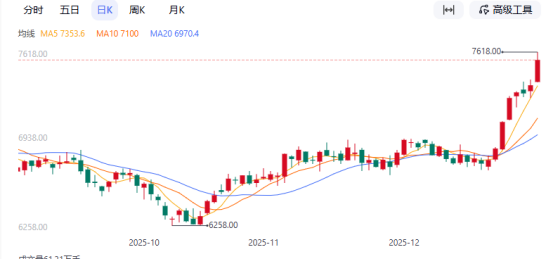
Core Viewpoint - The recent surge in domestic PX (para-xylene) and PTA (purified terephthalic acid) futures prices is attributed to multiple favorable factors, including global energy restructuring, optimized supply capacity, and ongoing industrial policy support [1][3]. Group 1: Price Trends - On December 26, PX futures rose by 4% to a peak of 7618 yuan/ton, while PTA futures surpassed 5300 yuan/ton, both reaching nearly one-year highs [1]. - The PX industry chain is becoming a significant profit breakthrough point in the refining sector, with expectations of high profitability due to limited supply growth and recovering demand [4]. Group 2: Supply and Demand Dynamics - Global PX capacity is expected to see no new additions in 2024 and 2025, with new projects planned for late 2026, creating a supply gap in the first half of 2026 [4]. - The current PX industry capacity utilization rate has exceeded 85%, indicating limited supply elasticity [4]. - The textile and apparel sectors in China and the U.S. may experience a replenishment wave in 2026, further driving demand for PX and its downstream products [4]. Group 3: Industry Structure - The domestic PX and PTA industries exhibit significant concentration, with the top three PX producers accounting for 54% of total capacity by the end of 2025 [6]. - Major PX producers include Rongsheng Petrochemical (1040 million tons), Sinopec (750 million tons), and PetroChina (630 million tons) [7]. - The PTA industry also shows high concentration, with the top three companies holding 52% of total capacity, led by Yisheng Petrochemical (2150 million tons) [8]. Group 4: Market Performance - Leading companies in the PX and PTA sectors have seen their stock prices rise significantly, with Rongsheng Petrochemical, Hengyi Petrochemical, and Hengli Petrochemical experiencing increases of 17.26%, 21.63%, and 15.42% respectively over the past two weeks [9]. Group 5: Future Outlook - The supply-demand landscape for PX and PTA is expected to continue optimizing into 2026, with no new PTA capacity and a focus on existing competition [10]. - The "anti-involution" policy is likely to lead to a contraction in supply, further improving the industry structure [10]. - Companies with integrated "crude oil-aromatic-PTA-polyester" supply chains, such as Rongsheng Petrochemical, are positioned to benefit significantly from the improving industry cycle [10].

和讯投顾孔晓云:7连阳的市场蕴含何种机会?
Sou Hu Cai Jing· 2025-12-25 10:59
七连阳的市场蕴含何种机会?和讯投顾孔晓云表示,今天在没有外资的情况下,盘面是放量收红,早盘 商业航天继续涨到大家头晕目眩的强劲格局,下午盘面先拉资源,后拉科计,明天八连阳会不会来谁也 说不好,但至少这种波段连续上涨,已经让市场情绪暖和起来了,给人感觉春季是不是在悄悄预热了, 等外资过完节回来,量能可能进一步的放大,市场向上的空间呢或许还能打开。 当前离岸美元对软民币汇率已踏入60关口,回顾过去20年7轮升值周期,约19%的行业会因为升值带来 利润率提升,更关键的因素可能来自政策应对,预示明年货币政策可能更容易超预期宽松,这对于激发 内需板块带动市场再上一个台阶有重要的意义。 具体配置方向可关注以下三条主线。例如短期进入记忆的品种,航空、燃气、造纸等在成本端或外债端 直接受益,股价弹性较高,利润率驱动品种上游的资源品和原材料,包括钢铁、有色、石油、炼化、基 础化工、建材、内需消费品,比如农产品服务业相关品种,比如航运进口等跨境电商。制造设备主要是 工程机械政策驱动品种,受益于潜在货币宽松的免税,以及受益于可能资本账户开放的券商保险全球化 潜力释放。 ...
华泰证券:2026年PX行业高景气或将延续,国内炼化龙头企业有望受益
Xin Lang Cai Jing· 2025-12-25 00:27
华泰证券研报表示,我国PX行业集中度较高,截至2025年11月按权益产能计算的CR5为62%,主要企业 及产能包括荣盛石化680万吨、中国石化611万吨、恒力石化520万吨、中国石油477万吨、连云港某厂 400万吨,此外桐昆股份因持有20%浙石化股权,拥有196万吨权益产能。考虑2026年国内无明确PX新 增产能,美联储降息对全球宏观经济及出行需求的刺激或将逐步显现,海外汽柴油价差提升或施压PX 装置负荷,华泰证券认为2026年海内外PX供需或将维持紧平衡,行业高景气有望延续,具备PX产能的 炼化一体化龙头企业有望受益。 ...

PX、PTA创10个月新高 炼化巨头荣盛石化盈利弹性加速释放
Quan Jing Wang· 2025-12-24 05:25
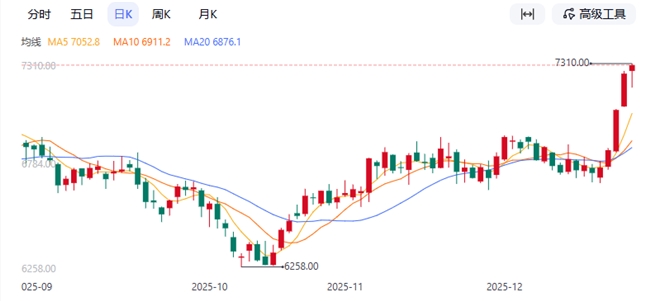
PX与PTA期货价格近期强势上涨。12月23日,PX主力合约突破7300元/吨,PTA主力合约站上5000元/ 吨,均创近10个月新高。市场分析认为,本轮上涨主要受全球能源格局调整、供给增长受限及下游补库 预期等多重因素驱动。 2025年第三季度,公司归母净利润为2.86亿元,同比增长1427.94%,环比增长1992.91%,展现了极强的 业绩弹性。受益于行业景气度回升,荣盛石化股价亦同步走强。12月22日,荣盛石化单日大涨6.42%, 恒逸石化与恒力石化分别上涨6.03%、4.54%。 在此轮行业上行周期中,具备全产业链布局的巨头企业尤为值得关注。荣盛石化作为全球最大的PX、 PTA生产商之一,其产能优势与行业地位突出。据中证鹏元研报,荣盛石化以1040万吨的PX产能位居 全国首位,约占全国总产能的24%,中国石化与中国石油则分别约占16%、14%。PTA产能分布同样高 度集中,据化纤信息网(CCF)数据,截至2025年11月底,国内PTA总产能突破9470万吨,前三名企业产 能合计约占全国总产能的52%。其中,逸盛石化(由荣盛石化与恒逸石化合资建立)以2150万吨总产能 位居首位,占全国总产能的23%, ...
PX、PTA创10个月新高 民营大炼化龙头价值迎重估
Cai Fu Zai Xian· 2025-12-24 05:00
Core Viewpoint - The recent surge in domestic PX (para-xylene) and PTA (purified terephthalic acid) futures prices is attributed to multiple favorable factors, including global energy restructuring, optimized supply capacity, and ongoing industrial policy support [5][6]. Group 1: Price Trends - On December 23, PX futures surpassed 7300 yuan/ton, while PTA futures exceeded 5000 yuan/ton, both reaching nearly 10-month highs [1]. - The PX industry chain is becoming a significant profit breakthrough point for the refining sector, with expectations of high profitability due to limited supply growth and recovering demand [6]. Group 2: Supply and Demand Dynamics - Global PX capacity is expected to see no new additions in 2024 and 2025, with new projects planned for late 2026, creating a supply gap in the first half of 2026 [6][11]. - The current PX industry capacity utilization rate has risen to over 85%, indicating limited supply elasticity [6]. - The textile and apparel sectors in China and the U.S. may experience a synchronized inventory replenishment in 2026, further boosting demand for PX and PTA [7]. Group 3: Industry Structure and Market Leaders - The domestic PX and PTA industries exhibit significant concentration, with the top three companies holding 54% of the total PX capacity and 52% of the total PTA capacity by the end of 2025 [8][9]. - Major players include Rongsheng Petrochemical, Sinopec, and PetroChina in the PX sector, and Yisheng Petrochemical, Hengli Petrochemical, and Xin Fengming in the PTA sector [9][10]. Group 4: Market Outlook - The supply-demand landscape for PX and PTA is expected to continue optimizing into 2026, with a generally optimistic market outlook [11]. - The absence of new PTA capacity will lead to a focus on existing capacity, potentially accelerating the exit of high-cost older capacities [11]. - Companies with integrated "crude oil-aromatic-PTA-polyester" supply chains, such as Rongsheng Petrochemical, are positioned to benefit significantly from the improving industry cycle [11].
申万宏源证券晨会报告-20251224
Shenwan Hongyuan Securities· 2025-12-24 00:42
Group 1: Refining Industry Overview - The refining industry is expected to improve as costs have returned to a comfortable zone, with oil prices stabilizing in a neutral range due to OPEC's production increases and rising non-OPEC output [11] - Current refining product demand is at historically low levels, providing a high safety margin for future performance improvements [11] - Capital expenditure growth in the refining sector is slowing, with some companies nearing the end of their capital spending cycles, which may lead to sustained high dividend levels and potential increases in dividend yields as performance improves [11] Group 2: Investment Analysis - The refining sector is facing both opportunities and challenges, with a significant recovery potential in profitability as the competitive landscape becomes more favorable for leading companies [11] - The demand for refined oil products is expected to decline, accelerating the transition to chemical products, while the supply of olefins is slowing, indicating a potential recovery in profitability [11] - Investment recommendations include focusing on high-quality private refining companies such as Hengli Petrochemical, Rongsheng Petrochemical, and Dongfang Shenghong, as well as state-owned refineries like Huajin Co [11] Group 3: AI Industry Insights - ByteDance's AI strategy focuses on enhancing multi-modal agent capabilities and cost advantages, aiming to optimize complex task handling and multi-modal interactions [10] - The company is leveraging its C-end business to support model training, creating a feedback loop that enhances its AI capabilities [14] - The competitive landscape in the AI cloud market shows ByteDance's Volcano Engine leading in the MaaS segment, driven by its model capabilities and competitive pricing [14]
成本端支撑减弱,长丝价格下滑 | 投研报告
Zhong Guo Neng Yuan Wang· 2025-12-22 02:03
东吴证券近日发布大炼化周报:国内重点大炼化项目本周价差为2674元/吨,环比+104元/吨(环比 +4%);国外重点大炼化项目本周价差为1305元/吨,环比-24元/吨(环比-2%)。本周PX均价为838.6美 元/吨,环比+1.7美元/吨,较原油价差为400.0美元/吨,环比+15.7美元/吨,PX开工率为89.2%,环比 +0.0pct。 以下为研究报告摘要: 【相关上市公司】民营大炼化&涤纶长丝:恒力石化、荣盛石化、恒逸石化、桐昆股份、新凤鸣。 投资要点 【风险提示】1)项目实施进度不及预期;2)宏观经济增速下滑,导致需求复苏弱于预期;3)地缘风 险演化导致原材料价格波动;4)行业产能发生重大变化;5)统计口径及计算误差。(东吴证券 陈淑 娴,周少玟) 【国内外重点炼化项目价差跟踪】国内重点大炼化项目本周价差为2674元/吨,环比+104元/吨(环比 +4%);国外重点大炼化项目本周价差为1305元/吨,环比-24元/吨(环比-2%)。 【聚酯板块】本周POY/FDY/DTY行业均价分别为6293/6536/7686元/吨,环比分别-111/-125/-61元/吨, POY/FDY/DTY行业周均利润为 ...
大炼化周报:成本端支撑减弱,长丝价格下滑-20251221
Soochow Securities· 2025-12-21 13:30
1. Report Industry Investment Rating No industry investment rating information is provided in the report. 2. Core View of the Report The report focuses on the weekly data of the large refining and chemical industry, showing that the cost - side support has weakened and filament prices have declined. It also analyzes the price, profit, inventory, and other indicators of different sectors such as refining, polyester, and chemicals, and tracks the performance and profit forecasts of relevant listed companies [1][2]. 3. Summary According to Relevant Catalogs 3.1 Big Refining Weekly Data Briefing - **Stock Price and Market Value of Listed Companies**: The report tracks the stock price changes of six major private refining and chemical companies in the past week, month, three - month, one - year, and from the beginning of 2025 to the present. For example, the oil and petrochemical index rose 1.6% in the past week, while Rongcheng Petrochemical rose 5.1%. It also provides the stock price, total market value, and profit forecasts of these companies from 2024A to 2027E [7]. - **Oil Price and Refining Spread**: The average price of Brent crude oil this week was $60.1 per barrel, a decrease of $1.9 ( - 3.1%) compared to the previous week, and a decrease of 18.4% compared to the same period last year. The average price of WTI crude oil was $56.3 per barrel, a decrease of $2.0 ( - 3.4%) compared to the previous week, and a decrease of 20.1% compared to the same period last year. The spread of domestic refining projects this week was 2,673.8 yuan/ton, an increase of 104.3 yuan/ton (4.1%) compared to the previous week, and an increase of 6.7% compared to the same period last year. The spread of foreign refining projects was 1,305.4 yuan/ton, a decrease of 23.6 yuan/ton ( - 1.8%) compared to the previous week, and an increase of 26.5% compared to the same period last year [7]. - **Polyester Sector**: The average prices of POY, FDY, and DTY in the industry this week were 6,292.9 yuan/ton, 6,535.7 yuan/ton, and 7,685.7 yuan/ton respectively, with week - on - week decreases of 110.7 yuan/ton, 125.0 yuan/ton, and 60.7 yuan/ton. The weekly average profits were - 58.4 yuan/ton, - 162.7 yuan/ton, and 3.2 yuan/ton respectively, with week - on - week decreases of 75.4 yuan/ton, 84.9 yuan/ton, and 42.2 yuan/ton. The inventory days were 19.0 days, 24.3 days, and 24.9 days respectively, with week - on - week increases of 2.3 days, 2.1 days, and 1.0 days. The filament operating rate was 89.1%, a decrease of 0.7 percentage points compared to the previous week [2][8]. - **Refining Sector**: The prices of gasoline, diesel, and jet fuel in China and the United States decreased this week [2]. - **Chemical Sector**: The average price of PX this week was $838.6 per ton, an increase of $1.7 compared to the previous week, and the spread compared to crude oil was $400.0 per ton, an increase of $15.7 compared to the previous week. The PX operating rate was 89.2%, unchanged from the previous week [2]. 3.2 Big Refining Weekly Report - **2.1 Big Refining Index and Project Spread Trends**: The report may show the trends of the big refining index and project spreads, but specific data and analysis are not detailed in the provided text, only the titles of relevant charts are given [10][11]. - **2.2 Polyester Sector**: It mainly analyzes the price, profit, inventory, operating rate, and sales - to - production ratio of various products in the polyester sector, including PX, PTA, MEG, POY, FDY, DTY, polyester staple fiber, polyester bottle chips, etc. For example, it studies the relationship between the price of PX and crude oil, the profit of PTA, and the inventory of filament products [22][23]. - **2.3 Refining Sector**: It is divided into domestic, US, European, and Singaporean refined oil markets, analyzing the price and spread of gasoline, diesel, and jet fuel in these regions compared to crude oil [80][92]. - **2.4 Chemical Sector**: It analyzes the price and spread of various chemical products such as EVA photovoltaic materials, pure benzene, styrene, etc., compared to crude oil [129][130].