绿色金融

Search documents
沙特已占中东绿色金融市场的三分之二
Shang Wu Bu Wang Zhan· 2025-12-11 03:01
2024年3月,沙特财政部发布了一项绿色金融框架,列出了八类可通过绿色债券发行融资的项目。这些 项目涵盖了支持清洁交通、可再生能源、适应气候变化等各项举措。沙特资本市场管理局(CMA)今 年发布了绿色和可持续债券发行规则指南,并在沙特证券交易所(Tadawul)建立了碳信用额数字交易 平台。2022年10月,沙特公共投资基金(PIF)发行了首批绿色债券,分三期发行,其中一期期限为100 年,共吸引认购180亿美元。 法利赫指出,沙特在减少碳排放方面取得的进展速度超过了预期目标,正朝着2060年实现碳中和的目标 迈进。为了实现这一目标,沙特将在2030年前或之后不久投资约1万亿美元用于基础设施建设,其中近 一半的资金将由私营部门承担。 经济报12月9日报道,沙特投资大臣法利赫表示,今年沙特绿色投资和可持续金融发行额已达120亿美 元。沙特已占据中东绿色金融市场三分之二的份额。 ...
全球协同 气候投融资和新质生产力实现双向赋能
Xin Hua Cai Jing· 2025-12-10 14:07
Group 1 - The conference held in Guangzhou focused on "green development opportunities and pathways," emphasizing the importance of high-tech, high-efficiency, and low-emission production as a core driver for addressing climate constraints and economic growth [1] - The global climate investment and financing demand is expanding, necessitating international cooperation and coordination to improve the climate investment environment [2] - The Silk Road Fund's sustainable investment reached $4 billion by June 2025, accounting for 25% of total investments, targeting renewable energy, transportation infrastructure, and other low-carbon development sectors [2] Group 2 - Climate investment and financing are seen as a crucial link between ecological protection and economic growth, serving as "financial lifeblood" for green technology innovation and industry cluster development [3] - The development of international climate investment and financing standards is essential for reducing cross-border transaction costs and enhancing regulatory predictability [4] - Financial innovation and risk-sharing mechanisms are necessary to support early-stage green technology projects, thereby accelerating commercialization [4] Group 3 - The construction of zero-carbon parks is a key strategy for achieving China's dual carbon goals and promoting climate investment [5] - The Guangzhou Nansha region aims to enhance cooperation with Hong Kong and Macau in climate investment, establishing a green financial cooperation mechanism that has already facilitated over 1 billion yuan in loans to green enterprises [6] - The signing of cooperation agreements for mutual recognition of climate investment standards among the Guangdong-Hong Kong-Macau Greater Bay Area is expected to lay the foundation for creating an international green finance hub [7]
专访黄杰夫:试水碳衍生品 让绿色金融“走出去”
2 1 Shi Ji Jing Ji Bao Dao· 2025-12-09 16:35
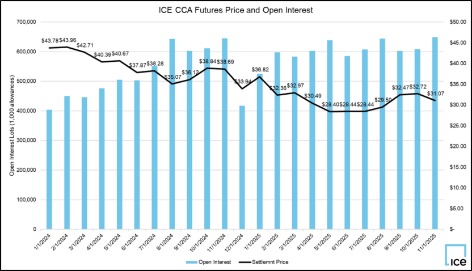
Group 1 - The core viewpoint emphasizes the necessity of financial support for the green low-carbon transition, highlighting the accelerating financialization of electricity and carbon markets globally, with China's green finance moving towards internationalization [1] - The establishment of the "Carbon Emission Trading Market Open Alliance" by China, the EU, and Brazil aims to create a unified global carbon market, focusing on improving compliance carbon markets and carbon pricing policies [1] - Hong Kong is taking initial steps towards international recognition of CCER, carbon quotas, and green certificates, indicating its role as a financial hub in facilitating carbon market transactions [1][6] Group 2 - Carbon futures and options play a crucial role in market pricing and risk management, as evidenced by the experiences of the Chicago Climate Exchange and the EU Emissions Trading System [2] - The holding scale of carbon futures, such as the over 600,000 contracts (600 million tons) in California's carbon quota futures market, serves as a key indicator of effective carbon pricing and market resilience [3] - The continuous expansion of China's national carbon emission trading market since its launch in 2021, with 16 brokerages approved for spot trading, reflects the growing involvement of financial institutions in managing carbon price risks [6] Group 3 - The development of China's green certificate market is rapid, with 4.7 billion certificates issued last year, surpassing the total of developed economies [9] - The demand for green certificates is driven by policy requirements, supply chain demands from multinational companies, and increasing corporate social responsibility awareness [9] - The effective pricing and liquidity of green certificates are essential for market activation, with a focus on achieving hour-level traceability to enhance international credibility [9][11] Group 4 - To promote the international recognition of China's green certificates, it is crucial to strengthen communication with foreign counterparts and understand the roles of various stakeholders in the certification process [10] - The "hour-level" matching of green energy attributes is a significant trend, allowing for more precise reflection of carbon emissions, with successful pilot projects already conducted in Hong Kong [11][12] - China's green certificate system is aligning with global best practices, signaling its capability to meet international standards and enhance cooperation among various stakeholders [12]

中诚信国际举行2026年信用风险展望年会
Jing Ji Guan Cha Wang· 2025-12-05 09:57
袁海霞建议,2026年中国财政赤字率提至4.5%-5%,货币延续宽松,以提振消费扩内需,优化债务管 理,深化改革并扩大制度型开放,推动经济稳步修复。 在年会期间,中诚信与海尔鑫海汇启动绿色产融数科生态合作,共同发布"绿E供应链票据通",旨在响 应国家绿色金融政策导向,尤其在绿色供应链金融领域实现重要突破。 根据2025年最新政策,绿色贸易首次被纳入绿色金融支持范围,为绿色票据在贸易场景中的应用提供直 接政策依据。与此同时,票据信息标注与共享机制还能有效破解银企信息不对称问题,推动绿色票据实 现"可识别、可追溯、可享优惠",有力支持绿色低碳转型与产业升级。双方将依托各自在ESG评估与产 融科技方面的核心能力,共建绿色金融基础设施,助力实体经济绿色可持续发展。(记者 陈植) 经济观察网 12月4日,中诚信国际举行"智驭风险·信立新篇——中诚信2026年信用风险展望年会"。 中诚信国际总裁岳志岗在年会期间表示,当前全球格局深度调整,新一轮科技革命与产业变革为我国带 来新机遇,国内经济虽处结构调整关键期、存在有效需求不足等问题,但经济结构优化、新旧动能转换 推进、科技创新驱动增强,为"十五五"高质量发展创造条件。 中 ...
中国绿色低碳发展释红利 机遇共享通世界
Zhong Guo Xin Wen Wang· 2025-11-29 10:00
中新社南昌11月29日电 (记者吴鹏泉)移动储能机器人、光伏汽车天窗、氢燃料电池电站……2025世界绿 色发展投资贸易博览会暨中国绿色食品博览会处处"绿意盎然"。透过这一国际化平台可发现,中国绿色 低碳发展正持续释放红利,为世界带来多重发展机遇。 11月27日至30日,本届博览会在江西南昌举行,中外2500余家企业参展觅商机,各类绿色低碳创新技术 和产品集中亮相。 11月27日,2025世界绿色发展投资贸易博览会暨中国绿色食品博览会现场,具身智能机器人的表演吸引 参观者观看。刘力鑫摄 江西省委书记尹弘表示,本次大会以"数智赋能绿色发展,开放江西链接全球"为主题,就是要践行生态 文明理念,顺应数智化发展潮流,交流绿色发展经验,共享时代机遇,共创美好未来,为高质量发展注 入强劲绿色动能。 博览会现场,一家新能源企业展示的光伏汽车天窗引人注目。"天窗采用高效光伏组件,单日发电量2度 左右,可提升续航里程约20公里,后续我们还会研发集成于玻璃间的太阳能板产品。"该企业产品总监 蔡伟认为,随着中国力推绿色发展,车辆零部件会更注重绿色低碳设计。 加快全面绿色转型是中国的发展方向。《中共中央关于制定国民经济和社会发展第十五 ...

业界人士:香港“超级联系人”优势助力绿色金融标准跨境对接
Zhong Guo Xin Wen Wang· 2025-11-25 23:31
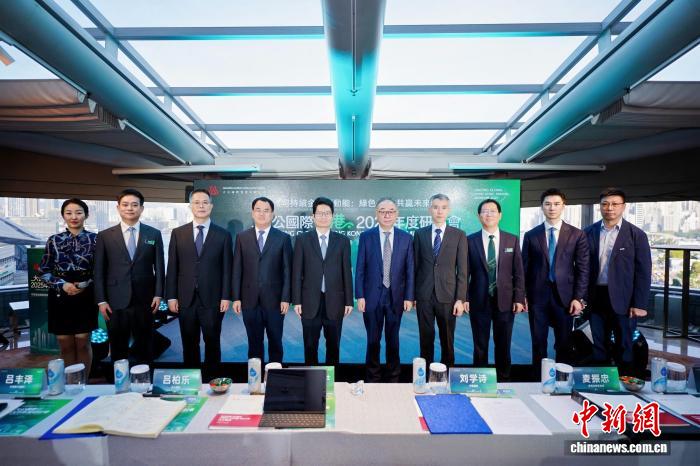
业界人士:香港"超级联系人"优势助力绿色金融标准跨境对接 中国国新控股有限责任公司总会计师刘学诗发言指出,香港既是观察世界经济脉动的重要窗口,也是连 接中国内地与全球市场的重要桥梁。近年来,香港特区政府持续推出多层次、系统化的绿色金融政策, 积极引导资金流向低碳领域,为区域乃至全球绿色转型注入强劲动力。(完) 中新网香港11月25日电 (记者 戴小橦)"可持续金融新动能:绿色共识 共赢未来"大公国际香港2025年度 研讨会25日在香港举行。多位与会的业界人士表示,香港作为连接内地与全球市场的"超级联系人",在 绿色金融标准跨境对接等方面发挥着不可替代的作用。 来源:中国新闻网 11月25日,"可持续金融新动能:绿色共识 共赢未来"大公国际香港2025年度研讨会在香港举行。 (主办方供图) 香港特区政府财经事务及库务局副局长陈浩濂致辞表示,多年来,香港特区政府一直以实际行动巩固和 提升香港作为国际绿色及可持续金融中心的地位。在债券发行方面,"政府可持续债券计划"已成功发行 约2500亿港元等值的政府绿色债券。其中涵盖不同发行类型、不同币种,以及不同年期,从而建立市场 基准供潜在的绿色债券发行人参考,展示香港能够 ...
动员更多社会资本参与气候适应与韧性投融资
Jin Rong Shi Bao· 2025-11-24 02:05
Core Insights - The article discusses China's new Nationally Determined Contributions (NDC) targets announced at the UN Climate Change Summit, aiming for a reduction of greenhouse gas emissions by 7% to 10% from peak levels by 2035, highlighting the urgency of global temperature control [1] - It emphasizes the significant funding requirements for climate adaptation in China, estimated at approximately 260 trillion yuan (around 40 trillion USD) from 2021 to 2060, with an annual average of about 6.5 trillion yuan (1 trillion USD) [2] - The article outlines the challenges and barriers to private sector participation in climate adaptation financing, noting that over 90% of climate adaptation funding in China comes from public sources [8][9] Group 1: Climate Adaptation Goals and Strategies - China's NDC targets aim for a reduction in greenhouse gas emissions by 7% to 10% by 2035, reflecting a commitment to global climate goals [1] - The "National Strategy for Climate Change Adaptation 2035" identifies key tasks across three main areas: natural ecology, socio-economic development, and climate risk management [3] - The strategy emphasizes the need for financial support policies and the development of a climate investment and financing guarantee system to stimulate various stakeholders' engagement [3] Group 2: Financial Requirements and Challenges - The total funding requirement for climate adaptation actions in China is projected to reach approximately 260 trillion yuan (40 trillion USD) from 2021 to 2060, with an annual average of about 6.5 trillion yuan (1 trillion USD) [2] - The World Bank estimates that China's annual climate adaptation project funding needs are around 250 billion USD, with an annual funding gap of 127 billion USD [2] - The current funding landscape shows a heavy reliance on public financing, with over 90% of climate adaptation funds sourced from domestic public sectors [8] Group 3: Barriers to Private Sector Participation - The low participation of social capital in climate adaptation financing is attributed to a lack of awareness and understanding of climate financing opportunities among investors [9] - Climate adaptation projects often have long construction cycles, high upfront investments, and low returns, making them less attractive to private investors compared to mitigation projects [10] - Data barriers hinder effective climate risk assessment, complicating investment decisions for financial institutions and investors [11] Group 4: Recommendations for Enhancing Participation - The article suggests developing a comprehensive range of green financial products to attract private investment, including innovative financial instruments tailored to the specific needs of climate adaptation projects [12] - It emphasizes the importance of prioritizing climate adaptation funding allocation to the most urgent and impactful projects [13] - Strengthening capacity building and enhancing awareness of climate adaptation financing among financial institutions and the public is crucial for increasing participation [14]
李若愚:全力做好绿色金融大文章
Jing Ji Ri Bao· 2025-11-24 00:08
Core Viewpoint - Green finance plays a leading and supportive role in promoting high-quality development and is essential for achieving China's green transition and carbon reduction goals [1][2]. Group 1: Development of Green Finance - Green finance has rapidly developed in China, effectively guiding social capital towards green low-carbon industries and promoting the green transformation of traditional industries [2]. - The People's Bank of China and other departments have issued the "Green Finance Support Project Directory (2025 Edition)" to standardize the flow of funds through unified green finance standards [2]. - Various national-level green finance reform and innovation pilot zones have been established in provinces such as Zhejiang, Jiangxi, Guangdong, and Guizhou to explore innovative practices [2]. Group 2: Achievements and Global Position - China has established itself as a global leader in green finance, being the first country to create a systematic green finance policy framework in 2016 [3]. - The scale of green credit in China ranks first globally, and the issuance of green bonds has seen an average annual growth of 16.5% from 2016 to 2024 [3]. - As of June this year, the balance of green loans in both domestic and foreign currencies reached 42.39 trillion yuan, reflecting a 14.4% increase since the beginning of the year [3]. Group 3: Challenges and Future Directions - Despite achievements, challenges remain, such as an incomplete green finance standard system and low trading volume in the carbon market [3]. - There is a need to enhance the green finance standard system and actively participate in international standard-setting to increase China's influence [4]. - Financial institutions are encouraged to diversify green finance products and services, particularly in carbon finance, to support the national carbon market [4].
“公园乡村”是什么样的?浙江云和为山区县“两山”转化提供了样本
Zhong Guo Huan Jing Bao· 2025-11-21 00:19
Core Insights - Zhejiang province, as the origin and pioneer of the "Two Mountains" concept, has integrated high-quality development with high-level protection over the past two decades, exemplified by Lishui City's Yunhe County, which has achieved significant ecological and economic outcomes [1] Group 1: Ecological Foundation - Yunhe County prioritizes ecological resource protection as the foundation for the "Two Mountains" transformation, establishing a comprehensive ecological protection system through ecological planning, digital remediation, and systematic restoration [2] - The county has developed a quantitative standard system with 127 indicators across 30 categories to coordinate ecological, service, cultural, and economic development [2] - The forest coverage rate in Yunhe County has reached 81.29%, and the surface water quality compliance rate is 100% [1] Group 2: Ecological Restoration - The county has implemented integrated protection and restoration projects, restoring over 5,000 acres of terraced fields and reducing the abandonment rate from 65% in 2016 to 3.3% [3] - Innovative agricultural practices such as "rice + snail" and "rice + fish" have been adopted to achieve ecological and economic benefits [3] Group 3: Economic Transformation Mechanisms - Yunhe County has established the first "Two Mountains Bank" in the country, offering "Two Mountains Loans" that integrate ecological credit as a prerequisite for financial support [4] - By selling the first "ecological land" in the country, the county has developed a model that combines economic output value with ecological environment appreciation [4] - As of March 2025, loans for Yunhe snow pears have reached a total credit of 312 million yuan, with 143 million yuan disbursed [4] Group 4: Ecotourism and Industry Integration - In 2024, the Yunhe terraced scenic area is expected to receive over 1.2 million visitors, generating tourism revenue of 250 million yuan [5] - The terraced fields have been approved as a 5A scenic area, with 285,800 visitors during the National Day and Mid-Autumn Festival holidays in 2025, resulting in tourism consumption of 137 million yuan [5] Group 5: Park Village Development - Yunhe County has established eight "Park Villages" as demonstration sites, with per capita disposable income for rural residents projected to reach over 22,400 yuan in 2024 [6] - The county has invested 87 million yuan in 2023 for 28 projects, leading to a 60% increase in collective operating income for villages [7] Group 6: Long-term Operation Mechanisms - The county employs an EPCO model for project management, enhancing efficiency and providing job opportunities for villagers [8] - A special fund for operations has been established, with over 100 million yuan allocated for "farm stay" loans, promoting the gathering of technology, capital, and talent in rural areas [8]
绿色金融资产表现如何?“绿色溢价”在这些品类已初步显现
和讯· 2025-11-19 09:07
Core Insights - The report highlights the overall stability and quality improvement of China's green finance system in October 2025, driven by policy support and market deepening, with green credit being the main growth driver and a rational price adjustment in carbon markets [2][11]. Group 1: Green Credit - Green credit continues to be the main driver of credit growth, with a new addition of 6.47 trillion yuan in the first three quarters of 2025, accounting for 43.9% of the total loan increase during the same period [3][22]. - As of the end of Q3 2025, the total balance of green loans reached 43.51 trillion yuan, reflecting a 17.5% increase from the beginning of the year [3][22]. - The main sectors benefiting from green loans include infrastructure upgrades, energy transition, and ecological restoration, with a combined balance of 32.62 trillion yuan [25][26]. Group 2: Green Bonds - In October 2025, 62 new green bonds were issued, totaling approximately 53.30 billion yuan, representing a significant decline of 41.35% in quantity and 48.13% in total issuance compared to September [4][29]. - The structure of green bond issuance has become more balanced, with asset-backed securities (ABS) becoming the largest category, accounting for over 54% of the total issuance [5][33]. Group 3: Carbon Market - The carbon market in October 2025 showed a "volume increase and price decrease" trend, with a total trading volume of approximately 41.56 million tons, a 27.09% increase from the previous month, while the total transaction value slightly decreased to 1.99 billion yuan [6][35]. - The average price of carbon allowances fell to 47.84 yuan per ton, indicating a rational market adjustment despite increased trading volume [6][37]. - Cumulatively, the carbon market has seen a total trading volume of approximately 769.9 million tons since its inception, with a total transaction value of about 51.82 billion yuan [6][37]. Group 4: Green Certificate Market - The issuance of green certificates saw a decline in October 2025, with approximately 229 million certificates issued, a decrease of 15.5% from August, while the proportion of tradable certificates increased to 69% [7][39]. - The total trading volume for green certificates in September reached about 65.12 million, with a significant portion being directly related to electricity trading [7][39]. Group 5: Market Data and Trends - The overall trend in green finance indicates a stable increase in volume and quality, with green credit leading the way, while the carbon market and green certificate market exhibit a "volume increase and price decrease" pattern [21][22]. - The green finance sector is becoming a crucial engine for stable growth and transformation in the economy, supported by various policies and market mechanisms [11][21]. Group 6: Corporate Dynamics - Various enterprises are actively engaging in green finance initiatives, such as issuing green bonds and developing innovative financial products linked to carbon footprints, demonstrating their role as key players in the market [45][46]. - Notable activities include the issuance of green financial bonds by the National Development Bank and the launch of a new green low-carbon card by China UnionPay [46][47].