加密货币

Search documents
US hiring weakens as high-paying tech jobs move offshore
Yahoo Finance· 2025-12-03 23:55
Core Insights - U.S. private payrolls unexpectedly declined by 32,000 in November, marking the sharpest drop in over two and a half years, primarily affecting small businesses which cut 120,000 roles due to higher trade costs and tariffs [1][3] - Despite the overall labor market softness, crypto hiring has surged, with job openings in the sector rising 47% year-on-year to approximately 66,000 new roles, indicating a strong demand for talent in this industry [4][5] Labor Market Trends - The labor market is experiencing a notable softness, with private employers reducing headcount in three of the past four months, the weakest stretch since the pandemic recovery [3] - Economists suggest that while the labor market is not "broken," it is clearly soft, influenced by tariffs increasing costs and AI reducing traditional middle-skill roles [3] Crypto Industry Dynamics - The crypto sector's resilience is attributed to three overlapping trends, with exchanges, infrastructure firms, and DeFi protocols accounting for nearly 70% of all industry jobs [4] - The global crypto workforce now stands at 1.6 million, with technical roles comprising over 50% of hiring, and salaries in North America ranging from $120,000 to $250,000, significantly higher than many traditional tech roles [5][6]
特朗普相关加密货币个股周三反弹
Xin Lang Cai Jing· 2025-12-03 15:48
Group 1 - The American Bitcoin Company (ABTC), founded by Eric Trump, saw its stock rise by 5.5% in early trading on Wednesday after a significant drop of 38.8% the previous day [1][2] - The Trump Media & Technology Group (DJT) experienced a slight decline, although it briefly increased by 1.3% in the early hours of Wednesday [1][2]

中概股下挫,蔚来、理想跌超3%,美国关键数据爆冷,黄金、油价、比特币集体拉升
Xin Lang Cai Jing· 2025-12-03 15:40
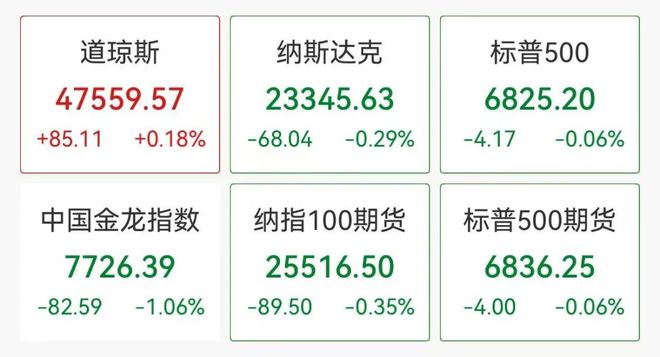
Market Overview - The three major U.S. stock indices opened lower on Wednesday, with the Dow Jones turning positive while the S&P 500 and Nasdaq experienced slight declines [1] - Major tech stocks mostly fell, with Nvidia and Amazon dropping over 1% and Microsoft declining nearly 3% due to reported reductions in AI software sales quotas amid customer reluctance [3] - Netflix shares fell by 6% following the sale of 375,470 shares by its chairman Reed Hastings [3] Cryptocurrency Market - The cryptocurrency market saw a collective surge, with Bitcoin rising above $92,000, reflecting a 3.89% increase [6][7] - Ethereum also experienced a significant rise of 6.67%, reaching $3,085, while other cryptocurrencies like Solana and XRP saw increases of 6.69% and 4.23% respectively [7] Economic Indicators - The U.S. "small non-farm" data exceeded expectations, indicating a surprising decrease of 32,000 jobs in the private sector for November [6] - The market is beginning to feel the impact of the potential new Federal Reserve chair, with Kevin Hassett being the leading candidate for the position, which may lead to a more dovish monetary policy [8]


美股异动丨比特币及以太坊大幅反弹,加密货币概念股齐涨
Ge Long Hui· 2025-12-03 15:18
Core Viewpoint - Cryptocurrency-related stocks experienced a significant increase, with American Bitcoin rising over 8% and Coinbase increasing by more than 4% [1] Group 1: Market Performance - Bitcoin approached $94,000 per coin, while Ethereum surpassed $3,140 per coin, both reaching new highs in two weeks [1] - Other companies such as Bullish, Circle, and Robinhood saw their stocks rise by over 3% [1]
疯狂爆雷!比特币跌30%蒸发千亿,特朗普家族币血洗归零,市场恐
Sou Hu Cai Jing· 2025-12-03 13:21
Core Viewpoint - The cryptocurrency market is undergoing a textbook cycle-end correction, characterized by a 30% drop in Bitcoin, a near-zero value for Trump-related tokens, record increases in stablecoin balances, and a fear index indicating extreme fear for three consecutive weeks. This situation is seen as a moment of pause before the next market movement, rather than an end-of-the-world scenario [1][12]. Group 1: Market Dynamics - Bitcoin has experienced a nearly 30% decline since its recent high, with $19 billion in leveraged positions being liquidated, indicating a fragile market foundation [3]. - The increase in stablecoin balances, particularly USDT and USDC, suggests that traders are opting to hold cash rather than buy the dip, reflecting a cautious sentiment in the market [3]. - The current market adjustment is viewed as a typical cycle-end correction, where investors are using stablecoins to hedge against risks while waiting for clearer signals from ETF fund flows and macroeconomic uncertainties [3][12]. Group 2: Celebrity Token Collapse - The collapse of celebrity-related tokens, particularly those associated with Eric Trump, has become a focal point of market adjustment, with significant price drops observed [5]. - The meme token TRUMP fell from a high of $73.40 to approximately $6, while other related tokens have also seen declines of around 30% from their September peaks [5]. - The failure of these tokens highlights the disconnect between short-term hype driven by celebrity endorsements and the actual value of the underlying assets, leading to inevitable price corrections [5]. Group 3: MicroStrategy's Position - MicroStrategy, one of the largest holders of Bitcoin, has seen its stock price plummet, raising concerns about potential forced sales of its Bitcoin holdings [8]. - The company has established a $1.4 billion reserve for dividend payments and interest expenses, alleviating immediate fears of liquidation [8]. - Despite the stock's volatility, MicroStrategy's market net asset value remains at a premium, indicating no urgent need to sell Bitcoin at this time [8]. Group 4: Fear Index and Future Signals - The cryptocurrency fear and greed index has remained in the "extreme fear" zone for three weeks, which may signal a potential bottoming out rather than continued declines [11]. - Key signals to monitor for market direction include the outcome of the Federal Reserve's interest rate decision, Bitcoin ETF fund flows, and changes in stablecoin balances, which could indicate a shift in trader sentiment [11][12]. - The current market adjustment is seen as a necessary process for digesting uncertainties and preparing for healthier upward movements in the future [12].

加密货币价格跳水,带走特朗普家族超10亿美元财富
凤凰网财经· 2025-12-03 13:07
Core Viewpoint - The cryptocurrency market is experiencing a significant downturn, with Bitcoin's price dropping by 25% over the past two months, raising widespread concerns in the market [1] Group 1: Market Trends - The overall market weakness has amplified the risks associated with meme coins, particularly those linked to the Trump family, with the WLFI token dropping by 51% since its peak in early September [1] - Tokens named after Donald Trump and his wife Melania have seen declines of 90% and 99% respectively from their January highs [1] - The stock price of the American Bitcoin company founded by Eric Trump plummeted by approximately 39% on Tuesday, down 76% from its September peak [1] Group 2: Financial Impact - The recent downturn in the cryptocurrency market has resulted in a loss of over $1 billion in wealth for the Trump family, although their overall wealth remains substantial [2] - The decline reflects the cyclical nature of the cryptocurrency industry, challenging previous assumptions about the sustainability of growth driven by pro-crypto policies during the Trump administration [2] Group 3: Regulatory and Legal Challenges - The "four-year cycle" of Bitcoin suggests that prices typically peak after halving events, followed by significant corrections [3] - Trump's presidency has had a dual impact on the legitimacy of cryptocurrencies, as his attempts to endorse crypto projects have not been successful, leading to rapid devaluation of many projects [3] - The unpredictability of Trump's policies, particularly regarding tariffs, has created uncertainty for investors, as highlighted by comments from industry participants [3] Group 4: Company-Specific Risks - Alt5 Sigma, a company associated with Trump-related cryptocurrencies, has faced financial risks, including the dismissal of senior executives due to ongoing legal issues [4] - Nasdaq has notified Alt5 Sigma that it no longer meets the requirements for continued listing due to failure to timely submit its Q3 2025 financial report, citing reasons such as auditor changes and governance issues [4]

热门中概股多数下跌;今晚9:15美国重要数据发布;亚马逊推出全新AI芯片;比特币反弹一度逼近9.4万美元【美股盘前】
Mei Ri Jing Ji Xin Wen· 2025-12-03 11:08
Group 1 - Major stock index futures showed slight gains, with Dow futures up 0.17%, S&P 500 futures up 0.12%, and Nasdaq futures up 0.07% [1] - Cryptocurrency-related stocks performed well, with Bitfarms rising nearly 4%, Coinbase up about 2.4%, and Strategy and MARA Holdings increasing over 2%. Bitcoin approached $94,000, reaching a high of $92,874 [1] - Popular Chinese concept stocks mostly declined, with Bilibili down over 2%, Xpeng Motors down nearly 1.5%, JD.com and NIO down over 1%, Pinduoduo down nearly 1%, and iQIYI down 0.5% [1] - Marvell, a chip design company, saw a pre-market increase of nearly 10% after announcing a $3.25 billion acquisition of semiconductor startup Celestial AI and projecting Q4 revenue above Wall Street expectations [1] - Microchip Technology, a semiconductor manufacturer, rose over 3% in pre-market trading after raising its Q3 net sales and earnings per share forecasts due to strong booking performance [1] Group 2 - HSBC raised its target price for Google, stating that the success of the Gemini 3 series large language models has mitigated potential AI disruption risks for its search business. The target price was increased from $335 to $370, maintaining a "buy" rating for Alphabet [2] - Anthropic, an AI startup backed by Amazon, announced its first acquisition of development tools startup Bun, with financial terms of the deal not disclosed [2] - Amazon's cloud division launched its latest AI chip, Trainium 3, which aims to provide cost-effective and efficient computing power for AI models, competing with Nvidia's leading GPUs. Amazon's stock rose 0.25% following the announcement [2] Group 3 - Google, along with Chevron-backed TAE Technologies, is advancing the commercialization of neutral beam technology through a joint venture, TAE Beam UK, with UKAEA planning to invest £5.6 million in the project [3] - The U.S. ADP employment change for November, often referred to as the "little non-farm," is being closely watched, with a previous value of 42,000 and a pessimistic forecast of 20,000. The employment market faces challenges due to immigration policy impacts and AI replacing basic jobs [3]

RadexMarkets瑞德克斯:加密市场洗盘后的关键考验
Xin Lang Cai Jing· 2025-12-03 11:02
Group 1 - The recent market rebound has led investors to refocus on major crypto assets, with Bitcoin (BTC) surpassing $93,000, attempting to recover from a significant drop earlier in the week, although sentiment remains cautious [1][3] - Bitcoin's recovery above $93,000 reversed a substantial sell-off, with approximately $457 million in short positions liquidated in the past 24 hours, including $224 million in Bitcoin and $94 million in Ether [1][3] - The liquidation process has effectively cleared high-leverage positions, providing space for a short-term rebound, while Ethereum has also regained the $3,000 mark, and other major tokens like Solana and Cardano saw gains exceeding 12% [1][3] Group 2 - Despite the price rebound, core market issues persist, including structural risks related to asset exposure adjustments, significant withdrawals from strategy ETFs, and emotional volatility triggered by MSCI methodology reviews [2][4] - The market rebound has been supported by positive news, such as SEC Chairman Paul Atkins announcing plans to unveil details of an "innovation exemption" framework, which is seen as a step towards regulatory clarity [2][4] - Vanguard's decision to allow users to trade crypto-related ETFs and mutual funds has also improved the previously low market sentiment, although the rebound structure is still viewed as "emotional repair" rather than a solid trend reversal [2][4] - The sustainability of the upward trend will depend on whether spot buying can continue to support the market after the liquidation cycle in the derivatives market, with upcoming changes in market depth and spot demand being critical for validating the rebound's continuity [2][4]

【美股盘前】美国11月“小非农”数据今晚发布;比特币一度逼近9.4万美元;Marvell涨近10%;亚马逊推出全新AI芯片
Mei Ri Jing Ji Xin Wen· 2025-12-03 10:19
Group 1: Market Movements - Dow futures rose by 0.17%, S&P 500 futures increased by 0.12%, and Nasdaq futures gained 0.07% [1] - Cryptocurrency-related stocks showed strength, with Bitfarms up nearly 4%, Coinbase rising about 2.4%, and Strategy and MARA Holdings increasing over 2% [1] - Popular Chinese concept stocks mostly declined, with Bilibili down over 2%, Xpeng Motors falling nearly 1.5%, JD.com and NIO down over 1%, Pinduoduo down nearly 1%, and iQIYI down 0.5% [1] Group 2: Company Developments - Marvell, a chip design company, saw a pre-market increase of nearly 10% after announcing a $3.25 billion acquisition of semiconductor startup Celestial AI, with Q4 revenue expected to exceed Wall Street estimates [1] - Microchip Technology, a semiconductor manufacturer, rose over 3% in pre-market trading after raising its Q3 net sales and earnings per share forecasts due to strong booking performance [1] Group 3: AI and Technology Advancements - HSBC raised the target price for Google’s parent company Alphabet from $335 to $370, citing the success of the Gemini 3 series large language model in mitigating potential AI disruption risks to its search business [2] - Amazon's AI startup Anthropic announced its first acquisition of the development tools startup Bun, with financial terms undisclosed [2] - Amazon Web Services launched its latest AI chip, Trainium 3, which aims to provide cost-effective and efficient computing power for AI models, competing with Nvidia's leading GPUs [2] Group 4: Energy Sector Developments - Google and Chevron-backed TAE Technologies are advancing the commercialization of neutral beam technology through a joint venture with the UK Atomic Energy Authority, with UKAEA planning to invest £5.6 million in the project [3]


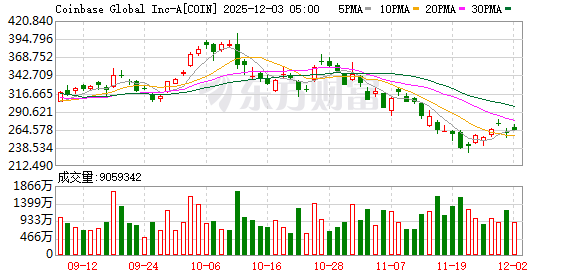
美股加密货币概念股盘前走强,Coinbase上涨2.4%
Mei Ri Jing Ji Xin Wen· 2025-12-03 09:51
Group 1 - The core viewpoint of the article highlights the pre-market strength of cryptocurrency-related stocks in the US, indicating a positive market sentiment towards this sector [2] Group 2 - Coinbase saw an increase of 2.4% in pre-market trading [2] - Bitfarms experienced a rise of 3.9% in pre-market trading [2] - Strategy stocks were up by 2.1% in pre-market trading [2]