资产管理

Search documents
追光与避险:六位资管大咖纵论财富守护之道
Zheng Quan Ri Bao· 2025-12-28 16:14
Core Insights - The forum discussed the theme "Wealth Protection Strategies for Asset Management Institutions" with industry experts sharing insights on investment opportunities and risk management in the current financial landscape [1] Group 1: Investment Opportunities - The equity market has shown significant recovery this year, prompting market participants to evaluate future investment opportunities [2] - "Certainty" is a key focus for institutional investors like insurance and banks, with an emphasis on prioritizing winning probabilities before seeking higher returns [2] - The growth sector may become a "deciding factor" for profitability in the equity market next year, supported by economic recovery and corporate profit restoration [2] - Market opportunities in 2026 are expected to arise more from structural insights rather than directional predictions, with a focus on "new productive forces" and multi-asset portfolio stability [2] - Investment opportunities are identified in AI-related technology, overseas industries, turnaround sectors, and dividend assets [2][3] Group 2: Asset Management Challenges - The asset management industry faces challenges, including the need for public funds to embrace active management despite the rise of index investing [4] - There is a persistent issue of aligning investor expectations with actual returns, which complicates wealth management [4] - The industry must address the cyclical nature of investor behavior, which often leads to a focus on short-term performance rather than long-term stability [4] - The insurance asset management sector must balance safety, liquidity, and profitability, with a proposed separation of assessments for different insurance products and investment strategies [5] Group 3: Risk Factors - Key risk points in the industry include low-interest rate environments leading to spread risks, cross-regional and cross-sector investment risks, and complexities in alternative asset management compliance [5]
全省各企业认真学习领会省委全会和省委经济工作会议精神——凝心聚力担使命 奋楫争先开新局
Xin Lang Cai Jing· 2025-12-28 02:55
Group 1 - The Yunnan Provincial Party Committee's 11th Plenary Session and Economic Work Conference have outlined a grand blueprint for the "14th Five-Year Plan," emphasizing the importance of enterprises in driving economic progress and contributing to the modernization of Yunnan [1][2] - Various enterprises in Yunnan, both state-owned and private, are actively engaging in learning and implementing the conference's directives, aiming to enhance their roles in economic development [1][2][8] - The focus is on creating a market-oriented, legal, and international business environment to stimulate high-quality development and support the growth of various enterprises [2][8] Group 2 - Yunnan Investment Management Company aims to enhance regional financial stability and service strategic collaboration, focusing on optimizing development paths and improving services for the real economy [2][3] - YunTianHua Group is committed to advancing green and high-quality development, balancing traditional industry upgrades with emerging industry innovations, and leveraging regional advantages for project development [3][4] - Yunnan Construction Investment Group has accumulated significant assets and is focusing on integrating transportation, logistics, energy, and tourism sectors to enhance project applications and drive economic corridors [5][6] Group 3 - Yunnan Coffee Factory is set to enhance its processing capabilities and brand presence, aiming to elevate the coffee industry in Yunnan through innovation and quality control [6][7] - The emphasis on supporting private enterprises is evident, with initiatives to promote project opportunities and reduce burdens on businesses, fostering a supportive environment for innovation and growth [8][10] - Yunnan's private enterprises are encouraged to focus on core responsibilities and enhance competitiveness, particularly in resource-based industries, to contribute to the province's economic transformation [9][10]
抓落实 开新局|全省各企业认真学习领会省委全会和省委经济工作会议精神:凝心聚力担使命 奋楫争先开新局
Xin Lang Cai Jing· 2025-12-28 00:57
Group 1 - The Yunnan provincial government has outlined a grand blueprint for the "14th Five-Year Plan," emphasizing the importance of both state-owned and private enterprises in driving economic progress and contributing to the modernization of Yunnan [1][2] - The provincial meetings highlighted the need to enhance the business environment, stimulate the vitality of various business entities, and support the growth of enterprises to promote high-quality development [2][8] - Companies like Yunnan Investment Management Co. and Yunnan Tianhua Group are committed to focusing on their core responsibilities and enhancing their main businesses to align with the provincial economic development goals [2][3] Group 2 - Yunnan Copper Holdings aims to establish a comprehensive value support system for its industrial group by 2025, with significant increases in profit indicators and a focus on steady operations amid uncertainties [4] - Yunnan Construction Investment Group has successfully managed 160 investment projects, with total assets reaching 450 billion yuan by the end of the "14th Five-Year Plan," and plans to integrate various industries to enhance economic corridors [5] - Yunnan Coffee Factory is set to improve its processing capabilities and brand presence, aiming to elevate the "Yunfei" brand to a national level while supporting local farmers through various initiatives [6][7] Group 3 - The provincial meetings have fostered a strong consensus among enterprises to pursue high-quality development, with companies like Xiangfeng Group and Yunnan Dianxue Grain and Oil Co. expressing confidence in their growth strategies [9][10] - Yunnan Duobao Cable Group is focusing on the development of new energy cable products and energy-saving transformations, leveraging regional advantages to enhance infrastructure in Southeast Asia [10] - The overall sentiment among various enterprises is one of determination to translate provincial directives into actionable strategies for growth and innovation, contributing to the success of the "14th Five-Year Plan" [10]
10 Stocks Jim Cramer Discussed
Insider Monkey· 2025-12-27 15:15
Market Overview - The S&P 500 index closed 1.1% lower on December 17th, while the NASDAQ 100 and NASDAQ Composite closed 1.9% and 1.8% lower respectively, indicating a downward trend in the market [1] - Factors contributing to market struggles include a rise in unemployment and concerns over an AI bubble [1] Jim Cramer's Insights - Jim Cramer criticized sellers in the market, noting that they have taken a break after driving down prices, allowing for a potential market rebound [1] - Cramer highlighted that many sellers have difficulty beating benchmark indexes due to the dominance of the "Magnificent 7" stocks [1] Janus Henderson Group plc (NYSE:JHG) - Janus Henderson Group plc was acquired for $7.4 billion by Trian Fund Management and General Catalyst, with shares closing 3.1% higher post-announcement [6] - Evercore ISI lowered its price target for Janus Henderson from $50 to $49, maintaining an In Line rating, citing skepticism about the premium offered despite the firm's consistent growth [6] - Cramer emphasized the significance of this acquisition as part of a trend where companies prefer private ownership to facilitate necessary changes without public scrutiny [6][7] Cintas Corporation (NASDAQ:CTAS) - Cintas Corporation announced its intent to acquire UniFirst for $5.2 billion, marking its third attempt at this acquisition [8] - Previous offers included a $5.3 billion hostile takeover attempt in January, with Cintas having first approached UniFirst in 2022 [8] - RBC Capital maintained a $206 price target for Cintas, noting the potential for double-digit earnings growth margins for UniFirst [8] - Cramer remarked that this acquisition reflects a growing trend in dealmaking, particularly under the Trump Administration [8]



香港投资推广署对话企业家
Zhong Guo Ji Jin Bao· 2025-12-27 12:49
Group 1 - The forum discussed how AI is reshaping the financial services industry and the global layout of fintech in mainland China [1] - Key executives from various companies shared insights on AI's role in asset management, emphasizing its application in research, risk control, and valuation [12][13][14][15][16] - AI is transforming traditional research processes, significantly reducing the time required to generate comprehensive reports from nearly a month to just 5-10 minutes [14] Group 2 - The discussion highlighted the importance of AI in enhancing trading strategies, with a shift from purely statistical methods to a combination of logical reasoning and statistical analysis [15] - Companies are focusing on building trust with clients through third-party endorsements and rapid report generation, which enhances service efficiency [16][17] - Hong Kong is positioning itself as a global innovation and technology hub, with over 1,200 fintech companies and a significant growth rate of approximately 10% annually [21][22] Group 3 - Ernst & Young (EY) is leveraging its global network to support Hong Kong's role as a financial and technological innovation center, with strategies aimed at enhancing cross-border fintech cooperation [19][20] - The Hong Kong government is providing substantial support for AI development, including the establishment of an AI supercomputing center and various innovation platforms [28][29] - The integration of generative AI into financial services is becoming more prevalent, with local companies adopting tools like chatbots and data analysis assistants [29]
香港投资推广署对话企业家
中国基金报· 2025-12-27 12:36
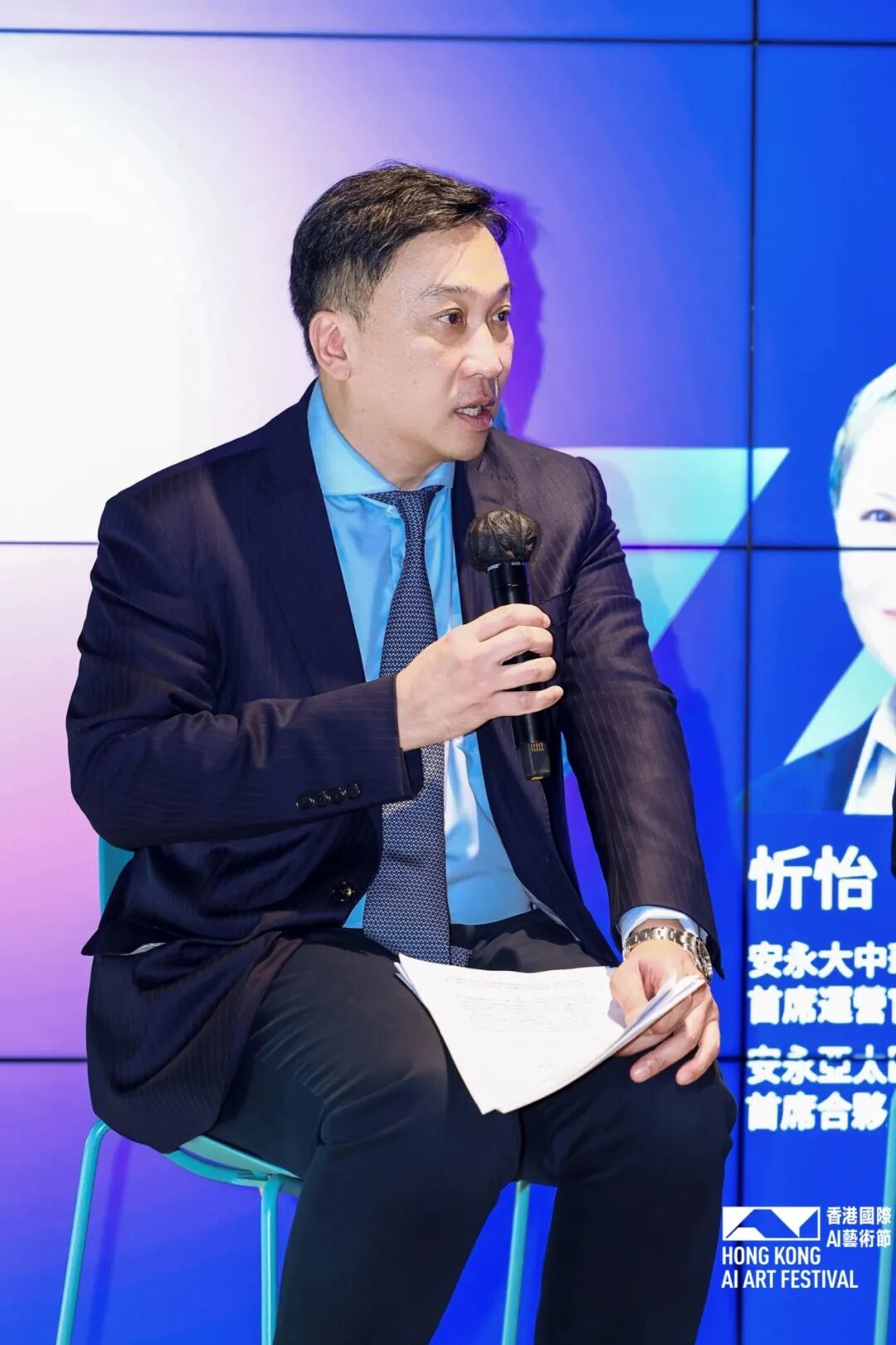
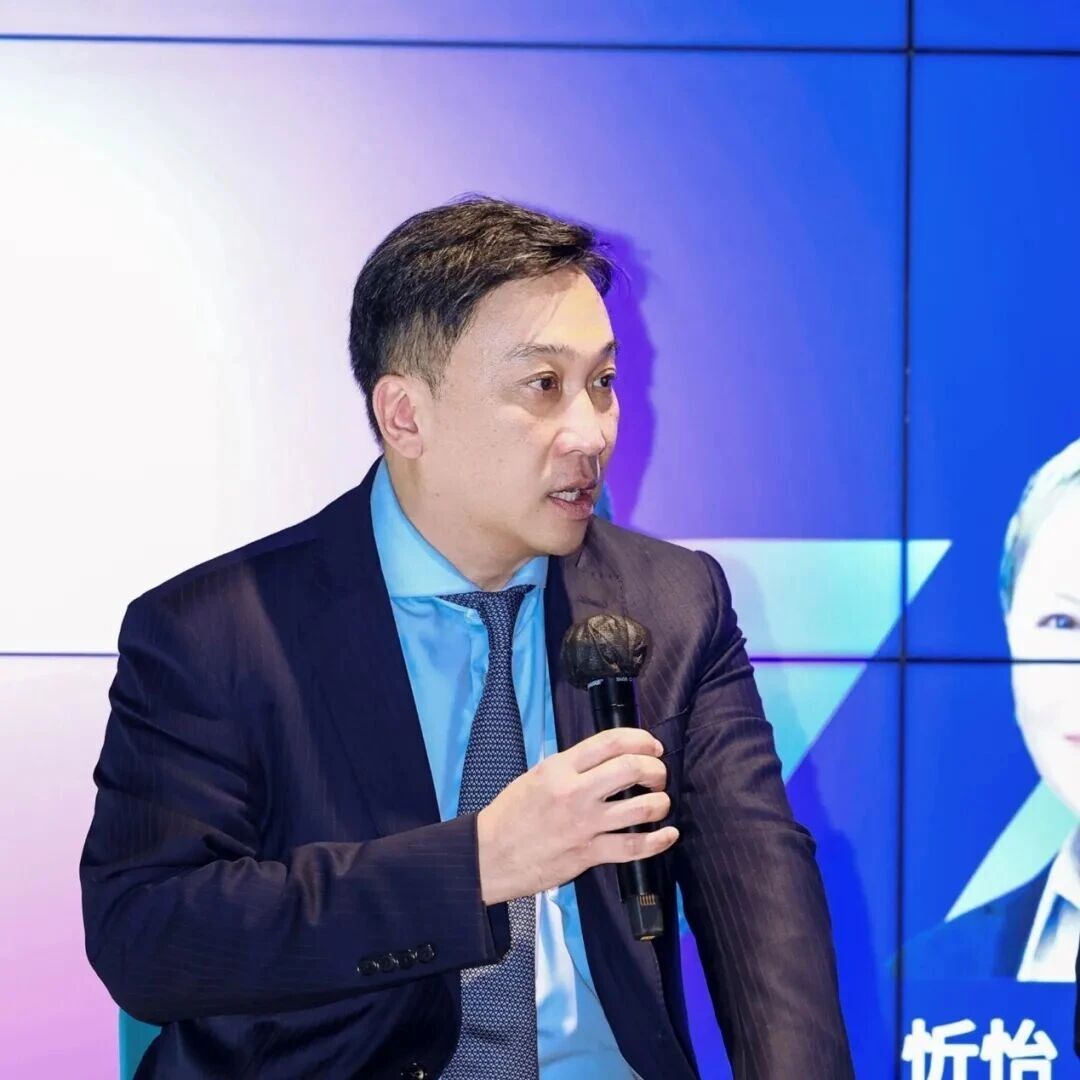
【导读】企业家热议: AI 如何重塑金融服务业?内地金融科技如何全球布局? 中国基金报记者 郭玟君 日前,在安永香港创新中心举行的,由中国基金报主办的 "2025 资本市场香港论坛 " 上, 香港投资推广署创新及科技、生命与健康科学总裁黄炜卓担任主持人,与四位专注于人工智 能( AI )赋能资产管理行业的企业高管进行了精彩对话。 这四位嘉宾分别是: 安永大中华区首席运营官及金融服务首席合伙人,安永亚太区金融科技及创新首席合伙人 忻 怡 前路有光董事长 何波 元聚变 CTO 殷磊 慧博集团董事长,上海外国语大学国际金贸学院教授 何佳川 AI 日益深入赋能金融服务各个领域 黄炜卓:安永如何利用 AI 赋能资产管理行业发展? 忻怡: 五年前,安永成立以业务人员为核心的金融科技工作组,致力于以技术推动管理提升 与业务发展。在资管行业,我们将 AI 与大数据等先进技术应用于不同的业务场景,比较有代 表性的是投研、风控与估值定价三大环节: 投研方面,面对政策与市场的快速变化,传统静态模式已难以应对。通过大数据与 AI 平台, 可实时追踪全球政策动向,精准分析其对行业与企业的影响。 风控领域,穿透式管理成为关键。 AI 能 ...
武兴锋:资管行业正处于从“规模导向”向“价值导向”转型关键阶段
Xin Lang Cai Jing· 2025-12-27 11:38
Core Viewpoint - The Chinese wealth management industry is transitioning from a "scale-oriented" approach to a "value-oriented" strategy, driven by low interest rates, tightening regulations, and narrowing returns on quality assets, which presents both challenges and opportunities for sustainable development [3][9][20] Funding Side - As of November 2025, the bank wealth management market's outstanding scale reached 31.67 trillion yuan, and public fund scale surpassed 36 trillion yuan, indicating steady expansion in the asset management industry [4][14] - The shift in residents' wealth allocation is deepening, with a trend towards financial assets as GDP per capita exceeds $10,000, aligning with national strategies to increase property income [4][14] - With over 60 trillion yuan in fixed deposits maturing by 2026, the low interest rate environment is expected to accelerate the shift of funds towards financial products, laying a solid foundation for industry growth [4][14] Asset Side - Wealth management institutions face multiple pressures in investment operations, particularly in the bond market, where volatility has increased, challenging traditional "buy and hold" strategies [5][15] - The A-share market is expected to show a slow bull trend in 2025, with significant structural differentiation, particularly in new economy sectors like AI and high-end manufacturing, requiring institutions to enhance their research depth and risk control [5][15] - Institutions need to focus on core capabilities, enhancing research and investment capabilities, and innovating products to transition from "scale competition" to "value creation" [6][16][20] Investment Research Capability - Institutions should develop a "multi-asset, multi-strategy" approach to adapt to the dual pressures of low interest rates and asset scarcity, utilizing diverse tools to enhance returns and manage risks [6][17] - Establishing a macro-factor-driven asset allocation framework and a standardized, results-oriented research system is essential for effective investment management [6][17][18] - Implementing suitability management is crucial for protecting consumer rights and ensuring appropriate product matching for investors [7][18] Product Development - Institutions must innovate product forms and integrate them with various investment scenarios to meet diverse investor needs [8][19] - Focusing on national strategies, institutions should expand product lines in areas like pension, inclusive finance, green finance, and digital finance, thereby supporting the real economy and enhancing long-term capital market stability [8][19]
建信理财齐建功:“十五五”理财行业挑战与机遇并存
Xin Lang Cai Jing· 2025-12-27 09:35
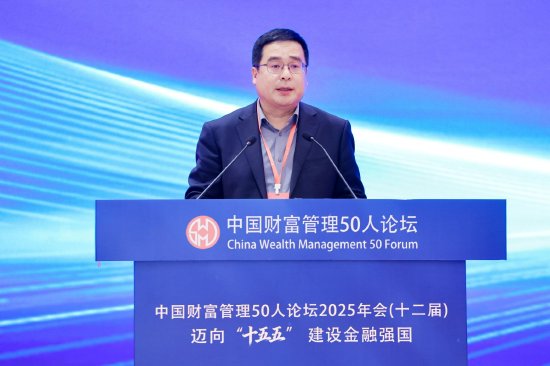
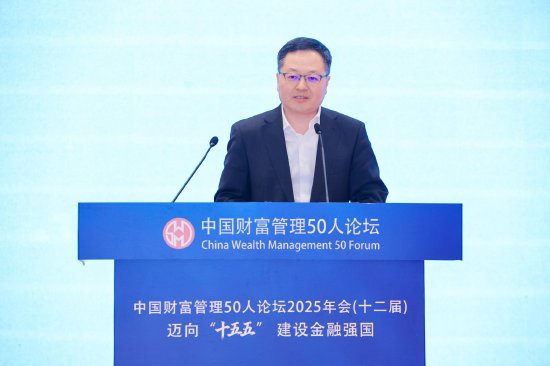
三是大力提升客户体验。齐建功表示,这要求理财公司首先要提升投研能力,优化资产配置。包括提升 大类资产配置的研究能力,增强对宏观大势和市场研判的把握;强化专业领域研究能力,加强行业和区 域研究覆盖,重点加大对"五篇大文章"和AI等新兴行业的研究投入;推进投研深度融合,打造投研一体 化平台;优化投研考核机制,以业绩评价为中心,加大对投研条线的约束力度。 其次,理财公司需要积极拓展多资产策略,提升资产配置能力。在过往对信用类资产投资有一定优势基 础上,进一步加强信用挖掘,并且构建固收+、+权益、+衍生、+跨境、+另类等等全品类的资产配置体 系,借助多品种衍生品以及各种新兴工具,分散化投资、跨市场布局,以实现资产分散、降低波动,对 客户实现长期稳定的收益。 专题:中国财富管理50人论坛2025年会 12月27日金融一线消息,中国财富管理50人论坛2025年会在京召开,本届年会的主题是"迈向'十五 五'建设金融强国"。建信理财董事长齐建功参与"锚定十五五:资管行业定位重构与能力跃迁"圆桌讨 论。 齐建功表示,受居民和机构财富管理需求日益旺盛、社会融资结构的趋势性转变、理财公司业务范围广 且投资类型丰富、科技和数字化发展 ...
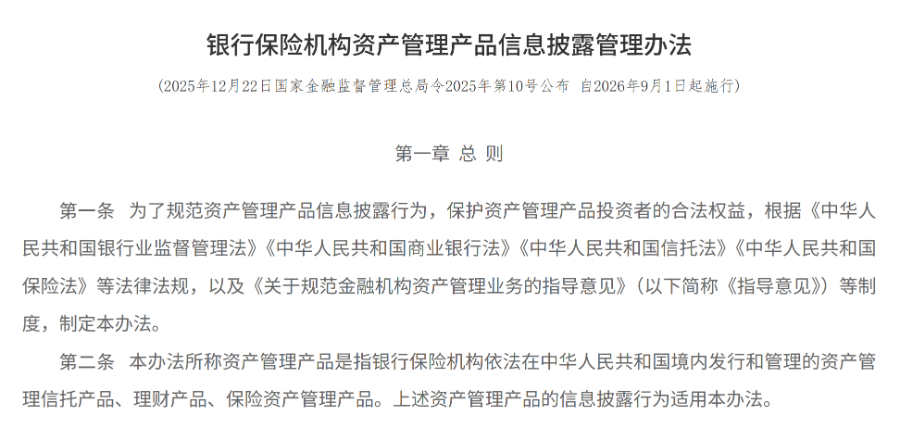
金监总局:原则上不得调整业绩比较基准 全面规范资管产品信披要求
Guo Ji Jin Rong Bao· 2025-12-27 03:37
Core Viewpoint - The Financial Regulatory Bureau has issued the "Management Measures for Information Disclosure of Asset Management Products by Banking and Insurance Institutions," aiming to standardize information disclosure for asset management trust products, wealth management products, and insurance asset management products, ensuring investor rights and obligations are met [1][2]. Group 1: General Regulations - The Measures establish general provisions for information disclosure, including channels, responsibilities, methods, prohibited behaviors, and text requirements [2]. - Prohibited behaviors include making unauthorized profit promises, predicting actual investment performance, using incomparable or inaccurate data for performance comparison, and disparaging other asset management products or institutions [2]. Group 2: Disclosure Requirements - The Measures comprehensively regulate the information disclosure requirements throughout the product lifecycle, covering aspects such as product offering information, periodic disclosures, temporary disclosures, and termination disclosures [2]. - Specific requirements are set for product prospectuses, performance benchmarks, issuance announcements, periodic reports, net value disclosures, past performance, and temporary disclosures [2]. Group 3: Performance Benchmark Adjustments - Product managers are generally not allowed to adjust performance benchmarks; any necessary adjustments must follow strict internal approval processes and be disclosed in periodic reports and updated product prospectuses [2][3]. Group 4: Differentiation Between Public and Private Products - The Measures differentiate between public and private products, imposing stricter disclosure requirements on public products due to their broader audience and lower investor thresholds [3]. - Public product information must be disclosed through unified industry channels, while private products can use agreed-upon disclosure channels [3]. Group 5: Self-Regulatory Norms - The Measures call for the establishment of self-regulatory norms for each product type, with relevant associations collaborating to create a detailed "1+3" information disclosure rule system [4].
资管产品信披标准明确!有这十大变动 附解读
2 1 Shi Ji Jing Ji Bao Dao· 2025-12-27 01:59
Core Viewpoint - The Financial Regulatory Authority has released the "Management Measures for Information Disclosure of Asset Management Products by Banking and Insurance Institutions," aiming to enhance transparency and accountability in the disclosure of asset management products [1][3]. Summary by Relevant Sections Information Disclosure Obligations - The new regulations require that professional institutions providing audit and legal opinions for asset management products must act diligently, ensuring that their documents do not contain false records, misleading statements, or significant omissions [4]. - Asset management products that involve investor meetings or beneficiary assemblies must disclose the procedures and rules for convening, deliberating, and voting in the product's prospectus or contract [4][5]. Performance Benchmark Disclosure - The regulation clarifies that asset management products are not required to disclose performance benchmarks, except for public products that have been established for less than one month, which must disclose their performance benchmarks alongside past performance [5]. Reporting Requirements - Non-cash management products must disclose the net asset value, cumulative net value, and performance during the reporting period, while cash management products must disclose the asset net value and annualized yield for the reporting period [6]. - Cash management products are required to disclose the net income per ten thousand units and the seven-day annualized yield within two working days after each open day, with specific rules for products established for less than seven days [6]. Transparency and Risk Disclosure - The regulations enhance transparency regarding underlying assets, requiring disclosure of significant risks such as bond defaults or stock suspensions for assets constituting 10% or more of the product [7]. - For non-standardized assets classified as non-performing, temporary disclosure is not required, but relevant information must be included in quarterly, semi-annual, and annual reports [8]. Liquidation Reporting - The new rules mandate that liquidation reports must include details such as the product's duration, termination date, asset disposal status, and distribution of remaining assets [9]. Continuous Disclosure and Special Considerations - Information disclosure must be consistent and fair to all investors, avoiding misleading practices. Special measures for information disclosure are encouraged for elderly investors aged 65 and above to enhance their experience [10]. - Self-regulatory organizations like the China Trust Industry Association and the China Banking and Insurance Asset Management Association are tasked with establishing and managing disclosure norms for various asset management products [11].