
低空经济

Search documents
聚焦新质生产力,盐城东台经贸洽谈会搭建合作共赢平台
Yang Zi Wan Bao Wang· 2025-11-20 06:36
Group 1 - The 2025 Yancheng Dongtai Economic and Trade Conference was successfully held, focusing on development plans and strategic cooperation agreements to boost local economic growth [1][3] - Dongtai has been recognized for its high-quality development, being awarded as an excellent county for three consecutive years, and aims to enhance its industrial foundation and innovation capabilities [2][3] - The conference highlighted the signing of 25 industrial projects, which cover strategic emerging fields such as new energy, new generation information technology, and new materials, contributing to the strengthening and extension of industrial chains [3][4] Group 2 - Dongtai's strategic advantages include a rising proportion of strategic emerging industries, with key sectors like third-generation semiconductors and hydrogen energy gaining momentum [2] - The establishment of a collaborative innovation system involving research institutes, incubators, and industry alliances has positioned Dongtai as a national model for innovation-driven development [2] - The local government is committed to enhancing the business environment, promoting digital public services, and ensuring a supportive atmosphere for investment and entrepreneurship [2][4]
中国劳务品牌迈向“精工智造”
Zhong Guo Xin Wen Wang· 2025-11-20 02:23
Core Insights - The low-altitude economy is identified as a future industrial direction for the country, with initiatives like the "Yangpu Low-altitude Flight Numerical Control Technician" labor brand aimed at cultivating talent in this emerging field [1][3] - The third National Labor Cooperation and Labor Brand Development Conference highlighted the importance of technology-driven labor brands in promoting industrial upgrades and integrating into the "intelligent manufacturing" wave [1][3] Industry Developments - The "Yangpu Low-altitude Flight Numerical Control Technician" labor brand focuses on addressing the talent shortage in the low-altitude sector, emphasizing skills such as installation, calculation, teaching, and operational capabilities [3] - The "Tianjin Intelligent Manufacturing Engineer" program has trained tens of thousands of engineers who are proficient in robotics and artificial intelligence, capable of solving real production issues [3] - The Hangzhou AI Animation Production Technician brand is a new labor brand that integrates AI animation technology with digital art creation, directly linked to an industry output value of 504.4 billion RMB and involving 647,000 practitioners [3] Labor Market Impact - Currently, there are nearly 2,500 labor brands in China, which have created millions of jobs. These labor brands are becoming crucial engines for high-quality development in "intelligent manufacturing" through skill upgrades and industry integration [4]


重构增长动能 - 2026年经济与市场展望
2025-11-20 02:16
Summary of Key Points from Conference Call Records Industry or Company Involved - The discussion primarily revolves around the **Chinese economy** and its future outlook, particularly in the context of the **15th Five-Year Plan**. Core Insights and Arguments 1. **High-Quality Development Focus**: The 15th Five-Year Plan emphasizes high-quality development, balancing effective qualitative improvements with reasonable quantitative growth, highlighting new productive forces, livelihood, and safety as key drivers for the next five years of economic development [1][3][4] 2. **Shift in Economic Strategy**: The future direction of China's economy is shifting from a single supply-side focus to a balanced approach addressing both supply and demand, with traditional industry upgrades and emerging industry growth occurring simultaneously [1][7] 3. **Investment Opportunities**: The concept of "investors" is highlighted, focusing on investments across the entire lifecycle of industries, with increased government spending in social employment, healthcare, and education to stimulate consumption potential [1][11] 4. **Economic Growth Expectations for 2026**: Five key highlights for 2026 include a potential easing of US-China tensions, strong export resilience, rising shares in emerging markets, increased innovation, and a focus on boosting domestic demand, with a GDP growth target of 5% [2][13][22] 5. **Emerging Industries**: The plan identifies several emerging industries such as low-altitude economy, embodied intelligence, hydrogen energy, and nuclear fusion, indicating a significant expansion of the strategic emerging industry framework [5] 6. **Risk Prevention Focus**: The focus of risk prevention has shifted from real estate and local government debt to external risks and domestic price pressures, with positive implications for anti-involution sectors and new infrastructure [8] 7. **Asset Allocation Recommendations**: Four main investment themes are identified: inflow of funds, technological innovation, institutional reform, and consumption upgrades, suggesting a positive outlook for the stock market [15][16] 8. **Bond Market Outlook**: A downward trend in government bond yields is anticipated due to a declining growth center and a sluggish real estate market, making government bonds a potentially attractive investment [18] 9. **Gold Market Dynamics**: Recent volatility in the gold market is attributed to supply-demand changes and geopolitical factors, with expectations of continued price support due to increased gold reserves by countries concerned about US debt risks [19] 10. **Commodity Market Outlook**: A bullish outlook is maintained for commodities, particularly gold and silver, with strategic and rare metals expected to enter an upward cycle, driven by high-quality and secure development needs [20] Other Important but Possibly Overlooked Content - The emphasis on "reasonable quantitative growth" aims to maintain GDP growth between 4.6% and 5% to achieve medium-developed country status by 2030 and 2035 [6] - The importance of safety in ensuring stable development is highlighted, alongside the need for high-level openness and the construction of a unified domestic market [4][9] - The ongoing governance of involution-style competition is crucial for improving market conditions and ensuring sustainable economic growth [12]
如何搭建低空经济“空中高速路”?
Huan Qiu Wang· 2025-11-19 22:45
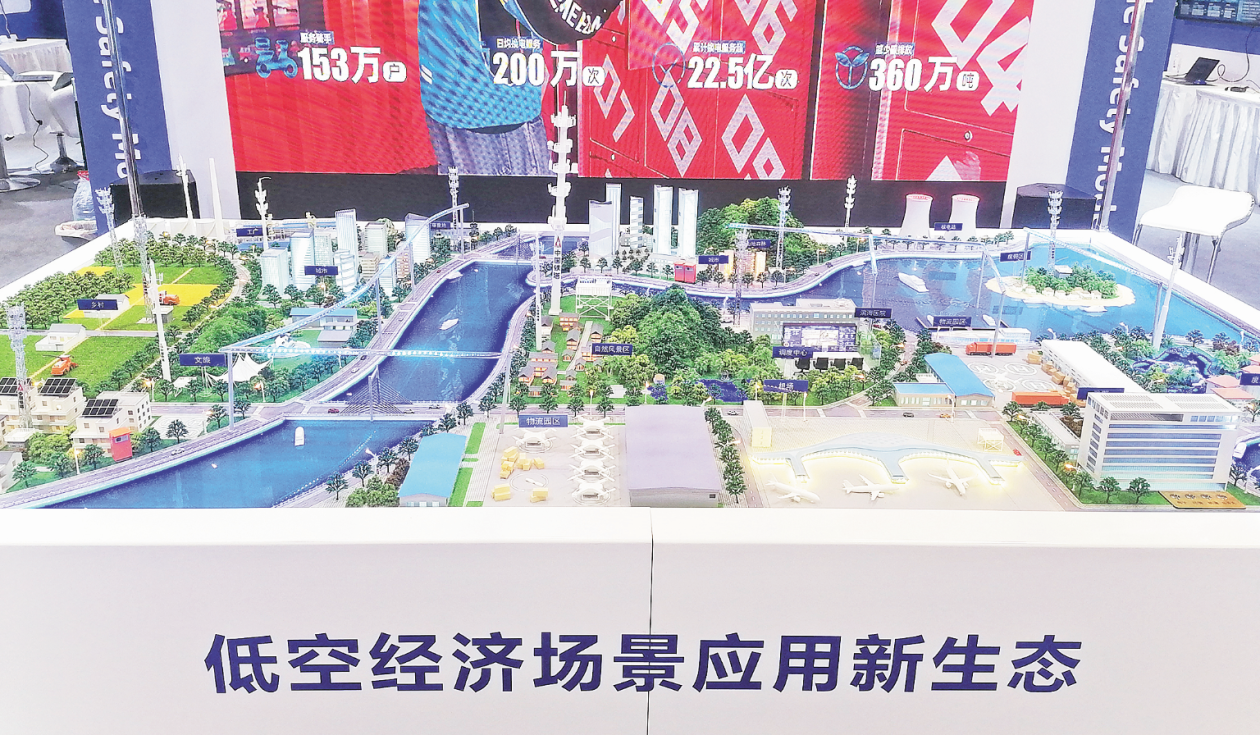
Core Viewpoint - The low-altitude economy is seen as a new engine for China's economic development, requiring the establishment of an invisible air traffic network with appropriate regulations and capabilities to ensure safety and efficiency [1][5]. Group 1: Current Practices and Challenges - China has initiated various practices in the low-altitude economy, including the use of eVTOLs, flying cars, and delivery drones, but these applications are currently fragmented and lack regulatory measures [2][5]. - The development of the low-altitude economy primarily focuses on airspace below 1,000 meters, with specific altitude ranges for different applications, necessitating a unified communication and navigation system to prevent chaos in the air [5][6]. Group 2: Safety and Regulatory Framework - The National Development and Reform Commission emphasized that safety is the primary prerequisite for developing the low-altitude economy, advocating for a cautious and orderly expansion of applications [5]. - The "Kang Qian City-Level Low Altitude Safety Operation Model 1.0" has been proposed to address urban safety regulation challenges, outlining a structured air traffic network supported by various facilities [6][7]. Group 3: Technological and Infrastructure Needs - The low-altitude economy requires a robust safety support network that includes communication, navigation, and monitoring facilities to ensure the safe operation of low-altitude aircraft [6][8]. - The integration of over 2.1 million communication towers across China can serve as foundational infrastructure for the low-altitude economy, providing necessary services and charging stations for drones [6][8]. Group 4: Intelligent Traffic Management - The development of a smart traffic management system for low-altitude operations is essential, similar to existing ground traffic management systems, to mitigate risks associated with low-altitude flights [7][8]. - The proposed low-altitude management service platform will enable indirect control of drones, ensuring comprehensive monitoring and management of flight operations [7][8]. Group 5: Legal and Policy Considerations - The legal framework for the low-altitude economy is under discussion, with a focus on balancing safety, compliance costs, and fostering innovation [11][12]. - Proposed legislative changes aim to clarify management responsibilities and provide local governments with the authority to support low-altitude economic enterprises [11][12]. Group 6: Future Directions and Innovations - Experts advocate for a flexible legal environment that encourages technological innovation while ensuring safety, suggesting that regulations should allow for adaptability to rapid technological advancements [13]. - The potential for automatic driving and AI management in low-altitude operations highlights the need for forward-thinking legislation that can evolve with technological progress [13].
英搏尔系列八-三季报点评:单三季度收入同比增长 69%,eVTOL、关节模组等领域相关业务持续推进【国信汽车】
车中旭霞· 2025-11-19 13:54
Core Viewpoint - In Q3 2025, the company achieved a revenue growth of 69% year-on-year, with a sequential increase in gross margin [4][8][11]. Financial Performance - In Q3 2025, the company reported revenue of 990 million yuan, a year-on-year increase of 69.4% and a quarter-on-quarter increase of 20.2%. The net profit attributable to shareholders was 110 million yuan, up 580.6% year-on-year and 322.7% quarter-on-quarter [4][8]. - For the first three quarters of 2025, the company achieved a total revenue of 2.36 billion yuan, representing a year-on-year growth of 46.7%, and a net profit of 150 million yuan, up 191.2% year-on-year [8][11]. Business Development - The company has established long-term partnerships in the new energy passenger vehicle sector with major automakers such as GAC Honda, Dongfeng Nissan, and Geely [4][24]. - In the new energy commercial vehicle sector, collaborations include companies like Geely Remote, Beiqi Foton, and SAIC Maxus [4][24]. - The company has also formed partnerships in the non-road vehicle sector with clients such as XCMG, SANY, and Doosan [4][24]. Market Expansion - The company has made significant progress in the low-altitude economy sector, collaborating with leading firms like EHang and Eviation [5][25]. - A joint venture with EHang has been established, with the construction of a factory nearing completion and entering trial production [6][25]. Product Innovation - The company focuses on advanced transmission modules and eVTOL systems, leveraging its "integrated chip" technology for high efficiency and lightweight designs [7][28]. - The company has developed a sixth-in-one power system that integrates multiple components, enhancing performance and reducing space requirements in vehicles [32][33]. Strategic Collaborations - The company has engaged in deep collaborations with Fengli Intelligent Technology and other firms to enhance product offerings in various sectors, including new energy vehicles and eVTOL [41][43]. - A strategic partnership with Guangdong Gaoyu Technology aims to innovate in the flying car sector, focusing on key components like motors and controllers [40][41].


万亿赛道潮起!物流、巡检、救援……低空经济应用场景创新发展
2 1 Shi Ji Jing Ji Bao Dao· 2025-11-19 11:01
Core Insights - The Ministry of Transport of China has released a set of typical cases for low-altitude transportation applications, covering areas such as low-altitude logistics, transportation production operations, and emergency rescue, with a total of 23 cases aimed at promoting innovation in low-altitude transportation applications [1][8] Low-altitude Logistics - In Nanjing, low-altitude blood transportation has been implemented to address delays caused by urban traffic congestion, reducing delivery time from the blood center to hospitals to 15 minutes, a 60% reduction compared to traditional methods, with nearly 2,000 flights completed and over 3,000 units of blood transported by May 2025 [4] - Qingdao has established a regular low-altitude logistics route between the mainland and Ling Shan Island, reducing transportation time from 40 minutes to 10 minutes, achieving over 70% efficiency improvement, with more than 60 flights and over 1 ton of goods transported since the route opened in October 2024 [4] Low-altitude Transportation Production Operations - Harbin has integrated drones with traditional law enforcement vessels to create a multi-dimensional patrol network, improving monitoring efficiency by 40% over traditional methods across a 600-kilometer waterway [5] Low-altitude Emergency Rescue - In Sichuan, a low-altitude emergency response system has been established in disaster-prone areas, utilizing drones equipped with advanced technology to generate emergency reconnaissance reports, aiding in disaster response and recovery efforts [5] Development Path of Low-altitude Economy - The low-altitude economy in China follows a development path of "first carrying information, then carrying goods, and finally carrying passengers," with 12 of the 23 cases focused on information transmission, 8 on cargo, and 3 on both [6][7] - The gradual development approach ensures a balance between safety and growth in the low-altitude economy, paving the way for future passenger transport scenarios [7] Market Potential - The low-altitude economy is gaining significant attention, with projections indicating a market size of 1.5 trillion yuan by 2025 and 3.5 trillion yuan by 2035, driven by technological advancements and integration with various industries [8][11]
总投资209.7亿元 13个高能级项目在成都签约
Zhong Guo Jing Ji Wang· 2025-11-19 07:26
Group 1 - The fifth Park City Forum was held in Chengdu, where 13 high-energy projects were signed with a total investment of 20.97 billion yuan, focusing on smart manufacturing, low-altitude economy, and biomedicine [1] - Green low-carbon and circular economy industries were highlighted, with multiple projects promoting efficient resource utilization through technological innovation, enhancing both ecological and economic values [1] - The latest results of the "Park City Index" were released, which upgraded four indicators while maintaining the original framework of 45 core indicators, expanding the database's scale and coverage [1] Group 2 - The "Chengdu Development Report for the Park City Demonstration Zone (2020-2025)" was published, summarizing the top-level design and construction achievements over the past five years and outlining future development plans [2] - Chengdu has made significant progress in building a modern industrial system and a responsive business environment, gathering over 4 million operating entities and 1.45 million high-tech enterprises [2] - The city has been recognized as one of China's best talent attraction cities and most investment-attractive cities for several consecutive years, indicating a continuous enhancement of development momentum [2]
低空企业加速拓展海外市场,通用航空ETF(159378)早盘活跃
Sou Hu Cai Jing· 2025-11-19 04:14
Core Insights - The Chinese eVTOL industry is experiencing significant growth, with multiple companies securing orders at the China International Import Expo, indicating a strong market demand and technological advancement [1][2] - The establishment of supportive policies and regulations is enhancing the low-altitude economy, providing a solid foundation for its development [1][2] Industry Developments - Several Chinese eVTOL manufacturers, including Volant Aviation, signed agreements for 95 aircraft orders totaling 2.375 billion yuan, with substantial deposits received [1] - The State Council has issued measures to encourage private investment in low-altitude economic infrastructure, aiming to diversify funding sources for industry growth [1] - The Shanghai Municipal Government has proposed a draft regulation to improve safety management for civil unmanned aerial vehicles, focusing on data management and inter-departmental cooperation [1] Market Positioning - The eVTOL sector is becoming a core part of the global industrial chain, with Chinese companies leveraging their technological and commercial capabilities to expand internationally [2] - The General Aviation ETF (159378) is highlighted as the largest ETF focused on the low-altitude economy and drones, serving as a strategic investment tool for this emerging sector [2]


成体系推进 全环节先行 绍兴市越城区探索低空经济发展新路径
Ren Min Ri Bao· 2025-11-18 23:01
Core Insights - The successful signing of the DJI Yangtze River Delta Industrial Park project in Shaoxing City, Zhejiang Province, highlights the rapid development and efficiency of the region in establishing a low-altitude economy [1] Group 1: Infrastructure Development - Shaoxing has established a comprehensive low-altitude economic service center and built nine specialized platforms to support the development of the low-altitude economy [2] - The "512" new infrastructure project is underway, with plans to construct five large, ten medium, and 200 small take-off and landing sites, alongside an 800-meter runway for low-altitude testing [2][3] - A low-altitude route network consisting of five main, ten central, and fifty branch lines is being developed, with a total length of 36 kilometers for public low-altitude routes [2] Group 2: Industry Ecosystem - Shaoxing has attracted 27 low-altitude economic projects with a total investment of 33 billion, covering areas such as complete machine research and development, core chips, and system software [4] - The establishment of the DJI Yangtze River Delta Industrial Park is expected to create a low-altitude economic industrial cluster, leveraging DJI's global technology and industry integration advantages [4] Group 3: Application Scenarios - Thirteen urban low-altitude logistics routes have been opened, with a significant increase in delivery efficiency by 70% [6] - The first regular low-altitude bus route in the Yangtze River Delta has been upgraded to connect multiple cities, achieving cross-city travel within one hour [6] - A low-altitude tourism project has been initiated, featuring nine sightseeing routes and a daily visitor capacity exceeding 200 [6] Group 4: Service and Talent Development - The Shaoxing low-altitude economic service center allows businesses to handle 22 services, including drone registration and flight activity reporting [7] - A talent training base has been established to support the industry with specialized training for drone operators and controllers [7] - The region has hosted various high-profile exhibitions to enhance its industry influence and attract global resources [7]
从概念新词到产业热词 新场景引领产业新变革
Zheng Quan Ri Bao· 2025-11-18 16:26
Core Viewpoint - The article discusses the importance of "new scenarios" in driving technological innovation and industrial transformation, as highlighted by the recent government policy aimed at fostering the development and application of these scenarios [2][4][11]. Group 1: Definition and Importance of New Scenarios - New scenarios are defined as specific contexts for validating and applying new technologies, products, and business models, serving as a bridge between technology and industry [3][4]. - The cultivation and opening of new scenarios are seen as strategic choices to enhance China's market advantages and overcome technological bottlenecks [4][5]. Group 2: Challenges in Implementing New Scenarios - There is a call for the establishment of new scenarios as incubators for new models and industries, with examples showing that without foundational scenarios like mobile payments, new business models would not emerge [5][6]. - Many innovative technologies in fields such as artificial intelligence and robotics remain in pilot stages due to a lack of effective application scenarios [6][7]. Group 3: Case Studies and Government Initiatives - Hefei has developed a "super experimental field" for low-altitude economy, expanding to 22 application scenarios and establishing over 180 low-altitude takeoff and landing facilities [8]. - Guangdong has created 14 innovative application scenario testing zones, facilitating a more efficient transition from technology to commercial contracts [8][10]. Group 4: Mid-Testing Platforms and Industry Support - The establishment of mid-testing platforms is crucial for the industrialization of new technologies, addressing issues like process optimization and cost control [9][10]. - Central and private enterprises are actively participating in building mid-testing platforms, enhancing the supply of innovative solutions [10]. Group 5: Future Implications - The integration of new scenarios is reshaping the technology, industry, and capital ecosystems, indicating a significant economic and social transformation [11].