氢能

Search documents
山西焦化巨头转型路漫漫,美锦能源终止部分氢能募投项目
Hua Xia Shi Bao· 2025-11-21 23:32
Core Viewpoint - Meijin Energy has clarified its decision to terminate part of its hydrogen energy projects, emphasizing its commitment to maintaining strategic focus and solidifying the foundation for hydrogen development [1][5]. Project Termination - The terminated project, "Hydrogen Fuel Cell Power System and Hydrogen Fuel Commercial Vehicle Parts Production Project (Phase I)," had an initial planned investment of 1.502 billion yuan, stemming from a convertible bond financing plan initiated in 2022 [2]. - The project aimed to establish a production base for hydrogen fuel cell systems and components in Jinzhong City, Shanxi Province, to facilitate Meijin Energy's transition into the hydrogen sector [2]. - Despite a significant reduction in the funding plan from 600 million yuan to 250 million yuan, the project's progress remained unsatisfactory, with only 73.43 million yuan invested by September 30, 2025, representing a mere 29.37% of the planned investment [2][4]. Market Concerns - Analysts have expressed concerns that the termination of the project may indicate a significant shift in Meijin Energy's hydrogen strategy, as the hydrogen fuel cell market faces challenges such as insufficient scale and limited commercial viability for passenger vehicles [1][5]. - The overall construction of hydrogen refueling stations is gradually increasing, but the absolute numbers remain low, hindering the promotion of hydrogen fuel cells [1]. Financial Performance - Meijin Energy's revenue is heavily reliant on coal, with 90% of its income derived from this sector. The company has experienced a continuous decline in performance, transitioning from significant profits in 2021 to losses in 2024 [6]. - In 2021, the company achieved a record revenue of 21.358 billion yuan, a 65.71% increase year-on-year, and a net profit of 2.541 billion yuan, up 269.16% [6]. - By 2023, revenue fell to 20.811 billion yuan, a decrease of 15.4%, with net profit plummeting 86.92% to 289 million yuan [7]. - In 2024, the company reported a revenue drop of 8.55% to 19.031 billion yuan and a net loss of 1.143 billion yuan, a staggering decline of 495.31% [7]. - As of the first three quarters of 2025, revenue further declined by 9.71% to 12.974 billion yuan, with net losses expanding to 737 million yuan, a 12.57% increase in losses [7]. Strategic Direction - Despite the challenges, Meijin Energy plans to maintain its strategic focus on hydrogen development, expanding into diverse applications such as hydrogen storage, distributed generation, and hydrogen power systems for drones and ships [5]. - The hydrogen business currently accounts for only 4.16% of the company's revenue, indicating that it has not yet become a core driver of performance [7].



“变革破局 共生共赢——2025中国新能源产业高质量发展论坛”成功召开
Zhong Guo Jing Ying Bao· 2025-11-21 14:38
Core Insights - The Chinese renewable energy industry is transitioning from "scale expansion" to "quality improvement," emphasizing technological innovation, green development, and international cooperation as key drivers for future growth [1][2]. Industry Trends - The current cyclical adjustment in the renewable energy sector is seen as a necessary process for high-quality development, marking a shift from explosive growth to maturity [2]. - The photovoltaic industry exemplifies the challenges faced, particularly regarding the protection of innovation and intellectual property, which is crucial for long-term development [3]. - The low entry barriers and inadequate product value assessment in the photovoltaic sector have led to severe homogenization and price competition [3]. Technological Innovation - Technological innovation is identified as a critical tool for overcoming industry challenges, with a focus on integrating energy storage and new power systems to enhance competitiveness [4]. - The fuel cell vehicle market is expected to narrow the cost gap with traditional fuel vehicles through technological advancements and policy support, aiming for a 15% market penetration by mid-2025 [5]. - Smart manufacturing technologies are injecting new transformative power into the renewable energy sector, with advancements in robotics enhancing operational efficiency [6]. ESG Practices - ESG (Environmental, Social, and Governance) factors are becoming central to high-quality development in the renewable energy industry, with companies seeking to balance long-term sustainability goals with operational objectives [7][8]. - The importance of a comprehensive understanding of ESG issues is emphasized for better engagement with international clients, particularly in supply chain management [9]. Global Strategy - Companies are encouraged to rethink their international strategies, focusing on their unique strengths and avoiding overcrowded markets [10]. - The majority of global photovoltaic components are produced in China, which continues to leverage its technological and cost advantages to meet global energy transition demands [11].

金博股份喜获多个领域企业客户认可
Zheng Quan Ri Bao Zhi Sheng· 2025-11-21 12:09
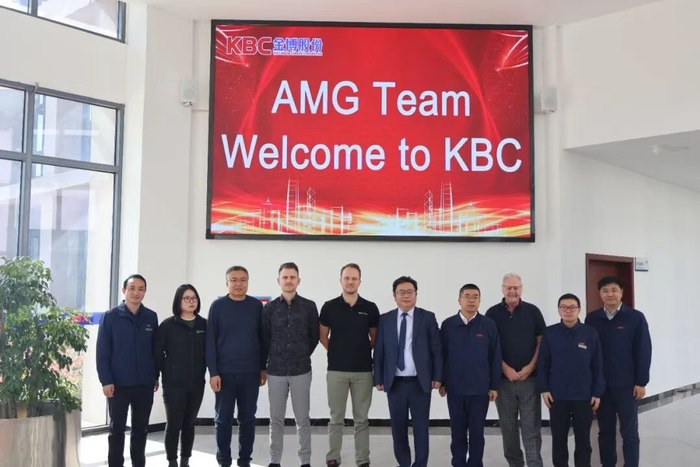
Core Insights - Jinbo Carbon Co., Ltd. has received recognition from clients in the photovoltaic, hydrogen energy, and automotive sectors for its products, processes, and technologies [1] - The company was awarded the "Value Partner Award" by Tongwei Co., Ltd. during the 8th China International Photovoltaic and Energy Storage Industry Conference, highlighting its comprehensive strength and innovative value in the photovoltaic materials sector [1] Group 1 - On November 20, Jinbo's subsidiary, Hunan Jinbo Hydrogen Energy Technology Co., Ltd., signed a strategic cooperation framework agreement with Zhejiang Fengyuan Hydrogen Energy Technology Co., Ltd. to collaborate on key materials for fuel cells, product validation, and domestic application [2] - Fengyuan Hydrogen Energy, established in May 2018, holds over 150 patents related to fuel cells, including more than 100 invention patents, and provides hydrogen energy solutions for vehicles and power stations [2] Group 2 - From November 19 to November 21, a team of experts from Mercedes-Benz Group AMG conducted a comprehensive audit of Jinbo, focusing on production process compliance, product quality control, supply chain management, and after-sales service standards [2] - The AMG experts visited Jinbo's research institute and evaluated the company's performance in quality control, technology application, and order delivery, providing positive feedback and recognition [2][4]

佛山创新实践:车间里长出未来产业
2 1 Shi Ji Jing Ji Bao Dao· 2025-11-21 11:17
Core Insights - The article highlights the innovative industrial development in Foshan, emphasizing that innovation stems from real industrial needs rather than theoretical concepts [1][2][3] Group 1: Industrial Innovation - Foshan's approach to innovation is characterized by a "from scene to scene" logic, where technology is tested and refined in real-world applications [2] - TianTai Robotics achieved a significant milestone by securing the world's first order for 10,000 humanoid robots, showcasing the practical application of robotics in logistics [1] - The successful operation of Mona Lisa Group's zero-carbon combustion production line demonstrates the effective application of hydrogen technology in high-temperature manufacturing, reducing carbon emissions by 5,200 tons annually [1] Group 2: Ecosystem and Collaboration - Foshan has established a robust innovation ecosystem, with over 170 hydrogen enterprises and more than 3,000 robotics companies, fostering a unique industrial environment [2] - The collaboration between government, research institutions, and enterprises facilitates rapid technology validation and application, making Foshan an attractive location for businesses [2] - The presence of diverse application scenarios in Foshan enhances the ability of companies to quickly test and implement their technologies, providing a competitive advantage [2] Group 3: Practical Implications - The article suggests that the best innovations often arise from simple needs, and significant transformations can emerge from ordinary workshops [3] - When technology is deeply rooted in industrial practices, it transforms from a distant dream into a daily reality [3]

【新华财经调查】榆林实现多元破局 铿锵进阶“万亿之城”
Xin Hua Cai Jing· 2025-11-21 09:49
Core Insights - Yulin, a city in Shaanxi, has transformed its economy from resource dependence to diversified development, achieving a GDP growth from 381.8 billion yuan in 2018 to 754.868 billion yuan in 2024, nearly doubling in six years [1] - The city is focusing on high-end chemical products and new materials, while also developing hydrogen energy, equipment manufacturing, and specialty agriculture, aiming to create a trillion-level energy and chemical industry cluster [1] Group 1: Economic Transformation - Yulin has become a model for resource-based city transformation, with a modern coal chemical industry system supported by four trillion-level and eight hundred-billion-level projects [3] - The city is implementing a "coal to hydrogen" strategy, leveraging its resources to transition from a coal-based economy to a hydrogen economy, positioning itself as a "Hydrogen City" [4][5] Group 2: Technological Innovation - The National Energy Group Yulin Chemical Company has achieved a breakthrough in a 79.8 billion yuan circular economy coal comprehensive utilization project, marking a significant step from planning to implementation [4] - Yulin is focusing on key technologies in hydrogen production, with projects like the hydrogen energy demonstration project receiving national funding support [6][8] Group 3: Environmental Sustainability - Yulin is addressing solid waste management by promoting comprehensive utilization, with over 6.8 million tons of solid waste generated annually, representing about 40% of the province's total [9] - The city is implementing projects to convert waste into resources, such as using coal gangue for construction materials and ecological restoration, achieving both ecological and economic benefits [11]
从“三次牵手”管窥塞罕坝精神发源地如何解锁“两山”转化密码
Zhong Guo Xin Wen Wang· 2025-11-21 09:26
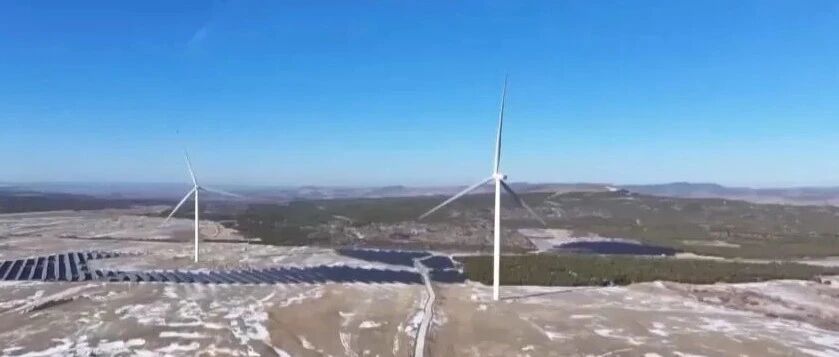
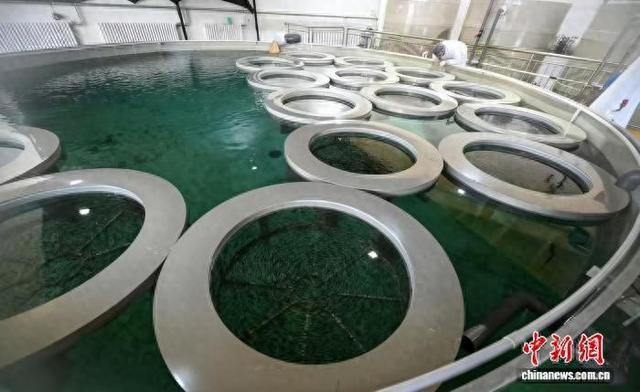
Core Insights - The article highlights the transformation of ecological resources into economic benefits in Chengde City, Hebei Province, emphasizing the "Two Mountains" theory of ecological and economic balance [1][9]. Group 1: Salmon Farming - Chengde's Weichang County has ideal conditions for salmon farming, with a forest coverage rate of 60.25% and an average annual temperature of 3.3°C, leading to successful hatching of 1.6 million salmon fry [1][2]. - The survival rate of salmon fry in this region is at least 10% higher than in coastal areas, and the farming cycle has been reduced from 24 months to 18 months through a zero-pollution, high-circulation model [2][3]. Group 2: Coffee and Almond Products - Weichang County is collaborating with Yunnan Province to create new products like coffee almond milk, combining local almond resources with Yunnan's coffee, which has gained popularity among young consumers [3][5]. - The county's government is actively supporting local farmers by promoting secondary processing of agricultural products to enhance their market value [3][5]. Group 3: Clean Energy Development - The region is leveraging its abundant wind and solar resources, with a total clean energy installed capacity exceeding 7.58 million kilowatts and an annual power generation of 17 billion kilowatt-hours [8]. - Innovative hydrogen production technology is being developed, achieving an average light-hydrogen conversion rate of over 19%, which is expected to open new pathways for the hydrogen industry [8][9]. Group 4: Collaborative Development - The article emphasizes the importance of regional collaboration for high-quality development, suggesting that Weichang County's success is partly due to its partnerships with other provinces [9]. - The integration of technology in ecological and energy industries is seen as a way to ensure that local communities and businesses benefit from green development, creating a win-win situation for ecology, economy, and society [9].
改革破障激活力,山东科技创新治理体系持续完善
Feng Huang Wang Cai Jing· 2025-11-21 07:07
Core Viewpoint - The key to unleashing technological innovation and accelerating the construction of a strong technological province in Shandong is deepening the reform of the technological system during the 14th Five-Year Plan period [1] Group 1: Reform of Technological Management System - The reform focuses on addressing the fragmentation in technological management, enhancing coordination among departments, and promoting a unified approach to technological innovation across the province [1] - Strategic cooperation agreements have been signed with over 10 departments and new consultation agreements with 16 cities to foster a collaborative environment for technological innovation [1] - A mechanism integrating talent, education, innovation, and industry has been established to ensure synchronized development [1] Group 2: Reform of Technological Project Management Model - The provincial technology department is enhancing organized research and implementing new project organization methods, significantly improving the quality and effectiveness of technology projects [2] - The launch of 31 provincial-level technology demonstration projects, including "Nuclear Future" and "Perovskite Solar Cells," has shown remarkable results [2] - The hydrogen energy industry in Shandong has seen growth from over 500 companies in 2020 to more than 1,200, driven by the "Hydrogen into Thousands of Homes" demonstration project [2] Group 3: Reform of Evaluation and Incentive Mechanisms - The provincial technology department is leading reforms in technology rewards, evaluation of scientific achievements, and talent assessment, establishing a five-dimensional value standard for evaluating technological achievements [3] - The shift in technology reward evaluation from a discipline-oriented approach to an industry-oriented one has resulted in economic benefits of 86 billion yuan from nine special award achievements during the 14th Five-Year Plan [3] - Reforms in talent evaluation have led to the development of 145 institutional documents that promote a more favorable environment for talent emergence [3] Future Outlook - The provincial technology department plans to introduce a new round of technological system reforms to provide stronger institutional support for building a strong technological province in the upcoming 15th Five-Year Plan [3]
中极氢能段晚儿:未来3—5年氢能汽车逐步缩小与燃油车成本差距
Zhong Guo Jing Ying Bao· 2025-11-21 05:55
Core Viewpoint - The hydrogen energy vehicle sector is characterized by commercial vehicles leading the way, policy-driven growth, and accelerated technological breakthroughs, with expectations for hydrogen applications in transportation to achieve lower lifecycle costs than fuel vehicles by the mid-point of the 14th Five-Year Plan [1][2]. Group 1: Market Development - As of July 2025, the cumulative sales of fuel cell vehicles in China are projected to reach 30,000 units, with over 90% localization of fuel cell systems [1]. - The 300kW fuel cell system has achieved a hydrogen consumption of 8kg per 100km and a range of 700km [1]. - Commercialization has been established in mid-to-long-distance heavy-load scenarios such as trunk logistics, cold chain logistics, and mining port applications [1]. Group 2: Infrastructure and Policy - There are nearly 600 hydrogen refueling stations nationwide, with over 10 provinces implementing free ETC policies for hydrogen vehicles, although regional coverage remains insufficient [1]. - The hydrogen industry during the 14th Five-Year Plan needs to address issues such as cost competitiveness, storage and transportation bottlenecks, standards and safety, industrial chain collaboration, and regional mismatches [2]. Group 3: Future Outlook - In the next 3-5 years, fuel cell vehicles are expected to narrow the cost gap with fuel vehicles through technological iterations, focused application scenarios, and policy collaboration, creating a complementary relationship with pure electric vehicles in differentiated scenarios [2]. - The hydrogen industry is transitioning from demonstration and exploration to large-scale commercialization, requiring policy support to enhance technological innovation, improve infrastructure, establish a sound standard system, optimize regulation, and strengthen regional collaboration and international layout to achieve carbon neutrality goals [2].
保时来/天荣科技/中科氢易/中集氢能/东拓氢能竞逐势银未来奖
势银能链· 2025-11-21 03:34
Core Viewpoint - The article discusses the upcoming 2025 TrendBank Hydrogen Energy and Fuel Cell Industry Annual Conference, highlighting the recognition of innovative companies in the hydrogen energy sector through the TrendBank Future Award [2][4]. Group 1: Event Details - The 2025 TrendBank Hydrogen Energy and Fuel Cell Industry Annual Conference will take place from January 6 to 8, 2026, in Ningbo [2]. - The conference aims to award companies that demonstrate courage and determination in product and technology development with the TrendBank Future Award [2]. Group 2: Participating Companies - Over fifty companies in the hydrogen energy industry have registered for the TrendBank Future Award evaluation [4]. - Notable participating companies include: - **Boshilai New Materials Technology (Suzhou) Co., Ltd.**: A leading supplier of green hydrogen electrode products in China, with advanced production lines and capabilities to meet significant demand [6][7]. - **Wuxi Tianrong New Energy Technology Co., Ltd.**: Focuses on overcoming technical challenges in hydrogen energy storage and has developed internationally leading green hydrogen compressor products [8]. - **Ningbo Zhongke Hydrogen Easy Membrane Technology Co., Ltd.**: Engaged in the research and production of new membrane materials for various applications in the hydrogen energy sector [9][10]. - **China International Marine Containers (CIMC) Hydrogen Energy Technology Co., Ltd.**: A key player in the hydrogen energy field, focusing on comprehensive solutions across the hydrogen production, storage, transportation, and utilization chain [11]. - **Suzhou Dongtuo New Energy Co., Ltd.**: Specializes in the development and production of PEM electrolysis hydrogen production equipment and fuel cell technology [12].
我国首台套!全面投运
中国能源报· 2025-11-20 12:07
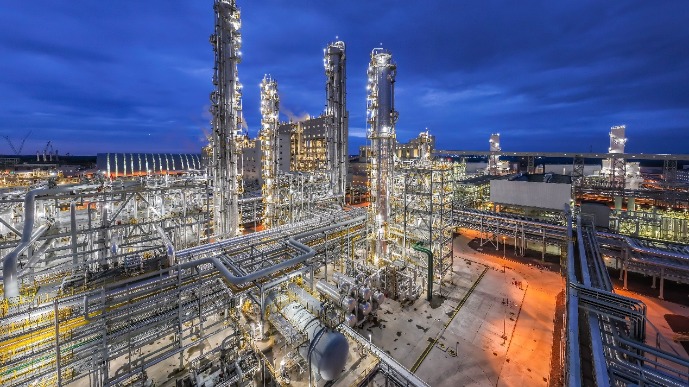
Core Viewpoint - The first integrated green hydrogen coal chemical project in China has commenced market operations, showcasing a replicable model for the green transformation of the coal chemical industry [1]. Group 1 - The project, located in Datang, utilizes a "green electricity hydrogen production + surplus electricity grid connection" collaborative model, marking a significant advancement in the industry [1]. - It has overcome key technical challenges, establishing a deep adjustment mechanism for large-capacity electrolyzers in renewable energy hydrogen production, filling a gap in the industry [1]. - The project has achieved 28 invention patents and published 3 corporate standards, and it has been selected as one of the first pilot projects in the hydrogen energy sector by the National Energy Administration [1]. Group 2 - The project is expected to produce 7.059 million cubic meters of hydrogen annually, contributing to a significant reduction in carbon dioxide emissions [2]. - It is projected to reduce CO2 emissions by 13.88 thousand tons, equivalent to the carbon absorption of 1,400 hectares of mature forest in one year [3].