乳业

Search documents
乳业概念下跌1.12%,9股主力资金净流出超千万元
Zheng Quan Shi Bao Wang· 2025-09-12 13:11
Group 1 - The dairy sector experienced a decline of 1.12%, ranking among the top losers in the concept sector, with companies like Pinwa Food, Junyao Health, and Happy Home seeing significant drops [1][2] - Among the dairy stocks, five companies saw price increases, with Yiatong leading at a rise of 3.74%, followed by *ST Tianshan at 1.10% and Dabeinong at 0.47% [1][2] - The dairy sector faced a net outflow of 631 million yuan from main funds, with 23 stocks experiencing outflows, and nine stocks seeing outflows exceeding 10 million yuan [2][3] Group 2 - The top net outflow was from Yili Group, with a net outflow of 449 million yuan, followed by Beiyinmei with 56 million yuan and Dabeinong with 33 million yuan [2][3] - Conversely, the stocks with the highest net inflow included Yiatong, Wanchen Group, and Tianrun Dairy, with net inflows of 37 million yuan, 17 million yuan, and 4.5 million yuan respectively [2][3] - The trading volume for Yili Group was 1.25%, while Beiyinmei had a turnover rate of 5.90%, indicating varying levels of investor interest [3]




三元牛晨艳:严守食品安全防线才能让企业赢得消费者信任
Zhong Guo Jing Ji Wang· 2025-09-12 06:06
Core Viewpoint - The core element of winning consumer trust in the food industry is ensuring strict adherence to food safety standards, as emphasized by the quality management department of Beijing Sanyuan Foods Co., Ltd. during the 16th China Food Safety Forum [1] Group 1: Industry Importance - The dairy industry is crucial for national welfare and people's livelihoods, with companies like Sanyuan bearing both political and economic responsibilities [2] - Sanyuan Foods has a 70-year commitment to providing high-quality milk, reflecting its dedication to fulfilling its promises to the public [2] Group 2: Food Safety Management - The complexity of managing food safety in the dairy sector arises from the extensive supply chain, which includes production, processing, transportation, and procurement [2] - Sanyuan employs technological innovations and collaborates with suppliers to enhance food safety across the entire supply chain [2][3] - The company has developed a standardized food safety control system based on risk analysis, utilizing quick testing methods and traceability from source to consumer [2] Group 3: Organizational Structure and Culture - Sanyuan has established a food safety management committee and integrates food safety responsibilities into its business operations, ensuring accountability at all levels [4] - The company promotes a culture of food safety through internal training and assessments for its food safety personnel [4][5] - Sanyuan implements a unique three-step tasting process at critical points in the production chain to ensure quality and safety [4] Group 4: Economic Responsibility - The company believes that the greatest economic benefits stem from ensuring product safety and quality, with a strict quality safety veto system in place [5] - Sanyuan incentivizes departments and employees who propose effective quality improvement measures, balancing brand integrity with food safety commitments [5]

财说|贝因美7405万利润背后的现金流危局
Xin Lang Cai Jing· 2025-09-12 00:10
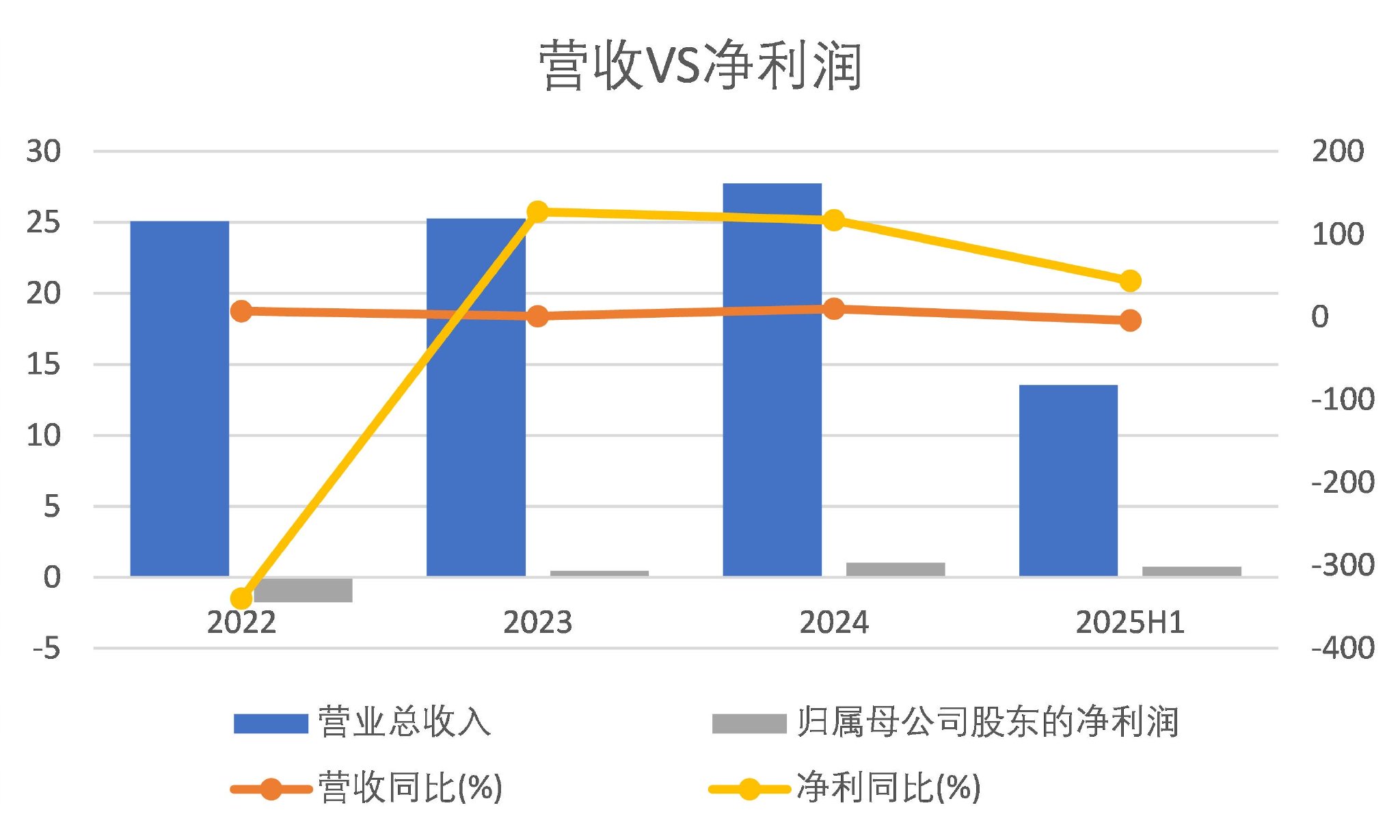
Core Viewpoint - Beiningmei (002570.SZ) has filed a lawsuit against its former partner, Zhejiang Keluobao Food Co., Ltd., claiming trademark infringement and unfair competition, seeking compensation of 72.01 million yuan, which raises concerns about the company's financial health and operational challenges [1][2]. Financial Performance - In the first half of the year, Beiningmei reported a 43% year-on-year increase in net profit attributable to shareholders, but its operating cash flow plummeted by 60%, and accounts receivable are four times the profit [1][2]. - The company's revenue decreased by 4.37% year-on-year, with a more significant decline of 9.94% in the second quarter, indicating a reliance on external factors for profit rather than internal growth [3][6]. - The gross profit margin improved to 45.3%, primarily due to a decrease in raw material prices, but this benefit was offset by increased sales expenses, which rose by 3.37 percentage points to 29.48% [6][8]. Legal Disputes - The conflict between Beiningmei and Keluobao began in 2021 over the "Xiao Beitai" trademark, with accusations of unauthorized expansion of product categories and supply chain disruptions [1][2]. - Keluobao previously sued Beiningmei for 185 million yuan over false advertising and supply chain issues, indicating a prolonged legal battle between the two companies [3]. Market Impact - The lawsuit has created a trust crisis and potential market disruption, as Keluobao is linked to over 200 mother-and-baby chain stores, affecting the sales of "Xiao Beitai" products [2][3]. - Sales personnel are hesitant to recommend "Xiao Beitai" products due to the ongoing legal disputes, which could further impact sales performance [3]. Strategic Transition - Beiningmei's strategic shift towards a "mother-and-baby ecosystem + family health" model is still in the planning stage, with no revenue generated from new business lines as of June [9][10]. - The company's milk powder business still accounts for 89.2% of its revenue, highlighting challenges in diversifying its product offerings [10]. Financial Health - The company's operating cash flow decreased by 59.9% to 80.81 million yuan, primarily due to inventory growth, raising concerns about cash flow management [11][12]. - Beiningmei's accounts receivable reached 316 million yuan, with a significant portion being overdue, indicating potential cash flow issues if collections do not improve [11][14]. - The company continues to face a "high debt, high inventory" situation, with short-term borrowings nearing 1 billion yuan, which could lead to liquidity challenges if credit conditions tighten [14][15].

财说| 贝因美7405万利润背后的现金流危局
Xin Lang Cai Jing· 2025-09-11 23:36
Core Viewpoint - The lawsuit filed by Beiningmei against its former partner, Keluobao, for trademark infringement and unfair competition raises concerns about the company's financial health and potential manipulation of performance metrics through legal actions [1][4]. Group 1: Lawsuit Background - The conflict between Beiningmei and Keluobao began in 2021 when Beiningmei authorized Keluobao to operate the "Xiao Bei Tai" brand of specialized medical infant formula, with a revenue-sharing model [2]. - Initial cooperation was smooth, but tensions arose as Beiningmei accused Keluobao of unauthorized product expansion and trademark registration, while Keluobao claimed Beiningmei cut off supply and owed partnership fees [2][3]. Group 2: Financial Performance - Beiningmei reported a 43% year-on-year increase in net profit, but revenue declined by 4.37%, indicating a disparity between profit growth and sales performance [4][5]. - The increase in net profit was primarily due to a rise in gross margin to 45.3%, attributed to lower raw material costs rather than sales growth [8]. - Sales expenses increased significantly, leading to concerns about the sustainability of profit margins, as the company relies heavily on promotional spending to maintain market share [9]. Group 3: Strategic Challenges - Beiningmei's strategic shift towards a "family health" platform has yet to yield significant revenue, with the infant formula business still accounting for 89.2% of total revenue [10]. - The company faces challenges in entering the adult nutrition market, which is already dominated by competitors [10]. Group 4: Cash Flow and Debt Issues - The company's operating cash flow dropped by 59.9%, raising alarms about its cash generation capabilities amid rising inventory levels [11]. - Beiningmei's accounts receivable are high, with a significant portion being overdue, indicating weak bargaining power in its distribution channels [18]. - The company maintains a high level of short-term debt relative to its cash reserves, leading to concerns about liquidity and financial stability [19].
乳业概念下跌0.11%,主力资金净流出25股
Zheng Quan Shi Bao Wang· 2025-09-11 11:04
Group 1 - The dairy sector experienced a decline of 0.11% as of the market close on September 11, ranking among the top losers in the concept sector [1][2] - Notable decliners within the dairy sector included Wanchen Group, Panda Dairy, and Huanlejia, while Zhuangyuan Pasture, Dabeinong, and *ST Tianshan were among the few that saw price increases of 2.29%, 1.90%, and 1.36% respectively [1][2] - The dairy sector faced a net outflow of 266 million yuan from major funds, with 25 stocks experiencing net outflows, and 7 stocks seeing outflows exceeding 10 million yuan [2][3] Group 2 - The stock with the highest net outflow was Wanchen Group, which saw a net outflow of 99.22 million yuan, followed by Yiyatong and Pinwa Foods with outflows of 89.44 million yuan and 21.80 million yuan respectively [2][3] - Conversely, the stocks with the highest net inflows included Beiyinmei, Huanlejia, and Dabeinong, with net inflows of 24.45 million yuan, 20.05 million yuan, and 13.37 million yuan respectively [2][3] - The trading volume for Wanchen Group was 2.72%, while the highest turnover rate was observed in Pinwa Foods at 12.68% [2][3]

中国芯力量|中国牛用上“中国芯”
Xin Hua She· 2025-09-11 09:26
Core Insights - The Chinese dairy industry has made significant advancements in milk production, with some high-yield farms achieving an annual milk yield of 14 tons per cow by 2024, surpassing most developed countries [1] - The overall quality of Chinese raw milk has improved, with key indicators such as protein, fat, and bacterial counts exceeding EU standards, indicating a world-class quality [1] - The rapid development of the dairy sector in China, completing in 20 years what took developed countries over a century, is driven by domestic innovations in breeding and technology [1] Group 1: Genetic Improvement and Technology - The increase in dairy production and quality is fundamentally linked to the genetic improvement of dairy cattle, facilitated by whole-genome testing technology [2] - Whole-genome testing provides precise breeding values, accelerates genetic progress, and reduces the risks of inbreeding, but its high cost and time consumption hinder widespread adoption in China [2] - A team led by Li Xihe has developed domestically produced gene chips that significantly reduce testing costs and improve efficiency, achieving a fourfold increase in efficiency and a cost reduction to one-fifth of whole-genome sequencing [2][3] Group 2: Breeding and Data Utilization - The breeding capability of dairy cows is heavily influenced by the genetics of their parents, with top bulls contributing over 75% to genetic improvement [4] - The establishment of a breeding big data platform across 96 large-scale farms has enabled the collection of comprehensive data on each cow, facilitating the identification of superior breeding stock [5] - The use of machine learning algorithms has allowed for the rapid identification of genetic markers associated with desirable traits, reducing the breeding cycle from six years to two [5][6] Group 3: Smart Farming and AI Integration - Traditional dairy farming faces challenges such as high reliance on manual labor and fragmented data, which can be addressed through smart farming technologies [7] - The "YILI-AI" system developed by Yili integrates AI technology to enhance dairy farming efficiency, providing precise solutions based on extensive historical data [8] - The implementation of AI has led to an increase in daily milk production by 1.66 kg per cow and a reduction in management costs by 0.31 yuan per kg of milk [8]
蒙牛落地产品水足迹核查 以科学实践深化绿色发展
Jing Ji Wang· 2025-09-11 07:50
Core Viewpoint - Efficient water resource utilization is becoming a crucial topic for food companies' green transformation, exemplified by Mengniu Group's recent collaboration with a third-party verification agency to complete a water footprint assessment for its core ice product "Ice + Sea Salt Lemon Snow Mud" [1] Group 1: Company Initiatives - Mengniu's water footprint assessment project is a key step in the company's sustainable development strategy, with accumulated methods and management experiences being replicable and promotable for future product lines [1] - The project reflects Mengniu's commitment to environmental protection and aims to inspire more industry partners to focus on sustainable water resource management [1] Group 2: Industry Impact - Mengniu, as a leading dairy enterprise, is leveraging scientific practices to drive green transformation across the entire industry chain, moving from single product water resource assessments to broader ecological initiatives [1]

交银国际每日晨报-20250911
BOCOM International· 2025-09-11 01:45
Group 1: MOMO US - The operating profit exceeded expectations, with overseas new products maintaining strong growth momentum [1] - Revenue for Q2 2025 was 2.62 billion yuan, a year-on-year decrease of 3%, while adjusted operating profit was 450 million yuan, surpassing the expected 390 million yuan due to better-than-expected cost control and marketing channel optimization [1] - Overseas revenue continued to expand, increasing by 73% year-on-year, accounting for 17% of total revenue [1] Group 2: Future Outlook for MOMO US - Revenue for Q3 2025 is expected to decline by 2% year-on-year, with the impact of stricter compliance on streamer taxes leading to potential increases in revenue-sharing incentives [2] - Overseas revenue is projected to grow by 62% year-on-year, with products like Amar and Yaahlan expected to maintain strong growth [2] - Adjustments to net profit expectations for 2025/26 have been made due to potential new product marketing investments and changes in dividend withholding tax rates [2] Group 3: SF Express (9699 HK) - The company is experiencing continuous profit release under diversified layouts, with a buy rating maintained [3] - Revenue growth for 2025-27 has been revised upward by 14%/12%/12% to 22 billion - 30.4 billion yuan, with year-on-year growth rates of 40%/20%/15% [3] - Profit forecasts for 2025-27 have been increased by 26%/23%/27% to 340 million - 760 million yuan, with Non-IFRS net profit margins of 1.5%/2%/2.6% [3] Group 4: Future Outlook for SF Express - SF Express is expected to benefit from a rational return of subsidies in the takeaway market, with significant business space remaining [4] - The target price has been adjusted to 15.4 HKD based on a rolling valuation to 2026, corresponding to 0.5 times the sales ratio [4] Group 5: Consumer Industry Overview - The consumer market in mainland China showed moderate recovery in the first half of 2025, with structural differentiation in performance across segments [8] - Key trends include the leading performance of experiential consumption, revenue growth from global expansion strategies, and operational efficiency becoming a critical factor for profit differentiation [8][9] - Recommendations include focusing on players capturing consumer trends with high growth potential, such as Pop Mart (9992 HK), and industry leaders with stable fundamentals like Midea (000333 CH), Anta (2020 HK), and Yili (600887 CH) [8] Group 6: Automotive Industry Overview - The penetration rate of new energy vehicles reached 55.2% in August, with retail sales of passenger cars hitting a historical high of 1.995 million units [12] - The export of passenger cars, including new energy vehicles, maintained good growth momentum, with 204,000 new energy vehicles exported in August, accounting for 40.9% of total exports [13] - The upcoming launch of multiple new models in Q3-Q4 2025 is expected to enrich market supply and boost sales during the traditional peak season [13][14]




质量赋能 产业强基--区域高质量发展的内蒙古实践
Zhong Guo Chan Ye Jing Ji Xin Xi Wang· 2025-09-11 00:48
Core Viewpoint - Inner Mongolia is focusing on high-quality development through a series of initiatives aimed at enhancing industrial foundations and promoting regional economic prosperity [1][2]. Group 1: Quality Empowerment and Policy Initiatives - Inner Mongolia has implemented the "Quality Strong Country" strategy, making industrial strength a core driver for regional high-quality development [2]. - The government has established various policies, including the "Quality Strong District Construction Outline" and the "Quality Strong County Management Measures," to support quality improvement initiatives [2]. - An annual budget of approximately 80 million yuan is allocated for quality enhancement, with 10 million yuan dedicated to "Mongolian" brand certification, resulting in 1,374 certified products across 51 counties [2]. Group 2: Industry-Specific Developments - Hohhot and Horinger County have developed a quality ecosystem for the dairy industry, focusing on digital empowerment and brand enhancement, leading to a GDP of 29.464 billion yuan [3]. - Wuyuan County has established the largest sunflower seed trading market in China, achieving a domestic market share of over 40% and an annual export value of 4.2 billion yuan [4]. - The city of Hohhot has transitioned from a coal-dominated economy to a diversified green low-carbon development model, enhancing its industrial structure [5]. Group 3: Emerging Industries and Technological Innovation - Baotou's Shiguai District is focusing on wind power equipment manufacturing, establishing a collaborative innovation system with industry and academia [6]. - Ordos City is pioneering a zero-carbon industrial park, aiming for 100% green electricity supply and achieving an industrial output value of 65.29 billion yuan by 2024 [7]. Group 4: Quality Infrastructure and Standards - The establishment of a one-stop service platform for quality infrastructure in Baotou is enhancing technical support for enterprises, with a projected industrial output value exceeding 130 billion yuan in 2024 [11]. - Ulanqab City is developing a brand cultivation plan to enhance market competitiveness, with several products recognized as national specialties [14]. Group 5: Future Outlook - Inner Mongolia aims to continue prioritizing quality and efficiency, focusing on infrastructure development, innovation, and green growth to enhance industrial competitiveness and regional strength [15].
从奶荒到奶源大国,印度如何成为全球最大产奶国?| 声动早咖啡
声动活泼· 2025-09-10 09:52
Core Viewpoint - India is emerging as a significant player in the global dairy market, contributing to ongoing trade tensions, particularly with the U.S. imposing high tariffs on Indian dairy products [3][4]. Group 1: Historical Development of India's Dairy Industry - Over the past 30 years, India has maintained its position as the world's largest milk producer, accounting for one-fourth of global milk production, with a record output of over 240 million tons last year, more than double that of the U.S. [4] - In the early 1940s, India faced severe milk shortages, producing only about 17 million tons annually, prompting government initiatives to improve milk quality [4][5]. - The introduction of cooperative models in the 1940s and 1950s, led by local farmers in Anand, transformed the dairy landscape, allowing farmers to gain better control over pricing and production [6][7]. Group 2: Technological and Structural Innovations - The development of milk powder technology by experts helped stabilize milk supply, addressing seasonal fluctuations in production [5]. - The establishment of the Amul brand in 1957 marked a significant milestone, combining health and nutrition concepts to create new consumer demand [8]. - By 1996, a network of 170 dairy processing centers and over 70,000 village cooperatives had been established, significantly improving farmers' income [9]. Group 3: Current Challenges in the Dairy Sector - Despite the cooperative framework, approximately 60% of India's milk is still purchased by the informal sector, indicating a challenge in formalizing the market [10]. - The average farm size in India is significantly smaller than in the U.S., with Indian farmers averaging only 4 cows per farm compared to 380 in the U.S., leading to lower production efficiency [10]. - Rising feed costs and a previous milk shortage crisis in 2022 highlight the ongoing vulnerabilities within India's dairy farming model [10].