油气

Search documents
油气基础设施管理新规出台 鼓励民间资本参投油气管道项目
Zheng Quan Ri Bao Wang· 2025-11-14 13:42
随着2017年我国油气体制改革加快推进,尤其是2019年国家石油天然气管网集团有限公司组建以来实现 的油气管网独立运营,油气行业各环节的发展模式得以调整,原有的上下游一体化运营机制被打 破,"X+1+X"的油气市场格局逐步形成。 "应该说,此次修订的《管理办法》在顶层设计、市场机制、安全保障等多个维度作出了系统性的规 划,不仅为我国油气基础设施的未来建设和运营提供了清晰的制度蓝图,还将有力推动我国新型能源体 系和能源强国建设。"孙传旺说。 国家能源局有关负责人称,此次修订的《管理办法》承接油气体制改革特别是管网改革任务部署,聚焦 油气基础设施这一承上启下的关键一环,全面贯彻改革要求,管理范围也从天然气扩展至油气领域。再 者,《管理办法》的修订也是油气领域落实《中华人民共和国能源法》的重要举措。 从内容上看,《管理办法》的修订涉及服务油气行业绿色低碳发展,完善油气基础设施规划体系,理顺 油气管网基础设施投资建设机制,立足"全国一张网"优化管网运营机制,理顺设施接入使用与公平开放 关系,加强天然气储备,完善储气调峰市场机制,以及明确法律责任、规范名词解释这七个方面。 在孙传旺看来,从内容上看,《管理办法》的修订主 ...

越跌越买!资金持续涌入
Zhong Guo Zheng Quan Bao· 2025-11-14 13:28
Group 1: Oil and Gas Sector Performance - The oil and gas sector showed strong performance on November 14, with multiple related ETFs rising over 1% [1] - The leading oil and gas ETF, Bosera Oil and Gas ETF (561760), recorded a gain of 2.02% [4] - Other notable performers included the Innovation Drug sector, with several ETFs gaining over 7% in the past five trading days [4] Group 2: Technology Sector Weakness - The technology sector, particularly in areas like chips, internet, and AI, experienced significant declines, with multiple ETFs showing negative performance [2][7] - Despite the weak performance of many technology-themed ETFs, there was still a notable inflow of funds into artificial intelligence ETFs [3][9] Group 3: Fund Inflows - The Southern ChiNext AI ETF saw a net inflow of over 1.1 billion yuan despite a drop of more than 2.6% from November 10 to 13 [9][10] - Other ETFs, such as the Huatai-PineBridge Gold ETF and the ICBC Innovation Drug ETF, also experienced substantial net inflows during the same period [10] Group 4: Chemical Industry Outlook - The chemical sector is expected to reach an industry turning point, with ongoing "anti-involution" self-regulation actions and demand recovery expectations [11] - The chemical industry has been in a bottoming phase for over two years, with new capacity nearing its end, suggesting potential improvements in supply-demand dynamics by 2026 [11]

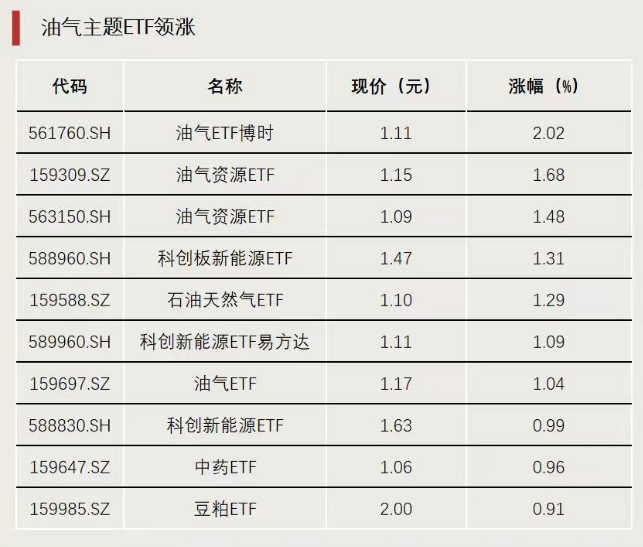
超3300只个股下跌
第一财经· 2025-11-14 07:34
Market Overview - The A-share market experienced fluctuations with the Shanghai Composite Index falling below 4000 points, closing down 0.97% at 3990.49 [3][4] - The Shenzhen Component Index and the ChiNext Index also saw declines of 1.93% and 2.82%, respectively [3][4] Sector Performance - The computing power and semiconductor sectors led the decline, with storage chips, HBM, CPO, and advanced packaging showing significant drops [4] - Conversely, the Hainan Free Trade Port sector performed well, with stocks like Kangzhi Pharmaceutical and Hainan Mining hitting the daily limit [5] Fund Flow - Main funds saw net inflows into solar equipment, banking, and real estate sectors, while there were net outflows from electronics, power grid equipment, and communications [8] - Specific stocks such as Yongtai Energy and Xiandai Intelligent received substantial net inflows of 10.58 billion and 9.31 billion, respectively [8] Institutional Insights - CITIC Securities predicts that the A-share index will continue to fluctuate upward in 2026, but with a slower growth rate, emphasizing the importance of fundamental improvements and economic verification [10] - CITIC Jian Investment highlights the significant performance elasticity and untapped potential of the domestic computing power chain [11]

国元香港晨报-20251114
Guoyuan International· 2025-11-14 02:49
Group 1: Economic Indicators - The U.S. labor statistics office failed to release the October CPI report as scheduled, which may impact market expectations [3] - The White House officials predict a 1.5 percentage point decrease in Q4 GDP growth due to the government shutdown [3] - China's social financing increased by 0.81 trillion yuan in October, with new RMB loans amounting to 0.22 trillion yuan [3] Group 2: Market Performance - The Nasdaq index closed at 22,870.36, down 2.29%, while the Dow Jones Industrial Average fell by 1.65% to 47,457.22 [5] - The Hang Seng Index rose by 0.56% to 27,073.03, and the Hang Seng Tech Index increased by 0.80% to 5,981.30 [5][8] - The Baltic Dry Index decreased by 2.03% to 2,030.00, indicating a decline in shipping rates [5] Group 3: Sector Developments - Several silicon wafer companies have united to resist low-price competition and support price increases [3] - BlackRock increased its holdings in NVIDIA by nearly 19.5 million shares while reducing its stake in Apple during Q3 [3]
LPG早报-20251114
Yong An Qi Huo· 2025-11-14 01:07
Group 1: Report Industry Investment Rating - No information provided Group 2: Report's Core View - The domestic civil LPG market may show a pattern of stronger in the south and weaker in the north, with overall peak - season expectations. PDH profit contraction may lead to a decline in propane demand, and the current domestic market valuation is high and may decline. The international propane market is in a loose pattern, and attention should be paid to weather and US cold wave conditions [1] Group 3: Summary According to Related Content Price and Basis Information - On Thursday, for civil LPG, the price in East China was 4368 (-10), in Shandong was 4400 (+0), and in South China was 4490 (+0). The price of ether - post carbon four was 4630 (+0). The lowest delivery location was East China, with a basis of - 6, and the daily change was (+74). The 12 - 01 monthly spread was 98 (-3). FEI was 501 (+2) and CP was 480 (+6) dollars/ton [1] - The PG main contract fluctuated. The basis was 102 (+116), the 12 - 01 monthly spread was 72 (-8). The number of warehouse receipts was 4444 (+250). The cheapest delivery product was East China civil LPG at 4374; in Shandong it was 4380 (+80), in East China it was 4374 (+95), and in South China it was 4450 (+50). The price of Shandong ether - post carbon four was 4500 (+80) [1] Market Spread and Margin Information - The external market price declined; the internal - external spread strengthened. PG - CP reached 137 (+4), PG - FEI reached 113 (+15.6); FEI - MB was 153 (-1.8). The arrival discount of propane in East China was 85 US dollars (+6), and the freight was basically flat. The FEI - MOPI spread widened, and the switching window was still open, with the latest at - 73 (-6) [1] - The naphtha crack spread changed little and was at a relatively high level this year. The profit of Shandong PDH to produce propylene declined significantly (some plants shut down). The profit of alkylation plants rebounded. The MTBE production gross profit changed little, and the export profit fluctuated [1] Supply, Demand and Inventory Information - Domestic production decreased, and factory inventories were basically flat; the arrival potential was limited, terminal sales improved, and port inventories decreased. The PDH operating rate was 75.49% (+1.6), as Lihuayi Weiyuan started to full - load operation, while Binhua, Xintai, and Haiwei shut down successively [1]
沪指创十年以来新高,两市成交额连续第80个交易日突破1.5万亿
Sou Hu Cai Jing· 2025-11-13 22:38
扬子晚报网11月13日讯(记者 范晓林)同花顺数据显示,沪深两市成交额连续第80个交易日突破1.5万亿,较昨日此时放量300亿,预计全天成交近2万 亿。 盘面上热点轮番活跃,全市场超3800只个股上涨。从板块来看,锂电池产业链爆发,天赐材料等20余股涨停,孚日股份6连板,华盛锂电6天3板,宁德时 代涨超8%逼近历史新高。福建板块持续走高,厦工股份等多股涨停。储能概念股快速走强,上能电气涨停。板块方面,能源金属、电池、磷化工等板块 涨幅居前,油气、银行等板块跌幅居前。截至发稿,沪指涨幅扩大至0.6%,报4025.99点,续创2015年7月以来新高,锂电产业链领涨。 ...

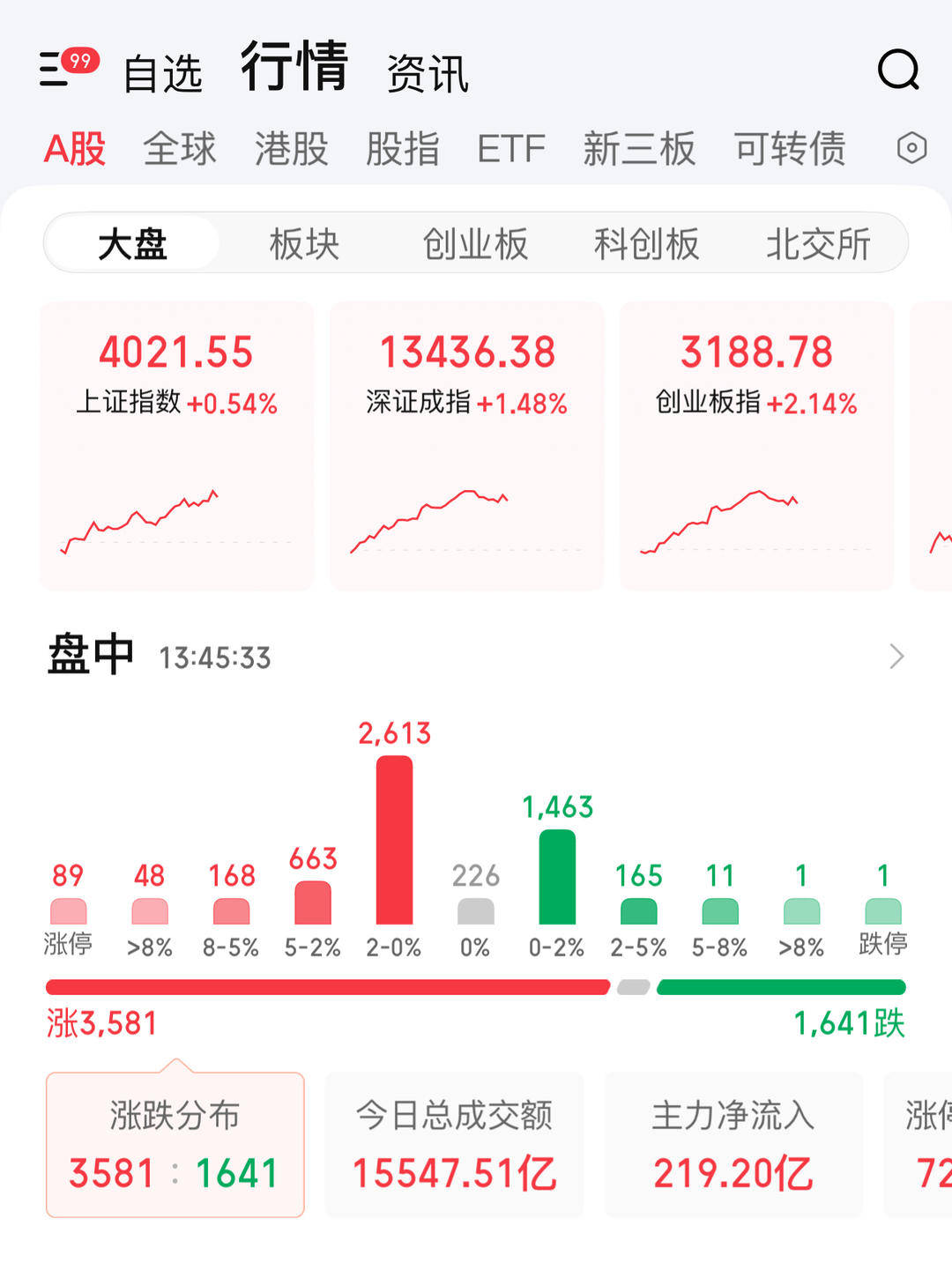
A股:创10年新高了!大家做好准备,不出意外,周五大盘将迎来新的拐点
Sou Hu Cai Jing· 2025-11-13 17:16
Group 1 - The A-share market has reached a ten-year high, with the Shanghai Composite Index closing at 4029.50 points, up 0.73%, and significant trading volume returning to the 2 trillion yuan level [1] - Northbound capital continues to show a net inflow, which is expected to support heavyweight sectors, indicating strong market liquidity [2][7] - The current market structure of "weak adjustment + high turnover" differs from traditional sharp declines, as funds rotate between sectors, providing a stable foundation for a gradual market uptrend [3] Group 2 - Market hotspots are diversifying, with sectors like energy storage and non-ferrous metals showing strength, while the camping economy concept has sparked a surge in small-cap growth stocks [5] - Some heavyweight sectors, such as securities, liquor, banking, and real estate, are currently in a low position and may become key drivers for the index if capital flows back into them [6][11] - On Friday, it is anticipated that the market will experience a combination of "heavyweight support + thematic rotation," with a focus on the capital flow in sectors like securities, liquor, banking, and real estate [11][13] Group 3 - The securities sector has not yet started but has reached a new high, and concentrated capital could accelerate the index towards 4500 points [8] - The liquor sector has undergone sufficient adjustment, and a return of capital could create a demonstration effect within the consumer sector [9] - The banking sector is seeing increased attention due to rising interest rate policy expectations, while the real estate sector has strong policy catalyst expectations that could lead to sudden opportunities [10]
国家能源局:促进油气管网等设施提质增效
Qi Huo Ri Bao· 2025-11-13 16:08
"坚持系统观念,促进油气管网等基础设施提质增效。"国家能源局有关负责同志就《办法》答记者问时 表示,《办法》坚持硬设施、软环境两手抓,一方面加快设施投资建设,发挥政府和市场、中央和地 方、国有资本和社会资本多方面作用联网、补网、强链。另一方面,规范设施运营,对油气干线管网等 已经实现独立运营的自然垄断环节,强化事前事中事后全链条全领域监管,严格公平开放;对暂未独立 运营的,通过健全接入和使用机制等方式,加快推进竞争性环节市场化改革,具备条件的尽快独立运 营。(齐宣) 本报讯 11月13日,据国家发展改革委官网消息,《石油天然气基础设施规划建设与运营管理办法》 (下称《办法》)已经2025年10月28日第24次委务会议审议通过,自2026年1月1日起施行。 ...
沪指续创十年新高 锂电池产业链全线上涨
Xin Hua Cai Jing· 2025-11-13 07:45
新华财经北京11月13日电(王媛媛)A股三大指数全天震荡拉升,沪指刷新十年新高,创业板指涨超 2%。两市及北交所共3952只股票上涨,1334只股票下跌,平盘有157只股票。 今日,锂电池产业链是盘面上最亮眼的主线,宁德时代涨幅超7%,天赐材料等近30股涨停,是推动创 业板指走高的核心动力。今日锂电池板块的亮眼表现,是由强劲的现货价格驱动和储能需求爆发带来的 基本面改善共同推动。 在锂电池板块之外,光伏板块同样强势反弹,与锂电共同构成市场做多主力。 截至收盘,沪指报4029.50点,涨0.73%,成交8764亿元;深证成指报13476.52点,涨1.78%,成交11656 亿元;创业板指报3201.75点,涨2.55%,成交5287亿元。沪深两市成交额2.04万亿,较上一个交易日放 量969亿元。 盘面热点 明年起购置税将减半征收已有17家主流汽车品牌承诺兜底 2025年新能源汽车全额免征购置税政策即将结束,车企订单抢夺战已打响。截至11月13日,理想、蔚 来、奇瑞、问界、智界、小米、极氪、智己、长安、猛士科技、深蓝、坦克、广汽、东风亦派、领克、 盘面上,锂电池产业链全线大涨,天赐材料等强势涨停,孚日股份6连 ...
沪指刷新10年新高
财联社· 2025-11-13 07:19
Market Overview - The A-share market experienced a significant rally, with the Shanghai Composite Index reaching a ten-year high and the ChiNext Index rising over 2% [1] - The total trading volume in the Shanghai and Shenzhen markets was 2.04 trillion yuan, an increase of 96.9 billion yuan compared to the previous trading day [1][5] Sector Performance - The lithium battery industry chain saw widespread gains, with nearly 30 stocks hitting the daily limit, including Tianqi Lithium and Ningde Times, which rose over 7% [1] - The consumer sector was also active, with multiple stocks such as Bubugao reaching the daily limit, and San Yuan shares achieving a four-day limit-up [1] - The Fujian sector continued to rise, with stocks like XGMA and China Wuyi seeing significant gains [1] - In contrast, the oil and gas sector faced declines, with companies like Zhun Oil and China National Offshore Oil Corporation showing weak performance [2] Index Performance - By the end of the trading day, the Shanghai Composite Index rose by 0.73%, the Shenzhen Component Index increased by 1.78%, and the ChiNext Index surged by 2.55% [3][4]