
造船

Search documents
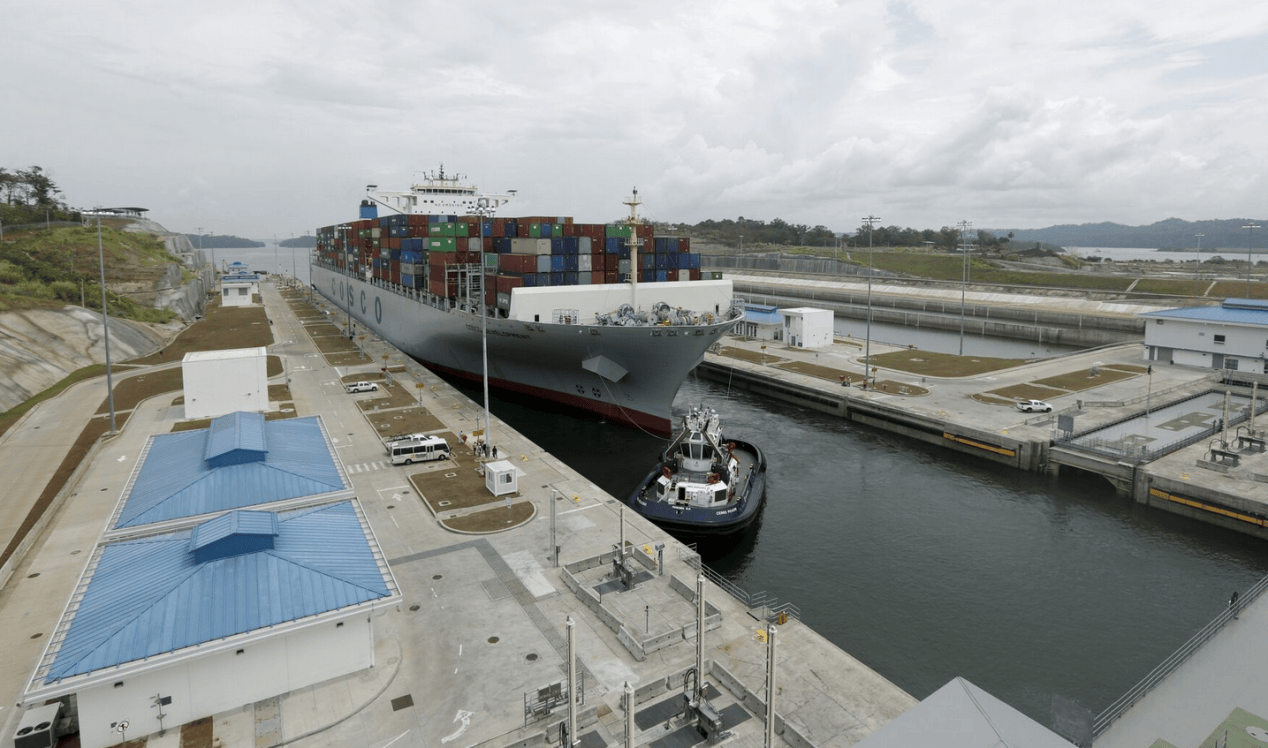
收购了巴拿马的港口,目光又转向造船业,美国要下狠手了!
Sou Hu Cai Jing· 2025-03-25 11:21
Group 1 - The U.S. has acquired control of a port in Panama, which is strategically significant for global shipping, particularly for exerting pressure on the Panamanian government and potentially disrupting competitors' shipping routes [1][3] - The Panama Canal is crucial as it connects the Pacific and Atlantic Oceans, with 6% of global trade passing through it, highlighting its strategic value [3] - The acquisition involved a significant premium, with the U.S. BlackRock Group purchasing the port assets from Li Ka-shing's company for $22.8 billion, indicating a strong U.S. interest in controlling this key maritime route [1][3] Group 2 - The Trump administration aims to challenge China's dominance in the shipbuilding industry, where China holds over 55% of global metrics such as completed ships, new orders, and backlog, while the U.S. only accounts for 0.1% [5] - The establishment of a "Shipbuilding Office" in the White House reflects the U.S. government's intent to revive its shipbuilding sector, alongside proposed legislation imposing a $1.5 million toll on ships manufactured or flagged in China [5] - The U.S. shipbuilding industry faces significant challenges, including an aging workforce with an average age of 52, reliance on imported key equipment, and labor costs that are 4.3 times higher than those in China [5] Group 3 - In response to U.S. pressure, China is exploring alternative shipping routes such as the Nicaragua Canal and Arctic passages, which may reduce reliance on the Panama Canal [7] - China's technological advancements in shipbuilding are expected to mitigate the effectiveness of U.S. restrictions, while deepening cooperation with Latin American and Southeast Asian countries could lead to the development of a "de-Americanized" shipping network [7]

美国经济、政策与市场怎么了?
2025-03-23 15:02
Summary of Key Points from the Conference Call Industry and Company Involvement - The conference call primarily discusses the **U.S. economy** and the impact of the **Trump administration's policies** on various sectors, including manufacturing, trade, and financial markets. Core Insights and Arguments 1. **Economic Downturn**: The U.S. GDP growth rate for the first quarter is reported at **-1.8%**, with the Federal Reserve lowering its annual GDP growth forecast to **1.7%** due to economic weakness [1][3][5]. 2. **Tariff Increases**: Average tariffs have increased from **9% to 24%**, aimed at reducing trade deficits. However, trade deficits rose in January, indicating short-term ineffectiveness of the tariff policy [1][6][3]. 3. **Federal Reserve's Stance**: The Federal Reserve has maintained interest rates but has adjusted its GDP growth forecast downwards, reflecting economic challenges. Structural reforms are underway, which may benefit long-term economic health [1][7][5]. 4. **Impact of Tariffs on Trade**: The increase in tariffs has not effectively reduced trade deficits, as evidenced by a rise in imports prior to the tariff implementation [6][3]. 5. **Government Efficiency Reforms**: The establishment of a Government Efficiency Department aims to reduce government size and spending, leading to significant layoffs and economic pressure [4][5][3]. 6. **Concerns Among Entrepreneurs**: Key concerns include rising tariffs, supply chain disruptions, labor shortages due to reduced illegal immigration, and inflation expectations [11][1]. 7. **Regulatory Relaxation**: The Trump administration has relaxed regulations, particularly concerning large tech companies and the automotive industry, which may lead to long-term benefits despite short-term job losses [10][1]. 8. **International Trade Relations**: Tariffs on Canada and Mexico have increased to counteract Chinese transshipment trade, affecting companies like BYD that planned to export vehicles to the U.S. [8][1]. 9. **Inflation Trends**: Consumer inflation expectations have risen, with the Michigan Consumer Sentiment Index increasing from **2.5% to 3%**. Inflation is driven by rising prices in food and services [16][17]. 10. **Market Reactions**: The stock market has experienced significant volatility, with major indices dropping over **10%** and specific stocks like Tesla falling by **50%** [23][24]. Other Important but Potentially Overlooked Content 1. **Labor Market Impact**: The layoffs resulting from government policies have led to a **20%-30%** drop in housing prices in Washington, D.C., and a significant decline in market confidence [15][2]. 2. **Long-term Economic Strategy**: The administration's focus on reducing government debt and spending is part of a broader strategy to achieve sustainable economic growth, despite short-term pain [5][7]. 3. **Shift in Financial Market Dynamics**: There is a notable shift from private equity to private credit, with private credit market size growing from **$500 billion to over $1.5 trillion** [27][28]. 4. **Global Economic Challenges**: The U.S. is facing increased competition from countries like Brazil and India, which are devaluing their currencies to enhance competitiveness [21][35]. 5. **Manufacturing Challenges**: The return of manufacturing to the U.S. faces obstacles, including a lack of skilled labor and the need for a robust supply chain [42][1]. This summary encapsulates the critical points discussed in the conference call, highlighting the current economic landscape, policy impacts, and market dynamics.


中国制造2025基本实现,美国制裁助推
日经中文网· 2025-03-06 03:34
Group 1 - The core viewpoint of the article emphasizes China's significant advancements in high-tech sectors, particularly under the "Made in China 2025" initiative, which has reportedly achieved nearly 90% of its goals despite challenges in the semiconductor field [1][3][5] - The Chinese government is expanding the application of artificial intelligence (AI) across core industries, including electric vehicles, to enhance overall economic productivity and support the development of next-generation smart devices and AI robots [1][2] - The U.S. Secretary of State has expressed concerns over China's rising technological capabilities, noting that China has become a leader in several key areas, including electric vehicles and shipbuilding, with significant production capacities [3][4] Group 2 - The "Made in China 2025" plan, initiated in 2015, aims to transform China's manufacturing sector through technological innovation, with a long-term goal of becoming a global manufacturing powerhouse by 2049 [2] - Despite achieving many targets, the semiconductor self-sufficiency goal remains elusive, with current self-sufficiency at only 23%, far below the 70% target set for 2025 [5] - The article highlights that U.S. sanctions and tariffs have been ineffective in curbing China's technological advancements, as evidenced by the continued growth of Chinese companies in high-tech sectors [3][4]

解码2025年经济预期目标:5%GDP、2%通胀、4%赤字率怎么看
Zheng Quan Shi Bao Wang· 2025-03-05 05:57
Economic Growth Targets - The GDP growth target for this year is set at around 5%, which is deemed necessary for stabilizing employment, preventing risks, and benefiting people's livelihoods [2][4][5] - The target aligns with China's actual economic conditions and development laws, and is considered achievable [2][3][4] - Factors supporting this target include the ongoing recovery of the economy, the rise of new industries, and supportive macroeconomic policies [3][4] Consumer Price Index (CPI) Target - The CPI growth target has been adjusted down to around 2%, marking the first time it has been set below 3% since 2004 [6][8] - This adjustment reflects the current economic situation, where deflationary pressures are more significant than inflationary ones [6][7] - The government aims to improve supply-demand relationships and stabilize prices through various policies [6][8] Fiscal Policy Adjustments - The fiscal deficit rate is proposed to be set at around 4%, an increase of 1 percentage point from the previous year, with a total deficit scale of 5.66 trillion yuan [9][10] - This marks the highest deficit level since the implementation of proactive fiscal policies in 2008, indicating a strong commitment to economic recovery [9][10] - The increased fiscal spending will focus on social welfare, technological innovation, and infrastructure investment [10]
【财闻联播】A股零食巨头董事长辞职!上海二手房2月网签量大涨
券商中国· 2025-03-03 13:06
Macro Dynamics - A suggestion has been made to strengthen the governance of AI-generated false information, highlighting the risks it poses to public trust and safety due to the lack of clear legal frameworks and inadequate platform oversight [1] Space Cooperation - A milestone agreement has been signed between Pakistan and China for Pakistani astronauts to conduct missions on the Chinese space station, emphasizing mutual benefits and peaceful cooperation in space technology [2] Medical Device Pricing - The price of cochlear implants has significantly dropped from an average of 200,000 yuan to around 50,000 yuan following a centralized procurement initiative, with a total procurement volume of 11,000 sets [3] Real Estate Market - The Shanghai second-hand housing market has seen a remarkable increase in transaction volume, with February's online signing reaching approximately 17,000 units, a year-on-year increase of about 120%, marking the highest level in nearly three years [5][6] Film Industry - The animated film "Ne Zha" has surpassed 14.5 billion yuan in box office revenue, ranking seventh globally and closing in on the fifth position held by "Star Wars: The Force Awakens" [7] Financial Institutions - The former Party Secretary and President of the Export-Import Bank of China, Wang Xuguo, has been expelled from the Party and public office due to serious violations of discipline and law, involving significant corruption and abuse of power [8][9] Market Data - The A-share market experienced mixed results, with the ChiNext index rising by 1.2%, while the total financing balance across both exchanges decreased by 176.99 billion yuan [10][11] Company Developments - Three squirrels plan to establish a new coffee brand named "Second Brain" through a wholly-owned subsidiary [14] - Liangpinpuzi's chairman and general manager, Yang Yinfen, has resigned, with Cheng Hong elected as the new chairman [15] - Fengmao Co. has initiated preliminary technical discussions with Yushut Technology regarding product applications in robotics [16] - Sinopec has discovered new shale oil reserves with a geological reserve of 180 million tons, marking a significant development in domestic oil exploration [17] - Wancheng Group's chairman, Wang Jiankun, is under investigation, with the general manager temporarily assuming his responsibilities [18] - Gree Electric plans to repurchase shares worth between 1.05 billion and 2.1 billion yuan [19] - China Shipbuilding's subsidiary has signed a shipbuilding contract worth between 18 billion and 19 billion yuan for LNG dual-fuel container ships [20]

上海疯狂建超级工厂
投资界· 2025-02-14 08:04
以下文章来源于真叫卢俊 ,作者真叫卢俊团队 累计建成177个市级智能工厂 。 作者 | 真叫卢俊团队 来源 | 真叫卢俊 (ID:zhenjiaolujun0426) 上海这座城市,强的是什么 有人说,上海是当之无愧的金融之城 目前上证交易所股票市值排名全球第三位 无论是持牌金融机构总数,还是外资金融机构数量和占比,上海均是全国第一 (数据来源:上海统计局) 距离这个目标还有一定距离 但是今年,上海一系列的动作已经表明了态度和速度 其中最为重磅的两个: | | | 2024年全球股市市值排名TOP5 | | 创微信公介号:真叫卢俊 | | --- | --- | --- | --- | --- | | 排名 | 国家 | 主要交易所 | 市值(美元) | 上市公司数量 | | 1 | 美国 | 纽约证券交易所(NYSE) | 约33.5万亿 | 2500多家 | | 2 | 美国 | 纳斯达克交易所(NASDAQ) | 约20.1万亿 | 3700多家 | | 3 | 中国 | 上海证券交易所(SSE) | 约7.2万亿 | 2100多家 | | 4 | 日本 | 东京证券交易所(TSE) | 约6.8万亿 ...
