纺织

Search documents
中国纺织“绿色”“智造” 受巴西市场欢迎
Zhong Guo Xin Wen Wang· 2025-08-09 08:38
Group 1 - The 2025 Brazil Textile and Apparel Exhibition concluded in São Paulo, featuring over 200 companies from China and various Latin American countries, with a focus on "smart manufacturing" and "green" products [1][2] - A Chinese textile company showcased a "green" fabric made from recycled PET plastic bottles, emphasizing the importance of high-tech products for international markets [1] - Another Chinese company presented a collagen fiber fabric derived from fish scales, which maintains functionality after multiple washes, attracting significant orders [1] Group 2 - A Brazilian e-commerce influencer praised a high-breathability children's clothing line from Zhejiang, highlighting the region's production capacity of 2 billion pieces annually, exporting to 165 countries [2] - The exhibition was organized by the China Council for the Promotion of International Trade Textile Industry Branch, the China (Brazil) Investment Development Trade Center, and Jiangsu Lianya International Exhibition Group [2] - According to the China Council for the Promotion of International Trade Textile Industry Branch, China's textile and apparel exports to Brazil are projected to reach $4.79 billion in 2024, marking an 11.5% year-on-year increase, outpacing the global export growth rate by nearly 10 percentage points [2]
第八届进博会展前供需对接会上展商“剧透”首发“靓品”
Zhong Guo Xin Wen Wang· 2025-08-08 21:49
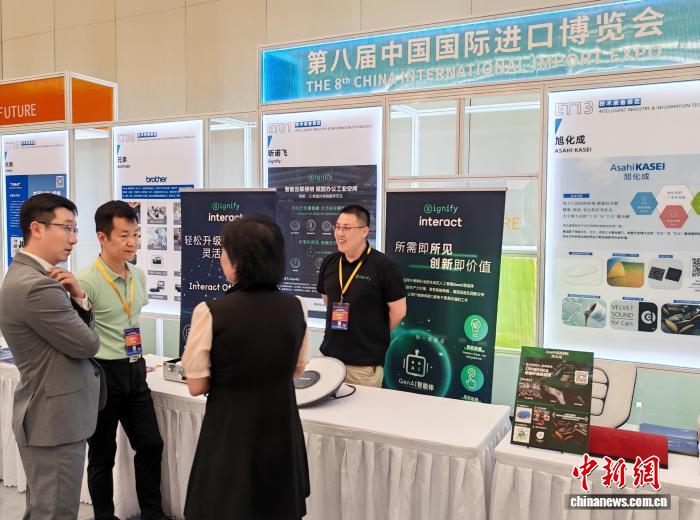
Group 1 - The eighth China International Import Expo (CIIE) will take place from November 5 to 10 in Shanghai, focusing on key national industry planning and optimizing exhibition areas [4] - HRC Group will globally launch a new generation of low-altitude unmanned transport aircraft at the expo, showcasing innovative composite material solutions for future smart mobility [3] - Asahi Kasei will present innovative products such as biodegradable clothing materials at the expo, emphasizing the need to keep pace with China's rapid development [3] - Kärcher will debut six new products, including commercial AI cleaning robots, highlighting its significant investment of over 3 billion RMB in China since participating in the first CIIE [3] Group 2 - The expo will feature trade investment matchmaking events and important buyer selection meetings to facilitate precise connections between exhibitors and buyers [4] - The exhibition will upgrade the artificial intelligence experience area and create a future mobility zone to showcase new topics like the low-altitude economy [4]

日本企业夏季奖金平均额再创新高
日经中文网· 2025-08-08 08:00
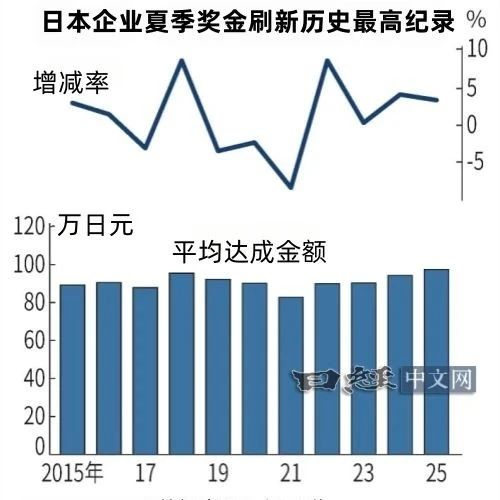
Group 1 - The average bonus amount for large companies in Japan reached 974,000 yen (approximately 47,510 RMB), marking the highest level since 1981 [2] - The average bonus amount has increased for four consecutive years since 2022, with the manufacturing sector seeing a year-on-year growth of 4.37%, reaching 1,029,479 yen (approximately 50,216 RMB), the highest since comparable data began in 1997 [4] - Non-manufacturing sectors experienced a year-on-year growth of 3.30%, reaching 863,726 yen (approximately 42,109 RMB), achieving positive growth for two consecutive years [5] Group 2 - The strong performance of the manufacturing industry has significantly contributed to the overall increase in bonus amounts [2] - Industries such as chemicals, textiles, and non-ferrous metals achieved double-digit growth rates [4] - The survey included responses from 154 companies across 22 industries, focusing on large enterprises with over 500 employees [5]
用金融力量“织就”民企更绚丽的未来
Jin Rong Shi Bao· 2025-08-08 07:58
Core Viewpoint - Hai'an Rural Commercial Bank is committed to supporting the real economy and private enterprises by enhancing credit resource allocation and innovating inclusive financial products to boost the confidence of private enterprises [1][3]. Group 1: Financial Support for Private Enterprises - Hai'an Rural Commercial Bank has tailored financial service plans for companies like Nantong Ruisheng Textile Technology Co., Ltd., addressing their specific funding needs for raw material procurement, technology research, and seasonal production peaks [1][3]. - The bank has provided over 10 million yuan in credit to Nantong Ruisheng Textile Technology Co., Ltd., reflecting a strong partnership built on mutual trust and cooperation over the years [1][3]. Group 2: Commitment to Local Economic Development - The bank actively integrates into local economic development, focusing on the high-quality growth of private enterprises through dedicated teams and comprehensive service coverage [3]. - A "one-to-one, face-to-face" service model is implemented to understand the operational status and funding needs of enterprises, fostering a collaborative environment for growth and transformation [3]. Group 3: Innovation and Efficiency in Financial Services - Hai'an Rural Commercial Bank emphasizes a customer-centric approach, optimizing the credit approval process to meet the "short, frequent, and fast" loan demands of private enterprises [3]. - The bank continuously innovates financial products and services to address financing challenges, aiming to be the preferred bank for local private enterprises [3].
做陪伴民营企业成长的长期主义者
Jin Rong Shi Bao· 2025-08-08 07:58
Core Insights - The article emphasizes the importance of long-termism and value co-existence in supporting private enterprises, particularly in the context of the financial sector's role in fostering growth and stability [1][9]. Group 1: Financial Support for Private Enterprises - The Suzhou Rural Commercial Bank has consistently prioritized support for private enterprises, embodying the principles of long-termism and value co-existence, and has been recognized as a leading enterprise in the production service industry for four consecutive years [1][2]. - As of the end of 2024, Suzhou Rural Commercial Bank's total assets reached 213.36 billion, with deposits at 170.25 billion and loans at 129.32 billion, with nearly 90% of loans supporting the real economy and over 60% directed towards private enterprises [2]. Group 2: Historical Context and Development - Since the 1990s, the Wujiang region has pioneered a new model for private economic development, with Suzhou Rural Commercial Bank being one of the first banks to support private enterprises by providing financial services and funding [3]. - The bank has played a crucial role in nurturing small and micro enterprises, particularly startups, by offering early-stage financing solutions since 2018 [4]. Group 3: Crisis Management and Support - During the textile industry's crisis from 2012 to 2014, Suzhou Rural Commercial Bank helped 664 enterprises overcome difficulties by maintaining stable credit policies and providing innovative loan services [6]. - The bank has also supported companies facing temporary liquidity issues by offering solutions such as non-repayment renewals of existing loans, ensuring their operational continuity [6]. Group 4: Strategic Partnerships and Growth - The partnership between Suzhou Rural Commercial Bank and Hengtong Group exemplifies mutual growth, with the bank facilitating Hengtong's financing needs and enhancing its business capabilities through strategic collaboration [7]. - The bank's involvement in the "Textile Industry Low Carbon Transition and Financial Innovation Guide" project highlights its commitment to supporting traditional industries in their transformation and green transition [9]. Group 5: Long-term Vision and Industry Development - The article advocates for a long-term perspective in financial operations, emphasizing the need to balance immediate actions with future goals to ensure sustainable growth [8][9]. - The bank's initiatives in green finance and industry transformation are positioned as essential strategies for adapting to changing economic landscapes and supporting the sustainable development of the textile industry [9].

环球百事通!2022年上市公司薪酬盘点:人均最高年薪达170万,最低年薪仅1.8万
Zheng Quan Zhi Xing· 2025-08-08 06:59
不论为谁工作,凡是付出应有的劳动,劳动者都有获得合理报酬的权利,工资就是报酬的数量化表现形 式之一,这也是不少劳动者的主要收入来源。 (相关资料图) 根据东财Choice数据统计,A股所有上市公司2022年员工人数达到近3000万,薪酬总额达到6万余亿, 2020年人均年薪为18.8万,2021年人均年薪21万、2022年人均年薪21.8万,近三年人均薪酬增长幅度达 到16%。在上市公司已经公布的2022年薪酬数据当中,哪些公司能够让人眼前一亮?哪些又会让人大跌 眼镜? 非银金融依旧是"高薪聚集地" 那么,这些60万以上的高薪企业都分布在哪些行业? 整理数据后可以发现,这65家企业共分布于16个申万一级行业,其中电子和非银金融合计就已经占去半 壁江山。当然,考虑到非银金融当中包括券商等被公认的高薪分支,电子行业的覆盖又极其广泛,这样 的数据并不令人奇怪。 (人均年薪60万以上企业最多的前5大申万行业,根据东财Choice数据整理) 如果将统计维度细化到公司层面,情况无疑更加明显。 根据统计,单是2020年人均年薪前20的上市公司当中就有7家非银金融公司,其中渤海租赁还是唯一一 家人均年薪破百万的非银金融上市公 ...

美“对等关税”生效,印度巴西不屈服
Huan Qiu Shi Bao· 2025-08-08 02:19
Core Points - The article discusses the implementation of "reciprocal tariffs" by the United States, which has raised average tariffs on trade partners to the highest level since World War II, impacting countries like India and Brazil [1][5][8] - Indian Prime Minister Modi and Brazilian President Lula have expressed their commitment to protect their countries' agricultural and economic interests against U.S. tariffs, indicating a potential for increased solidarity among BRICS nations [1][4][10] Group 1: U.S. Tariff Actions - The U.S. has increased average tariffs from 2.3% to 15.2%, marking a significant rise [1] - A 25% tariff on Indian goods has been implemented as a penalty for India's purchase of Russian energy, potentially raising the total tariff rate on India to 50% [5][6] - Brazil has also faced a 40% tariff increase, leading to a total of 50% on most products exported to the U.S. [8] Group 2: Responses from India and Brazil - Modi emphasized that India's farmers' interests are a top priority and stated that India will not compromise under pressure [5][6] - Lula has indicated that Brazil will seek consultations with the WTO regarding the U.S. tariffs and has ruled out immediate retaliatory measures [3][9] - Both leaders are considering collaboration with BRICS nations to counter U.S. tariffs, with Lula planning to contact other BRICS leaders [10] Group 3: Economic Implications - The tariffs are expected to severely impact labor-intensive sectors in India, such as textiles and seafood, prompting some companies to consider relocating manufacturing [6] - Experts suggest that the U.S. tariffs may be a negotiation tactic by Trump to force India into a trade agreement [6] - Brazil's economy is relatively insulated from the tariffs due to product exemptions and closer trade ties with China, giving Lula more room to resist U.S. pressure [10]
山东召开民营企业座谈会,部署开展服务民营企业专项行动
Da Zhong Ri Bao· 2025-08-08 00:49
Core Viewpoint - The Shandong provincial government is actively engaging with private enterprises to address their challenges and enhance the business environment, emphasizing the importance of the private economy for overall economic stability and growth [2][3][10]. Group 1: Economic Performance - Shandong's private economy constitutes 99% of the province's market entities, with significant contributions to industrial output and trade, including a 10.1% increase in industrial output value and a 7.7% rise in exports in the first half of the year [3][5]. - Private enterprises accounted for 76.1% of the province's total import and export volume, and private investment made up 61.1% of total investment, with a growth rate 1.5 percentage points higher than the national average [3]. Group 2: Challenges and Opportunities - The private sector is facing new challenges due to international conflicts, trade barriers, and insufficient domestic demand, but there are also new opportunities for growth [3][4]. - The provincial leadership acknowledges that the current difficulties are temporary and can be overcome with concerted efforts [4]. Group 3: Policy Support and Initiatives - The Shandong government is planning to implement a series of major projects and reforms as part of its "15th Five-Year Plan" to support the high-quality development of the private economy [5]. - A special action plan has been launched to address urgent issues faced by private enterprises, including payment delays and financing difficulties [10][11]. Group 4: Innovation and Development Strategies - Private enterprises are encouraged to focus on digital transformation and innovation, with an emphasis on technology and green development as key drivers for growth [8]. - Differentiation and specialization are highlighted as essential strategies for companies to thrive in a competitive market [8]. Group 5: Direct Engagement with Enterprises - The recent roundtable discussions allowed business leaders to voice their concerns and suggestions directly to provincial leaders, fostering a collaborative approach to problem-solving [10]. - The government is committed to a responsive and coordinated approach to address the needs of private enterprises, ensuring timely feedback and support [11].
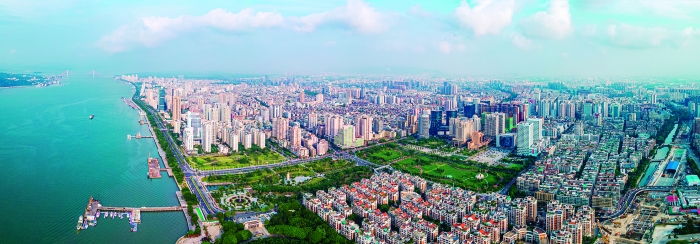
奋楫前行 迎头赶上——汕头建设新时代经济特区五年答卷
Shang Hai Zheng Quan Bao· 2025-08-07 18:28
Core Insights - Shantou is advancing its economic development by focusing on industrialization and modernization, particularly in the context of the 40th anniversary of its economic zone establishment [7][22] - The city is implementing a "three new, two special, one big" industrial development strategy, which includes new energy, new materials, and new generation electronic information industries [8][10] New Energy Sector - Shantou is developing a significant offshore wind power project, with an investment of 40.77 billion yuan, expected to generate an annual output value of 142 billion yuan upon reaching full production [9] - The offshore wind power industry aims to achieve an economic scale exceeding 200 billion yuan by 2030, positioning Shantou as a national hub for offshore wind power technology [9][10] New Materials Industry - The new materials sector is projected to have 302 enterprises by 2024, with an output value of 48.825 billion yuan, accounting for 17.4% of the city's industrial output [10] - Shantou is focusing on high-end, green, and clustered development in the new materials industry, aiming to create a billion-level industry cluster [10] New Generation Electronic Information Industry - Shantou is uniquely positioned as a national communication hub with six international submarine cables connecting to over 297 cities globally, accounting for over 50% of the national export bandwidth [10] - The city is leveraging its advantages to develop cross-border data services and attract investment in green computing [10] Traditional Industries Transformation - The textile and toy industries, which contribute significantly to national production, are undergoing transformation to address challenges such as small enterprise size and low product quality [12][15] - Shantou is promoting high-end, intelligent, and green upgrades in these traditional sectors, with significant investments in smart manufacturing and digital transformation [12][14] Health Industry Development - The health industry in Shantou is expanding, with a focus on pharmaceuticals, medical devices, and health services, supported by local enterprises and research institutions [16][18] - The health industry has surpassed 30 billion yuan in scale, with ongoing projects totaling approximately 138 billion yuan [19] Business Environment Improvement - Shantou is enhancing its business environment to attract investment, with initiatives such as streamlined administrative processes and improved regulatory frameworks [20][21] - The city aims to create a market-oriented, law-based, and international business environment to support high-quality economic development [21][22]

奋楫前行迎头赶上 汕头建设新时代经济特区五年答卷
Shang Hai Zheng Quan Bao· 2025-08-07 18:28
Core Viewpoint - The article highlights the new mission and tasks assigned to Shantou City, Guangdong Province, as it aims to accelerate its development in the context of the 40th anniversary of the establishment of economic special zones in China [2] Group 1: Development Strategy - Shantou City has established a development strategy focused on "industrial city, strong industry," aiming to build a "three new, two special, one large" industrial development pattern [2] - The local leadership emphasizes the importance of reform and opening up to promote modernization in Shantou [2] Group 2: Key Projects and Initiatives - The city has initiated several significant projects, including the commencement of its first offshore wind power project and the completion of the Shantou International Textile City [2] - A new port economic zone with a planned area of approximately 105 square kilometers has also begun construction [2] Group 3: Economic and Social Climate - Shantou is experiencing a revitalized economic atmosphere, characterized by increased confidence, vibrant population engagement, improved urban and rural environments, and heightened morale among its citizens [2] - The local government encourages a spirit of innovation and hard work, aiming to advance the city's development at a higher starting point [2]