芯片制造

Search documents
鲍威尔演讲引爆全球市场,美股全线大涨,中概股走势强劲
Sou Hu Cai Jing· 2025-08-23 00:39
Group 1 - Federal Reserve Chairman Powell hinted at potential interest rate cuts in the coming months despite ongoing inflation risks [1][5][4] - Market expectations for a September rate cut surged, with a 91.1% probability of a 25 basis point cut [1][2] - Major U.S. stock indices rose significantly, with the Dow Jones reaching a historical high and the Nasdaq China Golden Dragon Index increasing by 2.73% [1][6][7] Group 2 - International precious metals futures saw widespread gains, with COMEX gold futures rising by 1.05% to $3417.20 per ounce and silver futures up by 2.10% to $38.88 per ounce [2] - The cryptocurrency market experienced a rally, with Ethereum surpassing its previous all-time high, reflecting a 250% increase since its April low [3] Group 3 - Tesla's stock rose over 6% following news of a partnership with Volcano Engine to enhance its smart cockpit experience [6] - Intel's shares increased by 5.53% after announcing a deal with the U.S. government for an $8.9 billion investment [6] Group 4 - Chinese assets showed strong performance, with notable gains in stocks like Miniso and NIO, reflecting growing optimism among foreign investors regarding China's economic outlook [7][8] - Morgan Stanley highlighted the valuation discount of Chinese stocks compared to developed markets, indicating potential investment opportunities [8]


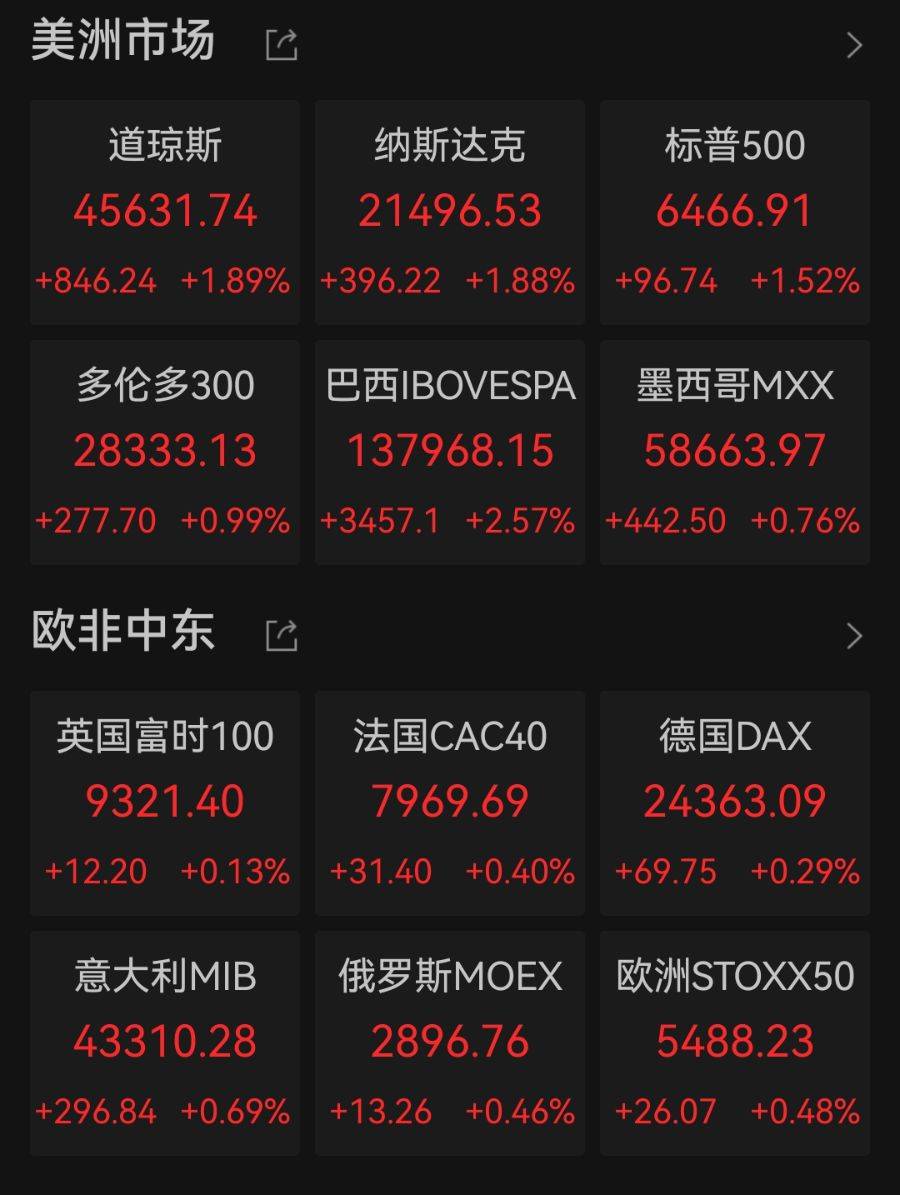
美股异动 | 芯片制造商股价上涨 英特尔(INTC.US)涨超4%
智通财经网· 2025-08-22 14:30
Core Viewpoint - The Federal Reserve Chairman Jerome Powell hinted at easing monetary policy, leading to a rise in semiconductor manufacturers' stock prices [1] Group 1: Stock Performance - Nvidia (NVDA.US) increased by over 1% [1] - Intel (INTC.US) rose by over 4% [1] - Qualcomm (QCOM.US) gained over 3.2% [1] - Broadcom (AVGO.US) saw an increase of over 2.3% [1] - Navitas Semiconductor (NVTS.US) surged by over 3.5% [1] - Micron Technology (MU.US) climbed by over 3% [1]


美联储主席鲍威尔暗示将放宽货币政策后,芯片制造商股价上涨。
Sou Hu Cai Jing· 2025-08-22 14:26
Core Viewpoint - The hint from Federal Reserve Chairman Jerome Powell regarding the easing of monetary policy has led to an increase in the stock prices of chip manufacturers [1] Group 1 - Chip manufacturers' stock prices have risen following the indication of a potential loosening of monetary policy by the Federal Reserve [1]
15%关税!刚刚,美国宣布
Sou Hu Cai Jing· 2025-08-22 11:22
Group 1 - The core point of the article is the agreement between the US and EU on a trade framework that includes a 15% uniform tariff on most EU imports, while the EU will eliminate all tariffs on US industrial products and commit to purchasing significant amounts of US energy and technology products [2][5][9] - The trade agreement framework consists of 19 key points covering various sectors including agriculture, industrial goods, semiconductors, energy, investment, environmental regulations, cybersecurity, and digital trade [5][9] - The US will reduce tariffs on European automobiles from the current 27.5% to 15% contingent upon the EU's legislative actions to implement tariff reductions [5][6] Group 2 - The EU will eliminate all tariffs on US industrial products and provide preferential market access for various US agricultural products, including nuts, dairy, and processed fruits and vegetables [9][10] - The EU plans to purchase $750 billion worth of US energy products by 2028 and at least $40 billion in US artificial intelligence chips for data center construction [9][10] - Both parties have agreed to collaborate on addressing unreasonable digital trade barriers and will negotiate rules of origin to ensure shared benefits from the agreement [10]

黄仁勋盛赞台积电:“人类史上最伟大公司之一”
Jin Shi Shu Ju· 2025-08-22 06:33
Core Insights - NVIDIA CEO Jensen Huang praised TSMC, stating that any investor looking to buy shares in the company is "very wise" as TSMC's stock has risen over 15% this year [2] - Huang's visit to Taiwan was to express gratitude to TSMC for completing the design finalization of six new chips for NVIDIA, including a new GPU and a silicon photonics processor for the next-generation "Rubin" architecture supercomputer [2] - Huang emphasized that this is the first time in the company's history that all chips are entirely new and revolutionary, indicating a significant milestone for NVIDIA [2] Company Developments - NVIDIA is eager to launch the "NVIDIA Constellation" project, a new office in Taiwan to accommodate its growing workforce [3] - The company is collaborating with local chip companies, system suppliers, and manufacturers, necessitating a large number of engineers to work alongside them [3] Industry Context - The U.S. government is planning to invest in semiconductor companies through the CHIPS and Science Act, which aims to revitalize U.S. leadership in semiconductor manufacturing [3] - TSMC has been promised $6.6 billion in funding under this act for the construction of three advanced fabs in Arizona, with the P1 fab already in production and P2 expected to start mass production in 2027 [3] - TSMC's Arizona factory reported its first profit after four years of losses, earning NT$6.447 billion, which accounted for 1.62% of TSMC's net profit in Q2 2025 [3]
特朗普赚大了,签订1.39万亿美元大单!将拿下美联储理第四席?
Sou Hu Cai Jing· 2025-08-22 06:25
Group 1 - The United States and the European Union have reached an agreement on a trade framework, which includes a reduction in tariffs, with Trump's tariffs on the EU set to decrease to 15% covering various sectors such as automobiles, pharmaceuticals, semiconductors, and timber [1][5] - The agreement is expected to benefit the U.S. significantly, with Trump reportedly securing over $1.39 trillion in orders, including a commitment from the EU to purchase $750 billion worth of U.S. energy by 2028, averaging $250 billion annually [3][5][7] - However, achieving the energy procurement target may be challenging, as the EU imported only approximately $64.55 billion in energy from the U.S. in 2024, indicating a substantial gap to the proposed target [7][9] Group 2 - In addition to energy, the EU has committed to purchasing at least $40 billion worth of U.S. artificial intelligence chips for data center construction, which appears more feasible given the rising demand for high-performance chips in Europe [9][11][12] - The EU also announced plans for European companies to invest an additional $600 billion in U.S. strategic sectors by 2028, although the actual investment will depend on various factors, including the U.S. investment environment and policy stability [12][14] - The overall $1.39 trillion deal, while impressive in scale, faces significant uncertainties regarding its actual implementation and the potential political and legal challenges surrounding it [14][25] Group 3 - Trump's actions also include attempts to influence the Federal Reserve by nominating allies to key positions, which could lead to a more accommodating monetary policy that aligns with his economic goals [19][21] - If Trump successfully secures more seats on the Federal Reserve Board, it could significantly impact U.S. monetary policy and economic stability, although this is contingent on overcoming various obstacles [23][25] - The interplay between the trade agreement and Trump's Federal Reserve strategy reflects a complex political and economic landscape, with potential implications for both the U.S. and global economies [25]
莫迪专机将飞往中国,却先收到1个坏消息,美代表团取消访问印度
Sou Hu Cai Jing· 2025-08-22 03:39
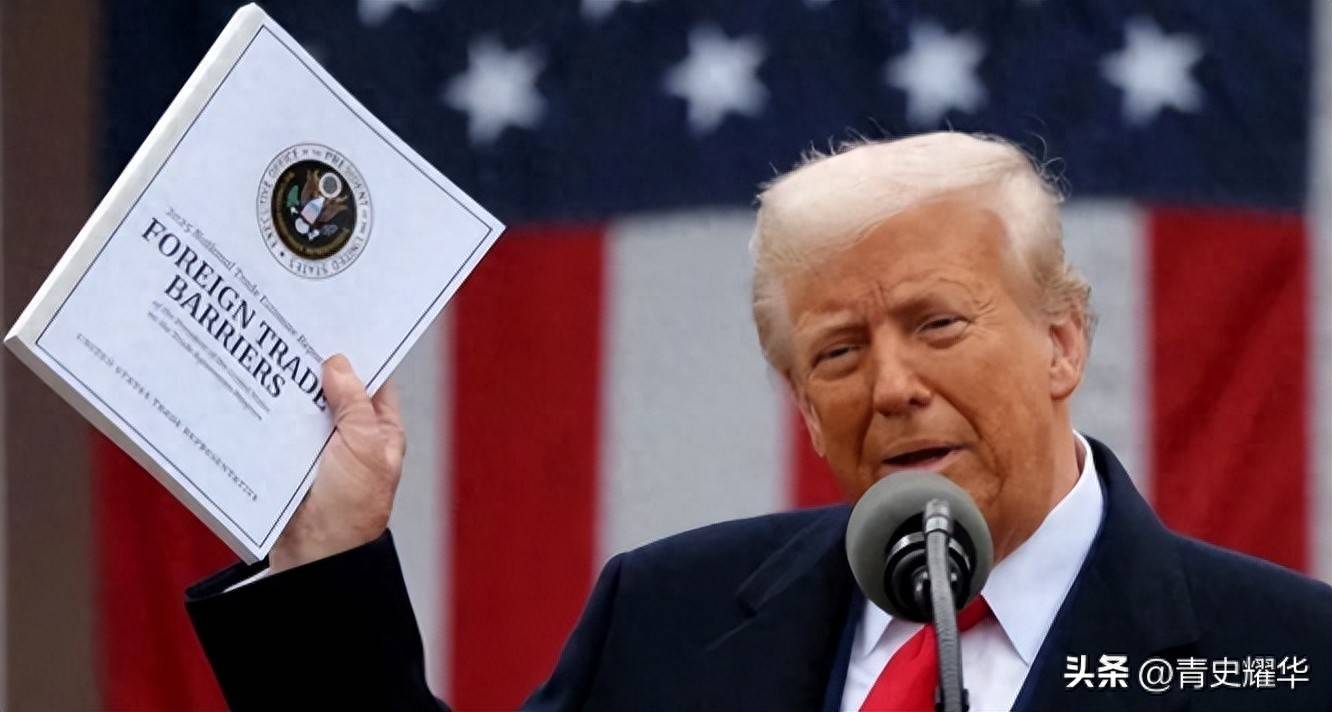
Core Viewpoint - The U.S. has unexpectedly canceled its planned visit to India, leading to the collapse of the sixth round of trade negotiations and the imminent implementation of a 50% tariff on Indian goods, which is unprecedented in U.S. trade history [2][3]. Group 1: U.S.-India Trade Relations - The U.S. Trade Representative's Office has not provided a clear explanation for the cancellation, but it signifies the end of hopes for tariff reductions [2]. - President Trump signed an executive order on August 6, imposing a 25% tariff on Indian imports, which, combined with a previously announced 25% tariff, totals a 50% tariff set to take effect on August 27 [2]. - The U.S. has been pressuring India to open its agricultural and dairy markets while India refuses to stop importing Russian oil, leading to a stalemate in negotiations [3]. Group 2: India's Response - India's Ministry of External Affairs criticized the U.S. actions as "unfair, unjust, and unreasonable," emphasizing that oil imports from Russia are driven by market demand and energy security [3]. - Prime Minister Modi has adopted a firm stance against U.S. pressure, advocating for self-reliance and the protection of domestic interests, including the announcement of a domestic chip production initiative [4]. - India has implemented countermeasures, including freezing military purchases from the U.S. and imposing a 150% tariff on American whiskey [4]. Group 3: Strategic Shifts - India is adjusting its foreign policy by engaging with Russia and China, aiming to reduce reliance on the U.S. dollar and establish a trade mechanism using the rupee [6][9]. - The visit of Chinese Foreign Minister Wang Yi to India coincides with these developments, highlighting a potential shift towards deeper cooperation between India and China [7]. - India's Finance Minister has proposed a "BRICS payment system," indicating a strategic pivot away from blind adherence to U.S. policies [9]. Group 4: Economic Implications - The 50% tariff could severely impact key Indian industries such as steel and pharmaceuticals, leading to significant economic losses and a breakdown in trust between the two nations [9]. - Modi's upcoming visit to the UN General Assembly is seen as a crisis management effort rather than a genuine attempt to repair relations with the U.S. [9]. - The situation reflects India's growing awareness that following U.S. policies may not yield the technological and financial support needed for its industrialization [9]. Group 5: Future Outlook - The upcoming Shanghai Cooperation Organization summit may serve as a pivotal moment for India to reshape its relationships and foster cooperation among developing countries against unilateral actions [11]. - The evolving dynamics between India and the U.S. suggest a move towards greater strategic autonomy for India, with global implications for trade and diplomacy [11].
特朗普政府拟挪用CHIPS法案资金 支持关键矿产项目
Zhi Tong Cai Jing· 2025-08-21 22:20
Group 1 - The Trump administration is considering reallocating at least $2 billion from the CHIPS Act to finance critical mineral projects and enhance the influence of Commerce Secretary Gina Raimondo in this area [1][2] - The move aims to reduce U.S. dependence on foreign critical minerals used in electronics and defense industries, and to unify the U.S. strategy for financing critical minerals [1][4] - The CHIPS Act, totaling $52.7 billion, was signed by President Biden in 2022 to strengthen domestic semiconductor production and reduce reliance on Asia [2] Group 2 - The U.S. Department of Energy recently proposed $1 billion in funding for critical mineral projects, sourced from the Bipartisan Infrastructure Law [3] - The administration plans to empower Raimondo to take a leading role in the allocation of critical mineral funds, replacing the current fragmented management by the Pentagon and other agencies [3][4] - Analysts suggest that this initiative is aimed at securing the semiconductor supply chain and reshaping U.S. influence in the global critical minerals sector [4]

美国宣布,15%关税
Zheng Quan Shi Bao· 2025-08-21 13:21
Group 1 - The core point of the news is that the United States and the European Union have reached a framework agreement for a trade deal, which includes a 15% uniform tariff on most EU imports and the elimination of all tariffs on US industrial products by the EU [1][3][4] - The agreement outlines 19 key areas, including agricultural products, automobiles, aircraft, semiconductor chips, energy, and digital trade barriers [3][8] - The US will apply either the most-favored-nation (MFN) tariff rate or a 15% tariff rate on EU-origin goods, with specific products subject to MFN tariffs starting from September 1, 2025 [3][5] Group 2 - The EU will eliminate all tariffs on US industrial products and provide preferential market access for various US agricultural products, including nuts, dairy, and meat [7][8] - The EU plans to purchase $750 billion worth of US energy products, including liquefied natural gas and nuclear products, and at least $40 billion in US AI chips for data center construction [8][9] - Both parties agreed to negotiate rules of origin to ensure that the benefits of the agreement are shared primarily between the US and the EU [9][10]
美国与欧盟发表联合声明:欧盟承购美能源产品、人工智能芯片及国防装备
财联社· 2025-08-21 12:29
Group 1 - The core viewpoint of the article is that the United States and the European Union have reached an agreement on a trade framework, which includes significant energy and technology procurement commitments from the EU to the US [1][2][3][4] Group 2 - The EU is set to purchase US energy products, including liquefied natural gas, oil, and nuclear products, with expected purchases reaching $750 billion by 2028 [2] - The EU has committed to acquiring at least $40 billion worth of US artificial intelligence chips for the construction of data centers in Europe [3] - By 2028, European companies are projected to invest an additional $600 billion in strategic sectors in the US, alongside plans to significantly increase procurement of military and defense equipment from the US [4]