
高端装备

Search documents
新房连续12个月供不应求 杭州卖地率先破千亿
经济观察报· 2025-06-20 10:14
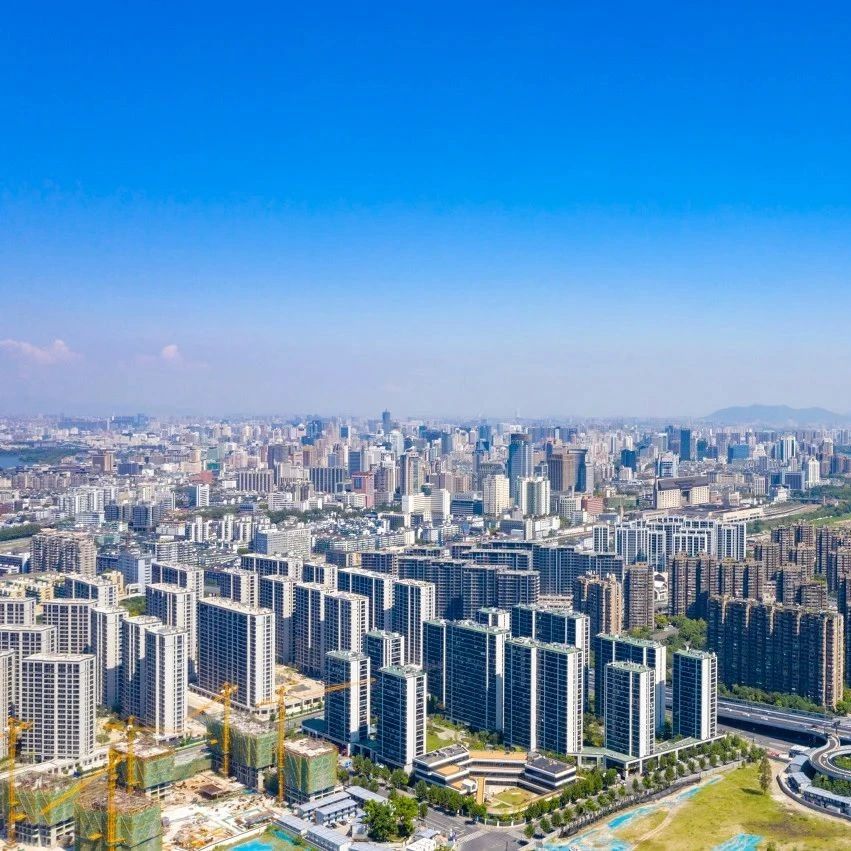
Core Viewpoint - Hangzhou's real estate market is closely linked to its land market performance, with significant growth in new residential transactions and a persistent supply-demand imbalance since June 2024 [5][19]. Group 1: Land Market Performance - In the first half of 2025, Hangzhou was the only city in China to exceed 100 billion yuan in land transfer fees, reaching 1198.8 billion yuan, significantly ahead of Beijing and Shanghai [3][10][11]. - The average premium rate for land transactions in Hangzhou was 31.8%, the highest among major cities, with some transactions seeing premiums as high as 115% [14][17]. - The land supply in Hangzhou is concentrated in core areas, with record-breaking land prices, such as 8.8 million yuan per square meter for a recent transaction [13][15]. Group 2: Real Estate Market Dynamics - Hangzhou's new residential transaction value increased by 12% year-on-year in the first four months of 2025, indicating strong market demand [5]. - The city has experienced a continuous supply-demand imbalance, with sales consistently outpacing new listings for 12 months [19]. - The second-hand housing market also showed robust performance, with monthly transaction volumes exceeding 6,000 units since early 2024, peaking at 12,400 units in March 2025 [20]. Group 3: Economic and Demographic Drivers - Hangzhou's population has been growing steadily, reaching 12.624 million in 2024, which is closely tied to the rapid development of high-tech industries [29]. - The city hosts 420 research and development centers and 44 unicorn companies, accounting for 80% of Zhejiang province's total [29]. - The influx of skilled talent, driven by the growth of high-tech enterprises, is a significant factor in the demand for housing, as many new residents seek to purchase homes upon relocation [30][31].


科创板设置成长层,支持优质未盈利科技型企业上市!科创综指ETF华夏(589000)近1周日均成交额排名可比基金首位!
Sou Hu Cai Jing· 2025-06-19 03:36
Group 1 - The Shanghai Stock Exchange Sci-Tech Innovation Board Composite Index decreased by 0.27% as of June 19, 2025, with mixed performance among constituent stocks [1] - Hai Zheng Sheng Cai led the gains with an increase of 15.30%, while Guo Guang Electric suffered the largest decline at 9.86% [1] - The Huaxia Sci-Tech Innovation Index ETF (589000) fell by 0.32%, with the latest price at 0.94 yuan, and it had an average daily trading volume of 1.26 billion yuan over the past month, ranking first among comparable funds [1] Group 2 - The 2025 Lujiazui Forum in Shanghai announced the establishment of a Sci-Tech Growth Tier on the Sci-Tech Innovation Board, along with six more inclusive and adaptive reform measures [1] - The China Securities Regulatory Commission (CSRC) restarted the fifth set of listing standards for unprofitable companies on the Sci-Tech Innovation Board, supporting enterprises in cutting-edge technology fields such as artificial intelligence and commercial aerospace [1] - The Huaxia Sci-Tech Innovation Index ETF is positioned as a key tool for investors to capitalize on growth opportunities in artificial intelligence and commercial aerospace, benefiting from the policy support for the Sci-Tech Growth Tier and the fifth set of listing standards [2]
坚守“硬科技”定位 科创板闯出一条高质量发展之路
Zheng Quan Ri Bao· 2025-06-18 16:10
Core Points - The implementation of the "Eight Measures for Deepening the Reform of the Sci-Tech Innovation Board" has significantly improved the financing environment for technology innovation companies, allowing more qualified firms to go public and focus on technological innovation and product development [1][2] - The Sci-Tech Innovation Board has become a primary platform for "hard technology" companies, with over 80% of the 588 listed companies coming from key technology sectors such as integrated circuits, biomedicine, and high-end equipment [2][3] - The board has facilitated the construction of self-sufficient industrial chains, particularly in the integrated circuit sector, which includes 119 companies covering the entire supply chain from chip design to packaging and testing [2][3] Industry Development - The "Eight Measures" have led to a clustering effect in the technology sector, with companies like YingShi Innovation Technology Co., Ltd. achieving a market capitalization exceeding 70 billion yuan on their first day of listing [2] - Many companies in the integrated circuit field are actively building autonomous industrial chains, with firms like Shenzhen Baiwei Storage Technology Co., Ltd. focusing on R&D and production capabilities [3] - The utilization rates of wafer manufacturing companies listed on the Sci-Tech Innovation Board remain high, indicating a robust production and sales environment [3] International Expansion - Sci-Tech Innovation Board companies are accelerating their internationalization strategies, with total overseas revenue reaching 430.36 billion yuan in 2024, a year-on-year increase of 6.1% [4] - High-value product exports and a dual approach of technology and capital are becoming key drivers for the international competitiveness of these companies [4] - The biopharmaceutical sector has also seen significant growth, with 113 companies listed and successful global drug launches, indicating a strong position in the global innovative drug market [5] Future Outlook - There is optimism regarding the continued reform of the Sci-Tech Innovation Board, with expectations for increased market activity, better understanding of long-term investments, and deeper integration of industry, academia, and research [5]
科创板蜕变:新质生产力公司激增,未盈利上市潮将至?
2 1 Shi Ji Jing Ji Bao Dao· 2025-06-18 13:50
21世纪经济报道记者 崔文静 实习生 张长荣 北京报道 2025年6月19日,"科创板八条"发布届满一周年。 一年内,尽管科创板新上市企业数量仅有15家,较往年明显放缓,但一系列积极信号正在涌现。 与IPO的节奏调整不同,科创板并购重组呈现加速态势。根据Wind数据,近一年内,科创板受理的发行 股份购买资产项目数量基本接近2022年到2024年6月的项目总量。截至6月15日,2025年以来的重大资产 重组项目数量已超越2024年全年总和。 针对未盈利企业设立的科创板第五套标准何时放开、尺度如何,是资本市场焦点所在。6月18日,证监 会主席吴清在2025陆家嘴论坛上表示,将以深化科创板、创业板改革为抓手,更好地发挥科创板"试验 田"作用,加力推出进一步深化改革的"1+6"政策措施。"1+6"中即包括重启未盈利企业适用科创板第五 套上市标准,对第五套标准上市企业试点引入资深专业机构投资者制度,扩大第五套标准适用范围等。 "科八条"则亮明了支持未盈利企业上市的鲜明态度。根据Wind数据,目前共有37家公司计划通过第五 套标准登陆科创板,其中20家已成功发行上市。 21世纪经济报道记者综合采访与梳理发现,"含科量"提 ...
新华视点|科创板加力服务优质科技企业 资本市场包容性改革迎来新突破
中泰证券资管· 2025-06-18 11:16
Group 1 - The core viewpoint of the article is the establishment of a new "Growth Layer" in the Sci-Tech Innovation Board (STAR Market) to enhance the inclusiveness and adaptability of the capital market, allowing unprofitable tech companies to list under the fifth set of standards [2][4][5] - The reform aims to provide a more controlled "testing space" for innovative policies, focusing on the management of unprofitable tech companies and improving investor risk recognition [5][6] - The new layer will include all existing and newly registered unprofitable tech companies, with specific arrangements for entry and exit conditions, enhanced disclosure requirements, and increased investor suitability management [4][6] Group 2 - The reform introduces six measures to enhance the inclusiveness and adaptability of the system, including the introduction of seasoned professional institutional investors and a pre-review mechanism for IPOs [6][7] - The fifth set of listing standards will now support a broader range of cutting-edge technology sectors, including artificial intelligence and commercial aerospace, signaling strong policy support for "hard technology" [8][9] - The reform also emphasizes the need for a balanced investment and financing environment, with measures to protect investor rights and improve risk disclosure, such as marking stocks of unprofitable companies with a special symbol "U" [9][10] Group 3 - The ongoing evolution of the STAR Market is aimed at creating a more attractive and competitive capital market ecosystem that supports comprehensive innovation [10][11] - The capital market is expected to provide more inclusive and adaptive tools, products, and services to meet the diverse needs of tech companies [10][12] - The reforms are seen as a response to the accelerating global technological iteration and deep restructuring of the industrial chain, with a focus on precise resource allocation for technological innovation [11][12]

华大智造、泰坦科技、天准科技、海康威视等企业获得2025科创金牛奖!
仪器信息网· 2025-06-18 07:01
导读: 本届科创金牛奖围绕科技创新主题,聚焦新一代信息技术、人工智能、航空航天、新能源、新材料、高端装备、生物医药、量子科技八大战略性新兴产 业。 特别提示 微信机制调整,点击顶部"仪器信息网" → 右上方"…" → 设为 ★ 星标,否则很可能无法看到我们的推送。 6月14日,由中国证券报主办的2025科创金牛奖颁奖典礼在上海市普陀区举行,2025科创金牛奖获奖名单现场揭晓。 本届科创金牛奖围绕科技创新主题,聚焦新一代信息技术、人工智能、航空航天、新能源、新材料、高端装备、生物医药、量子科技八大战略 性新兴产业,展示相关领域的优秀上市公司和未上市企业,促进科创产业健康、可持续、高质量发展。96家上市公司荣获金牛上市公司科创 奖;79家未上市企业荣获金牛科创企业奖。 新兴高科技企业的涌现,离不开金融活水的精准滴灌和耐心资本的悉心陪伴。9家银行、4家保险机构、5家证券公司、8家PE/VC投资机构和 5家科技园区,分获金牛银行支持科创奖、金牛保险支持科创奖、金牛证券支持科创奖、金牛PE/VC支持科创奖、金牛园区支持科创奖。 "金牛奖"是中国证券报鼎力打造的金融品牌,是中国资本市场最具影响力的奖项。科创金牛奖评选旨在 ...




策略对话机械:高端装备 - 空间广阔,急起直追
2025-06-18 00:54
Summary of Conference Call Records Industry Overview - The focus is on the **high-end equipment** sector within the context of **China's self-sufficiency** strategy, particularly in light of increasing restrictions from the U.S. and Western countries on Chinese technology [1][2][5] Core Insights and Arguments - **Self-sufficiency as Investment Theme**: The current geopolitical climate emphasizes the need for self-sufficiency, supported by China's 14th Five-Year Plan, which signals strong policy backing for domestic alternatives [1][2] - **Investment Strategy**: The strategy involves mapping macroeconomic and market correlations, focusing on policy-supported areas, critical sectors facing supply chain constraints, and fields with low domestic production rates but short technology advancement cycles [1][4] - **Key Sectors for Investment**: The report highlights several sub-sectors within the mechanical industry, including: - **Semiconductor Equipment**: Low domestic production rates, with photolithography machines near zero, inspection segments below 5%, and testing machines under 10% [12] - **Scientific Instruments**: Companies are encouraged to enhance market share through continuous R&D [12] - **High-end Equipment**: Low domestic production rates for five-axis machine tools (approximately 10%) and high-end CNC systems (in single digits) [12] Historical Context and Market Dynamics - **Past Market Trends**: The mechanical sector has historically been influenced by external pressures and domestic policy support. Key events include: - **2018-2020**: U.S.-China trade tensions led to a surge in high-end equipment manufacturing, particularly in the semiconductor sector [7][8] - **2021**: Further U.S. restrictions on the semiconductor industry prompted domestic companies to focus on mature process chip production [7] - **2022 Onwards**: The addition of Chinese wafer manufacturers to the U.S. entity list had a limited initial impact, with companies performing well despite market concerns [7][8] Investment Opportunities and Recommendations - **Focus on Low Domestic Production**: The emphasis is on sectors with low domestic production rates that have the potential for significant growth due to policy support and market demand [2][10] - **Encouragement for Investors**: Investors are urged to explore specific stocks within the self-sufficiency strategy, particularly in the semiconductor and high-end equipment sectors, where valuations may not be high [11] Additional Important Points - **Technological Progress and Policy Catalysts**: The acceleration of technological advancements and supportive policies is expected to create substantial investment opportunities in the mechanical sector [11] - **Long-term Viability**: The sustainability of the self-sufficiency sector's growth is contingent on achieving higher domestic production rates and the ability of companies to convert orders into performance to manage valuations [9]
程实:顶住压力,向新而生——2025年下半年中国经济展望
Sou Hu Cai Jing· 2025-06-17 09:33
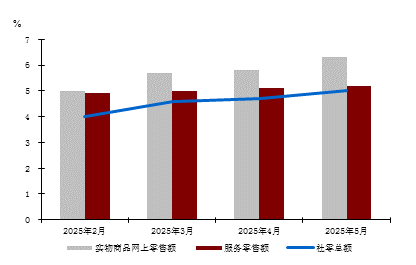
Economic Growth and Quality Improvement - In 2025, China's economy is expected to show stable growth and quality improvement, driven by effective macro policies and structural optimization [1] - Consumption is identified as a key engine for economic recovery, with a significant increase in its contribution to GDP growth [1][4] - High-tech industry investment is rapidly increasing, becoming a core driver of investment growth [1] Consumer Market Recovery - The consumer market is showing steady recovery, with retail sales of consumer goods growing by 5% year-on-year from January to May 2025, an acceleration of 0.3 percentage points compared to the previous months [2] - Service consumption, particularly in tourism and entertainment, is experiencing robust growth, with sales of upgraded goods like jewelry increasing by over 20% year-on-year in May [2][3] Structural Changes in Consumption - There is a clear trend of consumption structure upgrading, with a shift towards high-value goods and the emergence of new consumption models [3] - Policies are being implemented to enhance consumer capacity and improve the consumption environment, which is expected to further bolster consumer confidence [3] Future Consumption Outlook - In the second half of 2025, consumer spending is anticipated to grow more steadily, supported by stable employment and rising incomes [4] - The contribution of consumption to GDP growth is projected to exceed 60%, solidifying its role as the main driver of economic growth [4] Industrial Growth and Investment - In May 2025, industrial value-added output grew by 5.8%, with significant increases in equipment manufacturing (9.0%) and high-tech manufacturing (8.6%) [7] - Fixed asset investment increased by 3.7% year-on-year, with a notable 17.3% rise in equipment investment, indicating a shift towards new quality productivity [7][8] Export Market Dynamics - China's export structure is diversifying, with a growing focus on high-tech and green industries, which enhances resilience against external uncertainties [11] - The share of exports to emerging markets is increasing, while reliance on traditional markets like the U.S. is decreasing, reflecting a successful diversification strategy [11][13] Policy Framework and Economic Stability - Fiscal policy is set to increase the deficit target to 4.0% in 2025, aiming to stabilize expectations and boost confidence in the economy [14] - Monetary policy is expected to remain accommodative, with potential interest rate cuts and targeted reserve requirement ratio reductions to support economic growth [17]
华安基金科创板ETF周报:科创板开板六周年,“科八条”落地一周年,改革卓有成效
Quan Jing Wang· 2025-06-17 05:39
Group 1: Core Insights - The establishment of the Sci-Tech Innovation Board (STAR Market) has significantly supported the development of hard technology enterprises since its launch in June 2019, with recent mergers and acquisitions indicating a trend towards accelerated industry consolidation [1] - As of now, there are 119 companies in the integrated circuit sector on the STAR Market, representing a substantial portion of the A-share listed companies in this category, covering the entire supply chain from chip design to packaging and testing [1] - The recent "Eight Measures" issued by the China Securities Regulatory Commission has led to unprecedented activity in mergers and acquisitions among integrated circuit companies on the STAR Market, showcasing new characteristics and directions in the M&A market [1] Group 2: Industry Trends - The current trend of de-globalization and the urgent need for self-sufficiency have heightened the necessity for the development of new productive forces, with the STAR Market focusing on core electronic industries, emerging software, and new information technology services [2] - The STAR Market's top five industries—electronics, biomedicine, power equipment, computers, and machinery—account for 87.2% of the total market capitalization, indicating a concentrated investment landscape [3] - The high-end equipment manufacturing sector is crucial for enhancing the overall competitiveness of China's manufacturing industry, with recent PMI data showing signs of recovery and potential for continued growth in exports [4] Group 3: Sector Performance - The innovative drug sector is experiencing significant advancements, with Chinese companies leading in ADC and dual-antibody research, as evidenced by their substantial presence at the ASCO conference [5] - The overall industry sentiment in the pharmaceutical sector is improving, driven by increased R&D investment and active clinical trials, alongside international collaborations and supportive policies [6] - The STAR Market's ETFs, such as the Sci-Tech Information ETF and Sci-Tech Chip ETF, represent long-term investment directions aligned with the new productive forces [2][7][8][9]
长三角先进制造业集群联盟揭牌
Zhong Guo Hua Gong Bao· 2025-06-16 14:36
Group 1 - The Yangtze River Delta (YRD) region has established an Advanced Manufacturing Cluster Alliance to enhance collaboration among Jiangsu, Zhejiang, Anhui, and Shanghai, aiming to cultivate world-class advanced manufacturing clusters [1][2] - The alliance will focus on key sectors such as aerospace, biomedicine, integrated circuits, new materials, and high-end equipment, contributing to the modernization of the industrial system in the YRD [1][2] - As of now, the YRD has formed 26 national-level advanced manufacturing clusters, accounting for 32.5% of the total in China [2] Group 2 - The YRD provinces and city are implementing a policy system that includes targeted funding and tailored development plans for key clusters, enhancing inter-provincial cooperation [2] - Zhejiang has organized a series of matchmaking events, totaling 956 activities, which have facilitated financing of 476.2 billion yuan [2] - Shanghai has become a unique hub for shipbuilding, hosting multiple national-level innovation platforms, while Anhui is leveraging significant events to attract industrial investment [2]