托育服务

Search documents
今年新增普惠托位近90万
第一财经· 2025-12-26 11:48
Core Viewpoint - The article discusses the significant progress made in the development of inclusive childcare services in China during the "14th Five-Year Plan" period, highlighting government support, legislative efforts, and improvements in service supply and affordability [3][5][9]. Group 1: Government Support and Policy Initiatives - The central government has allocated 3 billion yuan to support the development of inclusive childcare services across 30 cities, with 9 provinces implementing childcare subsidy systems [3][8]. - The average price of full-day childcare has decreased by nearly 30% nationwide, addressing the issues of "difficult and expensive childcare" [3][8]. - As of this year, the number of childcare slots per thousand population has reached 4.73, with a total of 666 million slots available, marking a 132% increase since the beginning of the "14th Five-Year Plan" [7][8]. Group 2: Legislative and Structural Developments - A draft law on childcare services has been submitted for review, representing a crucial step in alleviating family "child-rearing anxiety" [3][9]. - The National Health Commission is actively promoting childcare service legislation and developing supporting policies to reduce the financial burden on families [3][9]. - The establishment of a "1+N" childcare service system is planned, integrating various childcare service models to enhance accessibility and quality [9]. Group 3: Healthcare Integration and Child Health Services - Approximately 80,000 childcare service institutions have signed agreements with healthcare facilities, ensuring professional health guidance and monitoring for children [8][9]. - By the end of this year, all secondary and tertiary public hospitals are expected to provide pediatric services, with 4,845 hospitals already meeting this requirement [6][11]. - Efforts are being made to improve the distribution of pediatric resources and address the shortage of pediatric specialists through training and incentive policies [11][14].

今年新增普惠托位近90万,国家将积极推动托育服务立法
Di Yi Cai Jing· 2025-12-26 11:03
Core Viewpoint - The Chinese government has made significant progress in improving childcare services during the "14th Five-Year Plan" period, addressing issues of accessibility and affordability in childcare, with a focus on legislative support and enhanced healthcare services for children [1][4][5]. Group 1: Childcare Service Development - Since the beginning of the "14th Five-Year Plan," nine provinces have implemented subsidy systems for childcare services, with a central government financial support of 3 billion yuan aimed at developing inclusive childcare services [1][4]. - The average price of full-day childcare has decreased by nearly 30%, alleviating the issues of "difficult and expensive childcare" [1][4]. - The number of childcare service institutions has reached 126,000, with a total of 6.66 million childcare spots available, marking a 110% increase in institutions and a 132% increase in spots since the "14th Five-Year Plan" began [3][4]. Group 2: Legislative and Policy Support - A draft law on childcare services has been submitted for review, representing a significant step in addressing family "child-rearing anxiety" through legislative measures [1][5]. - The National Health Commission is actively promoting childcare service legislation and developing supporting policies to reduce the financial burden on families [1][5]. - The government has introduced various policies to lower operational costs for childcare institutions, including tax exemptions and subsidies for service providers [3][4]. Group 3: Healthcare Integration - Approximately 80,000 childcare institutions have signed agreements with healthcare facilities to provide professional health guidance and establish health records for children [5]. - All secondary and tertiary public hospitals in China now offer pediatric services, enhancing the overall healthcare support for children [3][6]. - The government is focusing on improving pediatric service supply and addressing the shortage of pediatricians through training and incentive programs [6][8]. Group 4: Future Directions - The "15th Five-Year Plan" suggests further optimization of fertility support policies and the integration of childcare services, aiming to strengthen health services for women and children [1][2][5]. - The National Health Commission plans to continue expanding inclusive childcare service supply and improve the quality of services through a comprehensive service network [5].
今年新增普惠性托位数超89万个
Xin Lang Cai Jing· 2025-12-26 08:47
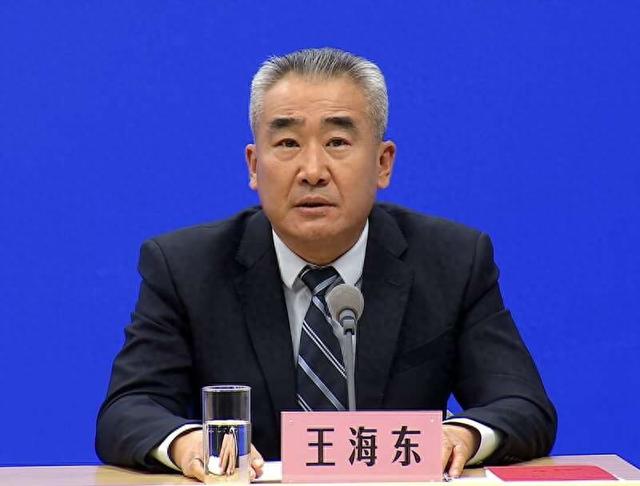
王海东在 发布会上回答记者提问。国家卫生健康委供图 中国青年报客户端北京12月26日电(中青报·中青网记者 刘昶荣)国家卫生健康委今天下午召开的新闻 发布会上通报,今年全国新增普惠性托位数超89万个,我国每千人口3岁以下婴幼儿托位数达4.73个, 共有托位665.7万个,其中普惠性托位数332万个。 今年年初,国家卫生健康委将每千人口3岁以下婴幼儿托位数4.5个,和全国新增66万个普惠性托位作为 2025年卫生健康系统为民服务实事的项目之一。和年初定的目标相比,"应该说超额完成了既定的目标 任务,托育服务工作取得了积极进展。"国家卫生健康委人口家庭司司长王海东在发布会上说。 托位数量增加的同时,托育服务价格持续下降,"入托贵"的压力逐步减轻。"十四五"以来,全国有9个 省份出台了托育服务的补贴制度,1315个县(市、区、旗)出台了托育的建设补贴、运营补贴、家庭消 费券等支持措施,有效降低了家庭的送托成本。全国的全日托平均价格降幅达到29%。 值得关注的是,托育服务质量也得到了有效提升,"托得好"的信心不断增强。全国有8万家托育服务机 构与医疗卫生机构签约,接受专业的卫生健康指导,为入托的婴幼儿建立健康成长档案 ...
国家卫健委:今年全国千人口婴幼儿托位数达到4.73个
Yang Shi Xin Wen· 2025-12-26 07:31
Core Viewpoint - The National Health Commission of China is advancing childcare services by setting a target of 4.5 childcare slots per 1,000 children under three years old by 2025, with a focus on increasing the availability of affordable childcare options [1] Group 1: Childcare Service Expansion - The number of childcare slots per 1,000 children under three years old has reached 4.73, exceeding the target with an addition of 890,000 affordable childcare slots this year [1] - The total number of childcare service institutions has increased to 126,000, providing 6.66 million slots, with a growth of 66,000 institutions since the start of the 14th Five-Year Plan, representing a 110% increase [1] Group 2: Cost Reduction in Childcare Services - The average price of full-day childcare has decreased by 29% since the beginning of the 14th Five-Year Plan, alleviating the financial burden on families [1] Group 3: Quality Improvement in Childcare Services - Trust in the quality of childcare services is increasing, with 80,000 childcare institutions partnering with healthcare organizations for professional guidance, enhancing service quality and utilization rates [1]
“最柔软群体”的“硬”托育,一线园长们最关心这些立法难题
Xin Jing Bao· 2025-12-25 00:01
Core Viewpoint - The draft of the Childcare Services Law is being reviewed, aiming to establish a national framework for childcare services, addressing the needs of families and promoting the development of children under three years old [1][2]. Group 1: Current State of Childcare Services - In Beijing, there are approximately 33,000 childcare spots available in various types of kindergartens, with over 26,000 being affordable spots, accounting for more than 50% of the total [1]. - The average enrollment rate for children under three in OECD countries is 35%, while China's rate is only 5%, indicating a significant gap [2]. Group 2: Legislative Importance - The legislation is deemed necessary to enhance the quality and accessibility of childcare services, addressing parents' concerns and potentially increasing enrollment rates [2][3]. - The draft specifies the establishment conditions for childcare institutions, requiring a licensing system and safety management protocols [2]. Group 3: Challenges in Implementation - Space limitations and structural constraints in existing kindergartens pose significant challenges for transforming facilities to accommodate younger children [4][5]. - The need for infrastructure upgrades includes creating safe play areas and appropriate sleeping zones for infants, which can be costly and time-consuming [5]. Group 4: Financial Support and Subsidies - The draft encourages local governments to explore childcare service subsidy systems to alleviate financial burdens on families and support the development of affordable services [6]. - Recommendations include increasing per-student subsidies and providing targeted financial support for facility upgrades [6]. Group 5: Workforce Development - The draft outlines qualifications for childcare workers, including a certification and registration system, to ensure a skilled workforce [8]. - There is a recognized need for training programs to enhance the skills of existing educators, particularly in caring for children aged 0-3 [10][11]. Group 6: Future Outlook - The introduction of the Childcare Services Law is expected to standardize and regulate the childcare market, promoting a collaborative ecosystem among public, private, and community providers [12][13]. - The law aims to improve the quality and accessibility of childcare services, addressing the needs of working parents and enhancing the overall childcare landscape in China [13].
托育服务,为带娃家庭“减负”(建言)
Ren Min Ri Bao· 2025-12-24 22:18
Core Insights - The development of inclusive childcare services is crucial for children's health and family welfare, as highlighted in the "14th Five-Year Plan" which emphasizes the establishment of a comprehensive childcare service system [1] Group 1: Current State of Childcare Services - As of the "14th Five-Year Plan" period, there are 126,000 childcare institutions in China, providing a total of 6.657 million childcare spots, with a ratio of 4.73 spots per 1,000 population for children under three years old [1] - Various regions are increasing resource investment in childcare services, with innovative measures being implemented, such as Heilongjiang's inclusion of affordable childcare services in its "Happy Heilongjiang" initiative [1] Group 2: Challenges in Childcare Services - Many working parents report a heavy burden in balancing work and childcare, with a lack of nearby, high-quality childcare institutions, and issues such as high costs and unstable service hours [2] - There is a significant gap between the effective supply of childcare services and the diverse, convenient, and inclusive needs of families, leading to concerns about affordability and trust in childcare services [2] Group 3: Recommendations for Improvement - It is recommended to establish accessible childcare institutions within communities to provide affordable and quality services to more families [2] - Encouragement of diverse social entities to participate in the provision of inclusive childcare services is necessary to create a multi-layered supply system [2] - Support for kindergartens to expand services by enrolling 2-3 year-olds and integrating childcare resources is essential [2] Group 4: Service Model Optimization - There is a need to optimize service models to meet family needs, including offering flexible childcare options such as full-time, part-time, and holiday care [3] - Establishing urban comprehensive childcare service centers is suggested to enhance the quality of childcare services and provide training and consultation for childcare institutions [3] Group 5: Integration of Health and Education - Promoting the integration of health services and childcare is vital, with recommendations to connect healthcare institutions, childcare facilities, and families to support children's health and development [4] - The establishment of "health-education combined" childcare units is proposed to introduce scientific parenting concepts and health services into childcare practices [4]
家门口享受托育服务——江西南昌红谷滩构建普惠托育服务体系
Xin Lang Cai Jing· 2025-12-24 20:50
Core Insights - The article highlights the significant improvements in childcare services in Honggutan District, Nanchang, with a focus on affordability and accessibility for working parents [1][2]. Group 1: Childcare Services Development - Honggutan District has established a "15-minute childcare circle," resulting in the construction of 81 various childcare institutions by 2025, with a ratio of 4.26 childcare spots per 1,000 people [1]. - The average monthly cost of childcare has decreased from 2,660 yuan to 2,000 yuan, making it more affordable for families [1]. Group 2: Safety and Health Regulations - A collaborative regulatory mechanism involving multiple departments has been implemented to ensure food safety and overall health standards in childcare facilities, with monthly inspections conducted [2]. - Each childcare institution is required to have a dedicated health administrator, and partnerships with public medical institutions have been established to provide regular health checks and training for staff [2]. Group 3: Enrollment Rates - The enrollment rate for children aged 0 to 3 in Honggutan District has reached 43.71%, indicating a growing acceptance and reliance on childcare services among families [3].
【社评】以法治之力助托育服务更便捷可及
Xin Lang Cai Jing· 2025-12-24 19:51
Group 1 - The core viewpoint of the news emphasizes the importance of well-structured childcare services for the healthy growth of infants and toddlers, which directly impacts family welfare and influences the fertility intentions of childbearing families, thereby affecting long-term population development [1][2] - The draft of the Childcare Services Law, which consists of 8 chapters and 76 articles, aims to ensure the healthy growth of infants and toddlers and serves as a foundational law for promoting high-quality population development [1][3] - The increasing demand for childcare services is driven by the rise in dual-income families and the declining capacity for intergenerational care, making childcare a necessity for many families [1][2] Group 2 - Despite the growth in the number of childcare institutions and available spots, there are significant disparities in service quality and accessibility, leading to a mismatch between supply and demand in different regions [2][3] - Recent policies have been introduced to address challenges in the childcare sector, including the 2019 guidelines to integrate childcare services into economic and social development plans and the 2024 measures to enhance supportive policies for childcare services [2][3] - The proposed law includes strict safety measures, professional qualifications for childcare workers, and aims to integrate affordable childcare services into public service frameworks, which could alleviate the high costs and difficulties associated with childcare [3][4] Group 3 - The legislation is seen as a crucial step towards creating a multi-faceted, safe, high-quality, and accessible public childcare service system, which is essential for building a fertility-friendly society [4] - Successful implementation of the law will require collaboration among various departments and community stakeholders to meet diverse needs and ensure the effective application of the law [4] - The legislation is expected to enhance the professional recognition and sense of belonging among childcare workers, attracting more talent to the industry and ultimately increasing the availability of quality childcare services [3][4]
民生样本 年度记录丨孩子的“社交预科班” 父母的“育儿加油站”
Yang Guang Wang· 2025-12-24 05:01
Core Viewpoint - The article highlights the evolution of community-based childcare services in Shanghai, particularly focusing on the "Jiangjiaxiang Baby House," which has transformed from a simple childcare facility into a comprehensive platform for parenting education and social interaction among parents and children [1][12]. Group 1: Overview of Jiangjiaxiang Baby House - The Jiangjiaxiang Baby House is located in a converted residential unit in Shanghai's Jing'an District, featuring a playroom, reading room, and a dedicated space for babies [3][8]. - The facility operates from Monday to Friday, offering playtime for children aged 1 to 3, and has introduced weekly parenting lectures since March [10][12]. Group 2: Educational Approach and Parent Involvement - The Baby House emphasizes learning through interaction, where older children model behaviors for younger ones, fostering social skills and empathy [9][11]. - Parents are encouraged to engage with their children during play, share parenting experiences, and learn from professional educators, thus enriching the childcare experience [10][12]. Group 3: Development and Future Plans - The Baby House has evolved to include professional guidance and support, moving beyond mere supervision to a focus on educational methodologies [13]. - Shanghai's policy aims to increase the availability of childcare services, with a target of 4.5 childcare spots per 1,000 residents for children under three by the end of the "14th Five-Year Plan" [13][14]. - The Jing'an District has established 25 Baby Houses, ensuring coverage across all neighborhoods, and plans to optimize locations based on community needs [14].

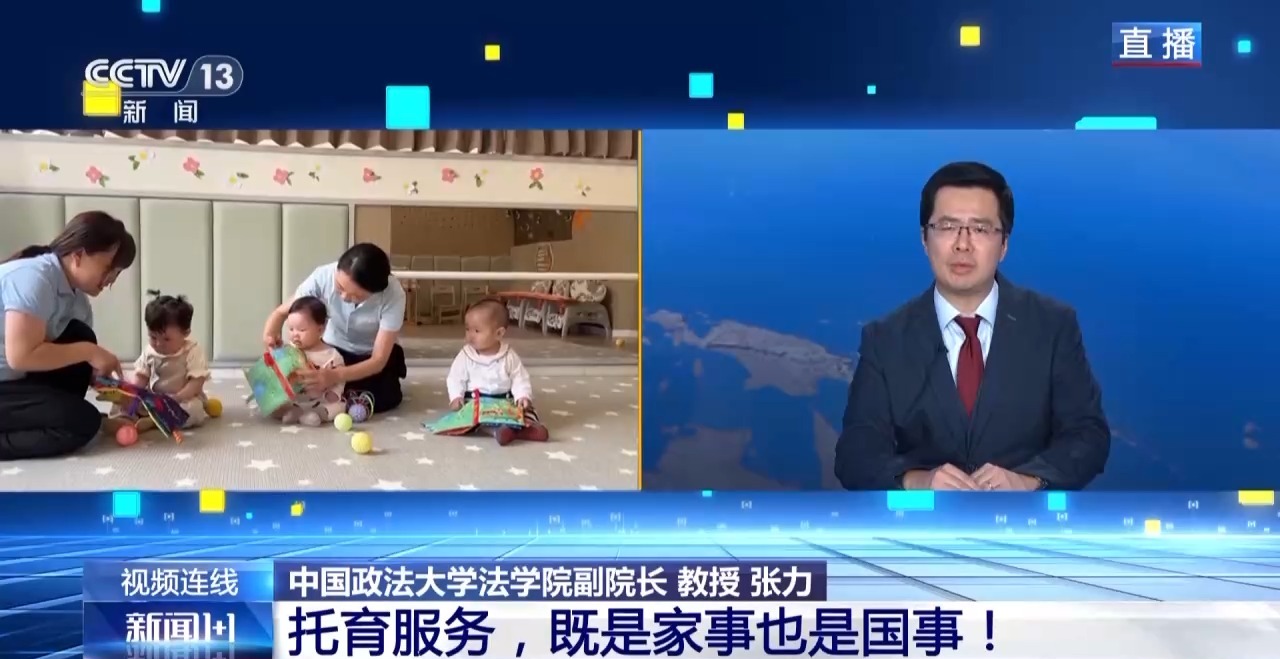
托育服务,既是家事也是国事!
Yang Shi Wang· 2025-12-24 00:06
Core Viewpoint - The draft of the Childcare Service Law aims to provide legal protection for children under three years old, enhance fertility support policies, reduce family upbringing costs, and improve population quality [1] Group 1: Government Role and Responsibilities - The draft emphasizes the government's leading role, mandating that childcare service funding be included in local government budgets [2] - It recognizes childcare services as an independent category within basic public services, addressing potential inequalities in service provision across regions [4] - The legislation will legally authorize government expenditures related to childcare services, alleviating concerns about budget allocations [5] Group 2: Standards and Safety in Childcare Services - The legislation will raise the entry standards for childcare institutions, ensuring that only qualified entities can operate, thus enhancing oversight and credibility [7] - Safety is a fundamental requirement, with the draft addressing various safety aspects, including institutional, personnel, facility, and service safety [8] - Specific standards for facility materials, air quality, dietary guidelines, and procedures for managing closures will be established to ensure a safe environment for children [10] Group 3: Financial Implications and Accessibility - The high cost of childcare services, which can consume 50% to 60% of a household's disposable income, has been a significant concern [11] - The legislation aims to reduce operational costs for childcare institutions through financial support measures, which could lead to lower service prices and make childcare more affordable for families [11]