清洁电器

Search documents
科沃斯(603486):Q3盈利能力持续强劲修复
Xin Lang Cai Jing· 2025-10-27 00:29
Core Viewpoint - Company reported strong financial performance for Q3 2025, with significant year-over-year growth in both revenue and net profit, driven by innovation and cost optimization efforts [1][2] Group 1: Financial Performance - For the first three quarters, the company achieved revenue of 12.88 billion, a year-over-year increase of 25.9%, and a net profit of 1.42 billion, up 130.6% [1] - In Q3 alone, the company generated revenue of 4.20 billion, reflecting a year-over-year growth of 29.3%, and a net profit of 440 million, which is a staggering increase of 7160.9% [1] - The gross margin in Q3 improved by 7.7 percentage points, attributed to increased market share in the mid-to-high-end segment and cost optimization through supply chain upgrades [2] Group 2: Market Dynamics - Domestic demand for cleaning appliances was boosted by ongoing government subsidy policies, with online sales of the company's vacuum and washing machines increasing by 122% and 35% year-over-year, respectively [1] - In the European market, the company effectively increased its high-end market share through new product launches, while in the U.S., it focused on maintaining delivery and targeting the mid-to-high price segment [1] Group 3: Profitability and Cash Flow - The net profit margin for Q3 was 10.4%, up 10.3 percentage points year-over-year, driven by improved expense management and a reduction in asset impairment losses [2] - Operating cash flow for Q3 increased by 650 million year-over-year, primarily due to rapid growth in sales revenue [2] Group 4: Investment Outlook - The company is positioned as a leader in the vacuum robot industry, with advantages in technology, channels, and supply chain, and is expected to maintain an upward trend in profitability [2] - Projected EPS for 2025 to 2027 is 3.74, 4.35, and 5.12, respectively, with a maintained buy rating and a target price of 112.33, corresponding to a 30 times P/E ratio for 2025 [2]

新石器完成逾6亿美元融资,阿联酋资本领投;霸王茶姬马来西亚最大门店开业;中文在线旗下FlareFlow成第三季海外收入黑马 |一周大公司出海动态
Tai Mei Ti A P P· 2025-10-25 06:47
Group 1: Strategic Collaborations - LoBo Fast Run has announced a strategic partnership with PostBus, a subsidiary of Swiss Post, to launch the autonomous driving service "AmiGo" in Switzerland by December 2025, with full operations expected by Q1 2027 [1] - Pony.ai has partnered with Stellantis to develop L4 autonomous vehicles for the European market, focusing initially on light commercial vehicles [3] Group 2: Product Launches - Yushu Technology has launched the Unitree H2 bionic robot, featuring a height of 180 cm, weight of 70 kg, and advanced capabilities such as a full-dimensional bionic facial system and a "super vision system" for 360-degree environmental perception [2] - ByteDance's AI assistant application Cici has achieved significant download success in multiple overseas markets, ranking among the top 20 free apps on Google Play in several countries [4] Group 3: Market Expansion - Bawang Tea Ji has opened its largest store in Malaysia, bringing its total number of stores in the country to over 200, following a strategic partnership with a local hotel giant [6][7] - Kaito Electric has announced plans to accelerate its overseas market expansion and AI integration, with products already entering markets such as Singapore, Malaysia, and the US [8] Group 4: Financial Agreements - Hansoh Pharmaceutical has entered a licensing agreement with F. Hoffmann-La Roche Ltd, receiving an upfront payment of $80 million for the global exclusive rights to develop and commercialize a targeted antibody-drug conjugate [5][6] Group 5: Industry Performance - The Chinese film industry has seen overseas box office revenue exceed $140 million in 2025, surpassing the total for 2024, with 46 countries participating in the release [11] - FlareFlow, a subsidiary of Zhongwen Online, reported a 269% quarter-over-quarter increase in mobile revenue, driven by its overseas short drama platform [13] Group 6: Manufacturing Investments - Longi Green Energy plans to establish a solar module manufacturing plant in Nigeria with a capacity of 500-1000 MW, complementing its previous agreements in the region [14] - Yingli Co. is investing in a new factory in Saudi Arabia to produce computer and data center components, enhancing its international presence [16] Group 7: Financing Activities - New Stone Technology has completed over $600 million in Series D financing, marking a record in China's autonomous driving sector, with plans for global market expansion [18] - LiblibAI has secured $130 million in Series B financing, the largest single financing in the domestic AI application sector in 2025, aimed at global expansion [21]

22年神话终破灭!戴森营收首次下滑 缺席双11榜单
Xin Lang Ke Ji· 2025-10-23 02:17
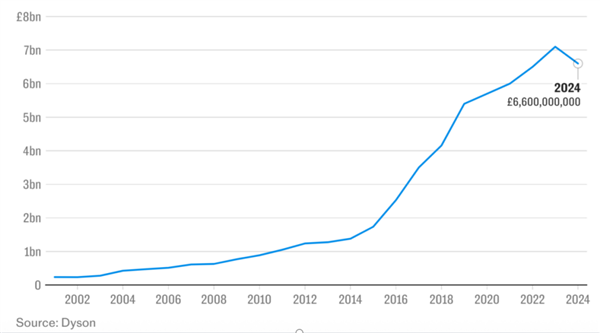
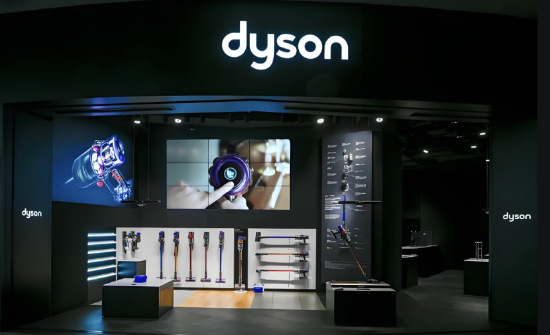
Core Points - Dyson's revenue has declined for the first time in 22 years, with a reported revenue of £6.6 billion in 2024, down 7.04% from £7.1 billion in 2023 [1][2][4] - The company's pre-tax profit fell by approximately 49% to £561 million, indicating a significant drop in profitability [1][4] - CEO Hanno Kirner described 2024 as a challenging but necessary transformation year for Dyson, attributing the revenue decline to decreased consumer confidence, global business restructuring, and currency fluctuations [4][12] Revenue and Profit Performance - Dyson's revenue of £6.6 billion in 2024 marks the first decline since 2002, with a notable drop in pre-tax profit to £561 million [1][2][4] - Despite achieving record global sales of over 20 million units, this increase did not translate into revenue or profit growth [4][12] Market Position and Competition - Dyson's market share in China has significantly decreased, with its online share in the high-end hair dryer market dropping to 7% in the first half of 2024 [6][12] - The company faces stiff competition from domestic brands like Midea and Leifheit, which offer similar products at lower prices, leading to a loss of market share [6][10][12] - Dyson's products are perceived as expensive, with consumers increasingly favoring local brands that provide comparable performance at a better price [10][12] Consumer Sentiment and Brand Perception - Consumer sentiment has shifted, with many viewing Dyson products as overpriced compared to domestic alternatives that match or exceed their performance [10][12] - The brand's innovative edge has diminished, as recent product launches have not generated significant consumer excitement, leading to a perception of stagnation [12][14] Sales Channels and Customer Engagement - Dyson's physical retail presence is struggling, with lower foot traffic compared to competitors like Midea and Roborock [8][9] - The lack of customer engagement in Dyson stores highlights a growing disconnect between the brand and its consumer base [9][10]

22年神话终破灭! 戴森营收首次下滑,缺席双11榜单 | BUG
Xin Lang Ke Ji· 2025-10-23 00:59
Core Points - Dyson's revenue has declined for the first time in 22 years, with a reported revenue of £6.6 billion in 2024, down 7.04% from £7.1 billion in 2023 [2][5] - The company's pre-tax profit fell by approximately 49% to £561 million in 2024 [2] - CEO Hanno Kirner described 2024 as a "difficult but necessary transformation year" for Dyson, despite achieving record global sales of over 20 million units [4] Revenue and Profit Performance - Dyson's revenue for 2024 was £6.6 billion, a decrease from £7.1 billion in 2023, marking the first revenue decline since 2002 [2][5] - The pre-tax profit for 2024 was £561 million, a nearly 49% reduction compared to the previous year [2] Market Position and Competition - Dyson's product sales have weakened in both online and offline markets, with no products listed in the top 10 best-selling hair dryers on a major e-commerce platform [2][6] - In the high-end hair dryer market in China, Dyson's online market share dropped to 7% in the first half of 2024 [6] - Competitors such as Midea and other domestic brands have rapidly gained market share, offering similar or superior products at lower prices [6][11] Consumer Sentiment and Brand Perception - Consumers perceive Dyson products as expensive, with some questioning their value compared to domestic alternatives that offer similar performance [10] - The brand's innovative edge has diminished, with fewer surprises in product offerings, leading to a shift in consumer preferences towards more affordable alternatives [12] Sales Channels and Customer Engagement - Dyson's physical stores have seen significantly lower foot traffic compared to nearby domestic brands like Covos and Pursuit [8] - The lack of customer engagement in Dyson stores indicates a potential decline in brand loyalty and interest [8][10]
家用电器:9月扫地机和洗地机景气延续,白电高基数承压
Huafu Securities· 2025-10-19 06:50
Investment Rating - The report maintains an "Outperform" rating for the industry [8] Core Views - The cleaning appliance sector, particularly floor cleaning robots and washing machines, continues to show strong growth in September, while the white goods sector faces pressure due to high base effects from last year [3][15] - The overall sales of major white goods categories experienced a decline in September, primarily due to the high base from last year's government subsidies [3][15] - The washing machine segment saw a year-on-year growth rate of 49.4% in September, with volume and price growth rates of +39% and +7% respectively. The floor cleaning robot segment achieved a year-on-year growth rate of 26.2%, with volume and price growth rates of +21% and +4.55% respectively [3][15] Summary by Sections Market Data - The home appliance sector experienced a decline of 2.1% this week, with white goods, black goods, small appliances, and kitchen appliances showing declines of -0.6%, -5.6%, -2.4%, and -2.0% respectively [4][31] - Raw material prices for copper and aluminum decreased by 1.46% and 1.04% respectively compared to the previous week [4][31] Investment Recommendations - The report suggests focusing on the following areas due to expected recovery in domestic demand supported by policy: 1. Major appliances benefiting from trade-in programs, recommending companies like Midea Group, Haier Smart Home, Gree Electric, Hisense Home Appliances, TCL Electronics, and Hisense Visual [5] 2. Pet-related companies as a resilient sector, recommending companies like Guibao Pet, Zhongchong Co., and Petty Holdings [5] 3. Small appliances and branded apparel expected to recover from weak consumer demand, recommending leading companies like Bear Electric, Feike Electric, Supor, and Newell [5] 4. Electric two-wheelers benefiting from new standards and trade-in programs, recommending companies like Ninebot, Yadea Holdings, and Aima Technology [5] Industry Trends - The report highlights that the global restructuring of manufacturing continues to favor Chinese manufacturing advantages, particularly in major appliances, vacuum cleaners, and tools, recommending companies like Midea Group, Haier Smart Home, and Hisense Home Appliances [6] - The report notes that the cleaning appliance sector remains strong globally, with leading brands benefiting from increased penetration rates, recommending companies like Roborock and Ecovacs [5][6] Sales Performance - In September, the sales performance of major brands in the floor cleaning robot segment showed significant growth, with Ecovacs and Roborock leading with year-on-year growth rates of +94% and +27% respectively [16][20] - The washing machine segment also showed strong performance, with brands like Tineco and Roborock achieving year-on-year growth rates of +38% and +115.8% respectively [20][21] Air Conditioning Market - The air conditioning market faced pressure in September, with domestic and foreign sales declining by 2.5% and 18.1% year-on-year respectively [22][26] - Major brands like Gree, Haier, and AUX showed positive growth in domestic sales, while foreign sales for brands like Midea and Gree experienced declines [26][28]
国补退潮,优选外销双高标的
2025-10-14 14:44
Summary of Conference Call on Robotic Vacuum Cleaner Market Industry Overview - The robotic vacuum cleaner market is expected to remain stable in 2026, with potential growth under optimistic scenarios, despite a neutral outlook suggesting it may remain flat compared to last year [1][3] - The domestic market has seen improvements in sales due to technological advancements, price range expansion, and government subsidy policies, with double-digit growth maintained in September [1][5] - The overall penetration rate of robotic vacuum cleaners in China is low, approximately 5%, with first-tier cities nearing 20%, indicating significant room for growth in the electrification of cleaning appliances [1][6] Key Insights and Arguments - The increase in penetration rates is driven by improved product quality and price-performance ratios, supported by government subsidies and innovations from manufacturers [4] - Despite the anticipated slowdown in growth due to the reduction of government subsidies, the overall market volume is expected to rise, leading to increased penetration rates [7][8] - Long-term, robotic vacuum cleaners are likely to gradually replace traditional vacuum cleaners, although handheld vacuums will remain relevant in the short term [14] Competitive Landscape - Domestic brands like Ecovacs and Roborock are expected to maintain their market shares despite increasing competition, with a two-superior and many-strong market structure likely to persist [15] - The entry of cross-industry brands poses a greater threat to mid-tier brands, while leading brands are less affected [16] - Chinese brands are gaining market share overseas, particularly against iRobot, which still holds a significant share in emerging markets due to its competitive low-end products [17][18] Company-Specific Insights - Investors are advised to focus on Ecovacs and Roborock. Ecovacs is expected to improve profit margins through product upgrades, although its floor washing machine business may slightly hinder overall performance [2][21] - Roborock is concentrating on expanding its global market share, sacrificing some profit margins for volume growth, which may lead to volatility in profitability [21] - iRobot is struggling to keep pace with domestic competitors in terms of innovation and speed of product iteration, which may hinder its competitive position [20] Additional Considerations - The robotic vacuum cleaner market is expected to see continued growth in both domestic and international markets, driven by historical data showing resilience in certain appliance categories even after external stimulus declines [9][10] - The acceptance of robotic vacuum cleaners in developed countries is higher due to consumer preferences for automated cleaning tools, while emerging markets present opportunities for growth due to lower penetration rates [13][18]

春光科技:本次质押后,陈凯先生累计质押公司股份430万股
Mei Ri Jing Ji Xin Wen· 2025-10-10 09:10
Group 1 - The actual controller of Chunguang Technology, Mr. Chen Kai, holds 9.2526 million shares, accounting for 6.84% of the total share capital [1] - After the latest pledge, Mr. Chen has pledged a total of 4.3 million shares, which is 46.47% of his holdings and 3.18% of the total share capital [1] - The actual controllers collectively hold 86.9526 million shares, representing 64.32% of the total share capital [1] Group 2 - After the latest pledge, the actual controllers have pledged a total of 7 million shares, which is 8.05% of their total holdings and 5.18% of the total share capital [1] - The revenue composition for Chunguang Technology in 2024 is 100% from clean appliances [1] - The current market value of Chunguang Technology is 5 billion yuan [2]

旗舰之上,再无对手!追觅H60 Ultra把“干净”做到极致
Qi Lu Wan Bao· 2025-10-10 08:25
Core Insights - The H60 Ultra cleaning machine addresses common household cleaning challenges, such as sticky sauces, rice grains, mold, and pet stains, by utilizing innovative technologies for deep cleaning [1][2] - The machine features a dual-arm system and a dual-heat washing system, enhancing its cleaning capabilities and efficiency [2] Group 1: Product Features - The H60 Ultra incorporates a globally innovative AI "dual-scraper" mechanical arm, designed to tackle stubborn stains effectively [1] - The rigid rear arm is specifically engineered to remove tough stains, while the flexible front arm focuses on corners and water stains, allowing for precise edge cleaning [1] - The design mimics natural cleaning motions, enabling the machine to handle even the most difficult messes, such as rice and oily residues [1] Group 2: Cleaning Technology - The H60 Ultra employs a "steam + hot water" dual washing system, with 90°C hot water and 160°C steam, achieving a bacteria kill rate of 99.9999% [2] - The system's high-temperature steam is delivered at an industry-leading flow rate of 3000mg/min, effectively penetrating floor gaps and killing hidden threats like bacteria and dust mites [2] - Enhanced safety features include a superconducting instant heating boiler and aerospace-grade sealing materials to prevent steam leakage, ensuring a secure user experience [2] Group 3: Market Positioning - The combination of the dual mechanical arms and dual-heat washing system positions the H60 Ultra as a comprehensive cleaning solution for various household areas, including kitchens, bathrooms, and play areas for children and pets [2]
俞浩放大招!追觅跨界造车,是破局还是虚火?
Ge Long Hui· 2025-10-09 03:50
Core Viewpoint - The company is attempting to transition from a cleaning appliance manufacturer to a diversified technology group, aiming for a global IPO by the end of 2026, while facing significant challenges in high-end manufacturing and market positioning [1][2][13]. Expansion Strategy - The company joined Xiaomi's ecosystem in 2017 and quickly rose in the cleaning appliance sector, achieving a revenue of 15 billion yuan in 2024 and serving over 30 million households globally [1]. - The cleaning appliance market is showing signs of saturation, with a 7.7% decline in retail volume and a 12% drop in average price in 2024 compared to 2021 [1]. - The company is diversifying into automotive, mobile, and space mining sectors to create a multi-faceted valuation model, inspired by Xiaomi's success in the market [2][3]. Automotive Ambitions - The company plans to launch a luxury electric vehicle that competes with high-end brands like Bugatti, with impressive specifications such as a 0-100 km/h acceleration in 1.8 seconds [3]. - The strategy includes leveraging brand prestige to enhance valuation, as the narrative of "competing with Bugatti" is more appealing than producing mid-range electric vehicles [3]. Challenges in Execution - There are significant gaps in technology transfer from cleaning appliances to automotive manufacturing, with the company's core technologies not meeting automotive standards [5]. - The company has filed 6,379 patents, but only 5% pertain to critical automotive systems, indicating a potential overestimation of its technological capabilities [5]. - The decision to build a factory in Germany poses risks due to the competitive landscape and stringent carbon regulations, which could increase manufacturing costs [6][7]. Financial Considerations - The company faces substantial funding challenges, needing 30-40 billion yuan to support automotive development, factory construction, and marketing [8]. - The reliance on an IPO for funding raises concerns, especially if the automotive business does not demonstrate tangible progress before the planned public offering [9]. Market Dynamics - The company announced over 15 billion yuan in orders, primarily from Middle Eastern and Central Asian dealers, but these orders may not translate into actual sales [9][12]. - The mismatch between the company's target market for luxury vehicles and its existing customer base in cleaning appliances could hinder effective market penetration [10]. - The low conversion rate for luxury vehicle orders raises questions about the sustainability of the company's projected sales figures [11]. Industry Reflection - The company's foray into high-end manufacturing reflects a broader anxiety among Chinese tech firms seeking growth beyond their core businesses, often leading to a focus on narrative over substance [13]. - Long-term success in high-end markets requires building brand equity and technological capabilities over time, rather than relying on short-term valuation strategies [14].
中国扫地机的越南“生意经”
经济观察报· 2025-10-01 04:30
Core Viewpoint - The competition landscape for Chinese cleaning appliance manufacturers has shifted from online traffic and technology iteration in the domestic market to channel coverage and service capabilities in overseas markets like Vietnam [1][14]. Group 1: Market Dynamics in Vietnam - In Vietnam, the sales strategy for cleaning appliances, particularly robotic vacuums, relies heavily on offline channels, with approximately 70% of sales coming from physical stores [6][10]. - The local market is characterized by a trust network built on specific locations and personal relationships, making face-to-face service crucial for consumer confidence [9][12]. - The penetration rate of robotic vacuums in Vietnam is currently below 10%, indicating significant growth potential as the market matures [16][18]. Group 2: Competitive Landscape - Chinese brands like Ecovacs, Roborock, and others have captured over 80% of the Southeast Asian robotic vacuum market, with Ecovacs holding a market share exceeding 40% in Vietnam [6][13]. - The competitive pressure from traditional brands like iRobot has diminished in the robotic vacuum segment, allowing Chinese companies to dominate [13][14]. Group 3: Sales and Distribution Strategy - Ecovacs employs a "single country single agent" model in Vietnam, partnering with a local distributor to manage marketing, sales, and after-sales service, which allows for a more localized approach [11][12]. - The company has established over 1,000 sales points in Vietnam, primarily through small family-run stores, enhancing community engagement and trust [10][12]. Group 4: Future Outlook - The cleaning appliance industry is expected to experience intense competition for the next three to five years, with opportunities for growth in overseas markets as domestic markets stabilize [16][17]. - The average income in Vietnam allows consumers to invest in cleaning appliances, with a willingness to spend on products that enhance their lifestyle [13][16].