
金融

Search documents
下好经济发展“先手棋” 多地召开“新春第一会”
Zhong Guo Zheng Quan Bao· 2026-02-24 20:28
辽宁在2月24日召开的全省振兴发展工作推进会上明确,要坚持从"小切口"入手、做好"大文章",确保 营商环境短期内明显好转、根本好转,打造营商环境最佳口碑省。拿出有力举措解决拖欠企业账款问 题,聚焦企业和群众诉求,研究推出更多含金量高的政策和全链条服务。 新业态、新产业发展对营商环境提出更高要求,多地对此着墨颇多。广东表示,制造业与服务业协同发 展必然伴随新产品、新业态、新模式的持续涌现,迫切需要构建开放、包容、稳定的营商环境,呵护新 生事物成长。 同时,地方政府正以真金白银塑造产业优势。安徽2月24日发布的《关于巩固拓展经济稳中向好势头若 干政策举措》提出,深入实施新兴产业集群发展工程,统筹安排资金41亿元用于培育壮大新动能。实 施"人工智能+"行动,设立数据要素改革发展专项资金,实施一批人工智能场景创新项目。 苏商银行特约研究员付一夫表示,人工智能相关产业发展已从政策驱动转向价值驱动。地方政府正通过 政策引导与标准规范,引导企业聚焦人工智能高价值场景,形成各有侧重、优势互补、协同并进的发展 格局。打造特色产业名片,形成错位竞争优势,为经济增长注入可持续的新动能。 持续优化营商环境 营商环境是发展的沃土、竞争 ...
广东 塑造“先进制造+现代服务”整体优势
Shang Hai Zheng Quan Bao· 2026-02-24 17:49
"群链一体化"打造产业新支柱 当前,广东拥有全部31个制造业大类,制造业规模约占全国八分之一,规上工业企业营业收入规模连续 保持全国第一。作为制造业大省和服务业强省,广东坚持实体经济为本、制造业当家,扎实推进制造业 与服务业协同发展,两业深度融合、互促共进的良好格局初步形成,发展成效显著。 在制造业方面,广东省以智能化升级、绿色化改造为核心路径,推动传统产业向高端化迈进,夯实了制 造业与服务业协同发展的基础,也为工业互联网、节能环保服务等生产性服务业嵌入制造提供了广阔场 景。在服务业方面,广东服务业规模领先、体系完整。据广东省统计局数据综合测算,2025年广东现代 服务业增加值55139.99亿元,占GDP比重近37.84%。其中,生产性服务业在广东现代服务业中占据绝对 主导地位,金融业,信息传输、软件和信息技术服务业成为核心引擎。 会议提出,广东要推动传统优势产业稳规模、提品质、增效益,发展壮大新兴产业、未来产业,"群链 一体化"打造产业新支柱,培育更多万亿元级、千亿元级产业集群;要推动服务业优质高效发展,以科 技服务提升制造业核心竞争力,以金融服务为实体经济注入源头活水,以商务服务为工业产品开具市场 通行 ...
山东中锐产业发展股份有限公司关于为子公司提供担保的进展公告
Xin Lang Cai Jing· 2026-02-24 17:17
登录新浪财经APP 搜索【信披】查看更多考评等级 证券代码:002374 证券简称:中锐股份 公告编号:2026-006 山东中锐产业发展股份有限公司 关于为子公司提供担保的进展公告 本公司及董事会全体成员保证公告内容真实、准确和完整,不存在虚假记载、误导性陈述或者重大遗 漏。 特别提示: 公司及子公司担保总额超过最近一期经审计净资产100%,其中包含对资产负债率超过70%的子公司提 供担保的情形,上述担保主要用于公司及子公司融资、授信或业务发展需要,风险相对可控,敬请投资 者注意相关风险。 一、担保情况概述 近日,山东中锐产业发展股份有限公司(以下简称"公司"或"保证人")全资子公司成都海川制盖有限公 司(以下简称"成都海川"或"债务人")因日常经营需要与四川简阳农村商业银行股份有限公司东部新区 支行(以下简称"债权人")签署了《流动资金借款合同》。公司为成都海川该笔借款提供连带责任担 保,并签署了《保证合同》。 公司分别于2025年4月23日、5月16日召开第六届董事会第十八次会议及2024年年度股东会,审议通过了 《关于2025年度公司提供担保额度预计的议案》,公司及子公司决定基于融资、授信、履约等业务 ...

宏观-关税-美元与中国复苏验证
2026-02-24 14:16
Summary of Key Points from Conference Call Industry or Company Involved - The discussion primarily revolves around the macroeconomic environment, U.S.-China relations, and the impact of tariff policies on various industries, particularly focusing on China's export sectors such as semiconductors and machinery. Core Insights and Arguments - **U.S.-China Relations Stability**: The market anticipates that U.S.-China relations will remain stable in the first half of 2026, supported by planned high-level meetings and positive attitudes from both sides [3] - **Tariff Policy Changes**: The U.S. Supreme Court's ruling on tariffs has led to a reduction in China's effective tariff rate from 29.8% to 22%, narrowing the gap with global rates by 6.5%. This is expected to benefit China's export sectors, especially semiconductors and machinery [4][22] - **Economic Recovery Indicators**: China's economic recovery is being validated through a three-step process, including positive CPI and PPI data, with expectations for PPI to turn positive by the end of Q2 2026 [7][8] - **Strong Consumer Demand**: During the Spring Festival, retail and catering sales increased by 8.6% year-on-year, indicating robust consumer demand. Port throughput also grew by 13.2%, reflecting active economic activity [8][9][10] - **Financial Data Insights**: January financial data showed strong corporate deposit growth, indicating potential for production investment and improved economic circulation. However, consumer loan growth remains weak [13][14] - **PPI Trends**: January 2026 PPI rose by 0.4%, marking the highest monthly increase since mid-2021. The forecast for PPI indicates a potential positive shift by mid-2026, driven by improved supply-demand dynamics in the manufacturing sector [16] Other Important but Possibly Overlooked Content - **AI and Economic Growth**: The development of AI is seen as a crucial factor in addressing U.S. debt issues and enhancing the long-term credibility of the dollar. AI-driven growth could lead to a scenario where inflation remains low, allowing for potential interest rate cuts [6] - **Old vs. New Economy Performance**: While traditional sectors like real estate and durable goods are underperforming, new economy sectors, particularly exports and midstream manufacturing, are thriving, contributing to overall economic growth [12] - **Global Monetary Policy Trends**: The global monetary policy landscape is characterized by continued easing, with expectations that the aggressive phase of monetary expansion will taper off by 2026 [18][19] - **Liquidity in Financial Markets**: Despite volatility, global liquidity remains healthy, with improvements in dollar liquidity and stable credit spreads, indicating a resilient financial environment [21] This summary encapsulates the key points discussed in the conference call, highlighting the macroeconomic context, industry-specific insights, and broader financial trends.
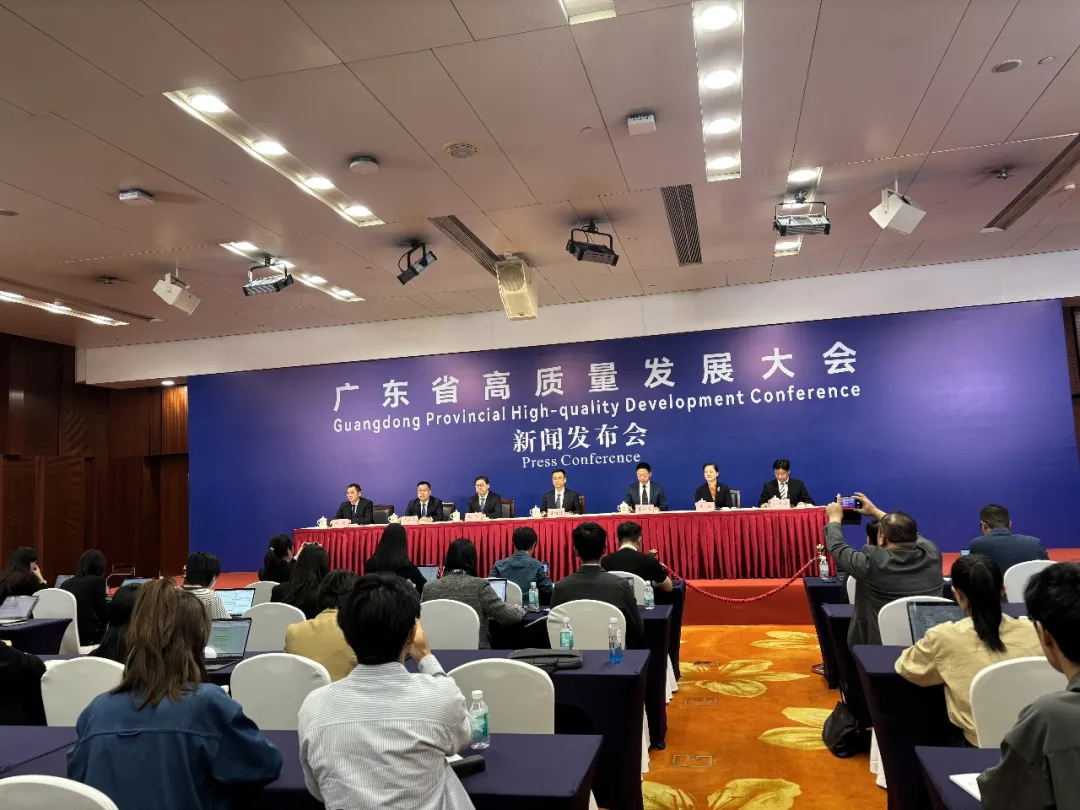
在这场广东开年大会上,我感受到几个“新”丨记者观察
Xin Lang Cai Jing· 2026-02-24 14:10
Core Viewpoint - The Guangdong province emphasizes "high-quality development" for the fourth consecutive year, focusing on the collaborative development of manufacturing and service industries as a new strategic direction for 2024 [1][2]. Group 1: Collaborative Development - The term "collaboration" is highlighted, indicating a shift from separate strategies for manufacturing and services to a unified approach that enhances competitive advantages through mutual support [2][3]. - Manufacturing is encouraged to embrace service elements, requiring upgrades through industrial internet, software algorithms, and system integration, thus extending beyond production to include R&D, design, and marketing [2][3]. Group 2: Service Industry Enhancement - The service sector is urged to enhance its quality and efficiency, leveraging technology to boost the core competitiveness of manufacturing, while financial services are seen as vital for injecting vitality into the real economy [3][4]. - The integration of services into manufacturing is viewed as a "dual-driven" approach, essential for rapid industrial development, with a focus on sales, operations, and maintenance alongside manufacturing [4]. Group 3: Innovation and Policy Support - The conference featured seven business leaders, particularly from Shenzhen, emphasizing the role of technological innovation in driving high-quality development across the province [4][6]. - A white paper on the collaborative development of manufacturing and services was introduced, outlining supportive policies aimed at ensuring these strategies are effectively implemented [6][7]. Group 4: Future Outlook - As Guangdong embarks on a journey to ascend the global value chain, the dual advancement of manufacturing and services is positioned as a powerful engine for economic growth [7][8].

上海“十五五”开局
Guo Ji Jin Rong Bao· 2026-02-24 13:47
"十五五"开局之年,上海将离岸金融作为国际金融中心功能升级的关键抓手,规划在临港新片区和东方 枢纽国际商务合作区探索打造离岸金融(经济)功能区。此举备受金融界关注,上海应该如何抓住历史 机遇,构建更高要求的离岸金融体系,来匹配国际金融中心的建设,FT账户又该如何突破和升级? 站在"十五五"开局之年的历史节点,上海如何下好离岸金融这盘大棋? 日前,上海举行新闻发布会解读《上海市国民经济和社会发展第十五个五年规划纲要》(下称"上海'十 五五'规划纲要")。"十五五"时期,上海将提高国际金融中心竞争力和国际化水平,在临港新片区和东 方枢纽国际商务合作区探索打造离岸金融(经济)功能区,支持在功能区试点开展离岸金融业务。 "离岸金融"也是今年上海两会代表委员的热议词汇。上海这座全球经济总量排名第五的城市,在开 启"十五五"新征程之际,受到各界对其加快国际金融中心建设的重点关注。 业内人士向《国际金融报》记者表示,这不仅是一场关于金融业务的探讨,更是一盘关乎国家战略、牵 动全球资本流向的大棋局。在上海国际金融中心建设从"规模扩张"迈入"功能升级"的关键转折点,离岸 金融或许承载着为顶级全球金融中心补上"临门一脚"的历史使 ...
上海国际金融中心建设能级跃升
Guo Ji Jin Rong Bao· 2026-02-24 13:40
Core Insights - The construction of Shanghai International Financial Center (SIFC) has transitioned from "gathering institutions, building frameworks, and expanding scale" during the 14th Five-Year Plan to "strengthening functions, enhancing levels, and optimizing ecology" in the 15th Five-Year Plan, with a focus on offshore finance as a key driver by 2026 [1][6][9] Group 1: Achievements in 2025 - In 2025, SIFC achieved significant progress in financial market construction, institutional capacity, financial infrastructure, and high-level openness, marking a new stage of functional enhancement [2][4] - The total amount of cross-border RMB payments in Shanghai reached 32.4 trillion yuan, a year-on-year increase of 9%, maintaining a 46% share of the national total [3] - The number of licensed financial institutions in Shanghai reached 1,813, with 128 international reinsurance platforms, including 34 foreign institutions [3] Group 2: Strategic Initiatives - The central financial committee issued opinions to support the acceleration of SIFC construction, aiming for a comprehensive enhancement of its capabilities over the next five to ten years [2] - The Shanghai government signed a collaborative development action plan with Hong Kong to strengthen cooperation in building international financial centers [2] - The 15th Five-Year Plan emphasizes the establishment of a global RMB asset allocation center and risk management center, enhancing cross-border and offshore financial services [6][7] Group 3: Future Directions - The focus will shift towards enhancing pricing power, resource allocation rights, and global service capabilities, aiming to establish Shanghai as a global center for RMB asset allocation and risk management [1][8] - Offshore finance is identified as a breakthrough point for SIFC construction, with plans to address challenges in legal frameworks, tax arrangements, and cross-border data flow [9][10] - Recommendations include establishing offshore financial functional zones, enriching offshore RMB product systems, and optimizing the legal and business environment to enhance international competitiveness [10][11]
社融信贷月报:财政货币政策协同发力,1月社融增长较快
BOCOM International· 2026-02-24 13:20
Investment Rating - The report provides a positive outlook for the financial industry, suggesting a "Leading" rating for the sector over the next 12 months, indicating expected performance to be attractive compared to the benchmark index [16]. Core Insights - The financial industry is experiencing a recovery in credit demand from households, with January 2026 seeing new RMB loans of 4.71 trillion yuan, a year-on-year decrease of 420 billion yuan. However, household loans increased by 456.5 billion yuan, showing a marginal recovery in demand [4][5]. - The total social financing (社融) in January 2026 reached 7.22 trillion yuan, an increase of 166.2 billion yuan year-on-year, driven by fiscal efforts and seasonal factors related to the Spring Festival [4]. - M1 and M2 growth rates accelerated in January 2026, with M1 growing at 4.9% and M2 at 9.0%, indicating an increase in liquidity in the market [4]. - The report highlights a shift in deposit structure, with total new RMB deposits of 8.09 trillion yuan in January 2026, an increase of 3.77 trillion yuan year-on-year, although household deposits decreased by 339 billion yuan [4][5]. Summary by Sections Credit Demand - In January 2026, household loans increased by 456.5 billion yuan, with short-term loans rising by 159.4 billion yuan, while corporate loans totaled 4.45 trillion yuan, a decrease of 330 billion yuan year-on-year [4][5]. Social Financing - New social financing in January 2026 was 7.22 trillion yuan, with government bonds increasing by 283.1 billion yuan and bank acceptance bills rising by 163.9 billion yuan [4][5]. Monetary Supply - M1 growth rate was 4.9%, ending a three-month decline, while M2 growth rate was 9.0%, indicating improved liquidity conditions in the financial system [4]. Deposits - New RMB deposits totaled 8.09 trillion yuan in January 2026, with household deposits decreasing by 339 billion yuan year-on-year, while corporate deposits increased by 2.82 trillion yuan [4][5].
社融信贷月报:财政货币政策协同发力,1月社融增长较快-20260224
BOCOM International· 2026-02-24 13:01
Investment Rating - The report provides a positive outlook for the financial industry, suggesting a "Leading" rating for the sector over the next 12 months, indicating expected performance to be attractive compared to the benchmark index [16]. Core Insights - In January 2026, new RMB loans amounted to 4.71 trillion yuan, a year-on-year decrease of 420 billion yuan, with household loans increasing by 456.5 billion yuan, showing a marginal recovery in demand [4][5]. - The total social financing (社融) in January 2026 reached 7.22 trillion yuan, an increase of 1.66 trillion yuan year-on-year, driven by fiscal efforts and seasonal factors related to the Spring Festival [4][5]. - M1 and M2 growth rates accelerated in January, with M1 increasing by 4.9% and M2 by 9.0%, indicating improved liquidity in the market [4][5]. - The report highlights a shift in deposit structure, with total new RMB deposits reaching 8.09 trillion yuan, a year-on-year increase of 3.77 trillion yuan, although household deposits saw a decrease [4][5]. Summary by Sections Credit and Social Financing Data - New RMB loans in January 2026: 47,100 million yuan, down 4,200 million yuan year-on-year [5]. - Household loans: 4,565 million yuan, up 127 million yuan year-on-year; short-term loans increased by 1,594 million yuan [5]. - Corporate loans: 44,500 million yuan, down 3,300 million yuan year-on-year; short-term loans increased by 3,100 million yuan [5]. - Total new social financing: 72,200 million yuan, up 1,662 million yuan year-on-year [5]. Deposit Trends - New RMB deposits: 80,900 million yuan, up 37,700 million yuan year-on-year; household deposits decreased by 33,900 million yuan [5]. - Corporate deposits increased by 28,160 million yuan year-on-year [5]. Monetary Supply Growth - M1 growth rate: 4.9%, ending a three-month decline; M2 growth rate: 9.0%, up 0.5 percentage points from the previous month [4].
广东“新春第一会”!让低空经济“飞”起来、自动驾驶“跑”起来、具身智能“用”起来
Zhong Guo Zheng Quan Bao· 2026-02-24 12:26
Core Viewpoint - The Guangdong Provincial High-Quality Development Conference emphasizes the coordinated development of manufacturing and service industries as a key strategy for achieving high-quality economic growth during the 14th Five-Year Plan period [2]. Group 1: Focus on Coordinated Development - This year's conference marks the fourth consecutive year that Guangdong has held its "New Year First Meeting" on the first working day after the Spring Festival, focusing on the theme of "coordinated development of manufacturing and service industries" [2]. - Guangdong's Secretary of the Provincial Party Committee, Huang Kunming, highlighted that promoting the synergy between manufacturing and service sectors is essential for industrial advancement, embracing technological trends, and enhancing economic circulation [2]. Group 2: White Paper Insights - The Guangdong Provincial Development and Reform Commission released a "White Paper on Coordinated Development of Manufacturing and Service Industries," which outlines strategies centered on intelligent upgrades and green transformations to elevate traditional industries [2]. - Since 2021, Guangdong has facilitated over 46,000 industrial enterprises in completing technological upgrades and digital transformations [2]. Group 3: Future Projections - The White Paper projects steady growth in the province's productive service sector by 2025, with financial sector value-added expected to increase by 7.7% year-on-year and revenue from information transmission, software, and IT services anticipated to rise by 9.7% [3]. - The retail sales of consumer goods in Guangdong are expected to reach 4.6 trillion yuan by 2025, with new business models such as "door-to-door economy," fresh e-commerce, and short video e-commerce emerging [3]. Group 4: Empowering Manufacturing and Services - Huang Kunming stated that the dual advancement of manufacturing and services is crucial for Guangdong's high-quality development and modernization [4]. - The strategy includes strengthening the industrial system, nurturing leading enterprises, and fostering technological innovation to enhance the overall ecosystem [4][5].