美元强弱

Search documents
宏观-关税-美元与中国复苏验证
2026-02-24 14:16
Summary of Key Points from Conference Call Industry or Company Involved - The discussion primarily revolves around the macroeconomic environment, U.S.-China relations, and the impact of tariff policies on various industries, particularly focusing on China's export sectors such as semiconductors and machinery. Core Insights and Arguments - **U.S.-China Relations Stability**: The market anticipates that U.S.-China relations will remain stable in the first half of 2026, supported by planned high-level meetings and positive attitudes from both sides [3] - **Tariff Policy Changes**: The U.S. Supreme Court's ruling on tariffs has led to a reduction in China's effective tariff rate from 29.8% to 22%, narrowing the gap with global rates by 6.5%. This is expected to benefit China's export sectors, especially semiconductors and machinery [4][22] - **Economic Recovery Indicators**: China's economic recovery is being validated through a three-step process, including positive CPI and PPI data, with expectations for PPI to turn positive by the end of Q2 2026 [7][8] - **Strong Consumer Demand**: During the Spring Festival, retail and catering sales increased by 8.6% year-on-year, indicating robust consumer demand. Port throughput also grew by 13.2%, reflecting active economic activity [8][9][10] - **Financial Data Insights**: January financial data showed strong corporate deposit growth, indicating potential for production investment and improved economic circulation. However, consumer loan growth remains weak [13][14] - **PPI Trends**: January 2026 PPI rose by 0.4%, marking the highest monthly increase since mid-2021. The forecast for PPI indicates a potential positive shift by mid-2026, driven by improved supply-demand dynamics in the manufacturing sector [16] Other Important but Possibly Overlooked Content - **AI and Economic Growth**: The development of AI is seen as a crucial factor in addressing U.S. debt issues and enhancing the long-term credibility of the dollar. AI-driven growth could lead to a scenario where inflation remains low, allowing for potential interest rate cuts [6] - **Old vs. New Economy Performance**: While traditional sectors like real estate and durable goods are underperforming, new economy sectors, particularly exports and midstream manufacturing, are thriving, contributing to overall economic growth [12] - **Global Monetary Policy Trends**: The global monetary policy landscape is characterized by continued easing, with expectations that the aggressive phase of monetary expansion will taper off by 2026 [18][19] - **Liquidity in Financial Markets**: Despite volatility, global liquidity remains healthy, with improvements in dollar liquidity and stable credit spreads, indicating a resilient financial environment [21] This summary encapsulates the key points discussed in the conference call, highlighting the macroeconomic context, industry-specific insights, and broader financial trends.
2026年黄金还能买吗?历史五次大跌回顾,关键买卖信号揭秘
Sou Hu Cai Jing· 2026-01-27 16:20
Core Viewpoint - The article discusses the future of gold investment in 2026, emphasizing the historical context of gold price fluctuations and the influence of monetary policy and geopolitical risks on gold's value [1][12]. Group 1: Historical Context of Gold Prices - The significant drop in gold prices in 1980 serves as a warning, where prices fell from $850 to $440 due to rising interest rates and political risks, leading to a long-term bearish trend [1]. - The long-term bear market in the 1990s was driven by a recovering U.S. economy, lower inflation, and a strong dollar, which marginalized gold as a safe-haven asset [3]. - The 2008 financial crisis saw a temporary sell-off of gold as institutions sought liquidity, but subsequent monetary easing restored gold's appeal [3]. Group 2: Recent Trends and Current Signals - The COVID-19 pandemic initially caused panic selling, but coordinated central bank actions led to a recovery and new highs for gold, highlighting the dual impact of liquidity crises and monetary easing on gold prices [5]. - As of late 2025 and early 2026, mixed signals are present: the Federal Reserve is in a rate-cutting cycle, which is generally favorable for gold, while global economic recovery remains weak, sustaining demand for gold as a safe haven [6]. - Central banks, particularly in China, have been net buyers of gold, with over 1,000 tons purchased globally in 2025, indicating strong demand support [6]. Group 3: Future Considerations for Gold Investment - The pivotal moment in June 2026 will be the Federal Reserve's direction post-Powell, which could either support gold prices through continued rate cuts or lead to a risk-on environment that may negatively impact gold [8]. - Gold is not a yield-generating asset, and its opportunity cost remains high in a rising interest rate environment, necessitating a patient and strategic investment approach [8][10]. - Investors should consider their investment horizon, asset diversification, and liquidity plans, as unexpected events can force the sale of assets at unfavorable times [10]. Group 4: Strategic Recommendations - In a scenario of moderate rate cuts and continued central bank buying, dollar-cost averaging and slight increases in gold holdings are advisable [10]. - In the event of drastic rate cuts and a resurgence in market risk appetite, a conservative approach involving reduction of holdings or hedging with options is recommended [10]. - For long-term investors, viewing gold as insurance and a hedge against systemic risks is prudent, with a strategy of gradual accumulation rather than concentrated bets [10][12].


澳元区间博弈待突破 加息预期信号主导方向
Jin Tou Wang· 2026-01-22 03:05
Core Viewpoint - The Australian dollar (AUD) is experiencing fluctuations against the US dollar (USD), with significant influences from the Reserve Bank of Australia's (RBA) monetary policy and economic indicators, leading to a critical point for directional movement in the currency market [1][2][3] Monetary Policy and Economic Indicators - The RBA has ended its easing cycle after three rate cuts in 2025, with expectations shifting towards potential interest rate hikes due to persistent inflation above the target range of 2%-3% [1] - There is a notable divergence in forecasts regarding future rate adjustments, with some institutions predicting a 25 basis point hike in February, while others suggest maintaining current rates due to concerns over consumer confidence [1][2] - The interest rate swap market indicates a 25% probability of a rate hike in February, increasing to 76% by May, with an overall expectation of a 30 basis point increase throughout 2026 [2] Economic Performance - Australia's economy shows resilience, with household spending increasing by 1.0% month-on-month in November 2025, and an annual growth rate of 6.3%, the highest since September 2023 [2] - The labor market remains robust, with the unemployment rate dropping to 4.3% in October and a significant increase in full-time employment [2] Consumer Confidence and Cost Pressures - Consumer confidence is declining, with the Westpac consumer confidence index falling by 1.7% to 92.9 in January 2026, indicating a pessimistic outlook on future economic conditions [3] - Rising living costs, including a 5.2% increase in housing costs and a 19.7% rise in electricity prices, are contributing to the pressure on consumer sentiment [3] Currency Dynamics and External Influences - The AUD's performance is significantly affected by global risk sentiment and international demand, with a notable recovery in international tourism contributing positively to the economy [3] - Despite the AUD showing resilience against the USD, external factors such as trade tensions and geopolitical issues may exert downward pressure on the currency [3] Technical Analysis - The AUD/USD exchange rate is currently oscillating around the middle band of the Bollinger Bands, indicating low volatility and potential for a directional breakout [4] - Key resistance levels are identified at 0.6760-0.6799, while support is concentrated in the 0.6660-0.6690 range, with a potential downward trend if key support is breached [4]
帮主郑重:油金背离、金属跳水!商品市场的“明牌”与“暗流”
Sou Hu Cai Jing· 2026-01-17 00:58
Group 1: Oil Market - Oil prices experienced a slight recovery, closing above $59 per barrel, primarily driven by a "weekend risk-off" sentiment rather than strong market optimism [3] - The geopolitical risk premium remains, but the underlying fundamentals supporting sustained oil price increases, such as global demand, are being scrutinized [3] - A senior strategist indicated that if the U.S. does not take action soon, market attention will shift back to less optimistic inventory and supply-demand data [3] Group 2: Gold Market - Gold prices fell due to a rebound in the dollar and rising U.S. Treasury yields, with deeper concerns stemming from Trump's statements regarding the Federal Reserve chair selection [4] - Market expectations for significant Fed rate cuts next year, which had previously driven gold prices to new highs, are now in doubt due to Trump's indecision [4] - The future trajectory of gold prices is increasingly tied to U.S. interest rate expectations, shifting from a geopolitical risk narrative to a financial story closely linked to the Fed's actions [4] Group 3: Base Metals Market - Base metals, including copper and tin, saw a significant decline after reaching historical highs, with tin prices dropping nearly 8% [4] - This collective drop is attributed to traders in Shanghai and London synchronously taking profits and closing positions, highlighting the volatility in speculative positions [4] - The market's reaction serves as a reminder that even in favorable long-term trends like global decarbonization, prices can experience significant corrections [4] Group 4: Investment Strategy - Investors are advised to differentiate between "event-driven" and "trend-driven" factors, with geopolitical events impacting oil prices being more volatile and less predictable [5] - Maintaining calm during market exuberance is crucial, as the recent correction in base metals illustrates the risks associated with prices deviating significantly from their fundamentals [5] - The strength of the dollar is emphasized as a key factor influencing all dollar-denominated commodities, with any shifts in Fed policy likely to create significant market impacts [5]

金价剧震来袭,震惊市场真相,四次暴跌教你抄底秘诀
Sou Hu Cai Jing· 2025-10-22 19:26
Core Insights - The volatility of gold prices is likened to a roller coaster, with significant fluctuations observed since the beginning of 2025, causing anxiety among investors [1] - Historical patterns show that during times of financial tightening, such as in 2008 and 2013, gold prices can drop sharply despite initial expectations of a rise [3][5] - The relationship between the strength of the US dollar, fiscal health, and global liquidity is crucial in determining gold prices, with these factors acting like three horses pulling in different directions [8][14] Market Dynamics - In 2022, the tightening of monetary policy and the strengthening of the dollar led to a significant decline in gold prices, dropping from $2070 to $1620 [6] - The Federal Reserve's actions in 2025 are anticipated to be pivotal, with speculation around potential interest rate cuts influencing market sentiment [10][12] - The current economic environment lacks major liquidity crises, but the ongoing high fiscal deficit and internal government conflicts pose risks to market stability [10][16] Future Outlook - The second half of 2025 may see a major shift in market dynamics, influenced by Federal Reserve policy signals and fiscal adjustments, which could either bolster or depress gold prices [16][20] - Geopolitical uncertainties may also trigger a resurgence in gold's appeal as a safe-haven asset, depending on how these factors evolve [16][20] - Investors are advised to maintain a cautious approach, recognizing that the gold market is influenced by complex interrelations and not to be swayed by short-term price movements [18][20]
Gold Falls Again As Rally Comes To Halt, Asian Markets Drop
International Business Times· 2025-10-22 03:00
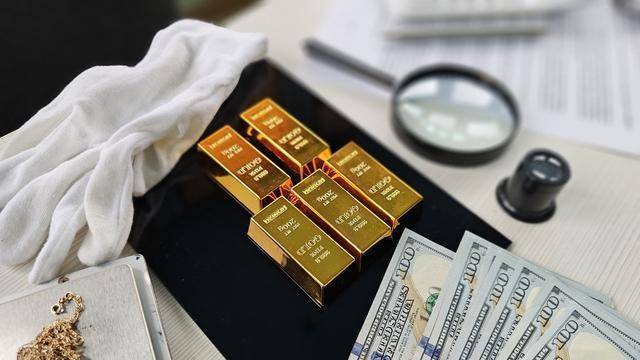
Group 1: Precious Metals Market - Gold and silver prices experienced a significant decline for the second consecutive day, halting a rally that had seen gold prices rise over 60% since the beginning of the year, reaching a peak of $4,381.51 before dropping to a low of $4,000 [1][3] - The rally in precious metals was driven by factors such as a weaker dollar, expectations of interest rate cuts, falling bond yields, and increased central bank buying, alongside heightened demand for safe-haven assets due to global economic concerns [2][5] - The recent sell-off was attributed to profit-taking, improved prospects for easing tensions between China and the US, and a stronger dollar, leading to a drop in gold miners' stocks, with Northern Star Resources and Perseus Mining seeing declines of over 8% and 6% respectively [3][4] Group 2: Market Reactions - The decline in gold prices coincided with a broader downturn in Asian equity markets, following two days of strong gains, as investors reacted to comments from US President Donald Trump regarding the uncertainty of a meeting with Chinese President Xi Jinping [5][6] - Major Asian stock indices, including the Nikkei 225, Hang Seng Index, and Shanghai Composite, all recorded losses, reflecting a general trend of profit-taking after previous rallies [7] - Despite the volatility in gold prices, analysts suggest that structural demand for gold as a form of insurance remains strong, with central banks likely to continue accumulating reserves amid concerns over fiat currency stability and high levels of debt [4][5]
影响金价涨跌的十个因素
Sou Hu Cai Jing· 2025-10-20 11:52
Core Viewpoint - The recent surge in gold prices has caught many investors off guard, with significant gains for those who purchased gold at lower prices [1] Factors Influencing Gold Prices - **Dollar Strength**: The relationship between gold and the US dollar is inversely correlated; a weaker dollar typically leads to higher gold prices, while a stronger dollar results in lower prices [3] - **Federal Reserve's Interest Rate Policy**: Lower interest rates from the Federal Reserve make gold more attractive as a non-yielding asset, leading to price increases, whereas higher rates tend to decrease gold's appeal [4] - **Geopolitical Tensions**: Events such as wars or financial crises increase demand for gold as a safe-haven asset, driving prices up during times of uncertainty [5] - **Economic Conditions**: Economic downturns or uncertainty lead to increased gold purchases as a stable investment, while strong economic performance tends to decrease demand for gold [6] - **Inflation Expectations**: Rising expectations of inflation boost gold's appeal as a hedge, resulting in price increases, while declining inflation expectations can lead to price drops [7] - **Safe-Haven Demand**: Events like pandemics or disasters heighten risk aversion, increasing gold prices, while a return to normalcy can reduce demand [9] - **Global Monetary Policy**: Coordinated global monetary easing, such as interest rate cuts or quantitative easing, tends to increase gold prices, while tightening policies can lead to price declines [10] - **Financial Crises**: During financial crises, gold is viewed as a safe haven, with prices rising in response to increased demand; as crises abate, prices typically fall [11] - **Market Demand**: The overall demand for gold, including purchases by central banks and for jewelry, affects prices; higher demand with limited supply leads to price increases [12] - **US Economic Indicators**: Poor performance in key US economic indicators can drive investors towards gold, resulting in price increases, while strong indicators may lead to price declines [13]

大和:美元强弱成关键 料年底前流动性为中资股带来支持
智通财经网· 2025-09-19 08:50
Group 1 - The weakening of the US dollar has a more significant impact on emerging markets, A-shares, and Hong Kong stocks than the Federal Reserve's interest rate cuts [1] - A soft landing for the US economy would be beneficial for emerging market stocks, while weak economic data could prolong the dollar's weakness and increase demand for currency hedging, providing liquidity support for emerging markets and China (including Hong Kong) by the end of 2025 [1][2] - The Asian market is currently in a "risk-on" atmosphere, with the MSCI Asia Pacific (excluding Japan) index rising approximately 10% since July, driven by easing geopolitical risks, favorable regional policies, and expectations of a Fed rate cut cycle [1] Group 2 - The Federal Reserve's recent 25 basis point rate cut is seen as a risk management measure rather than a response to an economic recession, with significant implications for monetary policy direction, dollar exchange rates, and the relative returns of emerging versus developed market assets [2] - Despite recent market volatility, the Fed's rate cuts and a weaker dollar are expected to continue providing liquidity support for emerging markets and A-shares and Hong Kong stocks until the end of 2025, with a preference for Hong Kong stocks due to anticipated foreign capital inflows [2] - Caution is advised regarding a potential market correction in Q4 2025, which could be triggered by sentiment cooling, slowing economic activity, or renewed geopolitical risks [2]
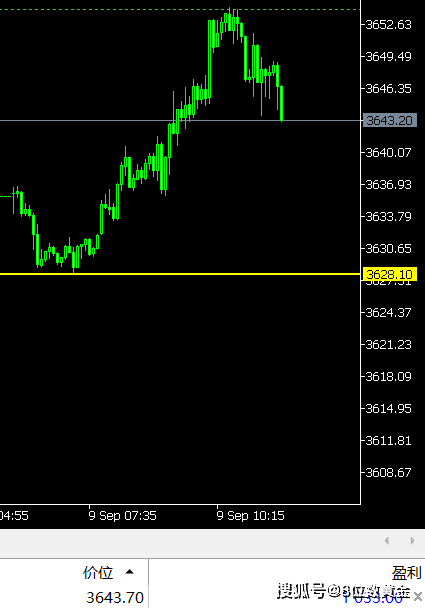
9.10黄金突发跳水55美金 冲高大跌探3600
Sou Hu Cai Jing· 2025-09-10 07:17
Market Overview - Gold prices have experienced significant volatility, reaching a historical high before a sharp decline of $55, testing the $3600 support level [1][15] - After hitting a high near $3658, gold prices faced another drop, indicating a bearish trend in the short term [2][14] Recent Performance - Gold broke previous highs, continuing its upward trend before experiencing a sudden drop during the U.S. trading session [6][7] - The market saw a vertical decline over two hours, with a drop of $50, reflecting heightened market instability [8] Technical Analysis - Current support levels are being tested at $3614 and $3578, with potential for a rebound [13][14] - Resistance levels are identified at $3648 and $3675, where short positions may be considered [10][14] Influencing Factors - The recent escalation of conflict in the Middle East, particularly an airstrike in Qatar, has increased risk aversion, contributing to gold's price surge [15] - U.S. non-farm payroll data showed a significant decline, indicating a weakening labor market and supporting expectations for a Federal Reserve rate cut [15] Economic Indicators - Upcoming economic data, including the U.S. PPI and wholesale sales figures, are expected to impact market sentiment and gold prices [17] - The CPI results have shown negative figures, indicating ongoing deflationary pressures in the economy [18][19]