
AI硬件

Search documents
数码家电行业周度市场观察-20251205
Ai Rui Zi Xun· 2025-12-05 05:28
Investment Rating - The report does not explicitly provide an investment rating for the digital home appliance industry Core Insights - The digital home appliance industry is experiencing significant trends, including a price reduction wave in the robotics sector and explosive growth in AI glasses sales during the Double 11 shopping festival. Major investments are flowing into AI, with a competitive landscape emerging among six tech giants for computing power [1][2][4] Industry Environment - The robotics sector has initiated a price reduction trend, with companies like Yuzhu Technology and Accelerated Evolution lowering product prices to below 10,000 yuan to enhance market accessibility. This is expected to accelerate large-scale commercial use by 2025, with further cost reductions anticipated [2] - The AI glasses market is witnessing explosive growth, with sales on Tmall and JD.com increasing by 2500% and 346% year-on-year during Double 11. The integration of AI technology is a key driver, with predictions indicating that shipments of smart glasses in China will reach 2.846 million units by 2025, with AI glasses accounting for over 77% [2] - The AI hardware market is rapidly emerging, with financing in China reaching 14.5 billion yuan in the first half of 2025. However, challenges such as high prices and limited application scenarios remain [4] - Major tech companies are heavily investing in AI, with a combined capital expenditure of $118.4 billion in Q3 2025, marking a 69.22% year-on-year increase. This competition focuses on transforming financial advantages into AI barriers through infrastructure and core technology [4] - The smart home industry is transitioning towards a fully integrated smart ecosystem, with leading companies like Gree, Midea, and Haier driving innovation through cross-industry collaborations [8] - The AI toy market is projected to reach a scale of $100 billion by 2030, with a compound annual growth rate exceeding 70%. However, challenges such as hardware performance and user acceptance need to be addressed [10] Top Brand News - XPeng Motors has faced stock fluctuations due to its transition to a physical AI company, with plans to mass-produce advanced robots by 2026 while managing significant losses [12] - Alibaba has seen a market rebound under the dual strategy of AI and consumer growth, with a stock price increase of over 90% this year, regaining a market value close to 3 trillion HKD [12] - Blue Sky Technology, led by its founder, is heavily investing in the humanoid robot sector, with expectations of significant revenue growth despite challenges in profit margins [15]
构建“理性共识” 追求“合理价格”
Zhong Guo Zheng Quan Bao· 2025-12-04 20:22
Core Insights - The founder and general manager of Zhiyu Zhishan Investment, He Li, emphasizes the integration of subjective insights, quantitative tools, and AI technology to create a scientific investment system that evolves continuously and seeks "rational consensus" [1][2] Group 1: Investment Philosophy - Value investment is defined as a combination of good assets and good prices, with a focus on buying when market prices significantly discount the consensus value range determined by future free cash flow [1] - The company aims to construct a "anti-fragile" investment portfolio using options and other tools to benefit from market volatility rather than suffer from it [1] - Examples include increasing stock positions and buying call options before the "9.24 market" in 2024, and purchasing put options on the Nasdaq index in April 2025 as insurance against high valuations in the tech sector [1] Group 2: AI Integration - The company has developed an AI system called "AI Cybertron," which integrates research, trading, risk control, and backtesting, making AI an essential part of every operational aspect [2] - AI enhances efficiency and fosters the development of better solutions through continuous discussions and iterations with the team [2] - A systematic approach to covering cutting-edge fields and maintaining a stable network of industry experts ensures that every viewpoint and transaction is traceable and analyzable [2] Group 3: Investment Examples - A successful investment in a US AI hardware company exemplifies the integration of investment philosophy and system, with initial investments made in 2022 based on its quality during a cyclical downturn [3] - As understanding of AI deepened, the company increased its valuation assessment and adjusted positions based on "quality-price ratio" [3] Group 4: Asset Outlook - The company is optimistic about the AI sector, believing there is no overall bubble, but warns of potential overheating at the individual stock level [4] - Focus areas include the computing power segment, particularly storage, which is expected to yield excess profits due to ongoing demand [4] - In the innovative drug sector, the company notes a trend where overseas firms lead in first-in-class (FIC) drugs while Chinese firms excel in best-in-class (BIC) drugs, with a caution on high stock price increases reflecting optimistic expectations [4] Group 5: Future Core Assets - The company identifies three categories of "new core assets" for 2026: AI technology innovation companies driving industrial upgrades, new consumer companies providing "emotional value" and high quality-price ratios, and resource and energy companies with scarcity in the changing global supply landscape [4]
豆包出“王炸”!AI手机能否成为新的主线?——道达投资手记
Mei Ri Jing Ji Xin Wen· 2025-12-01 10:28
Group 1 - The core point of the article is that Doubao Mobile Assistant marks ByteDance's entry into the edge AI sector, aiming to reshape human-computer interaction by integrating AI into the operating system layer [1][2] - Doubao Mobile Assistant is not an independent product but a collaboration with smartphone manufacturers, currently available in a technical preview version on the Nubia M153, priced at 3499 yuan, targeting developers and tech enthusiasts [1] - Doubao has no plans to develop its own smartphones and is working with multiple manufacturers to integrate the assistant into various brand models through "ecosystem cooperation" [1] Group 2 - The assistant features include deep integration into the operating system, global wake-up via physical buttons or voice, and interaction through floating windows without interrupting current applications [1][2] - It can execute cross-platform task chains, such as comparing prices across multiple platforms and generating travel plans from social media content [1][2] - The assistant also has the capability to understand screen content through visual comprehension and voice interaction, allowing users to edit photos or generate chat replies based on context [1][2] Group 3 - The market saw a collective rise in A-shares, with the Shanghai Composite Index recovering above the 3900-point mark, closing up 0.65% [3] - The total trading volume in the Shanghai and Shenzhen markets reached 18,739 billion yuan, an increase of 2,881 billion yuan from the previous trading day [3][4] - The consumer electronics sector led the market rally, driven by the release of Doubao Mobile Assistant, with significant gains in AI-related stocks [5][6] Group 4 - Analysts suggest that the development of edge AI in smartphones could drive hardware upgrades, potentially leading to a new wave of replacement demand [6] - The consumer electronics sector's valuation has been adjusted, with a PE-TTM of approximately 37 times, which is lower than the industry average, indicating a favorable investment opportunity [7] - Key stocks in the AI hardware sector, such as Zhongji Xuchuang, have shown significant price increases, indicating a strong structural trend in AI hardware [8] Group 5 - The AI hardware demand remains robust, with predictions of increased production for Google's TPU, indicating a growing market for AI-related hardware [9] - The domestic AI computing capacity is expected to rise significantly, with a focus on the "super node" architecture to enhance competitiveness [10] - The consumer sector is also experiencing growth, influenced by rising international commodity prices and strong performance in tourism and entertainment stocks [10]

北大学霸吴明辉19天收获两个IPO 两家科技公司尚未盈利市值346亿
Chang Jiang Shang Bao· 2025-12-01 02:04
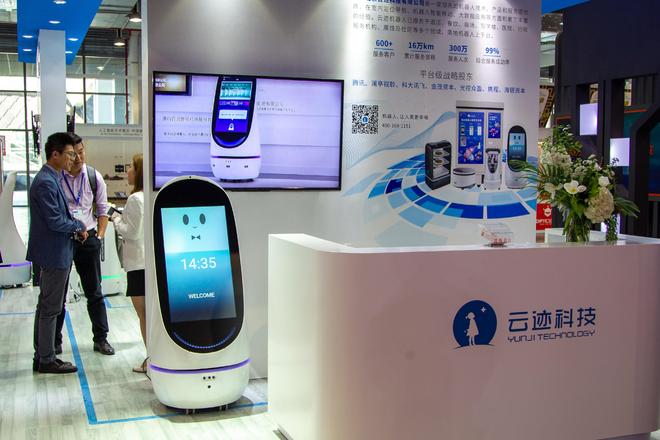
Core Insights - Wu Minghui, a graduate from Peking University, has successfully listed two companies, Yunji (02670.HK) and Minglue Technology (02718.HK), on the Hong Kong Stock Exchange within 19 days, achieving a combined market value of approximately 34.6 billion yuan [2] - Both companies have not yet achieved profitability as of mid-2025, with Minglue Technology reporting revenues of 1.269 billion yuan in 2022, 1.462 billion yuan in 2023, and 1.381 billion yuan in 2024, while Yunji also reported continuous losses [15][16] Company Overview - Minglue Technology was established through the merger of several companies, including MiaoZhen Systems and Minglue Software, and has expanded its business scope from marketing intelligence to various sectors such as manufacturing, finance, and security [8] - The company has been recognized as a global unicorn, ranking 807th on the 2025 Hurun Global Unicorn List with a valuation of 11 billion yuan [8] Financial Performance - Minglue Technology's operating losses from 2022 to 2024 were 1.009 billion yuan, 211 million yuan, and 132 million yuan respectively, with the company still in a loss-making position in the first half of 2025 [15] - The gross profit margin for Minglue Technology remained stable, with figures of 53.24%, 50.11%, 51.59%, and 55.94% from 2022 to the first half of 2025 [15] Research and Development - The company has seen a decrease in R&D expenditure from 7.51 billion yuan in 2022 to 1.5 billion yuan in the first half of 2025, with the R&D spending as a percentage of revenue dropping from 59.2% to 23.4% [15][16] - As of mid-2025, Minglue Technology holds 2,322 patents and has applied for 596 additional patents, showcasing its commitment to innovation in data intelligence and enterprise knowledge graphs [16] Future Outlook - The company plans to use the 1.067 billion yuan raised from its IPO to enhance its technological capabilities, expand its product offerings, and strengthen its marketing and sales teams [17] - Wu Minghui is focused on researching multimodal large models to drive the industry forward in new directions [17]

两创板块联手上攻,科创板50ETF(588080)、创业板ETF(159915)标的指数均涨超2%
Mei Ri Jing Ji Xin Wen· 2025-11-27 03:09
Core Viewpoint - The A-share technology sector is experiencing a significant rally, driven by key concepts such as solid-state batteries, advanced packaging, semiconductors, CPO, and storage chips, leading to a strong performance in related indices [1] Group 1: Market Performance - As of 10:05 AM, the Sci-Tech Innovation Board 50 Index rose by 2.4%, while the ChiNext Index increased by 2.1% [1] - The Sci-Tech Innovation Board 50 Index consists of 50 stocks with high market capitalization and liquidity, with over 65% of its composition from the semiconductor industry [1] - The ChiNext Index is made up of 100 stocks from the ChiNext market, with approximately 60% of its composition from AI hardware and the new energy industry chain [1] Group 2: Investment Outlook - According to Guosen Securities, the foundation for the current slow bull market remains intact due to sustained global technology investment enthusiasm, ongoing "anti-involution" policies, and increased household savings entering the market [1] - There is potential for continued strength in A-share indices, with a focus on strong industry trends in technology, particularly in "AI+" and policy-driven "anti-involution" and self-controllable sectors [1] Group 3: Investment Products - The Sci-Tech Innovation Board 50 ETF (588080) and ChiNext ETF (159915) are leading products in their respective indices, with management fees of only 0.15% per year, providing investors with a low-cost way to invest in leading technology innovation companies [1]

A股五张图:自己的下跌固然可怕,但指数的大涨更令人揪心
Xuan Gu Bao· 2025-11-26 10:31
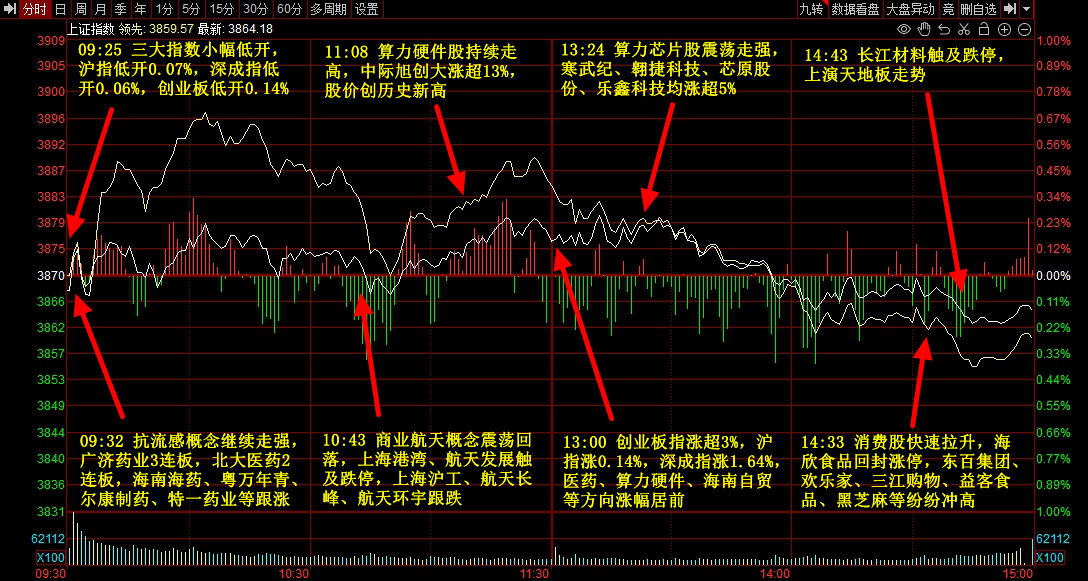
Market Overview - The market exhibited a fragmented low-volume trading pattern, with the Shanghai Composite Index slightly down by 0.15%, while the Shenzhen Component and ChiNext Index rose by 1.02% and 2.14% respectively. Approximately 3,600 stocks declined against over 1,600 that rose, with total trading volume reaching 1.7 trillion [1][3]. AI Hardware Sector - The AI hardware sector saw significant gains, with OCS continuing to strengthen and the CPO sector experiencing a collective rise. Key stocks such as Special Information and Zhongji Xuchuang hit new highs, while others like Saimicroelectronics and Yuxi Technology also saw substantial increases [4][6][7]. Consumer Sector - The consumer sector experienced a resurgence in the afternoon following the release of a plan by six departments aimed at enhancing the adaptability of consumer goods supply and demand. This plan anticipates the formation of three trillion-level consumption areas and ten billion-level consumption hotspots by 2027. Retail stocks like Dongbai Group and Sanjiang Shopping surged, with several stocks hitting the daily limit [9][10]. Shenzhen Local Stocks - Following the announcement of a financial support plan for enterprises in Guangdong, Shenzhen local stocks initially showed little reaction but later surged in the afternoon, led by stocks like Teli A and Shenhua A. The rally was partly driven by news regarding Vanke's debt situation and restructuring plans, which sparked interest in related local stocks [12][14][15][17]. Reader Culture - Reader Culture experienced a sudden surge of over 7% in the afternoon, closing with a 5.1% increase. The rise was attributed to heightened media attention surrounding figures like Luo Yonghao, suggesting that market movements may be influenced by social media trends rather than fundamental factors [20].





AI硬件先驱要凉了?CES明星Rabbit被爆欠薪,只因步子迈得太大?
3 6 Ke· 2025-11-25 04:35
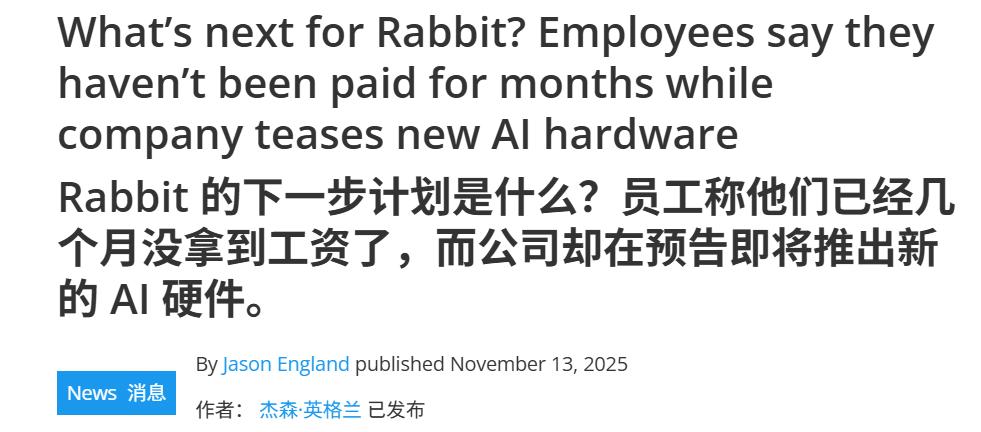
Core Insights - Rabbit r1 has gained significant attention as an AI hardware product but is currently facing financial difficulties and operational challenges [1][2][3] - The company has acknowledged severe financial pressure, particularly due to obstacles in entering the Indian market [2][3] - Despite its initial success, Rabbit's ambitious goals and product execution have led to a decline in user satisfaction and market performance [5][9] Company Performance - Rabbit r1 was initially successful, claiming over 100,000 units sold by August 2024, making it the highest-selling AI hardware at that time [5] - The product's early popularity was driven by impressive demonstrations, but actual user experience fell short of expectations, leading to criticism [6][9] - The company is currently offering discounts on Rabbit r1, now priced at $159, indicating a need to boost sales amid financial strain [2] Market Challenges - Rabbit's attempt to create a "phone replacement" product in an immature market has been criticized as overly ambitious [6][9] - The product's design flaws, such as a small screen and limited functionality, have contributed to its inability to compete effectively with smartphones [8][12] - The reliance on commercial AI models has resulted in high operational costs, further straining the company's finances [8] Industry Trends - The AI hardware market is still in its early stages, and the failure of Rabbit does not necessarily indicate a lack of potential for AI hardware overall [10] - Domestic manufacturers are exploring AI hardware that complements existing smartphone ecosystems rather than attempting to replace them [11][12] - Future AI hardware developments may focus on specific use cases and user needs, rather than broad, ambitious goals [11][12]
近4900股上涨,A股高开高走,科技龙头全线反弹,光库科技20CM涨停
21世纪经济报道· 2025-11-25 04:10
Market Overview - On November 25, A-shares saw all three major indices open higher and continue to rise, with the Shanghai Composite Index up over 1.13%, the Shenzhen Component Index up 2.04%, and the ChiNext Index rising over 2.6% to surpass 3000 points [1][2] - Nearly 4900 stocks in the market were in the green, indicating a broad-based rally [1] Sector Performance - AI hardware sector experienced a strong rebound, with the CPO concept surging, and related sectors such as fiberglass, liquid cooling, and copper-clad boards also seeing significant gains [5] - The innovative drug index saw a strong upward movement, with stocks like Peking University Pharmaceutical hitting the daily limit, and several others like Frontier Bio and Nanjing New Pharmaceutical also performing well [5] - The CPO concept index rose over 10%, with stocks like Dekoli, Changguang Huaxin, and Guangku Technology hitting the daily limit, while others like Taicheng Light and Changxin Bochuang rose over 10% [5] Individual Stock Highlights - Longpan Technology saw its stock price hit the daily limit, with the latest quote at 18.06 yuan, following an announcement of expected sales to exceed 450 billion yuan, up from over 50 billion yuan [6] - In the Hong Kong market, Longpan Technology also rose over 18% [6] - Alibaba Health continued its upward trend, rising nearly 5%, with a year-to-date increase of 81.33% [9] Broader Market Trends - The Hong Kong stock market also saw gains, with the Hang Seng Index up 0.74%, the Hang Seng Tech Index up 1.38%, and the Hang Seng China Enterprises Index up 0.87% [7] - The tech sector followed the overnight surge in US stocks, with Xiaomi Group rising nearly 5% and Baidu Group up over 7% [9] - Precious metals saw a recovery, with Zijin Mining rising nearly 3% as spot gold prices increased from $4060 to $4144.6 per ounce [9]

对话未来商业丨萌友智能何嘉斌:一场AI陪伴的“非共识”商业实验 在年轻人桌上放下一个“未来宠物”
Mei Ri Jing Ji Xin Wen· 2025-11-24 09:57
Core Insights - Ropet, an AI pet developed by Beijing Mengyou Intelligent Technology Co., aims to tap into the emotional companionship market, which is projected to be worth billions [2][6][9] - The company has adopted a unique strategy by forgoing voice interaction, focusing instead on emotional value and presence, which differentiates it from competitors [2][6][7] Company Overview - Beijing Mengyou Intelligent Technology was founded in 2022 and has completed three rounds of financing, with the latest A1 round raising several million RMB [2][3] - The core team has a strong background in technology and product design, with experience from major companies like Microsoft and ByteDance [3] Product Strategy - Ropet is designed for desktop companionship, targeting users in their 20s and 30s who spend significant time at their desks [3][4] - The product was first launched overseas, with successful crowdfunding campaigns in the U.S. and Japan, indicating a higher acceptance of innovative hardware in these markets [3][4] Market Positioning - The AI toy market is rapidly growing, with a projected global market size exceeding 100 billion yuan in 2023 and expected to surpass 1 trillion yuan by 2030 [6][9] - Ropet's decision to avoid voice interaction is seen as a strategic move to enhance emotional connection, as traditional chatbots often fail to engage users meaningfully [6][7] Competitive Landscape - The AI companionship sector is still in its early stages, with many large brands yet to enter the market, presenting both opportunities and challenges for startups like Ropet [8][9] - The company faces potential competition from both traditional toy manufacturers and emerging tech firms that may leverage their existing user bases and distribution channels [9][10] Future Outlook - The company aims to refine its product based on user feedback and data analysis, focusing on creating a more engaging and interactive experience [4][5] - The long-term vision includes leveraging advancements in edge computing and AI to enhance personalization and privacy, positioning Ropet as a leader in the emotional AI pet market [10][11]
突袭!一则传闻,万亿AI巨头一度跌停!公司紧急辟谣:未向市场下调第四季度利润目标!
雪球· 2025-11-24 08:13
Core Viewpoint - The market is experiencing a rebound with major indices closing in the green, but there are significant disparities in sector performance, particularly in AI hardware and applications [2][4]. Group 1: AI Hardware and Applications - Industrial Fulian, a trillion-yuan company, saw its stock price plummet, hitting a limit down of 7.80% amid rumors of order reductions, although the company later confirmed that operations are proceeding as planned and there are no adjustments to profit targets for Q4 [4][6]. - The AI hardware sector is facing challenges, while the AI application sector is thriving, with notable stock performances from companies like Alibaba and Tencent, which are launching new AI products [7][11]. - Recent AI applications have seen rapid adoption, with Alibaba's "Qianwen" app achieving over 10 million downloads in just one week, marking it as one of the fastest-growing AI applications [11]. Group 2: Investment Opportunities in AI - Analysts suggest focusing on both foundational and application layers for AI investments, emphasizing the importance of companies with large user bases and proven willingness to pay [12]. - The ongoing development of AI applications by major companies presents significant investment opportunities, particularly in sectors with high-value applications such as automotive and industrial [12]. Group 3: Lithium Resource Market - The lithium resource sector is experiencing volatility, with significant price fluctuations in lithium carbonate futures, leading to sharp declines in related stocks [14][16]. - Recent trading actions by the Guangxi Futures Exchange, including increased transaction fees and adjusted trading limits, have contributed to market reactions and price drops in lithium futures [17]. - Goldman Sachs has revised its forecasts for lithium prices and company earnings, predicting a shift from profit to loss for certain companies in the sector, which has led to downgrades in stock ratings [17].
