调味品

Search documents
安记食品上市10年净利4亿分红4.56亿 林肖芳及一致行动人频繁减持套现1.65亿
Chang Jiang Shang Bao· 2025-10-19 23:38
Core Viewpoint - The actual controller and chairman of Anji Food, Lin Xiaofang, has completed a significant share reduction, raising concerns about the company's future performance and governance [1][2]. Shareholding Changes - Lin Xiaofang reduced his holdings by 4.6888 million shares, cashing out 50.5924 million yuan, with the latest reduction bringing his ownership down to 45.7% from 47.69% [2][3]. - The cumulative cashing out by Lin Xiaofang and his associates over the past four years amounts to 165 million yuan [8]. Financial Performance - In 2023, Anji Food reported a revenue of 632 million yuan, a year-on-year increase of 13.45%, and a net profit of 31.0923 million yuan, up 124.73% [9]. - For 2024, the company expects a revenue decline of 4.06% to 607 million yuan, while net profit is projected to grow by 23.29% to 38.3335 million yuan [9]. - The company's main business revenue decreased by 10.35% in 2024, but the gross profit margin improved by 0.68% due to an 8.3% increase in spice gross margins [9]. R&D and Future Plans - Anji Food's R&D expenses for 2024 were 9.1264 million yuan, a decrease of 18.62%, with R&D investment accounting for 3.62% of annual revenue [9]. - The company plans to enhance its product development and operational efficiency through digital transformation and supply chain optimization in the second half of 2025 [10]. Dividend History - Since its listing in 2015, Anji Food has distributed a total of 456 million yuan in dividends over 11 occasions, maintaining a dividend payout ratio above 50% since 2017 [10].

非遗“校园行”打动年轻人 老字号王致和推出多款新品
Bei Jing Shang Bao· 2025-10-19 05:36
Core Viewpoint - Wang Zhihe, a time-honored brand, participated in the 120th anniversary celebration of China Agricultural University, showcasing the charm of traditional fermented bean curd through various interactive activities and product displays [1] Group 1: Event Participation - Wang Zhihe engaged in the university's anniversary through performances, intangible cultural heritage experiences, cultural creative activities, and food tasting [1] - The event featured multiple interactive areas, including a cultural creative product display that attracted significant attention from students and faculty [1] Group 2: Product Innovation - The company showcased a range of innovative products, including spicy dry fermented bean curd, black truffle and matsutake vegetarian sauce, organic cooking wine, and organic white fermented bean curd [1] - New products focused on low-salt health concepts, such as reduced-salt rose fermented bean curd and reduced-salt whole bean curd, aligning with modern consumer dietary preferences while preserving traditional flavors [1] Group 3: Marketing Strategy - Wang Zhihe has been actively promoting intangible cultural heritage in schools and engaging in cross-industry collaborations to innovate while preserving its legacy [1] - The company aims to attract a younger audience to appreciate and enjoy its products through initiatives like the intangible cultural heritage activities [1]

海南糟粕醋美食推介会暨“海南鲜品一桌菜”推介活动在重庆举行
Hai Nan Ri Bao· 2025-10-19 01:13
Core Insights - The event "Hainan Zao Po Vinegar Food Promotion Conference" was held in Chongqing, showcasing the unique flavor of Hainan Zao Po vinegar and promoting culinary exchange and industrial cooperation between Hainan and Chongqing [3][4]. Industry Development - The promotion highlighted the vitality of the Wenchang Zao Po vinegar industry, with 95 traditional vinegar shops, 137 related dining establishments, and 16 processing enterprises in Wenchang, projecting an annual production of over 5,000 tons this year [4]. - The event featured innovative ideas such as "everything can be Zao Po vinegar" and products tailored to Sichuan-Chongqing tastes, including "chopped pepper Zao Po vinegar" and "spicy Zao Po vinegar" [4][5]. Consumer Reception - Attendees praised the unique taste of Hainan Zao Po vinegar, with comments highlighting its refreshing and distinctive flavor, which contrasts with the spicy hot pot typical of Chongqing [6]. - Various companies showcased their signature products, offering both traditional and modern flavor combinations that appealed to the local palate [6]. Business Opportunities - The event attracted numerous buyers seeking collaboration, with interest from major food companies and local restaurant owners looking to incorporate Zao Po vinegar into their offerings [7][8]. - The Wenchang government expressed its commitment to advancing the Zao Po vinegar industry towards industrialization, standardization, branding, clustering, and internationalization [8].

谁能想到,零食、火锅、调味料也在“卷”健康赛道了呀
Yang Zi Wan Bao Wang· 2025-10-17 12:13
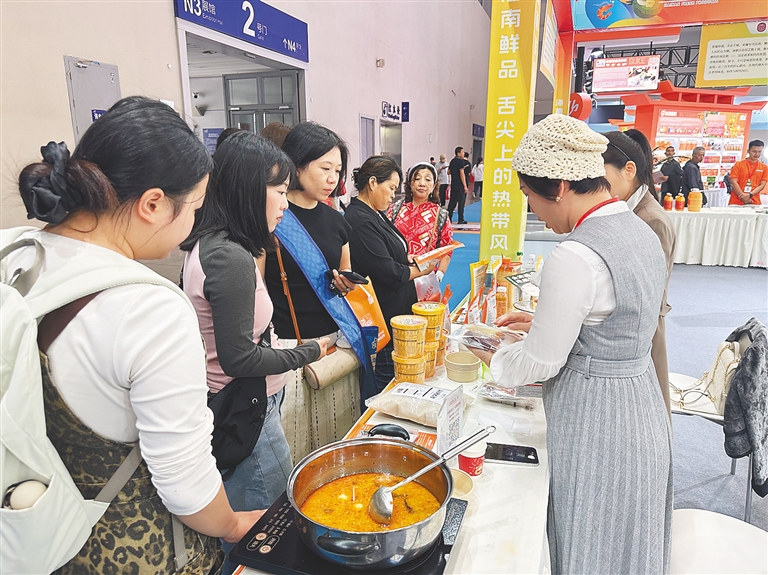
Group 1 - The 113th National Sugar and Wine Fair was held in Nanjing, attracting around 4,000 companies from over 40 countries and regions, showcasing more than 300,000 products, indicating a vibrant market with abundant business opportunities [1] - There is a growing trend towards health-conscious products, with snacks, hot pot ingredients, and condiments increasingly focusing on health, as seen in the offerings at the fair [1] - Nanjing Siyu Food Co., specializing in baby snacks, has gained popularity among parents by offering products made from fresh fruits and honey, without added white sugar or pectin, catering to the demand for healthier options for children [1] Group 2 - The brand "Lin Xiaosheng," which emphasizes "fresh and original flavor," showcased its oyster sauce made from 100% oyster juice, highlighting a clean and simple ingredient list, which differentiates it from competitors that add starch [2] - The trend of health and no additives is influencing even traditionally heavy condiments, as companies adapt their products to meet consumer demand for healthier alternatives [2]
食品饮料行业双周报(2025、10、03-2025、10、16):市场情绪边际回暖,关注三季报业绩反馈-20251017
Dongguan Securities· 2025-10-17 07:54
Investment Rating - The report maintains an "Overweight" rating for the food and beverage industry, expecting the industry index to outperform the market index by over 10% in the next six months [56]. Core Viewpoints - Market sentiment is marginally improving, with a focus on the performance feedback from the third-quarter reports. The liquor sector is under pressure due to ongoing constraints in consumption scenarios, particularly in government and business banquets, leading to a subdued performance in the second quarter. The market is currently engaged in left-side speculation regarding a reversal of industry difficulties, while long-term assessments will depend on economic recovery and distributor confidence [6][51]. - The food and beverage industry index rose by 2.26% from October 9 to October 16, 2025, outperforming the CSI 300 index by approximately 2.74 percentage points during the same period [13][14]. - Approximately 69% of stocks in the industry recorded positive returns during the same period, with notable gainers including Kweichow Moutai (+21.10%) and Baba Food (+11.73%) [18]. Summary by Sections Market Review - The SW food and beverage industry index outperformed the CSI 300 index, with a rise of 2.26% from October 9 to October 16, 2025, ranking seventh among Shenwan's primary industry sectors [13]. - Most sub-sectors outperformed the CSI 300 index, with the other liquor sector showing the highest increase at 5.69%, while the soft drink sector had the largest decline at -1.17% [14]. Industry Data Tracking - **Liquor Sector**: The price of Feitian Moutai remained stable at 1760 RMB/bottle, while the prices of Wuliangye and Guojiao 1573 increased by 10 RMB/bottle to 850 RMB/bottle [24]. - **Condiment Sector**: Prices for soybean meal and white sugar increased, with soybean meal at 3010 RMB/ton and white sugar at 5790 RMB/ton [27]. - **Beer Sector**: The average price of barley was 2232.50 RMB/ton, with glass prices at 15.70 RMB/square meter [32]. - **Dairy Sector**: The average price of fresh milk remained unchanged at 3.04 RMB/kg [39]. - **Meat Products Sector**: The average wholesale price of pork decreased to 18.02 RMB/kg, down 1.29 RMB/kg from the previous month [41]. Important News - In the first eight months of 2025, Jiangsu Province's liquor production decreased by 17.6% [44]. - The national liquor price index showed a slight decline in September, with a total index of 99.63, down 0.37% [45]. - Sales of liquor on Douyin increased by 58% month-on-month in September [46]. Company Announcements - **Wuliangye**: Announced the completion of a stock buyback plan, acquiring 627.33 million shares [49]. - **Qiaqia Food**: Reported progress on its share repurchase plan, buying back 105.52 million shares [50]. Industry Weekly Perspective - The report suggests focusing on high-certainty stocks such as Kweichow Moutai and other regional liquors like Shanxi Fenjiu and Guojiao [51][52].




海天味业增资至58.5亿元,增幅约5%
Xin Lang Cai Jing· 2025-10-17 04:21
Core Insights - On October 16, Haitian Flavor Industry Co., Ltd. (海天味业) experienced a business registration change, increasing its registered capital from approximately 5.56 billion RMB to about 5.85 billion RMB, representing a growth of around 5% [1] Company Overview - Haitian Flavor Industry Co., Ltd. was established in April 2000 and is engaged in the production and operation of condiments, bean products, food, beverages, packaging materials, processing of agricultural and sideline products, other telecommunications services, import and export of goods and technology, information consulting services, online food sales, and wholesale and retail of pre-packaged food [1] - The legal representative of the company is Guan Jianghua, and the shareholders include Guangdong Haitian Group Co., Ltd., Pang Kang, and Hong Kong Central Clearing Limited (as an agent) [1]
食品饮料板块分化中寻机遇:高景气赛道领跑,餐饮链复苏引关注
Mei Ri Jing Ji Xin Wen· 2025-10-17 01:57
Core Viewpoint - The consumption data during the holiday period indicates a gradual recovery in the catering industry, which is driving a rebound in the entire industry chain [1] Group 1: Catering Industry Recovery - The first four days of the holiday saw an increase in catering sales, with daily foot traffic exceeding expectations [1] - There are significant signs of recovery in the catering chain, with notable improvements in the sales of condiments, which slightly exceeded expectations during September and the holiday period [1] - The demand for frozen foods in the B-end has also shown slight recovery, reflecting the transmission effect of catering recovery on upstream industries [1] Group 2: Snack Sector Performance - The snack sector continues to show high levels of activity, with some companies benefiting from strong sales in gift-giving scenarios during the holiday [1] - Traditional channels have seen stable growth, and the volume of customers in bulk snack stores during the holiday indicates strong channel vitality and consumer demand, becoming a key driver of growth in the sector [1] Group 3: Market Confidence and Investment Opportunities - The recent rise in the sector is attributed to the dual themes of "snack sector vitality and catering recovery," with data validating the high activity levels in the snack sector [1] - The continuous improvement in catering has boosted expectations for sub-sectors such as condiments and beer, enhancing market confidence in consumer recovery [1] - The food and beverage ETF (515170) has attracted significant capital, with over 1.1 billion yuan raised in the last five trading days, indicating strong investor interest [1] - From a valuation perspective, the food and beverage sector remains at a low level, suggesting a favorable configuration opportunity at present [1]
含量超成人款 儿童调味品的“高钠陷阱”
Bei Jing Shang Bao· 2025-10-17 00:29
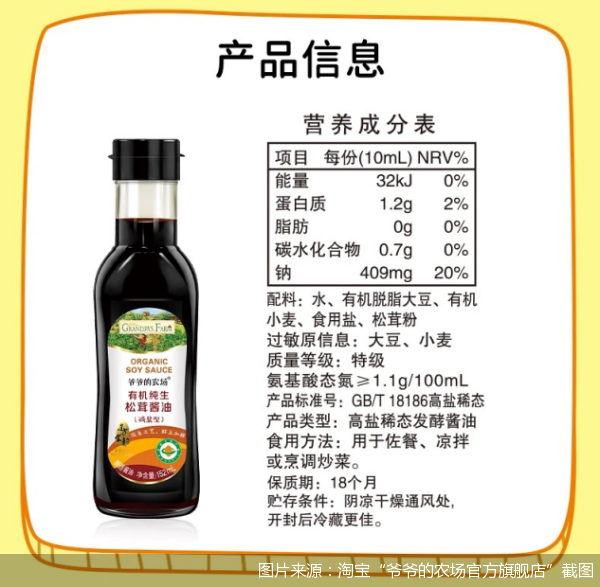
Core Viewpoint - The labeling of products as "children-specific" does not guarantee health benefits and instead misleads parents into high-sodium traps, as many products marketed as "low-sodium" for infants contain sodium levels exceeding those of adult low-sodium products [1][11]. Group 1: Sodium Content in Children's Products - Several children's soy sauces have sodium content higher than adult low-sodium soy sauces, with specific examples showing sodium levels of 295 mg, 409 mg, and 330 mg per 10 ml [2]. - Children's seasoning products, such as "black truffle mushroom salt," claim to reduce sodium by 42%, yet contain 1400 mg of sodium per 5 grams, which is comparable to regular seasoning [3][4]. - Common snacks like cod fish sausages also exhibit high sodium levels, with some products containing up to 774 mg of sodium per 100 grams, classifying them as high-sodium foods [4]. Group 2: Lack of Regulatory Standards - There are currently no national or industry standards specifically governing the sodium content in children's soy sauces, salts, or snacks, leading to a lack of accountability for manufacturers [9][10]. - Existing regulations for infant food products do not cover these categories, allowing high-sodium products to remain on the market without proper oversight [9][10]. Group 3: Parental Awareness and Concerns - Parents are increasingly aware of sodium intake due to health risks associated with high sodium diets, such as hypertension and other diseases, prompting them to scrutinize food labels more closely [6][8]. - The growing knowledge among parents about the metabolic limitations of infants regarding sodium has led to heightened sensitivity towards sodium content in children's foods [7][8]. Group 4: Marketing and Pricing Strategies - Companies exploit parents' desire for safe and healthy options by marketing products as "children-specific" and "low-sodium," often at a premium price, despite the actual sodium content being misleading [10][11]. - For instance, children's soy sauces are priced significantly higher than adult alternatives, yet they do not deliver on the promised lower sodium content [10].
A股新变化:超1700家公司集体撤销监事会!
Zheng Quan Shi Bao· 2025-10-16 13:20
Core Viewpoint - The recent changes in corporate governance structures among listed companies in China, driven by the new Company Law, indicate a significant shift towards abolishing supervisory boards in favor of audit committees, enhancing oversight efficiency and aligning with regulatory requirements [1][2][3]. Group 1: Legislative Changes - The revised Company Law, effective from July 1, 2024, allows joint-stock companies to establish audit committees within the board of directors to perform the functions of supervisory boards, providing a legal basis for this transition [3]. - The China Securities Regulatory Commission (CSRC) has issued guidelines to facilitate this transition, with a one-year grace period for compliance, requiring adjustments to be completed by January 1, 2026 [3]. Group 2: Industry Trends - Over 1,700 A-share listed companies have announced the cancellation of their supervisory boards since March 2023, with major state-owned banks and private enterprises leading this trend [2][4]. - The shift is not limited to listed companies; non-listed firms are also adopting similar governance changes, indicating a broader industry movement towards audit committees [2]. Group 3: Governance Efficiency - The elimination of supervisory boards is expected to streamline governance structures, reduce management layers, and enhance decision-making speed, thereby improving operational efficiency [4][5]. - The concentration of oversight functions within audit committees is anticipated to reduce resource wastage and lower operational costs, including direct expenses and hidden costs associated with communication and coordination [4][5]. Group 4: Challenges and Considerations - While the transition to audit committees is seen as a positive step towards modern governance, challenges remain in ensuring the independence and professionalism of these committees to prevent them from becoming tools of internal control [6]. - Balancing the supervisory and decision-making roles of audit committees is crucial to avoid centralization risks, and industry-specific governance standards need to be established to minimize regulatory arbitrage [6]. Group 5: Future Directions - The integration of ESG (Environmental, Social, and Governance) principles into corporate governance is becoming a competitive focus, with suggestions for dedicated ESG roles within audit committees and enhanced employee representation in decision-making processes [7]. - Proposed reforms aim to create a modern governance system characterized by effective checks and balances, addressing issues related to professional capability, employee rights, and accountability [7].
专用酱油钠含量超成人,儿童调味品的“高钠陷阱”
Bei Jing Shang Bao· 2025-10-16 10:34
Core Viewpoint - The labeling of products as "children's special" does not guarantee health benefits and instead misleads parents into high-sodium traps, as many products marketed as "low sodium" for infants contain sodium levels exceeding those of adult low-sodium products [1][5][16] Group 1: Sodium Content in Children's Products - A comparison of various children's soy sauces revealed that their sodium content is often higher than that of adult low-sodium soy sauces, with specific examples showing sodium levels of 295 mg, 409 mg, and 330 mg per 10 mL [2][5] - Children's seasoning products, such as "black truffle mushroom salt," claim to reduce sodium by 42%, yet contain 1400 mg of sodium per 5 grams, which is comparable to regular seasoning products [5][7] - The sodium content in popular children's snacks, like cod fish sausages, also exceeds recommended levels, with some products containing up to 774 mg of sodium per 100 grams [8][14] Group 2: Lack of Regulation and Standards - There are currently no national or industry standards specifically governing the sodium content in children's soy sauces, salts, or snacks, leading to a lack of accountability for manufacturers [13][14] - Existing standards for infant food do not cover these products, allowing high-sodium items to be marketed without restrictions [13][15] Group 3: Parental Awareness and Concerns - Parents are increasingly aware of sodium content in children's diets, driven by health concerns and educational resources highlighting the risks of high sodium intake [9][12] - The dietary guidelines emphasize that children require less salt than adults, and parents are advised to carefully design their children's diets to minimize sodium intake [10][11] Group 4: Marketing Strategies - Companies exploit parents' desire for safe and healthy products by marketing high-sodium items as "children's special" or "low sodium," often at premium prices [15][16] - The price of children's soy sauces can be significantly higher than adult versions, despite having higher sodium content, indicating a marketing strategy that prioritizes profit over health [15][16]