
核能

Search documents
“人造太阳”有多难?
虎嗅APP· 2025-07-07 14:23
Core Viewpoint - The article discusses the challenges and opportunities in the field of controlled nuclear fusion, emphasizing its potential as a solution to future energy demands driven by advancements in artificial intelligence and the limitations of traditional energy sources [3][4]. Group 1: Understanding Nuclear Reactions - Nuclear fusion involves the combination of light elements like deuterium and tritium to form heavier elements, releasing significant energy in the process [6]. - Achieving controlled nuclear reactions requires high material purity and density, as well as specific conditions to initiate chain reactions [6]. Group 2: The Timeliness of Nuclear Fusion - The urgency for nuclear fusion development is highlighted by the increasing energy demands associated with AI advancements and the limitations of traditional energy sources [8][9]. - The U.S. is shifting focus towards nuclear fusion as a viable energy solution, potentially bypassing renewable energy sources due to their slower implementation [9]. Group 3: Challenges in Achieving Nuclear Fusion - Achieving nuclear fusion is likened to "cooking dumplings in a paper pot," requiring precise control over extreme conditions [13]. - The three core conditions for nuclear fusion are high particle density, extreme temperatures (typically over 100 million degrees Celsius), and sufficient confinement time, collectively referred to as the "triple product" [15]. Group 4: Progress in Nuclear Fusion Industry - Research in nuclear fusion has seen exponential growth since the 1960s, with the triple product doubling approximately every 1.8 years, outpacing other technological advancements [28][29]. - The development of control systems and materials science has significantly contributed to this progress [29][30]. Group 5: Cross-Industry Applications of Nuclear Fusion Technology - Nuclear fusion technology is driving advancements in high-temperature superconductors and non-ferromagnetic materials, which have applications in various industries [33][34]. - The demand for non-ferromagnetic materials is increasing due to the extreme magnetic fields involved in nuclear fusion, necessitating new materials that can withstand these conditions [37]. Group 6: Entrepreneurial and Investment Opportunities - The nuclear fusion industry is still in its early stages, presenting opportunities for entrepreneurs and investors to engage in critical technology development [41]. - Successful entrepreneurs in this field will likely have practical experience in large experimental setups and the ability to attract talent from various disciplines, including AI and materials science [42]. - Potential areas for startups include superconducting magnet design, precision control systems, and specialized materials, with an emphasis on technologies that can also serve other markets [43].

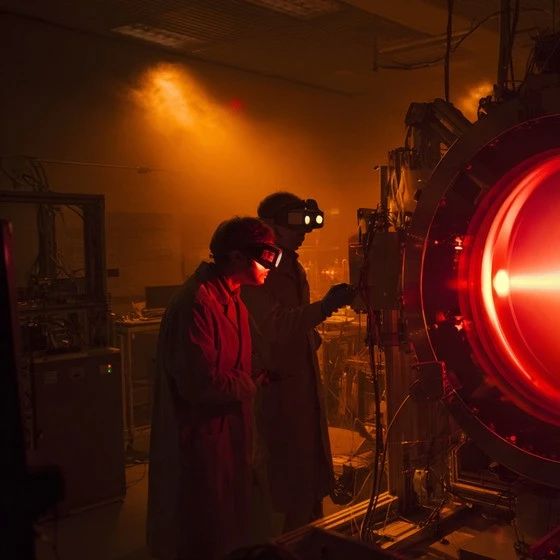
美俄锆石交易重启,中断18个月,美国又找上门了
Sou Hu Cai Jing· 2025-07-07 08:35
Core Viewpoint - Zirconium, a metal often overlooked by the public, holds an irreplaceable strategic position in high-tech and military sectors, with the U.S. resuming imports from Russia, highlighting the complexities of geopolitical and economic realities [1][3][6] Group 1: Import Dynamics - In May 2025, the U.S. imported over $1 million worth of zirconium ore and concentrates from Russia, setting a record for monthly imports since 2002 [1] - This import occurred despite the U.S. government's strong rhetoric against Russian resources, indicating a contradiction between political statements and actual supply chain needs [3][6] Group 2: Supply Chain Challenges - The U.S. has attempted to restructure its critical mineral supply chain through alliances with countries like Australia, South Africa, and Canada, but has faced challenges such as high costs and limited availability [4][6] - The reliance on Russian resources for critical materials like zirconium reveals the limitations of the West's "supply chain risk reduction" efforts [4][9] Group 3: Geopolitical Implications - The resumption of zirconium imports signifies a retreat from idealistic foreign policy, as the U.S. acknowledges the necessity of Russian resources in high-tech applications [6][9] - This situation reflects a broader trend where Western nations, despite political opposition to Russia, continue to engage in trade for essential materials, revealing a structural dependency [9][10] Group 4: Industrial System Anxiety - The U.S. domestic industrial system faces anxiety due to reduced processing capabilities for rare metals, leading to a paradox of wanting to decouple from Russia while being unable to do so effectively [7][9] - The importance of zirconium in nuclear energy and other high-tech applications underscores the strategic challenges faced by the U.S. in balancing its ambitions with supply chain realities [7][9] Group 5: Future Outlook - The zirconium import case is indicative of a larger trend where geopolitical tensions do not fully sever global supply chains, as critical materials remain intertwined with national strategies [9][10] - As the U.S. navigates its foreign policy and industrial needs, the reliance on Russian resources may continue to challenge the narrative of complete decoupling from adversarial nations [10]

“人造太阳”有多难?揭秘可控核聚变的核心技术和创业机会
3 6 Ke· 2025-07-07 06:42
Core Insights - The intersection of AI and nuclear energy is seen as a transformative force for the 21st century, with AI's rapid development increasing energy consumption and nuclear fusion being a potential solution to this challenge [1][2] - TerraPower, a nuclear power company, announced a $650 million financing round in June 2025, with Nvidia as one of the new investors, highlighting the growing interest in nuclear fusion technology [1] - The article emphasizes the urgency of developing controlled nuclear fusion as a response to the energy demands of the AI era, especially as traditional energy sources may not suffice [5][6] Group 1: Nuclear Fusion Overview - Nuclear fusion involves the combination of light elements like deuterium and tritium to release significant energy, while nuclear fission, such as uranium-235 splitting, releases slightly less energy [3][4] - Achieving controlled nuclear reactions requires high purity and density of materials, as well as specific conditions to initiate chain reactions [3][4] Group 2: Current Developments and Challenges - The U.S. government's recent shift towards supporting nuclear fusion, as indicated by executive orders from former President Trump, reflects a strategic pivot in energy policy [5][6] - The complexity of achieving nuclear fusion is likened to "cooking dumplings in a paper pot," requiring precise control over extreme conditions [11][19] Group 3: Technological Pathways and Progress - The main technological pathways for nuclear fusion include inertial confinement and magnetic confinement, with the latter being closer to achieving continuous operation [14][20] - The global research on nuclear fusion has seen exponential growth since the 1960s, with significant advancements in controlling complex systems and materials science [22][23] Group 4: Industry Applications and Opportunities - Nuclear fusion technology is driving advancements in high-temperature superconductors and non-ferromagnetic materials, which have applications beyond energy production [32][34] - The development of superconducting materials is lowering costs and expanding their use in various industries, including medical imaging and power generation [33] Group 5: Investment and Entrepreneurial Landscape - The nuclear fusion industry is still in its early stages, presenting opportunities for entrepreneurs and investors to engage in critical technology development [39] - Successful entrepreneurs in this field will need practical experience and the ability to attract talent from various disciplines, including AI and materials science [40][41] - China's comprehensive industrial system and increasing investment in nuclear fusion position it as a potential leader in this sector [43][44]

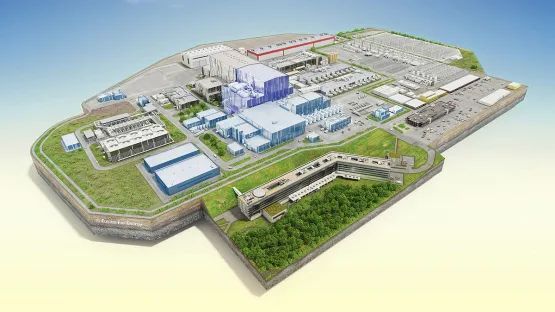
在福岛事故发生14年后,日本重新开始利用核能
news flash· 2025-07-06 23:46
Core Viewpoint - Japan is re-evaluating its stance on nuclear energy, planning to restart idle reactors and build new nuclear power plants after the Fukushima disaster 14 years ago [1] Industry Summary - Japan is laying the groundwork for the construction of next-generation nuclear power plants following the restart of its idle reactors [1] - The rising natural gas prices and high electricity consumption from data centers are driving the reconsideration of nuclear energy in Japan [1] - The Japanese government announced at the end of last year that it would allow the construction of new nuclear reactors at existing sites, indicating a significant policy shift regarding this controversial energy source [1] - Experts predict that the reactivation phase will last at least until 2030, after which Japan can focus on building new reactors to meet energy demands and decarbonization goals [1]
20年来首次!伊朗驱逐国际原子能机构全部核查员 伊以随时可能再交火
智通财经网· 2025-07-04 13:44
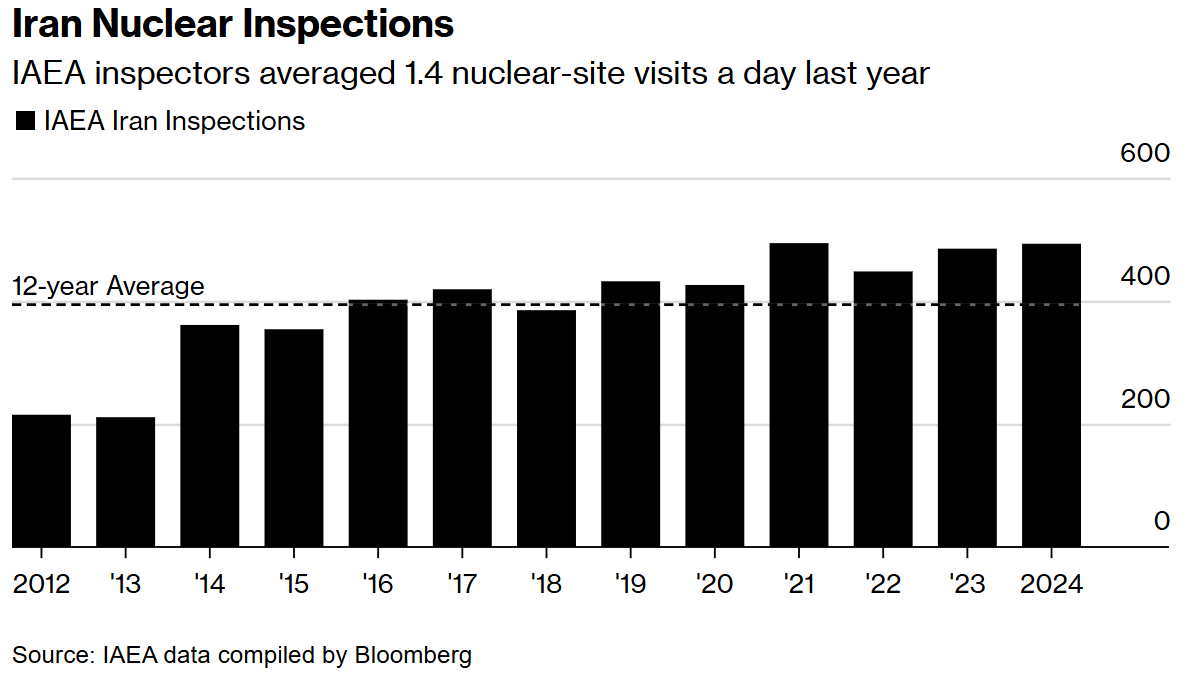
Group 1 - The International Atomic Energy Agency (IAEA) has withdrawn its last batch of inspectors from Iran, marking the first expulsion of IAEA personnel since Iran began uranium enrichment activities two decades ago [1] - The withdrawal follows Iran's new law criminalizing international oversight, leading to a more severe information blockade regarding Tehran's nuclear program [1] - Prior to the withdrawal, IAEA inspectors conducted nearly 500 inspections in Iran, tracking 409 kilograms of near-weapons-grade enriched uranium, which is now unaccounted for [1] Group 2 - The average number of visits by IAEA inspectors to nuclear facilities in Iran was 1.4 times per day last year [4] - Iran has accused the IAEA of assisting Israel in attacks on its nuclear facilities, a claim that the IAEA's Director General has denied [4] - Although Iran has not exited the Treaty on the Non-Proliferation of Nuclear Weapons (NPT), it may invoke provisions of the Vienna Convention on the Law of Treaties to suspend cooperation with the IAEA [4]
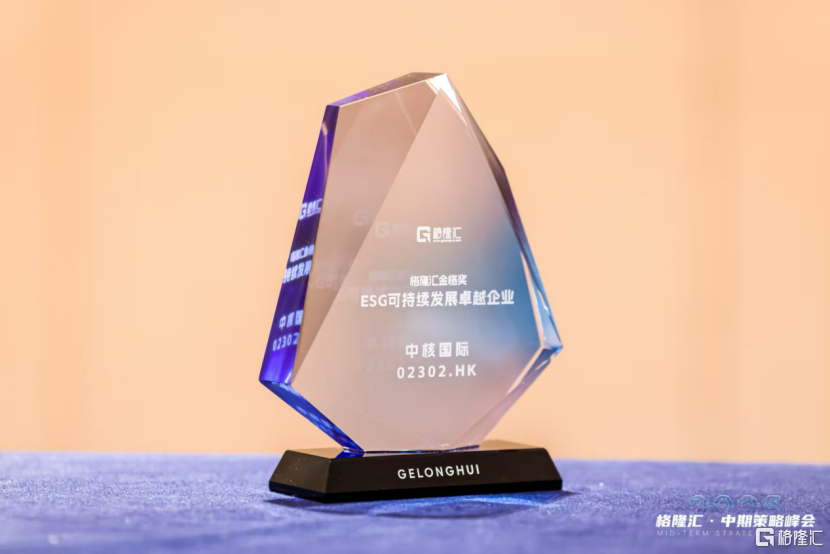
护航中国铀资源供应安全的核心力量,中核国际(02302.HK)荣获“ESG可持续发展卓越企业”
Ge Long Hui· 2025-07-04 05:27
Core Viewpoint - The "dual carbon" goals are driving the global economic transformation, with ESG principles becoming a rigid requirement for corporate governance, leading to sustainable development practices in China's nuclear energy industry [1][3]. Group 1: ESG Recognition and Awards - China National Nuclear Corporation International (中核国际) was awarded the "ESG Sustainable Development Excellence Enterprise" at the "Gelonghui Mid-term Strategy Summit 2025," recognizing its comprehensive efforts in environmental, social, and governance dimensions [1][3]. - The award aims to honor companies that actively promote green transformation and contribute to China's "dual carbon" goals while setting a benchmark for long-term value in the capital market [3]. Group 2: Nuclear Energy Development - The energy sector's carbon emissions account for approximately 80% of China's total emissions, making it a critical area for achieving carbon reduction goals [5]. - The global nuclear energy sector is experiencing a revival, with China expected to have the largest operational nuclear power capacity by 2030, aiming for 200 million kilowatts by 2040, contributing about 10% to the power generation mix [5][9]. Group 3: Company Performance and Growth - 中核国际 reported a significant increase in sales of natural uranium, reaching approximately 577,000 pounds with total revenue of HKD 1.841 billion, a year-on-year growth of 217% [9]. - The company achieved a net profit of HKD 195 million, reflecting an 83.4% increase, marking four consecutive years of positive growth [9]. - As of March 31, 2025, 中核集团 operates 26 nuclear power units with a total capacity of 24.962 million kilowatts and has 17 units under construction or approval, aiming for substantial capacity increases by 2030 [9]. Group 4: ESG Practices and Future Outlook - 中核国际 is committed to reducing carbon emissions, achieving a reduction to approximately 15.03 tons in 2024 from 15.19 tons in 2023, and decreasing electricity consumption to about 14,886 kWh from 17,432 kWh in the previous year [10]. - The company emphasizes employee welfare and training, fostering mutual growth between the enterprise and its employees [10]. - With a strong backing from 中核集团 and a focus on ESG principles, 中核国际 is positioned to attract more investor attention and enhance its market presence in the natural uranium sector [11].
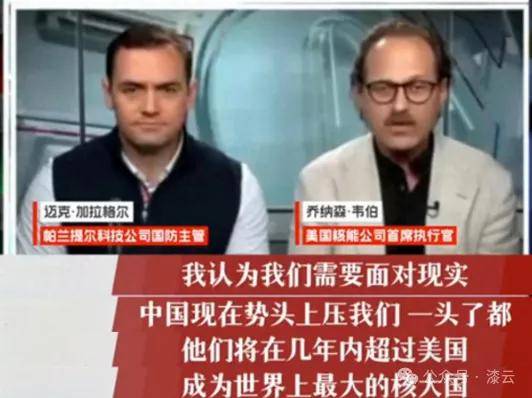
美国大佬承认:核能这块,我们被中国“压了一头”!咋办?学中国!
Sou Hu Cai Jing· 2025-07-03 17:01
Core Viewpoint - The U.S. nuclear energy sector is lagging behind China, which has rapidly expanded its nuclear power capabilities, leading to concerns about losing global leadership in this field [1][3]. Group 1: U.S. Nuclear Industry Challenges - The CEO of a major U.S. nuclear company expressed alarm over the country's stagnant nuclear power development, having built only two plants in the last thirty years compared to China's rapid construction of numerous facilities [1][3]. - The U.S. nuclear power industry has not seen significant advancements since the 1970s, with an average age of over 40 years for its 93 nuclear plants, resulting in outdated technology and high maintenance costs [6][11]. - The Three Mile Island accident in 1979 significantly impacted public perception and investment in nuclear energy in the U.S., leading to a long-term decline in new nuclear projects [5][6]. Group 2: China's Nuclear Energy Growth - China, starting its nuclear journey much later in 1991, has successfully developed over 100 operational and under-construction nuclear reactors, showcasing rapid growth and technological advancement [9][11]. - The Chinese nuclear industry has adopted and improved upon foreign technologies, creating its own advanced reactor designs, such as the "Hualong One" and "Guohe One" [9][12]. - The construction efficiency of Chinese nuclear plants is significantly higher, with projects completed in about 56 months, compared to the longer timelines of U.S. projects [12][11]. Group 3: Resource and Supply Chain Dynamics - China has established partnerships for uranium mining, becoming a key player in the supply chain, while the U.S. faces challenges in securing enriched uranium due to reliance on foreign technology, particularly from Russia [16][18]. - The U.S. nuclear industry is at risk of being unable to secure necessary resources, as geopolitical tensions may hinder access to essential materials [16][18].
大跨界!中国石油强化布局可控核聚变
Zhong Guo Dian Li Bao· 2025-07-03 03:17
Group 1 - China National Petroleum Corporation (CNPC) Capital announced an investment of 655 million yuan in Kunlun Capital for a total capital increase of 3.275 billion yuan, aimed at investing in controllable nuclear fusion projects [1] - This is not CNPC's first venture into nuclear fusion; last year, Kunlun Capital and Hefei Science Island Holdings became shareholders in a fusion energy company, each investing 2.9 billion yuan for a 20% stake [1] - Controllable nuclear fusion is referred to as the "ultimate energy" source, with the potential to provide limitless energy without high-level radioactive waste [3][4] Group 2 - The principle of nuclear fusion mimics the sun's energy production, utilizing isotopes of hydrogen (deuterium and tritium) to release significant energy [4] - The key technologies for achieving controllable nuclear fusion are magnetic confinement fusion and inertial confinement fusion, with the tokamak device being the most mainstream approach [4] - China has made significant advancements in nuclear fusion research, transitioning from a follower to a core player in the field, with projects like the EAST tokamak and participation in the ITER project [3][8] Group 3 - The ITER project, initiated in 1985, aims to create a large-scale fusion reactor through international collaboration, with China joining in 2006 and taking on a significant portion of the research tasks [9][10] - The CFEDR (China Fusion Engineering Demonstration Reactor) project is a strategic initiative to develop a demonstration reactor, with plans to achieve commercial fusion energy by 2050 [11][12] - The CRAFT (Comprehensive Research Facility for Fusion Technology) project is set to be completed by 2025, providing a platform for high-parameter testing and supporting the CFEDR project [12]


全球核裂变与SMR发展趋势与新机遇
Haitong Securities International· 2025-07-02 11:02
Group 1: Global Enriched Uranium Landscape - Enriched uranium is defined as uranium with a U-235 isotope content higher than the natural level of approximately 0.711%[10] - The global enriched uranium production capacity is highly concentrated, with four companies accounting for 99% of the market share[28] - By 2030, the total enriched uranium production capacity is projected to reach 70,300 thousand SWU/year, up from 62,900 thousand SWU/year in 2025[28] Group 2: SMR Technologies and Market Trends - The global market for Small Modular Reactors (SMRs) is expected to grow significantly, with installed capacity projected to increase from 1 GWe in 2030 to 122.25 GWe by 2050, reflecting a compound annual growth rate (CAGR) of 27.16%[56] - The U.S. SMR market is anticipated to see a compound growth rate of 4% from 2023 to 2035 due to supportive government policies[86] - As of now, there are 68 active SMR designs globally, with 4 in operation and 4 under construction[51] Group 3: U.S. Enriched Uranium Demand and Supply - The U.S. is projected to face a 30% shortfall in enriched uranium supply due to the ban on Russian uranium imports starting in 2024[89] - The U.S. Department of Energy (DOE) has allocated $3.4 billion to support domestic uranium production capabilities, including enrichment and conversion technologies[93] - The enriched uranium demand in the U.S. is expected to grow significantly, with estimates reaching 1,500 tons by 2030[88] Group 4: Investment and Market Performance - Recent market performance shows a significant increase in stock prices for companies involved in nuclear energy, with Centrus Energy rising by 203% and NuScale Power by 170%[98] - The total funding requirement for SMR projects is estimated at $176 billion, indicating substantial investment opportunities in the sector[67]
可控核聚变板块探底回升,融发核电触及涨停
news flash· 2025-07-02 02:32
可控核聚变板块探底回升,融发核电(002366)触及涨停,哈焊华通(301137)涨超10%,天力复合、 雪人股份(002639)、久盛电气(301082)跟涨。 暗盘资金正涌入这些股票,点击速看>>> ...
