
航空航天

Search documents
钢研高纳:商业航天业务占比较低 主攻航空发动机
Xin Lang Cai Jing· 2026-01-06 09:59
钢研高纳在互动平台表示,公司核心产品聚焦航空航天发动机领域,其中航空发动机领域占据主导地 位,商业航天相关业务占比较低。公司始终以航空发动机为主营业务方向,在此基础上逐步拓展至航 天、舰船、燃气轮机等领域,形成了以航空发动机业务为核心、多领域协同发展的业务格局。 ...

航亚科技实控人方拟套现1.9亿 2020上市即巅峰募5.3亿
Zhong Guo Jing Ji Wang· 2026-01-06 07:27
Core Viewpoint - The announcement from Hangya Technology (688510.SH) regarding the share reduction plan by its shareholders indicates a planned reduction of up to 7,165,000 shares, which represents 2.76% of the company's total share capital [1][2]. Group 1: Shareholder Reduction Plans - Director Ruan Shihai plans to reduce his holdings by up to 4,900,000 shares, accounting for 1.89% of the total shares [1]. - Wuxi Huahang Kechuang Investment Center (Limited Partnership) intends to reduce its holdings by up to 2,265,000 shares, representing 0.87% of the total shares [1]. - The total planned reduction by both shareholders amounts to approximately 192,666,850 yuan based on the previous trading day's closing price of 26.89 yuan [2]. Group 2: Shareholding Structure - As of the announcement date, Ruan Shihai holds 16,975,091 shares, which is 6.54% of the total share capital, while Huahang Kechuang holds 8,193,300 shares, or 3.16% [2]. - The shareholders mentioned have a group of concerted actions, including individuals such as Yan Qi and others, collectively holding 76,874,043 shares, which is 29.62% of the total share capital [2]. Group 3: Company Background - Hangya Technology was listed on the Shanghai Stock Exchange's Sci-Tech Innovation Board on December 16, 2020, with an initial issuance of 64.6 million shares at a price of 8.17 yuan per share [3]. - The total funds raised during the IPO amounted to 528 million yuan, with a net amount of 474 million yuan after deducting issuance costs [3]. - The company initially planned to raise 672 million yuan, with 578 million yuan allocated for expanding production capacity of key components for aircraft engines [3].

ETF盘中资讯|北斗星通、航天电子、海格通信三股涨停!通用航空ETF(159231)午后劲涨3.24%,资金加速涌入!
Sou Hu Cai Jing· 2026-01-06 07:01
Group 1 - The National Industrial and Information Technology Work Conference emphasized the cultivation of emerging industries, including new materials, aerospace, and low-altitude economy, and the orderly development of satellite IoT commercial trials [1] - The revised Civil Aviation Law encourages the development of general aviation and optimizes low-altitude airspace resource allocation, promoting the growth of the low-altitude economy [2] - Southwest Securities highlighted the national strategy focusing on the low-altitude economy, with various regions implementing development policies and state-owned enterprises establishing low-altitude economic companies [2] Group 2 - The General Aviation ETF Huabao (159231) covers 50 constituent stocks in sectors such as low-altitude economy, large aircraft, military aircraft, commercial aerospace, satellite navigation, and drones, with over 37% of its focus on the aerospace industry [2] - On January 6, stocks related to commercial aerospace and satellite concepts surged, with Aerospace Universe rising by 17% and Huace Navigation increasing by over 12%, indicating strong market interest [4] - The General Aviation ETF Huabao experienced a price increase of 3.24%, reaching a new high, with a net subscription of 21 million shares, reflecting accelerated capital inflow [4]


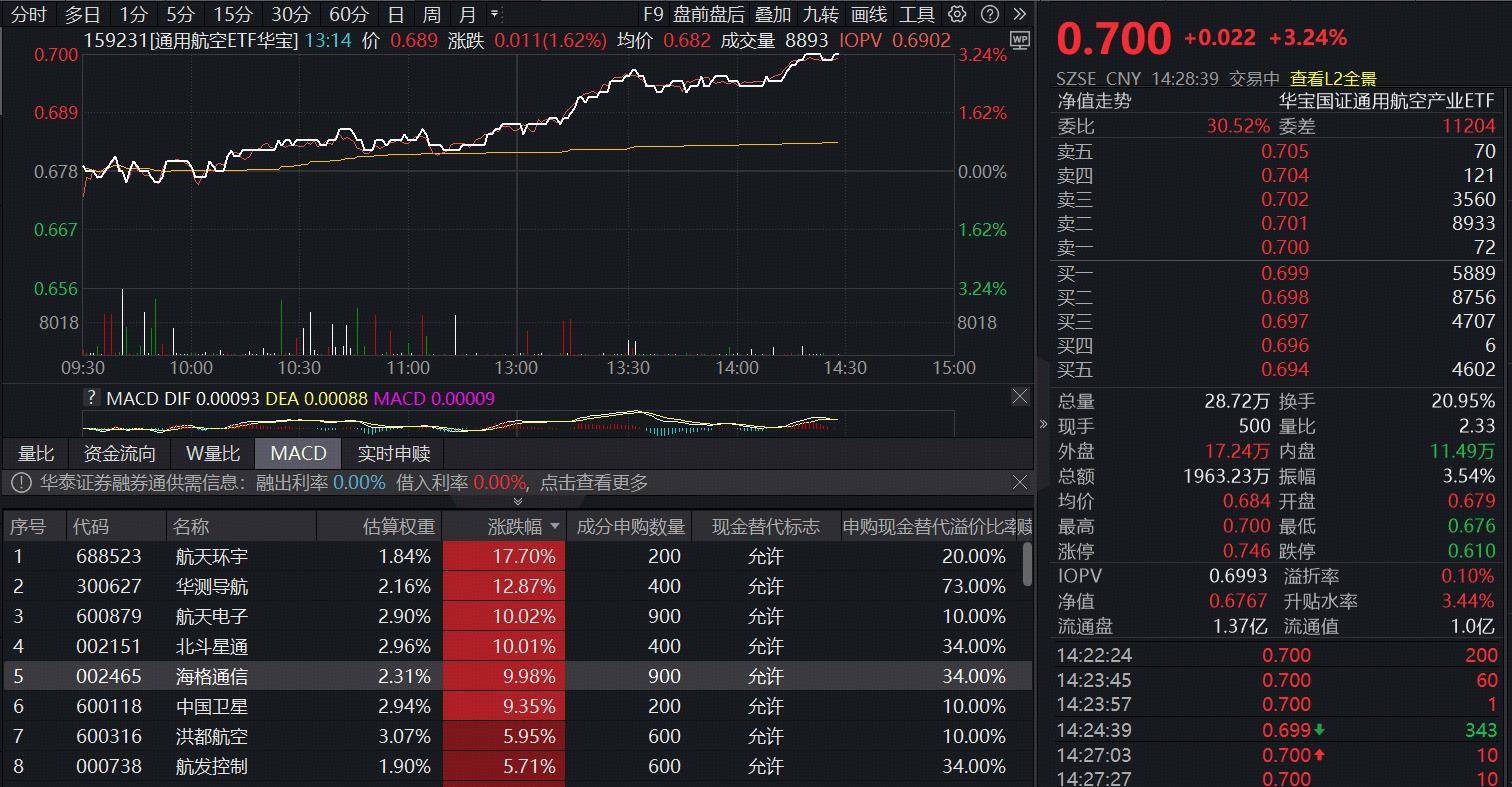
北斗星通、航天电子、海格通信三股涨停!通用航空ETF(159231)午后劲涨3.24%,资金加速涌入!
Xin Lang Cai Jing· 2026-01-06 06:47
Group 1 - The core viewpoint of the news is the significant surge in the general aviation sector, driven by commercial aerospace and satellite concepts, with notable stock price increases for companies like Aerospace Universe and Huace Navigation [1][6] - The General Aviation ETF Huabao (159231) has seen a price increase of 3.24%, achieving an eight-day consecutive rise and reaching a new high since its listing, with a real-time net subscription of 21 million shares [1][6] - The national industrial and information technology conference emphasized the cultivation of emerging industries, including new materials, aerospace, and low-altitude economy, and the orderly development of satellite IoT business trials [3][8] Group 2 - The newly revised Civil Aviation Law will take effect on July 1, 2026, encouraging the development of general aviation and optimizing low-altitude airspace resource allocation [3][8] - The national 14th Five-Year Plan suggests accelerating the development of the aerospace and low-altitude economy industries, with various local governments implementing policies to support low-altitude economic development [3][8] - The General Aviation ETF Huabao and its associated funds cover 50 constituent stocks across various sectors, including low-altitude economy, large aircraft, military aircraft, commercial aerospace, satellite navigation, and drones, with over 37% of the focus on the aerospace industry [3][8]



道指创历史新高,美股能源板块普涨
Zheng Quan Shi Bao Wang· 2026-01-06 03:31
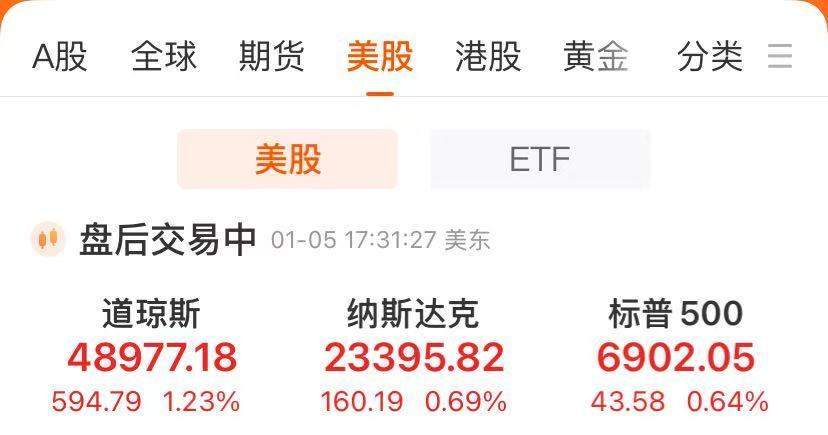
Market Performance - Major US stock indices closed higher, with the Dow Jones reaching a record high, driven by strong gains in financial stocks [1][3] - The Dow rose by 594.79 points, or 1.23%, closing at 48,977.18 points; the Nasdaq increased by 160.19 points, or 0.69%, to 23,395.82 points; and the S&P 500 gained 43.58 points, or 0.64%, ending at 6,902.05 points [3] Sector Performance - The S&P 500 energy sector index rose by 2.7%, with major stocks like ExxonMobil and Chevron seeing significant increases due to military actions in Venezuela [5] - The S&P 500 financial sector index increased by 2.2%, with both Goldman Sachs and JPMorgan Chase rising over 3% and reaching all-time highs [6] Technology Stocks - Most large-cap tech stocks saw gains, with Tesla up 3.10%, Amazon up 2.9%, and Meta up 1.29%. However, Microsoft fell by 0.02%, Nvidia dropped by 0.39%, and Apple decreased by 1.38% [3][4] Cryptocurrency and Related Stocks - Cryptocurrency-related stocks experienced a rise, with Strategy stock increasing nearly 5% and Coinbase surging by 7.8% as Bitcoin prices hit a three-week high [6] Chinese Stocks - The Nasdaq Golden Dragon China Index rose by 0.49%, with notable gains in stocks like Beike up over 6% and Bilibili and Tencent Music each up over 3% [6]


重要指示:机器人、无人机加快迭代升级!航空航天ETF天弘(159241)跟踪指数拉升翻红,机器人ETF(159770)近8日“吸金”2.19亿元
Sou Hu Cai Jing· 2026-01-06 02:39
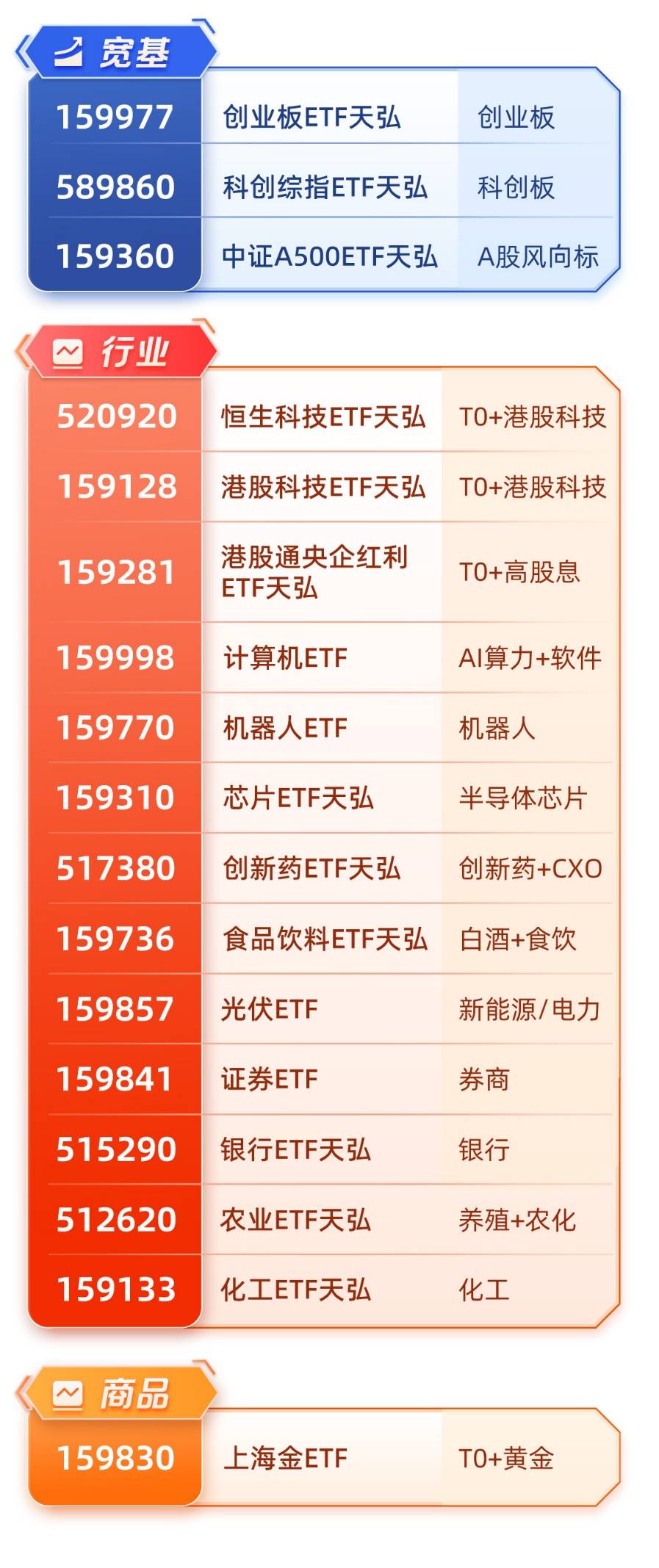
Group 1 - Aerospace ETF Tianhong (159241) experienced a turnover of 6.19% with a transaction volume of 36.4855 million yuan, while the CN5082 index initially rose [1] - Key stocks in the aerospace sector showed mixed performance, with Beifang Navigation (600435) leading with a 2.93% increase, followed by Yaguang Technology (300123) at 1.83%, and China Satellite (600118) at 1.74% [1] - The Robot ETF (159770) had a transaction volume of 170 million yuan, tracking the CSI Robot Index (H30590), which rose by 0.24% [1] Group 2 - The Robot ETF (159770) saw significant growth, with an increase of 1.119 billion yuan in scale and 13.7 million shares in the past two weeks [1] - In terms of capital inflow, the Robot ETF (159770) attracted a total of 219 million yuan over the last eight trading days [1] - The Robot ETF closely follows the CSI Robot Index, focusing on core entities across the robot industry chain [2] Group 3 - Important leaders emphasized the need to enhance the industrial ecosystem and expand application scenarios for robots and drones during a recent survey in Guangdong [2] - Guojin Securities noted that the global aerospace industry is undergoing structural changes akin to the Age of Exploration, with China's commercial aerospace sector transitioning from a policy incubation phase to an industrial explosion phase [2] - The year 2026 is projected to be a pivotal year for China's commercial aerospace industry, shifting from thematic speculation to fundamental investment based on supply chain performance [2]

赵一德在西安市调研督导稳增长工作时强调突出政策举措早出快出集成发力 推动一季度经济实现开门稳开门红
Shan Xi Ri Bao· 2026-01-06 01:03
Group 1 - The provincial secretary Zhao Yide emphasized the need to implement the spirit of the Central Economic Work Conference and the provincial economic work meeting, focusing on early and integrated policy measures to stabilize employment, enterprises, markets, and expectations, aiming for a strong economic start in the first quarter [1][2] - Zhao Yide visited the new smart factory of COFCO Coca-Cola in Shaanxi, highlighting the importance of meeting enterprise needs, enhancing service quality, and supporting local quality enterprises in expanding investment [1] - At the Vipshop Northwest Operation Center, Zhao Yide encouraged the company to leverage its resources, brand, and channels to promote local products, adapt to changes in consumer structure, and develop new business models such as live e-commerce and instant retail [1] Group 2 - Zhao Yide visited the Yanliang District Aviation Industry Institute to understand key technology breakthroughs and the transformation of scientific achievements, urging the institute to lead technological innovation and enhance the integration of industry and market forces [2] - The emphasis was placed on the importance of stabilizing growth as a priority for a good start to the 14th Five-Year Plan, with a call for proactive macro policies and enhanced effectiveness of existing and new policies [2] - The city of Xi'an was urged to strengthen its role as a western demonstration and to actively engage in initiatives that contribute to economic growth and high-quality development [2]
影响市场重大事件:爱思达航天增资212.13% 已启动科创板IPO辅导;中国航天科技集团商业火箭公司增资至13.96亿
Mei Ri Jing Ji Xin Wen· 2026-01-05 22:28
Group 1: Investment and Capital Increase - China Aerospace Science and Technology Corporation's commercial rocket company increased its registered capital from 1 billion RMB to 1.396 billion RMB, a growth of 39.6% [1] - Tianjin Aisida Aerospace Technology Co., Ltd. raised its registered capital from 51.2615 million RMB to 160 million RMB, an increase of approximately 212.13% [2] Group 2: Technological Developments and Innovations - ByteDance's "Doubao" AI glasses are set to enter the shipping phase, featuring a self-developed spatial algorithm module and weighing less than 50 grams, with a starting price expected to be under 2000 RMB [3] - Gaode, a subsidiary of Alibaba, is developing a world model and plans to launch a new product application based on this model, which will be open-sourced soon [9] Group 3: Digital Economy Initiatives in Sichuan - Sichuan Province is advancing the construction of a national digital economy innovation development pilot zone, focusing on data infrastructure and the establishment of a unified data circulation system [4] - The province aims to explore local legislation to promote artificial intelligence and digital economy initiatives, including the potential creation of regulations for digital economy and AI industry promotion [5] - Sichuan plans to achieve a total computing power scale of 40 EFLOPS within 3 to 5 years, alongside the establishment of numerous digital transformation centers and advanced manufacturing factories [7][8] Group 4: AI Industry Growth in Beijing - Beijing aims to build a global AI innovation hub, with plans to exceed a core industry scale of 1 trillion RMB within two years, supported by the implementation of nine major actions [11]

沈阳发布产业急需紧缺人才需求目录
Xin Lang Cai Jing· 2026-01-05 19:46
Core Insights - The demand for high-level, skilled, and composite talents in Shenyang is accelerating due to the ongoing adjustment of the industrial structure, particularly in key industries such as high-end equipment, automotive parts, aerospace, and new-generation information technology [1][2] Group 1: Talent Demand Overview - A total of 266 urgent talent positions have been identified, with nearly 60% concentrated in strategic industry clusters like high-end equipment, integrated circuits, biomedicine, and new-generation information technology [2] - There are 82 five-star urgent positions primarily in integrated circuits, biomedicine, and high-end equipment, indicating significant talent shortages in core technologies and key areas [2] - Four-star positions total 112, covering a wide range of fields including new-generation information technology and aerospace, while three-star positions number 72, focusing on more general vocational skills [2] Group 2: Industry-Specific Talent Needs - The highest demand for positions is in the biomedicine and medical equipment (46 positions), high-end equipment (43 positions), integrated circuits (43 positions), and new-generation information technology (38 positions), all of which are characterized by high technology intensity and innovation [2] - Each industry cluster shows a concentrated demand for specific professional types, with traditional engineering fields like mechanical, electrical, and materials sciences being prominent in manufacturing sectors [3] - The new-generation information technology and integrated circuit clusters have a strong demand for computer science, software engineering, and electronic information professionals, reflecting the technical requirements of digital industry positions [3]
中航机载:公司是昊龙货运航天飞机的主要供应商
Zheng Quan Ri Bao Wang· 2026-01-05 14:12
Core Viewpoint - The company, AVIC Aircraft (中航机载), is a key supplier for the Haolong cargo aerospace aircraft, providing various system-level products, equipment-level products, and components [1] Group 1 - The company will continue to leverage its aviation onboard technology to expand its business into the aerospace sector [1]
