纺织

Search documents
大利好!十大重点行业,稳增长方案即将出台
Zheng Quan Shi Bao Wang· 2025-07-18 08:22
Group 1 - The Ministry of Industry and Information Technology (MIIT) is set to release a work plan aimed at stabilizing growth in ten key industries, including steel, non-ferrous metals, petrochemicals, and building materials [1] - The MIIT will focus on structural adjustments, optimizing supply, and eliminating outdated production capacity in these industries [1] - Efforts will be made to enhance the quality of development by integrating technological and industrial innovation, promoting high-end manufacturing, and implementing the "Artificial Intelligence+" initiative [2] Group 2 - The MIIT plans to implement digital transformation schemes for industries such as textiles, light industry, food, and pharmaceuticals, identifying 82 typical scenarios for smart transformation [2] - There will be a focus on green and low-carbon standards, particularly in the comprehensive utilization of resources like power batteries [2] - The MIIT aims to cultivate new industries and develop new growth drivers, including biomanufacturing and low-altitude industries, while promoting innovation in future industries such as humanoid robots and brain-computer interfaces [1]
工信部信息通信发展司司长谢存:近期工信部将会同相关部门先后印发实施纺织、轻工、食品、医药等行业数字化转型方案,明确数字化研发设计、柔性化生产制造、智能供应链管理优化等82个典型场景,分类开展智能化改造。
news flash· 2025-07-18 07:34
工信部信息通信发展司司长谢存:近期工信部将会同相关部门先后印发实施纺织、轻工、食品、医药等 行业数字化转型方案,明确数字化研发设计、柔性化生产制造、智能供应链管理优化等82个典型场景, 分类开展智能化改造。 ...
贵州:全社会用电量比增9.03%
Zhong Guo Dian Li Bao· 2025-07-18 03:29
Core Insights - Guizhou Province's electricity consumption reached 1004.28 billion kWh in the first half of the year, marking a year-on-year increase of 9.03%, indicating strong economic vitality and development trends [1] Industrial Electricity Consumption - Industrial electricity consumption grew by 9.35%, significantly supporting Guizhou's economic development as traditional industries transform and new industries emerge [2] - The aluminum smelting industry saw a 16.33% increase in electricity consumption, with Guizhou Aluminum New Materials Co., Ltd. operating at full capacity [2] - The electricity consumption in the aluminum industry chain in Qingzhen City reached 37.03 billion kWh, up 2.18% year-on-year [2] - The phosphate chemical industry experienced a 9.29% increase in electricity consumption, while the new energy battery materials sector surged by 47.63% [2] Textile Industry Performance - Tongren Fujian Tianxiang Textile Co., Ltd. reported a remarkable 257% year-on-year increase in electricity consumption, with an average daily consumption of 33,000 kWh [3] Internet Data Services - Electricity consumption for internet data services increased by 51.68%, driven by the exponential growth in computing power demand at data centers [4] - Guizhou Electric Power invested in a 500 kV substation to ensure reliable power supply for major data centers, achieving a power supply reliability rate of 99.999% [4] - The data center electricity load has tripled over five years, with no recorded power outages [4] Big Data Industry - In the first half of the year, the electricity consumption of the big data industry in Gui'an New Area reached 12.57 billion kWh, contributing to rapid development in related sectors [5] - Guizhou Electric Power is implementing a power supply plan to support the national integrated computing network [5] Accommodation and Catering Industry - The accommodation and catering sector's electricity consumption increased by 6.75%, with significant contributions from tourism-related activities [6] - The tourism sector in Zhaoxing received 1.027 million visitors, generating a total revenue of 1.02 billion yuan [6] Charging Service Industry - The charging service industry has seen a 49.92% increase in electricity consumption, with 2,476 charging stations and 12,782 charging guns established by the end of June [7] - This development supports the growth of the new energy vehicle industry and promotes green travel [7]
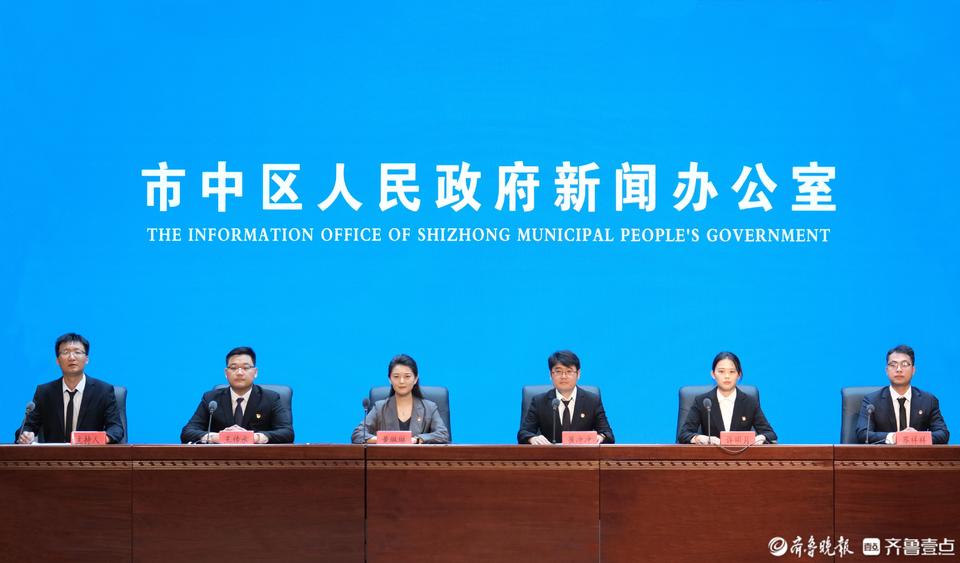
枣庄市市中区今年上半年GDP增速预计6%以上
Qi Lu Wan Bao Wang· 2025-07-17 14:23
Core Viewpoint - The economic performance of Zaozhuang's Shizhong District shows strong growth indicators, with GDP growth of 6.9% in Q1 and an expected GDP growth of over 6% for the first half of the year, indicating a positive economic trajectory [1][3]. Economic Performance - In Q1, the district's GDP grew by 6.9%, ranking first in the city [3]. - Fixed asset investment increased by 8.0% in the first half of the year [3]. - Retail sales of consumer goods grew by 6.7% in the first half [3]. - The service industry saw a revenue of 30.77 billion yuan, a year-on-year increase of 15.0% [3]. - The revenue from ten industries contributing to GDP reached 19.11 billion yuan, with a year-on-year growth of 33.4% [3]. Industry Structure - The ratio of the three industries in Q1 was 2.2:35.2:62.6, indicating a strong service sector [3]. - The first industry grew by 3.5%, reflecting a favorable agricultural production situation [3]. - The second industry's share increased by 1.2 percentage points compared to 2024, showing positive industrial development [3]. - The third industry is transitioning towards modern services, focusing on cultural creativity and technology services [3]. Consumption and Investment Initiatives - The district is actively promoting new consumption scenarios and launching various consumption-boosting activities [4]. - Policies to encourage the replacement of old consumer goods are being continued, with events for automobiles and home appliances planned [4]. - The district aims to secure 17.67 billion yuan in various policy funds to support economic development and improve living standards [4]. - Key projects include the establishment of a national coal storage base and a new energy storage project, enhancing the district's strategic importance [4].

2025年全国消费品工业座谈会在陕西西安召开
news flash· 2025-07-17 12:21
Group 1 - The conference emphasized the importance of the consumer goods industry as a traditional advantage and a vital livelihood sector, serving as the material foundation to meet the growing needs of the people for a better life [2] - The consumer goods industry is expected to play a foundational role in economic growth, supporting the advancement of new industrialization and the construction of a manufacturing powerhouse [2] - The industry will focus on enhancing the resilience and competitiveness of key industrial chains and supply chains while promoting the transformation and upgrading of traditional industries [1][2] Group 2 - The conference called for a systematic planning of the consumer goods industry development strategy and the continuous improvement of the policy support system for industry development [2] - There will be a strong push for the integration of technological and industrial innovation, particularly in sectors such as textiles, light industry, food, and pharmaceuticals [2] - Measures will be taken to boost consumption and expand domestic demand, enhancing the adaptability of supply and demand in the consumer goods sector [2]
2025年全国消费品工业座谈会在陕西西安召开 强调多措并举提振消费扩大内需
news flash· 2025-07-17 12:20
智通财经7月17日电,全国消费品工业座谈会7月16日在陕西省西安市召开。会议强调,全力以赴保障消 费品工业平稳增长,系统谋划消费品产业发展战略布局,持续完善行业发展政策保障体系,因地制宜发 展特色优势产业和新质生产力。大力推进科技创新和产业创新深度融合,贯彻落实纺织、轻工、食品、 医药等行业数字化方案,扎实开展重点产业链稳链强链工作,加快人工智能技术在消费品工业推广应 用。多措并举提振消费扩大内需,切实增强消费品供需适配性,分行业分领域推进中国消费名品方阵建 设,有力提升优质产品供给服务能力,全力做好重要民生产品保障。协同发力提升行业治理水平,坚持 以"小切口"推进精细化管理,持续加强产业生态培育,加快壮大县域富民产业,打造特色鲜明、优势互 补、集约高效的消费品产业发展格局。 2025年全国消费品工业座谈会在陕西西安召开 强调多措并举提振消费扩大内需 ...
印度尼西亚扩大对进口棉织物保障措施涉案产品范围
news flash· 2025-07-17 06:05
Core Points - The WTO safeguards committee has received a notification from the Indonesian delegation regarding safeguard measures on cotton fabric imports [1] - The Indonesian Safeguard Committee (KPPI) has added four new tax codes related to cotton fabric in response to a request from the Indonesian Textile Association [1] - A safeguard investigation has been initiated by the KPPI on cotton fabric imports following a request from domestic producers, involving multiple tax codes [1] Group 1 - The Indonesian Safeguard Committee has expanded the list of tax codes for cotton fabric imports to include 5208.51.10, 5209.59.10, 5212.15.10, and 5212.25.10 [1] - Stakeholders are invited to submit evidence and comments regarding the safeguard measures [1] - The KPPI has launched a safeguard investigation on cotton fabric imports, covering a total of 30 tax codes [1]
特朗普正式致函菲律宾,宣布加重税,菲律宾终于意识到不对劲,替美国卖命不会有好下场
Sou Hu Cai Jing· 2025-07-17 05:11
Core Viewpoint - The U.S. has imposed a 20% tariff on goods imported from the Philippines, exacerbating the economic and strategic challenges faced by the Southeast Asian nation, which had previously relied on U.S. support for trade and security [1][3]. Economic Impact - The 20% tariff will significantly increase export costs for the Philippines' key industries, including electronics, textiles, and agriculture, which already have profit margins below 5% [3]. - In August, the Philippines' electronic exports reached $3.57 billion, accounting for 52.9% of total exports, but the high tariffs may weaken its competitiveness in the global supply chain [3]. - Agricultural exports have also suffered, with a 14.3% year-on-year decline in 2023, particularly affecting major products like coconuts and mangoes [3]. - The peso has been depreciating, leading to rising import costs and increased domestic inflation, with rice prices rising 19.6% year-on-year by December 2023 [3]. Government Response - President Marcos plans to negotiate with the U.S. to reduce the tariff rate to 10% and secure exemptions for critical exports like semiconductors [3]. - The negotiations may require the Philippines to open its markets further to U.S. products, including pork and poultry, which could lead to more market share being ceded to U.S. capital [3]. Public Sentiment - Public opinion in the Philippines is shifting, with 72% of citizens identifying inflation as the most pressing issue and 73% dissatisfied with the government's handling of it [5]. - There is growing discontent regarding the U.S. tariff policy, with sentiments emerging on social media that criticize the Philippines' alignment with U.S. interests [5]. Geopolitical Context - The U.S. tariff measures are part of a broader pattern affecting multiple countries, indicating a potentially arbitrary and destructive trade policy under the "America First" agenda [5]. - The unpredictability of U.S. trade policies is undermining its credibility as a partner, creating opportunities for deeper cooperation between China and ASEAN nations [5][7]. - The Philippines risks becoming a geopolitical pawn if it continues to align closely with the U.S. in the context of regional power dynamics [7].

大爆发!一字涨停,“20cm”7连板!
证券时报· 2025-07-17 04:42
Core Viewpoint - The A-share market showed a mild performance on July 17, with the Shanghai Composite Index fluctuating around 3500 points and the ChiNext Index rising over 1% [1][4]. A-share Market Summary - The Shanghai Composite Index was at 3506.94, up 0.09% [5]. - The ChiNext Index reached 2255.36, with a gain of 1.13% [5]. - The Shenzhen Component Index increased by 0.87% to 10813.75 [5]. - Notable sectors performing well included telecommunications, electronics, and retail, while public utilities and transportation lagged [5]. Individual Stock Performance - Several stocks experienced consecutive trading halts, with Upway New Materials achieving a 250% cumulative increase over seven trading days [1][9]. - Upway New Materials reported significant trading anomalies, with a closing price of 23.24 yuan per share and a P/E ratio of 105.71, significantly higher than the industry average of 23.78 [11]. - Lansheng Co. also saw a continuous rise, with a warning about potential risks due to rapid price increases [13]. - Other companies like Lisheng Pharmaceutical and Lianfa Co. reported similar trading halts and risk warnings [14]. Hong Kong Market Summary - The Hong Kong market exhibited a stable performance, with the Hang Seng Index at 24534.84, up 0.07% [17]. - Notable gainers included Nongfu Spring and Geely Automobile, while Baidu and New Oriental saw declines [17]. - Blueport Interactive surged over 40% after announcing the establishment of a new division focused on Web3 and digital assets [20]. Corporate Announcements - Dechang Motor Holdings announced the establishment of two joint ventures with Shanghai Mechanical and Electrical Co., focusing on humanoid robot solutions, with a registered capital of 75 million yuan for each venture [23].

国内高频 | 基建开工连续回升(申万宏观·赵伟团队)
申万宏源研究· 2025-07-17 01:17
Group 1: Industrial Production - Industrial production remains relatively stable, with a blast furnace operating rate year-on-year at 0.7% [2][5][8] - Chemical production shows a slight decline, with soda ash and PTA operating rates down by 2.6 percentage points to 6% and 0.9 percentage points to 1.3%, respectively [2][15] - The automotive sector's semi-steel tire operating rate is still below last year's level, up by 2.7 percentage points to -6.3% [2][15] Group 2: Construction Industry - The construction industry shows a mixed performance, with the national grinding operating rate down by 2.4 percentage points to 3.7% [2][27] - Cement shipment rates remain low, with a year-on-year increase of 1.2% to -3% [2][27] - Asphalt operating rates have seen a recovery, up by 0.6 percentage points to 7.4% [2][35] Group 3: Real Estate Transactions - Real estate transactions are at a low point, with the average daily transaction area for new homes down by 19.1% year-on-year, despite a 13.1% increase [2][44] - First-tier cities continue to see a decline in transactions, down by 18.6% to 39.9% [2][44] - Third-tier cities show significant improvement, with a year-on-year increase of 72.4% to 17% [2][44] Group 4: Transportation and Shipping - National railway and highway freight volumes have decreased, with year-on-year declines of 1.3% to 1.2% and 0.9% to 0.8%, respectively [2][54] - Port cargo throughput and container throughput have also shown a decline, down by 9.3% to 6.8% and 4.7% to 0.9%, respectively [2][54] - The overall intensity of human mobility remains high, with a migration scale index down by 2% to 12.6% [2][63] Group 5: Price Trends - Agricultural product prices are mixed, with pork and vegetable prices rising by 0.1% and 0.8%, while egg and fruit prices fell by 2.2% and 0.1% [3][85] - Industrial product prices have generally increased, with the South China industrial price index rising by 1.1% [3][93] - The energy and chemical price index increased by 1.3%, while the metal price index rose by 0.7% [3][93]