Workflow
农业种植
icon
Search documents
宜都市琦薇家庭农场(个体工商户)成立 注册资本100万人民币
Sou Hu Cai Jing· 2025-11-08 07:17
天眼查App显示,近日,宜都市琦薇家庭农场(个体工商户)成立,法定代表人为黄直杰,注册资本 100万人民币,经营范围为一般项目:茶叶种植,食用农产品零售,农副产品销售,劳务服务(不含劳 务派遣)。(除许可业务外,可自主依法经营法律法规非禁止或限制的项目)许可项目:茶叶制品生 产,食品小作坊经营。(依法须经批准的项目,经相关部门批准后方可开展经营活动,具体经营项目以 相关部门批准文件或许可证件为准)。 ...
BrasilAgro(LND) - 2026 Q1 - Earnings Call Transcript
2025-11-07 14:00
Financial Data and Key Metrics Changes - In Q1 2026, the company reported net revenue of BRL 286.6 million, an adjusted EBITDA of BRL 64 million, and a net loss of BRL 64.3 million, indicating a challenging quarter due to the end of the sugarcane harvest and the planting of new crops [2][22][23] - The operational EBITDA was BRL 64 million, similar to BRL 61.4 million in the same period last year, reflecting stable operational performance despite market volatility [23][24] Business Line Data and Key Metrics Changes - The sugarcane segment faced challenges with productivity, leading to a decrease in ATR levels from historical averages of 140 kg to around 135-136 kg, impacting overall revenue [22][24] - Soy sales were strong, with 56% of the current harvest sold at BRL 1,072, benefiting from strategic timing in the market [19][20] - Corn prices showed recovery, and the company has a significant volume of corn yet to be sold, indicating potential for future revenue [20][29] Market Data and Key Metrics Changes - The sugar market has been under pressure due to global production expectations, leading to lower prices [4][22] - The cotton market experienced a 14% price drop, while cattle raising showed signs of recovery due to export restrictions [4][11] - The company anticipates a good soy harvest in Brazil, with estimates ranging from 178 to 180 million tons [5][11] Company Strategy and Development Direction - The company is focusing on diversifying its operations across various commodities to mitigate risks associated with market volatility [10][12] - There is an emphasis on cost management and strategic timing in sales to optimize margins, particularly in the soy and corn segments [3][19] - The management is exploring opportunities in biofuels and crushing projects, indicating a long-term strategic shift towards sustainable practices [40][42] Management's Comments on Operating Environment and Future Outlook - Management acknowledged the volatility in the agricultural market, particularly influenced by geopolitical factors affecting trade agreements [18][41] - There is optimism regarding the recovery of sugarcane productivity due to improved weather conditions and irrigation strategies [50][51] - The company remains committed to being a dividend-paying entity, reflecting confidence in its long-term financial health despite current challenges [34][35] Other Important Information - The company has a significant amount of receivables, over BRL 650 million, which will positively impact its balance sheet in the coming quarters [20][32] - The company is actively managing its debt levels, with a net debt of BRL 658 million and a focus on maintaining liquidity [32][34] Q&A Session Summary Question: What is the expected sugarcane harvest scenario? - Management expects about 10% more tons harvested by the end of the harvest year, but acknowledges that market estimates may be overly optimistic [36][37] Question: Can you provide an update on land purchase and sale scenarios? - The company is actively pursuing land sales and sees ongoing opportunities in regions like Bahia, despite challenges posed by interest rates [38][39] Question: What is the perspective on soy imports and market competitiveness? - The company anticipates favorable conditions for soy imports from China, which could enhance competitiveness in the market [40][41] Question: How does the company view the potential for biofuels and M&A? - Management sees biofuels as a long-term opportunity and is exploring M&A possibilities to enhance operational efficiency [40][42] Question: What are the expectations for sugarcane TCH recovery? - Management is optimistic about TCH recovery due to improved weather conditions and irrigation strategies, expecting significant improvements in the next harvest [47][50]
粮食稳产高产靠什么丨夯实粮食安全数智基础
Jing Ji Ri Bao· 2025-11-07 03:42
Group 1 - The core viewpoint of the articles emphasizes the significant advancements in agricultural mechanization and smart technology in China, leading to a modernized agricultural system that enhances efficiency and productivity [1][2][3] Group 2 - By the end of 2024, the comprehensive mechanization rate of major crops in China is expected to exceed 75%, with specific regions like Zhejiang and Hunan achieving even higher rates of 90.5% and 89.72% respectively [1][6][8] - The integration of IoT, AI, and big data technologies in agriculture is transforming traditional farming practices into high-tech, market-oriented, and eco-friendly operations [1][2] - Mechanization and automation are addressing labor shortages due to urbanization and an aging workforce, allowing for increased production efficiency and reduced reliance on manual labor [1][2][4] Group 3 - In regions like Zhejiang, the use of advanced agricultural machinery, such as drones for pesticide application, has significantly increased operational efficiency, allowing one drone to cover 400 acres in a day compared to manual labor [4][5] - Hunan's agricultural sector has seen a rise in the total power of agricultural machinery to 123.02 million kilowatts, with a total of 21.01 million machines in operation [8][9] - The establishment of digital platforms for monitoring agricultural machinery usage is enhancing operational efficiency and resource allocation in regions like Hunan [9][10] Group 4 - The articles highlight the importance of developing a supportive agricultural technology application system tailored to China's diverse regional conditions, emphasizing the need for small-scale machinery in certain areas [3] - The promotion of new agricultural machinery and technology is supported by government subsidies, which aim to encourage the adoption of modern farming practices [6][13] - In Tibet, the mechanization rate for major crops like barley has reached 73.4%, with ongoing efforts to adapt machinery for the region's unique geographical challenges [12][14]
九载织密“防护网” 金融活水润“三农”
Qi Huo Ri Bao Wang· 2025-11-07 00:58
Core Viewpoint - The "insurance + futures" model introduced by the Dalian Commodity Exchange (DCE) has effectively supported rural revitalization and agricultural sustainability in Huachuan County, Heilongjiang Province, by providing a robust risk management framework for local farmers [1][8]. Group 1: Implementation and Development - Since its launch in 2015, the "insurance + futures" model has evolved from basic price insurance to include spot purchase agreements and income guarantees, significantly enhancing income stability for farmers [1][3]. - The model was initially piloted with 10,000 tons of soybean price insurance in 2016, which expanded in 2017 to include corn and soybean price insurance along with spot purchase agreements, resulting in a total compensation of 2.51 million yuan for insured crops [3][4]. - By 2018, the project had expanded to cover 400,000 acres and provided solid guarantees for 5,666 households, with average annual income for corn farmers reaching 4,500 yuan, surpassing the poverty line [4][8]. Group 2: Risk Management and Financial Support - The introduction of income insurance in 2019 allowed for simultaneous coverage of both price and yield fluctuations, significantly enhancing the resilience of the "Huachuan model" during adverse weather conditions [5][6]. - In 2019, the total compensation reached over 87 million yuan, with a compensation rate of 376%, effectively preventing many farmers from falling back into poverty [6][8]. - The model not only provides immediate financial support but also stabilizes land rental prices, encouraging larger-scale farming operations and cooperative management among farmers [6][7]. Group 3: Long-term Impact and Future Prospects - The "insurance + futures" model has fostered a long-term risk management mindset among farmers, ensuring a stable production environment and enhancing agricultural sustainability [7][8]. - Over nine years, Huachuan County has implemented 14 projects covering corn, soybeans, and pigs, with total premiums reaching 187.75 million yuan and insuring over 2.05 million acres [8]. - The ongoing exploration of new models, including collaborations with banks and further innovations in insurance products, indicates a commitment to continuous improvement in agricultural risk management [8].
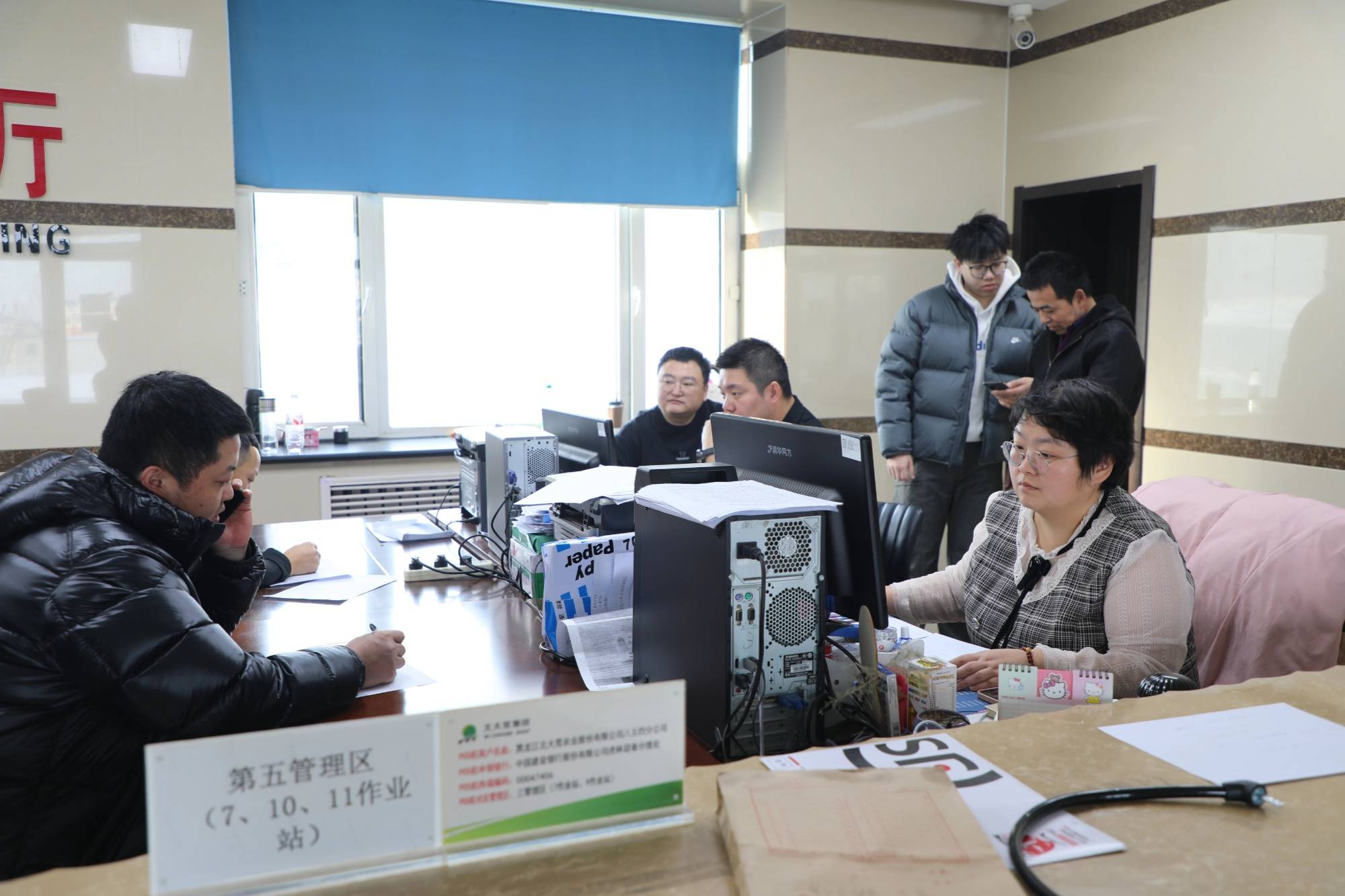
聚焦北大荒丨八五九分公司组织开展管理人员业务能力测试
Sou Hu Cai Jing· 2025-11-06 07:19
Core Viewpoint - The company is enhancing the policy interpretation, execution accuracy, business collaboration, and overall competency of its management personnel through a business capability test aimed at promoting high-quality development in modern agriculture [1][3]. Group 1: Business Capability Test - The business capability test was conducted in four batches with over 300 participants, focusing on areas such as land contracting, agricultural production, internal controls, legal regulations, corporate governance, and the spirit of Beidahuang [3]. - The test was designed to comprehensively assess the depth of knowledge and the ability to apply that knowledge among management personnel, ensuring effective implementation of the company's decisions and regulations at the grassroots level [3]. Group 2: Learning and Development - The examination not only evaluated the daily learning outcomes of management personnel but also encouraged them to identify knowledge gaps and areas for improvement through a method of "learning through examination" [3]. - The company plans to strengthen education and training for management personnel, fostering a proactive approach to learning and skill enhancement, ultimately building a high-quality management team capable of understanding policies, mastering business operations, and effectively managing responsibilities [3].
从“城市附属”到城乡融合 在津门探寻撬动都市农业升级的金融支点
Jin Rong Shi Bao· 2025-11-06 03:42
Core Viewpoint - Tianjin is focusing on the development of urban agriculture, leveraging its unique advantages and addressing the growing demand for high-quality agricultural products in the Beijing-Tianjin-Hebei urban agglomeration, which has over 35 million residents [1] Group 1: Urban Agriculture Development - Tianjin is the only province among seven major grain sales areas to receive an excellent rating in farmland protection assessments, ensuring a nearly 70% self-sufficiency rate in staple food production [1] - The city has launched a comprehensive action plan for rural revitalization, emphasizing the creation of a modern urban agriculture upgrade version as a primary focus [1] - Urban agriculture is increasingly seen as integral to urban-rural integration, requiring financial support to facilitate its development [1] Group 2: Financial Innovations - Tianjin Rural Commercial Bank has introduced the "Agricultural Land Certification Loan" to address financing challenges faced by new agricultural operators, allowing them to apply for loans through an online platform [5] - The bank's innovative approach includes sharing land transfer contracts and operational conditions to streamline loan approval processes, significantly reducing the time required for offline investigations [5] - Financial institutions are actively supporting the integration of farmland to enhance agricultural efficiency and improve land utilization [5] Group 3: Agricultural Production and Market Adaptation - In response to limited arable land, there is a push for land consolidation and resource optimization to enhance agricultural productivity [9] - The introduction of modernized greenhouses in villages is aimed at improving crop quality and aligning production with market demands, reflecting a shift towards high-quality agricultural practices [10][11] - Financial support from banks has been crucial in facilitating the establishment of modern agricultural facilities, enabling farmers to adapt to changing consumer preferences and improve their income [10][12]
加速实现从“脱贫摘帽”到“富民强州”的转型 走进两个村庄 感受发展脉动
Si Chuan Ri Bao· 2025-11-06 03:10
Core Viewpoint - The transformation of Dashi Ban Ancient Village in Xichang City reflects the successful integration of poverty alleviation and rural revitalization efforts in Liangshan Prefecture, showcasing significant progress in rural development and cultural tourism integration during the 14th Five-Year Plan period [7][12]. Group 1: Rural Revitalization and Tourism Development - Dashi Ban Ancient Village, with a history of over 600 years, has evolved from an obscure village with minimal agricultural income to a vibrant tourist destination, thanks to the rural revitalization project initiated in 2019 [10][11]. - The village's revitalization project, which includes a total investment of approximately 5 billion yuan, aims to create a demonstration area that integrates ancient village charm, pastoral vacation, and sports education [11]. - The village has been recognized as one of the top ten cases of cultural and tourism empowerment for rural revitalization by the Ministry of Culture and Tourism, highlighting its successful transformation into a cultural tourism site [11]. Group 2: Agricultural Innovation and Economic Growth - In Yanyuan County, the introduction of drought-resistant rice cultivation under apple trees has shown promising results, with yields reaching up to 669 kg per mu, indicating successful agricultural innovation [14][15]. - The apple industry in Yanyuan County has become a cornerstone of the local economy, with a planting area of 430,000 mu and a production value of 3.3 billion yuan in 2024, contributing significantly to rural income [15][16]. - Liangshan Prefecture is implementing an "Agricultural Strong Prefecture" strategy, aiming to cultivate six agricultural industry clusters worth over 10 billion yuan each, further enhancing the region's agricultural productivity and economic resilience [16].
武汉发布乡村振兴典型案例
Chang Jiang Ri Bao· 2025-11-06 03:02
Core Viewpoint - The city of Wuhan is actively promoting rural revitalization through initiatives such as "State-owned Enterprises Linking Villages" and the "消薄攻坚" (Eliminating Weakness) campaign, which aims to enhance collective economic development in rural areas [1] Summary by Sections Rural Revitalization Initiatives - The "消薄攻坚" campaign has successfully eliminated weak collective economies in 372 villages, with a focus on increasing income and improving living standards [1] - The "国企联村" initiative has seen 16 state-owned enterprises and 58 secondary enterprises collaborate with rural communities, providing resources and support for economic development [1] Case Studies of Successful Villages - **Dongfang Village**: Transitioned from a weak village to a stronger one, with collective income projected to exceed 36 million in 2025, up from 11 million [3] - **Bailin Village**: Achieved a tenfold increase in collective income, from 3.56 million to an expected 34.7 million by year-end [2] - **Shiyuhu Village**: Focused on vegetable production, with projected collective income reaching 20 million by 2025 [2] - **Zhanghe Village**: Revitalized from a "hollow village" to a thriving community, with per capita income reaching 32,000 [4] State-Owned Enterprises Collaboration - **Wuhan Publishing Group**: Invested in a medicinal herb planting demonstration base, increasing village income from 1 million to over 3 million [6] - **Wuhan Jin控 Group**: Promoted "order agriculture," leading to collective revenue of 2.12 million [7] - **Wuhan Urban Construction Group**: Increased village income by 1.2 million through a cultural and tourism project [8] - **Wuhan Metro Group**: Developed a fruit orchard project, enhancing collective income and promoting rural tourism [9] Future Projections - Several villages are expected to see significant increases in collective income by 2025, with initiatives focusing on agricultural modernization, resource optimization, and community collaboration [2][3][4]
综合利用 盐碱地变丰产良田
Ren Min Ri Bao· 2025-11-06 00:24
Core Insights - The comprehensive utilization of saline-alkali land is crucial for ensuring national food security and stabilizing China's food supply [1] - The Chinese government emphasizes the importance of improving soil quality and expanding arable land through the development of saline-alkali areas [1] Group 1: Current Status and Importance - China has 1.5 billion acres of saline-alkali land, with 500 million acres having potential for development [1] - The third national land survey has identified the distribution and area of saline-alkali land, providing a foundation for targeted remediation efforts [2] Group 2: Technological Innovations and Practices - In Jilin Province, the average yield of rice on treated saline-alkali land has exceeded 600 kg per mu, approaching the levels of black soil [3] - Various remediation techniques, such as organic silicon agents and gypsum, are being explored to improve soil conditions [3] - The National Saline-Alkali Land Comprehensive Utilization Technology Innovation Center has developed 68 new salt-tolerant crop varieties, with 20 officially registered [4] Group 3: Agricultural Development and Future Prospects - The promotion of salt-tolerant crop varieties, such as 'Xiao Yan 60', has led to significant increases in yield, with some farmers reporting 1,000 jin per mu [6] - Saline-alkali land is being transformed into productive agricultural areas, contributing to the overall agricultural industry and enhancing food security [6] - The comprehensive utilization of saline-alkali land is supported by national pilot programs, indicating a promising future for agricultural development in these areas [6]
浙江岱山农文旅融合促进乡村振兴
Zhong Guo Jing Ji Wang· 2025-11-05 05:53
Core Insights - The "Island Village Gallery" roadshow competition in Zhoushan, Zhejiang Province successfully concluded, with three projects, including "Longtou Salt Selection" and "Daidong Common Prosperity," winning gold awards [1] - The development of the "Agricultural Rhythm" initiative in Gaoting Town is focused on land consolidation and modernization of agricultural practices, achieving a total of 1,246 acres of land transfer from March to July, with 806 acres managed by the county's agricultural development group [1] Group 1 - The integration of 1,246 acres of land into a modern agricultural economic belt in Gaoting Town has been completed, promoting both large-scale operations and increased income for local farmers [1] - The "Luhuan Qingsha" rural complex in Daidong Town is set to open in 2024 and has become a popular tourist destination, attracting over 50,000 visitors and generating more than 1.5 million yuan in revenue [2] - The establishment of a "Agricultural Enterprises + Village Collective + Farmers" benefit-sharing mechanism is being implemented to encourage villagers to invest in local development [2] Group 2 - The "Agricultural Rhythm" development axis spans approximately 17 kilometers, covering three towns and eleven villages, focusing on industrial revitalization, landscape enhancement, and high-standard farmland efficiency [3] - The introduction of rural managers has positively impacted village development, with a goal to attract more talented teams to Zhoushan through initiatives like the roadshow competition [3]