
智能穿戴

Search documents
AI眼镜卖爆,产能跟不上了
3 6 Ke· 2025-12-15 07:03
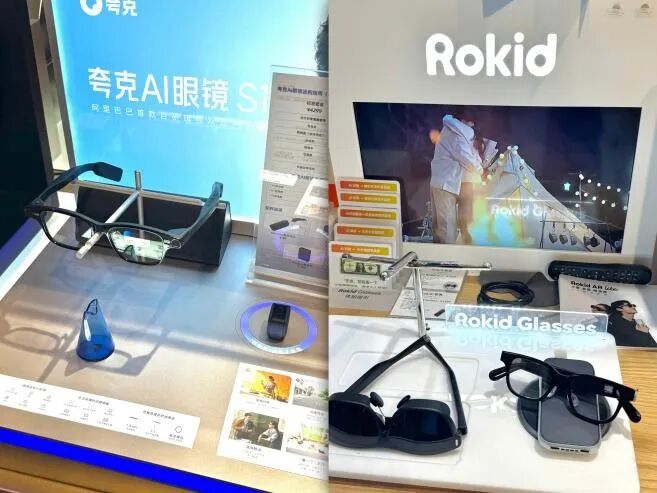
Core Insights - AI glasses are transitioning from niche products to mainstream consumer items, with multiple domestic manufacturers launching new models this year and Google entering the market recently [1][11] - There is a significant supply chain bottleneck affecting popular models, with long wait times for new orders, indicating high demand [1][3][4] - The market for AI glasses is still in the early stages of consumer education, leading to high foot traffic in stores but low conversion rates for purchases [1][5][8] Company Summaries - Quark AI glasses launched two series, S1 and G1, with prices starting at 3,799 yuan and 1,899 yuan respectively, but are facing supply shortages with delivery times extending to 45 days [2][3] - Rokid has also experienced production challenges, with a goal to sell over 1 million units next year, supported by a recent increase in active users [3][4] - Both Quark and Rokid are working to enhance production capacity, with Quark adding a new assembly line and Rokid collaborating with Lens Technology to overcome production bottlenecks [4][12] Market Dynamics - The primary buyers of AI glasses are enterprise users, with applications in professional settings such as presentations and translation, while general consumers show interest mainly out of curiosity [6][8] - Despite similar functionalities, Quark and Rokid glasses have different pricing strategies and customization options for prescription lenses, affecting consumer choices [9][10] - Google’s entry into the AI glasses market, along with partnerships with major tech companies, highlights the growing potential of the industry and the diverse approaches being taken by different brands [11][13] Technical Challenges - The AI glasses industry faces significant technical hurdles, particularly in balancing battery life and performance, as well as the need for more compelling applications to drive consumer adoption [14]

有商机成果集中展示 横岗潮品闪耀“湾区T台”
Nan Fang Du Shi Bao· 2025-12-13 13:10
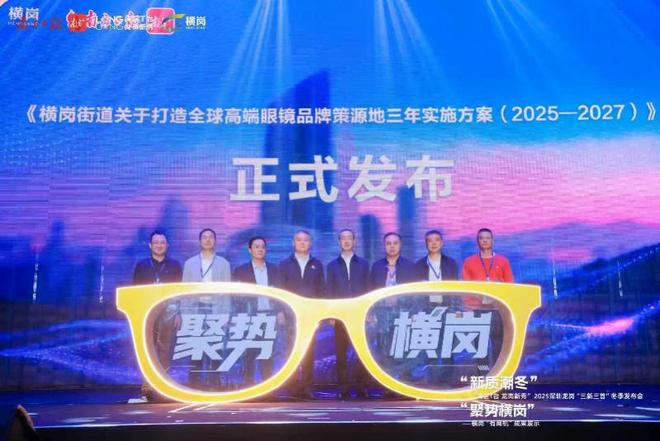
Group 1 - The "New Quality Trend Winter" event in Longgang, Shenzhen, showcased the area's commitment to becoming a global hub for high-end eyewear and smart wearable technology [1][3] - The establishment of the "National College Student Eyewear Design and R&D Practice Base" and the "Guangdong-Hong Kong-Macao Greater Bay Area Eyewear + Smart Wearable Industry Alliance" highlights Longgang's strategic focus on innovation and collaboration in the eyewear sector [3][4] - The "Three New Three Firsts" winter release event featured a variety of products, including eyewear, jewelry, and AI products, demonstrating the diverse industrial landscape of Longgang [7][10] Group 2 - Shenzhen Zhonglian Exhibition Industry Operation Co., Ltd. shared its growth story, emphasizing the favorable business environment in Longgang, with 33 industrial parks and 25 talent apartments under its management [4][6] - The company has been recognized with multiple awards, including the "3A Enterprise Credit Rating" and "Guangdong Province 'Contract-abiding and Trustworthy Enterprise'" [4] - The launch of the "Zero Carbon Digital Innovation Park" represents a new model of collaboration between state-owned and private enterprises, focusing on sustainable development [4][6] Group 3 - The Longgang Intelligent Eyewear Experience Center has initiated a global招商计划 (investment invitation plan) to attract top eyewear brands and innovative design teams [3][4] - Strategic partnerships, such as the collaboration with the Silicon Valley Gaia Artificial Intelligence Research Institute, aim to enhance the smart eyewear industry's technological capabilities [3][4] - The event also included a "Shopping Festival" featuring 20 local enterprises, integrating exhibition, negotiation, consumption, and entertainment into a comprehensive ecosystem [11][10]
海信视像:目前公司正稳步推进智能穿戴产品的迭代与场景拓展
Zheng Quan Ri Bao Wang· 2025-12-12 13:13
Core Viewpoint - The company is actively exploring XR technology integration and has developed customized VR all-in-one machines, AR glasses, and AI glasses for multiple clients [1] Group 1: XR Technology Development - The company has implemented several typical solutions in various industry scenarios such as XR industrial training, AR remote collaboration, 3D digital human interaction platforms, and VR medical rehabilitation [1] - The company utilizes self-developed AR/VR devices based on a cloud-edge collaborative technology architecture [1] Group 2: Product Launch and Innovation - The company is set to officially launch the Vidda G11 smart glasses in October 2025 [1] - The company is steadily advancing the iteration of smart wearable products and expanding their application scenarios [1]

海信视像:Vidda G11智能眼镜预计年底上市
Xin Lang Cai Jing· 2025-12-12 08:27
Group 1 - The company is continuously expanding its presence in the smart wearable sector [1] - The Vidda G11 smart glasses product was officially launched in October 2025 and is expected to be available for sale by the end of the year [1]
海信视像:Vidda G11智能眼镜产品预计年底正式上市销售
Mei Ri Jing Ji Xin Wen· 2025-12-12 07:57
Core Viewpoint - The company is actively expanding its presence in the smart wearable technology sector, with plans to launch the Vidda G11 smart glasses in October 2025, and anticipates official sales by the end of the year [1] Group 1: Product Launch - The Vidda G11 smart glasses are scheduled for an official release in October 2025 [1] - The company expects the product to be available for purchase by the end of 2025 [1] Group 2: Pricing and Purchase Channels - The pricing and purchasing channels for the Vidda G11 smart glasses will be announced through the company's official news and flagship store [1]
苹果首款智能眼镜或明年发布,谷歌、阿里等巨头纷纷加速布局
Jin Rong Jie· 2025-12-12 01:46
Core Viewpoint - Apple's first smart glasses, AppleGlasses, are expected to be released in 2026, likely debuting at the Worldwide Developers Conference (WWDC), with mass production and market launch anticipated in 2027 [1] Industry Trends - The global AI glasses market is experiencing a surge, with various companies accelerating their developments in this sector [1] - Google announced plans to launch its first AI-driven smart glasses in 2026 [1] - In late November, Quark AI glasses featuring Alibaba's latest Qianwen AI assistant were officially released [1] - On December 3, Li Auto also launched its first AI glasses, named Livis [1] Market Outlook - According to CMB International Securities, the global technology industry is expected to see a dual trend of differentiated terminal demand and accelerated AI innovation by 2026 [1] - The rapid iteration of AI large models is driving sustained high demand in the computing power industry chain, leading to faster deployment of edge AI products such as AI smartphones, AI PCs, and AI glasses [1] - It is projected that global shipments of AI glasses will exceed 10 million units by 2026, positioning them as a core wearable category following TWS earbuds [1]

苹果AI眼镜明年或发布,绩优概念股出炉
Zheng Quan Shi Bao Wang· 2025-12-12 01:36
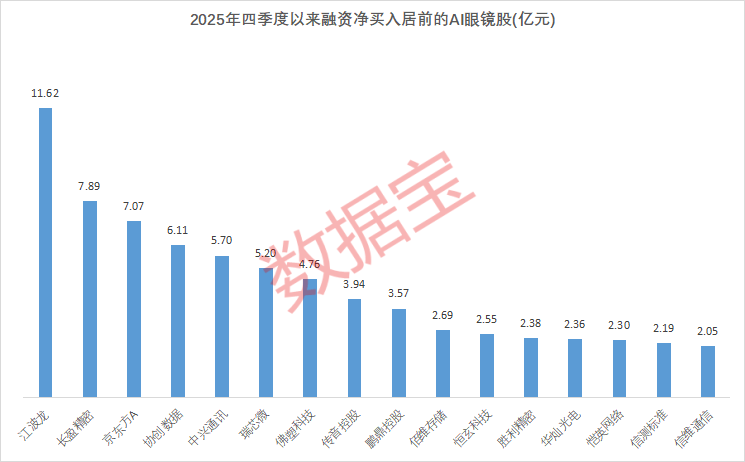
Group 1: Apple and Competitors' Developments - Apple is expected to release its first lightweight Apple Glass in 2026, likely at the WWDC, with mass production starting in 2027. The product will not have an AR display but will include multiple cameras for photo and video capture, and will utilize an updated Siri for AI support [1] - Google has officially launched the Android XR platform and showcased Project Aura, the first consumer-grade AR glasses powered by this platform, in collaboration with Chinese company XREAL, set to be released in 2026 [1] - Domestic players are also entering the AI glasses market, with Alibaba launching the Quark AI glasses series and Li Auto releasing its first AI glasses, Livis [1] Group 2: Market Potential and Predictions - AI glasses are viewed as the next competitive mainstream computing terminal following smartphones. Analysts from IDC suggest that AI functionalities will be more rapidly implemented in smart glasses due to cost efficiency and advancements in large models for voice and image recognition [2] - IDC forecasts that global shipments of smart glasses will reach 12.8 million units by 2025, representing a 26% year-on-year growth, with China's market expected to see shipments of 2.75 million units, a 107% increase [2] Group 3: Performance of AI Glasses Stocks - A total of 16 AI glasses stocks have seen net purchases exceeding 200 million yuan since Q4 2025, with Jiangbolong leading at 1.162 billion yuan. Other notable companies include Changying Precision, BOE Technology, and ZTE, each with over 500 million yuan in net purchases [3] - Jiangbolong has introduced innovative products for the AI glasses industry, including ultra-small eMMC and ePOP4x storage solutions [3] - The global AIGC wave and the "Digital China" initiative are expected to drive growth in the storage market, with Jiangbolong positioned for significant expansion [3] Group 4: Profit Growth Predictions for AI Glasses Stocks - TCL Technology, Haopeng Technology, and Sitaiwei are predicted to have the highest net profit growth rates for 2025, at 259.7%, 176.02%, and 153.63% respectively. Other companies like Baiwei Storage and Qixin Group are also expected to double their net profits [5] - Haopeng Technology is actively transitioning its AI/AR glasses and related businesses into tangible results, supported by a comprehensive product offering [5] - Sitaiwei has launched a 12-megapixel AI glasses application CMOS image sensor, enhancing the lightweight and high-quality imaging capabilities required for AI glasses [5]
车企集体跨界智能终端 AI入口争夺战中开启生态破局
Zhong Guo Zheng Quan Bao· 2025-12-11 20:31
Core Viewpoint - The launch of Li Auto's AI glasses, Livis, signifies a strategic shift for Chinese electric vehicle manufacturers, expanding competition beyond traditional automotive products into a comprehensive smart ecosystem [1][2]. Group 1: Industry Trends - The current electric vehicle market faces significant homogenization, prompting companies to seek differentiation through smart wearables and digital products [2][3]. - Major players like NIO and XPeng are also venturing into smart devices, indicating a collective industry trend towards integrating technology into user lifestyles [1][2]. Group 2: Product Features and User Engagement - Livis glasses feature a lightweight design at 36 grams, an impressive battery life of 18.8 hours, and deep integration with vehicle systems, enhancing user interaction [1][2]. - The glasses enable quick responses for vehicle controls, such as air conditioning and steering wheel heating, fostering a seamless user experience [2][3]. Group 3: Market Performance and Consumer Behavior - The global smart glasses market is projected to grow, with a 64.2% year-on-year increase in shipments, and automotive-related products contributing 15% to this growth [3]. - Livis achieved over 12,000 orders on its first sales day, with 80% of buyers being existing Li Auto customers, indicating strong brand loyalty and user retention [3]. Group 4: Business Model Challenges - Domestic electric vehicle manufacturers face longer profit cycles in the smart device sector, necessitating innovative business models beyond traditional hardware sales [4][5]. - The comparison with Tesla's successful integration of robotics highlights the need for scale and cost control in developing smart devices [4]. Group 5: Consumer Willingness and Market Potential - A significant 72% of Chinese smart device users are willing to pay a premium for cross-terminal services, compared to only 45% in Western markets, indicating a favorable environment for innovation [5]. - The strategic move towards integrating smart devices into the automotive ecosystem is seen as essential for addressing industry homogenization and capturing AI-driven user engagement [5].


车企集体跨界智能终端AI入口争夺战中开启生态破局
Zhong Guo Zheng Quan Bao· 2025-12-11 20:17
Core Insights - The launch of Li Auto's AI glasses, Livis, signifies a shift in the competitive landscape of the new energy vehicle (NEV) industry, expanding from single automotive products to a comprehensive smart ecosystem [1][2] - Major Chinese NEV companies, including NIO and Xpeng, are diversifying into smart wearables and digital products to break through homogenized competition and capture user engagement in the AI era [1][2] Group 1: Product Features and Market Strategy - Livis features a lightweight design at 36 grams, an impressive battery life of 18.8 hours, and deep integration with vehicle systems, enhancing user interaction and experience [1][2] - The glasses are not standalone hardware but part of a "car + glasses" ecosystem, which increases user stickiness by transitioning customers from car buyers to participants in a smart lifestyle [2][3] Group 2: Industry Trends and Competitive Landscape - The global smart glasses market is experiencing significant growth, with a 64.2% year-on-year increase in shipments, and NEV-related products contributing 15% to this growth [3] - Li Auto's Livis achieved over 12,000 orders on its first sales day, with 80% of orders coming from existing Li Auto vehicle owners, indicating a shift towards an ecosystem competition involving multiple smart terminals [3] Group 3: Business Model and Challenges - Domestic NEV companies face longer profit cycles in their smart device ventures compared to international competitors like Tesla, which has successfully integrated robotics into its business model [4] - The development of smart devices by companies like Xpeng and Li Auto requires substantial investment and innovative business models to ensure long-term cash flow and profitability [4][5] Group 4: Consumer Behavior and Market Potential - A significant 72% of Chinese smart device users are willing to pay a premium for cross-terminal services, compared to only 45% in Western markets, indicating a strong market potential for innovative cross-device solutions [4] - The strategy of extending smart cockpit ecosystems to personal devices is seen as a necessary response to industry homogenization and a way to secure a foothold in the AI-driven market [5]
夸克AI眼镜“一机难求”?核心供应商曝已新增产线
Cai Jing Wang· 2025-12-11 11:07
Core Insights - Quark AI glasses S1 are experiencing high demand, frequently selling out across multiple channels, with a reported shipping delay of up to 45 days [1] - The resale market for Quark AI glasses S1 has seen prices soar to 4000-5000 yuan [1] Production and Supply Chain - Quark has added a new production line, which is expected to gradually increase capacity starting next week [1] - An insider from Luxshare Precision revealed that Quark's team has been closely monitoring shipments and has established a new assembly line in their factory [1] - The founder of ZhiGe Technology stated that they are accelerating production of optical waveguide orders for Quark AI glasses, with newly purchased equipment already in use [1] Market Strategy - Quark's internal team aims to fully release production capacity by January to capitalize on the upcoming Spring Festival consumer surge [1] - The S1 and G1 series of Quark AI glasses were officially launched in November, with the S1 series starting at a price of 3799 yuan and the G1 series starting at 1899 yuan, marking the first hardware equipped with Qianwen [1]