服务贸易

Search documents
封关后海南自贸港服务贸易开放路径
Sou Hu Cai Jing· 2025-11-22 10:05
Core Insights - The article emphasizes the need for Hainan to focus on a negative list system to promote institutional openness in service trade, aligning with international high-standard rules, and establishing itself as a "pressure testing ground" for institutional innovation [1][48]. Group 1: Service Trade Development in Hainan - Hainan Free Trade Port is positioned to leverage its institutional advantages and development opportunities post-closure, particularly in emerging sectors like supply chain services, offshore trade, and digital services [1][5]. - The service trade will become a pillar for Hainan's high-quality economic development, supported by a unique advantage in tourism and modern service industries [5][27]. Group 2: Policy Framework and Implementation - Key policies announced for Hainan's free trade port include zero tariffs on a broader range of goods, a dual 15% income tax rate for registered enterprises, and a processing value-added exemption for goods produced in Hainan [3][4]. - The establishment of a cross-border service trade negative list is a significant step towards enhancing service trade freedom and convenience, with the first list having been implemented [4][42]. Group 3: Global Service Trade Trends - Global service trade is experiencing a recovery driven by digitalization, with China needing to address structural and competitive shortcomings to seize new development opportunities [6][10]. - The WTO reports that service trade has become a vital component of international trade, with a significant portion of service trade now being facilitated through digital means [10][11]. Group 4: Challenges and Opportunities - China faces challenges in service trade development, including regional imbalances and external environmental complexities, necessitating reforms across various dimensions [18][19]. - Hainan's service trade indicators show significant growth, with service exports increasing by 84% in early 2025, highlighting the province's unique advantages in service trade [37][20]. Group 5: Future Directions - The article outlines the necessity for Hainan to create a conducive environment for "offshore + offshore" trade, aiming to attract regional headquarters and enhance its status as an international trade hub [38][39]. - The establishment of a comprehensive service trade system is crucial for Hainan to achieve its goals of higher-level trade liberalization and to serve as a testing ground for China's broader trade policies [41][48].

圈粉全球!超20万亿元体量,超大规模市场→
Sou Hu Cai Jing· 2025-11-22 04:03
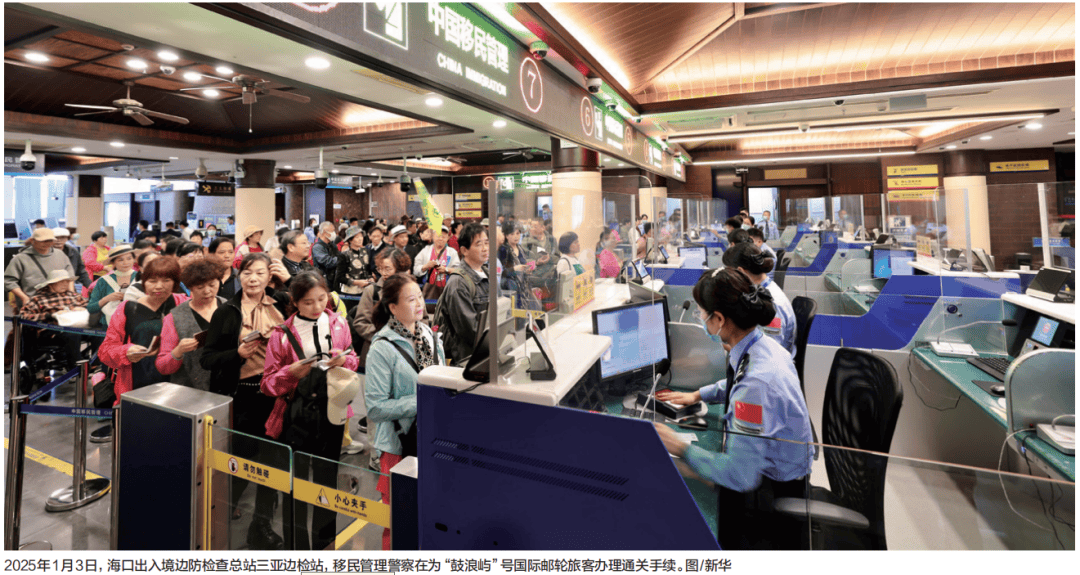
Core Insights - China has maintained its position as the world's second-largest importer for 16 consecutive years, driven by a population of over 1.4 billion and more than 400 million middle-income individuals, resulting in an annual import volume exceeding 20 trillion yuan [1][8]. Group 1: Trade and Economic Scale - China is the world's largest goods trader, holding this position for eight consecutive years and serving as a major trading partner for over 150 countries and regions [2]. - The service trade scale is projected to exceed 1 trillion USD for the first time in 2024, ranking second globally [3]. - China's cross-border e-commerce is the largest in the world, with total import and export volume expected to reach 2.71 trillion yuan in 2024 [4]. - By the end of 2024, China is expected to attract over 100 billion USD in foreign investment for 15 consecutive years, maintaining its status as the largest recipient of foreign investment among developing economies [5]. Group 2: Market Openness and Connectivity - The national negative list for foreign investment has been reduced to 29 items, with the manufacturing sector achieving a complete clearance [6]. - Shenzhen is emerging as an "international hub," enhancing its connectivity with the world through busy ports and efficient logistics, with significant growth in international shipping routes [7]. - In the first ten months, Shenzhen's import of mechanical and electrical products reached 1.2 trillion yuan, an increase of 8.5%, while agricultural product imports grew by 10% to 82.26 billion yuan [7]. Group 3: Tourism and Consumer Trends - The recent implementation of a 240-hour visa-free transit policy at several ports in Guangdong has significantly increased foreign tourist arrivals, with over 1.2 million foreign travelers processed this year, marking a 100% increase in visa-free entries [9]. - The integration of "China travel" and "China shopping" has become a popular topic on social media, with foreign tourists increasingly purchasing Chinese electronic products [9]. Group 4: Expert Insights on Market Potential - Experts emphasize that China's import demand accounts for 10.5% of global demand, providing opportunities for countries to leverage their advantages in participating in China's economic development [10]. - The expansion of green trade, particularly in new energy vehicles and solar products, has significantly reduced global costs for wind and solar power generation, enhancing the world's capacity to address climate change [10]. - The "14th Five-Year Plan" suggests actively expanding autonomous openness and aligning with international high-standard trade rules, with institutional openness being a key focus [10].
多项指标领跑全球!数说中国开放大市场的“世界之最”
Sou Hu Cai Jing· 2025-11-21 15:15
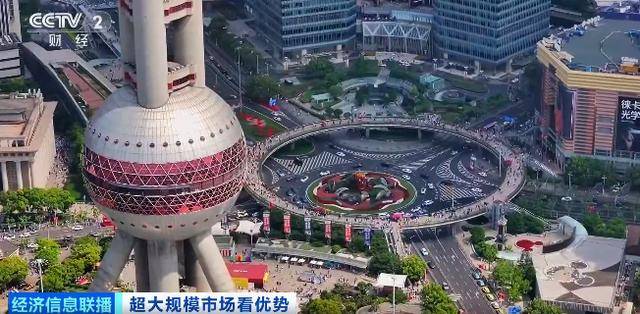
Group 1 - China's super-large market is a key factor for the steady progress of its economy, emphasizing high-level openness to the outside world as a bridge connecting with the global market [1] - China has maintained its position as the world's largest goods trading nation for eight consecutive years and is a major trading partner for over 150 countries and regions [3] - The scale of service trade in China is expected to exceed 1 trillion USD for the first time in 2024, ranking second globally [3] Group 2 - China has attracted over 100 billion USD in foreign investment for 15 consecutive years, solidifying its status as the largest recipient of foreign investment among developing economies [5] - The national negative list for foreign investment has been reduced to 29 items, with the manufacturing sector achieving a complete removal of restrictions [5] - In the tourism sector, China is one of the most dynamic markets globally, with over 20.89 million foreign visitors entering the country in the first three quarters of this year, marking a year-on-year increase of over 50% [7] Group 3 - The cross-border e-commerce scale in China ranks first in the world, with total import and export volume expected to reach 2.71 trillion CNY in 2024 [3]
10年后有望全球登顶!全国大咖为何看好大湾区?
2 1 Shi Ji Jing Ji Bao Dao· 2025-11-19 00:19
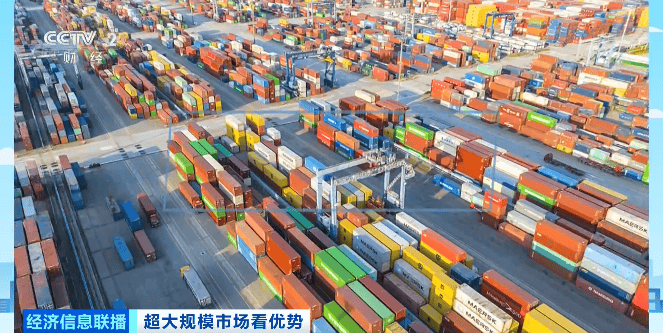
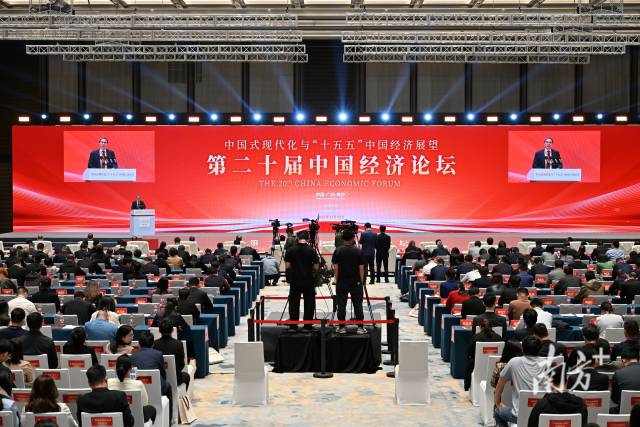
Core Insights - The 20th China Economic Forum was held in Guangzhou, focusing on promoting Chinese-style modernization and high-level opening-up [1] Group 1: Manufacturing Industry - By the end of the 14th Five-Year Plan, China's manufacturing industry accounted for over 30% of the global share, making it the third country to reach this milestone after the UK and the US [3] - China has shed the label of being "large but not strong" in manufacturing, leading in five out of the ten most important manufacturing sectors and keeping pace in the other five [5] - Despite significant progress, the manufacturing sector still faces three major issues: high energy consumption, low profits, and low total factor productivity, which need to be addressed through the development of new quality productivity [5] Group 2: Strategic Emerging Industries - Investment in strategic emerging industries such as new energy, new materials, biomedicine, high-end equipment, and artificial intelligence is projected to attract at least 100 trillion yuan from the 15th Five-Year Plan until 2040 [5] - Guangdong has established nine trillion-level industrial clusters, including new-generation electronic information and advanced materials industries, with emerging industries like AI and autonomous driving rapidly developing [5][7] Group 3: Service Trade and Economic Development - The average growth rate of China's productive service industry during the 14th Five-Year Plan was around 12%, nearly three times the GDP growth rate [11] - China's service trade has become the second largest globally, with significant potential for growth as it has maintained a long-term trade deficit in this sector [11] - The Guangdong-Hong Kong-Macao Greater Bay Area is positioned as a key area for expanding service trade and exploring institutional openness [13][16] Group 4: Future Economic Outlook - The Greater Bay Area is expected to become the world's largest economic and innovation center by 2035 if the 11 cities within it further integrate [16] - The 15th Five-Year Plan is seen as a strategic opportunity for Chinese companies to transition from "Chinese leaders" to "global giants" [13]
G20国家受关税影响贸易额创WTO观测史上最大增幅,后续会怎样?
第一财经· 2025-11-14 14:17
Core Insights - The WTO reported that the trade volume affected by tariffs among G20 countries increased approximately fourfold from the previous reporting period, marking the largest increase in WTO trade monitoring history [3][8] - Despite the rise in tariffs, G20 countries implemented a significant number of trade facilitation measures, doubling the value of such measures compared to the previous report [4][9] Group 1: Tariff Impact - From mid-October 2024 to mid-October 2025, 14.3% of imported goods in G20 countries (approximately $25.99 trillion) were affected by tariffs and other measures, a significant increase from the previous $5.99 trillion [8] - The average actual tariff rate faced by U.S. consumers reached 18.0%, the highest level in over 90 years, indicating ongoing concerns about tariffs [4][12] Group 2: Trade Facilitation Measures - G20 countries introduced 184 new trade facilitation measures covering approximately $2.055 trillion in trade, nearly double the previous report's $1.07 trillion [9] - In the service trade sector, 52 new measures were introduced, with over two-thirds aimed at promoting trade [9] Group 3: Trade Growth Projections - The WTO forecasts a global goods trade growth rate of 2.4% for 2025, but this is expected to drop significantly to 0.5% in 2026 [11] - Oxford Economics predicts a slowdown in global trade growth from 4% in 2025 to 1% in 2026, highlighting the negative impact of rising tariffs [12] Group 4: Trade Policy Uncertainty - Trade policy uncertainty remains a critical factor affecting investment, with the U.S. experiencing over 40 modifications to tariff-related regulations within a year [13] - The fluctuation in U.S. trade policies, including recent increases in heavy truck tariffs and ongoing legal uncertainties regarding tariff legality, contribute to this uncertainty [12]

扩大外贸领域制度型开放
Ren Min Ri Bao· 2025-11-14 07:49
Group 1: Trade Innovation and Development - The "14th Five-Year Plan" emphasizes promoting trade innovation and accelerating the construction of a strong trade nation [1] - In goods trade, there is a focus on market diversification and the integration of domestic and foreign trade, expanding intermediate goods and green trade [1] - The establishment of national import trade promotion innovation demonstration zones aims to increase imports to meet industrial transformation and people's needs [1] Group 2: Digital Trade and E-commerce - The creation of national digital trade demonstration zones is intended to enhance openness in the digital sector and promote institutional innovation in cross-border data and international internet access [2] - The role of cross-border e-commerce comprehensive pilot zones will be leveraged to develop cross-border e-commerce in conjunction with industrial sectors [2] - Support for foreign trade enterprises and e-commerce platforms in global logistics and warehousing infrastructure is crucial for advancing cross-border e-commerce [2]
扩大外贸领域制度型开放(专家点评)
Ren Min Ri Bao· 2025-11-13 22:02
Core Insights - The "14th Five-Year Plan" emphasizes promoting innovative development in trade and accelerating the construction of a strong trade nation [1][2] - The plan aims to enhance the digitalization of trade processes and expand both goods and service trade [1][2] Goods Trade - The strategy focuses on diversifying markets and integrating domestic and foreign trade, while expanding trade in intermediate goods and green trade [1] - Establishing national import trade promotion innovation demonstration zones to increase imports, catering to industrial transformation and improving citizens' quality of life [1] - Enhancing the digitalization level across all trade segments and strengthening the application of electronic documentation [1] Service Trade - The establishment of national service trade innovation development demonstration zones to boost support for service exports through fiscal, financial, and export tax rebate measures [1] - Expanding traditional service exports in sectors such as transportation, tourism, and construction, while fostering new growth points in inspection, professional services, digital culture, cloud services, and data services [1] - Promoting the integration of artificial intelligence with service trade to enhance standardization and cultivate new growth momentum in service trade [1] Digital Trade - The creation of national digital trade demonstration zones to facilitate openness in the digital sector and innovate systems for cross-border data and international internet access [2] - Enhancing the standardization of digital trade and aligning with international standards to optimize the development environment for digital trade [2] - Leveraging cross-border e-commerce comprehensive pilot zones to promote the development of cross-border e-commerce and support foreign trade enterprises in global logistics and warehousing [2]
扩大更高水平对外开放 绘就合作发展新图景
Zheng Quan Shi Bao· 2025-11-10 18:34
Core Viewpoint - China emphasizes the importance of "openness" as a fundamental national policy and a hallmark of Chinese-style modernization, aiming to expand high-level opening-up in response to complex global changes and uncertainties [1][2]. Group 1: High-Level Opening-Up - The "15th Five-Year Plan" outlines actions to enhance openness through four key areas: expanding autonomous opening, promoting trade innovation, increasing bilateral investment cooperation, and high-quality Belt and Road Initiative construction [1]. - The focus on stabilizing and expanding institutional opening is crucial during the "15th Five-Year" period [2]. Group 2: Trade Innovation and Growth - China has maintained its position as the world's largest goods trader for eight consecutive years, leveraging its industrial chain advantages and diversified market layout [3]. - The plan includes fostering trade innovation by balancing goods and services trade, expanding both exports and imports, and supporting traditional trade sectors while transitioning to new growth drivers [3]. Group 3: Service Trade Development - The service sector is identified as a key area for future market access and opening, with plans to expand pilot programs in telecommunications, biotechnology, and foreign-funded hospitals [2]. - Global service trade is projected to grow at a moderate pace, with a forecasted increase of 4.6% in 2025, outpacing goods trade growth of 0.5% [4][5]. Group 4: Investment and Economic Strategy - The concept of "Chinese economy" is evolving to include "Chinese people economy," emphasizing the importance of national income and global resource allocation capabilities [6]. - The plan aims to expand bilateral investment cooperation, enhance the environment for foreign investment, and improve overseas service systems for Chinese enterprises [6][7]. Group 5: Belt and Road Initiative - The Belt and Road Initiative is highlighted as a significant avenue for trade and investment, with a focus on strengthening mutual trust and benefit with partner countries [7]. - Recommendations include enhancing debt sustainability management and localizing operations to ensure shared benefits from resource development projects [7].
今日视点:从最新数据透视经济新动向
Zheng Quan Ri Bao· 2025-11-09 22:51
Core Viewpoint - The articles highlight the resilience and vitality of China's economy, emphasizing the importance of high-level opening-up and consumption as key drivers for economic growth [1][2][3][4]. Group 1: Economic Data and Trade - In the first ten months of the year, China's total import and export value reached 37.31 trillion yuan, a year-on-year increase of 3.6%, with exports at 22.12 trillion yuan (up 6.2%) and imports at 15.19 trillion yuan (essentially flat) [1]. - The structure of exports has upgraded, with mechanical and electrical products accounting for 60.7% of total exports, amounting to 13.43 trillion yuan, reflecting a shift towards higher value-added products [1]. - China's goods trade has maintained its position as the world's largest for eight consecutive years, with service trade projected to exceed 1 trillion USD in 2024, ranking second globally [2]. Group 2: Consumption and Market Dynamics - Consumption contributes approximately 60% to economic growth annually, showcasing its role as a primary engine for economic development [3]. - The Producer Price Index (PPI) decreased by 2.1% year-on-year in October, with a narrowing decline, indicating the effectiveness of policies aimed at boosting consumption [3]. - The e-commerce logistics index for October was reported at 113.1, reflecting a 0.4-point increase from the previous month, indicating a recovery in logistics activity [3]. Group 3: Policy and Future Outlook - The recent guidelines emphasize the importance of boosting consumption as a priority in building a strong domestic market and accelerating the new development pattern [4]. - New consumption trends and business models are emerging, driven by policies and market dynamics, which are expected to further stimulate domestic demand and economic growth [4]. - The ongoing development of new economic sectors, such as emotional economy and pet economy, illustrates the vibrant potential of China's consumer market [4].
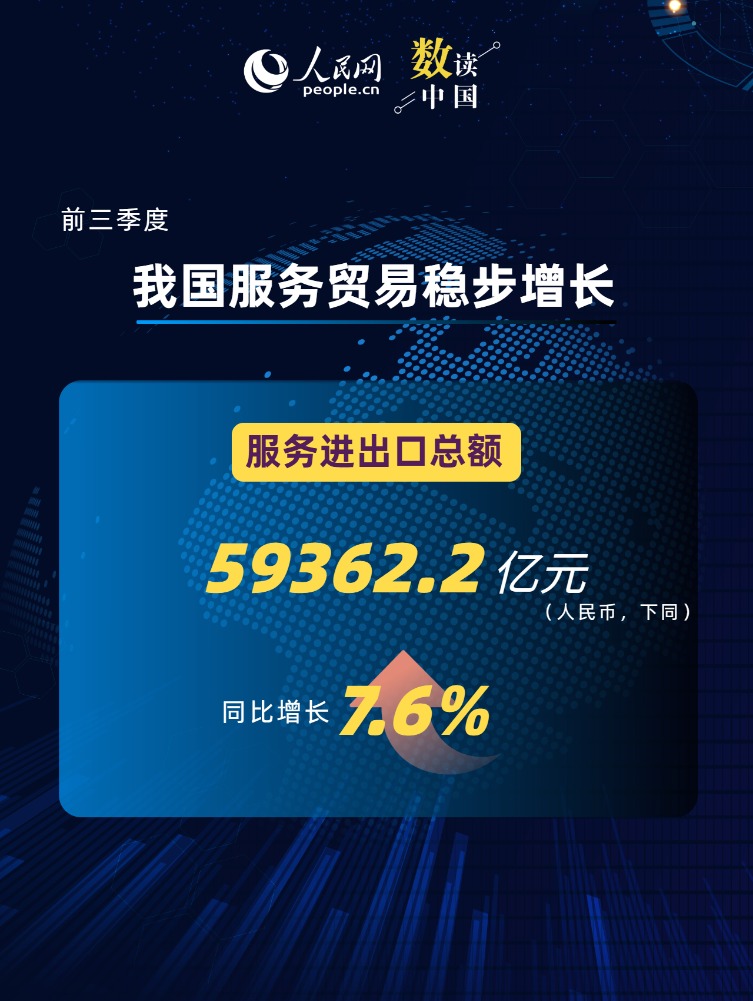
数读中国 一组数据看前三季度服务贸易“成绩单”
Ren Min Wang· 2025-11-08 01:19
Core Insights - China's service trade has shown steady growth in the first three quarters of this year, with knowledge-intensive service trade maintaining an upward trend and travel service exports experiencing rapid growth [1][3]. Group 1: Overall Service Trade Performance - Service trade exports reached 26,015 billion yuan, reflecting a growth of 14.4% [3]. - Service trade imports totaled 33,347.2 billion yuan, with a growth of 2.8% [3]. - The service trade deficit was recorded at 7,332.2 billion yuan, which is a year-on-year decrease of 2,382.4 billion yuan [4]. Group 2: Knowledge-Intensive Service Trade - Knowledge-intensive service trade reached 22,705.9 billion yuan, marking a growth of 6.4% [5]. - Knowledge-intensive service exports amounted to 13,177.6 billion yuan, with an increase of 9.2% [5]. - Knowledge-intensive service imports were 9,528.3 billion yuan, showing a growth of 2.8% [5]. Group 3: Other Service Categories - Other commercial services in imports and exports experienced a growth rate of 10.6%, totaling 7,940.6 billion yuan [7]. - Telecommunications, computer, and information services also contributed to the overall growth, with a growth rate of 3.9% [7].