
财政

Search documents
超预期的“结存限额”增量——9月财政数据点评
一瑜中的· 2025-10-19 11:48
Core Viewpoint - The article emphasizes the significance of the recent fiscal policy changes, particularly the allocation of 500 billion yuan from the local government debt balance limit, which is expected to directly support project construction in major economic provinces and facilitate credit expansion [5][11][38]. Group 1: Fiscal Data Overview - In September, the broad fiscal revenue increased by 3.2% year-on-year, compared to 0.3% in August, while broad fiscal expenditure rose by 2.3% year-on-year, down from 6% in August [2]. - The tax revenue growth reached a new high for the year at 8.7%, indicating strong fiscal performance [5][22]. Group 2: Understanding the Debt Balance Limit - The local government debt balance limit refers to the difference between the legally permitted debt limit and the actual debt balance, which allows for additional borrowing capacity [7][25]. - By the end of 2023, the local debt limit was 42.17 trillion yuan, with a balance of 40.74 trillion yuan, resulting in a balance limit of 1.43 trillion yuan [10][27]. Group 3: Purpose of the 500 Billion Yuan Allocation - The allocation of the 500 billion yuan is aimed at supporting major economic provinces to achieve their development goals and stabilize the economic recovery [11][29]. - This year's allocation is not primarily focused on meeting fiscal budget targets, as tax revenue has shown resilience, leading to a potential budget surplus [11][28]. Group 4: Implications of the Allocation - The 500 billion yuan allocation, combined with another 500 billion yuan from new policy financial tools, effectively provides a trillion yuan in additional fiscal resources for local governments [6][41]. - This funding can now be used for project construction in major economic provinces, marking a shift from previous years where it was limited to debt repayment and clearing arrears [16][38]. Group 5: Observations on Fiscal Performance - The article notes that tax revenue growth has been driven by price-related taxes and personal income tax, with significant contributions from the computer and communication equipment sectors [45][47]. - The government fund income growth turned positive in September, primarily due to a narrowing decline in land sales revenue [67].


超预期的结存限额增量——9月财政数据点评
Huachuang Securities· 2025-10-19 11:17
Group 1: Fiscal Data Overview - In September, general fiscal revenue increased by 3.2% year-on-year, compared to 0.3% in August[1] - General fiscal expenditure in September rose by 2.3% year-on-year, down from 6% in August[1] - Tax revenue growth reached a year-to-date high of 8.7% in September, indicating strong fiscal performance[2] Group 2: Debt Limit and Policy Changes - The central government allocated 500 billion yuan from local government debt limits to support local projects, exceeding last year's allocation of 400 billion yuan[2] - The total debt limit for local governments was 42.17 trillion yuan at the end of 2023, with a balance of 40.74 trillion yuan, resulting in a remaining limit of 1.43 trillion yuan[5] - By the end of 2024, the debt limit is expected to increase to 52.8 trillion yuan, allowing for a remaining limit of 5.3 trillion yuan after accounting for debt replacement policies[5] Group 3: Economic Support and Investment - The 500 billion yuan allocation aims to bolster economic recovery and support local governments in achieving their development goals[6] - The policy shift allows for the use of debt limits not only for debt repayment but also for project construction, directly aiding credit expansion[9] - The combination of the 500 billion yuan debt limit and an additional 500 billion yuan in quasi-fiscal funds provides a total of 1 trillion yuan in fiscal support for local projects[10] Group 4: September Fiscal Insights - Tax revenue growth was primarily driven by domestic value-added tax and corporate income tax, contributing significantly to overall revenue[41] - Government fund income showed a positive growth of 5.6% in September, with a notable reduction in the decline of land sale revenue to -1%[64] - The overall fiscal expenditure growth rate was 3.1% in September, with infrastructure spending showing signs of recovery[58]
增量财政资金来了!中央财政安排5000亿元结存限额补充地方财力
Zheng Quan Shi Bao· 2025-10-17 12:16
Core Insights - The fiscal revenue growth in China has shown a significant increase in the third quarter of 2025, indicating a stable and improving economic environment [1][2] - The government has implemented measures to support local governments financially, including an increase in debt limits and early allocation of new debt quotas for 2026 [6][7] Fiscal Revenue Performance - In the first three quarters of 2025, the national general public budget revenue reached 163,876 billion yuan, a year-on-year increase of 0.5% [1] - Tax revenue, which constitutes the main part of fiscal income, grew by 0.7%, with the domestic value-added tax increasing by 3.6% and corporate income tax rising by 0.8% [2][3] - The securities transaction stamp duty revenue reached 1,448 billion yuan, reflecting a significant recovery in market confidence [2] Expenditure in Key Areas - The national general public budget expenditure for the first three quarters was 208,064 billion yuan, a year-on-year increase of 3.1% [4] - Expenditures in social security, education, health, science and technology, environmental protection, and cultural sectors have reached their highest growth rates in nearly three years [4] - Government fund budget expenditure saw a substantial increase of 23.9%, driven by accelerated use of bond funds [4] Support for Local Governments - The central government has allocated 500 billion yuan from the local government debt limit to support local fiscal capacity, marking an increase of 100 billion yuan from the previous year [6] - The funds will be used to address existing government investment project debts and support effective investment in major economic provinces [6] Future Financial Strategies - The Ministry of Finance plans to continue early allocation of new local government debt limits for 2026 to facilitate project funding and support local fiscal stability [7]
财政可持续增长减弱怎么办?安徽财政给出对策
Di Yi Cai Jing· 2025-10-11 02:44
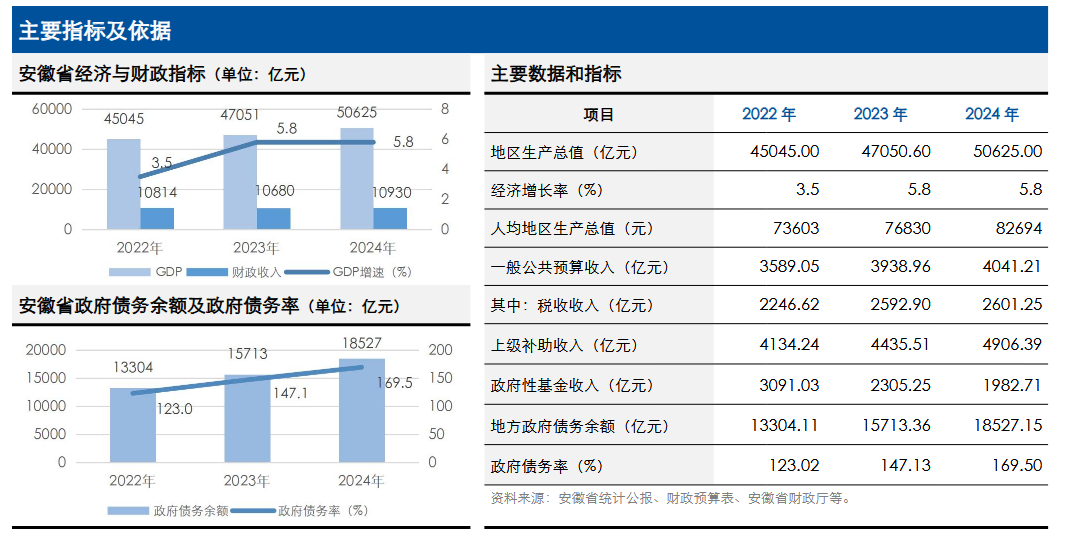
Core Viewpoint - The article emphasizes the need for short-term measures to enhance tax collection and activate asset resources to compensate for revenue shortfalls, while advocating for long-term reforms to ensure sustainable fiscal growth [1][12]. Summary by Sections Current Fiscal Challenges - Local fiscal revenues are under pressure due to sluggish tax revenue growth and a significant decline in land transfer income, with national tax revenue expected to decrease by 3.4% in 2024 and show only a slight increase of 0.02% in the first eight months of 2025 [3][4]. - In Anhui Province, tax revenue growth has also been strained, attributed to macroeconomic slowdowns and declining industrial prices, which have reduced corporate profit margins and tax elasticity [4][9]. Revenue Composition and Trends - In 2023, Anhui's general public budget revenue reached 285.6 billion yuan, a 2.7% increase year-on-year [5]. - Non-tax revenue accounted for 35.6% of Anhui's general public budget revenue in 2024, up 5.1 percentage points from 2019, indicating a reliance on non-tax sources to offset tax revenue shortfalls [6]. - Land transfer income, which previously contributed over 40% to the combined budget revenue, has seen a nearly 50% decline from its peak in 2021, creating a significant revenue gap [9][10]. Debt and Financing Issues - The decline in land transfer income has reduced local governments' borrowing capacity and weakened their ability to finance through land sales, leading to a decrease in the allocation of new debt limits [10]. - The structure of local government debt is shifting, with general debt decreasing and challenges in financing public projects becoming more pronounced [10][11]. Recommendations for Improvement - Short-term strategies include enhancing tax collection through strict enforcement and optimizing asset resource utilization to fill revenue gaps [12][13]. - Long-term reforms should focus on improving the fiscal and tax system, developing new quality revenue sources, and exploring customized land resource supply to meet housing demands [12][14]. - The article suggests transitioning local government financing from reliance on government support to generating self-sustaining revenue through emerging industries and tax sources [14].
金湖财政:多点发力强保障 教育民生暖人心
Jiang Nan Shi Bao· 2025-09-25 15:33
Core Insights - The article emphasizes the commitment of the Jinhu County Finance Bureau to prioritize education and public welfare through substantial financial investments in student support, campus infrastructure, and teacher compensation [1] Group 1: Student Support - Jinhu County has increased financial aid for students to ensure educational equity, with nearly 4.25 million yuan allocated for public education expenses in 2025 [2] - In 2024, over 60,000 yuan will be distributed for student assistance, with 26,000 yuan specifically allocated for disadvantaged students in the spring semester of 2025 [2] Group 2: Campus Improvement - The Finance Bureau has dedicated funds to enhance campus facilities, ensuring a safe and comfortable learning environment for students [3] - In 2025, 1.09 million yuan will be allocated for daily operational support, with 560,000 yuan earmarked for upgrading school restrooms and 5.46 million yuan for constructing a multifunctional auditorium at Jinhu Middle School [3] Group 3: Teacher Compensation - The Finance Bureau prioritizes teacher compensation to stabilize the workforce and enhance teaching quality, ensuring that average salaries for teachers meet or exceed local civil servant levels [4] - Currently, teachers in Jinhu County can earn over 4,500 yuan per month, with improved benefits including higher housing fund contributions and a 13-month salary policy [4] - Future plans include optimizing fiscal expenditure to address new educational needs and further enhance financial support for high-quality educational development [4]
2025年1-8月财政数据解读:财政支出延续偏强态势,关注新型政策性金融工具
ZHESHANG SECURITIES· 2025-09-17 13:29
Fiscal Performance - In August 2025, the national general public budget revenue reached 12,359 billion CNY, a year-on-year increase of 2.0%[3] - The national general public budget expenditure in August was 18,587 billion CNY, showing a year-on-year growth of 0.8%[8] - From January to August 2025, the completion rate of the general public budget revenue was 47.8%, consistent with the same period in 2024[1] - The completion rate of general public budget expenditure was 57.3%, which is higher than the same period in 2024[1] Tax Revenue Insights - Tax revenue in August 2025 was 10,152 billion CNY, with a year-on-year increase of 3.4%[3] - Cumulative tax revenue from January to August 2025 achieved a positive growth of 0.02%, marking the first positive growth since December 2023[4] - Individual income tax grew by 8.9% from January to August 2025, reflecting improved tax collection efforts[4] Non-Tax Revenue Trends - Non-tax revenue in August 2025 was 2,207 billion CNY, declining by 3.8% year-on-year, continuing a negative growth trend since May 2025[3] - The decline in non-tax revenue is attributed to high base effects from 2024 and improved management of non-tax revenue[5] Government Fund Budget Analysis - The government fund budget revenue in August 2025 recorded a year-on-year decrease of 5.7%, primarily due to a drop in land transfer income[10] - Government fund budget expenditure in August 2025 increased by 19.8% year-on-year, indicating strong spending in infrastructure and public projects[10] Policy Recommendations - The report suggests focusing on the implementation of new policy financial tools to support fiscal stability and economic recovery[1] - It highlights the importance of maintaining a balance between fiscal revenue and expenditure to ensure sustainable economic growth[1]
部分市县财政紧张拖欠人才及购房补贴
Di Yi Cai Jing· 2025-09-17 10:49
Core Points - Local governments are facing financial strain, leading to delays in the disbursement of talent and housing subsidies [1][2] - The situation is not isolated to Haiyang; other regions like Jiangyong County in Hunan and Ningdu County in Jiangxi are experiencing similar issues with subsidy payments [3][2] Financial Situation - Haiyang's general public budget revenue increased from 2.82 billion to 3.254 billion from 2019 to 2024, indicating slow growth [4] - The government fund revenue in Haiyang is projected to be approximately 2.269 billion in 2024, a year-on-year decrease of about 24% [4] - The local budget report highlights challenges such as a complex external environment, insufficient growth in real estate, and a weak industrial base contributing to financial difficulties [4] Budget Execution - In the first half of the year, Haiyang's general public budget revenue was approximately 2.038 billion, a year-on-year increase of about 5.6%, surpassing the initial annual growth estimate of 3.5% [5][6] - The government fund revenue was about 260 million, indicating a significant gap from the projected annual revenue of 3.74 billion [6] - Haiyang plans to enhance tax collection, optimize expenditure structure, and focus on major investment projects to stimulate growth and increase fiscal revenue [6]
六方面显成效!“十四五”财政改革发展亮出“成绩单”
Xin Hua She· 2025-09-13 07:49
Core Insights - The "14th Five-Year Plan" has significantly enhanced national fiscal strength, with general public budget revenue expected to reach 106 trillion yuan, an increase of 17 trillion yuan compared to the "13th Five-Year Plan" [3] - Total general public budget expenditure is projected to exceed 136 trillion yuan, marking a 24% increase of 26 trillion yuan from the previous five-year period [4] - Fiscal policy has become more proactive and adaptable, playing a crucial role in supporting stable economic development [5][6] Fiscal Strength Enhancement - The national fiscal capacity has been greatly strengthened during the "14th Five-Year Plan" period, with a notable increase in both revenue and expenditure [3][4] - The structure of fiscal spending has been optimized, directing more funds towards significant developmental and livelihood projects [4] Proactive Fiscal Policy - Fiscal policy has shifted from being merely active to more actively supportive of economic stability, with enhanced precision and flexibility in its implementation [5][6] - The focus has been on timely interventions and targeted measures to address economic challenges [6] Social Welfare Focus - Nearly 100 trillion yuan has been allocated for social welfare in the general public budget, with education, social security, health, and housing receiving substantial funding [7] - Social welfare spending accounts for over 70% of total general public budget expenditure [7] Risk Management - The management of local government debt has been strengthened, with a legal framework established for debt management and measures to control hidden debts [8] - Central government transfers to localities are projected to be nearly 50 trillion yuan over five years, ensuring stability in local fiscal operations [8] Reform and Efficiency - Ongoing reforms aim to optimize resource allocation and enhance budget performance management [9] - Tax system improvements and the establishment of a mechanism for intergovernmental fiscal responsibilities are key focuses for promoting high-quality development [9]

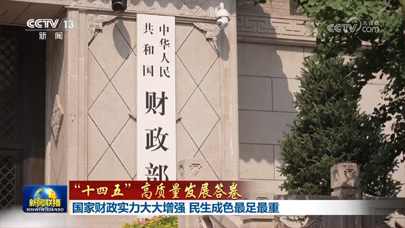
国家财政实力大大增强 民生成色最足最重
Yang Shi Wang· 2025-09-12 23:21
Group 1 - The core viewpoint of the article highlights the significant enhancement of China's fiscal strength during the "14th Five-Year Plan" period, with a clear focus on improving people's livelihoods [2] - The national general public budget revenue is expected to reach 106 trillion yuan, an increase of 17 trillion yuan compared to the "13th Five-Year Plan," representing a growth of approximately 19% [2] - The total general public budget expenditure is projected to exceed 136 trillion yuan over five years, an increase of 26 trillion yuan from the "13th Five-Year Plan," indicating a growth of 24% [2] Group 2 - The article emphasizes a more proactive fiscal macro-control approach, with the arrangement of an additional local government special bond quota of 19.4 trillion yuan [2] - It mentions that the new tax reductions, fee cuts, and tax refunds will exceed 10 trillion yuan, reinforcing the fiscal policy's role in counter-cyclical adjustment [2] - The fiscal policy aims to support the development of new productive forces, promoting both qualitative improvements and reasonable quantitative growth in the economy [2]
财政部:财政政策始终留有后手 未来政策发力空间依然充足
Zheng Quan Shi Bao· 2025-09-12 18:58
Core Insights - The fiscal strength of the country has significantly increased since the "14th Five-Year Plan," with a notable enhancement in the structure of fiscal expenditures and proactive macroeconomic regulation [1][2] - The total public budget revenue is expected to reach 106 trillion yuan, an increase of 17 trillion yuan or approximately 19% compared to the "13th Five-Year Plan" [1] - The total public budget expenditure is projected to exceed 136 trillion yuan, marking an increase of 26 trillion yuan or 24% compared to the previous five-year period [1] Fiscal Policy and Economic Growth - Fiscal policy has shifted from active to more proactive, becoming a crucial support for stable economic growth, with an average growth rate of 5.5% over the past four years [2] - The deficit ratio has increased from 2.7% to 3.8%, with a further rise to 4% this year, and new local government special bond quotas amounting to 19.4 trillion yuan have been arranged [2] - Over 10 trillion yuan in tax reductions and deferred payments have been implemented, expanding fiscal policy space [2] Focus on Domestic Demand - The Ministry of Finance aims to innovate fiscal and tax policy tools to stimulate consumption and expand effective investment, tapping into the potential of domestic demand [3] Social Welfare Investments - More than 70% of the national public budget expenditure is allocated to social welfare, with significant investments in education (20.5 trillion yuan), social security and employment (19.6 trillion yuan), health (10.6 trillion yuan), and housing security (4 trillion yuan) [4] - The central government has arranged nearly 50 trillion yuan in transfer payments to local governments over five years to strengthen financial support [5] Debt Management - The Ministry of Finance has effectively managed existing debt and curbed new debt, leading to a gradual reduction in hidden debt risks [7] - As of the end of August this year, 4 trillion yuan of the newly increased 6 trillion yuan special debt limit has been issued, with an average interest cost reduction of over 2.5 percentage points [8] - The total government debt is projected to be 92.6 trillion yuan by the end of 2024, with a debt-to-GDP ratio of 68.7%, indicating that the overall government debt level is within a reasonable range [8]