汽车制造

Search documents
技术平权,用户为王:上汽的“开门红”不只是一场销量胜利
Xin Lang Cai Jing· 2026-02-28 02:33
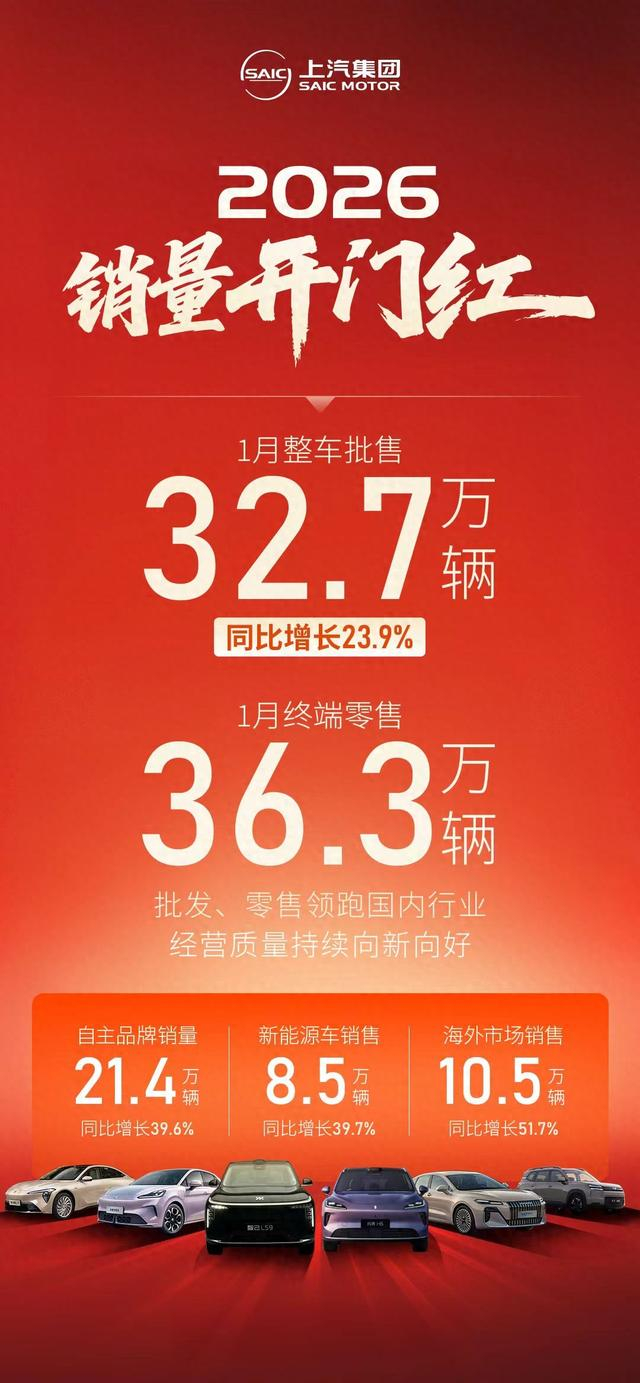
Core Insights - In January 2026, SAIC Motor Corporation achieved significant sales growth, with wholesale sales reaching 327,000 units, a year-on-year increase of 23.9%, and retail sales of 363,000 units [1] - The growth is attributed not only to scale but also to the implementation of "technology equality" and a "user-centric" approach, allowing the company to differentiate itself in a competitive market [1][5] - The company's self-owned brands played a crucial role, with sales of 214,000 units in January, up 39.6%, accounting for 65.3% of total sales, an increase of 7.3 percentage points year-on-year [1][6] Sales Performance - In the new energy vehicle segment, SAIC Motor's sales reached 85,000 units in January, marking a nearly 40% year-on-year increase, positioning the company among the industry leaders [1] - The MG4 model, featuring semi-solid-state batteries and integrated battery body technology, has become a standout product, achieving over 75,000 pre-orders and monthly sales exceeding 10,000 units [7][9] Overseas Strategy - Under the guidance of its Overseas Strategy 3.0, SAIC Motor's overseas sales reached 105,000 units in January, a 51.7% increase year-on-year, with MG delivering nearly 26,000 units in Europe, up approximately 15% [2] Reform and Innovation - The company initiated comprehensive reforms in the second half of last year, enhancing product definition, R&D, production, and marketing, which have begun to translate into improved sales and profitability [5] - SAIC Motor has invested over 150 billion yuan in electric and intelligent technologies, resulting in nearly 26,000 effective patents across various platforms [13][15] User-Centric Approach - The company has established a unified value expression of "understanding cars and understanding you," focusing on reshaping product and service logic to meet diverse user needs [12] - In early 2026, SAIC launched a series of promotional activities to enhance user experience and satisfaction, reinforcing its commitment to a user-centric philosophy [12] Future Product Launches - In 2026, SAIC plans to introduce a range of new products, including the A+ class sedan i6 and the LS9 Hyper version, which will feature advanced technologies such as line control steering [16][18] - The company aims to solidify its position in the high-end electric vehicle market with innovative models that leverage its technological advancements [18] Conclusion - The strong sales performance in January 2026 reflects the successful implementation of SAIC's reform and innovation strategies, marking a significant step towards establishing a new development paradigm focused on user needs and technological capabilities [19][21] - The company's ability to convert technological investments into user value will be crucial for maintaining its competitive edge in the evolving automotive landscape [21]


福特因照明系统缺陷在美召回超430万辆汽车
Cai Jing Wang· 2026-02-28 02:06
2月26日,福特汽车公司表示,由于软件错误可能导致刹车失灵及外部车灯故障,将在美国召回超430万 辆皮卡和SUV。 ...

冯兴亚:今年广汽产销要重回200万辆级
Cai Jing Wang· 2026-02-28 02:02
Core Viewpoint - GAC Group aims to achieve a vehicle production and sales target of 2 million units in 2026, with a focus on positive growth in real estate value and continuous improvement in operational efficiency [1] Group 1 - GAC Group's Chairman, Feng Xingya, outlined key tasks at the 2026 High-Quality Development Conference [1] - The company is targeting a return to the 2 million vehicle production and sales level this year [1] - There is an emphasis on achieving positive growth in real estate value [1] Group 2 - The operational efficiency of GAC Group is expected to continue improving [1]

从卖车到输出技术 中国智造赢得国外车企长期信任
Yang Shi Xin Wen Ke Hu Duan· 2026-02-28 01:38
Group 1 - The core message of the articles highlights the strengthening of long-term cooperation between German automotive companies and China, as evidenced by the recent visit of German Chancellor Merz, who was accompanied by major car manufacturers like Volkswagen, Mercedes-Benz, and BMW [1] - Mercedes-Benz has signed a strategic cooperation memorandum with a Chinese tech company to enhance their partnership, showcasing the integration of Chinese technology in their new S-Class model [1] - BMW has also signed a memorandum with China's CATL to promote carbon reduction in the electric vehicle supply chain, indicating a commitment to sustainability [1] Group 2 - The Chinese automotive industry is expected to export over 7 million vehicles by 2025, demonstrating resilience in foreign trade and marking a new milestone in export scale [2] - The Chinese automotive sector is poised for new opportunities in 2026, with companies like Momenta reporting an annual business growth rate of over 80% and advancements in autonomous driving technology [3] - The reduction of tariffs on Chinese electric vehicles in Canada from 106.1% to 6.1% is seen as a positive signal for Chinese automotive exports, enhancing market accessibility [3] Group 3 - China has established the most complete and advanced new energy vehicle industry chain globally, with capabilities spanning from raw materials to intelligent driving software [4] - The Chinese automotive industry aims not only to export products but also to internationalize its entire value chain, including technology standards and brand value [4]
雷军马年首次直播谈汽车安全,详细介绍新一代SU7门把手
Sou Hu Cai Jing· 2026-02-28 01:29
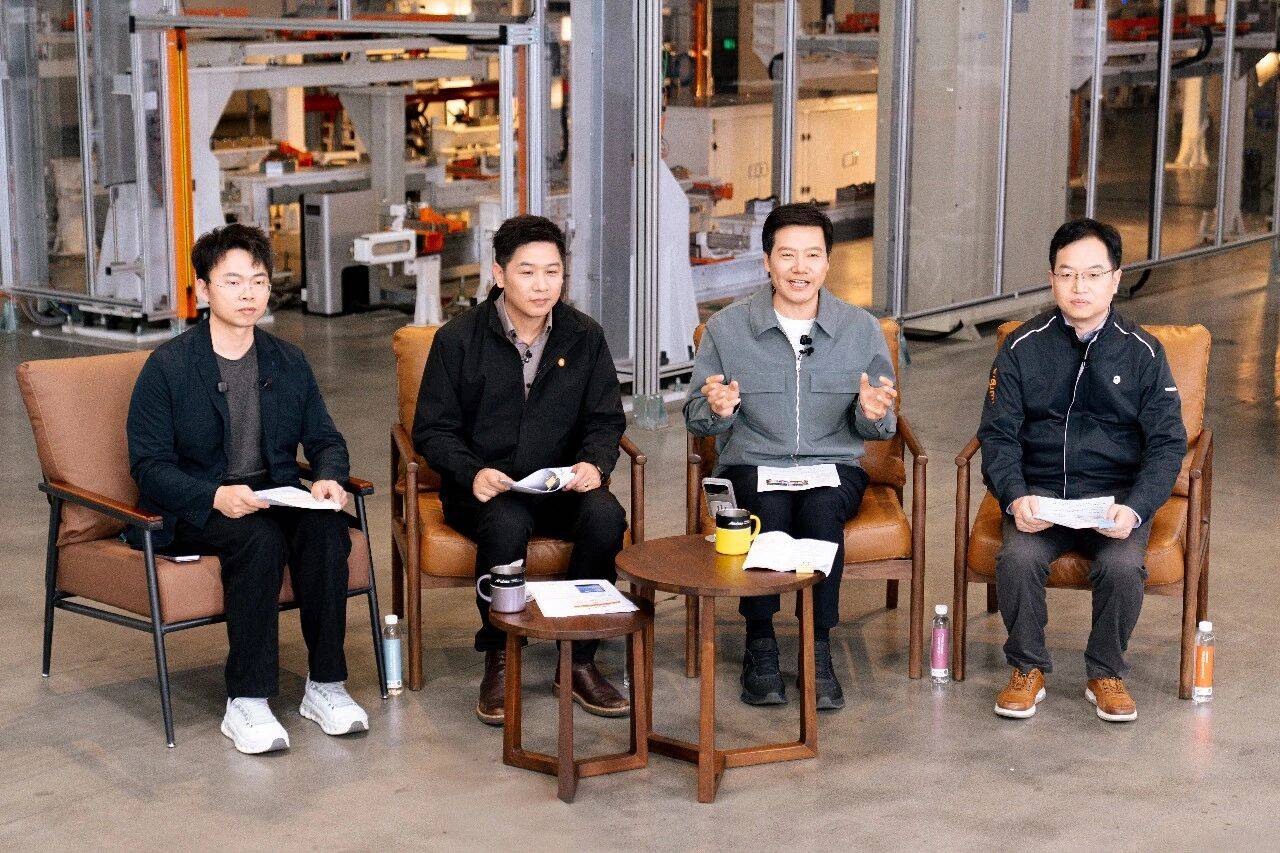
Core Viewpoint - Xiaomi Group emphasizes safety as the top priority in its automotive development, with a commitment to invest significantly in safety features and technology for its vehicles [1] Group 1: Safety Commitment - Xiaomi's automotive safety philosophy is encapsulated in the motto "safety above all," with a dedicated team of over 3,500 people focused on safety [1] - The company plans to establish a safety advisory committee to enhance public communication regarding vehicle safety, involving experts from academia and media [1] Group 2: New Model Features - The new generation SU7 has begun pre-orders and is expected to be officially launched in April, featuring a body composed of 90.3% high-strength steel and aluminum [1] - The SU7 includes advanced safety upgrades such as 2200MPa ultra-high-strength steel in critical areas and an increase in airbags to a total of nine, including two new rear side airbags [1] Group 3: Locking Mechanism and Battery Safety - The SU7's door locking mechanism features a three-tier power redundancy system to ensure mechanical unlocking in emergencies, even if the vehicle's power is compromised [2][4] - Xiaomi is actively involved in battery development and manufacturing, with a dedicated battery factory that covers the entire battery pack process, and has submitted 486 patents related to battery systems [4]

中国人选“豪车”,不爱买进口了?
Xin Lang Cai Jing· 2026-02-28 01:23
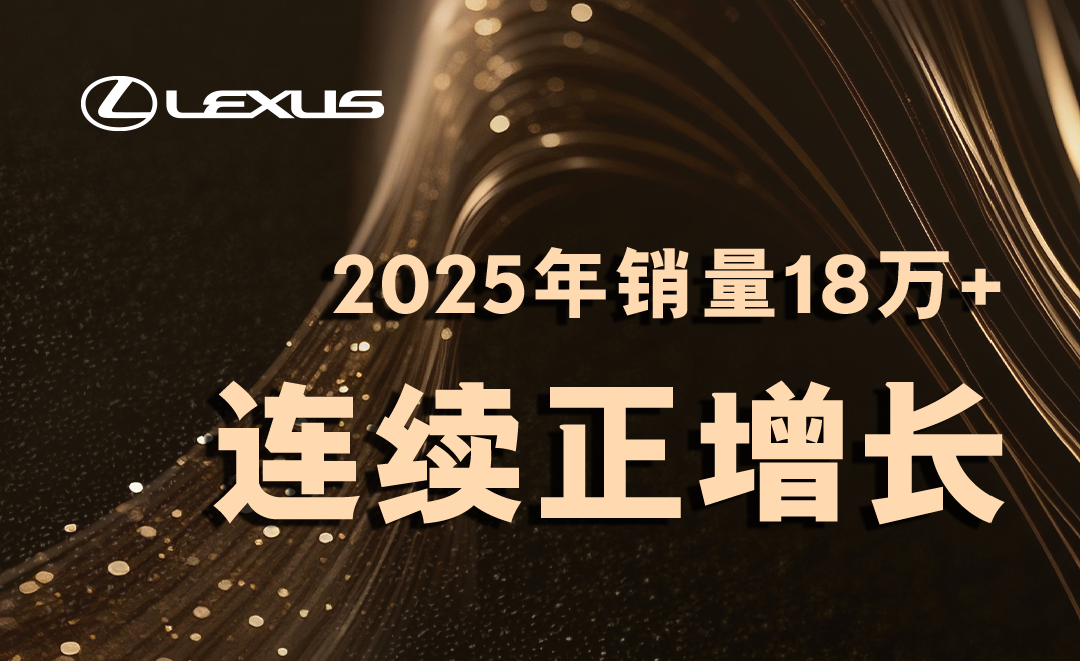
Core Insights - The luxury imported car market in China is experiencing a significant decline, particularly affecting brands like Mercedes-Benz, BMW, Audi, and Porsche, while Lexus shows a slight growth [2][5][23]. Market Performance - In 2024, the overall market for luxury cars priced over one million yuan is estimated at approximately 128,000 units, with a slight decline to 120,000 units in 2025, indicating a drop of less than 10% [6][23]. - The decline in imported luxury car sales is stark, with a reported drop of 30%-40% in 2024, contrasting with the overall market performance [6][24]. Brand Analysis - Lexus remains a standout, contributing 184,069 units in 2025, achieving a 2% year-on-year growth, while other luxury brands face steep declines [2][21]. - The sales figures for major luxury brands in 2023 show significant drops: Mercedes-Benz down 15%, Audi down 13%, and BMW down 9% [22][23]. Consumer Behavior - There is a noticeable shift in consumer preferences, with many buyers moving away from traditional luxury brands towards newer domestic models, reflecting a change in the perception of luxury [12][29]. - The acceptance of domestic luxury brands is increasing, with models like the ZunJie S800 and brands like Yangwang gaining traction in the market [11][28]. Future Trends - The luxury car market is evolving towards a more diversified and personalized consumer base, with a growing demand for unique features and experiences rather than just brand prestige [31][34]. - The trend indicates that the "import" label is losing its allure, as consumers prioritize tangible value and features over brand history and prestige [36][19].
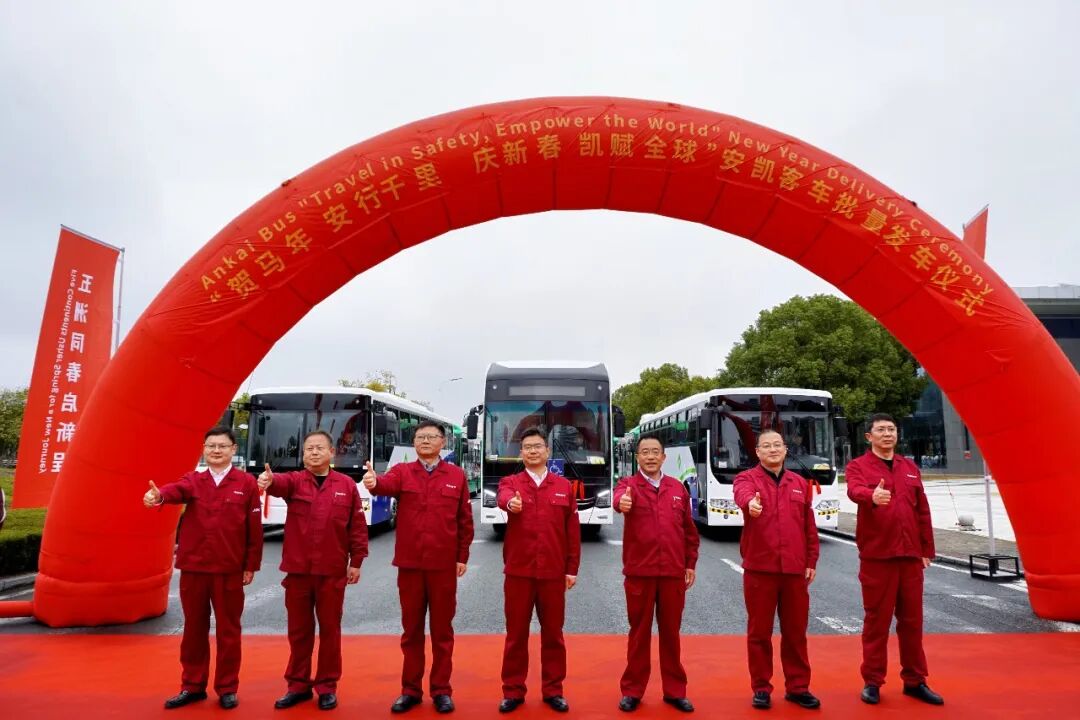
六十载深耕致远,安凯客车驭风出海,驰骋全球!
Zhong Guo Qi Che Bao Wang· 2026-02-28 01:22
Core Viewpoint - Ankai Bus is actively expanding its global market presence through a large-scale vehicle delivery ceremony, marking the beginning of a new chapter in its international operations and celebrating its 60th anniversary in 2026 [1][6][10]. Group 1: Company Developments - The delivery ceremony on February 24 signifies Ankai Bus's commitment to global expansion and collaboration with international customers [1][10]. - Ankai Bus aims to leverage its strong product quality, advanced technology, and comprehensive service system to break into international markets, transitioning from "product export" to "brand and system export" [4][6]. - The company reported a remarkable 152.84% year-on-year increase in exports in 2025, with a total of 5,034 vehicles exported, solidifying its position as a leading player in the international bus market [11]. Group 2: Product and Service Strategy - Ankai Bus is focusing on a diverse range of products, including public transport buses, high-end business vehicles, and double-decker buses, all designed to meet various global market demands [8]. - The company emphasizes innovation in product development, particularly in green and intelligent upgrades, and is committed to creating a high-end product matrix that addresses different market needs [15]. - Ankai Bus has established a comprehensive service system that includes pre-sale, in-sale, and post-sale support, ensuring high-quality technical assistance and maintenance for its international customers [17]. Group 3: Market Positioning - The company has strategically targeted core markets in Europe, the Middle East, the Americas, and South Asia, building a robust sales and service network to enhance its global brand influence [13]. - Ankai Bus's approach combines marketing and localized service strategies, with experienced engineers and service teams stationed overseas to provide timely support [17].

汽车早餐 | 奥迪任命中国区新高管;博世与蔚来签署战略合作协议;冯兴亚:今年广汽产销要重回200万辆级
Zhong Guo Qi Che Bao Wang· 2026-02-28 01:22
Group 1: Regulatory Developments - The State Administration for Market Regulation aims to establish a national unified smart inspection and testing regulatory platform by the end of 2027, enhancing regulatory efficiency through the integration of data and the application of AI and big data technologies [2] Group 2: Electric Vehicle Infrastructure - As of January 2026, China's electric vehicle charging infrastructure reached 20.698 million units, marking a year-on-year growth of 49.6%. Public charging facilities accounted for 4.801 million units, growing by 31.2%, while private charging facilities reached 15.897 million units, increasing by 56.1% [3] Group 3: Environmental Challenges - The Ministry of Ecology and Environment highlighted ongoing challenges in air pollution control during the 14th Five-Year Plan period, focusing on reducing PM2.5 concentrations and promoting refined pollution management [4] Group 4: Energy and Emission Reduction Initiatives - Shanghai's 2026 plan for energy conservation and emission reduction includes a budget of 43.232 million yuan to support the national vehicle scrapping and replacement program, targeting both fuel and new energy vehicles [5] Group 5: Automotive Recalls - Kia is recalling 85,448 vehicles in the U.S. due to a defect in the seatback frame that may increase injury risk during collisions [6] - Ford announced a recall of over 4.3 million vehicles in the U.S. due to a software error that could lead to brake failure and external lighting issues [10] Group 6: Semiconductor Equipment Sales - Japan's semiconductor manufacturing equipment sales reached 427.508 billion yen in January 2026, a 2.6% increase year-on-year, marking the 24th consecutive month of growth and setting a historical high for the month [8] Group 7: Corporate Investments - Hyundai Motor Group plans to invest 6.3 billion USD in AI, robotics, and hydrogen sectors in South Korea, including the establishment of a robot manufacturing plant and an AI data center [9] - Bosch signed a strategic cooperation agreement with NIO to collaborate on core technologies for smart electric vehicles, covering areas such as brake control and battery management [11] - NIO's chip subsidiary, Anhui Shenji Technology Co., Ltd., completed its first round of financing, raising 2.257 billion yuan, with a post-investment valuation nearing 10 billion yuan [15] Group 8: Management Changes - Audi is restructuring its management in China, appointing new leadership to strengthen its strategic position in this key market [12] Group 9: Automotive Production Goals - GAC Group aims to return to an annual production and sales level of 2 million vehicles in 2026, focusing on positive growth in real estate value and improving operational efficiency [16]

独家丨理想启动「门店合伙人计划」,一线门店将参与分红
雷峰网· 2026-02-28 00:48
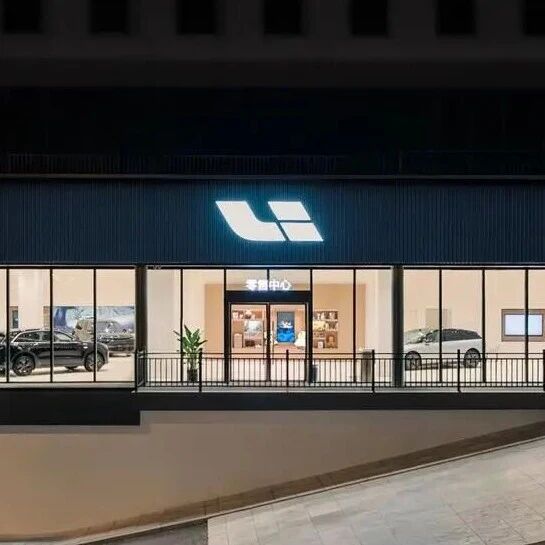
Core Viewpoint - The core viewpoint of the article is that Li Auto is shifting its sales assessment from a sole focus on sales volume to emphasizing user reputation and service quality, through the introduction of the "Store Partner Program" aimed at enhancing store management capabilities in response to increasing market competition [1][2]. Group 1: Store Partner Program - The "Store Partner Program" is not a franchise model but an incentive mechanism for frontline store managers, aimed at improving store operational capabilities [2]. - The program represents a shift in the sales power structure, decentralizing authority to store levels, with store managers now responsible for overall store performance [4]. - This change allows frontline stores greater autonomy in decision-making and direct participation in profit sharing, with the goal of placing knowledgeable individuals in key positions to manage stores effectively [5]. Group 2: Market Context and Competition - The initiation of this program is closely related to changes in the market environment, where competition has shifted from product differentiation to channel and operational efficiency [6]. - The competition among car manufacturers is increasingly about store management capabilities rather than just product features [7]. - Li Auto aims to enhance the cohesion and effectiveness of its frontline teams through this program, allowing outstanding individuals to share in the operational success [7]. Group 3: Store Network Optimization - Li Auto is also optimizing its offline store network, having closed underperforming stores and opened new comprehensive stores in certain cities [8]. - The new store strategy emphasizes matching suitable managers with store locations, ensuring that operational responsibilities are aligned with the right personnel [8]. Group 4: Future Product Cycle - The launch of the "Store Partner Program" is aligned with Li Auto's upcoming product cycle, with several new models expected to be released by 2026 [8]. - The goal of the organizational adjustment is not only to boost sales but also to ensure that frontline stores possess sustainable operational capabilities, making them crucial connection points between the brand and users [8][9].

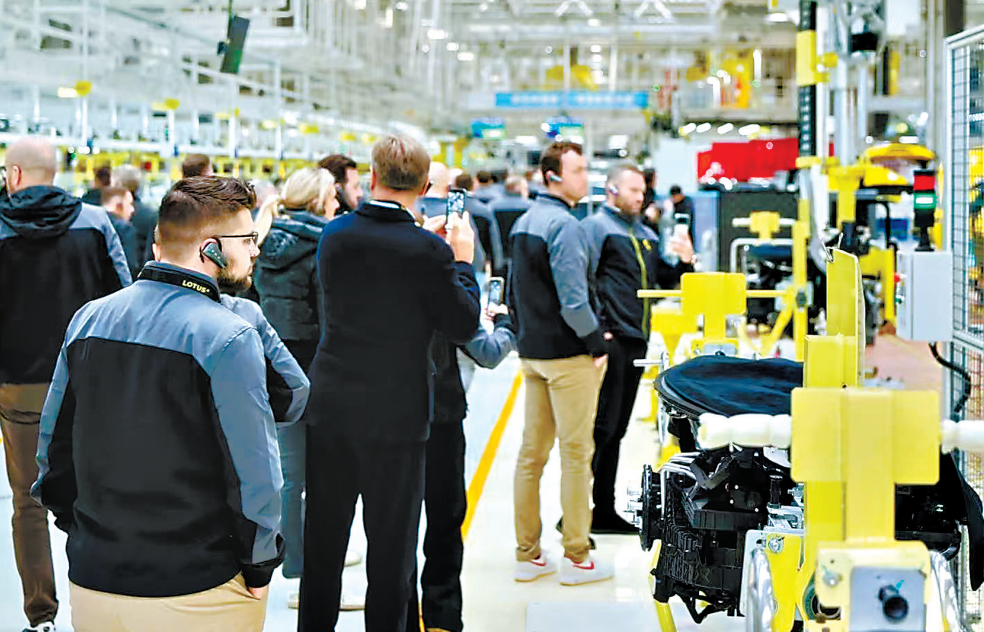
欧洲经销商组团探访武汉工厂
Chang Jiang Ri Bao· 2026-02-28 00:40
Group 1 - The Lotus Automobile global smart factory in Wuhan has showcased its advanced manufacturing capabilities to a delegation of 35 European dealer groups and 58 investors, highlighting China's strength in luxury automobile production [1][2] - The factory is the world's first full-process vehicle manufacturing base utilizing "digital twin" technology, with an annual production capacity of 150,000 vehicles, enabling the production of four models on the same line and switching between hundreds of configurations in just two minutes [2] - The new high-performance hybrid SUV "For Me" features a comprehensive power of 952 horsepower and a pure electric range of 420 kilometers, generating positive feedback from European dealers regarding its market potential [2][3] Group 2 - Lotus aims to position itself as a global luxury brand, with a supply chain localization rate of 60%, which is leading in the industry, and is accelerating the construction of its technology headquarters nearby [3] - Wuhan has become a hub for the automotive industry, hosting 11 vehicle manufacturers and 15 factories, contributing to a diverse automotive ecosystem [3] - The perception of "Made in China" is evolving, with Lotus emphasizing that no consumer rejects the brand due to its Chinese manufacturing roots, as it is now associated with high quality and consistency [3]