茶饮

Search documents
茶百道与泸州老窖联名推出白酒奶茶 首日热卖近12万杯
Zheng Quan Shi Bao Wang· 2025-09-17 12:56
Core Insights - The new tea beverage brand Cha Bai Dao (02555.HK) has relaunched its classic drink "Zui Bu Shang Dao," which combines white liquor and milk tea, achieving nearly 120,000 cups sold on its first day [1] - The drink uses real white liquor and is designed with consumer health in mind, containing approximately 174 kcal per serving, catering to the rising trend of "micro-drinking" among younger consumers [1] - The Chinese liquor market is seeing a shift, with over 60% of consumers now being young people aged 18-35, indicating a significant change in consumer preferences [1] Product Launch and Sales Performance - Cha Bai Dao has been actively launching new products this year, including the Oriental Plant Series and Fresh Pomegranate Series, which have received positive market feedback [2] - The newly launched "Fresh Pomegranate" series, featuring "Fresh Pomegranate Ice Tea" and "Fresh Pomegranate Guava," sold 200,000 cups on its first day [2] - In Q2, new product sales accounted for 28% of total sales, with daily average GMV per store increasing by approximately 15% compared to Q1, reaching the highest quarterly level in nearly a year [2]

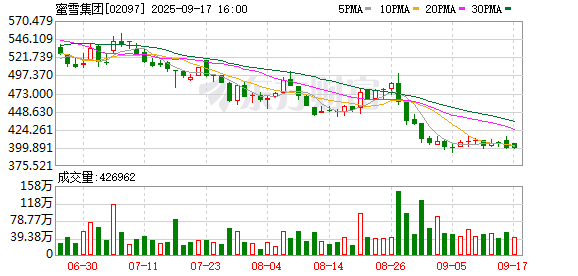
蜜雪冰城门店买不到柠檬水?知情人士:柠檬缺货情况将很快恢复
Xin Jing Bao· 2025-09-17 11:51
9月17日,社交媒体上多名网友发帖称,在蜜雪冰城多个门店买不到柠檬水了。 当天,新京报贝壳财经记者从一位接近蜜雪冰城的知情人士处了解到,近日蜜雪冰城个别地区的部分门 店原料波动,源于一批进口柠檬受天气影响延期到港,同时川渝柠檬已经进入采摘期,因需储存一段时 间优化口感,导致了部分区域出现供应紧张的情况,但柠檬整体储备非常充足。 记者从全国农产品批发市场价格系统查询看到,最近一年,柠檬整体价格(单一品种的全国平均价)涨 幅较大,从去年9月的7.83元/公斤上涨至今年9月的15元/公斤。 (文章来源:新京报) "目前,大量进口柠檬即将到港,储存的柠檬也经过评测满足使用标准,陆续下发门店,柠檬缺货情况 将很快恢复。"上述知情人士表示。 ...


茉莉奶白联合创始人高芸晞:消费者挑选商品正在从“性价比”转向“心价比”
Sou Hu Cai Jing· 2025-09-17 10:12
Group 1 - The 21st Summer Annual Meeting of the 2025 Yabuli Forum concluded successfully, focusing on the theme "Refining and Steady Progress - Corporate Development in the New Global Situation" [1] - Hundreds of government leaders, entrepreneurs, and scholars gathered in Guangzhou to discuss how companies can respond to challenges and seize opportunities in a more complex and volatile domestic and international market environment [1] Group 2 - Gao Yunxi highlighted that all sectors are experiencing a transition where high-quality supply gradually replaces low-quality supply, and brands are continuously upgrading [3] - Consumers have shifted their focus from "cost-performance ratio" to "quality-price ratio," and now to "emotional-price ratio" products [3] - Products that meet the "emotional-price ratio" must not only provide basic functionality but also satisfy additional dimensions of consumer needs, such as health, quality, and organic materials [3] - Factors like product packaging, brand tone, and the emotional value conveyed have become significant in consumer decision-making [3]

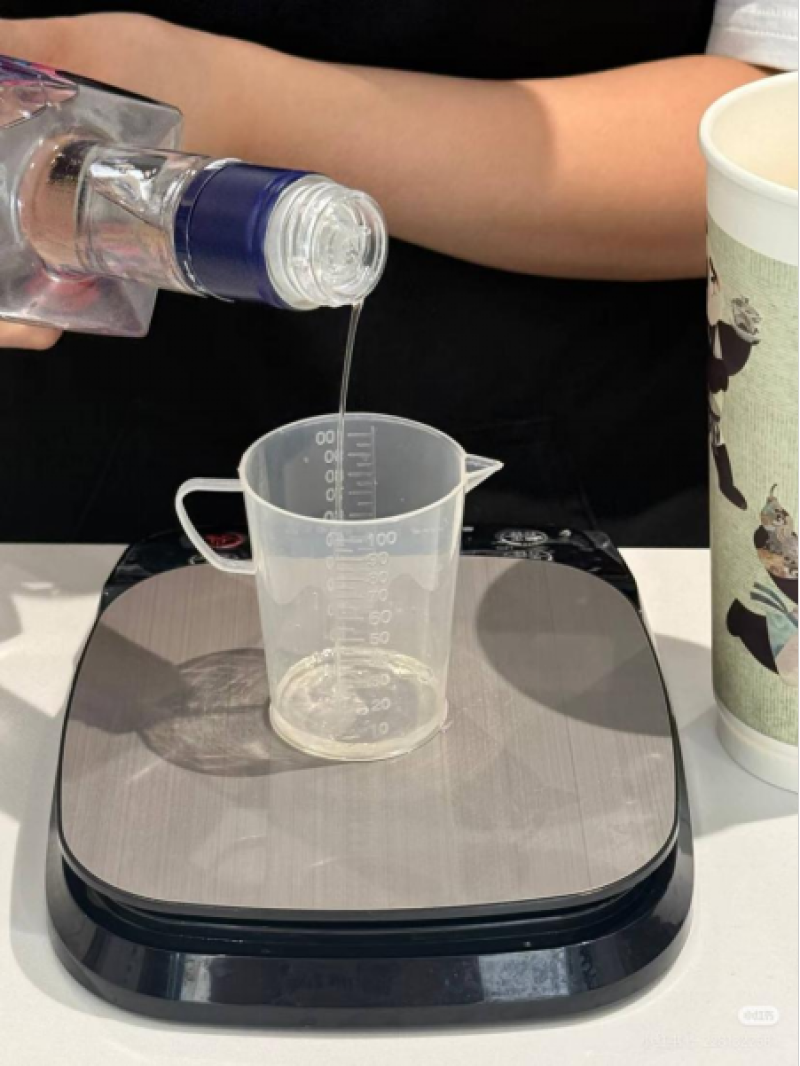
“微醺经济”升温,白酒倒进奶茶杯?“醉步上道”首日热卖近12万杯
Yang Zi Wan Bao Wang· 2025-09-17 08:37
Core Insights - The new tea beverage brand Cha Bai Dao has re-launched its classic drink "Zui Bu Shang Dao," which combines white liquor and milk tea, achieving nearly 120,000 cups sold on its first day [1][4] - "Zui Bu Shang Dao" is a collaboration with Luzhou Laojiao and is the first innovative drink in China to combine white liquor with milk tea, originally launched in 2020 [1][3] - The drink has gained a loyal following over the past five years, with consumers frequently requesting its return on social media platforms [1] Product Details - Each cup of "Zui Bu Shang Dao" contains 3 grams of Luzhou Laojiao white liquor, emphasizing the use of genuine liquor in the drink [3][4] - The drink combines the flavors of aged Pu'er tea and fresh milk, with a calorie count of approximately 174 kcal for a medium-sized cup without added sugar [4] - The product is designed to cater to health-conscious consumers while providing a fresh and mild intoxication experience [4] Market Trends - According to the China Alcohol Industry Association, over 60% of white liquor consumers are now young people, with a significant increase in the 18-35 age group [4] - The rise of the "mild intoxication economy" has led to a growing demand among young consumers for products that offer a light drinking experience [4] - Cha Bai Dao's decision to reintroduce "Zui Bu Shang Dao" reflects its sensitivity to consumer demand and market trends [4] Company Strategy - Cha Bai Dao's management emphasizes the importance of effective new product launches and lifecycle management for classic products [4] - The company aims to balance quality and cost-effectiveness through supply chain advantages [4]
秋果扎堆,你尝到这波时令果茶了吗|消费视窗
Sou Hu Cai Jing· 2025-09-17 01:20
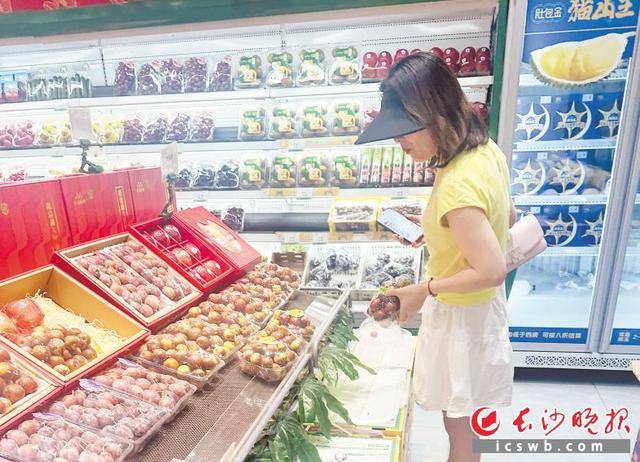
Core Insights - The article highlights the arrival of autumn fruits in Changsha, with a variety of seasonal fruits such as persimmons, pomelos, pomegranates, winter jujubes, and citrus fruits becoming available, providing consumers with new flavors after the summer season [1][3] Group 1: Seasonal Fruits - The market is currently seeing a mix of summer and autumn fruits, with seasonal varieties like autumn pears, plums, and pomegranates being particularly popular among consumers [3] - Local fruit vendors are promoting the health benefits of consuming seasonal fruits, with customers expressing a preference for fresh, in-season options [3] - Fruit gift boxes featuring seasonal fruits are gaining popularity, with a notable example being a three-piece gift box priced at 69.9 yuan, which is marketed as both practical and thoughtful for gifting [3] Group 2: New Beverage Offerings - Major tea brands in Changsha are launching autumn-themed beverages, such as "Fresh Pomegranate Ice Tea" and "Fresh Pomegranate Guava," which have quickly gained popularity, with 200,000 cups sold on the first day of launch [5] - The preparation of these beverages involves fresh pomegranate seeds being extracted on-site, enhancing customer engagement and satisfaction [5] - Local dessert shops are also introducing autumn-themed desserts, incorporating seasonal fruits like persimmons, which are associated with good fortune [5] Group 3: Pricing Trends - Industry experts indicate that the current prices for autumn fruits are relatively high due to the early harvest of certain varieties, with prices expected to decrease significantly after the National Day holiday [6] - For instance, the retail price of soft-seeded pomegranates is currently around 8 to 10 yuan per pound, which may drop to 5 to 6 yuan per pound post-holiday, as supply increases and fruits mature [6] - Consumers are advised to wait until after the National Day for better pricing and taste, as the fruits will be sweeter and more abundant [6]
霸王茶姬(CHA.US)涨超4% 今年上半年实现营收67.25亿元
Zhi Tong Cai Jing· 2025-09-16 23:43
Group 1 - The stock price of Bawang Tea Ji (CHA.US) increased by over 4%, reaching $17.27 as of the report [1] - In the first half of the year, Bawang Tea Ji achieved revenue of 6.725 billion yuan, representing a year-on-year growth of 21.61% [1] - The adjusted net profit for the same period was 1.31 billion yuan, with a year-on-year increase of 6.8% [1]
美股异动 | 霸王茶姬(CHA.US)涨超4% 今年上半年实现营收67.25亿元
智通财经网· 2025-09-16 15:35
Core Viewpoint - Bawang Tea Ji (CHA.US) stock price increased over 4%, reaching $17.27 as of the latest report [1] Financial Performance - In the first half of the year, Bawang Tea Ji achieved revenue of 6.725 billion yuan, representing a year-on-year growth of 21.61% [1] - The adjusted net profit for the same period was 1.31 billion yuan, reflecting a year-on-year increase of 6.8% [1]
AI驱动、出海加速!2025中国品牌百强总价值突破1.2万亿美元
Guo Ji Jin Rong Bao· 2025-09-16 14:09
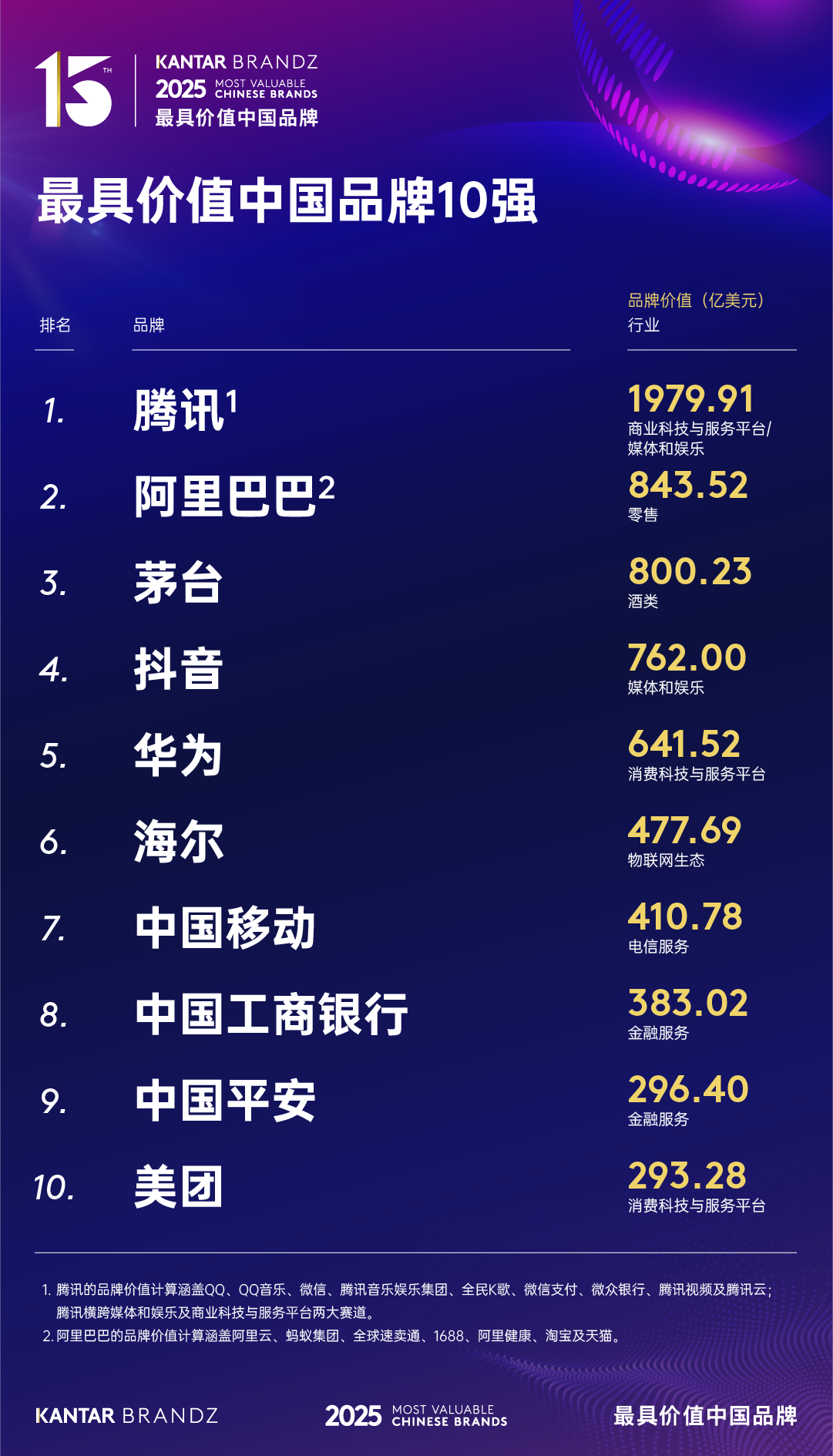
Core Insights - The total value of the 2025 BrandZ Top 100 Most Valuable Chinese Brands reached $1.21 trillion, marking a significant 25% increase from the previous year [1] - The strong recovery of Chinese brands is attributed to four main drivers: breakthroughs in artificial intelligence innovation, stable development in the financial services sector, accelerated expansion into overseas markets, and the value return of technology giants [1] Company Highlights - Tencent topped the BrandZ list with a brand value of $197.99 billion, achieving a 53% increase due to its expansion in consumer and enterprise sectors [3] - Alibaba reclaimed the second position with a brand value of $84.35 billion, growing at a rate of 23% [3] - Moutai maintained third place with a brand value of $80.02 billion, while Douyin surged 34% to $76.20 billion, securing fourth place [3] - Huawei's brand value increased by 56% to $64.15 billion, placing it fifth overall and among the top four in annual value growth [3] - Haier, ranked sixth with a brand value of $47.77 billion, strengthened its leadership in the IoT ecosystem through an enhanced ecological brand strategy [3] Emerging Brands - The BrandZ list showcased a diverse development landscape with seven new brands, including two from the fast-food sector [6] - Mixue Ice City ranked 51st with a brand value of $3.96 billion, recognized for its high-quality supply chain and affordable brand positioning [6] - Bawang Tea Ji ranked 88th with a brand value of $1.82 billion, focusing on cultural and aesthetic representation through tea [6] - Qunar, returning to the list at 78th with a brand value of $2.20 billion, improved its brand value through enhanced online service experiences [6] Growth Leaders - The average growth rate of the leading brands this year reached 67%, indicating strong development momentum among Chinese brands [7] - Xiaomi led the growth with a remarkable 154% increase, achieving a brand value of $28.15 billion through a user-centric innovation strategy [7] - BYD ranked 18th with a brand value of $17.16 billion, experiencing a 78% increase driven by advancements in smart driving technology and strategic partnerships [7] - XPeng Motors returned to the top 100 at 80th place with a brand value of $2.18 billion, bolstered by its overseas market expansion [7] Industry Trends - Chinese brands are at the forefront of artificial intelligence applications, optimizing manufacturing processes and transforming marketing strategies [8] - The integration of smart technology into daily life is becoming increasingly seamless, with innovations in smart home solutions leading the way [8]




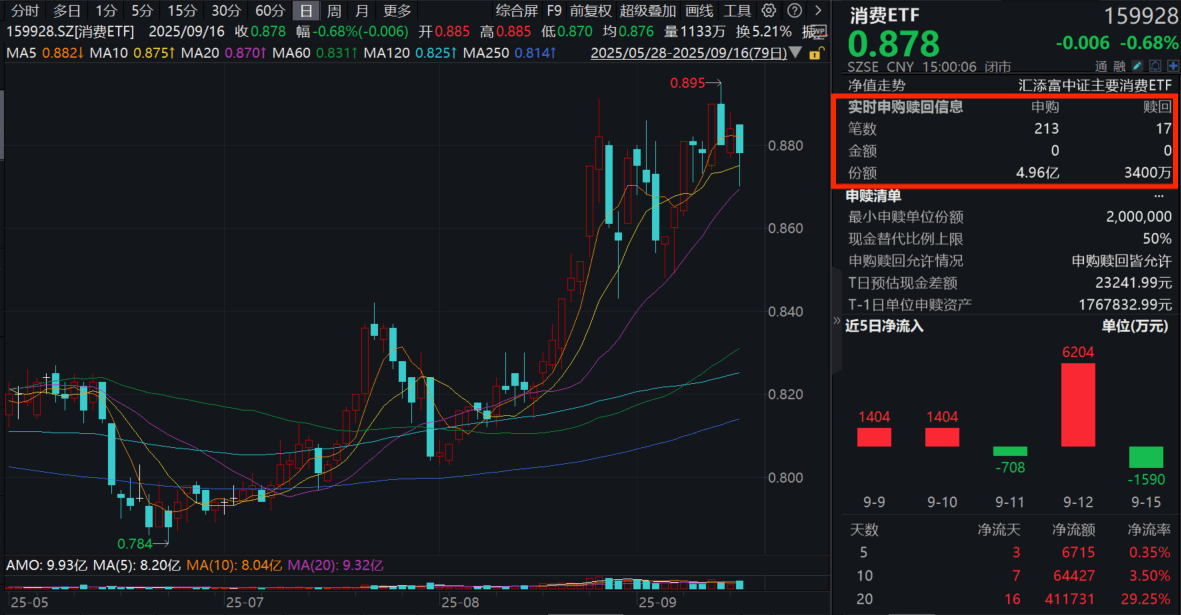
九部门发文:扩大服务消费!消费ETF(159928)回调0.68%全天逢跌大举吸金超4.6亿份!港股通消费50ETF(159268)涨近1%!
Xin Lang Cai Jing· 2025-09-16 10:44
Group 1 - The overall market showed mixed performance, with the Consumption ETF (159928) declining by 0.68% and achieving a trading volume of nearly 1 billion yuan, a significant increase of 82% compared to the previous day [1] - The Consumption ETF (159928) has a latest scale exceeding 19.2 billion yuan, leading its peers significantly [1] - The Hong Kong Stock Connect Consumption 50 ETF (159268) rose by 0.67%, with a trading volume exceeding 27 million yuan, and has attracted over 250 million yuan in the last 20 days [3] Group 2 - The Ministry of Commerce and other departments released policies to expand service consumption, proposing 19 measures to enhance consumer activities and optimize service supply [5] - Huatai Securities noted that consumption policies are extending to improve welfare and living standards, with various measures expected to support a continued recovery in consumption [5] - Zhejiang Securities believes that a systematic market rally could release wealth effects, potentially boosting consumption, with insurance and foreign capital entering the market favoring consumer blue chips [6] Group 3 - The market style is expected to favor growth and consumption, with historical data indicating that consumer sectors outperform in the trading days leading up to the National Day holiday [7] - Recommendations include focusing on leading consumer stocks and emerging growth sectors, with specific attention to stable growth in essential consumer goods and potential opportunities in the liquor sector [8] - The Consumption ETF (159928) has a significant weight in its top ten holdings, with leading liquor stocks accounting for 32% and major pig farming companies for 15% [9]
网红柴怼怼被刑拘,名下多家公司已注销
Qi Lu Wan Bao· 2025-09-16 08:45
多名消费者向大象新闻记者表达了对此案进展的关注。在柴氏珠宝花费6666元购买和田玉手镯的张女士说:"希望当地相关部门公正处理。"消费金额达9.4 万元的何女士称,目前她仍有5375元未退款。因为肖某曾在直播间公开声称"有钱也不退"让她感到气愤,她得知"柴怼怼"及其妻子肖某被刑拘后"长出了一 口气"。 据媒体报道,近日,"柴怼怼"涉嫌生产、销售伪劣产品案有新进展,警方已完成对涉案首批玉石饰品的价格鉴定和真伪鉴定,结果显示,已鉴定的30多件玉 石产品中有15件玉石为"染色和田玉";平阳县公安局鉴定意见通知书显示,柴怼怼直播间近4万玉石仅值3509元。柴怼怼与其妻子肖某分别于9月8日、9日被 刑拘。 | | 所有如此是一些地 | 平阳县小人类饮有限公司 | | --- | --- | --- | | 基本信息 | 行政处罚详情 | | | | 行政处罚相对人 | 平阳县小人类饮草赌公司 处罚单位 平阳县市场监督管理局 | | 字号 | | | | | 处罚金额(元) | 220,000.00 没收金额(元) | | | 外罚日期 | 2025-07-22 发布日期 | | | | 经查明,当事人平阳县小丫茶饮有限公 ...