跨境电商

Search documents
上线即售全球 亚马逊深圳智能枢纽仓落地
Yang Zi Wan Bao Wang· 2025-12-05 14:20
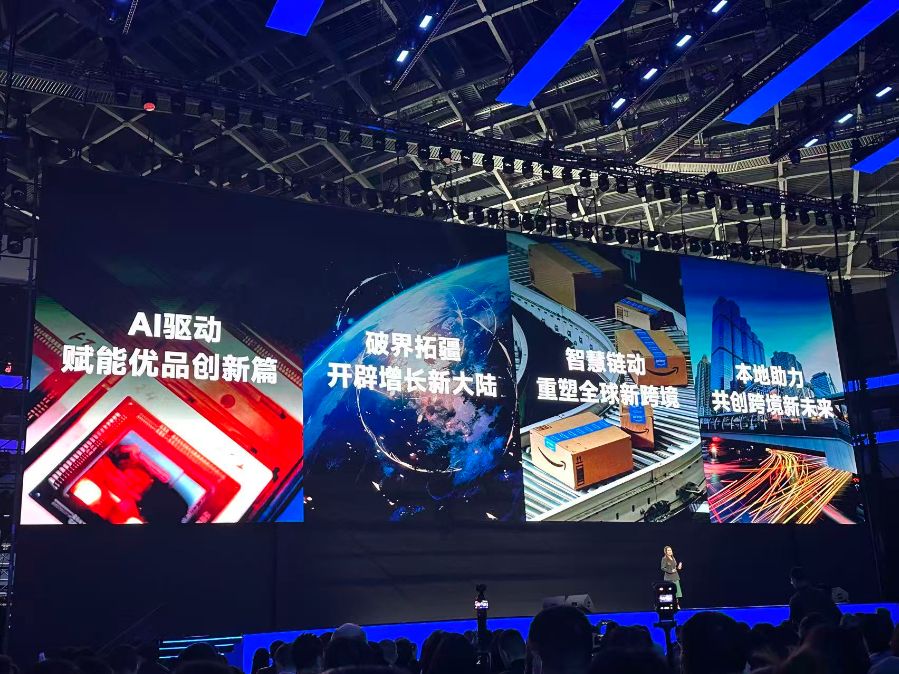
Core Insights - Amazon's Global Selling business celebrates its 25th anniversary, and the Global Store enters its 10th year in China, launching the 2025 Global Selling Cross-Border Summit in Hangzhou, where the "Next Generation Global Selling" initiative is unveiled [1][3] - The summit outlines four strategic priorities for 2026, focusing on AI integration, market expansion, supply chain innovation, and local support for cross-border e-commerce [3][4] Group 1: Strategic Initiatives - The four core strategies for 2026 are: "AI-driven, empowering quality innovation," "breaking boundaries to explore new growth territories," "smart supply chain transformation," and "local support for a new cross-border future" [3] - Over 40 innovative measures have been introduced to support Chinese export e-commerce businesses, covering supply chain, AI tools, site expansion, and brand development [3][4] Group 2: Supply Chain and Logistics - The "Next Generation Global Selling" aims to provide a full-service chain for sellers, allowing "one listing, one warehousing, global sales" [5] - The first Amazon Global Smart Hub Warehouse (GWD) will be established in Shenzhen, offering integrated services such as warehousing, customs clearance, and cross-border transportation, set to open in March 2026 [5][6] Group 3: AI Integration - AI technology is a core driver of the "Next Generation Global Selling," with new AI tools launched to enhance seller operations [8] - The upgraded seller platform will serve as an intelligent management center, simplifying tasks and predicting operational needs, while the Amazon Seller Assistant will provide decision-making support in various areas [8] Group 4: Performance of Chinese Sellers - Data from the summit indicates significant growth for Chinese sellers, with sales on Amazon's global sites reaching billions of items since 2025, and mature markets seeing over 15% sales growth [9] - The number of sellers achieving sales over $2 million, $5 million, and $8 million has increased by over 20%, with those surpassing $10 million growing nearly 30% [9]



亚马逊发布“下一代跨境链” 跨境电商走向“上线即售全球”时代
Huan Qiu Wang· 2025-12-05 14:10
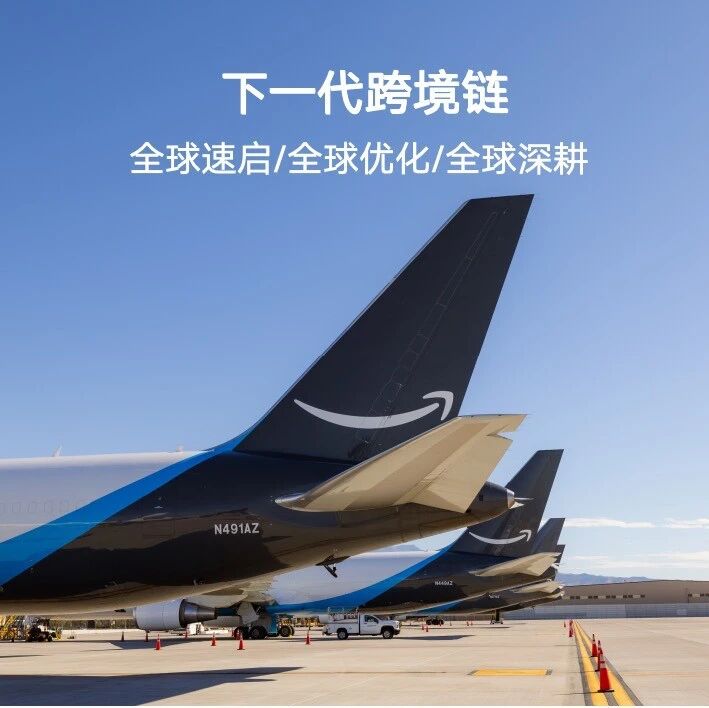
Core Insights - Amazon is launching the "Next Generation Global Selling" initiative to help sellers achieve a "global launch" strategy, fundamentally restructuring the approach for Chinese companies to enter international markets [1][3] - The initiative aims to simplify cross-border supply chain management and reduce costs associated with market entry, allowing sellers to test products in multiple markets simultaneously [3][5] Group 1: Global Expansion Strategy - The "Next Generation Global Selling" divides global expansion into three phases: Global Quick Start, Global Optimization, and Global Deepening, focusing on a lightweight and fast testing model for sellers [5][7] - The Global Smart Hub Warehouse (GWD) will serve as a key infrastructure to support these phases, allowing sellers to keep inventory in China and distribute based on real-time demand, significantly lowering overseas storage costs [7][14] Group 2: AI Integration - AI is being integrated into Amazon's operations, evolving from a tool for efficiency to an intelligent agent that assists sellers in inventory optimization, advertising, and compliance monitoring [8][17] - The upgraded Seller Assistant will have reasoning and planning capabilities, allowing it to actively manage tasks and support sellers in focusing on product innovation and brand strategy [8][9] Group 3: Market Opportunities - Despite the growth of leading Chinese sellers, there remains significant potential for expansion in global markets, particularly as online retail continues to grow [10][14] - Amazon's global footprint has expanded significantly, providing more opportunities for Chinese sellers to access new markets, with emerging markets showing substantial growth [10][14] Group 4: B2B Market Potential - The B2B market is identified as a new growth area, with the number of global buyers on Amazon increasing from 6 million to 8 million, and B2B advertising showing a higher return on investment compared to B2C [15] Group 5: Regional Development - Amazon is focusing on expanding its presence in inland regions of China, promoting local industries to go global through targeted initiatives [16] - The strategy aims to assist traditional manufacturing companies in transitioning to digital platforms, with tailored solutions for different product categories [16] Group 6: Compliance and Long-term Strategy - Amazon is addressing rising compliance costs by reducing fees and simplifying processes for sellers, while encouraging them to consider global compliance from the outset [16][17] - The overarching goal is to empower Chinese companies to become global brands with lower initial costs and more flexible, intelligent operations [17]

浏览器指纹检测在跨境电商中的应用难题与解决思路
Sou Hu Cai Jing· 2025-12-05 14:02
最近越来越多跨境电商卖家开始关注浏览器指纹识别。不管是为了账号安全、风控管理,还是团队协作,都绕不 开指纹环境。 但随着亚马逊、TikTok Shop、Temu 等平台的风控升级,有一点做得不对,就可能触发系统的"异常标记"。 如果你也在为账号不稳、多店铺关联、指纹环境难调等问题发愁,一起跟随小编来看看如何解决浏览器指纹相关 难题。 目前市面上有不少指纹浏览器和防关联工具,但很多都没有明确的环境检测能力。 可以使用 ToDetect 指纹检测专业工具 来做风险扫描,通过检测: 一、为什么跨境电商离不开浏览器指纹检测? 很多人以为浏览器指纹识别是"黑科技",其实它就是平台的一种设备识别方式,通过浏览器环境、系统参数、网 络信息等组合来判断"你是谁"。 跨境卖家多账号、多店铺运营,如果设备环境过于一致,就会被平台识别为"同主体",导致账号关联、店铺异 常,甚至直接封号。 所以,为了稳住账号,卖家需要定期做浏览器指纹查询、环境检测,确保指纹环境是否存在异常、冲突或高风险 点。 二、跨境电商使用浏览器指纹技术的"合规困境" 难点 1:不清楚哪些指纹信息属于"个人数据" 难点 2:用工具却不知道"环境到底是否合规" 比 ...

跨境电商新十年:AI助力全球铺货,内陆产业带突围
2 1 Shi Ji Jing Ji Bao Dao· 2025-12-05 13:45
Core Insights - The 2025 Amazon Global Store Cross-Border Summit was held in Hangzhou, highlighting the growth of cross-border e-commerce in China, with a total import and export value of 1.37 trillion yuan in the first half of the year, a 10.3% increase compared to the same period in 2024 [3][4] Group 1: Cross-Border E-Commerce Trends - Cross-border e-commerce is expanding globally, with platforms providing enhanced services for sellers to access international markets [3][4] - Amazon introduced the "Next Generation Cross-Border Chain," allowing sellers to list products once and manage inventory from a single location for global sales [4] Group 2: AI Integration in E-Commerce - AI tools are becoming essential for improving efficiency across all processes in cross-border e-commerce, with Amazon launching innovative AI solutions to streamline operations [5] - The introduction of generative AI allows sellers to create product listings more efficiently, with over 1.3 million sellers already utilizing the new AI tools [5] Group 3: Emerging Markets in Inland Regions - Inland cities in China, particularly in Central and Western regions, are emerging as new hubs for cross-border e-commerce, with significant growth observed in these areas [6][7] - Hubei province has seen a remarkable increase in cross-border e-commerce, with a 124% year-on-year growth in export value in 2024, reaching 67.97 billion yuan [7]
亚马逊眼中的下一代跨境电商是什么?
财富FORTUNE· 2025-12-05 13:05
Core Insights - The article discusses Amazon's strategic decision 25 years ago to allow third-party sellers on its platform, which has significantly transformed the retail industry and contributed to over $2.5 trillion in sales from these sellers [1] - Over 60% of products sold on Amazon now come from third-party sellers, highlighting the platform's evolution into a comprehensive online marketplace [1] - The article emphasizes the growth of Chinese sellers on Amazon, with sales in mature markets increasing by over 15% and in emerging markets by over 30% since 2025 [3] Group 1: Amazon's Marketplace Evolution - Amazon's introduction of third-party sellers has allowed for rapid expansion of product variety and price competitiveness, while also generating additional revenue through commissions [1] - The platform has created significant opportunities for sellers globally, with over 60% of products now sourced from third-party vendors [1] - The sales generated by third-party sellers have contributed to a transformative impact on the retail landscape [1] Group 2: Growth of Chinese Sellers - Since 2025, Chinese sellers have sold billions of items through Amazon, with notable sales growth in both mature and emerging markets [3] - The number of Chinese sellers achieving sales over $2 million, $5 million, and $8 million has increased by over 20%, while those surpassing $10 million have seen a nearly 30% growth [3] Group 3: Next Generation Global Selling - Amazon's "Next Generation Global Selling" initiative aims to empower cross-border e-commerce by enabling sellers to reach global customers directly from local warehouses [5][7] - The initiative includes leveraging AI to enhance efficiency in the cross-border selling process, allowing sellers to unlock global opportunities from day one [5][7] Group 4: AI and Seller Support - Amazon is investing in AI and machine learning to improve the seller experience, including tools that automate product information creation, which can save sellers significant time and effort [8][9] - The introduction of the "Seller Assistant" tool provides personalized support to sellers, helping them optimize their business strategies based on consumer behavior insights [11] Group 5: Supply Chain and Logistics - Amazon's logistics services, including Fulfillment by Amazon (FBA), have facilitated the delivery of over 800 billion products, significantly enhancing supply chain reliability for sellers [12] - The company is expanding its global logistics capabilities to provide end-to-end supply chain solutions, addressing challenges such as customs clearance and inventory management [13]

广西自贸试验区以制度创新促进产业联动发展
Zhong Guo Xin Wen Wang· 2025-12-05 11:21
Group 1 - The core viewpoint of the news is the introduction of the "Scene List" by the China (Guangxi) Free Trade Pilot Zone, which aims to promote industrial linkage development through institutional innovation, providing reference for enterprises to expand into the ASEAN market [1][4] - The Guangxi Free Trade Zone has launched a cross-border "one-stop" logistics model between China and Vietnam, improving delivery efficiency by 25% and reducing costs by 25% for cross-border express deliveries to Hanoi [1][2] - From January to October this year, the cross-border e-commerce import and export volume of the Guangxi Free Trade Zone reached 19.77 billion yuan, representing a year-on-year growth of 19.6% [2] Group 2 - The Guangxi Free Trade Zone has introduced a collaborative inspection model for lithium battery exports, changing the inspection process from "batch inspection" to "batch inspection," which saves about 20% in logistics costs for companies [2][3] - The establishment of a comprehensive management system at the Beibu Gulf Ship Traffic Management Center aims to enhance shipping services and reduce logistics costs while ensuring the safe entry and exit of large vessels [3] - The introduction of a real-time data synchronization mechanism for the aluminum industry aims to address price volatility, financing difficulties, and storage credit issues, promoting the "Guangxi Aluminum Price Index" as a regional pricing benchmark [3]
电商下半场,下一代跨境链的「韧性战争」怎么打?
3 6 Ke· 2025-12-05 10:37
Core Insights - The article discusses the challenges and transformations in cross-border e-commerce logistics, highlighting the need for improved supply chain efficiency and resilience in response to global economic fluctuations [4][13]. Group 1: Challenges in Cross-Border Logistics - Founders like Zhou Ge of ZAPT faced significant logistical challenges, including unreliable shipping companies and unexpected cost increases, which reflect broader issues in global supply chains [3][4]. - Companies like Juxing Technology also experience complex cross-border logistics, with delays caused by various factors such as port strikes and customs clearance [3][4]. - The global retail e-commerce market, excluding China, is projected to reach $3.15 trillion by 2025, indicating that any supply chain disruptions can lead to substantial opportunities or losses [4]. Group 2: Evolving Supply Chain Strategies - The article emphasizes a shift in focus from traditional logistics to global supply chain capabilities, as new markets emerge in regions like the Middle East, Latin America, and India [4][8]. - Sellers are increasingly adopting Amazon's Fulfillment by Amazon (FBA) to enhance logistics efficiency, with Zhou Ge's team reporting a 1.5 times increase in sales after switching to FBA [7][8]. - Amazon's introduction of the Global Warehouse Distribution (GWD) system aims to simplify cross-border logistics for sellers, reducing storage costs by 20-40% and allowing for more flexible inventory management [10][12]. Group 3: Technological Innovations in Logistics - The integration of AI and data analytics is transforming logistics decision-making, allowing companies to optimize inventory management based on predictive analytics [16][21]. - Amazon's new operational technologies, including robotic systems and AI-driven solutions, are enhancing efficiency in warehouses, achieving a 25% improvement in processing times [20][21]. - The article highlights the importance of transitioning supply chain competitiveness from fixed assets to the quality of data and algorithms, particularly benefiting small and medium-sized enterprises [22][24]. Group 4: Open Supply Chain Infrastructure - Amazon's Supply Chain by Amazon (SCA) initiative modularizes logistics services, enabling sellers to utilize Amazon's infrastructure for various sales channels, thus enhancing operational flexibility [28][29]. - The use of Multi-Channel Fulfillment (MCF) has led to a 19% reduction in stockout rates and a 12% increase in inventory turnover for sellers [29]. - The article concludes that resilient supply chains are essential for navigating global trade uncertainties, allowing for quick adaptations to disruptions and maintaining consistent sales [32].
电商下半场,下一代跨境链的「韧性战争」怎么打?
36氪· 2025-12-05 10:28
Core Insights - The article emphasizes the transformation of supply chains from cost centers to value centers, highlighting the need for companies to rethink their supply chain strategies in the face of global economic fluctuations and consumer demands for faster delivery [2][18]. Group 1: Challenges in Cross-Border E-commerce - Cross-border e-commerce sellers face significant logistical challenges, including delays and increased costs due to complex shipping processes and unreliable logistics partners [4][5]. - The global retail e-commerce market, excluding China, is projected to reach $3.15 trillion by 2025, indicating that any fluctuations in supply chains can lead to substantial opportunities or losses for businesses [5]. Group 2: New Market Dynamics - Emerging markets such as the Middle East, Latin America, Japan, South Korea, India, and Australia are becoming new hotspots for cross-border e-commerce, shifting the focus from traffic and pricing to global supply chain capabilities [6][7]. Group 3: Innovations in Supply Chain Management - Amazon's introduction of the Global Warehouse Distribution (GWD) system aims to simplify cross-border logistics for sellers, allowing them to send products to a single warehouse and letting Amazon handle the rest, thus reducing storage costs by 20-40% [15][31]. - The use of data and algorithms for inventory decisions is becoming crucial, enabling sellers to optimize their logistics strategies based on sales trends and customer expectations [22][25]. Group 4: Technological Advancements - Automation and AI are revolutionizing warehouse operations, improving efficiency and reducing processing times by up to 25% through coordinated robotic systems and predictive analytics [27][28]. - The integration of AI in supply chain management allows sellers to proactively manage inventory and optimize operations, enhancing their competitiveness [29][30]. Group 5: Strategic Shifts in Branding and Supply Chain - Companies are transitioning from OEM to brand-focused strategies, emphasizing the importance of brand trust and flexibility in supply chain management during market fluctuations [36][37]. - Amazon's Supply Chain by Amazon (SCA) initiative modularizes logistics and warehousing services, enabling sellers to utilize Amazon's infrastructure for various sales channels, thus enhancing operational efficiency [38][39]. Group 6: Future Trends in Supply Chain Resilience - The article predicts that the evolution of supply chains will become more systematic, focusing on global network integration, regional operational grids, and full-chain digitization, ultimately shifting supply chains from cost centers to value centers [42].
贯彻落实党的二十届四中全会精神权威访谈丨扩大高水平对外开放 加快建设强大国内市场——访商务部党组书记、部长王文涛
Xin Hua Wang· 2025-12-05 10:04
Core Viewpoint - The article emphasizes the importance of expanding high-level opening-up and accelerating the construction of a strong domestic market as outlined in the 15th Five-Year Plan proposal, highlighting specific measures such as actively expanding autonomous opening and significantly boosting consumption [1]. Group 1: Importance of High-Level Opening-Up - Expanding high-level opening-up is a strong driving force for promoting high-quality development, especially during the critical period of the 15th Five-Year Plan, which faces both strategic opportunities and challenges [2]. - It is an inherent requirement to meet the people's needs for a better life, with nearly 700,000 foreign trade enterprises and about 500,000 foreign-funded enterprises expected to contribute to employment and consumption upgrades [3]. - High-level opening-up is a proactive measure to promote economic globalization, countering unilateralism and protectionism while maintaining multilateralism and free trade [4]. Group 2: Key Tasks for High-Level Opening-Up - The proposal outlines four key tasks for the 15th Five-Year Plan period, including actively expanding autonomous opening by aligning with international high-standard trade rules and focusing on service sector market access [5]. - Promoting trade innovation development by enhancing goods, services, and digital trade, while also balancing imports and exports to meet both industrial and consumer needs [7]. - Expanding bilateral investment cooperation by creating a transparent and stable environment for foreign investment and enhancing overseas investment management [6]. Group 3: Strengthening Domestic Market and Consumption - The proposal stresses the strategic importance of expanding domestic demand, with a focus on boosting consumption as a key driver of economic growth, supported by a large population and a growing middle-income group [9]. - Specific measures to enhance service consumption include relaxing access restrictions and promoting new growth areas such as tourism and sports events [10]. - Efforts to upgrade goods consumption will involve implementing policies to increase consumer access to quality products and promoting durable goods consumption [11].
派安盈亮相2025亚马逊全球开店跨境峰会,以一站式金融全栈助力卖家高质量出海
Sou Hu Wang· 2025-12-05 09:30
Core Insights - The 2025 Amazon Global Store Cross-Border Summit was held in Hangzhou from December 4 to 7, attracting over 10,000 participants from the cross-border e-commerce industry [1] - Payoneer showcased its comprehensive financial ecosystem at the summit, providing Amazon sellers with end-to-end support for payment processing, fund management, and resource integration [1][3] Group 1: Event Overview - The summit celebrated the 10th anniversary of Amazon Global Store's operations in China, focusing on themes of "Excellence, Innovation, and Globalization" [3] - The event featured strategic releases and six parallel forums addressing key topics such as supply chain management, AI applications, product selection, branding and traffic, global site expansion, and compliance [3] Group 2: Payoneer's Role - Payoneer has been a partner of Amazon for ten years, being one of the first to join the PSPP payment service provider program and SPN service provider network [3] - The company aims to assist sellers in navigating risks and challenges by building a more complete financial stack and compliance risk control system [5][6] Group 3: Financial Solutions - Payoneer offers a one-stop financial stack that supports localized payments for Amazon's global multi-site and multi-currency operations, creating a financial closed loop for sellers [8] - The Payoneer card allows sellers to settle Amazon advertising costs in their original currency, reducing currency conversion losses and enhancing fund management [8] Group 4: Risk Management and Support - Payoneer has developed an intelligent risk control system using machine learning and AI technology to safeguard sellers' operations [8] - The "Olive Branch Program" has established partnerships with over 40 quality cross-border e-commerce platforms, facilitating sellers' entry into new markets [8] Group 5: Future Directions - Payoneer is committed to enhancing its cross-border payment infrastructure and expanding its product offerings to empower more Chinese SMEs to seize global opportunities [9] - The company focuses on providing integrated support through localized customer service, market insights, growth financing, and ecosystem collaboration [9]