投资银行

Search documents
“次贷危机”的味道?华尔街投行旗下信贷基金暴雷,大摩等同业开始撤资
Hua Er Jie Jian Wen· 2025-10-11 05:37
Core Insights - The bankruptcy of First Brands Group has triggered a significant crisis affecting major financial institutions on Wall Street, particularly impacting Jefferies' Point Bonita Capital fund, which faces urgent redemptions from top institutional investors [1][3] - The event has exposed the vulnerabilities within the $2 trillion private credit market, drawing parallels to the 2008 financial crisis, as highlighted by investor Jim Chanos [1][9] Group 1: Impact on Financial Institutions - Jefferies' Point Bonita Capital fund holds $715 million in receivables related to First Brands, representing nearly 25% of its $3 billion portfolio, creating a substantial risk exposure [3] - Major investors, including BlackRock and Morgan Stanley, have initiated redemption requests, indicating a loss of confidence in Jefferies [3][4] - UBS and Cantor Fitzgerald are also affected, with UBS's fund reportedly having a 30% exposure to First Brands [4] Group 2: Regulatory and Legal Implications - The U.S. Department of Justice has begun a preliminary investigation into the circumstances surrounding First Brands' bankruptcy [4] - Legal documents reveal potential fraudulent activities, including the possibility of "double pledging" receivables, raising concerns about the integrity of the financial practices involved [6][8] Group 3: Structural Vulnerabilities in Private Credit - The collapse of First Brands has revealed a fragile structure within the private credit market, where risks are often obscured by complex financial arrangements [1][9] - Chanos warns that the high returns promised by private credit funds may be masking hidden risks, similar to the subprime mortgage crisis [9][10] - The lack of transparency in private companies like First Brands complicates the assessment of financial health, as their financial documents are not publicly available [10][11] Group 4: Broader Market Concerns - The First Brands incident has raised alarms about the potential for similar undisclosed risks within the private credit market, likening it to a "Pandora's box" that could lead to further financial instability [13] - The current economic environment and tightening credit conditions may exacerbate these vulnerabilities, posing challenges for both investors and regulators [13]

S&P 500 and Nasdaq see worst day since April, why mid-October could be the best week to buy a home
Youtube· 2025-10-10 22:04
Core Insights - The article discusses the economic influence of Gen Z and millennials, highlighting their consumption trends and preferences, which are shifting the market dynamics [3][5][14] - It also emphasizes the current favorable conditions for home buyers, particularly in mid-October, as a prime time to purchase homes due to lower competition and better pricing [28][29][40] Group 1: Economic Influence of Gen Z and Millennials - Gen Z and millennials represent nearly 48% of the global population, making their consumption trends crucial for investors [5] - This demographic is increasingly focused on value-based shopping, favoring non-branded local brands over luxury items [6][10] - They are digital natives, engaging primarily in e-commerce and digital experiences rather than traditional retail [7][11] - Their investment preferences are shifting towards digital assets like bitcoin, contrasting with older generations' preference for gold [12][14] Group 2: Housing Market Trends - The week of October 12th to 18th is identified as the best time to buy a home, with more listings and less competition [28][29] - Buyers can expect to save approximately $15,000 compared to peak prices seen in the summer, which averaged around $440,000 [34] - The housing market is experiencing a seasonal slowdown, but lower mortgage rates are expected to stimulate activity in the fall [40][41] - Current mortgage rates are below 6.5%, providing additional relief for potential buyers [41][42]
全球媒体聚焦|《经济学人》:美国政府搞“堡垒经济”自己很受伤
Sou Hu Cai Jing· 2025-10-10 14:37
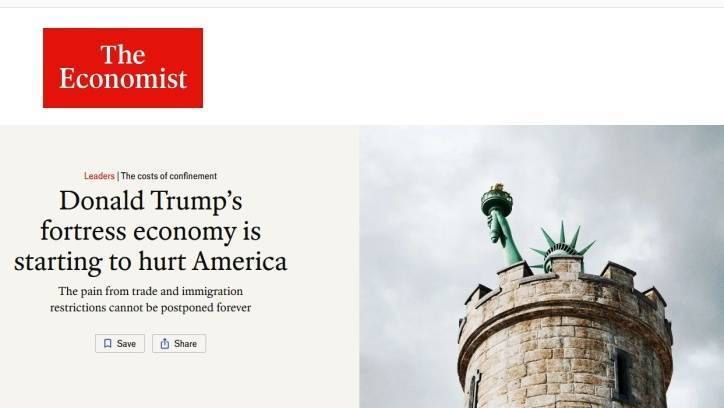
文章最后得出结论,美国的经济"堡垒"难以轻易拆除:其他国家没有提高关税意味着美国需单方面降 税,但受保护惯了的本土企业必将竭力游说维持现状。而移民对美国的信心也难以快速重燃。 《经济学人》杂志网站截图 文章说,美国政府现行关税的破坏力已开始传导,这带来的最大直接问题是更高的通胀。根据《经济学 人》的追踪,特朗普政府的关税目前正在将消费者价格推高0.3个百分点。这可能会在未来几个月内继续 上升,并在岁末年初达到峰值。高盛的经济学家发现,关税的持续时间越长,转嫁到价格上的程度就会 越高——这或许源于政策反复使企业观望后才提价。当他们这样做时,不受竞争影响的其他生产商就会 效仿。 文章认为,真正的损害将是长期的。美国仅占全球商品进口最终需求的15%。如果"堡垒"继续,"堡垒"之 外的世界将逐渐融合。随着时间的推移,关税将削弱美国的竞争力和经济实力。全球投资者已经对美元 变得更加警惕,美元兑一篮子货币今年下跌了9%。 文章指出,移民紧缩同样危害深远。美国政府将矛头指向高技术人才,这将对美国造成最大的伤害。一 项研究显示,1990年至2010年间,美国30%-50%的生产率增长源自技术移民。当美国关闭流动人才的大 门时 ...
高盛预警白银后市:实物交割困难为本轮大涨推手,未来1-2周或迎剧烈调整
Hua Er Jie Jian Wen· 2025-10-10 13:48
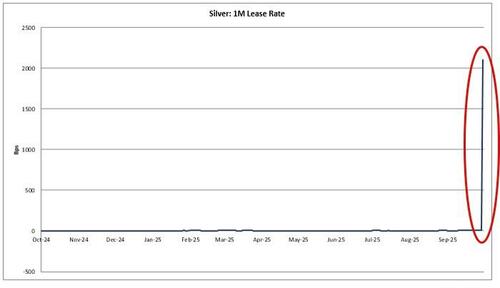
Core Viewpoint - The London Bullion Market Association (LBMA) silver price has surpassed $50 per ounce, reaching a historical high, but Goldman Sachs warns of potential market adjustments due to physical delivery difficulties expected to ease in the next 1-2 weeks [1][3]. Group 1: Supply Tension - The current supply tension in the silver market is reflected in the extreme leasing rates, with one-month rates soaring to -21% and daily rates hitting -200%, indicating severe physical supply constraints in the London spot market [1][3]. - The LBMA spot price has notably diverged from the COMEX futures price, with a rare premium of $2.7 for LBMA over COMEX [3]. - Strong ETF buying and high retail demand in India ahead of the Diwali festival are key drivers of the supply tension, alongside a tight LBMA inventory due to increased imports related to U.S. tariffs [4]. Group 2: Delivery Challenges - The logistics of delivering silver from the U.S. to London face significant hurdles, requiring 2-3 weeks to gather metal from various delivery warehouses, and not all COMEX brands meet LBMA delivery standards [5]. - The uncertainty surrounding the timing of physical delivery for December COMEX longs adds to financing costs and complicates the decision-making for LBMA shorts [5]. Group 3: Market Adjustments - Goldman Sachs anticipates that a significant influx of physical silver from China and the U.S. will alleviate the LBMA market tension in the next 1-2 weeks, although the adjustment process is expected to be highly volatile [7]. - The current demand significantly exceeds available supply, suggesting that supply-demand dynamics will ultimately dictate price movements, with market participants needing to prepare for imminent volatility [7].
金融史最疯豪赌!握1.2万亿AIG差点毁全球经济,美联储850亿救市
Sou Hu Cai Jing· 2025-10-10 09:58
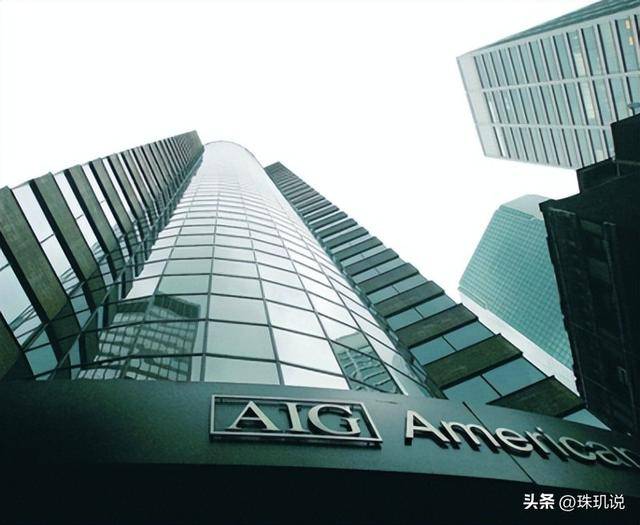
Core Viewpoint - The collapse of AIG in 2008 was a significant event that triggered global financial panic, highlighting the interconnectedness of major financial institutions and the potential systemic risks they pose [1][3][10]. Group 1: AIG's Background and Significance - AIG was once considered a "healthy benchmark" in the financial industry, with operations in 140 countries and total assets of $1.2 trillion, making it one of the largest insurance companies globally [3][5][16]. - The company had a 3A credit rating, which allowed it to secure favorable lending terms and attract business without actively seeking it [23][25]. - AIG's involvement in the insurance of over 80 million life insurance policies, with a total face value of $1.9 trillion, positioned it as a critical player in the financial system [23][31]. Group 2: The Crisis Trigger - The financial crisis began on September 15, 2008, when Lehman Brothers declared bankruptcy, leading to a 60% drop in AIG's stock price and a downgrade in its financial rating [10][12]. - AIG faced a liquidity crisis, prompting it to seek a $30 billion emergency loan from the New York Federal Reserve [12][16]. - The U.S. government, under President Bush, initially resisted the idea of bailing out Wall Street firms, reflecting public sentiment against using taxpayer money to rescue failing corporations [12][14]. Group 3: The Decision to Rescue AIG - Timothy Geithner, then President of the New York Federal Reserve, argued for a government bailout, emphasizing AIG's systemic importance due to its extensive connections with global financial institutions [20][21]. - AIG's risk exposure was estimated at $3 trillion, significantly higher than that of Lehman Brothers, indicating the potential for widespread financial fallout if AIG failed [21][31]. - Ultimately, the Federal Reserve approved an $85 billion bailout, which included a significant restructuring of AIG's management and a substantial equity stake for the government [39][42]. Group 4: Aftermath and Lessons Learned - The bailout successfully prevented a broader financial collapse, reinforcing the idea that the government must sometimes intervene to maintain market confidence [46][51]. - The U.S. government later profited from the bailout, recouping $22.7 billion four years after the initial investment [53]. - The AIG crisis serves as a cautionary tale about the risks of financial products like credit default swaps (CDS) and the importance of understanding systemic risk in the financial sector [55][57].
投资圈又迎来女掌门!41岁哈佛金融女,接管7100亿基金公司
Sou Hu Cai Jing· 2025-10-10 01:39
Core Insights - The article highlights the increasing presence of powerful women in Wall Street, indicating a potential shift in leadership dynamics as more women rise to prominent positions [2][3]. Group 1: Leadership Changes - Blackstone has appointed Katie Keenan as the new CEO of its $100 billion (approximately 710 billion RMB) real estate flagship fund, BREIT, following the tragic death of her predecessor, Wesley LePatner [3][4]. - Katie Keenan has been with Blackstone for 13 years and has made significant contributions, including initiating a $2 billion mortgage loan project and leading an $1.8 billion loan for a landmark building in Manhattan [7][9]. - The previous CEO, Wesley LePatner, was noted for her impactful leadership before her untimely death [11][10]. Group 2: Rising Female Executives - The article mentions several notable female executives in the finance industry, including Jane Fraser, the first female CEO of Citigroup, and Li Wei, a prominent strategist at BlackRock [26][19]. - Jessica Wu, a 22-year-old entrepreneur and former MIT student, has successfully founded an AI company, Sola, which has secured $21 million (approximately 149 million RMB) in funding [21][25]. - The increasing number of women in leadership roles is changing the traditional male-dominated landscape of Wall Street, with more women breaking through the glass ceiling [27].


达利欧话音刚落,黄金突破4000美元!5000美元遥远么?
Di Yi Cai Jing· 2025-10-09 10:42
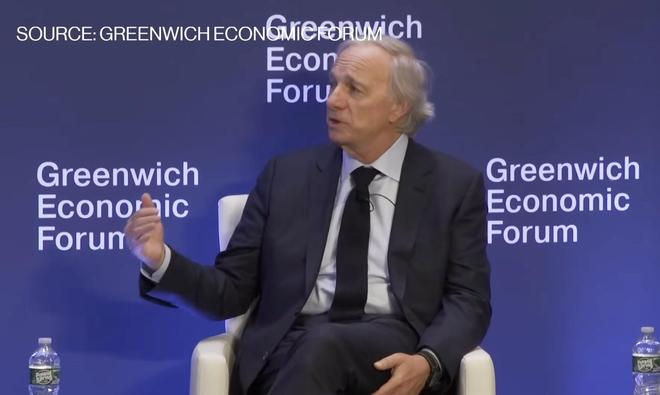
Core Insights - Gold futures and spot prices have recently surged, with spot gold surpassing $4000 per ounce, marking a significant increase of nearly $600 in just one and a half months [1][5] - Ray Dalio, founder of Bridgewater, suggested during the Greenwich Economic Forum that investors should allocate 15% of their portfolios to gold, significantly higher than the typical 5%-10% [1][3] - Goldman Sachs raised its gold price target from $4300 to $4900, reflecting a bullish sentiment among major financial institutions [1][8] Group 1: Market Dynamics - The surge in gold prices coincided with Dalio's speech, which emphasized gold's role as a safer asset compared to fiat currencies amid rising global debt levels [3][4] - The U.S. government is projected to spend approximately $7 trillion in 2024 while only generating about $5 trillion in revenue, leading to a significant budget deficit [3] - The total market capitalization of the gold market has exceeded $27 trillion, highlighting its status as a critical asset class [4][5] Group 2: Institutional Perspectives - Major financial institutions like UBS and Goldman Sachs have raised their gold price forecasts, indicating a consensus view on the bullish outlook for gold [8][9] - Goldman Sachs anticipates that central bank purchases of gold will accelerate, contributing significantly to price increases in the coming years [8][9] - The recent increase in gold ETF holdings reflects a growing institutional interest in gold as a hedge against economic uncertainty [9][10] Group 3: Regional Insights - China's central bank has been increasing its gold reserves for 11 consecutive months, indicating strong domestic demand for gold [5] - The Hong Kong government plans to enhance its gold reserves and establish a central clearing system for gold, which may further support gold prices [10]


达利欧话音刚落,黄金突破4000美元
第一财经· 2025-10-09 10:36
Core Viewpoint - The article discusses the recent surge in gold prices, with futures and spot prices both surpassing $4000 per ounce, driven by significant market events and commentary from influential figures like Ray Dalio [3][6]. Group 1: Gold Price Surge - Gold futures and spot prices have recently crossed the $4000 mark, with a notable increase of nearly $600 in just one and a half months [3]. - Ray Dalio, founder of Bridgewater, suggested that investors should allocate 15% of their portfolios to gold, significantly higher than the typical 5%-10% [6][7]. - The total market capitalization of gold has exceeded $27 trillion, highlighting its status as a safe-haven asset amid economic uncertainties [8]. Group 2: Economic Context - The U.S. faces a severe debt crisis, with government spending projected at $7 trillion against revenues of $5 trillion, leading to a reliance on bond issuance to cover deficits [6]. - Major central banks are experiencing losses on government bonds, prompting a shift towards increasing gold reserves as a hedge against currency devaluation [6][8]. - The current economic environment is reminiscent of the monetary order changes seen in the early 1970s, particularly with the decline of the Bretton Woods system [6]. Group 3: Institutional Support for Gold - Major financial institutions, including Goldman Sachs and UBS, have raised their gold price forecasts, with Goldman predicting a price of $4900 per ounce by December 2026 [12][13]. - The demand for gold from ETFs has surged, with the largest increase in three years recorded recently, indicating strong institutional interest [13]. - China's central bank has been increasing its gold reserves for 11 consecutive months, further supporting the bullish outlook for gold [8][12].

达利欧话音刚落,黄金突破4000美元!下一步5000美元遥远么?|GEF观察
Di Yi Cai Jing Zi Xun· 2025-10-09 10:20
Core Insights - Gold futures and spot prices have surged past $4000, with a nearly $600 increase in just one and a half months, driven by significant market events and commentary from influential figures like Ray Dalio [1][4][6] Group 1: Market Dynamics - Ray Dalio, founder of Bridgewater, suggested that investors should allocate 15% of their portfolios to gold, significantly higher than the typical 5%-10% [1][4] - Goldman Sachs raised its gold price target from $4300 to $4900, reflecting a bullish outlook on gold due to recent price increases and anticipated demand from central banks [1][9] - The total market capitalization of gold has surpassed $27 trillion, highlighting its status as a critical safe-haven asset amid economic uncertainties [6] Group 2: Economic Context - The U.S. is facing a severe debt crisis, with projected government spending of $7 trillion against revenues of $5 trillion in 2024, leading to increased reliance on bond issuance [4][5] - Major central banks are experiencing losses on government bonds, prompting a shift towards gold as a reserve asset, reminiscent of the monetary order changes in the early 1970s [5][6] - The ongoing geopolitical risks and economic slowdown have underscored gold's irreplaceable role as a hedge against market volatility [6] Group 3: Institutional Trends - There is a growing consensus among Wall Street firms to adopt a bullish stance on gold, with significant inflows into gold ETFs observed recently [9][10] - Central banks are expected to continue increasing their gold purchases, with projected monthly net purchases of 80 tons and 70 tons for 2025 and 2026, respectively [9][10] - The recent political instability in Europe and the U.S. Federal Reserve's anticipated interest rate cuts are contributing to the bullish sentiment surrounding gold [4][10]
高盛宏观大师:美股尚未出现转向避险的信号,资产买家“宇宙不断扩大”
Hua Er Jie Jian Wen· 2025-10-09 06:25
Core Insights - Despite trends in the global bond market, risk assets are not showing signs of shifting towards safe havens, supported by an expanding buyer universe and liquidity overwhelming fundamentals [1][3] Group 1: Market Conditions - Major stock indices remain above key moving averages, with no clear signals for risk aversion [3] - Investor sentiment and positioning are seen as potential energy for market reversal, with many investors underweight due to recent concerns [3] - A significant amount of cash, amounting to trillions of dollars, is parked in money markets, indicating potential buyers are waiting to enter the market [3] Group 2: Investment Strategy - The current strategy is to continue pursuing risk until a trend change occurs, with momentum trading yielding returns [5] - The largest risk facing the market is the Federal Reserve potentially adopting a less aggressive rate-cutting path than expected [5] Group 3: Upcoming Catalysts - The market is entering a phase termed "Calendar Compression," with multiple key events expected in the coming weeks [6] - Key catalysts include the upcoming earnings season led by the banking sector and the next Federal Open Market Committee (FOMC) meeting on October 29 [6] - Expectations for "consecutive rate cuts and accelerating earnings" are noted, with potential benefits for Bitcoin, gold, and long-duration assets if the U.S. government remains shut down [6] Group 4: Macro Perspective - Attention is drawn to the "four balance sheets" of banks, corporations, consumers, and governments, with a focus on the structural deterioration of Western governments' balance sheets post-2008 financial crisis and COVID-19 [7] - The current market environment exhibits characteristics of a "war economy," with a lack of political motivation for fiscal tightening and a global arms race for rearmament [7] Group 5: Interest Rate Outlook - In the context of a "war economy," the path of interest rates is expected to differ from historical patterns, with central banks likely to cut rates significantly [8] - The potential for yield curve control (YCC) measures is noted, with Japan cited as a current case study [8] - The market's term premium has not shown significant widening, contributing to a less favorable outlook for the U.S. dollar [8]