汽车

Search documents
社评:默茨“China Travel”刷新欧洲对华认知
Xin Lang Cai Jing· 2026-02-27 16:24
Group 1 - German Chancellor Merz's visit to China marks a significant opportunity to enhance Sino-German relations, as it is the first visit by a foreign leader to China after the Chinese New Year [1] - The visit included interactions with advanced technologies, such as humanoid robots, showcasing China's rapid development in AI and robotics, which has garnered positive attention from European media [2] - The presence of 30 German business leaders during the visit indicates a strong interest in expanding investments and deepening joint research in China, particularly in AI and new energy vehicles [2] Group 2 - Despite some negative narratives from Western media regarding China's economic practices, the visit highlighted the importance of China as Germany's largest trading partner and a crucial node in global supply chains [3] - Merz emphasized the value of the Sino-German relationship, the importance of the Chinese market, and the commitment to free trade, opposing protectionism [3] - The visit is expected to foster a more balanced consensus within the EU regarding relations with China, benefiting both German and Chinese citizens and contributing to global peace and prosperity [3]
全球车企销量榜前十生变 3家中企位次抬升
Zheng Quan Ri Bao· 2026-02-27 16:20
销量"稳中有升"的直接支撑,来自于新能源渗透率提升带来的结构性增量。中国汽车工业协会数据显 示,2025年,我国汽车产销量分别为3453.1万辆和3440万辆,同比分别增长10.4%和9.4%;新能源汽车 产销量超过1600万辆,国内新车销量占比超过50%。在此背景下,中国头部车企在电动化产品供给、价 格带覆盖与智能化体验上的优势更容易转化为销量兑现。以比亚迪为例,其全年销量中纯电动车型销量 达225.67万辆,同比增长27.86%,并首次超越特斯拉成为全球纯电销冠。 海外市场的贡献同样关键。资料显示,2025年,比亚迪海外销量达到105万辆,同比增长145%;上汽海 外市场销量为107.1万辆,同比增长3.1%。车企"出海"正从单一的出口扩张,走向渠道体系、品牌运营 与本地化能力的综合比拼。业内观点认为,销量位次的提升不仅反映产品竞争力,也反映出企业对不同 地区法规、用户偏好与供应链协同的适配能力。 随着2月26日Stellantis集团(斯特兰蒂斯集团)发布财报,2025年全球车企销量排行终于出炉。丰田仍 以逾千万辆的销售规模稳居第一,大众、现代汽车、通用汽车继续占据前四,Stellantis位列第五的格 ...


巴西政府对进口汽车CKD和SKD散件关税将逐步恢复至35%
Shang Wu Bu Wang Zhan· 2026-02-27 16:11
Core Viewpoint - The Brazilian government is set to gradually restore import tariffs on CKD and SKD automotive components to 35% after the expiration of the tax exemption quota system on January 31 [1] Group 1: Tariff Restoration Timeline - The import tariff for SKD components will return to 35% by July 2026 [1] - The import tariff for CKD components will return to 35% by January 2027 [1]
摩洛哥巩固在欧洲市场的出口优势
Shang Wu Bu Wang Zhan· 2026-02-27 16:11
Core Insights - Morocco has become the largest fertilizer supplier to the EU by 2025, significantly enhancing its strategic position in the European market [1] - The EU's restructuring of supply chains post-Russia-Ukraine conflict has benefited Morocco, making it an important diversified supplier for Europe [1] Fertilizer Market - By 2025, Morocco's market share in EU fertilizer imports is projected to reach 19%, surpassing Russia's 12.8% [1] - Morocco's advantages include phosphate resources, geographical location, a free trade agreement with the EU, and a stable logistics system [1] Agricultural Exports - In 2024, Morocco is expected to become the largest vegetable supplier to the EU, with vegetable exports exceeding 1 million tons and generating approximately $2 billion in revenue, a 7% increase year-on-year [1] Export Structure - The total import value from Morocco to the EU is projected to reach $29.8 billion in 2024, with the export structure showing diversification [1] - Key sectors include automobiles (28%), machinery (24.6%), agricultural products (11.8%), and textiles (11.6%), indicating a shift from traditional agricultural exports to more industrial and high-value products [1]
巨亏1800亿!全球第四大车企,栽在电动车上了?
电动车公社· 2026-02-27 16:07
Core Viewpoint - Stellantis, the world's fourth-largest automaker, reported its first annual loss in history, with a net loss of €22.3 billion (approximately ¥180 billion), raising concerns about its strategic direction and electric vehicle (EV) transition [1][5][6]. Group 1: Financial Performance - In 2025, Stellantis experienced a significant decline in net profit, dropping 70% year-on-year in 2024, and reported a net loss of €22.3 billion in 2025 [3][5]. - The company’s adjusted operating income turned negative at €842 million, compared to a profit of €8.648 billion in 2024, indicating a drastic shift in financial health [1][13]. - Stellantis' total shipments in 2025 were 5.484 million units, with a slight increase of 1% compared to 2024 [1][15]. Group 2: Strategic Challenges - The new CEO, Antonio Filosa, attributed the massive losses to a failed electric vehicle transition strategy, highlighting the misjudgment of the speed of energy transition and customer preferences [8][10]. - Stellantis undertook a costly business restructuring in 2025, amounting to €22.2 billion, primarily focused on adjusting future product plans and scaling down its EV supply chain [11][13]. - The company faced challenges due to overlapping brand positioning within its portfolio, making it difficult to implement a unified electric vehicle strategy [32][36]. Group 3: Market Dynamics - The North American market contributed over half of Stellantis' profits, while European sales, despite being nearly half of total volume, did not yield high average prices [56][59]. - The demand for electric vehicles in Europe and the U.S. remains weak, with Europe achieving only 19.7% of new car sales being electric and the U.S. below 10% [22][27]. - Stellantis' reliance on traditional fuel vehicles is evident as it plans to maintain production of V8 models and reduce the number of electric models in response to market demand [54][60]. Group 4: Future Outlook - Stellantis plans to invest over €50 billion by 2030 to build its electric vehicle supply chain, but the aggressive targets set by the previous CEO have been reassessed under the new leadership [47][48]. - The company is shifting its focus back to market demands and customer preferences, moving away from the previous aggressive electric vehicle transition goals [54][55]. - The automotive industry is witnessing a broader trend of traditional manufacturers reassessing their electric vehicle strategies, with many opting to continue producing internal combustion engine vehicles for a longer period [28][29].


意大利出口首超日本!关税成“神助攻”
Sou Hu Cai Jing· 2026-02-27 15:39
Core Insights - The impact of U.S. tariffs has significantly altered the global economic landscape, with Italy surpassing Japan in export value for the first time in history during the second half of 2025 [1][3]. Group 1: Export Performance - Italy's export value reached $376 billion in the latter half of 2025, while Japan's was $370 billion, marking Italy's first half-year export lead over Japan in over 50 years [3]. - This achievement positions Italy as the fifth-largest exporter globally, following China, the U.S., Germany, and the Netherlands, while Japan falls to seventh place, just behind South Korea [3]. Group 2: Factors Influencing Export Growth - The U.S. tariff policy, particularly under Trump, has adversely affected Japan's export performance, especially in the automotive sector, which constitutes 17% of Japan's total exports [3][5]. - In contrast, Italy's export portfolio is diverse, including pharmaceuticals, food, wine, furniture, and clothing, with luxury goods and food showing particularly strong performance [3][5]. - Italian luxury brand Prada reported a 9% year-on-year sales increase, reaching €4.07 billion (approximately $4.8 billion) in the first three quarters of the previous year [3]. Group 3: Economic Strategies - Italy's export resilience is attributed to its diversified export strategy and government support for small and medium-sized enterprises (SMEs), resulting in a 60% export growth over the past decade, significantly outpacing Japan's 18% and Germany's 34% [5]. - Japan's reliance on the automotive industry has become a liability, as the depreciation of the yen has less impact on export competitiveness due to the relocation of production overseas by Japanese companies [5].

美股科技股,集体下跌
Di Yi Cai Jing Zi Xun· 2026-02-27 14:59
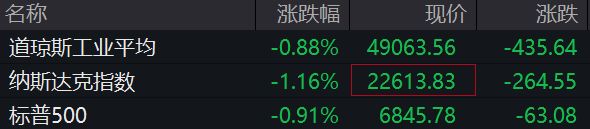
Group 1: Technology Stocks Performance - Major technology stocks experienced a decline, with Oracle falling over 4%, Broadcom and SanDisk dropping more than 3%, and Nvidia, Microsoft, and Micron Technology decreasing by over 2% [1][2] - Specific stock performance includes Oracle at -4.16% ($144.060), Broadcom at -3.43% ($310.655), and Nvidia at -2.50% ($180.269) [2] Group 2: Chinese Stocks Performance - Most popular Chinese stocks saw declines, with the Nasdaq Golden Dragon China Index down 0.8%, Century Internet dropping over 6%, and NIO falling over 2% [3] - Notable declines include Century Internet at -6.41% ($10.660) and NIO at -2.43% ($4.966) [5] Group 3: US Market Indices - On February 27, all three major US indices opened lower, with the Nasdaq down 1.16%, the Dow down 0.88%, and the S&P 500 down 0.91% [4]




事关事故调查过程,小米最新回应
Shang Hai Zheng Quan Bao· 2026-02-27 14:59
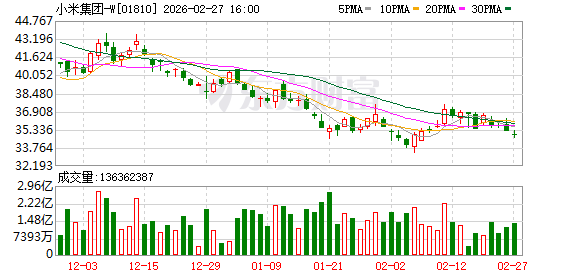
Group 1 - The core issue of the news revolves around the ongoing investigation into the traffic accident involving the Xiaomi SU7 Ultra, highlighting the procedural steps taken by authorities in such cases [1][2] - Xiaomi's safety experts emphasized that during an investigation, the car manufacturer is restricted from accessing the vehicle and must provide information truthfully, with no interference allowed from the company [2] - Xiaomi announced a five-layer safety system for its vehicles, focusing on human-centered design, priority for safety assistance, redundancy in passive safety, rapid emergency response, and the importance of driver attention while using assisted driving features [4] Group 2 - Xiaomi's CEO Lei Jun stated the company's commitment to developing its own battery packs, having established a strong research and development team and a dedicated battery pack factory to enhance manufacturing capabilities [6] - The company aims to set a benchmark in battery manufacturing and improve the overall supply chain efficiency within the industry [6] - Xiaomi plans to rebuild its automotive safety advisory committee and engage with experts from various institutions to ensure comprehensive safety evaluations for its vehicles [4]

宁德时代:出席中德总理座谈会,与宝马签约共推电池护照试点
Bei Jing Shang Bao· 2026-02-27 14:26
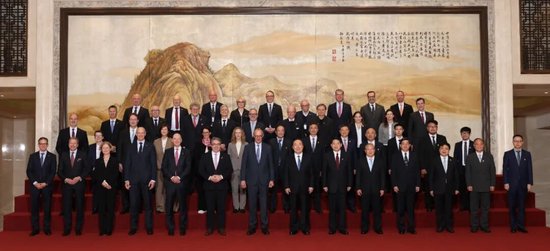
Core Viewpoint - CATL and BMW Group have signed a memorandum of understanding to collaborate on battery passport cross-border data trials and supply chain carbon footprint reduction, aiming for sustainable development in the automotive industry [1] Group 1: Collaboration Details - The cooperation focuses on enhancing digital management and data interaction capabilities within the global supply chain context [1] - The partnership aims to strengthen compliance with global regulations and promote low-carbon sustainable development of products [1] - The collaboration is part of a broader initiative to drive the demonstration and application of global battery information and data standards [1] Group 2: Historical Context - The strategic partnership between CATL and BMW Group began in 2012, establishing deep trust in battery production, joint research, and technological innovation [1] - CATL emphasizes an open cooperation philosophy, aiming to drive global green transformation through technological innovation [1] - The collaboration aligns with the visit of German Chancellor Merz and a delegation of German entrepreneurs to China, highlighting the importance of international partnerships [1]

默茨访华杭州行:强脑科技韩璧丞亮相中德企业交流活动
Xin Lang Cai Jing· 2026-02-27 14:24
Group 1 - German Chancellor Merz visited Hangzhou, where a delegation of nearly 30 German economic representatives engaged with 10 Chinese companies from sectors such as artificial intelligence, brain-computer interfaces, humanoid robots, and new energy vehicles [1][3][11] - The German representatives included major companies like BMW, Mercedes-Benz, Siemens, Adidas, and DHL, while Chinese representatives showcased firms like Zhejiang's Chint Group, Geely, Alibaba, and emerging tech companies like BrainCo and Yushu Technology [3][13] Group 2 - The collaboration between China and Germany is evolving from traditional manufacturing to deeper integration in soft ecosystems, with Zhejiang aiming to establish itself as a global advanced manufacturing hub [4][14] - In the automotive sector, there is a multi-dimensional cooperation where German car manufacturers leverage their brand and mechanical advantages, while Chinese companies excel in core components for new energy vehicles and smart cockpit technologies [5][15] - The partnership extends beyond automotive to traditional sectors like chemicals, with calls for reinventing cooperation methods to adapt to a rapidly changing world [6][15] Group 3 - Companies like BrainCo and Yushu Technology represent a new wave of collaboration, focusing on future industries such as non-invasive brain-computer interface technology, with significant revenue coming from the German market [6][16] - DHL's CEO highlighted China's rapid advancements in logistics robotics and technology innovation, indicating strong partnerships with local developers [6][16] - The current development strategies of China and Germany align closely, emphasizing pragmatic cooperation for mutual benefit, particularly in green energy transitions [9][18]