
低空经济

Search documents
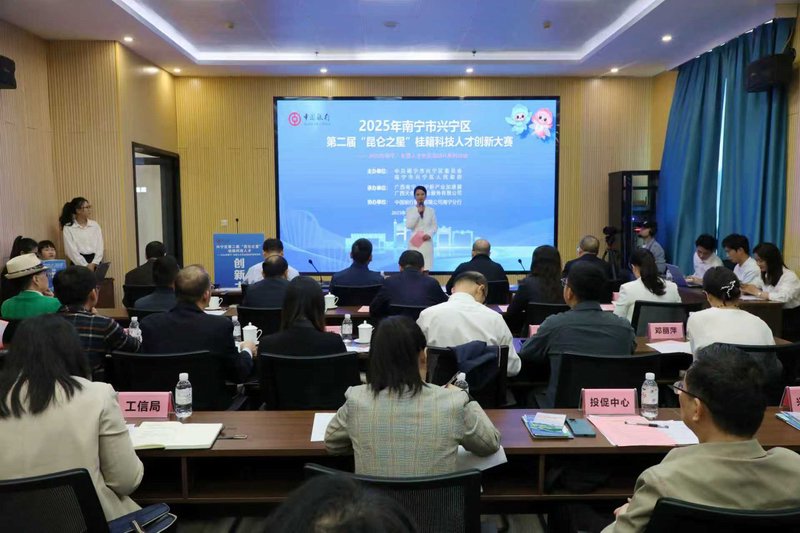
广西南宁兴宁区举办桂籍科技人才创新大赛决赛
Zhong Guo Jin Rong Xin Xi Wang· 2025-10-28 12:48
Core Points - The second "Kunlun Star" Innovation Competition for Guangxi Technology Talents was held in Xingning District, Nanning, focusing on various industrial sectors and attracting numerous projects from Guangxi [1][3] - A total of 11 high-quality projects advanced to the finals, contributing to the high-quality economic and social development of Xingning District [1][4] Group 1: Competition Overview - The competition emphasized industries such as artificial intelligence, smart manufacturing, low-altitude economy, new energy, and new consumption, with a focus on technological innovation and market adaptability as core evaluation criteria [4] - The final competition was intense, with awards distributed as follows: 2 first prizes, 2 second prizes, 2 third prizes, and 5 excellence awards [7] Group 2: Support for Winning Projects - Winning projects will receive multiple support policies, including priority for office space in the Xingning New Industrial Accelerator with a two-year rent exemption, and inclusion in the industrial land supply plan for those needing self-built factories [7] - The organizing committee will assist outstanding projects in obtaining seed or angel round financing and facilitate cooperation with large and medium-sized enterprises in the region [7][8] Group 3: Regional Development Initiatives - Xingning District has actively integrated the "technology-industry-finance" cycle, establishing new industrial accelerators and regional platforms to support innovation and project development [3] - The district has successfully incubated several high-quality projects, demonstrating its capability to nurture seed projects into thriving industries, thereby contributing to regional economic development [8]

“十五五”规划:促进中小企业专精特新发展,培育独角兽企业|快讯
Hua Xia Shi Bao· 2025-10-28 12:12
Core Insights - The "Suggestions" for the 15th Five-Year Plan emphasize innovative regulatory approaches and the development of venture capital to foster the growth of future industries and risk-sharing mechanisms [1] - The plan aims to promote the development of specialized and innovative small and medium-sized enterprises (SMEs) and cultivate unicorn companies [1] - It highlights the importance of forward-looking layouts for future industries, exploring diverse technological routes, typical application scenarios, feasible business models, and market regulatory rules [1] - Key sectors identified for economic growth include quantum technology, biomanufacturing, hydrogen energy, nuclear fusion energy, brain-computer interfaces, embodied intelligence, and sixth-generation mobile communication [1] - The plan also focuses on building emerging pillar industries and implementing industrial innovation projects to accelerate the development of strategic emerging industry clusters such as new energy, new materials, aerospace, and low-altitude economy [1] - It calls for the improvement of the industrial ecosystem and the implementation of large-scale application demonstration actions for new technologies, products, and scenarios to expedite the scaling of emerging industries [1]
从“汽车城”到“未来城” 上海嘉定跑出“四个嘉速度”
Zhong Guo Fa Zhan Wang· 2025-10-28 07:28
Core Viewpoint - The article highlights the significant economic and developmental progress of Jiading District, Shanghai, emphasizing its transition from an "automobile city" to a "future city" with a focus on high-quality development and innovation-driven growth [1][2]. Economic Development - Jiading District's GDP has surpassed 300 billion yuan for the first time, showcasing strong economic momentum [2]. - The production value per unit of construction land has increased by 20 percentage points compared to the end of the 13th Five-Year Plan, indicating improved land utilization efficiency [2]. - Fixed asset investment during the 14th Five-Year Plan has exceeded 300 billion yuan, surpassing the initial target of 250 billion yuan, reflecting active regional investment [2]. Industrial Innovation - Jiading is focusing on innovation-driven development, with strategic emerging industries accounting for a larger share of industrial output, increasing by 13.4 percentage points compared to the end of the 13th Five-Year Plan [3]. - The annual growth rate of strategic emerging industries is 13.8%, supported by the rise of three major industrial clusters: "new four modernizations" in automobiles, integrated circuits, and biomedicine [3]. - The district is also investing in future industries such as low-altitude economy and intelligent technology, demonstrating a long-term strategic vision [3]. Urban Development - Jiading has become a leading area for population influx in Shanghai, driven by its modern urban development strategy [4]. - The district is advancing major projects like the Hongqiao International Open Hub and the Lingang Jiading Technology City, enhancing urban functionality and cultural integration [4]. - Jiading is actively participating in the Yangtze River Delta integration, collaborating with neighboring cities to create a regional innovation core [4]. Quality of Life - The district prioritizes improving residents' quality of life, with per capita disposable income growing faster than the economic growth rate by 2.4 percentage points [5]. - Significant investments in education and healthcare have been made, including the establishment of 40 high-quality schools and three top-tier hospitals [5]. - Environmental improvements are evident, with a forest coverage rate of 17.44% and high public satisfaction regarding ecological conditions [5]. Governance and Community Engagement - Jiading is enhancing its governance model through integrated party leadership and community engagement, establishing 143 regional party organizations [6]. - The district has developed a three-tier grid governance system to improve resource allocation and service delivery [6]. - The establishment of "I Jia·Neighbor Centers" aims to enhance community cohesion and governance efficiency [6].
章俊:下一个五年经济增长逻辑既重创新,也重安全
Zhong Guo Xin Wen Wang· 2025-10-28 04:56
Group 1 - The core viewpoint of the article emphasizes that the economic growth logic for the next five years will focus on both innovation and security, as outlined in the recent policy blueprint from the 20th Central Committee [1][2] - The document highlights seven major goals and twelve strategic tasks for the "14th Five-Year Plan" period, with a strong emphasis on building a modern industrial system and enhancing national security [1][3] - The shift in focus from "supplementing and strengthening the supply chain" to "system restructuring" indicates a strategic elevation of industrial chain security [2][3] Group 2 - The article discusses the importance of technological innovation and industrial integration as key directions for achieving breakthroughs and fostering new productive forces during the "14th Five-Year Plan" [3][4] - It notes that the policy aims to enhance domestic demand as a long-term strategy, transitioning from merely facilitating domestic circulation to strengthening it [4] - The emphasis on creating a strong domestic market and improving income distribution reflects a shift towards a dual-driven supply and demand model, aiming for structural upgrades in the economy [4]
上交所理事长邱勇:支持更多前沿科技公司适用第五套标准上市
Zhong Guo Jing Ying Bao· 2025-10-28 03:30
Core Viewpoint - The Shanghai Stock Exchange (SSE) aims to enhance its role as a "testing ground" for innovative companies by refining its admission standards and better identifying high-quality technology enterprises, particularly in cutting-edge fields such as artificial intelligence, commercial aerospace, and low-altitude economy [1] Group 1 - SSE Chairman Qiu Yong announced the listing ceremony for the first batch of newly registered companies in the Sci-Tech Innovation Board, emphasizing the importance of supporting hard technology companies with global competitive potential [1] - SSE Vice Chairman Huo Ruirong previously indicated that the exchange has initiated preliminary communications with several companies in the commercial aerospace, artificial intelligence, and low-altitude economy sectors to expand the fifth set of standards to these relevant industries [1]
国家十五五规划建议加快航空航天、低空经济产业发展 | 投研报告
Zhong Guo Neng Yuan Wang· 2025-10-28 02:05
Group 1 - The low-altitude economy sector underperformed the market during the period from October 13 to October 26, with the Wind Low Altitude Economy Index declining by 3.47%, lagging behind the Shanghai Composite Index by 4.84 percentage points, the CSI 300 Index by 4.42 percentage points, and the ChiNext Index by 5.34 percentage points [1][2] - The National Development and Reform Commission emphasized the importance of nurturing emerging industries and future industries, with the "three new" economies expected to account for over 18% of GDP in 2024 [2] - The Central Committee's proposal for the 15th Five-Year Plan aims to accelerate the development of strategic emerging industries, including low-altitude economy, which is projected to create several trillion-yuan markets [2] Group 2 - Guangzhou's Tianhe District has issued policies to support the development of the low-altitude economy, focusing on infrastructure, industry clustering, and low-altitude logistics, with subsidies up to 20 million yuan for individual measures [2] - The Chongqing Yuzhong District government has released a three-year action plan for high-quality development of the low-altitude economy, aiming to establish demonstration projects and various application scenarios by 2027 [3] - EHang's VT35 long-range unmanned aerial vehicle has been launched, targeting mid-to-long-distance travel scenarios, with its model certificate application already submitted to the Civil Aviation Administration of China [3] Group 3 - The new brand "ARIDGE" by Huitian has secured orders for 600 flying cars in the Middle East, with the hybrid long-range flying car "A868" expected to be unveiled in Guangzhou in November [4] - Beta Technologies announced plans for an IPO in the U.S. to raise up to $825 million, potentially valuing the company at $7.2 billion, marking a significant event in the low-altitude economy sector [4] - A partnership between WoFei ChangKong and Siemens aims to enhance the development and operation of eVTOLs, focusing on digital empowerment in research, manufacturing, and operations [5] Group 4 - The establishment of a 2 billion yuan low-altitude economy industry fund in Henan is part of a broader strategy to develop the low-altitude economy, with successful projects already initiated [6] - Archer Aviation has signed a cooperation agreement with Korean Air for the potential purchase of up to 100 eVTOL aircraft, aiming to accelerate advanced air mobility development in South Korea [6] - The national 15th Five-Year Plan suggests accelerating the development of the aviation and low-altitude economy industries, with various local governments implementing supportive policies [7]
蓝图指引千帆竞 实干为楫启新篇
Zheng Zhou Ri Bao· 2025-10-28 00:50
Group 1: Economic and Social Development - The 20th Central Committee of the Communist Party of China has outlined a grand blueprint for economic and social development during the "14th Five-Year Plan" period, emphasizing the need for modernization and strategic deployment [1][2][4][5] - The focus is on accelerating comprehensive green transformation and building a beautiful China, which provides fundamental guidelines for various sectors, including forestry and agriculture [2][5][8] Group 2: Water Resource Management - The water management strategy emphasizes "water conservation first, spatial balance, systematic governance, and dual efforts," aiming to enhance urban and rural water supply security and disaster prevention capabilities [3] - The strategy includes strengthening ecological protection and governance of rivers and lakes, promoting efficient use of water resources, and ensuring the safety of people's lives and property [3] Group 3: Technological Innovation - The plan stresses the importance of high-level technological self-reliance and innovation, with a focus on building strong innovation platforms and promoting key industry chains [6][7] - There is a call for deepening the integration of technological innovation and industrial innovation, enhancing the role of enterprises in driving technological advancements [6][7] Group 4: Environmental Protection - The emphasis on ecological environment protection includes advancing pollution prevention and ecological system optimization, aligning with the goal of building a beautiful China [8][9] - The strategy involves implementing actions for increasing greenery, integrating cultural and recreational functions into parks, and enhancing urban beautification efforts [9]
打造千亿产业集群,全国首个低空信息基建规划出炉
Xuan Gu Bao· 2025-10-27 23:19
Group 1 - Shandong Province has issued the first provincial-level low-altitude information infrastructure special plan in China, aiming to build a comprehensive, intelligent, and secure low-altitude communication network over the next ten years [1] - The plan focuses on developing key sectors such as drone manufacturing and air logistics, with a target to establish a trillion-level low-altitude economic industry cluster by 2027 [1] - The infrastructure construction is seen as a prerequisite for the emergence of the low-altitude economy, emphasizing the importance of foundational projects and application scenarios for drones [1] Group 2 - Leshi Information, a leading civil aviation management company in China, has launched the "Tianmu" series of products centered around a low-altitude flight service management platform, establishing a benchmark for provincial-level low-altitude platforms in Jiangsu Province [2] - The company has achieved the first military-civilian-territorial collaboration benchmark in the sector [2] - CITIC Haizhi is collaborating with Qingdao Metro Group and Qingdao Blue Space Aircraft Company to develop a low-altitude sightseeing project [3]
21社论丨再造一个中国高技术产业,掌握全球科技竞争主动权
21世纪经济报道· 2025-10-27 23:10
Core Viewpoint - The article emphasizes the strategic goal of "recreating a Chinese high-tech industry," which aims to achieve significant growth in scale, value-added, and contribution to GDP over the next decade, effectively creating a new high-tech industrial landscape in China [1][2][3]. Group 1: Emerging and Future Industries - The strategy involves nurturing and expanding emerging industries that already have a foundation and are rapidly growing, such as new energy, new materials, aerospace, and low-altitude economy, which are expected to generate several trillion-level markets [1][2]. - Long-term strategies include forward-looking layouts for future industries like quantum technology, biomanufacturing, hydrogen energy, nuclear fusion, brain-computer interfaces, embodied intelligence, and sixth-generation mobile communication, which are anticipated to become new economic growth points [1][2]. Group 2: Economic Growth and Modernization - The recreation of the existing Chinese high-tech industry is seen as essential for achieving socialist modernization by 2035, with a target of reaching a per capita GDP comparable to that of moderately developed countries, supported primarily by high-tech industries [2][3]. - Traditional industries currently account for about 80% of the value-added in manufacturing, and through upgrading key industries like chemicals, machinery, and shipbuilding, an estimated market space of around 10 trillion yuan is expected to be added over the next five years [2]. Group 3: Technological Innovation and Global Competitiveness - The article highlights the need for deep integration of technological and industrial innovation to maintain a proactive position in the new round of technological revolution and industrial transformation, ensuring that innovation is supported by market and industrial foundations [3]. - The strategy aims to reshape the global industrial competitive landscape, providing a solid foundation for achieving socialist modernization and ensuring that China occupies a leading position in the new technological revolution and industrial transformation [3].

【铜川】推动资源型城市高质量全面转型发展
Shan Xi Ri Bao· 2025-10-27 22:53
Core Viewpoint - The transformation of Tongchuan from a "coal city" to an "industrial new city" reflects its alignment with the times, showcasing a journey of 15 years marked by significant development and recognition as a demonstration zone for inclusive financial development supported by the central government [1]. Industrial Development - Tongchuan has prioritized industrial development as the main driver of economic growth, focusing on enhancing project construction and integrating development with safety, livelihood, protection, and ecology [2]. - The city has implemented a comprehensive green transformation strategy, with traditional industries undergoing digital and technological upgrades to support sustainable development [3]. Traditional Industry Upgrades - The cement industry in Tongchuan has adopted a smart production line with a capacity of 10,000 tons per day, achieving energy consumption below national standards by 9.41 kg of standard coal per ton of cement [3]. - The city has completed 91 energy-saving and emission-reduction demonstration projects, with all clinker enterprises finishing desulfurization and denitrification upgrades [3]. Aluminum Industry Growth - Tongchuan has developed a unique aluminum industry chain, projected to achieve an output value of 18 billion yuan in 2024, making it the largest aluminum processing base in the province [4]. - The city has introduced policies to support high-quality development in the aluminum sector, including the establishment of the Shaanxi Aluminum and Aluminum Processing Standardization Committee [4]. Emerging Industries - The semiconductor industry is represented by companies like Yinjie Semiconductor, which has developed proprietary technology for indium phosphide materials, addressing supply chain security issues [6]. - The optical electronics industry has seen significant growth, with over 30 companies forming a complete supply chain from materials to end products [7]. New Material Innovations - Companies in Tongchuan are advancing in new materials, including high-purity precious metal catalysts and asphalt-based carbon fibers, indicating strong potential for future growth [9]. - The city is also focusing on low-altitude economy development, with initiatives to promote drone technology and applications [9]. Cultural and Ecological Integration - Tongchuan is integrating cultural heritage with industrial development, promoting red culture and ecological tourism, which enhances the city's attractiveness and livability [10]. - The city has made strides in ecological transformation, achieving significant improvements in air quality and urban green coverage [16]. Economic and Social Development - The per capita disposable income in Tongchuan reached 15,167 yuan in the first half of 2025, reflecting a year-on-year growth of 5.5%, with rural incomes growing faster than urban ones [17]. - The city has invested in education and healthcare, enhancing the quality of life for residents and supporting sustainable community development [18]. Future Outlook - Tongchuan aims to strengthen its industrial base and continue its high-quality transformation, contributing to the broader goals of modernization in China [19].