加密货币

Search documents
刚刚,全线跳水!16万人爆仓!
Zheng Quan Shi Bao· 2025-11-17 00:46
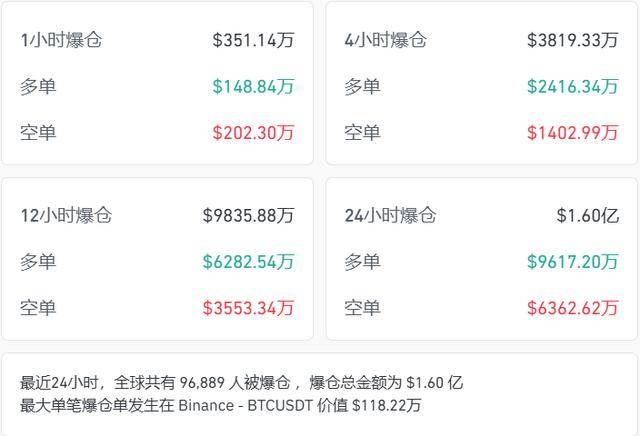
Core Viewpoint - The cryptocurrency market is experiencing a significant downturn, with Bitcoin dropping below $94,000, erasing all gains made this year, and a notable increase in negative sentiment among investors [1][3]. Market Performance - Bitcoin has fallen to $93,778.6, while Ethereum decreased by 1.93%, Cardano by 3.29%, and FIL by 3.44% [1][2]. - In the past 24 hours, approximately 160,000 traders faced liquidation, totaling $580 million, with long positions accounting for $410 million and short positions for $170 million [2]. Investor Sentiment - Analysts suggest that a withdrawal of funds from major investment funds, ETFs, and corporate treasuries has contributed to the market's vulnerability [3]. - Reports indicate a sharp rise in negative discussions surrounding Bitcoin, Ethereum, and XRP, leading to a significant drop in the positive/negative sentiment ratio [3][4]. Selling Pressure - Long-term holders are reportedly engaging in concentrated selling, with 815,000 Bitcoins sold in the past 30 days, marking the highest selling activity since early 2024 [5][6]. - "Whales" holding over 1,000 Bitcoins are selling at a rate exceeding 1,000 Bitcoins per hour, indicating a sustained and staggered distribution rather than a coordinated sell-off [6]. Psychological Threshold - The $100,000 mark has been identified as a psychological threshold for many early holders, who have long discussed this level as a point for profit-taking [6].

刚刚全线跳水!16万人爆仓!比特币抹去今年以来所有涨幅
Zheng Quan Shi Bao· 2025-11-17 00:44
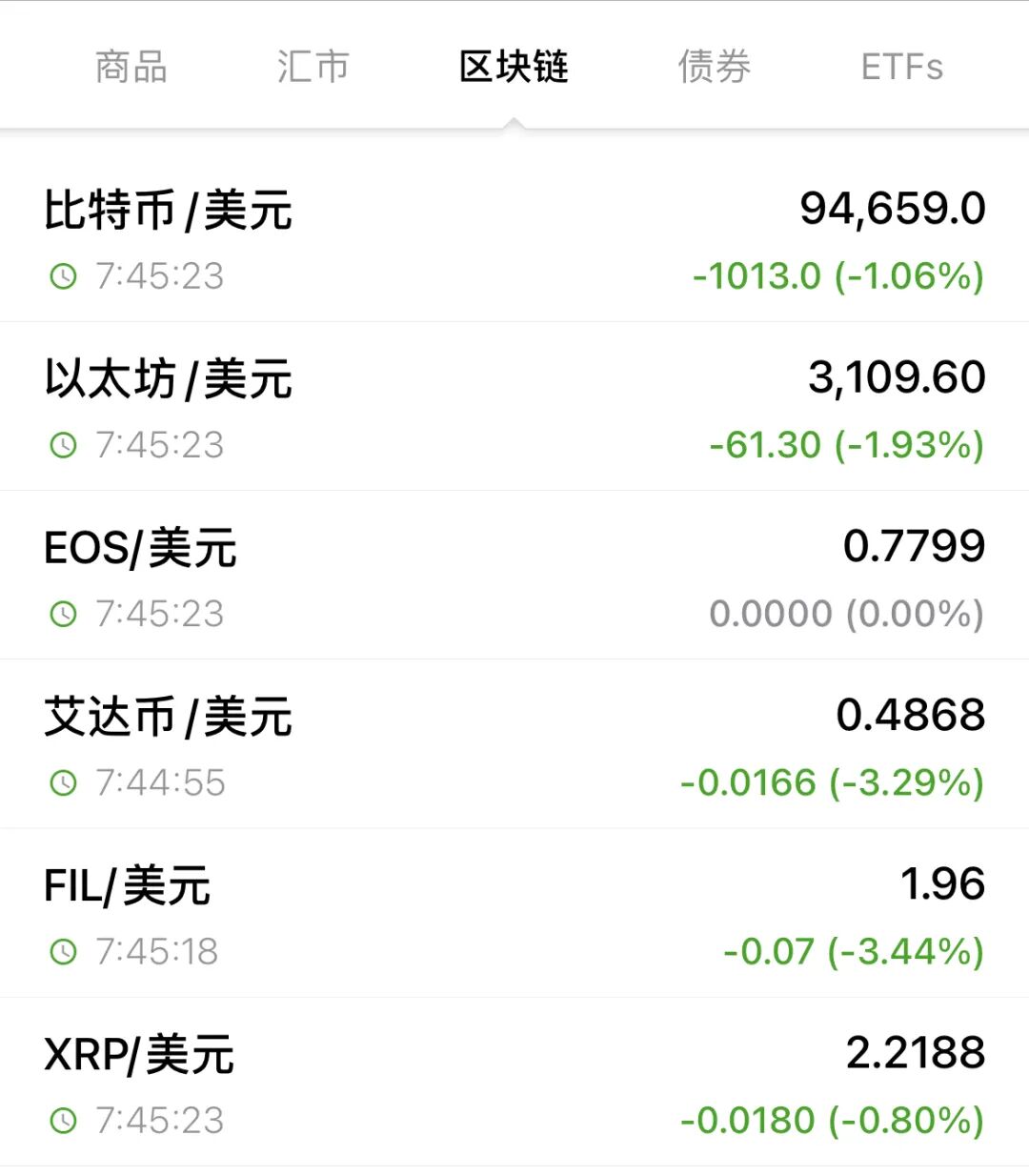
Core Viewpoint - The cryptocurrency market is experiencing a significant downturn, with Bitcoin dropping to $93,778.6, erasing all gains made this year, and other cryptocurrencies like Ethereum and Cardano also facing declines [1][2]. Market Performance - Bitcoin is currently priced at $94,659.0, down by $1,013.0 (-1.06%) [2]. - Ethereum is trading at $3,109.60, down by $61.30 (-1.93%) [2]. - Cardano is at $0.4868, down by $0.0166 (-3.29%) [2]. - FIL is priced at $1.96, down by $0.07 (-3.44%) [2]. - The total liquidation in the cryptocurrency market over the past 24 hours reached $580 million, with long positions accounting for $410 million and short positions for $170 million [2]. Market Sentiment - Analysts suggest that the ongoing sell-off in the cryptocurrency market is largely due to capital withdrawal, indicating a potential new phase of market vulnerability [3]. - Negative discussions surrounding Bitcoin, Ethereum, and XRP have surged, leading to a significant drop in the positive/negative sentiment ratio, indicating a prevailing negative sentiment among investors [3][4]. Selling Pressure - Long-term holders are reportedly engaging in concentrated selling, contributing to the market decline [5]. - The sell-off is particularly driven by "whales" (individuals holding over 1,000 Bitcoins) and long-term holders, with approximately 815,000 Bitcoins sold in the past 30 days, marking the highest selling activity since early 2024 [6]. - Many early holders view the $100,000 mark as a psychological threshold for profit-taking, which has accelerated selling since Bitcoin first surpassed this level in December 2024 [6].
黄金直线拉升,比特币暴跌
Zheng Quan Shi Bao· 2025-11-17 00:41
Group 1 - Precious metals prices stabilized and rebounded after a significant drop, with international spot gold rising to $4100.420 per ounce, an increase of 0.45%, and spot silver reaching $50.863 per ounce, up 0.68% [1] - U.S. stock index futures opened lower but recovered, with Nasdaq 100 and S&P 500 futures turning positive [1] - The probability of a 25 basis point rate cut by the Federal Reserve in December dropped to 44.4%, down from over 70% previously, following comments from Fed officials [1] Group 2 - The decline in interest rate cut expectations, combined with waning enthusiasm for the Trump administration's support of cryptocurrencies and a cooling tech stock rally, led to a significant drop in the cryptocurrency market [1] - Bitcoin fell below the $95,000 mark, briefly dipping below $93,000, erasing over 30% of its gains since the beginning of the year [1]
刚刚,全线跳水!16万人爆仓!
证券时报· 2025-11-17 00:34
Core Viewpoint - The cryptocurrency market is experiencing a significant downturn, with Bitcoin dropping to $93,778.6, erasing all gains made this year. Other cryptocurrencies like Ethereum, Cardano, and FIL also saw declines [1]. Group 1: Market Analysis - The ongoing decline in the cryptocurrency market is attributed to a withdrawal of funds, marking the beginning of a fragile period for the market. Major investment funds, ETFs, and corporate treasury departments have retreated from Bitcoin, removing key support that fueled this year's rebound [2]. - Sentiment analysis indicates a sharp increase in negative discussions surrounding Bitcoin, Ethereum, and XRP, with the positive-to-negative sentiment ratio dropping significantly, reflecting a prevailing negative sentiment in the market [2]. Group 2: Long-term Holder Behavior - Long-term holders are increasingly selling off their Bitcoin holdings, contributing to the market's decline. In the past 30 days, long-term holders have sold approximately 815,000 Bitcoins, marking the highest selling activity since early 2024 [3][4]. - Notably, "whales" (individuals holding over 1,000 Bitcoins) and long-term holders have been selling at a rate exceeding 1,000 Bitcoins per hour. This selling behavior is characterized by a continuous and staggered distribution rather than a sudden coordinated sell-off [4]. - Many early holders view the $100,000 mark as a psychological threshold for profit-taking, which has led to accelerated selling since Bitcoin first surpassed this level in December 2024 [4].

比特币下跌超2%,抹平年内涨幅
Guan Cha Zhe Wang· 2025-11-16 23:33
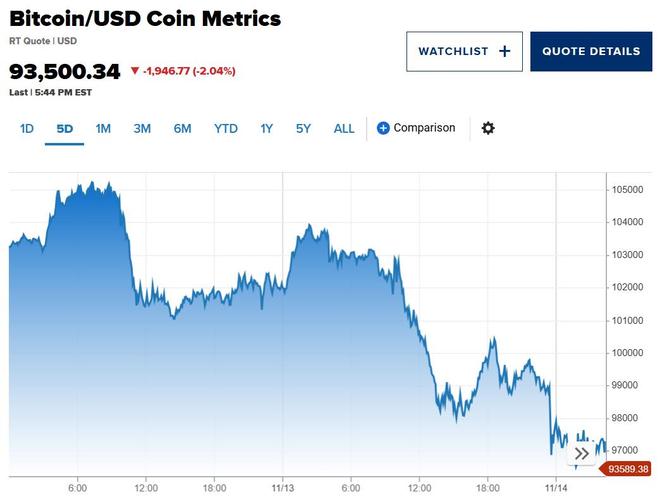
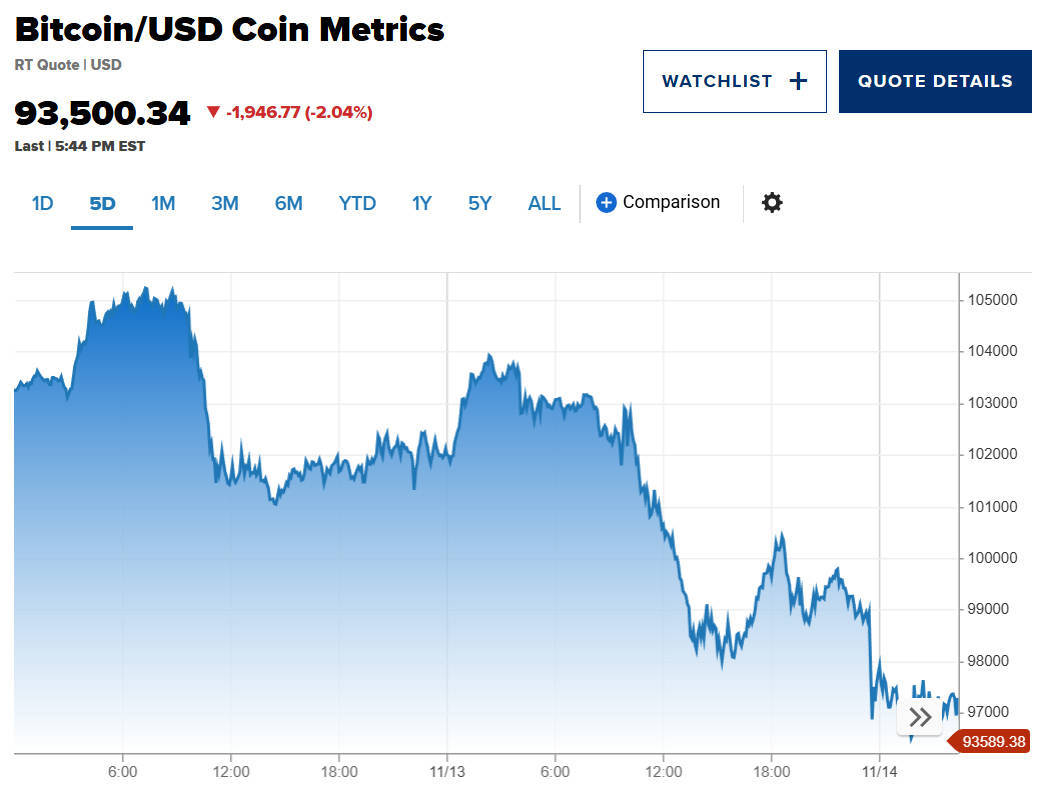
据美国消费者新闻与商业频道(CNBC)消息,截至美国东部时间11月16日17时44分,全球市值最大的 加密货币比特币下跌2.04%,至93500美元,抹去今年以来所有涨幅。 美东时间11月16日,比特币价格下跌超2% CNBC截图 报道指出,近日,在与人工智能相关的股票普遍回调的背景下,比特币自11月11日以来已连续数日下 跌。 由于吸引了众多此前大举投资大型科技股的投资者,这使得这两类交易紧密相连。上周,由于市场对硅 谷科技巨头在人工智能项目上的巨额投入重燃担忧情绪,多家大型科技企业的股价出现了下跌。 加密货币投资和区块链开发公司安拟集团(Animoca Brands)联合创始人萧逸(Yat Siu)表示,当前市 场流通资金趋紧,这就导致投资者不得不抛售部分资产,毕竟整体市场处于收缩态势,他们要借此应对 各类资金缺口与潜在风险。 萧逸称,当前加密货币市场周期可能与以往不同,尤其是因为机构资金近期才相对大量涌入数字资产领 域,机构通常不会像比特币的主要长期持有者那样,对这种代币四年一轮的价格周期抱有近乎 "宗教 式" 的信仰,这或许能帮助比特币及其他数字资产,在近期和即将到来的逆风期保持一定韧性。 "有观点认 ...
比特币下跌超2%,至93500美元,抹平年内涨幅
Sou Hu Cai Jing· 2025-11-16 23:25
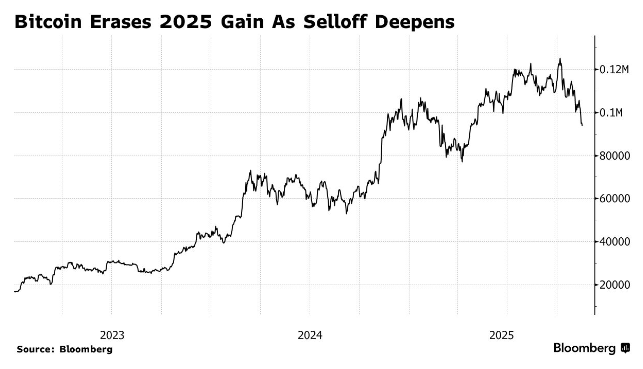
据美国消费者新闻与商业频道(CNBC)消息,截至美国东部时间11月16日17时44分,全球市值最大的加密货币比特币下跌2.04%,至93500美元,抹去今年 以来所有涨幅。 美东时间11月16日,比特币价格下跌超2%CNBC截图 报道指出,近日,在与人工智能相关的股票普遍回调的背景下,比特币自11月11日以来已连续数日下跌。 由于吸引了众多此前大举投资大型科技股的投资者,这使得这两类交易紧密相连。上周,由于市场对硅谷科技巨头在人工智能项目上的巨额投入重燃担忧情 绪,多家大型科技企业的股价出现了下跌。 比特币价格历史走势图彭博社 据报道,比特币跌破10万美元关键里程碑的背后,"巨鲸"(持有1000个比特币以上的大户)和长期持有者的抛售成为显著推手。 区块链数据显示,过去30天内,长期比特币持有者已出售约81.5万枚比特币,这是自2024年初以来的最高抛售活动。更关键的是,持有比特币超过七年的巨 鲸钱包,以每小时超过1000枚比特币的速度持续卖出。 这种抛售呈现出"持续的、交错的分配"特征,而非突然的协调性抛售。分析显示,许多早期持有者将10万美元视为一个心理门槛——这是他们多年来一直谈 论的获利了结水平。自20 ...
特朗普行情“昙花一现” 比特币年内涨幅全部蒸发!
智通财经网· 2025-11-16 23:24
Core Viewpoint - Bitcoin has retraced over 30% of its gains since the beginning of the year, following a peak of $126,251 on October 6, as optimism regarding the Trump administration's support for cryptocurrencies fades [1][3]. Market Dynamics - The market is currently in a risk-off state, with significant buyers, including ETF institutions and corporate consortiums, quietly exiting, leading to a loss of the funding support that previously drove Bitcoin to record highs [3][4]. - Institutional investors have been crucial in supporting Bitcoin's price and market legitimacy, with ETFs absorbing over $25 billion, peaking at approximately $169 billion in assets [3][4]. - The recent sell-off is attributed to multiple factors, including profit-taking by long-term holders, outflows of institutional funds, macroeconomic uncertainties, and the liquidation of leveraged long positions [3][4]. Investor Sentiment - Retail sentiment in the cryptocurrency market is notably pessimistic, with many investors choosing to exit early to avoid significant losses [4][6]. - Bitcoin's volatility has led to dramatic price swings, with a notable drop to $74,400 in April following Trump's tariff announcement, before rebounding to a historical high [6]. - Smaller, less liquid tokens have been hit harder by the market downturn, with the MarketVector index tracking the bottom 100 digital assets down approximately 60% this year [6]. Future Outlook - The current market lacks natural bullish catalysts, leading to a cautious attitude towards capital allocation among investors [6].
西班牙国家报:加密货币受避险情绪影响:比特币几乎已经抹去了今年的所有涨幅
Sou Hu Cai Jing· 2025-11-16 22:13
Core Insights - The cryptocurrency market is facing significant challenges, with digital assets experiencing a prolonged decline, leading to record outflows from ETFs and reduced retail demand, primarily due to uncertainties surrounding interest rate cuts, macroeconomic data, and the outlook for artificial intelligence [1][2]. Group 1: Market Performance - Bitcoin has struggled to maintain its value above $100,000, ultimately falling to $95,947.76, influenced by a new wave of risk aversion and a massive sell-off in tech stocks [1]. - Since early October, Bitcoin's market capitalization has evaporated by over $450 billion, with a notable net outflow of approximately $870 million from Bitcoin ETFs in a single day, marking the second-largest daily redemption since Bitcoin's inception [2]. - Year-to-date, Bitcoin has only increased by about 3.3%, contrasting sharply with the S&P 500's return of 15% and the IBEX35's return of 40% [2]. Group 2: Broader Market Trends - The overall cryptocurrency market has shown signs of weakness, with significant declines in other cryptocurrencies such as Ethereum (down 5%), Ripple (down 5%), Solana (down over 8%), and Binance Coin (down 3%) [3]. - Related stocks, such as Strategy, which was once a major Bitcoin holder, have also suffered, with its stock price dropping over 30% this year and currently trading at its lowest level since October 2024, indicating a lack of investor confidence in its high-leverage model [3].

直线跳水!近10万人爆仓!
Sou Hu Cai Jing· 2025-11-16 13:42
Group 1: Bitcoin Market Dynamics - Bitcoin experienced a sharp decline, dropping from around $100,000 to below $95,000, with nearly 100,000 liquidations in the past 24 hours [1] - The market is under significant selling pressure and corporate hedging demands, leading to a heightened correlation with traditional assets, which contributed to the price drop [3] - The cryptocurrency market is confirmed to be in a "bear market," with historical data suggesting that the current downtrend may not have reached its bottom yet [3][4] Group 2: Market Sentiment and Predictions - 10x Research indicates that Bitcoin has not yet formed a true bottom, as it has only retraced over 20% from its 2025 peak, while previous bear markets saw declines of 30% to 40% [4] - The market is showing signs of deteriorating sentiment, with weak ETF inflows, ongoing selling by long-term holders, and low retail investor interest [4] - Key support for Bitcoin is set at approximately $93,000, with the price recently falling below the critical 365-day moving average, signaling a potential bear market [4] Group 3: Impact on Trump's Wealth - The Trump family's wealth has significantly decreased alongside the volatility in the cryptocurrency market, with their indirect Bitcoin holdings valued at approximately $870 million during Bitcoin's peak in October 2025 [6] - Trump's family investments in cryptocurrency-related companies have also suffered, with declines of about 30% since Bitcoin's October high [6] - The value of World Liberty Financial tokens held by the Trump family has dropped from a peak of $4.5 billion to around $3.4 billion, reflecting the broader market downturn [7]
财经观察丨比特币暴跌!特朗普家族财富大幅缩水,加密货币全线杀跌!发生了什么?
Sou Hu Cai Jing· 2025-11-16 11:16
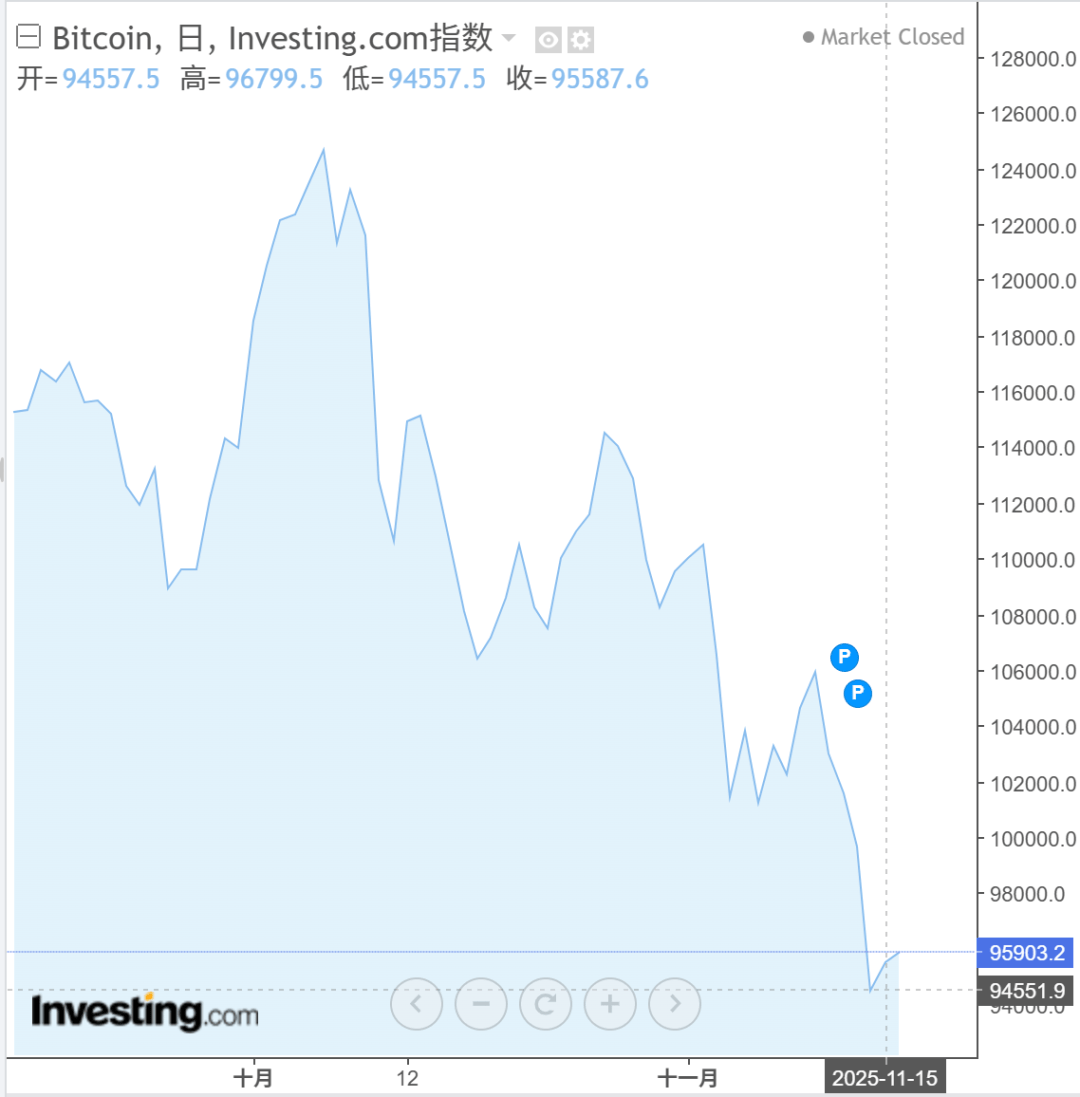
Market Overview - The cryptocurrency market experienced a significant downturn, with Bitcoin dropping below $95,000, currently trading at $95,812, reflecting a decline of 0.7%. Ethereum and other cryptocurrencies like Cardano and XRP also saw declines exceeding 1% and 2% respectively [1] - In the past 24 hours, nearly 100,000 traders were liquidated, with a total liquidation amount reaching $160 million [1][2] - Since the flash crash on October 10, the total market capitalization of all cryptocurrencies has lost over $1 trillion [2] Impact on Trump's Wealth - The Trump family's wealth from cryptocurrency investments has significantly decreased due to the market volatility [2] - Trump's cryptocurrency portfolio includes investments in Trump Media & Technology Group, blockchain company World Liberty Financial, and Bitcoin mining company American Bitcoin, all of which have seen a decline of approximately 30% since Bitcoin's peak in October [3] Harvard Endowment Fund - Harvard University's endowment fund reported holding 6.8 million shares of BlackRock's iShares Bitcoin Trust (IBIT), which has increased by 257% compared to the previous quarter. This fund is the largest Bitcoin spot ETF globally, with net assets nearing $75 billion [3][4] - The Bitcoin trust now constitutes 20.97% of Harvard's total U.S. stock holdings, surpassing major companies like Microsoft, Amazon, Alphabet, Nvidia, and even the SPDR Gold Shares ETF [4] Selling Pressure in the Market - Long-term holders are increasingly selling off their cryptocurrency holdings, contributing to the market's decline [5] - In the past 30 days, long-term Bitcoin holders have sold approximately 815,000 Bitcoins, marking the highest selling activity since early 2024. Notably, "whales" holding over 1,000 Bitcoins are selling at a rate exceeding 1,000 Bitcoins per hour [6] Speculation on MicroStrategy - Speculation is rising regarding MicroStrategy potentially selling Bitcoin, as on-chain data indicates fund movements. MicroStrategy's stock has dropped nearly 32% in the past month, with a market cap of $59 billion, while its Bitcoin holdings are valued at $62.3 billion [7] - Despite this, MicroStrategy's co-founder Michael Saylor maintains that the company's strategy is to continue buying Bitcoin, pausing new purchase announcements only at the end of each fiscal quarter [7] Federal Reserve's Influence - Recent comments from Federal Reserve officials regarding a cautious stance on interest rate cuts have negatively impacted risk appetite in the market. Some decision-makers have warned about the potential stagnation of inflation progress, casting doubt on the likelihood of a rate cut in December [7] - Predictions indicate a 70% probability of Bitcoin dropping below $90,000 by the end of the year, with a 26% chance of falling below $80,000 [7]