
调味品

Search documents
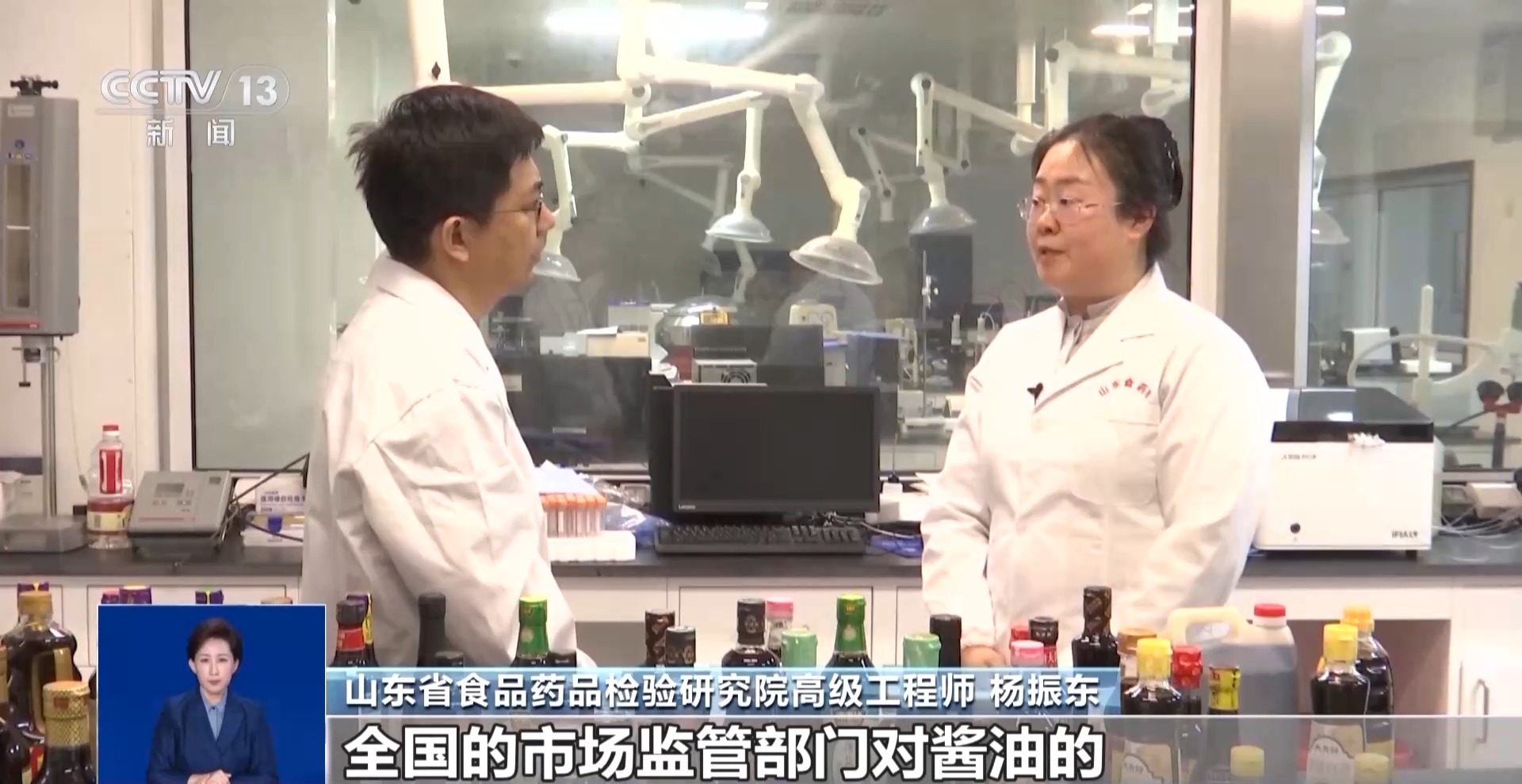
酱油“零添加”是没加什么?看食品标签注意这些细节
2 1 Shi Ji Jing Ji Bao Dao· 2025-09-13 23:28
Core Viewpoint - The article discusses the implications of the new national standard for food labeling in China, particularly focusing on soy sauce products labeled as "zero additives" and the potential consumer confusion regarding these labels [1][11]. Group 1: New National Standard - A new national standard was released by the National Health Commission and the State Administration for Market Regulation, prohibiting the use of terms like "no additives" and "zero additives" on food labels [1][12]. - The new standard will officially take effect on March 16, 2027, allowing a two-year transition period for companies to comply [1]. Group 2: Soy Sauce Quality and Inspection - Over 100,000 batches of soy sauce have been inspected nationwide from 2022 to 2024, with a compliance rate consistently above 99%, indicating good overall quality [3]. - More than 400 soy sauce products currently display "zero additives" on their labels, with various claims such as "zero added preservatives" and "no additives at all" [5][9]. Group 3: Consumer Misunderstanding - Many soy sauce products prominently feature "zero additives" in large font, while the specific details of what is not added are often in smaller font, making it difficult for consumers to find [7]. - Over 25% of surveyed products labeled "zero additives" did not specify which ingredients were excluded, leaving the interpretation up to the manufacturers [9][11]. Group 4: Industry Response and Initiatives - Local market regulatory authorities are working with soy sauce manufacturers to address labeling issues during the transition period [12][13]. - The China Condiment Association has called for companies to proactively implement the new labeling standards and improve transparency regarding ingredient lists [15]. - Various regions, including Sichuan and Jiangsu, have initiated actions to reduce the quantity and variety of food additives used in production [15][17].

川味一哥冲刺港股IPO:一包火锅底料如何撑起130亿市值?
Sou Hu Cai Jing· 2025-09-13 15:37
Core Viewpoint - The Chinese condiment industry is witnessing a significant milestone with Tianwei Food initiating its Hong Kong IPO process, aiming to become the second condiment company to achieve "A+H" dual listing after Haitian Flavoring and Food [1] Company Overview - Tianwei Food, founded by former technician Deng Wenyuan, has transformed from a small workshop into a publicly listed company with a market value of approximately 13 billion yuan [3] - The company has two main brands: "Hao Ren Jia" targeting the mid-to-high-end market and "Da Hong Pao" focusing on the hot pot base market, with over 300 product varieties [4] Market Strategy - The company has established a robust sales network covering all 31 provinces and regions in China, collaborating with over 1,000 distributors and entering major retail chains [5] - Online sales have shown remarkable growth, with a 45% increase in 2024, accounting for 18% of total revenue [5] International Expansion - Tianwei Food has exported products to over 50 countries, with a 40% growth in overseas business in 2024, contributing 8% to total revenue [6] - However, the company faces challenges, as evidenced by a 24.8% decline in revenue and a 57.53% drop in net profit in Q1 2025 [6] Governance and Competition - The governance structure of Tianwei Food, primarily controlled by the founding couple, raises concerns about the need for modern management practices as the company expands internationally [7] - The company competes with traditional rivals and larger condiment giants, as well as regional brands and restaurant chains that are establishing their own condiment production lines [7] Strategic Significance of IPO - The funds raised from the Hong Kong IPO will primarily support international expansion, overseas business development, and brand building [8] - A successful IPO would not only enhance the company's international profile but also serve as a reference for other condiment companies seeking capital [8]

超400种酱油产品标注零添加 “零添加”是没加什么?
Ge Long Hui· 2025-09-13 14:55
Core Insights - Soy sauce is the largest category of condiments in China, showing a trend towards diversification driven by health, individuality, and naturalness [1] Industry Trends - There are over 400 types of soy sauce products in the market labeled as "zero additives," including "zero preservatives," "zero sweeteners," "zero colorants," "zero flavor enhancers," and "no additives at all" [1] - The labeling of "zero additives" is prominently displayed in large fonts, while the specific details regarding what "zero additives" entails are often in smaller fonts, which can mislead consumers [1] Consumer Awareness - Experts indicate that the labeling practices may confuse consumers, leading them to believe that "zero additives" means no food additives at all, rather than specific types of additives being excluded [1] - Consumers are advised to carefully discern and understand the actual ingredients of the products when making purchases [1]
千禾味业:“千禾0”商标未被宣告无效,用于区分特定商品和服务
Ge Long Hui· 2025-09-13 12:49
Core Viewpoint - The event held on September 12 by the Sichuan Listed Companies Association addressed investor concerns regarding the validity of the "Qianhe 0" trademark, clarifying that it has not been declared invalid and is legally registered [1] Group 1: Trademark Validity - Qianhe Weiye confirmed that the "Qianhe 0" trademark (registration number: 46717423) remains valid and is used in compliance with regulations for specific goods and services [1] - The company has registered defensive trademarks to protect its intellectual property and will not use any trademarks that have been declared invalid [1] - The National Intellectual Property Administration has verified Qianhe Weiye's registered trademarks, ensuring compliance with the Trademark Law of the People's Republic of China [1]

食品板块的低估值探讨
雪球· 2025-09-13 03:05
Core Viewpoint - The article discusses the investment opportunities in the consumer sector, particularly focusing on traditional consumption, which is perceived to have more potential than new consumption due to the undervaluation of leading companies in this space [3][15]. Summary by Sections Traditional vs. New Consumption - The consumer market is divided into traditional consumption (e.g., Guizhou Moutai, Haitian Flavoring, Yili) and new consumption (e.g., Pop Mart, Laopu Gold, Weilong). The author favors traditional consumption due to strong companies with clean balance sheets and current undervaluation [4][5]. Performance of Food and Beverage Sector - The article reviews the half-year performance of various segments within the food and beverage sector: - **Baijiu**: Revenue growth of -0.4% and net profit growth of -0.9%, with a notable decline in Q2 due to policy impacts [7]. - **Beer**: Revenue growth of +2.8% and net profit growth of +11.8%, with a focus on non-drinking channels and premium products [7]. - **Beverages**: Revenue growth of +7.2% and net profit growth of +3.2%, driven by new product launches [7]. - **Condiments**: Revenue and net profit growth both at +10.6%, with a recovery in soy sauce and vinegar [7]. - **Dairy Products**: Revenue growth of +1.9% and net profit decline of -1.3%, but a significant recovery in Q2 with a net profit growth of 44.2% [7]. - **Frozen Foods**: Revenue growth of +0.2% and net profit decline of -11.5%, impacted by reduced dining out [7]. - **Snacks**: Revenue growth of -4.2% and net profit decline of -42.9%, with some segments performing better [7][8]. Future Outlook - The article suggests that the food and beverage sector's performance is generally underwhelming, reflecting a recovering economic environment where consumer spending on dining out is reduced [8][9]. - For the baijiu industry, a U-shaped recovery is expected, with growth resuming in two to five years [10]. - For other consumer goods, a recovery is anticipated, but the timing of a market turnaround remains uncertain [11]. Investment Directions - Notable investment opportunities include leading companies like Ningde Times and Guizhou Moutai, with the latter serving as a benchmark for evaluating other investments [12]. - The article highlights the low valuation of the consumer sector, with the food ETF's price-to-earnings (PE) ratio at 21.3, which is at the 10th percentile compared to the past decade [12][13][14]. - The author suggests that if investors recognize these leading consumer companies as strong, the current valuation presents a worthwhile opportunity [15]. Investment Strategy - The article advises a diversified investment approach, balancing high-growth sectors with traditional consumption and utilizing ETFs for broader exposure to leading companies [16].


千禾味业食品股份有限公司关于召开2025年第一次临时股东会的通知
Shang Hai Zheng Quan Bao· 2025-09-12 18:46
Group 1 - The company is convening its first extraordinary general meeting of shareholders for 2025 on September 29, 2025, at 10:00 AM [2][5] - The meeting will be held at the company's location in Meishan, Sichuan Province [2][12] - Voting will be conducted through a combination of on-site and online methods, utilizing the Shanghai Stock Exchange's network voting system [3][5] Group 2 - The network voting will be available on the day of the meeting from 9:15 AM to 3:00 PM [3][8] - Shareholders must register to attend the meeting, with specific registration times and methods outlined for both corporate and individual shareholders [15][12] - The company will provide a reminder service for shareholders to ensure participation in the voting process [8][12] Group 3 - There are no special resolutions or related party voting issues for this meeting [8] - The company has disclosed the meeting agenda and voting procedures in advance through various media outlets [7][8] - Shareholders holding multiple accounts can aggregate their voting rights across all accounts [9][10]
恒顺醋业(600305):25Q2盈利延续改善,关注后期经营变化
Shenwan Hongyuan Securities· 2025-09-12 13:42
Investment Rating - The investment rating for the company is maintained at "Outperform" [2] Core Views - The company reported a 12.0% year-on-year increase in revenue for the first half of 2025, reaching 1.125 billion yuan, and a net profit of 111 million yuan, up 18.1% year-on-year. The second quarter saw a revenue of 499 million yuan, a decrease of 8.2% year-on-year, but a net profit increase of 40.61% year-on-year to 54 million yuan, aligning with market expectations [7][6] - The company is undergoing transformation and investment, with a projected net profit of 165 million, 207 million, and 241 million yuan for 2025 to 2027, reflecting year-on-year growth rates of 30%, 25%, and 16.5% respectively. The current market valuation corresponds to P/E ratios of 55x, 44x, and 38x for the respective years [7][6] - The company has outlined four strategic focuses: high-end positioning, national expansion, health empowerment, and youth engagement, which are expected to enhance operational performance and profitability [7] Financial Data and Profit Forecast - Total revenue projections for 2025 are set at 2.309 billion yuan, with a year-on-year growth rate of 5.2%. The gross profit margin is expected to be 36.6% [6][9] - The company’s gross margin for the first half of 2025 was 38.41%, an increase of 1.86 percentage points year-on-year, attributed to product mix optimization and cost reductions [7] - The company’s cash flow from sales in the first half of 2025 was 1.102 billion yuan, a 3.7% increase year-on-year [7]

海天味业MSCI ESG评级获上调
Zheng Quan Ri Bao Zhi Sheng· 2025-09-12 10:41
Core Viewpoint - Morgan Stanley (MSCI) has upgraded the ESG (Environmental, Social, and Governance) rating of Foshan Haitian Flavoring and Food Co., Ltd. (Haitian) to A grade, reflecting the company's active initiatives in green intelligent manufacturing, social responsibility, and corporate governance [1] Group 1: ESG Initiatives - Haitian has implemented multiple ESG practices, including the recognition of its Gaoming factory as the world's first "Lighthouse Factory" in the soy sauce industry by the World Economic Forum, showcasing intelligent brewing technology and resource recycling systems [1] - The Gaoming factory has utilized AI refrigeration technology, resulting in over a 20% reduction in energy consumption for its cooling systems [1] - In July 2025, Haitian, along with 25 partners in the supply chain, established the "Carbon Road Green Chain Alliance" to create a comprehensive carbon reduction system from farm to table, laying the groundwork for future carbon reduction efforts in the industry [1] Group 2: Health and Nutrition Innovations - Haitian has launched the "Little Powder Cap" public welfare program targeting special populations, developing innovative products such as iron-fortified soy sauce, gluten-free soy sauce, and sugar-free soy sauce to meet the health needs of specific groups [1] - The company integrates ESG principles into its corporate strategy and daily operations, promoting sustainable transformation and providing a reference path for high-quality development in traditional manufacturing [1]

研报掘金丨天风证券:日辰股份业绩有望稳健增长,维持“买入”评级
Ge Long Hui A P P· 2025-09-12 09:37
Core Insights - Tianfeng Securities report indicates that Richen Co., Ltd. achieved revenue and net profit attributable to shareholders of 204 million and 35 million yuan respectively in H1 2025, representing year-on-year growth of 8.63% and 22.64% [1] - In Q2 2025, the company reported revenue and net profit attributable to shareholders of 102 million and 18 million yuan respectively, with year-on-year increases of 6.85% and 11.04% [1] - The company continues to launch new products, with the baking business contributing incremental growth; direct sales in supermarkets have shown significant increase, while food processing and brand customization remain stable [1] Business Performance - The restaurant sector remains weak, but food processing and brand customization show steady performance, with direct sales experiencing high growth [1] - The C-end e-commerce and distributors continue to contract, indicating a shift in market dynamics [1] - With ongoing expansion in new customers and channels, the company's performance is expected to grow steadily [1] Profitability Outlook - Due to the slowdown in restaurant demand and intense competition, the profit forecast has been slightly adjusted, but the "buy" rating is maintained [1]


研报掘金丨天风证券:维持海天味业“买入”评级,三大主力产品有望维持稳健增长
Ge Long Hui A P P· 2025-09-12 09:19
Core Viewpoint - Tianfeng Securities' report indicates that Haitian Flavor Industry's revenue and net profit for H1 2025 were 15.23 billion and 3.914 billion yuan respectively, showing year-on-year growth of 7.59% and 13.35% [1] Group 1: Financial Performance - For Q2 2025, the company's revenue and net profit were 6.915 billion and 1.712 billion yuan respectively, with year-on-year increases of 7.00% and 11.57% [1] - The company experienced double-digit growth across all product categories, with other categories showing even higher growth rates [1] Group 2: Future Outlook - The three main products are expected to maintain steady growth in 2025, while other categories are anticipated to continue achieving rapid growth [1] - The company's plans for a Hong Kong listing and international expansion are expected to enhance brand recognition and drive additional sales growth [1] Group 3: Industry Context - The seasoning industry is experiencing a slowdown in revenue growth, coupled with weak consumer demand, leading to a slight adjustment in profit forecasts [1] - Despite the industry challenges, the company maintains a "buy" rating [1]