资产管理

Search documents
资管巨头:如果市场不信任新任主席,美联储或被迫重启QE
Hua Er Jie Jian Wen· 2025-12-09 08:09
据彭博周二报道,全球最大上市对冲基金集团Man Group警告,如果债券市场对美联储下任主席的独立 性产生质疑,美联储可能不得不重启量化宽松政策以压低长期借贷成本,这一警示凸显出央行公信力对 市场的关键影响。 随着白宫国家经济委员会主任哈塞特Kevin Hassett被视为接替鲍威尔的领跑者,美联储独立性问题正成 为投资者的主要担忧。特朗普总统本月早些时候表示,美联储行长职位的竞争已"缩小到一人",并称哈 塞特为"潜在美联储主席"。 Man Group首席市场策略师Kristina Hooper指出,英国的前车之鉴值得警惕。2022年交易员因对时任首 相利兹·特拉斯的经济政策缺乏信心而抛售英国国债,导致英国借贷成本此后一直高于多数七国集团经 济体,这提醒市场公职人员的公信力至关重要。 美债市场已显现异常迹象,尽管美联储本周可能再次降息25个基点,但10年期美债收益率已较10月低点 攀升逾20个基点。这种逆向走势凸显出市场对政策独立性的敏感。 独立性存疑可能倒逼QE重启 哈塞特被广泛视为支持特朗普降息偏好的人选,特朗普已表示接近公布人选以接替5月任期届满的现任 主席鲍威尔。 PGIM Fixed Income联 ...
标普500新添金融股,连夜涨超7%
Guo Ji Jin Rong Bao· 2025-12-09 07:13
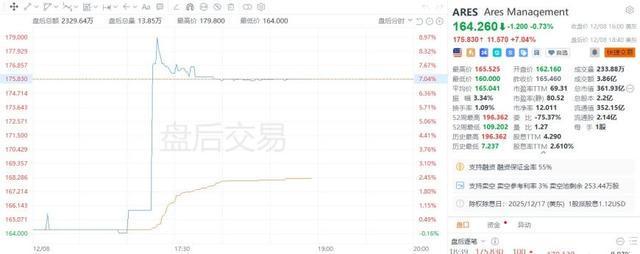
Group 1 - Ares Management Corporation will join the S&P 500 index on December 11, with Carvana, CRH, and Comfort Systems USA joining on December 22 [1] - Ares' stock price surged to $164.26 on December 8, increasing over 7% in after-hours trading to $175.83 [1] - Ares has a market capitalization of $54 billion, making it one of the largest companies not yet in the S&P 500 [1] Group 2 - Ares' assets under management are projected to exceed $525 billion by the end of 2024 and reach $595.7 billion by September 2025 [2] - The acquisition of GCP International in March 2025 enhances Ares' logistics and digital infrastructure assets in Asia and Europe [2] - Analysts from TDCowen and CFRA have a "buy" rating on Ares, indicating confidence in its growth potential, while BMO Capital highlights challenges in its direct lending business [2]
业界共话深化京港协同 赋能金融高水平开放
Zheng Quan Ri Bao· 2025-12-09 06:44
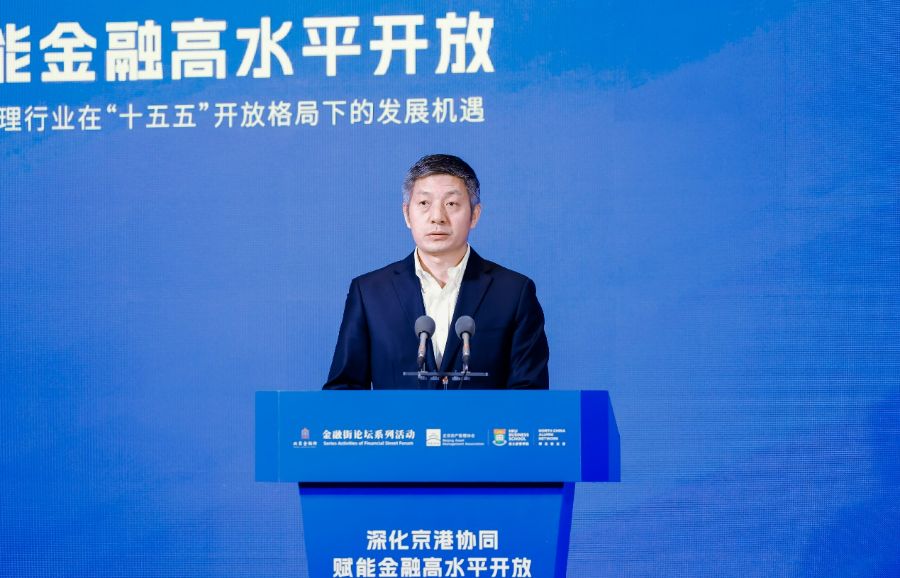
12月5日,"深化京港协同,赋能金融高水平开放——资产管理行业在'十五五'开放格局下的发展机 遇"金融街论坛系列活动在北京成功举办。与会业界人士就深化京港金融合作提出观点和建议,更好助 力金融高水平对外开放。 北京资产管理协会会长、工银理财有限责任公司总裁高向阳表示,当前,我国正处于"十四五"规划圆满 收官与"十五五"规划谋篇布局的关键交汇期,金融领域正从"要素型开放"向"制度型开放"进阶,构建适 配我国经济地位、兼具安全与开放属性的现代金融体系已成为核心任务。北京与香港作为我国金融体系 中两大核心枢纽,形成的"双中心"驱动效应,正是支撑这一任务落地的关键引擎。 中国国际经济交流中心副理事长王一鸣在主旨演讲中强调,京港深化金融合作,对巩固和提升香港国际 金融中心地位、助力构建以国内大循环为主体、国内国际双循环相互促进的新发展格局意义重大。他建 议从五个方面探索深化合作路径:一是合作发展科技金融;二是探索跨境资管合作;三是协同推进人民 币国际化;四是强化优势互补提升各自竞争力;五是加强金融监管协同,筑牢金融安全防线。 中国宏观经济学会副会长、香港大学经管学院金融学教授巴曙松在线参会时指出,中国资管市场历经多 轮 ...
从“要素型开放”到“制度型开放”,资管业发力深化京港协同
2 1 Shi Ji Jing Ji Bao Dao· 2025-12-09 05:32
近日,"深化京港协同,赋能金融高水平开放——资产管理行业在'十五五'开放格局下的发展机遇"金融街论坛系列活动在北京举 办。 北京资产管理协会会长、工银理财有限责任公司总裁高向阳在会上表示,北京资产管理协会自成立以来,始终以"推动资管行业 高质量发展、搭建跨区域交流合作平台"为核心使命,本次活动正是协会立足"十五五"战略窗口期,助力京港金融"双中心"协 同、服务金融高水平开放的重要实践。 高向阳指出,当前,我国正处于"十四五"规划圆满收官与"十五五"规划谋篇布局的关键交汇期,金融领域正从"要素型开 放"向"制度型开放"进阶,构建适配我国经济地位、兼具安全与开放属性的现代金融体系已成为核心任务。北京与香港作为我国 金融体系中两大核心枢纽,形成的"双中心"驱动效应,正是支撑这一任务落地的关键引擎。 21世纪经济报道 杨希 中国国际经济交流中心副理事长王一鸣在主旨演讲中强调,京港深化金融合作,对巩固和提升香港国际金融中心地位、助力构 建"双循环"新发展格局意义重大。他建议从五个方面探索深化合作路径:一是合作发展科技金融;二是探索跨境资管合作;三 是协同推进人民币国际化;四是强化优势互补提升各自竞争力;五是加强金融监管 ...

优化互联互通机制、加大创新力度,京港协同共探资管行业发展新机
Bei Jing Shang Bao· 2025-12-09 04:19
Core Insights - The event "Deepening Beijing-Hong Kong Cooperation, Empowering High-Level Financial Openness" highlights the importance of collaboration between Beijing and Hong Kong in the asset management industry under the "14th Five-Year Plan" and the upcoming "15th Five-Year Plan" [1][3] Group 1: Financial Cooperation and Development - The transition from "factor-based openness" to "institutional openness" in China's financial sector is crucial for building a modern financial system that balances security and openness [3] - The deepening financial cooperation between Beijing and Hong Kong is significant for reinforcing Hong Kong's status as an international financial center and supporting the "dual circulation" development pattern [3] - Five suggested areas for enhancing cooperation include developing technology finance, exploring cross-border asset management, promoting RMB internationalization, strengthening competitive advantages, and enhancing financial regulatory collaboration [3] Group 2: Market Trends and Innovations - The Chinese asset management market is evolving with increasing diversification in products and institutions, driven by rising wealth management demands and a shift towards high-quality development [4] - The introduction of AI and blockchain technology is transforming the financial infrastructure, particularly in cross-border payment systems, offering advantages in time, cost, and processes [4] - Hong Kong's financial market plays a vital role in supply chain finance, risk management, and piloting innovative financial products [4] Group 3: Roundtable Discussions and Strategic Insights - Hong Kong serves as a critical "bridgehead" for Chinese insurance institutions investing abroad, emphasizing its strategic importance for asset allocation [5] - Recommendations include enhancing collaboration between Beijing and Hong Kong to develop a more multi-layered and complementary financial service system [5] - The asset management industry is trending towards multi-asset and multi-strategy approaches in a low-interest-rate environment, with Hong Kong being a key market for overseas investments [5][6]

中国ESG信披转向“主动加强”
Jin Rong Shi Bao· 2025-12-09 03:33
Core Insights - The article highlights the significant transformation in ESG (Environmental, Social, and Governance) disclosure in China, moving from vague narratives to precise data quantification, marking a shift from "storytelling" to substantive implementation [1] - The contrasting trends between the U.S. and China regarding ESG policies are emphasized, with the U.S. experiencing a retreat while China is ramping up its ESG commitments [2][3] Group 1: Policy and Market Dynamics - The U.S. has seen a withdrawal from ESG commitments by major financial institutions due to rapid policy changes and legal risks, leading to a capital flight from sustainable funds [2][3] - In contrast, China is enhancing its ESG framework with mandatory disclosure requirements for listed companies, signifying a shift from voluntary to compulsory reporting [3][4] - Local governments in China are actively promoting ESG initiatives, providing financial incentives for compliant companies [3] Group 2: Unique Aspects of Chinese ESG Disclosure - China's ESG disclosure incorporates local issues such as rural revitalization and supply chain security, differentiating it from the Western focus on climate change [4] - The new "Corporate Sustainability Disclosure Guidelines" align with international standards while retaining local characteristics [4] Group 3: Trends in ESG Reporting - The disclosure rate of ESG reports among A-share listed companies has increased significantly, reaching 46.90% in 2025, up from 26.74% in 2019 [6] - There is a notable increase in companies obtaining environmental and energy management certifications, indicating a serious commitment to ESG practices [6] Group 4: Challenges and Opportunities - Despite progress, key metrics like energy consumption and greenhouse gas emissions reporting remain low, presenting opportunities for new market services such as supply chain ESG rating [7][8] - The demand for supply chain ESG ratings is growing, especially for companies engaged in trade with developed nations, where ESG compliance is becoming a critical factor [8] Group 5: ESG Investment Landscape - China's ESG banking products have surged, with the scale surpassing 270 billion yuan, indicating a shift in the ESG investment landscape from public funds to bank-managed products [9] - The market for passive ESG funds is expanding rapidly, with a notable increase in both the number and size of these products, reflecting a growing interest in this investment approach [10]
涉网络安全技术等领域 市场监管总局批准发布一批重要国家标准
Xin Hua Cai Jing· 2025-12-09 03:18
Group 1: Emerging Fields - The release of 5 national standards related to cybersecurity technology aims to strengthen national cybersecurity defenses and promote healthy development of the digital economy [1] - 7 national standards in information technology will ensure interoperability and security of information systems through unified technical application specifications [1] - 3 national standards for artificial intelligence social experiments support the healthy and orderly development of intelligent society [1] - 7 national standards for nanotechnology will assist in unifying relevant technical characterization and testing specifications [1] Group 2: Transportation and Environmental Protection - 44 national standards covering automotive steering systems, vehicle brake fluids, railway construction machinery, rail transit vehicles, shore power for ships, containers, and aerospace components contribute to the construction of a strong transportation nation [2] - 10 energy-saving and environmental protection standards in industrial boilers, meat processing, food processing, alcoholic beverages, and lead-zinc industries support the fight against pollution [2] Group 3: Safety Production - National standards for assessing combustible dust explosion risks and guidelines for gas protection station construction in chemical parks aim to enhance safety levels in chemical production [2] - 5 emergency management national standards, including guidelines for emergency drills and scenario construction methods, are designed to improve emergency response capabilities [2] - 11 mandatory national standards for fire trucks ensure technological advancement in fire truck products and enhance the operational capabilities of fire rescue teams [2] Group 4: Public Services - 3 national standards for educational organization management certification requirements and 7 guidelines for standardized education course construction in logistics, elderly care, automation, and IoT lay the foundation for cultivating versatile talents and promoting education integration [2] - Guidelines for the usability of home health care products and services support the construction of an age-friendly society [2] - 4 national standards related to asset management digital maturity and cultural digital asset valuation aim to improve the digital level of asset management and enhance transparency and security in digital asset transactions [2] Group 5: Daily Life - National standards for smart textiles guide the standardized development of smart textile products [3] - The introduction of national standards for biodegradable plastic shopping bags promotes resource recycling [3] - National standards for testing methods related to formaldehyde content in leather and fur, as well as short-chain chlorinated paraffins, enhance detection capabilities for harmful substances [3] - 8 national standards for surgical implants and sterilization of medical products aim to improve the quality and safety of medical devices [3] - Additional national standards were released for rice, navel oranges, rural toilets, and oil drilling equipment [3]
从“要素开放”到“制度开放” 京港协同赋能资管行业高质量发展
Zheng Quan Shi Bao Wang· 2025-12-09 02:01
12月5日,"深化京港协同,赋能金融高水平开放——资产管理行业在'十五五'开放格局下的发展机 遇"金融街论坛系列活动在北京举办。论坛汇聚多位政产学领域重磅嘉宾,共探资管行业开放发展机遇 与京港金融合作路径,为构建安全开放的现代金融体系凝聚共识。 北京资产管理协会会长、工银理财有限责任公司总裁高向阳表示,当前,我国正处于"十四五"规划圆满 收官与"十五五"规划谋篇布局的关键交汇期,金融领域正从"要素型开放"向"制度型开放"进阶,构建适 配我国经济地位、兼具安全与开放属性的现代金融体系已成为核心任务。北京与香港作为我国金融体系 中两大核心枢纽,形成的"双中心"驱动效应,正是支撑这一任务落地的关键引擎。 中国国际经济交流中心副理事长王一鸣表示,京港深化金融合作,对巩固和提升香港国际金融中心地 位、助力构建"双循环"新发展格局意义重大。他建议从五个方面探索深化合作路径:一是合作发展科技 金融;二是探索跨境资管合作;三是协同推进人民币国际化;四是强化优势互补提升各自竞争力;五是 加强金融监管协同,筑牢金融安全防线。 全国社会保障基金理事会原副理事长王忠民认为,当前,香港金融市场的功能作用主要体现在三个方 面。一是供应链 ...
顶级投资人丨摩根士丹利投资管理:理解中国机遇 答案在身临其境
Di Yi Cai Jing· 2025-12-09 01:45
《顶级投资人》本期嘉宾是摩根士丹利投资管理新兴市场股票团队主管Amy Oldenburg。摩根士丹利旗 下的摩根士丹利投资管理成立于1975年,在全球拥有超过50年的专业资产管理经验。目前,摩根士丹利 投资管理全球资产管理规模达1.8万亿美元,是全球不多的万亿美元资管俱乐部成员之一。 2023年,摩根士丹利基金由中外合资转为外商独资,成为摩根士丹利投资管理在中国内地全资控股的公 募基金公司。 Amy拥有26年的行业经验。这次是她今年第二次来到中国。她走访了深圳,上海和杭州的中国科技,制 造以及生物医药企业。她对自己看到的一切印象很深,她说,国际投资人应该来中国实地看看,否则将 错过很多机会。 第一财经:Amy,非常感谢你抽出时间参加我们的节目。首先,您此行的目的是什么? Amy Oldenburg:非常感谢您的邀请,很高兴能来到这里。这是我今年第二次来到中国,很 高兴能再次实地走访企业、深入考察市场环境和整体经济状况。我们深感亲临实地进行深度 调研至关重要。 第一财经:您这次打算走访哪些企业? Amy Oldenburg:(我们关注的)领域涉及方方面面,除了重点关注创新、制造业外,我们 也会聚焦深入解读"十五 ...

资产管理公司Ares Management盘后涨超7%,被纳入标普500指数
Jin Rong Jie· 2025-12-09 00:24
Core Viewpoint - Ares Management (ARES.US) shares rose over 7% to $175.83 after the announcement of its inclusion in the S&P 500 index, coinciding with Mars Inc.'s acquisition of Kellanova valued at $36 billion [1]. Group 1 - Ares Management will officially join the S&P 500 index before the market opens on December 11 [1]. - The inclusion of Ares Management comes ahead of the previously announced additions of Carvana (CVNA), CRH (CRH), and Comfort Systems USA (FIX), which will be added on December 22 [1]. - Being part of the S&P 500 index signifies market recognition for the constituent companies and necessitates that funds tracking the index purchase their stocks [1].