
清洁能源

Search documents
诚志股份(000990):25H1业绩承压,半导体显示材料业务有望持续增长
EBSCN· 2025-07-15 03:42
Investment Rating - The report maintains a "Buy" rating for the company, indicating a positive outlook for future investment returns [4][6]. Core Views - The company is expected to face significant pressure on its performance in the first half of 2025, with projected net profit declining by 88.24% to 91.98% year-on-year, primarily due to tax payments by its subsidiary and weak downstream demand in the clean energy sector [1][2]. - Despite the challenges in the clean energy business, the semiconductor display materials segment is anticipated to continue its growth trajectory, contributing positively to the company's overall performance [3][4]. Summary by Relevant Sections Performance Forecast - For 2025, the company forecasts a net profit of 7.6 million to 22 million yuan, with a significant year-on-year decline [1]. - The clean energy business has been adversely affected by low downstream demand and tax payments totaling 166 million yuan, impacting the net profit by approximately 132 million yuan [2]. Semiconductor Display Materials - The semiconductor display materials business, particularly liquid crystal products, has achieved record sales and profitability, with a compound annual growth rate (CAGR) of 12.2% in revenue and 17.1% in gross profit from 2020 to 2024 [3]. - The company is focusing on enhancing its competitive edge through technology innovation and has become a leading supplier in the TN/STN and TFT-LCD mixed liquid crystal materials market [3]. Profitability and Valuation - The report projects a downward adjustment in profit forecasts for 2025 to 2027, with expected net profits of 7.6 million, 15.4 million, and 18.5 million yuan respectively [4]. - The earnings per share (EPS) for these years are estimated at 0.06, 0.13, and 0.15 yuan [4][5].

泰政能源:向“新”而行点亮绿色发展矩阵
Xin Hua Ri Bao· 2025-07-14 21:41
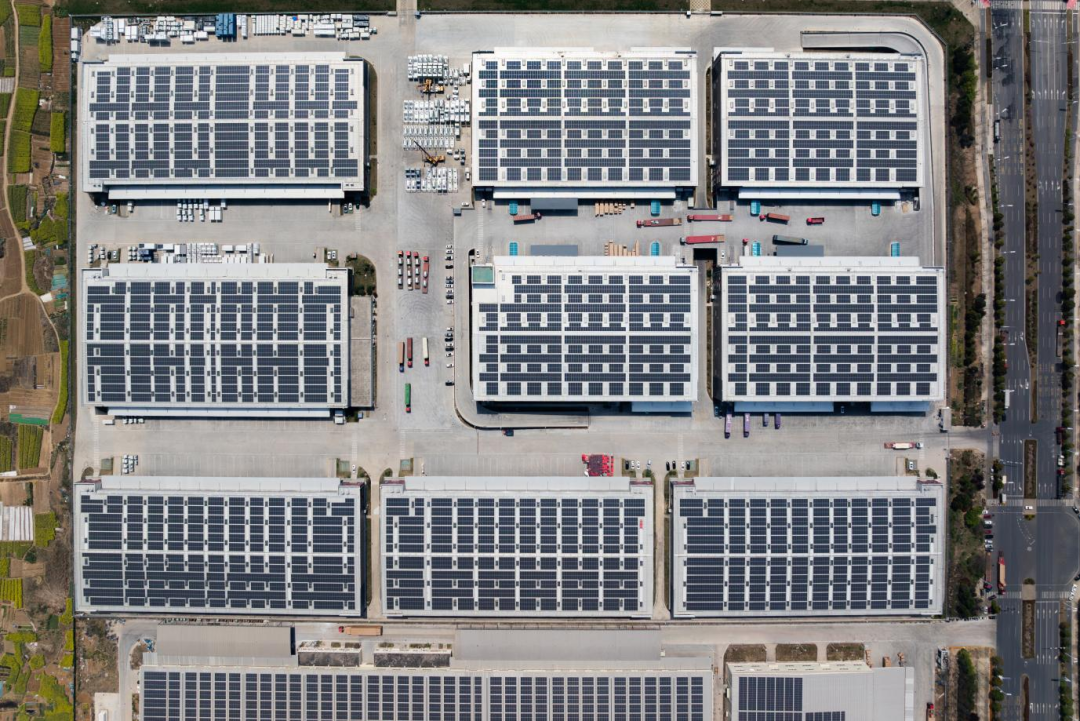
Group 1 - The core project of the 3.87 MW photovoltaic power station in Taixing City marks a significant step towards green development in the Huangqiao Park, with a planned capacity of 10 MW and an annual output of 10 million kWh, reducing CO2 emissions by 7,493.2 tons [1] - Taizhou Taizheng Energy focuses on clean energy applications and aims to establish itself as the leading brand in state-owned enterprises in Central Jiangsu, transitioning from traditional energy operations with an annual revenue of nearly 3 billion yuan [1] - The company emphasizes the need for reform and transformation to overcome development bottlenecks while strengthening its clean energy capabilities [1] Group 2 - Taizheng Energy has built 10 photovoltaic power stations with a total capacity of 22 MW for various enterprises, saving approximately 10,000 tons of standard coal and reducing carbon emissions by about 30,000 tons annually [2] - The projects utilize a "self-generated and surplus electricity online" model, providing lower electricity costs for enterprises and significant emission reduction benefits for local areas [2] - The company is expanding its green electricity initiatives into public buildings and agriculture, with ongoing projects like a 1.49 MW photovoltaic station at Jiangsu Agricultural College and a 1.46 MW project at the Port City sewage treatment plant [2] Group 3 - Taizheng Energy is launching a pilot for integrated solar storage and charging stations, aiming to innovate energy production and consumption models [3] - The company has signed strategic cooperation agreements with wind power listed companies to develop wind energy resources and establish a multi-energy complementary system [3] - Plans are in place to support the construction of a "zero-carbon city" in Taizhou, with a goal to exceed 100 MW of wind and solar power capacity by the end of the 14th Five-Year Plan [3]
金风科技连跌4天,南方基金旗下1只基金位列前十大股东
Sou Hu Cai Jing· 2025-07-14 14:37
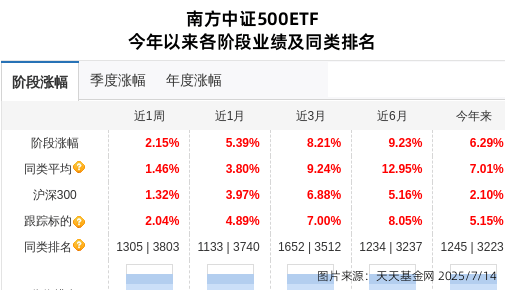
Company Overview - Goldwind Technology Co., Ltd. is a globally trusted clean energy strategic partner, dedicated to promoting energy transformation and making affordable, reliable, and sustainable energy accessible to all [1]. Stock Performance - Goldwind Technology has experienced a decline for four consecutive trading days, with a cumulative drop of -3.33% [1]. - The Southern Fund's Southern CSI 500 ETF is among Goldwind's top ten shareholders and has reduced its holdings in the first quarter of this year [1]. - The year-to-date return for the Southern CSI 500 ETF is 6.29%, ranking 1245 out of 3223 in its category [1][2]. Fund Manager Profile - The fund manager of the Southern CSI 500 ETF is Ms. Luo Wenjie, who holds a Master's degree in Mathematical Finance from the University of Southern California and a Master's in Computer Science from the University of California [4][5]. - Ms. Luo has extensive experience in quantitative analysis, having previously worked at Morgan Stanley Investment Bank and joined Southern Fund in September 2008 [4][5]. Fund Management - The Southern Fund Management Co., Ltd. was established in March 1998 and is currently led by Chairman Zhou Yi and General Manager Yang Xiaosong [5]. - The fund has a total asset management scale of 1229.64 billion yuan, with a return of 116.34% during Ms. Luo's tenure [5].


【战略合作】香港中华煤气与孚宝集团合作 共同拓展绿色甲醇供应链网络
Ge Long Hui· 2025-07-14 09:20
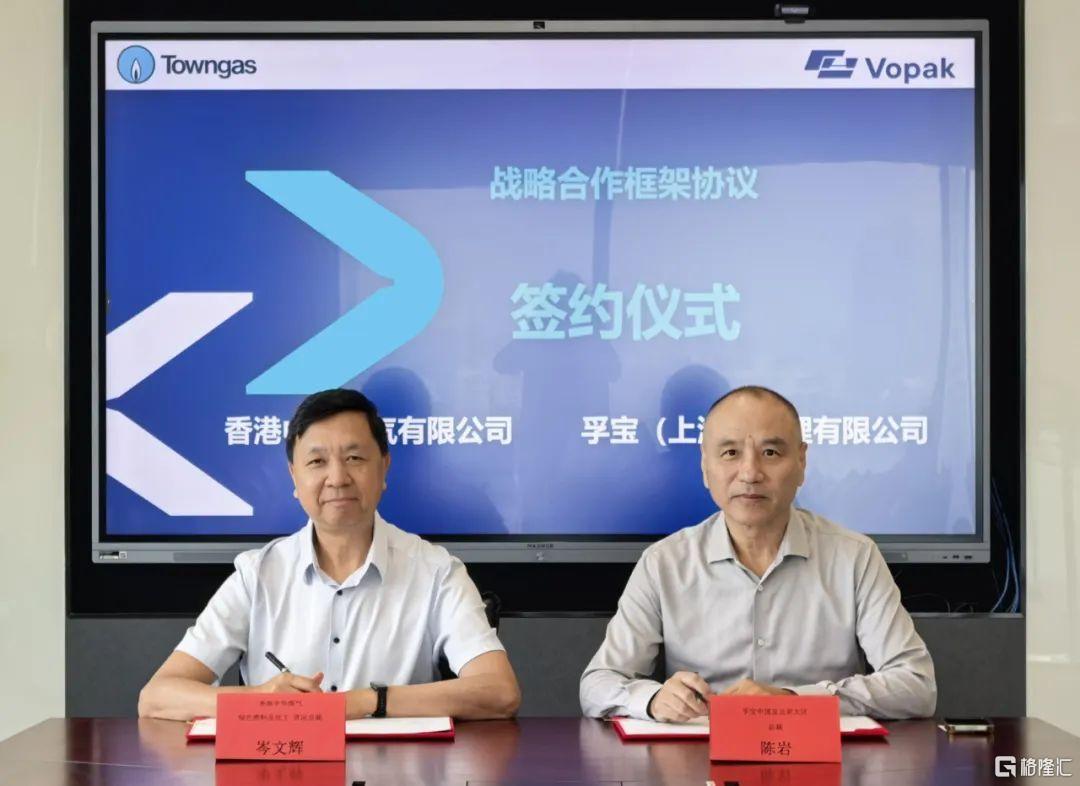
Core Viewpoint - Hong Kong and Royal Vopak Group have signed a strategic cooperation framework agreement to collaborate on green methanol production, storage, and trading, focusing on the Greater Bay Area, Hong Kong, and the Asia-Pacific market to support the shipping industry's green transition [1][3]. Group 1: Strategic Collaboration - The partnership aims to leverage each company's strengths to expand the green methanol supply chain, with Hong Kong and Royal Vopak utilizing their respective technologies and logistics capabilities [1][3]. - The collaboration will focus on "production and storage synergy," enhancing logistics and storage facilities to create an integrated green methanol supply network [3][4]. Group 2: Regional Focus - The Greater Bay Area will be a key area for cooperation, utilizing the advantages of ports in Hong Kong, Shenzhen, and Guangzhou to meet the growing demand for green fuels [3]. - In the East China region, Shanghai and Ningbo will serve as central points for logistics and storage collaboration to address increasing green fuel needs [3]. Group 3: Production Capacity and Future Plans - Hong Kong's green methanol production facility in Inner Mongolia is expected to increase its annual capacity from 100,000 tons to 150,000 tons by the end of the year, with a long-term goal of reaching 300,000 tons by 2028 [4]. - The company plans to establish multiple green methanol production plants in mainland China, targeting an annual capacity of 1 million tons to prepare for large-scale applications of green methanol [4].

央企消费帮扶聚力行动再次启动 中核集团消费帮扶超5亿元
Xin Lang Ke Ji· 2025-07-14 02:18
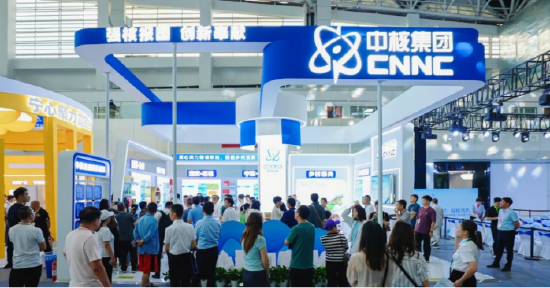
Core Viewpoint - The central enterprises, including China Nuclear Group, China Resources Group, and COMAC, are actively participating in the "Consumption Assistance for Rural Revitalization in Ningxia" initiative, demonstrating their commitment to supporting local development and poverty alleviation efforts [1][3]. Group 1: Actions and Contributions - The initiative aims to build a bridge for "production, supply, and sales" connections between central enterprises and local businesses in Ningxia [1]. - China Nuclear Group has invested over 4.3 billion yuan in unconditional assistance and over 67 billion yuan in conditional assistance to four designated poverty alleviation counties in Ningxia [1]. - The group has also contributed more than 5 billion yuan in consumption assistance and trained over 150,000 individuals in various skills [1]. Group 2: Economic Impact - China Nuclear Group's 36 subsidiaries in Ningxia have established a strong foundation with assets totaling 23 billion yuan, creating nearly 2,000 jobs and generating annual tax revenues of approximately 240 million yuan [3]. - The company has built 3.1 million kilowatts of clean energy capacity and has initiated projects that are completed within the same year of approval [3]. - The investment in the Zhongke (Ningxia) Tongxin Protection Company has empowered over 300 local women, allowing them to work while managing their households, and has received national recognition for its contributions to poverty alleviation [3]. Group 3: Event Overview - The "Central Enterprises Consumption Assistance Action" is a brand initiative developed by the State-owned Assets Supervision and Administration Commission (SASAC), successfully hosting 18 events over two years [3]. - The recent event lasted three days offline and will continue online for thirteen days, featuring exhibitors from six central ministries, 43 central enterprises, and over 50 local businesses [3].
让更多硬科技“金种子”破土拔节
Zheng Quan Ri Bao Zhi Sheng· 2025-07-11 16:41
Group 1 - The core viewpoint emphasizes that unicorn and gazelle companies are not only key players in technological innovation but also crucial for leading the development of emerging industries and nurturing new growth drivers [1] - Recent initiatives from regions like Shanghai and Sichuan focus on supporting unicorn and gazelle companies through financial support, talent acquisition, and open scenarios [1] - According to the "World Unicorn Company Development Report 2025," nearly 30% of global unicorn companies are based in China, with 53 new unicorns emerging in 2024, primarily in hard technology sectors such as artificial intelligence, integrated circuits, and clean energy [1] Group 2 - To enhance policy precision, a tiered cultivation mechanism should be established, dynamically selecting high-potential companies based on local characteristics and providing targeted support for different stages of growth [2] - Financial capital is essential for the rapid growth and innovation of unicorn and gazelle companies, necessitating the establishment of long-term mechanisms and optimized financial resource supply to meet diverse financing needs [3] - Creating a supportive innovation ecosystem is vital, encouraging collaboration between leading companies and potential unicorns, integrating resources, and facilitating the transformation of research outcomes into market applications [4]
鄂尔多斯: 内蒙古鄂尔多斯资源股份有限公司关于参加内蒙古辖区上市公司2025年投资者网上集体接待日活动情况的公告
Zheng Quan Zhi Xing· 2025-07-11 16:13
Group 1 - The company held an online investor reception day on July 2025, where executives discussed operational performance and future plans with investors [1] - The company emphasizes high dividend returns to shareholders and aims to maintain current dividend levels despite market conditions [1][2] - The company plans to focus on technological innovation and supply chain upgrades to enhance competitiveness in the chlor-alkali chemical, clean energy, and ferroalloy sectors [1][2] Group 2 - The company has no current plans for A and B share consolidation or mid-term dividend schemes, and coal sales accounted for approximately 9% of revenue while clothing sales accounted for about 15% in 2024 [2] - The company reported a 32% year-on-year profit increase in the first quarter, primarily due to significant reductions in product costs [3] - The company is exploring new growth opportunities and optimizing its business layout, including potential entry into the medical sector through its investment in Richde Medical Technology [3]

中国领跑过去十年全球清洁能源投资,“十五五”期间新的投资空间在哪里
Di Yi Cai Jing· 2025-07-10 09:39
Core Insights - The article highlights that energy investments in China, particularly in energy storage, distribution networks, and charging stations, are expected to see significant growth during the 14th Five-Year Plan period, driven by the need for flexibility and resilience in the power system [1][4] - It is projected that global energy investments will reach $3.3 trillion by 2025, with China accounting for over 25% of this total [1][5] - The construction of a new power system in China, primarily based on solar and wind energy, is accelerating, but the volatility of renewable energy generation poses challenges for grid stability [1][2] Energy Demand and Supply - China's electricity demand is not yet at its peak, with an expected annual increase of 4-5%, translating to approximately 500 TWh of new electricity demand that needs to be met [1][2] - Current approved projects in nuclear and hydropower can only contribute about 50-60 TWh of new electricity annually, necessitating an annual investment of 300-500 GW in wind and solar energy to fill the gap [2][4] Investment Focus Areas - The flexibility and resilience of the power system are identified as key areas for increased investment, with a projected annual addition of 50 GW in energy storage and gas turbines during the 14th Five-Year Plan [4] - There is a shift in investment logic towards enhancing distribution networks to support zero-carbon parks and integrated energy systems, moving away from previous focuses on distributed solar power [4][6] - Demand-side investment opportunities are highlighted, particularly in charging stations, which could significantly reduce the need for additional coal power generation [4][6] Global Energy Transition - The IEA emphasizes the imbalance in global energy investments, noting that while major economies like China, the US, and the EU have seen rapid growth, many developing countries, especially in Africa, have experienced a decline in energy investments [6][7] - China is recognized as a leader in clean energy investment and production, with its experiences serving as a reference for other countries in developing their energy markets [6][7] Regional Investment Trends - Central Asia is emerging as a focal point for market investment, benefiting from land resources and large projects, although it faces challenges due to insufficient grid investment [7] - China's photovoltaic equipment price reductions have spurred rapid market expansion in developing countries, making distributed generation a preferred choice in regions with unreliable grid access [7]
从“大美丽法案”到关税新信函,海外变局下的应对与思考
天天基金网· 2025-07-09 11:46
Core Viewpoint - The article discusses the significant changes in the global capital market driven by the "One Big Beautiful Bill Act" (OBBB) and its implications for various industries, alongside the Federal Reserve's monetary policy and global trade dynamics [1][2]. Group 1: The "One Big Beautiful Bill Act" - The OBBB was passed by the U.S. Senate after overcoming internal party divisions and external opposition, marking a pivotal moment in Trump's policy agenda [3][4]. - The act focuses on three main areas: large-scale tax cuts favoring the wealthy, adjustments in government spending with increased defense budgets and reduced social welfare, and raising the federal debt ceiling by $5 trillion, the largest adjustment in U.S. history [7][8]. - The act creates a dichotomy in industry impacts, benefiting traditional energy, manufacturing, real estate, and defense sectors while imposing pressures on clean energy, healthcare, and food industries due to reduced incentives [8][9]. Group 2: Federal Reserve's Dilemma - The Federal Reserve has paused interest rate changes four times, with market expectations leaning towards two rate cuts by the end of the year, potentially starting in September [14][15]. - Trump's push for immediate rate cuts contrasts with the Fed's cautious approach, which is influenced by high unemployment and inflation uncertainties stemming from tariffs and fiscal stimulus [16][20]. - Current economic conditions differ from previous cycles, with fiscal expansion and tariff uncertainties constraining the Fed's decision-making space [20]. Group 3: Global Trade Dynamics - The expiration of tariff exemptions on July 9 has heightened tensions, with Trump announcing new tariffs on imports from 14 countries, including Japan and South Korea, effective August 1 [21][24]. - The trade landscape remains volatile, with previous tariff announcements causing market fluctuations and ongoing negotiations between the U.S. and China [25][26]. Group 4: Future Market Considerations - The article emphasizes the need for diversified asset allocation in response to the evolving global landscape, highlighting the importance of low correlation among assets for risk mitigation [29][30]. - It suggests focusing on sectors aligned with new productivity paradigms, such as AI and high-end manufacturing, as potential growth areas in the A-share and Hong Kong markets [30]. - The importance of cash flow assets and maintaining liquidity is underscored, as these can provide stability in a fluctuating market environment [32][34].

东盟能源中心达伍德:东盟能源脱碳要学习中国经验|首席气候官
2 1 Shi Ji Jing Ji Bao Dao· 2025-07-09 08:58
Core Insights - ASEAN region has a population exceeding 600 million and a GDP of approximately $3.8 trillion, becoming one of the more stable areas for global economic growth with rising energy demands [1][2] - The ASEAN Energy Center is focusing on overcoming challenges in energy transition, including resource endowment differences, economic development levels, and energy structures among member countries [1][2][4] - The region aims for net-zero emissions targets between 2050 and 2065, with significant investment needs identified, particularly in the electricity sector, which requires about $190 billion annually by 2050 [2][4] Group 1: Energy Transition Challenges - ASEAN countries face multiple challenges in energy transition, including financing bottlenecks and insufficient technological reserves [1][4] - The energy sector's core issues include energy security, energy transition, and economic development momentum, with a goal to become the world's fourth-largest economy by 2030 [2][4] - The ASEAN Power Grid Initiative (ASEAN PGI) aims to invest up to $700 billion by 2050 to enhance energy security and facilitate renewable energy integration [6] Group 2: Investment and Policy Coordination - ASEAN member states are encouraged to align national strategies with regional goals to attract investments from Chinese renewable energy companies [2][8] - Innovative policies are being introduced to encourage foreign direct investment, particularly from China, despite external challenges such as green trade barriers [8][9] - Joint ventures are seen as the optimal model for enhancing cooperation between China and ASEAN in the renewable energy sector, facilitating resource integration and technology transfer [9][10] Group 3: Renewable Energy and Technology - Strong storage technology is identified as crucial for stabilizing energy supply from intermittent renewable sources like solar and wind [7] - The potential for green hydrogen is acknowledged, but immediate focus remains on storage solutions to ensure reliable energy supply [7] - The ASEAN Energy Center plays a pivotal role in facilitating collaboration, providing knowledge, and supporting policy development for low-carbon transitions [3][10]