
饮料

Search documents
阿联酋联邦税务局拟实施针对含糖饮料的新税制
Shang Wu Bu Wang Zhan· 2025-11-06 03:45
Core Points - The Federal Tax Authority (FTA) of the UAE is set to implement a new tiered tax system for sugary beverages starting in 2026, which will classify drinks based on their sugar content per 100 milliliters [2] - Companies are required to submit sugar content reports from accredited laboratories and obtain compliance certificates; otherwise, their products will be automatically classified as high-sugar beverages [2] - The new tax system categorizes beverages into four tiers: high sugar (≥8g/100ml), medium sugar (5–8g), low sugar (<5g), and no sugar (0% tax rate), while carbonated drinks will be taxed based on sugar content and energy drinks will maintain the current 100% tax rate [2] - The FTA has indicated that there will be a sufficient preparation period for companies to adjust their formulations and systems to ensure a smooth transition to the new tax regime [2]
薪资增长势头稳固 日本央行政策正常化进程不改
智通财经网· 2025-11-06 02:33
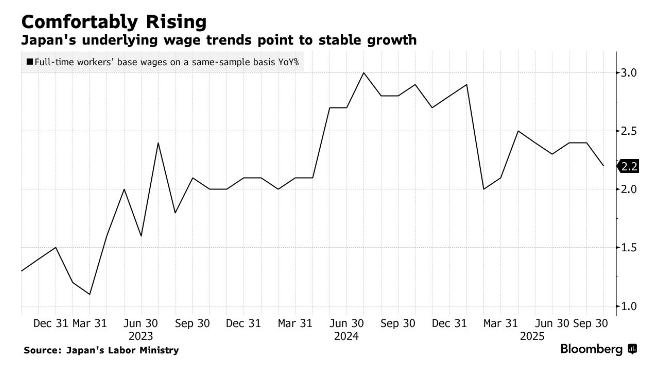
Group 1 - Japan's core wages in September showed stable growth, allowing the Bank of Japan to continue its tightening policy, with nominal wages increasing by 1.9% year-on-year, matching economists' expectations [1][3] - The basic salary also grew at the same rate, while a more stable indicator, which excludes bonuses and overtime, rose by 2.2%, slightly slowing from the previous month [1][3] - Real cash earnings fell by 1.4%, marking the ninth consecutive month of decline, which aligns with analysts' expectations and increases pressure on the government to address inflation's impact on households [1][3] Group 2 - The Bank of Japan views wage trends as a key factor in determining the timing of future interest rate hikes, with the next policy decision scheduled for December 19 [3][4] - The largest labor union, Rengo, is aiming for at least a 5% wage increase in upcoming negotiations, including a 3% rise in basic salary, with confirmation expected by the end of November [4][5] - The current wage negotiations face stronger resistance compared to previous years, influenced by tariffs imposed during the Trump administration, which have affected exporters' ability to raise wages [5] Group 3 - Continuous wage growth is a priority for the government, especially in light of public dissatisfaction over rising living costs and declining real wages, which contributed to the ousting of previous leaders [5] - Japan's core inflation has remained above the Bank of Japan's 2% target for approximately three and a half years, eroding household purchasing power [5] - The government is formulating an economic stimulus plan, expected to be completed this month, which will include measures to alleviate price pressures and support wage growth for small and medium-sized enterprises [5]

太古集团再度亮相进博会
Ren Min Wang· 2025-11-06 01:02
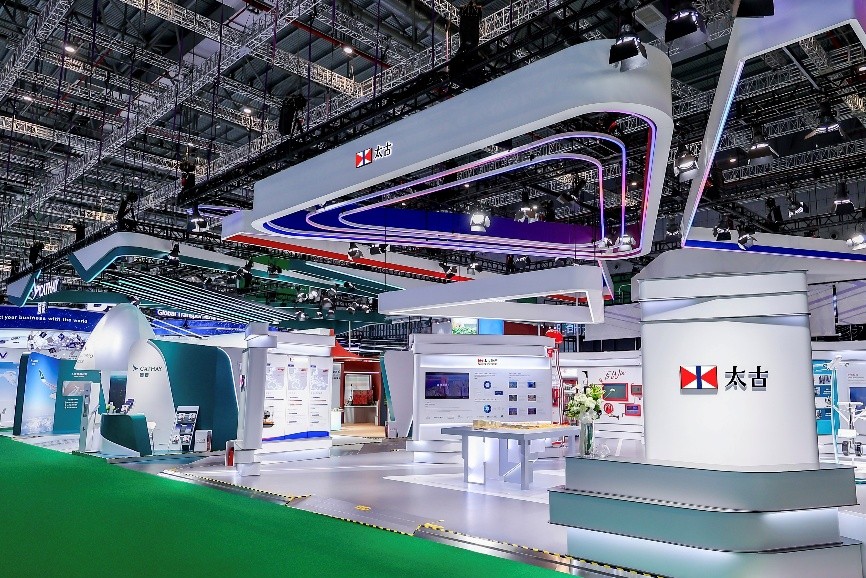
Core Insights - The eighth China International Import Expo (CIIE) has opened, with Swire Group showcasing its commitment to the Chinese market through an upgraded exhibition presence [1][2] Group 1: Exhibition Highlights - Swire Group's exhibition theme is "Lean and Innovative, Together for a Better Future," featuring subsidiaries such as Swire Properties, Swire Coca-Cola, Cathay Pacific, Swire Machinery, and Swire Shipping [1] - The interactive exhibition space spans 400 square meters, utilizing digital multimedia technology to illustrate the vitality of "new consumption" [2][3] - Visitors can engage with various interactive experiences, including a project model of Xi'an Taikoo Li, a self-service beverage machine from Swire Coca-Cola, and a virtual reality experience of Cathay Pacific's cabin space [2][5] Group 2: Technological and Sustainable Initiatives - The exhibition also highlights Swire Group's exploration in intelligent and green transformation, showcasing applications of robotics and artificial intelligence in aircraft maintenance by Swire Machinery [4] - The future operational scenarios of the Xiamen Taikoo Xiang'an International Airport maintenance base are presented, emphasizing digital technology upgrades and green standards [4] - Swire Shipping, making its debut at the expo, introduces its route layout and low-carbon solutions, reflecting the group's commitment to sustainable development and industry transformation [4] Group 3: Commitment to the Chinese Market - Swire Group's representatives emphasize the company's long-term commitment to the Chinese market, showcasing its active exploration in contributing to high-quality economic and social development [4] - The group aims to be a witness, participant, and beneficiary of Chinese-style modernization, injecting continuous momentum into high-quality development through innovative practices [4]

宗馥莉“换将”
Zheng Quan Shi Bao· 2025-11-05 15:30
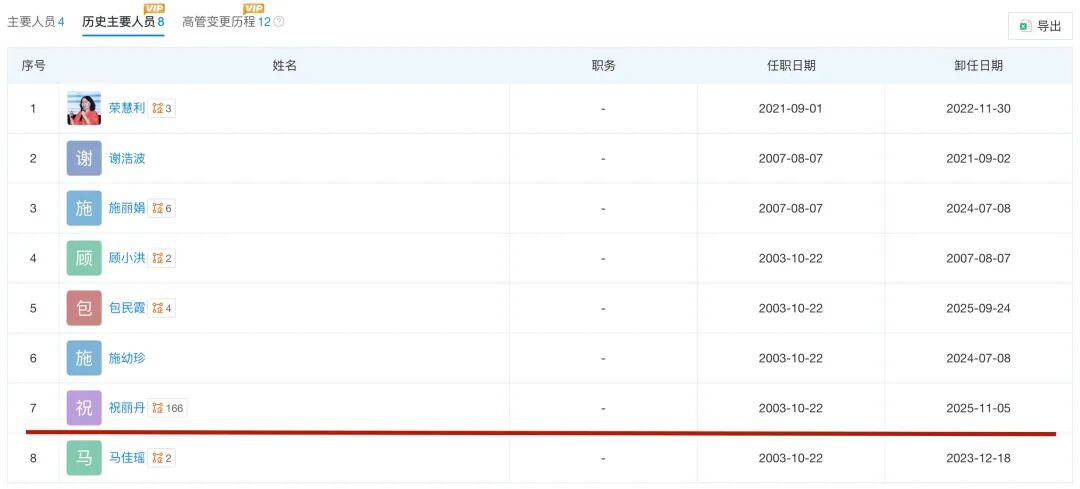
Core Viewpoint - The legal representative of Hongsheng Beverage Group Co., Ltd. has changed from Zhu Lidan to Zheng Qundi, with Zhu's departure date noted as November 5 [1] Management Changes - Zhu Lidan has been moved to the historical key personnel list, indicating her official departure from the role [1] - Zheng Qundi currently serves as the legal representative and manager in six Wahaha-related companies, suggesting a significant role within the organization [1] Historical Personnel - The document lists various historical personnel changes, including the tenure and departure dates of several key individuals, with Zhu Lidan's tenure starting from October 22, 2003 [1]
东鹏饮料现2笔大宗交易 合计成交33.87万股
Zheng Quan Shi Bao Wang· 2025-11-05 15:01
Core Viewpoint - Dongpeng Beverage conducted two block trades on November 5, totaling 338,700 shares with a transaction value of 81.32 million yuan, at a price of 240.12 yuan, reflecting an 11.00% discount compared to the closing price of the day [2] Trading Summary - The total transaction volume for the two block trades was 338,700 shares, with a total transaction value of 81.32 million yuan [2] - The transaction price was 240.12 yuan, which is an 11.00% discount relative to the closing price of the day [2] - Over the past three months, Dongpeng Beverage has recorded a total of seven block trades, amounting to 636 million yuan [2] Market Performance - On the same day, Dongpeng Beverage's closing price was 269.80 yuan, showing an increase of 1.12% [2] - The daily turnover rate was 0.41%, with a total transaction amount of 570 million yuan [2] - The net inflow of main funds for the day was 15.72 million yuan, while the stock has seen a cumulative decline of 5.66% over the past five days, with a total net inflow of 18.75 million yuan [2] Margin Trading Data - The latest margin financing balance for Dongpeng Beverage is 426 million yuan, which has increased by 57.17 million yuan over the past five days, representing a growth of 15.52% [2] Company Background - Dongpeng Beverage (Group) Co., Ltd. was established on June 30, 1994, with a registered capital of 520.013 million yuan [2]

祝丽丹卸任宏胜饮料集团法定代表人
Bei Jing Shang Bao· 2025-11-05 12:26
北京商报讯(记者 孔文燮)11月5日,宏胜饮料集团发生工商变更,法定代表人从"祝丽丹"变更为"郑 群娣"。此前有媒体报道,祝丽丹已从宏胜饮料集团离职。祝丽丹曾是娃哈哈的核心高管,在158家"娃 哈哈系""宏胜系"企业中担任法定代表人或高管。公开资料显示,郑群娣自2024年10月起担任浙江娃哈 哈数字科技有限公司法定代表人及经理职务,负责该公司日常经营管理。北京商报记者注意到,近日, 浙江娃哈哈创业投资有限公司、大理宗盛智能科技有限公司、杭州宗新投资管理合伙企业(有限合伙)等 新增一则恢复执行信息,执行标的逾13.4万元,执行法院为云南省大理白族自治州祥云县人民法院。 ...
宏胜集团法定代表人变更,郑群娣接棒祝丽丹
21世纪经济报道· 2025-11-05 11:29
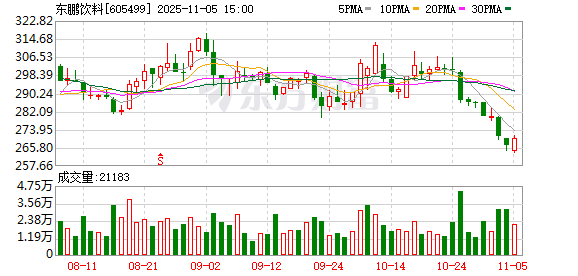
记者丨叶映橙 见习记者林健民 编辑丨刘巷 视频丨 柳润瑛 实习生余星惠 11月5日消息,天眼查工商信息显示,宏胜饮料集团有限公司发生工商变更, 祝丽丹卸任法定 代表人、经理,由郑群娣接任。 祝丽丹的名字则被转移至历史主要人员名单之列, 其卸任日期显示为11月5日。 | 主要人员4 | | | ® 음出 | | | 历史主要人员 8 高管变更历程 12 2 | | --- | --- | --- | --- | --- | --- | --- | | 序号 | | | 职务 任职日期 卸任日期 | 姓名 | | | | 1 | | 美 荣慧利 猛3 | 2021-09-01 2022-11-30 | | | | | 2 | 谢 | 谢浩波 | 2007-08-07 2021-09-02 | | | | | 3 | 施 | 施丽娟 ぽ6 | 2007-08-07 2024-07-08 | | | | | 4 | | 顾小洪 窟2 | 2003-10-22 2007-08-07 | | 顾 | | | 5 | 包 | 包民霞 ぽ4 | 2003-10-22 2025-09-24 | | | | | 6 | 施 | ...

经导财评|制度型开放筑基 资本市场引力升级
Da Zhong Ri Bao· 2025-11-05 10:08
Group 1 - The China Securities Regulatory Commission (CSRC) is committed to implementing the spirit of the Fourth Plenary Session, focusing on risk prevention, strong regulation, and promoting high-quality development in the capital market [1][2] - The CSRC aims to deepen the institutional opening of the capital market, with measures to enhance the efficiency of overseas listing filings and expand the scope of the Shanghai-Hong Kong and Shenzhen-Hong Kong Stock Connect programs [1][2] - The overseas listing filing system has improved through effective inter-departmental coordination, enhancing the stability and predictability of policy supply for companies [1][2] Group 2 - The expansion of the Stock Connect mechanism is expected to inject substantial momentum into market openness, allowing for a more diverse range of market participants and new products like RMB stock trading counters and REITs [2] - Risk prevention remains a fundamental support in the process of opening up, with a focus on enhancing regulatory capabilities and cross-border monitoring of capital flows [2] - The total market capitalization of A-share listed companies has surpassed 119 trillion yuan, with the technology sector accounting for over one-quarter, indicating significant internal market stability [3]
宏胜集团法定代表人变更,郑群娣接棒祝丽丹
Mei Ri Jing Ji Xin Wen· 2025-11-05 09:20
每经杭州11月5日电(记者叶晓丹)11月5日,《每日经济新闻》记者注意到,宏胜饮料集团有限公司法定 代表人已由此前的祝丽丹变更为郑群娣。10月底,有媒体报道称,宏胜饮料集团有限公司法定代表人祝 丽丹已离职,其办公室已搬空。 ...
香飘飘2025三季报:掘金5.5万亿餐饮市场,构建“三足鼎立”渠道新势能
Cai Fu Zai Xian· 2025-11-05 09:09
Core Insights - The beverage industry is currently facing growth challenges, with a slight increase of 0.1% in retail value year-on-year for the first nine months of 2025, totaling 250.1 billion yuan, indicating near-zero growth [1] - Despite the industry downturn, the ready-to-drink segment of Xiangpiaopiao has shown resilient growth, achieving a revenue of 833 million yuan in the first nine months of 2025, a year-on-year increase of 3.92% [1] Group 1: Channel Strategy - Xiangpiaopiao's ready-to-drink business has become a key growth driver, surpassing the revenue contribution of its brewed products for the first time in the first half of 2025 [2] - The company has focused on two core channels: campus and bulk snack retail, leveraging these to build a strong foundation for its ready-to-drink segment [2] - The campus channel targets the Z generation, utilizing themed pop-up stores and sponsorship of campus events to enhance brand recognition and drive sales [2] Group 2: Bulk Snack Retail Channel - The bulk snack retail channel has seen significant growth, becoming a primary access point for fast-moving consumer goods [3] - Xiangpiaopiao has tailored small-sized, high-value products to fit various consumption scenarios, establishing strategic partnerships with leading snack chains, covering over 30,000 stores [3] - This channel's efficiency and consumer reach have significantly boosted brand exposure and market penetration for Xiangpiaopiao's ready-to-drink products [3] Group 3: Emerging Restaurant Channel - Xiangpiaopiao has identified the restaurant channel as a new growth opportunity, with the restaurant sector projected to reach 5.5 trillion yuan in revenue in 2024, growing by 5.3% [4] - The company has developed a product matrix tailored to dining needs, including Meco fruit tea and plant-based health drinks, enhancing brand visibility and consumer appeal [4] - Xiangpiaopiao is actively expanding its presence in restaurant chains, with successful pilot projects in cities like Jiangyin, Huzhou, and Shenzhen, and plans to extend to other key regions [5] Group 4: Future Growth Potential - The multi-channel strategy encompassing campus, bulk snacks, and restaurants is expected to create a robust growth framework for Xiangpiaopiao's ready-to-drink business [6] - The restaurant channel, with its large market potential and high compatibility with consumer needs, is anticipated to become a significant new growth driver alongside existing channels [6] - This strategic positioning aims to solidify Xiangpiaopiao's leadership in the cup tea market amidst increasing competition [6]
