工业技术

Search documents
中创智领(00564) - 中创智领(郑州)工业技术集团股份有限公司2025年度审计报告及财务报表
2026-03-30 14:09
香港交易及結算所有限公司及香港聯合交易所有限公司對本公告的內容概不 負 責,對 其 準 確 性 或 完 整 性 亦 不 發 表 任 何 聲 明,並 明 確 表 示,概 不 對 因 本 公 告 全部或任何部分內容而產生或因倚賴該等內容而引致的任何損失承擔任何責 任。 ZCZL Industrial Technology Group Company Limited 中創智領(鄭州)工業技術集團股份有限公司 (在 中 華 人 民 共 和 國 註 冊 成 立 的 股 份 有 限 公 司) (股 份 代 碼:00564) 海外監管公告 本公告乃根據香港聯合交易所有限公司證券上市規則第13.10B條 作 出。 茲載列中創智領(鄭 州)工業技術集團股份有限公司在上海證券交易所網站及 中 國 報 章 刊 登 公 告 如 下,僅 供 參 閱。 承董事會命 中創智領(鄭 州)工業技術集團股份有限公司 董事長 焦承堯 中 國,鄭 州,2026年3月30日 於本公告日期,本公司執行董事為焦承堯先生、賈浩先生、孟賀超先生及李開順 先 生;非 執 行 董 事 為 崔 凱 先 生;而 獨 立 非 執 行 董 事 為 季 豐 先 生、方 遠 ...
邦纳公司发布2025年财报,净利润达1.954亿美元
Xin Lang Cai Jing· 2026-02-20 20:41
Core Viewpoint - The company has demonstrated strong profitability with a net profit of $51.2 million in Q4 2025 and a total annual net profit of $195.4 million for the year, indicating robust financial performance [1] Financial Performance - Q4 2025 net profit was $51.2 million, with diluted earnings per share of $1.49 [1] - Total net profit for the year 2025 reached $195.4 million, with earnings per share of $5.64 [1] - The expected release date for Q1 2026 financial results has not yet been announced [1] Stock Performance - As of January 22, 2026, the company has not mentioned any recent stock price fluctuations or significant capital operation plans [1] - Investors are advised to monitor the overall performance of the industrial sector and the impact of the macroeconomic environment on the business [1] Industry Policy and Environment - The company specializes in sensors and automation solutions, with its performance closely tied to the manufacturing investment cycle [1] - Attention should be paid to changes in global manufacturing sentiment and the long-term demand potential driven by the increasing penetration of technologies such as artificial intelligence and the Internet of Things in the industrial sector [1]

EnPro Industries(NPO) - 2025 Q4 - Earnings Call Transcript
2026-02-18 14:30
Financial Data and Key Metrics Changes - Enpro reported a 9% increase in sales for 2025, reaching $1.14 billion, driven by strong performance in aerospace, food and biopharma, and semiconductor markets [5][12] - Adjusted EBITDA for Q4 2025 was $69.4 million, up 19.2%, with an adjusted EBITDA margin of 23.5%, an increase of 100 basis points [13] - Adjusted diluted earnings per share for Q4 2025 increased nearly 27% to $1.99, primarily due to higher adjusted EBITDA and lower interest expenses [13] Business Line Data and Key Metrics Changes - Sealing Technologies sales increased almost 15% in Q4 2025 to $187.1 million, with organic sales up nearly 8% year-over-year [14] - Advanced Surface Technologies (AST) sales rose 13.4% to $108.4 million in Q4 2025, driven by strength in precision cleaning solutions [15] - Adjusted segment EBITDA margin for Sealing Technologies expanded 180 basis points to 32.8%, while AST maintained a margin above 20% [15][16] Market Data and Key Metrics Changes - The aerospace and food and biopharma markets showed strong demand, while commercial vehicle OEM demand remained weak [14][38] - The semiconductor capital equipment market is expected to recover in the second half of 2026, with improved order flow anticipated [9][23] Company Strategy and Development Direction - Enpro's strategy focuses on organic growth of mid- to high single digits through 2030, with a commitment to strategic acquisitions that enhance capabilities [4][10] - The company aims to maintain premium profitability and return levels, with a focus on leveraging engineering expertise and applied capabilities [8][10] Management's Comments on Operating Environment and Future Outlook - Management expressed confidence in the company's ability to generate strong free cash flow and maintain a robust balance sheet despite recent acquisitions [9][19] - The outlook for 2026 includes total sales growth of 8%-12%, with expectations for adjusted EBITDA between $305 million and $320 million [20][21] Other Important Information - Enpro recorded its best safety statistics in 2025, with a total recordable incident rate of 0.64 and a lost time case rate of 0.09 [25] - The company plans to increase its quarterly dividend to $0.32 per share, marking the eleventh consecutive annual increase since initiating dividends in 2015 [19] Q&A Session Summary Question: Can you provide more detail on AST's margin expectations for the first and second halves of the year? - Management indicated that the second half is expected to be considerably stronger, with growth rates accelerating and margins improving as new growth programs contribute [34][35] Question: How did the last couple of months of the year compare to your November guidance? - Sales were at the higher end of expectations, while margins were slightly softer due to increased corporate expenses, particularly in medical costs [42][43] Question: What is the outlook for cash conversion in 2026 given the higher CapEx? - Management expects strong free cash flow conversion to remain around 100% of adjusted EPS, despite higher interest expenses due to recent acquisitions [46][47] Question: Has the focus on M&A shifted at all? - No, the company continues to pursue strategic acquisitions aggressively, maintaining a strong pipeline of potential targets [48][50] Question: How are the newly acquired businesses performing? - Both Alpha and Overlook are exceeding expectations with strong backlogs and order rates, contributing positively to the Sealing Technologies segment [57][58]

Matthews International(MATW) - 2026 Q1 - Earnings Call Transcript
2026-02-04 15:02
Financial Data and Key Metrics Changes - The company reported net income of $43.6 million, or $1.39 per share, compared to a net loss of $3.5 million, or $0.11 per share a year ago, primarily due to a significant gain from the divestiture of the warehouse automation business [23][24] - Consolidated sales for the first quarter of fiscal 2026 were $285 million, down from $402 million a year ago, reflecting divestitures of the SGK business and European packaging and tooling businesses [24][25] - Adjusted EBITDA for the first quarter was $35.2 million, compared to $40 million in the prior year, primarily due to lower operating performance in the industrial technology segment [25] Business Line Data and Key Metrics Changes - Memorialization segment sales increased to $204.2 million from $190.5 million year-over-year, driven by higher casket volumes and inflationary pricing [26][27] - Industrial technology segment sales decreased to $69 million from $80.5 million, primarily due to lower sales in the engineering business and the divestiture of the tooling business [27][28] - Brand Solutions segment sales were $11.6 million, down from $130.8 million, impacted by the divestiture of the SGK business [30] Market Data and Key Metrics Changes - The company noted strong demand for mausoleum construction, which is expected to positively impact the Gibraltar Construction business [10] - The energy solutions business faced challenges, but there is a strong interest in dry battery electrode technology, with over $100 million in the lead pipeline [16][18] Company Strategy and Development Direction - The company has successfully reduced its leverage ratio below 3x and improved its balance sheet through strategic divestitures [4][6] - Future cash flow will be supported by a 40% interest in Propelis, with expected synergies exceeding $60 million [8] - The company is exploring strategic partnerships to enhance its intellectual property value and is focused on organic growth opportunities [21] Management's Comments on Operating Environment and Future Outlook - Management expressed confidence in the memorialization segment's growth, anticipating a full-year contribution from the Dodge acquisition [19] - The company remains cautious about the timing of orders in the energy business due to slowed demand in North America and Europe [20] - Management highlighted the importance of strategic partnerships and investments to expand adoption of their technologies without heavy capital expenditure [18] Other Important Information - The company declared a quarterly dividend of $0.255 per share, payable on February 23, 2026 [33] - Cash flow used in operating activities for the first quarter was $52 million, reflecting typical seasonal lower earnings [31] Q&A Session Summary Question: Can you talk about the potential customers for ultracapacitors and batteries in North America and Asia? - Management indicated ongoing conversations with OEMs and battery manufacturers in North America and Europe, emphasizing the shift towards dry battery electrode technology [36][37] Question: Are there any potential M&A opportunities in the energy sector? - Management noted a focus on joint development opportunities rather than acquisitions, highlighting partnerships as a key strategy [39][40] Question: What are the expectations for the memorialization market in 2026? - Management expects continued growth in the memorialization segment, driven by the integration of the Dodge acquisition and inflationary pricing [48][50] Question: What is the expected revenue from energy storage in fiscal 2026? - Management projected revenue from energy storage to be in the range of $30-35 million [61] Question: What are the expectations for CapEx and free cash flow in fiscal 2026? - Management indicated CapEx should be around $25 million, with expectations for positive cash generation in the latter part of the fiscal year [62]

Matthews International(MATW) - 2026 Q1 - Earnings Call Transcript
2026-02-04 15:02
Financial Data and Key Metrics Changes - The company reported net income of $43.6 million, or $1.39 per share, compared to a net loss of $3.5 million, or -$0.11 per share a year ago, primarily due to a significant gain from the divestiture of the warehouse automation business [23] - Consolidated sales for the first quarter were $285 million, down from $402 million a year ago, reflecting divestitures of the SGK business and European packaging and tooling businesses [24] - Consolidated Adjusted EBITDA for the first quarter was $35.2 million, compared to $40 million a year ago, primarily due to lower operating performance in the engineering business [25] Business Line Data and Key Metrics Changes - The memorialization segment reported sales of $204.2 million, up from $190.5 million a year ago, with a 7% year-over-year increase driven by higher casket volumes and inflationary pricing [26] - The industrial technology segment's sales were $69 million, down from $80.5 million a year ago, primarily due to lower sales in the engineering business and the divestiture of the tooling business [27] - The brand solutions segment reported sales of $11.6 million, significantly down from $130.8 million a year ago, due to the divestiture of the SGK business [30] Market Data and Key Metrics Changes - The company noted strong demand for mausoleum construction, which is expected to positively impact the Gibraltar Construction business [10] - The energy solutions business faced challenges in the European market and U.S. battery space, but interest in their solutions remains strong, with over $100 million in the lead pipeline [16] Company Strategy and Development Direction - The company successfully executed a strategic pivot to reduce its leverage ratio below 3x, achieving this through the sale of its warehouse automation and Saueressig businesses [4][5] - Future cash realization is expected to be driven by a 40% interest in Propelis, with anticipated synergies exceeding $60 million [8] - The company is exploring strategic partnerships to enhance the adoption of its technologies without heavy capital expenditure [18] Management's Comments on Operating Environment and Future Outlook - Management expressed confidence in the memorialization segment's growth, expecting a full year contribution from the Dodge acquisition to drive sales [19] - The company remains cautious about the timing of orders in the energy business due to slowed demand in North America and Europe [20] - Management highlighted the importance of patience in realizing the full value of their assets and maintaining a focus on shareholder returns [21] Other Important Information - The company reported cash flow used in operating activities of $52 million for the first quarter, reflecting typical seasonal lower earnings [31] - Outstanding debt at the end of the quarter was $537 million, with net debt declining by $173 million due to cash proceeds from divestitures [32] - The board declared a quarterly dividend of $0.255 per share, payable on February 23, 2026 [33] Q&A Session Summary Question: Can you discuss the potential customers for ultracapacitors and batteries in North America and Asia? - Management indicated ongoing conversations with OEMs and battery manufacturers in North America, emphasizing the shift towards dry battery electrode technology [36][37] Question: Are there any potential M&A opportunities in the energy sector? - Management noted a focus on joint development opportunities rather than acquisitions, as partnerships may provide necessary capital investments [39][40] Question: What are the expectations for the memorialization market in 2026? - Management expects continued growth in the memorialization segment, driven by the integration of the Dodge acquisition and inflationary pricing [48][50] Question: What is the anticipated revenue from energy storage in fiscal 2026? - Management projected revenue from energy storage to be in the range of $30-35 million [61] Question: What are the expectations for CapEx and free cash flow in fiscal 2026? - Management indicated CapEx should be around $25 million, with expectations for positive cash generation in the latter part of the fiscal year [62]
方洪波:我们总有道路,前程崭新
Xin Lang Cai Jing· 2026-01-17 02:11
Core Insights - Midea Group's Chairman Paul Fang emphasized the company's resilience and strategic direction in his 2026 New Year address, highlighting the achievements of 2025 despite global challenges and expressing confidence in overcoming future obstacles [1][23][48] Group 1: Global Challenges and Company Progress - In 2025, Midea faced a turbulent global political and economic environment but continued to advance by adhering to a strategy of simplification for growth and self-disruption to meet challenges [2][27] - The company made significant strides in technology leadership, product innovation, and global impact across various business segments, including smart home, industrial technology, and healthcare [4][29][49] Group 2: Business Segments and Innovations - Midea's smart home segment introduced the first AI Butler and led the air conditioning industry with advanced AI interaction technologies, while also launching innovative products like a 45CM ultra-thin refrigerator [4][29] - In industrial technology, Midea focused on key components for HVAC and robotics, launching new products and establishing manufacturing bases in Mexico and Brazil [4][29][49] - The healthcare sector saw the establishment of a dedicated division, with significant innovations such as the world's first full-chain AI platform for MRI and the acquisition of Carestream International [5][30][49] Group 3: Strategic Focus for 2026 - Midea's strategy for 2026 centers on "Core-Focused Growth," emphasizing core businesses, markets, and capabilities to create a sustainable growth relay between ToC and ToB operations [31][50] - The company aims to solidify its leadership in white goods and HVAC, targeting top global positions through continuous innovation and enhanced user experience [6][31][50] - Secondary core businesses, including robotics, energy, and healthcare, will be strategically developed to ensure resilience across economic cycles [34][50] Group 4: Efficiency and Globalization - Midea plans to enhance efficiency across its value chain, focusing on cost leadership and digitalization to improve decision-making and operational efficiency [39][50] - The company will implement an OBM-first strategy to strengthen its global presence, emphasizing localization in R&D, manufacturing, and supply chains in key regions [39][50] Group 5: Embracing Change and Future Opportunities - Midea recognizes the necessity of continuous self-reinvention and the courage to disrupt existing patterns to foster growth amid fierce competition [40][51] - The company is committed to maintaining an enterprising spirit and adapting to changing market demands, ensuring that innovation and self-improvement remain central to its identity [44][51] - Midea believes that by focusing on core strengths and embracing change, every direction will lead to new opportunities for growth [45][51]



博世CES 2026:Bosch Cook AI烹饪助手、汽车线控制动系统量产
Sou Hu Cai Jing· 2026-01-05 23:07
Group 1: Strategic Vision and Financial Goals - Bosch announced its strategic vision at CES 2026, focusing on integrating hardware and software to create "human-centered AI technology" [1] - The company aims to exceed €6 billion (approximately ¥49.14 billion) in annual revenue from its software and services business by the early 2030s [1] - Bosch plans to invest over €2.5 billion (approximately ¥20.47 billion) in AI by the end of 2026 [1] Group 2: Consumer Technology Innovations - Bosch introduced the Bosch Cook AI, an AI cooking assistant that utilizes sensors, connected appliances, and computer vision to guide users through recipes and adjust cooking temperatures automatically [3] - The company launched Origify, a smart anti-counterfeiting solution that identifies unique surface textures to create unalterable digital identities for products, enabling quick verification of authenticity [3] Group 3: Smart Mobility Developments - Bosch unveiled a next-generation vehicle motion management software platform that coordinates braking, steering, power systems, and suspension control, addressing motion sickness issues affecting millions globally [4] - The company showcased an AI-driven smart cockpit solution that allows drivers to interact with their vehicles conversationally, assisting with parking and transcribing meetings [4] - Bosch's Brake-by-Wire system is set to enter mass production with a major global automaker, with projected cumulative sales exceeding €7 billion (approximately ¥57.33 billion) by 2032 [4] Group 4: Industrial Technology Collaborations - Bosch announced a strategic partnership with Microsoft to focus on "Agentic AI" in manufacturing, combining Bosch's expertise with Microsoft's cloud and AI infrastructure for autonomous optimization of production and supply chains [5] - Early results from this collaboration indicate a potential reduction in system integration costs by up to 70% and a decrease in predictive maintenance costs by one-third [5] - Bosch is also collaborating with Kodiak AI to develop a control platform for autonomous trucks and confirmed the planned production of a silicon carbide semiconductor factory in California by late 2026, with an investment of $1.9 billion (approximately ¥13.29 billion) [5]

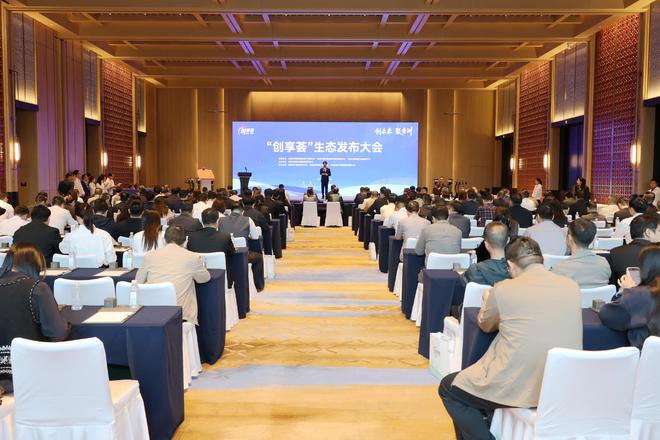
政策之外,什么最值钱?珠海香洲打造“资源链接”新型平台
Nan Fang Du Shi Bao· 2025-12-10 09:43
Core Insights - The "Chuangxianghui" industrial ecosystem platform launched by the Xiangzhou District aims to address the pain points of enterprises by transforming government policies into actionable support [1][11] - The platform has successfully attracted over 60 billion yuan in social capital through a government investment fund of 12 billion yuan, and has introduced more than 200 high-end talents [1][3] Group 1: Platform Development and Strategy - The platform is part of a broader strategy to deepen state-owned enterprise reform and systematically open application scenarios, with a focus on ten key areas including artificial intelligence and low-altitude economy [3] - "Chuangxianghui" has gathered over 160 members, including industry leaders, investment institutions, universities, and professional service organizations, aiming to create a network that integrates talent, industry, innovation, funding, and value chains [4] Group 2: Project Implementation and Ecosystem Building - The platform employs a "closed-loop thinking" approach to build a credible ecosystem, with over 20 cooperative projects signed at the launch, involving joint investments exceeding 50 million yuan [6] - The core task of "Chuangxianghui" is to facilitate the organic coupling of resources through regular mechanisms such as project roadshows and supply-demand matching [8] Group 3: Impact on Enterprises - The platform's real value is reflected in the direct support it provides to enterprises, addressing critical issues such as financing and legal matters [9] - Startups benefit significantly from the platform's multi-dimensional support in R&D, pilot testing, scenario matching, and market expansion, which accelerates product validation and reduces market entry risks [9] Group 4: Government's Role in Industrial Development - The launch of "Chuangxianghui" signifies a shift in the local government's role from being a mere policy provider to becoming a comprehensive ecosystem builder and innovation service provider [11] - The initiative aims to create a market-oriented interface that links state-owned enterprise scenarios, government funding, social capital, and research intelligence, marking a significant step in regional innovation dynamics [11]
【申万宏源策略 | 一周回顾展望】春季行情的幅度和定位
申万宏源研究· 2025-12-02 05:19
Core Viewpoint - The market has experienced a rebound after a significant decline, but the adjustment in technology growth stocks regarding cost-effectiveness issues is still ongoing, with the adjustment magnitude having surpassed half but the time insufficient for a complete recovery [2][3]. Group 1: Market Analysis - The current market is within the "two-phase bull market" framework, with the first phase at a high level. The AI industry chain is experiencing a trend that has not yet concluded, leading to a situation where the cost-effectiveness of mid and small-cap stocks is temporarily insufficient [2][3]. - Historical experience suggests that when technology adjustments approach the bull-bear boundary, it may indicate a mid-term bottom area. However, the challenge lies in waiting for industrial catalysts and performance validation to digest valuations [2][3]. - The adjustment in technology growth stocks has reached over half of its potential, but the time required for a complete adjustment remains a challenge. A significant recovery in long-term cost-effectiveness may signal the resumption of an upward trend [2][3]. Group 2: Spring Market Outlook - The spring market is positioned as a potential rebound phase within the high-level adjustment of the bull market 1.0. The overall market adjustment pressure is limited, leaning towards this scenario [4]. - There are two potential scenarios for the spring market: it may either be a rebound within the high-level adjustment phase or a transition from the adjustment phase to a bottoming phase [4]. - The spring market is expected to see effective rebounds in offensive assets (technology and cyclical sectors), but upward breakthroughs may be challenging due to high supply growth and limited improvement in supply-demand dynamics [3][4]. Group 3: Investment Opportunities - The "policy bottom" may be validated earlier, and cyclical price increases could serve as the foundation for the spring market, with a focus on basic chemicals and industrial technology sectors [4]. - Technology stocks are likely to experience a general rebound as their adjustment magnitude reaches a critical point. Key areas to watch include innovative pharmaceuticals and national defense industries, as well as AI computing power, storage, energy storage, and robotics [4][6]. - The Hong Kong stock market continues to exhibit high beta characteristics, with the Hang Seng Technology index showing more substantial adjustments and potential for a more elastic rebound [4].

【申万宏源策略】周度研究成果(11.24-11.30)
申万宏源研究· 2025-12-02 05:19
Market Overview - The market experienced a rebound after a period of decline, but the adjustment in technology growth stocks has not fully resolved, indicating that while the price adjustment is over half complete, the time for recovery remains insufficient [5] - The spring market is characterized by potential effective rebounds in offensive assets like technology and cyclical stocks, but the upward breakthrough logic may be difficult to realize, suggesting a limited upper range for the spring market [5] - Short-term rebounds are expected, with the "policy bottom" potentially being validated earlier, alongside rising prices in cyclical sectors, indicating that cyclical assets may form the foundation for the spring market [5] Industry Valuation and Comparison - As of November 28, 2025, the valuation metrics for major indices are as follows: - CSI All Share (excluding ST) PE at 21.0x, PB at 1.8x, at historical percentiles of 77% and 38% respectively - SSE 50 PE at 11.8x, PB at 1.3x, at historical percentiles of 63% and 42% - ChiNext Index PE at 39.2x, PB at 5.1x, at historical percentiles of 30% and 56% [8][9] - Industries with PE valuations above the 85th percentile include real estate, retail, pharmaceuticals, and IT services, while the medical services sector is below the 15th percentile for both PE and PB [9][10] Global Asset Allocation - The expectation of interest rate cuts in the US has increased, with the probability of a 25 basis point cut in December rising to 86.4%, up from 71.0% the previous week, driven by a weakening labor market [11] - The decline in the US dollar index below 100 indicates a shift to a weaker position, contributing to an inflow of both domestic and foreign capital into the Chinese stock market [11]