
有色金属工业

Search documents
一季度有色金属工业将继续平稳运行
Xin Hua Wang· 2026-02-20 11:27
Core Viewpoint - The non-ferrous metal industry in China is expected to maintain stable growth in 2023, with an estimated increase in industrial added value of around 5% year-on-year [1] Group 1: Industry Performance - The non-ferrous metal industry is projected to continue its stable operation, with growth in production, operating revenue, and profits [1] - Fixed asset investment in the non-ferrous metal sector is expected to remain on an upward trend, driven by increasing demand for nickel, cobalt, and lithium from downstream sectors such as photovoltaics, wind power, and lithium batteries [1] Group 2: Policy and Structural Changes - A series of policies, including the "Non-Ferrous Metal Industry Stabilization Growth Work Plan (2025-2026)" and high-quality development plans for copper and aluminum industries, are providing a clear framework for resource security and green transformation [1] - The internal driving force for growth is undergoing significant changes, with the rise of "new three samples" and industries like artificial intelligence serving as core engines for the industry to ascend the value chain [1]
2025年我国规上有色金属工业企业利润总额突破5000亿元
Xin Hua Wang· 2026-02-19 04:12
Core Viewpoint - The profit of large-scale non-ferrous metal industry enterprises in China is projected to exceed 500 billion yuan, reaching 528.45 billion yuan in 2025, representing a 25.6% increase from the previous year, marking a historical high [1] Group 1: Profit Contributions - Aluminum, gold, and copper are highlighted as key contributors to profit growth, with profit increases of 38 billion yuan, 21.2 billion yuan, and 17.7 billion yuan respectively, contributing 35%, 20%, and 16% to the overall profit growth of the industry [1] Group 2: Supporting Factors - The core factors supporting the rapid growth of the non-ferrous metal industry in 2025 include high metal prices, continuous policy benefits, and the expansion of demand from emerging industries [1] - The rapid development of strategic emerging industries such as aerospace, new energy, new generation information technology, and artificial intelligence is continuously expanding market demand for non-ferrous metal products [1] Group 3: Structural Upgrades - The demand driven by "new quality productivity" is accelerating the upgrade of the industry's product structure towards high value-added areas, injecting momentum into profit growth [1]
2026年1月PPI同比下降1.4% 环比上涨0.4%
Guo Jia Tong Ji Ju· 2026-02-11 03:16
Group 1 - In January 2026, the national industrial producer price index (PPI) decreased by 1.4% year-on-year, with the decline narrowing by 0.5 percentage points compared to the previous month; month-on-month, it increased by 0.4%, with the increase expanding by 0.2 percentage points from the previous month [1] - The industrial producer purchase price index also saw a year-on-year decrease of 1.4%, with the decline narrowing by 0.7 percentage points from the previous month; month-on-month, it increased by 0.5%, with the increase expanding by 0.1 percentage points from the previous month [1] Group 2 - In January, the prices of production materials decreased by 1.3%, contributing approximately 1.06 percentage points to the overall decline in industrial producer prices; within this category, mining industry prices fell by 8.1%, raw materials prices decreased by 2.0%, and processing industry prices dropped by 0.4% [2] - Prices of living materials decreased by 1.7%, contributing about 0.38 percentage points to the overall decline; food prices fell by 1.9%, clothing prices decreased by 0.7%, and prices of general daily goods and durable consumer goods both declined by 1.8% [2] - In terms of purchase prices, fuel and power prices decreased by 7.1%, chemical raw material prices fell by 5.8%, and construction materials and non-metallic prices dropped by 4.7%; however, prices of non-ferrous metals and wires increased by 16.1% [2] Group 3 - Month-on-month, production material prices increased by 0.5%, contributing approximately 0.37 percentage points to the overall increase in industrial producer prices; mining industry prices decreased by 1.7%, while raw materials prices rose by 0.7% and processing industry prices increased by 0.5% [2] - Living material prices saw a slight increase of 0.1%, contributing about 0.01 percentage points to the overall increase; food prices decreased by 0.1%, clothing prices fell by 0.3%, and general daily goods prices dropped by 0.1%, while durable consumer goods prices increased by 0.3% [2]
有色市场:结构分化 波动加剧
Shang Hai Zheng Quan Bao· 2026-02-04 18:32
Core Insights - In 2025, the profits of China's large-scale non-ferrous metal industry reached a record high of 528.45 billion yuan, marking a 25.6% increase from the previous year, driven primarily by aluminum, gold, and copper [2][3] - The non-ferrous metal market is expected to experience structural differentiation and increased volatility in 2026, with potential for further price increases [2][3] - The global supply constraints, particularly in copper and nickel, alongside strong demand from sectors like electric vehicles, are anticipated to support non-ferrous metal prices in 2026 [3][5] Profit Performance - The profit contributions from major metal varieties in 2025 included aluminum (38 billion yuan), gold (21.2 billion yuan), and copper (17.7 billion yuan), with lead-zinc, tungsten, molybdenum, and rare earths also contributing significantly [2] - The overall profit growth contribution rates for these six major varieties were 35%, 20%, 16%, 7%, 5%, and 5% respectively [2] Market Outlook - The macroeconomic environment is expected to remain supportive, with a continued global interest rate reduction cycle and robust domestic policies, which will provide a solid foundation for non-ferrous metal prices [2][3] - The anticipated structural growth in demand, particularly in the renewable energy and electric vehicle sectors, is expected to bolster nickel demand by approximately 5% annually [5] Supply Constraints - Supply-side constraints are projected to persist, with limited global copper mine output and reduced nickel production from Indonesia, while domestic electrolytic aluminum capacity approaches its ceiling [3][5] - The aluminum market is expected to maintain a tight balance, with high-cost alumina production potentially exiting the market due to regulatory measures [3] Regulatory Challenges - The implementation of the EU Carbon Border Adjustment Mechanism (CBAM) starting January 1, 2026, is expected to increase operational costs for non-ferrous metal companies, with an estimated CBAM cost of 2.44 million euros for aluminum products exported to the EU [6][7] - The CBAM will impose higher compliance thresholds, potentially excluding high-carbon products from the EU supply chain, which could lead to increased logistical and channel pressures for companies [6][7]

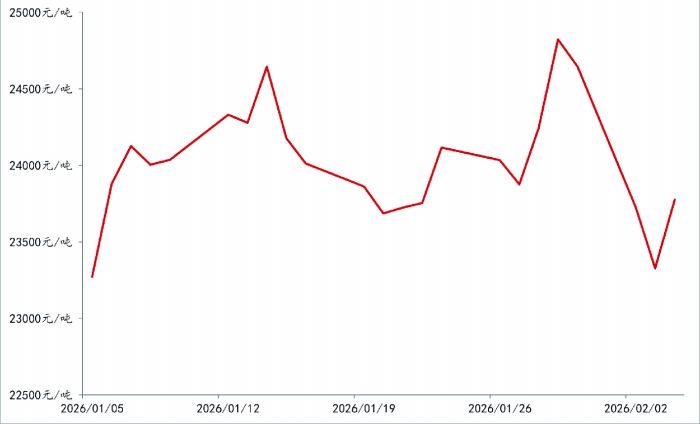
2025年我国有色金属主要产品产量再创新高
券商中国· 2026-02-03 04:46
Core Viewpoint - The Chinese non-ferrous metals industry is expected to achieve record production levels in 2025, maintaining a leading global market share, with a projected industrial added value growth of 6.9% [1] Group 1: Production and Growth - In 2025, the production of ten major non-ferrous metals is anticipated to exceed 80 million tons, reaching 81.75 million tons, which represents a 3.9% increase from the previous year [1] - The average annual growth rate during the 14th Five-Year Plan period is projected to be 5.0% [1] - For 2026, the non-ferrous metals industry is expected to maintain stable growth, with an industrial added value growth of approximately 5% year-on-year [2] Group 2: Price and Revenue Outlook - Prices for industrial silicon and lithium carbonate are expected to stabilize and rebound in 2026, while the prices of commonly used non-ferrous metals such as copper and aluminum are projected to experience high-level fluctuations [2] - The industry's revenue growth is anticipated to reach 5%, with a slight increase in profits [2]
【广发金工】AI识图关注卫星、有色、生物科技
广发金融工程研究· 2026-01-18 12:09
Market Performance - The Sci-Tech 50 Index increased by 2.58% over the last five trading days, while the ChiNext Index rose by 1.00%. In contrast, the large-cap value index fell by 2.81%, and the large-cap growth index decreased by 0.03%. The Shanghai Stock Exchange 50 Index dropped by 1.74%, whereas the small-cap index represented by the CSI 2000 gained 1.31%. The computer and electronics sectors performed well, while the defense, military, and real estate sectors lagged behind [1]. Risk Premium and Valuation Levels - As of January 16, 2026, the risk premium, measured as the inverse of the static PE of the CSI All Share Index minus the yield of ten-year government bonds, stands at 2.51%. The two standard deviation boundary is 4.68%. The valuation levels indicate that the CSI All Share Index's PETTM is at the 83rd percentile, with the Shanghai 50 and CSI 300 at 74% and 75%, respectively. The ChiNext Index is close to 63%, while the CSI 500 and CSI 1000 are at 69% and 67%, respectively. The ChiNext Index's valuation is relatively at the historical median level [1]. Fund Flow and Trading Volume - In the last five trading days, ETF funds experienced an outflow of 132.3 billion yuan, while the margin trading balance increased by approximately 97.3 billion yuan. The average daily trading volume across the two markets was 34.251 billion yuan [3]. Thematic Indexes - The latest thematic allocations include the Satellite Industry Index, Nonferrous Metals Index, Biotechnology Index, and Computer Index, among others. Specific indices mentioned are the CSI Satellite Industry Index, CSI Industrial Nonferrous Metals Theme Index, CSI Biotechnology Theme Index, CSI Big Data Industry Index, and CSI Computer Theme Index [2][4]. Market Sentiment and Risk Preference - The report includes observations on market sentiment based on the proportion of stocks above the 200-day moving average and tracks the risk preferences between equity and bond assets [13][14]. Financing Balance - The financing balance data is also included, indicating trends in margin trading activity [16]. Individual Stock Performance - Statistics on individual stock performance year-to-date based on return intervals are provided, highlighting the distribution of returns across different stocks [18]. Oversold Indices - The report notes instances of indices being oversold, which may indicate potential investment opportunities [20].

2025长三角有色金属供应链创新大会召开 共建供应链协同生态
Zheng Quan Shi Bao Wang· 2025-11-19 01:13
Core Insights - The conference focused on the modernization of the non-ferrous metal supply chain, which is crucial for the development of key industries such as electricity, electronics, construction, and new energy [1] - China has become the world's largest producer and consumer of non-ferrous metals, significantly supporting the growth of strategic emerging industries and the industrial economy [1] - In the first half of 2025, the added value of the non-ferrous metal industry grew by 7.6% year-on-year, outperforming the average growth rate of the industrial sector by 1.2 percentage points [1] Industry Challenges - The non-ferrous metal industry faces multiple challenges, including tightening resource and environmental constraints, low efficiency in supply chain collaboration, and difficulties in financing for small and medium-sized enterprises (SMEs) [2] - Key recommendations to address these challenges include building a smart and efficient supply chain ecosystem through "digital chain connectivity," empowering SMEs through financial solutions, and creating a sustainable industrial community through ecological collaboration [2] Policy and Market Development - The establishment of a unified national market is essential for building a high-level socialist market economy, focusing on the unification of systems and rules [3] - The conference included the unveiling of the "China SME Association Anhui Office" to better serve local SMEs and a signing ceremony for the "Yangtze River Delta Non-Ferrous Metal Industry Financial Unified Market" to enhance regional industrial collaboration and address financing challenges [3]
前三季度规上有色工业增加值同比增7.8%
Ren Min Ri Bao· 2025-11-14 22:03
Group 1 - The core viewpoint of the article highlights the growth and stability of the non-ferrous metal industry in China during the first three quarters of the year, with significant increases in production, investment, and trade [1] Group 2 - The added value of the non-ferrous metal industry increased by 7.8% year-on-year, surpassing the national industrial growth rate by 1.6 percentage points [1] - The production of ten common non-ferrous metals reached 61.249 million tons, reflecting a year-on-year growth of 3.0% [1] Group 3 - Fixed asset investment in the non-ferrous metal industry grew by 10.1% compared to the same period last year, with mining and selection industries seeing a substantial increase of 49.3% [1] - Private sector fixed asset investment rose by 7.9% year-on-year [1] Group 4 - The total import and export trade of non-ferrous metals amounted to $305.66 billion, marking a year-on-year increase of 13.4% [1] - Imports reached $244.94 billion, up 11.9% year-on-year, while exports totaled $60.72 billion, reflecting a growth of 19.8% [1]
深化产融结合 助力产业高质量发展 三大行业协会共话期货市场服务实体经济
Qi Huo Ri Bao Wang· 2025-11-03 16:58
Core Insights - The forum discussed the role of the futures market in supporting the real economy of the non-ferrous metals industry, emphasizing its importance in ensuring supply chain security and promoting high-quality industry development [1] Non-Ferrous Metals Industry - The non-ferrous metals industry has shown stable performance in 2023, with an industrial added value growth of 7.8% year-on-year and a production of 61.25 million tons, reflecting a 3.0% increase [2] - The futures market has become a crucial part of the financial system, aiding in price discovery, risk management, and resource allocation, which stabilizes production and enhances the industry's resilience [2] - The futures product system is continuously improving, with 13 non-ferrous metal futures and corresponding options available, leading to deeper integration into business operations [2] - The industry faces new challenges such as resource security and green transformation, necessitating further development of the futures market [3] Steel Industry - The steel industry has seen a significant increase in futures market participation, with nine steel-related futures and four options currently available, maintaining the largest trading scale globally [4] - There has been a notable shift in participation, with large steel enterprises that previously avoided the futures market now engaging more deeply [4] - The steel sector is currently under pressure from weak demand and a complex external environment, prompting calls for measures to reduce participation costs and enhance market regulation [4] Petrochemical Industry - The petrochemical sector has advanced from initial exploration to deep collaboration in integrating production and finance, with significant progress in risk management and financing innovation [5] - In 2024, the petrochemical industry's revenue is projected to reach 16.28 trillion yuan, with a profit of 789.71 billion yuan, marking increases of 46.9% and 53.2% respectively since 2020 [5] - Despite progress, challenges remain in the petrochemical industry regarding balanced participation, risk management tools, and the need for further development of futures market functionalities [6] - Recommendations for the petrochemical industry include enhancing market supply, deepening integration, and improving risk management capabilities [6]
镍与不锈钢日评:成本支撑走弱不锈钢逢高沽空-20251031
Hong Yuan Qi Huo· 2025-10-31 03:08
1. Report Industry Investment Rating - Not provided in the document 2. Core Viewpoints of the Report - Nickel: On October 29, the main nickel contract fluctuated within a range. The spot market trading was weak, and the basis premium narrowed. The nickel fundamentals are weak with inventory pressure, but the valuation is at a low level. It is expected that the nickel price will fluctuate at a low level [1]. - Stainless steel: On October 29, the main stainless - steel contract fluctuated within a range. The spot market trading was weak, and the basis premium narrowed. The fundamentals are loose, and the cost support is weakening. It is expected that the upside space for stainless steel is limited [1]. 3. Summary by Relevant Catalogs Nickel Market - **Futures Market**: On October 29, the closing prices of Shanghai nickel futures' near - month, continuous - one, continuous - two, and continuous - three contracts were 120300 yuan/ton, 121380 yuan/ton, 121560 yuan/ton, and 121710 yuan/ton respectively, with increases of 950 yuan/ton, 980 yuan/ton, 950 yuan/ton, and 960 yuan/ton compared to the previous day. The trading volume of the active contract was 109262 hands (-47034), and the open interest was 109686 hands (-5360). The LME 3 - month nickel official price was 15320 US dollars/ton, up 100 US dollars/ton from the previous day [2]. - **Spot Market**: The average price of SMM 1 electrolytic nickel was 122100 yuan/ton, down 250 yuan/ton from the previous day. The average price of nickel beans was 123300 yuan/ton, down 300 yuan/ton from the previous day [2]. - **Supply and Demand**: On the supply side, nickel ore prices remained flat, the amount of nickel ore arriving at the port last week decreased, and port inventories decreased. Nickel - iron plants' losses deepened, domestic production in October increased, and Indonesian production increased, leading to nickel - iron inventory reduction. Domestic electrolytic nickel production increased in October, and export profits expanded. On the demand side, ternary production increased, stainless - steel plants' production increased, and the demand for alloys and electroplating was stable [1]. - **Inventory**: The inventory of the Shanghai Futures Exchange increased, the LME inventory increased, the social inventory increased, and the bonded - area inventory decreased [1]. Stainless - Steel Market - **Futures Market**: On October 29, the main stainless - steel contract fluctuated within a range. The trading volume was 93841 hands (-3249), and the open interest was 98223 hands (-2030) [1]. - **Spot Market**: The spot market trading was weak, and the basis premium narrowed. The average price of 304/2B coil - cut edge (Wuxi) was 13550 yuan/ton, remaining unchanged from the previous day [2]. - **Supply and Demand**: In terms of supply, stainless - steel production in October increased, and the production of the 300 - series decreased. In terms of demand, the terminal demand was weak [1]. - **Cost**: The price of high - nickel pig iron decreased, and the price of high - carbon ferrochrome decreased [1]. - **Inventory**: The inventory of the Shanghai Futures Exchange decreased, and the social inventory of the 300 - series last week was 612700 tons (-9000) [1]. News and Information - According to the statistics of each sub - association of the China Non - Ferrous Metals Industry Association, in the first three quarters of 2025, the output of industrial silicon in new - energy metals was 328000 tons, a year - on - year decrease of 10.8%; the output of electrolytic nickel was 347000 tons, a year - on - year increase of 50.6%; the output of refined cobalt was 134000 tons, a year - on - year decrease of 3.7%; and the output of lithium carbonate was 588000 tons, a year - on - year increase of 28.0% [1].