
纺织等

Search documents
零碳工厂:工业领域落实“双碳”目标的关键抓手
中国能源报· 2026-01-26 04:24
Core Viewpoint - The article discusses the issuance of the "Guiding Opinions on the Construction of Zero Carbon Factories" by five departments including the Ministry of Industry and Information Technology, marking a significant step in promoting zero carbon factory construction as a national strategic action aimed at achieving carbon neutrality in the industrial sector [1][3]. Summary by Sections Zero Carbon Factory Definition and Goals - A zero carbon factory prioritizes the use of green electricity and energy-saving modifications to reduce carbon emissions, aiming for net-zero emissions through carbon offsetting via green trading [1]. - The construction of zero carbon factories is set to be included in government work reports by 2025, indicating its elevation from industry exploration to a national strategy [1]. Key Tasks and Industry Focus - The "Guiding Opinions" outline three clear aspects: construction objects, goals, and pathways, focusing on key industries such as automotive, lithium batteries, photovoltaics, steel, non-ferrous metals, and petrochemicals, which together account for over 65% of the industrial added value and approximately 50% of total carbon emissions in China [3][4]. Development Goals and Phased Approach - The document sets clear, phased development goals, emphasizing the need to establish low-carbon competitive advantages in sensitive international trade sectors by 2027, particularly in automotive and electronics [4]. - By 2030, the focus will shift to consolidating low-carbon achievements in foundational materials and consumer goods, promoting collaborative carbon reduction across supply chains [4]. Construction Pathways and Mechanisms - The "Guiding Opinions" propose a comprehensive lifecycle approach to carbon reduction, including scientific carbon accounting, source reduction, process reduction, consumption carbon fixation, intelligent carbon control, and efficient carbon management [5]. - It emphasizes the need for differentiated deployment of tasks among various stakeholders, including local authorities, enterprises, industry associations, and research institutions, to create a multi-faceted governance structure for zero carbon factory construction [5]. Four Guiding Principles - The article outlines four guiding principles for zero carbon factory construction: 1. **Prudent Development**: Tailoring strategies to industry characteristics and ensuring steady carbon reduction without compromising economic growth [7]. 2. **Systematic Advancement**: Integrating energy optimization, resource recycling, and supply chain collaboration into a comprehensive carbon reduction strategy [8]. 3. **Soft and Hard Integration**: Combining physical measures with robust carbon management systems to enhance overall carbon management capabilities [9]. 4. **International Leadership**: Establishing standards and databases that reflect China's characteristics and actively participating in international standard-setting [9]. Recommendations for Stakeholders - Local authorities are advised to implement science-based policies that consider regional industrial characteristics and avoid sacrificing normal operations for short-term emission reductions [12]. - Enterprises should focus on enhancing their green competitiveness by aligning with ESG disclosure requirements and establishing effective carbon management systems [12]. - Research institutions are encouraged to innovate standards and frameworks that support zero carbon factory construction, ensuring alignment with international practices [13]. Conclusion - The "Guiding Opinions" serve as a clear action guide and institutional framework, marking a solid step towards zero carbon development in China's industry, with the potential to set a global benchmark for industrial green transformation [13].

五部门:2026年起将遴选一批标杆零碳工厂
Zhong Guo Zheng Quan Bao· 2026-01-19 23:57
Core Viewpoint - The Chinese government has issued guidelines for the construction of zero-carbon factories, aiming to enhance energy efficiency and promote green transformation in key industries by selecting and establishing benchmark zero-carbon factories starting in 2026 [1][2]. Group 1: Objectives and Implementation - The main goal is to implement a phased approach to cultivate zero-carbon factories, prioritizing industries with urgent decarbonization needs and lower difficulty in achieving carbon reduction [1]. - By 2027, a batch of zero-carbon factories will be established in sectors such as automotive, lithium batteries, photovoltaics, electronics, light industry, machinery, and computing facilities [1]. - The initiative will expand to include traditional high-energy industries like steel, non-ferrous metals, petrochemicals, building materials, and textiles by 2030, exploring new decarbonization pathways [1]. Group 2: Construction Pathways - Zero-carbon factory construction involves continuous reduction of CO2 emissions through technological innovation, structural adjustments, and management optimization [2]. - Key construction pathways include establishing a carbon emission accounting management system, enhancing the green and low-carbon transformation of energy structures, and improving energy efficiency through technological upgrades [2][3]. - The guidelines emphasize the importance of digitalization and intelligent management for precise measurement and control of energy consumption and carbon emissions [2]. Group 3: Energy Structure Transformation - The guidelines encourage factories to achieve zero-carbon energy supplies, including electricity, heat, hydrogen, and fuels, while promoting the use of distributed renewable energy sources [3]. - Development of industrial green microgrids and integrated projects utilizing solar, wind, and energy recovery technologies is encouraged to enhance energy efficiency [3]. - The initiative also supports the advancement of clean low-carbon hydrogen applications through industrial by-product hydrogen and renewable energy hydrogen production [3].
138届广交会海州22家企业斩获丰 累计接待境外客商超1000批次
Yang Zi Wan Bao Wang· 2025-11-06 04:56
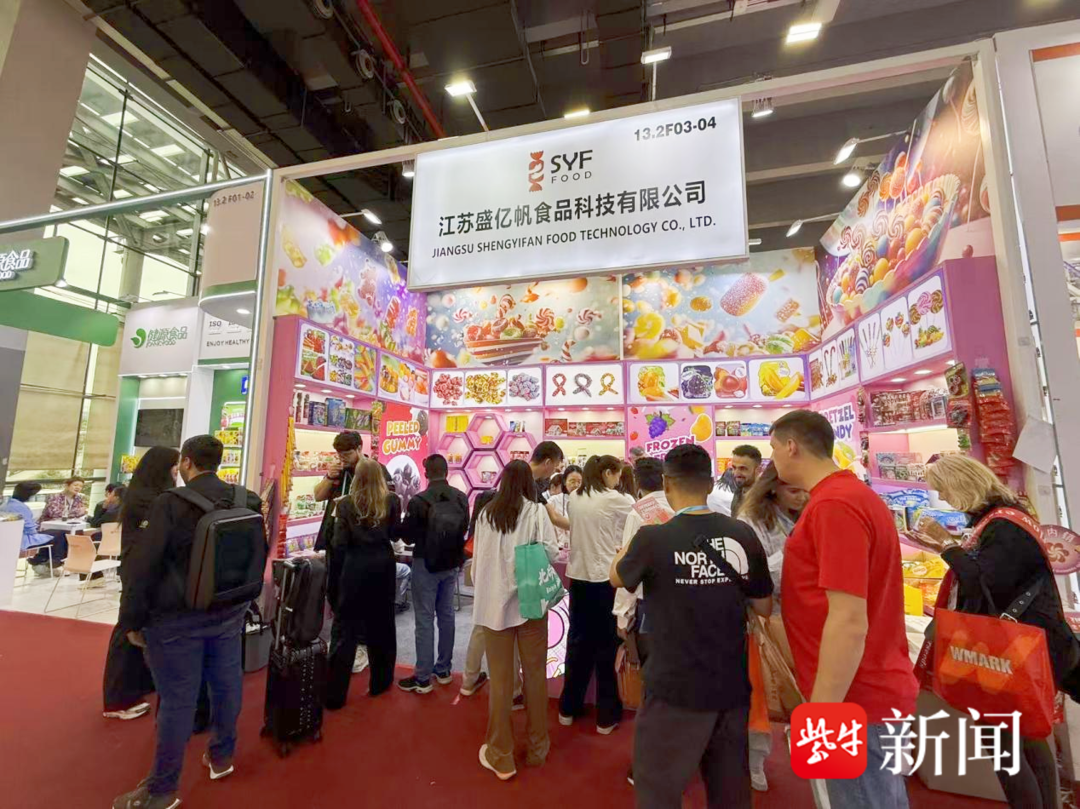
Core Insights - The 138th China Import and Export Fair (Canton Fair) concluded successfully, with 22 companies from Haizhou District showcasing 17 categories of products, attracting over 1,000 batches of foreign buyers [1][3] - The participating companies included those from various sectors such as industrial automation, smart manufacturing, home appliances, and textiles, demonstrating their competitive advantages and positive image in foreign trade [1][3] Group 1 - Haizhou District's exhibitors received significant attention for their unique products, with companies like Sonas Security Technology focusing on outdoor sports shoes, which garnered interest from European buyers [3] - Jiangsu Shengyifan Food Technology Co., Ltd. achieved over 10 million yuan in new sales during the fair, successfully expanding its overseas market presence [3] - Companies like Ruyear Industry engaged with over 260 batches of clients, primarily from Belt and Road countries, with a notable focus on the Middle East, South Asia, and Central Asia [3] Group 2 - Following the fair, companies are actively engaging with visiting buyers and conducting online negotiations to deepen cooperation and gather market feedback [5] - Companies such as Sonas and Jindian Textile plan to develop new products and enter new markets based on customer needs [5] - Local government departments will continue to support these companies by facilitating connections with exhibitors possessing advanced technologies, aiming to help them secure orders and expand their markets [5]

我省每年开展一次重点行业能效“领跑者”认定
Da Zhong Ri Bao· 2025-10-10 00:57
Core Viewpoint - Shandong Province has introduced a management method for selecting energy efficiency "leaders" in key industries, aiming to enhance overall energy utilization efficiency across the sector through annual recognition and promotion of advanced practices [1] Summary by Relevant Categories Policy and Implementation - The Shandong Provincial Department of Industry and Information Technology, along with the Provincial Development and Reform Commission and the Provincial Market Supervision Administration, will conduct annual assessments to identify energy efficiency "leaders" in key industries [1] - The recognized companies will be prioritized for national energy efficiency "leader" applications and provincial green manufacturing demonstration units [1] Definition and Scope - Energy efficiency "leaders" are defined as enterprises within Shandong that achieve energy consumption indicators meeting or exceeding national mandatory limits and benchmarks while continuously improving energy utilization efficiency [1] - Key industries include petrochemical, steel, non-ferrous metals, building materials, light industry, and textiles, covering 38 specific sub-industries such as crude oil processing and coal-to-chemical production [1] Evaluation Process - The Provincial Department of Industry and Information Technology will collaborate with other provincial bodies to review applications submitted by cities and select the energy efficiency "leaders" based on expert evaluations [1] - The title of energy efficiency "leader" is valid for one year [1]
我省29个项目上榜2025年国家5G工厂名录
Si Chuan Ri Bao· 2025-09-21 00:28
Core Insights - The Ministry of Industry and Information Technology has released the "2025 5G Factory Directory," with Sichuan having 29 projects selected, ranking ninth nationally and first in the western region [1] - Sichuan now has a total of 48 national-level 5G factories, which utilize advanced information and communication technologies to enhance industrial internet infrastructure [1] Group 1: 5G Factory Overview - 5G factories integrate new-generation information and communication technologies to create advanced manufacturing environments, enhancing connectivity and data utilization [1] - The development of "5G + Industrial Internet" provides new solutions for the digital transformation of the manufacturing sector and is a key driver for the deep integration of information technology and industrialization [1] Group 2: Regional and Industry Distribution - The selected 5G factories in Sichuan cover all 17 cities and prefectures in the province, with several regions achieving their first 5G factory [1] - The factories span across four key industrial chains, including new energy vehicles, artificial intelligence, and deep processing of agricultural products, involving 17 major industrial categories [1] Group 3: Performance Metrics - On average, the selected factories have seen a 19.7% increase in production efficiency, an 11.6% reduction in operating costs, a 17.6% enhancement in production capacity, an 11.7% decrease in total carbon emissions, and a 14.7% improvement in energy utilization efficiency [1] Group 4: Future Initiatives - Sichuan plans to deepen the implementation of intelligent manufacturing and promote the integration of "5G + Industrial Internet" through typical application scenarios and solutions [2] - The province aims to support cities like Chengdu and Deyang in becoming pilot cities for "5G + Industrial Internet" applications, facilitating large-scale promotion across the province [2] - There will be a focus on collaboration between industrial enterprises and telecommunications companies to build dedicated industrial networks and integrate new industrial networks with industrial internet platforms [2]
瑞士联邦议会联邦院议长:中瑞关系不断深化,两国贸易飞速发展
2 1 Shi Ji Jing Ji Bao Dao· 2025-08-28 10:01
Group 1 - The event celebrated the 75th anniversary of diplomatic relations between China and Switzerland, highlighting the deepening economic ties and the role of Swiss companies in China [1][2] - Switzerland has become China's sixth largest trading partner in Europe, while China is Switzerland's largest trading partner in Asia, with significant trade growth since the 2014 free trade agreement [1][2] - In the first half of 2025, the trade volume between China and Switzerland was $23.33 billion, with a notable decrease of 42.9%, while exports from China to Switzerland increased by 20.3% [1] Group 2 - The Swiss Federal Council President emphasized the transformation of trade relations over the past decades, noting that Swiss exports to China have nearly doubled since the free trade agreement [1] - The China-Switzerland Business Awards aim to recognize outstanding contributions to bilateral business cooperation, focusing on innovation, sustainability, digital transformation, and talent development [2] - The event also introduced a new Heritage Award for companies with significant Swiss branding that have operated in China for over 20 years [2][3]
项目提速蓄动能 产业集聚势如虹
Xin Hua Ri Bao· 2025-08-11 20:41
Group 1 - The aviation and aerospace industry in Zhenjiang received a new special credit of 28 billion yuan from local financial institutions during a government-business meeting [1] - Zhenjiang's GDP growth rate for the first half of the year was 5.9%, with fixed asset investment growth ranking third in the province [1] - The city has released six financial assistance lists since 2022, benefiting 775 enterprises with a total credit exceeding 220 billion yuan [1] Group 2 - The high-precision metal mask project in Jurong Economic Development Zone is expected to produce 100,000 units annually after its first phase is completed [2] - Zhenjiang's major projects completed 56.9% of their annual investment plan in the first half of the year, exceeding the provincial average by 1.6 percentage points [2] - The city signed new industrial projects with a total investment of 115.8 billion yuan in the first half of the year, a year-on-year increase of 5.9% [3] Group 3 - Zhenjiang is focusing on 54 provincial major industrial projects and 163 municipal key industrial technology transformation projects to enhance economic growth [4] - The application of robotic arms in manufacturing has increased production efficiency by 12% and reduced labor costs by 42% [4] - Zhenjiang ranked 77th in the global innovation index, highlighting its technological innovation capabilities [4] Group 4 - Zhenjiang plans to implement 200 key manufacturing intelligent transformation projects annually over the next three years, aiming to cultivate 250 advanced intelligent factories by 2027 [5] - The city is promoting deep integration of industry, academia, and research through partnerships with local universities and enterprises [6] - High-tech industries accounted for 55.6% of the industrial output value in Zhenjiang, surpassing the provincial average by 3.8 percentage points [6] Group 5 - Zhenjiang is concentrating on future industries such as artificial intelligence, low-altitude economy, new energy storage, and hydrogen energy to strengthen its industrial chain [7] - The city aims to address weak links and critical points in the industrial chain to facilitate technological breakthroughs [7]
南通创新打造工贸安全监管模式 把安全生产课堂搬进车间里
Xin Hua Ri Bao· 2025-07-21 00:01
Group 1 - The article highlights the implementation of a "classroom" training model in the metal melting industry in Nantong, focusing on safety inspections and guidance from experts [1][2] - Nantong has over 26,000 industrial and trade enterprises across various sectors, including metallurgy, non-ferrous metals, construction materials, machinery, light industry, and textiles [2] - Since November of last year, Nantong's emergency management bureau has adopted a collaborative inspection model involving regulatory personnel, industry experts, and responsible individuals from similar enterprises [2] Group 2 - The "classroom" activities have been conducted over 450 times this year, with 3,957 enterprises participating, leading to the identification of 32,653 safety issues [2] - The rate of repeated safety hazards has decreased by 37%, while the compliance rate for safety production standards has increased by 28% [2]