
化工制造业

Search documents
浙江:从“要我搬”到“我要转”的特色升级
Zhong Guo Hua Gong Bao· 2026-02-09 06:23
Core Insights - Zhejiang Province is focused on reducing safety and environmental risks while promoting industrial quality upgrades through the relocation and transformation of hazardous chemical production enterprises [1][2][4] - A total of 59 hazardous chemical enterprises have completed relocation and transformation, with 35 included in the national plan and 24 in the provincial plan, achieving their goals ahead of schedule [1][2] - The province has established a three-tiered coordination system to ensure effective implementation and collaboration among various departments [2] Group 1 - The relocation and transformation process began in 2017 with a comprehensive assessment of 1,117 hazardous chemical production enterprises, identifying 59 that required relocation [1] - By the end of 2020, 32 small and medium-sized enterprises on the national list and 24 on the provincial list completed acceptance checks, ahead of the annual targets [2] - A "look-back" mechanism will be established to ensure compliance with standards and prevent any resurgence of safety issues by 2025 [2] Group 2 - The province has shifted from "single-point remediation" to "systematic governance," expanding risk assessments to all hazardous chemical production enterprises and chemical parks [2] - A classification management system has been introduced to optimize industrial layout, avoiding a one-size-fits-all approach to relocation [2] - The integration of relocation efforts with traditional industry upgrades and innovative management services has addressed common challenges faced during the transformation [3] Group 3 - Zhejiang Province has implemented various measures to support enterprises, including providing multiple options for approximately 700 employees affected by the closure of large state-owned enterprises [3] - The successful relocation of key enterprises, such as the relocation of Zhejiang Xin'an Chemical Group's subsidiary, is expected to increase annual net profits by 122 million yuan by 2025 [3] - The transformation has shifted the focus from "scale expansion" to "quality and efficiency," aiming to build a modern chemical industry system characterized by high-end, specialized, and intelligent features [4]
美国1月裁员创17年同期新高!降息预期再度升温,3月会转向吗?
Sou Hu Cai Jing· 2026-02-05 15:34
Labor Market Conditions - The U.S. labor market is showing significant signs of weakness, with January layoffs reaching 108,435, a year-on-year increase of 117.8%, marking the highest level for January since the 2009 financial crisis [1][3] - The Challenger report indicates that the number of new job postings in January fell to 5,306, a decline of 13% year-on-year, representing the worst January data since records began in 2009 [1][3] Industry-Specific Layoffs - The transportation sector experienced the highest layoffs, totaling 31,243, primarily due to UPS announcing a layoff of 30,000 employees after ending its partnership with Amazon [3] - The technology sector followed with 22,291 layoffs, including 16,000 from Amazon as part of a management restructuring [3] - The healthcare sector saw 17,107 layoffs, the highest monthly figure since April 2020, driven by inflation, high labor costs, and reduced reimbursement rates [3] Economic Outlook and Policy Implications - The increase in layoffs and initial jobless claims, which rose to 231,000, significantly above the expected 212,000, has led to market speculation regarding potential interest rate cuts by the Federal Reserve [4] - The market's expectations for maintaining interest rates in March decreased from 90.1% to 84.2%, while the probability of a 25 basis point rate cut increased to 15.8% [4] - Internal divisions within the Federal Reserve are evident, with some members advocating for more aggressive rate cuts, while others express concerns about inflation and the need to maintain current rates [6]


2025年东莞地区生产总值12760.20亿元 同比增长4.0%
Zhong Guo Xin Wen Wang· 2026-01-31 08:19
Economic Overview - In 2025, Dongguan's GDP reached 12,760.20 billion yuan, with a year-on-year growth of 4.0% [1] - The primary industry added value was 36.90 billion yuan, growing by 4.5% year-on-year [1] - The secondary industry added value was 7,165.44 billion yuan, with a growth of 4.4% [1] - The tertiary industry added value was 5,557.87 billion yuan, increasing by 3.5% year-on-year [1] Industrial Performance - Industrial production in Dongguan showed steady growth, with a total industrial added value increasing by 4.0% year-on-year [1] - Key industries such as electronic information manufacturing grew by 6.6%, electrical machinery and equipment manufacturing by 9.0%, and chemical manufacturing by 9.7% [1] - New momentum industries, including advanced and high-tech manufacturing, saw added value growth of 6.2% and 7.0% respectively [1] - High-tech product output experienced rapid growth, with integrated circuits up by 69.7%, smartwatches by 36.2%, servers by 25.9%, and sensors by 24.7% [1] Investment Trends - Fixed asset investment in Dongguan increased by 1.3% year-on-year, while investment excluding real estate development surged by 20.1% [2] - Investment in new momentum sectors grew significantly, with advanced manufacturing and high-tech manufacturing investments rising by 64.6% and 89.1% respectively [2] - Specific sectors such as electronic and communication equipment manufacturing, equipment manufacturing, and computer and office equipment manufacturing saw investment growth of 100.9%, 66.8%, and 57.3% respectively [2] Consumer Market - The retail sales of consumer goods in Dongguan reached 4,446.00 billion yuan, marking a year-on-year increase of 2.8% [2] - Retail sales through public networks for above-limit units grew by 28.1% year-on-year, indicating a strong online consumption trend [2] Future Outlook - Overall, Dongguan's economy maintained a stable performance in 2025, achieving new results in high-quality development [2] - The local government emphasized the need to address external environmental changes and ongoing economic challenges while focusing on stabilizing employment, enterprises, markets, and expectations [2]
同比增长4.0%!东莞公布2025年经济成绩单
Nan Fang Du Shi Bao· 2026-01-31 03:52
Economic Overview - In 2025, Dongguan's GDP reached 12,760.20 billion yuan, with a year-on-year growth of 4.0% [2] - The primary industry added value was 36.90 billion yuan, growing by 4.5%; the secondary industry added value was 7,165.44 billion yuan, increasing by 4.4%; and the tertiary industry added value was 5,557.87 billion yuan, with a growth of 3.5% [2] Agricultural Production - The total output value of agriculture, forestry, animal husbandry, and fishery was 56.14 billion yuan, with a year-on-year increase of 4.4% [3] - Agricultural output value was 41.05 billion yuan, growing by 5.3%; while forestry output value decreased by 7.7% to 0.24 billion yuan [3] - The production of garden fruits increased by 30.5%, and the production of melons and fruits grew by 6.1% [3] Industrial Production - The industrial added value for large-scale enterprises grew by 4.0% year-on-year [4] - The electronic information manufacturing industry saw a 6.6% increase, while electrical machinery and equipment manufacturing grew by 9.0% [4] - High-tech manufacturing added value increased by 7.0%, surpassing the city’s average growth rate [4] Foreign Trade - The total import and export value reached 15,794.3 billion yuan, with a year-on-year growth of 13.8% [6] - Imports were 6,086.9 billion yuan, increasing by 22.1%, while exports were 9,707.4 billion yuan, growing by 9.1% [6] - Trade with countries involved in the Belt and Road Initiative reached 5,254.5 billion yuan, growing by 23.3% [6] Consumer Market - The total retail sales of consumer goods reached 4,446.00 billion yuan, with a year-on-year growth of 2.8% [7] - Online retail sales increased by 28.1%, indicating strong growth potential in e-commerce [7] - Sales of basic living goods and some upgraded products saw significant growth, with communication equipment sales increasing by 105.4% [7] Fixed Asset Investment - Total fixed asset investment grew by 1.3%, with a notable increase of 20.1% when excluding real estate development [8] - Investment in advanced manufacturing and high-tech manufacturing surged by 64.6% and 89.1%, respectively [8] - Real estate development investment decreased by 47.9%, although the decline was less severe than in previous quarters [8] Service Sector - The service sector's added value grew by 3.5% year-on-year [9] - Internet and related services saw a revenue increase of 17.5%, while postal and express services grew by 49.7% [9] Financial Market - By the end of December, the balance of deposits in financial institutions reached 29,664.35 billion yuan, growing by 3.9% [10] - Loans to the manufacturing sector increased by 10.7%, indicating robust financial support for industrial growth [10] Consumer Price Index - The Consumer Price Index (CPI) decreased by 0.9% year-on-year, with various categories showing mixed trends [11][12] - In December, the CPI increased by 0.2%, reflecting a slight recovery in price growth [12] Conclusion - Overall, Dongguan's economy maintained a stable trajectory in 2025, achieving significant progress in high-quality development [12] - The city aims to address existing challenges while promoting effective growth and enhancing productivity in the coming years [12]

东莞前11月进出口超1.4万亿,新动能投资达双位数增长
Xin Lang Cai Jing· 2025-12-25 04:05
Economic Overview - Dongguan's economy shows overall stable development with industrial production and foreign trade maintaining rapid growth in the first 11 months of 2025 [2][3] - The total industrial added value in Dongguan increased by 4.1% year-on-year [3] Industrial Performance - The electronic information manufacturing industry saw a year-on-year increase of 6.7%, while electrical machinery and equipment manufacturing grew by 9.2%, and chemical manufacturing increased by 10.7% [2] - Advanced manufacturing and high-tech manufacturing added value grew by 7.6% and 9.0% respectively [3] - High-tech product output showed significant growth, with integrated circuits, servers, smartwatches, and electronic components increasing by 82.7%, 62.7%, 42.4%, and 11.3% respectively [2] Foreign Trade - Dongguan's total foreign trade import and export value reached 1,436.19 billion yuan, marking a 14.3% year-on-year increase [2] - Imports totaled 557.24 billion yuan, up 24.3%, while exports reached 878.95 billion yuan, increasing by 8.7% [3] - In November, foreign trade total increased by 10.7% year-on-year, with imports and exports growing by 15.0% and 8.3% respectively [3] Investment Trends - Fixed asset investment in Dongguan decreased by 0.8% year-on-year, but the decline was less severe than in previous months [3] - Excluding real estate development, fixed asset investment grew by 18.5%, with advanced manufacturing investment increasing by 56.4% and high-tech manufacturing investment rising by 75.6% [3] - Real estate development investment fell by 48.0%, with a 29.3% decrease in commercial housing sales area [3] Consumer Market - In November, the total retail sales of consumer goods in Dongguan increased by 6.6% year-on-year [4] - The total retail sales for the first 11 months reached 401.23 billion yuan, a 2.1% increase, with growth accelerating compared to the previous months [4] - Sales of basic living and some upgraded goods saw rapid growth, with significant increases in categories such as communication equipment (90.2%), sports and entertainment products (45.7%), and food (45.3%) [4] - Online consumption maintained a strong growth trend, with retail sales through public networks increasing by 23.3% [4]
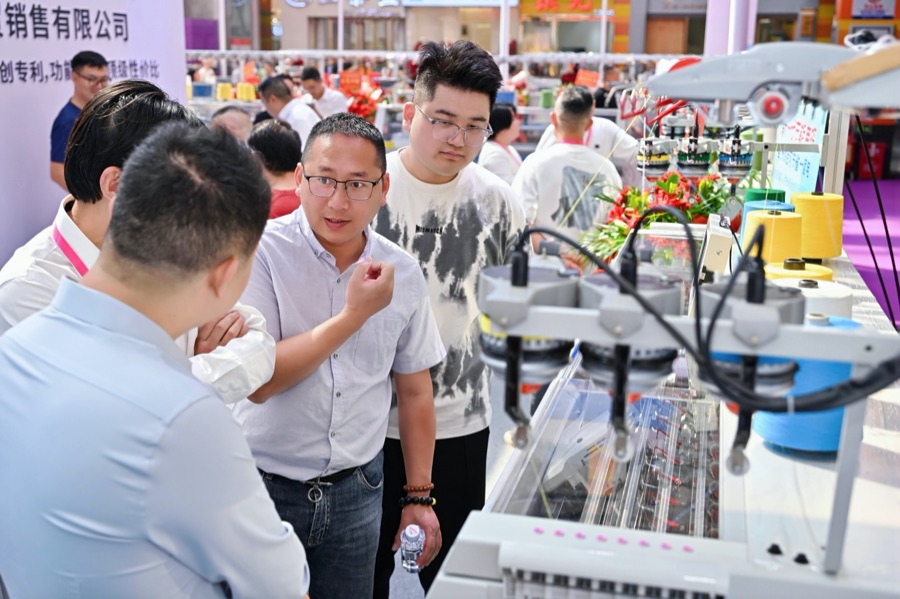
外贸同比增长14.3%!东莞公布1—11月经济运行情况
Nan Fang Du Shi Bao· 2025-12-24 11:39
Economic Overview - Dongguan's economy maintained overall stability in the first eleven months of the year, adhering to the provincial government's "1310" deployment and focusing on high-quality development [2] Industrial Production - The industrial added value of enterprises above designated size increased by 4.1% year-on-year. Key industries showed rapid growth, with electronic information manufacturing up 6.7%, electrical machinery and equipment manufacturing up 9.2%, and chemical manufacturing up 10.7% [3] - New momentum industries grew quickly, with advanced manufacturing and high-tech manufacturing added value increasing by 6.4% and 7.2% respectively. High-tech product output saw significant growth, with integrated circuits up 71.7%, smartwatches up 33.3%, optical fibers up 28.9%, and servers up 27.3% [3] - Total electricity consumption reached 1,124 billion kWh, a year-on-year increase of 5.4% [3] Foreign Trade - The total foreign trade import and export volume reached 1,436.19 billion yuan, a year-on-year increase of 14.3%. Imports were 557.24 billion yuan, up 24.3%, while exports were 878.95 billion yuan, up 8.7% [4] - In November, the total foreign trade volume grew by 10.7% year-on-year, with imports increasing by 15.0% and exports by 8.3% [4] Consumer Market - In November, the total retail sales of social consumer goods increased by 6.6% year-on-year. For the first eleven months, the total retail sales reached 401.234 billion yuan, a year-on-year increase of 2.1%, with an acceleration of 0.5 percentage points compared to the first ten months [5] - By consumption type, catering revenue grew by 2.4%, and commodity retail increased by 2.0%. Sales of basic living and some upgraded goods saw rapid growth, with retail sales of communication equipment, sports and entertainment products, grain and oil, and furniture increasing by 90.2%, 45.7%, 45.3%, and 22.5% respectively [5] - Online consumption maintained a good growth trend, with retail sales through public networks increasing by 23.3% year-on-year [5] Fixed Asset Investment - Total fixed asset investment decreased by 0.8% year-on-year, with the decline narrowing by 2.4 percentage points compared to the first ten months. Excluding real estate development investment, fixed asset investment increased by 18.5%, with an acceleration of 1.6 percentage points [6] - Investment in advanced manufacturing grew by 56.4%, and high-tech manufacturing investment increased by 75.6%. Real estate development investment decreased by 48.0%, with a decline narrowing by 1.2 percentage points, while the sales area of commercial housing decreased by 29.3% [7] Financial Market - By the end of November, the balance of deposits in financial institutions reached 29,286.18 billion yuan, a year-on-year increase of 2.8%. The balance of loans in financial institutions was 19,989.63 billion yuan, up 3.7%, with manufacturing loans growing rapidly, reaching 3,834.27 billion yuan, an increase of 8.3% [8] Consumer Price Index - The Consumer Price Index (CPI) decreased by 0.9% year-on-year in the first eleven months. The price index for eight categories of goods showed a trend of "six decreases and two increases," with transportation and communication prices down 3.1%, clothing prices down 2.0%, and food and tobacco prices down 1.1% [9] - In November, the CPI decreased by 0.1% year-on-year [9]
每日机构分析:12月22日
Zhong Guo Jin Rong Xin Xi Wang· 2025-12-22 09:37
Group 1: UK Economic Outlook - The UK economy shows slight improvement with a Q3 GDP growth of 0.1%, and corporate investment data revised from a decline of 0.3% to an increase of 1.5% [1] - Despite a decline in real household income, consumer spending willingness has strengthened, with household savings rate dropping from 10.2% in Q2 to 9.5% in Q3, the lowest in over a year [1] - Overall, the data remains lagging and does not alter the forecast of a slowdown in GDP growth in the second half of 2025 [1] Group 2: US CPI and Commodity Prices - The US November CPI fell more than expected, leading to revised market expectations for the Federal Reserve's interest rate cuts in 2026, boosting prices of precious metals like gold and silver [2] - Gold prices have surged above $4,400 per ounce, with potential for further increases if it stabilizes above this level, although challenges may arise from central banks shifting from rate cuts to hikes [2] - Seasonal liquidity during the Christmas holiday may amplify current price increases, with December and January historically being strong months for gold [2] Group 3: German Automotive Exports - German automotive exports to the US fell nearly 14% in the first three quarters of 2025, significantly impacted by Trump's trade policies [3] - The engineering sector also faced challenges, with exports to the US down 9.5%, and the chemical industry experiencing a similar decline [3] - Overall, German exports to the US decreased by 7.8% year-on-year, contrasting with an average growth of about 5% from 2016 to 2024 [3] Group 4: Japanese Monetary Policy - The Bank of Japan is expected to continue raising interest rates to address concerns over the weak yen, with predictions of two rate hikes in 2026 [3] - The potential for foreign exchange intervention by Japanese authorities is being closely monitored, although specific intervention levels remain uncertain [4] Group 5: Argentine Foreign Direct Investment - Argentina's foreign direct investment has seen a negative growth for the first time in 22 years, with a reported outflow of $1.52 billion from January to November 2025 [5] - The decline is attributed to multinational companies exiting the Argentine market or selling their local operations, driven by high inflation and currency volatility [5] - The exit of numerous multinational firms since December 2023 reflects a lack of confidence in Argentina's macroeconomic stability [5]
天际股份:公司及下属公司累计担保余额约为5.68亿元
Sou Hu Cai Jing· 2025-12-12 09:21
Group 1 - The core point of the article is that Tianji Co., Ltd. has announced its cumulative guarantee balance as of November 30, 2025, amounting to approximately 568 million yuan, which represents 15.46% of the audited net assets attributable to shareholders of the listed company as of December 31, 2024 [1] - The guarantees are entirely between companies and subsidiaries within the consolidated financial statements, with no external guarantees or overdue external guarantees reported [1] - For the first half of 2025, the revenue composition of Tianji Co., Ltd. is 92.14% from the chemical manufacturing industry and 7.86% from the household kitchen appliance manufacturing industry [1] Group 2 - As of the report date, the market capitalization of Tianji Co., Ltd. is 16.2 billion yuan [1]

前10月东莞外贸进出口总额1.3万亿,规模位居全国第五
2 1 Shi Ji Jing Ji Bao Dao· 2025-11-27 09:27
Economic Overview - Dongguan's industrial added value for the first ten months of 2025 increased by 4.2% year-on-year, indicating stable industrial production growth [1] - The advanced manufacturing and high-tech manufacturing sectors saw added value growth of 6.4% and 7.9% respectively [1] Foreign Trade - Dongguan's total foreign trade import and export value reached 1,298.24 billion yuan, a year-on-year increase of 14.7% [2] - Imports amounted to 505.62 billion yuan, up 25.4%, while exports were 792.62 billion yuan, increasing by 8.7% [2] - The number of foreign trade enterprises in Dongguan increased by 12.2% to 26,000, with private enterprises accounting for 21,000 and contributing 62.7% of the total trade value [2] Investment Trends - Fixed asset investment in Dongguan decreased by 3.2% year-on-year, but the decline has narrowed compared to previous months [3] - Excluding real estate development, fixed asset investment grew by 16.9%, with advanced manufacturing investment rising by 51.2% and high-tech manufacturing investment increasing by 66.0% [3] - Real estate development investment fell by 49.2%, with a 27.3% decrease in the sales area of commercial housing [3] Consumer Market - The total retail sales of consumer goods in Dongguan reached 359.763 billion yuan, reflecting a year-on-year growth of 1.6% [3]
今年1-10月,东莞外贸进出口总额同比增长14.7%
Nan Fang Du Shi Bao· 2025-11-26 12:59
Economic Overview - Dongguan's economy showed overall stability in the first ten months of 2025, with a focus on high-quality development and the implementation of various policy measures [2] Industrial Production - The industrial added value of enterprises above designated size increased by 4.2% year-on-year. Key industries such as electronic information manufacturing, electrical machinery and equipment manufacturing, and chemical manufacturing saw increases of 7.5%, 8.5%, and 10.8% respectively [3] - New momentum industries performed well, with advanced manufacturing and high-tech manufacturing added value growing by 6.4% and 7.9% respectively. High-tech product output also saw significant growth, with integrated circuits, smartwatches, servers, and sensors increasing by 78.4%, 34.2%, 28.8%, and 24.6% respectively [3] Foreign Trade - The total foreign trade import and export volume reached 12,982.4 billion yuan, a year-on-year increase of 14.7%, with imports at 5,056.2 billion yuan (up 25.4%) and exports at 7,926.2 billion yuan (up 8.7%). In October, the total foreign trade volume grew by 17.3% year-on-year [4] Consumer Market - The total retail sales of social consumer goods amounted to 3,597.63 billion yuan, reflecting a year-on-year growth of 1.6%. Notable growth was seen in dining revenue (up 2.4%) and retail of goods (up 1.4%). Certain essential and upgraded goods experienced strong sales, with retail sales of staple food, hardware, and sports entertainment goods increasing by 50.0%, 26.6%, and 26.1% respectively [5] - Online consumption also surged, with retail sales through public networks increasing by 19.6% year-on-year [5] Fixed Asset Investment - Total fixed asset investment decreased by 3.2% year-on-year, but the decline narrowed by 1.9 percentage points compared to the previous nine months. Excluding real estate development investment, fixed asset investment grew by 16.9% [6][7] - Investment in advanced manufacturing and high-tech manufacturing saw significant increases of 51.2% and 66.0% respectively, while real estate development investment fell by 49.2% [7] Financial Market - By the end of October, the balance of deposits in financial institutions reached 28,929.77 billion yuan, a year-on-year increase of 2.1%, while the balance of loans was 19,917.25 billion yuan, up 3.4% [8] Consumer Price Index - The Consumer Price Index (CPI) decreased by 1.0% year-on-year, with six categories of goods and services experiencing price declines. Notably, transportation and communication prices fell by 3.1%, while medical care prices rose by 1.5% [9]