万家北交所慧选两年定开A

Search documents
主动权益基金罕见分红,释放什么信号?
Guo Ji Jin Rong Bao· 2025-11-14 05:37
Core Viewpoint - A rare occurrence of dividend distribution among growth-style active equity funds has been observed, with several funds announcing their first dividends of the year, indicating a shift in strategy and market conditions [1][2][3] Group 1: Dividend Announcements - Multiple active equity funds, including those from E Fund, have announced their first dividends of the year, allowing investors to choose between reinvestment or cash dividends [1][2] - The recent dividend distributions are notable as they come from growth-style funds, which typically focus on capital appreciation rather than income generation [3][5] - Funds like E Fund Kexun and Wanjiabj North Exchange Selection have reported significant year-to-date returns, with E Fund Kexun exceeding 100% [2][5] Group 2: Market Context - The decision to distribute dividends is attributed to the strong performance of growth sectors, particularly technology, which has led to substantial gains for fund managers [6] - The current market environment has seen a notable increase in the valuation of technology stocks, with the ChiNext 50 Index PE ratio reaching 157 times, indicating a high valuation compared to historical averages [6][7] - Analysts suggest that the distribution of dividends may serve as a strategy for fund managers to lock in profits and optimize portfolio structures amid high valuations and concentrated holdings in technology stocks [6][7]
上亿元,基金密集发红包,多只ETF成“大户”
Zheng Quan Shi Bao· 2025-10-27 02:04
Core Insights - The year-end fund distribution trend continues to rise, with bond and passive index funds becoming the main focus, as several funds have single distribution amounts exceeding 1 billion [1][3][5] Fund Distribution Overview - A significant number of funds have distributed over 1 billion in a single payout, indicating a sustained year-end distribution trend [3] - Large distributions are primarily concentrated in bond funds and passive index funds, with notable payouts such as 2.25 billion from Guangfa Ju Xin A and 3.58 billion from Huashan Shanghai 180 ETF [3][5] - Many funds have implemented multiple distributions within the year, showcasing a trend towards normalization of distributions [3] ETF Dominance - ETFs are identified as the "red envelope big spenders," with large-scale passive products leading the distribution trend, such as Huaxia CSI 300 ETF distributing 28.7 billion [5][6] - The scale and stable returns of passive products contribute to their dominance in the distribution market, with nearly all major distributors being broad-based ETFs [5][6] Market Trends - The current distribution pattern reflects a market preference for stability and cash flow returns, with funds like Wan Jia North Exchange Wisdom Two-Year Open A achieving a distribution ratio of 21.17% [3][6] - The trend indicates that ETF distributions are likely to become a regular occurrence, as fund companies recognize the importance of distributions in enhancing investor experience and stabilizing capital [6]
上亿元!基金密集发红包 多只ETF成“大户”
Zheng Quan Shi Bao· 2025-10-27 00:17
Core Insights - The year-end fund distribution trend continues, with bond and passive index funds becoming the main focus, as several funds have single distributions exceeding 100 million yuan [1][2][3] Group 1: Fund Distribution Trends - A significant number of funds have distributed over 1 billion yuan recently, indicating a sustained year-end distribution trend [2] - Large distributions are primarily concentrated in bond funds and passive index funds, with notable examples including Guangfa Ju Xin A distributing 225 million yuan and Huaxia Shanghai-Shenzhen 300 ETF distributing 2.87 billion yuan [2][3] - Many funds have implemented multiple distributions within the year, reflecting a trend towards normalization of distributions [2] Group 2: ETF Dominance - ETFs are identified as the "red envelope big spenders," with large-scale passive products leading the distribution trend [3][4] - The Huatai-PineBridge Shanghai-Shenzhen 300 ETF has a single distribution exceeding 8 billion yuan, while other ETFs like Huaxia and E Fund also have significant distributions [3][4] - The structure of the market shows a preference for stable cash flow returns, with ETFs meeting this demand due to their large scale and stable earnings accumulation [4] Group 3: Future Outlook - ETF distributions are expected to become a norm as passive product scales continue to grow and investor structures mature [5] - Fund companies are increasingly recognizing the importance of distributions in enhancing investment experiences and stabilizing capital [5]
北交所基金“造富”再升级:3只产品涨超200%,后市聚焦三大主线
Hua Xia Shi Bao· 2025-08-20 12:26
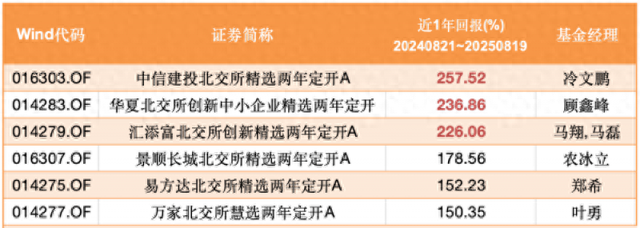
Group 1 - The core viewpoint of the article highlights the impressive performance of North Exchange-themed funds, with three funds achieving over 200% returns in the past year, showcasing strong profit potential [1][2] - The top-performing fund, managed by Leng Wenpeng, achieved a return of 257.52%, while other notable funds managed by Gu Xinfeng and Ma Xiang, Ma Lei also delivered substantial returns of 236.86% and 226.06% respectively [2] - The overall performance of North Exchange funds significantly exceeds the market average, indicating a robust momentum in the North Exchange sector [2][6] Group 2 - Active management of equity funds in the North Exchange has shown significant excess returns compared to performance benchmarks, with the top fund outperforming its benchmark by 161.84 percentage points over the past year [3] - The North Exchange is undergoing a valuation system reconstruction, driven by policy, industry upgrades, and liquidity benefits, transforming it into a value investment area for institutional investors [6] - Recent regulatory reforms have improved liquidity and market attractiveness, with the North Exchange 50 Index showing a cumulative increase of 138.83% over the past year, significantly outperforming the CSI 300 Index [6] Group 3 - Fund managers are focusing on sectors such as intelligent driving, engineering machinery, and specialized industries, with notable investments in companies like Geely Automobile [5][7] - The market outlook suggests a return to performance-driven investment strategies, with emphasis on high-growth companies in technology innovation, advanced manufacturing, and emerging consumer sectors [8][9] - The influx of new funds and specialized index funds targeting the North Exchange is expected to bring substantial capital into the market, creating various investment opportunities [9]

“21班”基金成绩单向好“上涨却遭赎回”怪圈有望破解
Zhong Guo Zheng Quan Bao· 2025-08-14 20:16
Core Viewpoint - The recent rise in the Shanghai Composite Index has led to a recovery in many actively managed equity funds established in 2021, with over 170 funds returning to positive net asset values as of August 13, 2023, and an average return exceeding 20% this year, outperforming the overall market average [1][2][3] Fund Performance - More than 170 of the 600+ actively managed equity funds established in 2021 have achieved positive returns, with over 98% of products gaining positive returns this year [2] - Notable performers include the Huaxia North Exchange Innovation Small and Medium Enterprises Fund, which has a total return of 137.21%, and several other funds with returns exceeding 80% [2] - Funds focused on AI computing power, such as E Fund Pioneer Growth A and E Fund Vision Growth A, have also shown strong performance, with returns over 80% this year [3] Redemption Pressure - Despite the recovery, many funds are facing significant redemption pressures, particularly as their net asset values approach 1 yuan, leading to concentrated redemption behaviors [3][4] - For instance, the Jiashi Hong Kong Stock Advantage Fund saw its shares drop from 64.34 billion to 49.44 billion due to nearly 15 billion shares being redeemed in a single quarter [4] Market Trends - The current redemption pressure is notably concentrated in sectors such as new energy, liquor, and pharmaceuticals, aligning with the "track-based" funds issued between 2019 and 2021 [5] - The market is transitioning from a rebound to a reversal, with the previous trend of "rising but facing redemptions" weakening, and new fund issuance is accelerating [6] Fundraising and New Issuance - As of August 13, 2023, newly established actively managed equity funds have raised over 60 billion yuan this year, with several products exceeding 10 billion yuan in initial offerings [6] - The issuance of traditional fee-based actively managed equity funds has rebounded to around 10 billion yuan in July, indicating a recovery in fundraising [6] Future Outlook - The redemption funds are likely to flow into financial assets, with a preference for higher-risk products such as public funds, stocks, and margin trading, while some may also move into lower-risk insurance products [7]


2025年公募基金“中考”九成正收益,“最牛”榜单出炉
2 1 Shi Ji Jing Ji Bao Dao· 2025-07-01 14:01
Core Insights - The public fund market showed significant profitability in the first half of 2025, with 87% of funds achieving positive returns, highlighting a strong market recovery [1][9][10] - The top-performing funds were dominated by innovative drug and North Exchange theme funds, indicating a trend towards specialized investment strategies [2][3][4][5] Fund Performance - The best-performing fund was Huatai-PineBridge Hong Kong Advantage Selection A, with a net value growth of 86.48%, followed closely by CITIC Securities North Exchange Selection with 82.45% and Great Wall Pharmaceutical Industry Selection A with 75.18% [3][4] - Seven out of the top ten funds were heavily invested in innovative drugs, while two were focused on North Exchange themes, showcasing the effectiveness of concentrated investment strategies [4][5] Market Trends - The first half of 2025 saw a notable performance from sectors such as innovative drugs, North Exchange, humanoid robots, and new consumption, with these themes alternating in prominence [2][3][10] - Analysts predict that the positive trends for innovative drugs and North Exchange themes are likely to continue into the second half of the year, supported by structural opportunities in these sectors [7][8] Overall Market Dynamics - A total of 12,571 funds were analyzed, with 10,949 achieving positive returns, reflecting a broad-based recovery in the public fund market [9] - The market exhibited a "barbell" characteristic, with both high-growth technology stocks and low-valuation, high-dividend stocks performing well, particularly in the banking sector [10] Sector Performance - Certain sectors, such as real estate and food and beverage, underperformed, leading to lower returns for funds heavily invested in these areas [11] - The bond market transitioned from a bull market to a more volatile environment, resulting in weaker performance for fixed-income funds [11]
近六成主动权益基金年内收益转正,医药主题强势领跑半程业绩榜
Di Yi Cai Jing· 2025-06-18 12:42
Group 1 - The A-share market has shown a rebound since April 7, with the Wind偏股混合型基金指数 rising over 11% as of June 17, indicating a recovery in active equity products [1][2] - Nearly 70% of active equity funds have turned positive in returns, with 3,079 out of 4,462 funds reporting gains, a significant increase from 10.8% on April 7 [2][3] - The top-performing funds are heavily invested in the pharmaceutical sector, with six out of the top ten funds focusing on this area, driven by Hong Kong innovative drug stocks [3][5] Group 2 - The top fund, 长城医药产业精选A, has achieved a 75.69% return year-to-date, followed closely by 中信建投北交所精选两年定开A and 永赢医药创新智选A with returns of 74% and 70.8% respectively [3] - The performance of the pharmaceutical sector is attributed to the strong showing of Hong Kong innovative drug stocks, which constitute a significant portion of the holdings in these funds [3][6] - Despite recent market corrections in popular sectors like innovative drugs and new consumption, industry experts believe that the long-term value remains intact, with ongoing support from national policies and market demand [5][6] Group 3 - The innovative drug sector has seen a year-to-date increase of 59.18%, while other sectors like humanoid robots and new consumption have also performed well, with gains exceeding 20% [5] - Recent corrections in these sectors are viewed as technical adjustments rather than a sign of a downturn, with analysts suggesting continued investment interest in innovative drugs due to their long-term growth potential [6][7] - The new consumption sector is experiencing a temporary pullback, but the underlying market conditions remain strong, as evidenced by positive consumption data during the recent 618 shopping festival [6][7]
定开基金三年爆赚176%却买不到?别急,这些北证50指数基金还能助力你把握北交所行情!
Sou Hu Cai Jing· 2025-06-11 11:18
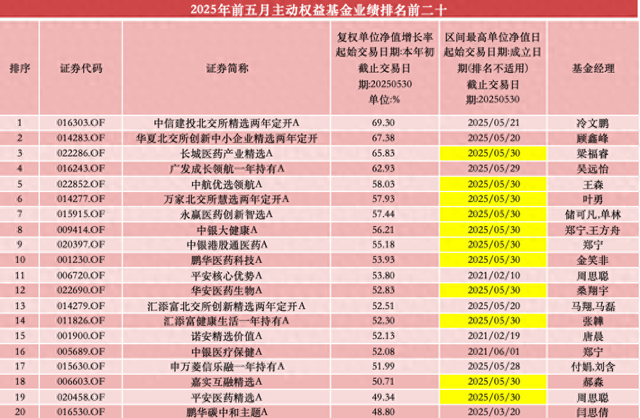
Group 1 - The Beijing Stock Exchange (BSE) has maintained a strong performance in 2025, with the core indicator, the North Exchange 50 Index, showing a year-to-date increase of 37.59%, outperforming the Hong Kong stock market during the same period [1] - The robust performance of the BSE has led to significant increases in the net value of related thematic funds, with all 11 actively managed two-year open-end funds and 26 North Exchange 50 index funds achieving positive returns year-to-date as of June 11 [3][4] - Among the standout funds, the CITIC Securities North Exchange Selected Two-Year Open A Fund has achieved a remarkable year-to-date increase of 70.96%, while the Huaxia North Exchange Innovative Small and Medium Enterprises Selected Fund has a three-year cumulative return of 176.10%, ranking first in the market [4][5] Group 2 - The 26 funds tracking the North Exchange 50 Index have also achieved positive returns, but their overall performance is slightly less impressive compared to actively managed funds. Only four funds have managed to outperform their benchmarks as of June 10 [6][7] - The top-performing fund among the index funds is the GF North Exchange 50 Component A Fund, with a year-to-date net value growth rate of 37.54%, while the Qianhai Kaiyuan North Exchange 50 Component Index A Fund has achieved a 9.74% excess return, making it the strongest performer in its category [6][7] - Investors looking for liquidity and average market returns may prefer the North Exchange 50 index funds, which offer a more flexible investment tool compared to the closed-end funds [8]
最高涨69%!北交所主题基金领跑前五月业绩榜单,多只医药基金净值创新高
Xin Lang Cai Jing· 2025-05-31 13:23
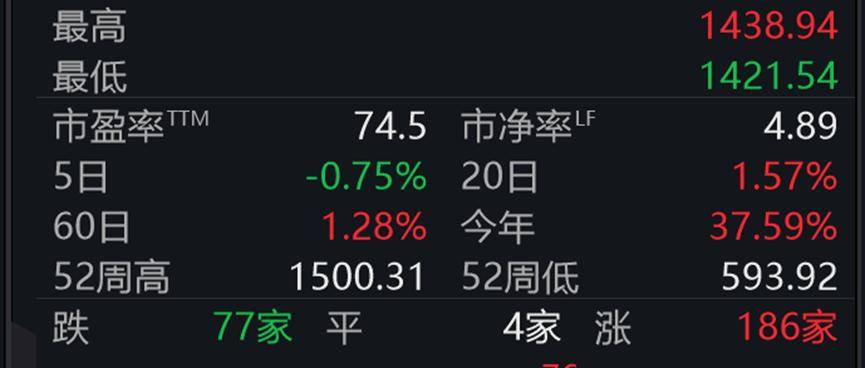
Core Insights - The performance of actively managed equity funds in the first five months of 2025 shows a significant disparity, with the best-performing fund achieving a return of 69.30% and the worst losing over 37%, resulting in a nearly 108% difference between the top and bottom performers [1] - The average return for all 4,516 actively managed equity funds was 2.64%, with 190 funds exceeding a 20% return in the first two months [1] - The North Exchange 50 Index outperformed other indices, leading to strong performances from several North Exchange-themed funds and a rebound in pharmaceutical-themed funds due to the strong performance of the innovative drug sector [1] Fund Performance - The top two funds in terms of performance for the first five months of 2025 were the CITIC Securities North Exchange Selected Two-Year Open A, managed by Leng Wenpeng, with a return of 69.30%, and the Huaxia North Exchange Innovative Small and Medium Enterprises Selected Two-Year Open, managed by Gu Xinfeng, with a return of 67.38% [1][5] - Other notable funds include Changcheng Pharmaceutical Industry Selected A and Guangfa Growth Navigation One-Year Holding A, both exceeding 60% returns [3] Sector Analysis - The innovative drug sector has seen a significant increase in market costs since 2022, with a notable second wave of cost increases occurring after the Lunar New Year [4] - The analysis suggests that the second wave of cost increases in the innovative drug sector may present greater potential for returns compared to the first wave, driven by a combination of policy, capital, and industry dynamics [4]
3年跑输基准超10%将降薪 哪些基金经理“亮红灯”?
Nan Fang Du Shi Bao· 2025-05-29 23:10
Core Viewpoint - The China Securities Regulatory Commission (CSRC) has released an "Action Plan for Promoting the High-Quality Development of Public Funds," which links fund managers' compensation to long-term performance, addressing the industry's focus on scale over returns [2] Group 1: Fund Manager Compensation - Fund managers with products underperforming their benchmarks by more than 10 percentage points over three years will see a significant decrease in their performance-based compensation [2] - Conversely, fund managers whose performance significantly exceeds benchmarks may see reasonable increases in their compensation [2] Group 2: Underperforming Funds - As of May 21, nearly 6000 public funds have been managed for over three years, with 1341 funds underperforming their benchmarks by over 10 percentage points, involving 735 fund managers [3] - Among these, 31 funds have underperformed their benchmarks by over 50 percentage points, including notable managers like Yao Zhipeng from Harvest Fund and Shi Cheng from Guotai Junan [3] - The worst performer is Morgan Fund's Guo Chen, whose fund has a cumulative return of -23.03%, lagging behind the benchmark by 128 percentage points [3] Group 3: High-Performing Funds - There are 543 funds that have outperformed their benchmarks by over 10 percentage points, with 33 funds exceeding benchmarks by over 50 percentage points [6] - Notable high performers include the Huaxia North Exchange Innovation Small and Medium Enterprises Fund, managed by Guo Xin, which achieved a cumulative return of 194%, surpassing its benchmark by 176 percentage points [6][7] - The North Exchange theme funds have emerged as a concentrated area of excess returns, with several funds exceeding their benchmarks by over 60 percentage points [7] Group 4: Adjustments to Performance Benchmarks - In response to the new action plan, many fund companies have begun to adjust their performance benchmarks, with over 100 funds changing their benchmarks by May 26 [8][10] - Adjustments are made to ensure benchmarks accurately reflect the risk-return characteristics of the funds, addressing previous inadequacies in benchmark design [10][11] - The CSRC emphasizes the need for strict regulation of benchmark selection and modification to ensure alignment with investment strategies and product positioning [11]