中短债

Search documents
存单收益率继续下行支撑中短债,曲线陡峭趋势仍在持续:国内经济起步有力,全球滞涨交易影响货币预期
Zhong Tai Qi Huo· 2026-03-22 13:09
1. Report Industry Investment Rating No relevant content provided. 2. Core Viewpoints of the Report - The core of current bond market trading lies in the contrast between loose liquidity and a significant rise in inflation expectations. The bond market shows little volatility, but the curve steepening trend continues. Due to the decline in inter - bank certificate of deposit rates, the yields of medium - and short - term bonds within 10 years may still decline, while the yields of ultra - long - term bonds are more significantly affected by fundamentals and show a weak trend [8]. - Overseas stagflation trading is the current macro - mainline but will not affect domestic monetary policy, as the core lies in the different supply - demand contradictions between domestic and overseas markets. High - frequency real - estate data is not sufficient to change the medium - term data conclusion, and it is too early to change the cyclical conclusion. Looking forward, the probability of a steeper bond market yield curve is still high, and there is insufficient evidence of a bond market bear market [8]. 3. Summary According to the Table of Contents 3.1 Logic and Strategy - The decline in certificate of deposit yields continues to support medium - and short - term bonds, and the curve steepening trend persists [6]. - Regarding the money and policy front, after the tax period, the money price is stable with a slight decline, and the LPR quote remains unchanged, meeting market expectations. The certificate of deposit rate continues to decline. The MLF due next Wednesday is 450 billion yuan, and if the central bank maintains a 50 - billion - yuan bond - buying scale and a 1 - trillion - yuan monthly medium - and long - term liquidity injection, the MLF needs to be renewed by 1.7 trillion yuan. There is a large gap, and the central bank may use other tools such as future reserve requirement ratio cuts. The central bank's research on canceling the 5% lower limit of the deposit reserve ratio lacks market - recognized authenticity, but the market logic has some merit. Currently, the certificate of deposit rate is likely to continue approaching 1.5%. The central bank may cut the reserve requirement ratio in the second quarter, and the pace of interest rate cuts may be postponed [8][32]. - On the fundamental front, domestic economic indicators in January - February showed a significant recovery, except for the real - estate sector. The industrial sector played a key role in production, and new - quality productivity accelerated. The three - horse - carriage of demand worked together, and both domestic and external demand improved. The CPI rose by 0.8% year - on - year, and the core CPI rose by 1.3%, indicating a mild recovery in demand and a further alleviation of deflationary pressure. However, the macro - data from January - February was significantly affected by the Spring Festival, and the data in March may be negatively affected. Overseas, during the "super week" of global central banks from March 16 - 22, 2026, major central banks' policy stances turned hawkish or cautious, and the previously expected easing cycle was postponed or reversed. The market's expectation of interest rate cuts in major developed economies has basically disappeared, replaced by concerns about possible interest rate hikes [8][18]. 3.2 Macro Main Asset Fund Flow Changes - Affected by inflation, the yields of Chinese and US bonds have both increased, the US dollar has rebounded with fluctuations, and the US and Chinese stock markets have significantly declined. The stagflation expectation continues to prevail. The China Securities Commodity Index has weakened with severe differentiation, precious metals and non - ferrous metals have weakened significantly, and crude - oil - related commodities have continued to rise sharply [12]. 3.3 Recent Macro Data Analysis and Review - Domestic data from January - February showed a comprehensive recovery in most economic indicators except for real - estate. However, the data was affected by the Spring Festival, and the data in March may be under pressure. Overseas, major central banks' policy stances turned hawkish or cautious during the "super week" due to the energy price shock caused by the escalation of the Middle - East geopolitical conflict [8][18]. - In February, domestic inflation showed that the CPI increase expanded, and the PPI decline narrowed, both exceeding expectations. Foreign trade exports increased significantly, mainly driven by the global AI investment boom in the semiconductor industry chain. Financial data showed that the growth rate of social financing was flat, and government bonds were the key support for social financing growth. Overseas, in February, the US CPI and core CPI met expectations and were the same as the previous values, with structural differences in the sub - categories of the CPI [24]. - In February, the domestic manufacturing PMI declined unexpectedly, mainly due to the impact of the extended Spring Festival holiday. Overseas, the unexpectedly weak February non - farm payrolls report in the US and the tense Middle - East situation have created a stagflation combination, putting the Fed in a difficult policy dilemma. The market's expectation of the Fed's interest rate cut rhythm has changed [25]. 3.4 Fundamentals Analysis and Bond Futures and Spot Indicator Monitoring - The money price is stable with a slight decline after the tax period, the LPR quote remains unchanged, and the certificate of deposit rate continues to decline. The MLF due next Wednesday is 450 billion yuan, and there is a large gap in the renewal amount. The central bank may use other tools such as reserve requirement ratio cuts. The central bank's meeting in March emphasized maintaining liquidity and the stability of financial markets, and the necessity of interest rate cuts has decreased. The central bank may cut the reserve requirement ratio in the second quarter, and the interest rate cut rhythm may be postponed [8][32]. - The yields of Chinese and US bonds, the US dollar index, and the RMB exchange rate have shown certain trends. The bond market curve shows a steepening trend, and the yields of medium - and short - term bonds within 10 years may decline [12][36]. 3.5 Equity Broad - Based Index Fundamentals, Liquidity, and Futures - Spot Indicator Monitoring - The ROE of listed companies and macro - economic data show certain relationships. The EPS and PE of major broad - based indexes have different trends, reflecting the performance and valuation of the equity market [90][91]. - The trading volume, turnover rate, and margin trading balance of the equity market show the market's liquidity and activity. The style of the equity index and the basis rate of stock index futures also reflect the market's characteristics [110][129]. 3.6 Medium - Term Fundamental Tracking and Monitoring of the Macroeconomy - The net financing amounts of government bonds, local bonds, and policy - bank bonds, as well as the fiscal revenue and expenditure, show the government's financing and fiscal situation. The relationship between social financing, M2, and M1 reflects the money supply and demand in the market [137][156]. - The real - estate market data, including land transactions, housing sales, and prices, show the current situation and trends of the real - estate market. The inflation data, including the CPI, PPI, and price indexes of various commodities, reflect the inflation situation [164][186]. - The industrial production and inventory data, including production capacity utilization, output, and inventory levels, show the operation of the industrial sector. The import and export data, BCI index, and power generation data reflect the economic situation and business confidence [207][240]. 3.7 Long - Wave Fundamental Tracking and Monitoring of the Macroeconomy No relevant content provided. 3.8 Appendix - The comparison of central meetings shows the economic goals, policy tones, and key points of different periods, reflecting the government's economic decision - making and policy orientation [326][327][328]. - The comparison of public - offering fund sales regulations shows the changes in fees such as subscription fees, redemption fees, and sales service fees for different types of funds, which will affect the investment cost and return of investors [332]. - The event of the US tariff policy change shows the development process, impact, and future prospects of the US - China trade war, which will have an impact on the global economic and trade situation [333][334][335]. - The comparison of government work report indicators shows the economic goals, fiscal and monetary policies, and development priorities of different years, reflecting the government's economic development strategy [340].
国泰海通|固收:跨年策略:兼顾胜率和赔率,博弈曲线变凹
国泰海通证券研究· 2026-02-08 14:56
Core Viewpoint - The overall risk in the cross-year bond market is controllable, with a tendency for a warm sentiment to continue in the short term. The focus should be on the yield curve dynamics, particularly the narrowing of the 10-2 year spread and maintaining the 30-10 spread around 40 basis points [1]. Group 1: Market Dynamics - The supply-demand relationship for long-term bonds has improved significantly, with most long-term local government bonds issued at rates below 2.5%, indicating strong market absorption capacity [1]. - Technical indicators show a notable improvement, with recent trading sessions experiencing upward momentum and a low-level golden cross in the KDJ indicator, suggesting a shift in short-term funding focus [1]. - Funding rates are stabilizing and declining, but the future downward space is limited unless there is a reduction in the Open Market Operation (OMO) rates [1]. Group 2: Investment Opportunities - The 10-year government bonds and policy financial bonds present a high cost-performance ratio, as their rebound has not fully absorbed the benefits of monetary easing, indicating clear potential for price recovery [2]. - The supply pressure for 10-year bonds is relatively controllable compared to ultra-long bonds, with a current yield of approximately 1.96%, providing a thicker spread protection compared to 10-year government bonds [2]. Group 3: Short and Ultra-Long Bonds - The pricing of medium and short-term bonds has fully reflected the benefits of monetary easing, with limited further downward space and significant compression of spreads, making the cost-effectiveness of carry strategies insufficient [3]. - The issuance of ultra-long local government bonds has been stable, indicating market absorption capacity, but caution is advised regarding older bonds due to potential selling pressure and liquidity issues [3]. - The 30-year government bonds are expected to follow the recovery of 10-year bonds, with a compression of spreads anticipated but not expected to fall below 40 basis points [3].


深度|债市“低性价比”时代,“羊群效应”消失了
2 1 Shi Ji Jing Ji Bao Dao· 2026-01-11 23:17
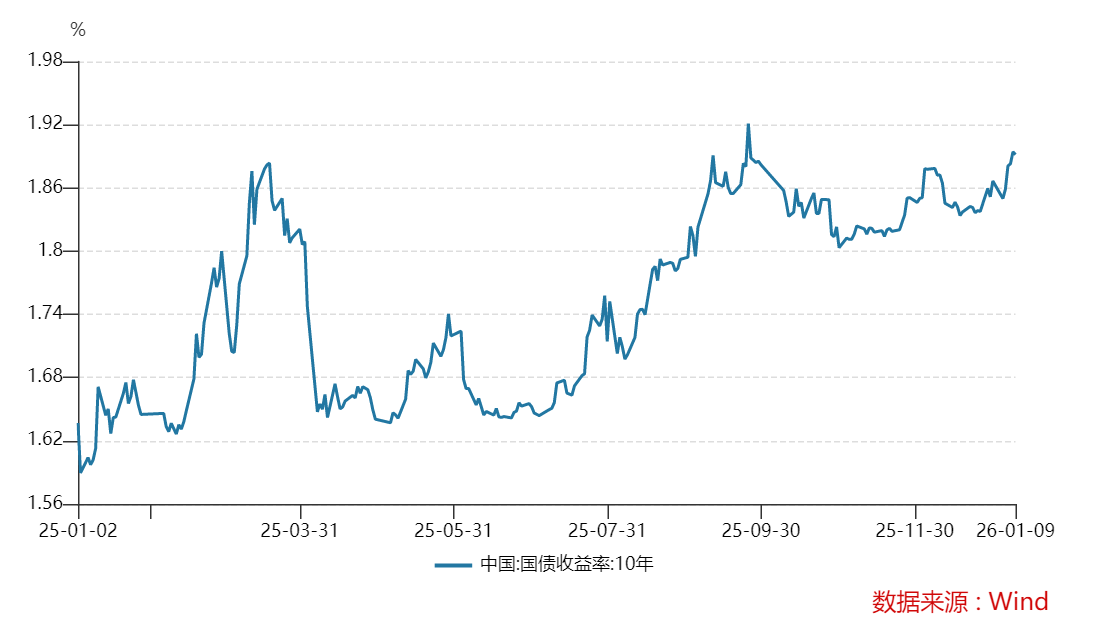
Core Insights - The bond market in 2025 faced significant challenges, characterized by high volatility and a complex interplay of factors affecting investment strategies [1][2][3] - The pressure on institutions to generate returns has intensified, leading to increased competition and operational difficulties in navigating the market [2][3] Market Dynamics - The bond market experienced a notable decline in interest rates, with the yield on 10-year government bonds decreasing by nearly 1 percentage point compared to the same period in 2024, resulting in a challenging investment environment [3][5] - The yield on 10-year government bonds fluctuated throughout the year, starting at 1.6% and reaching approximately 1.92% by September, reflecting economic recovery expectations and supply pressures [5][6] Institutional Behavior - Different types of institutions displayed varied investment behaviors by the end of 2025, with large commercial and policy banks showing strong buying activity, while other institutions like joint-stock banks and city commercial banks were net sellers [11][12] - The investment strategies of institutions have diverged, with some focusing on short-term trading for excess returns, while others are more cautious, aiming to reduce costs and losses [9][12] Future Outlook - As 2026 begins, the bond market is anticipated to open with a yield of around 1.85% on 10-year government bonds, with expectations for potential interest rate cuts in the first quarter [13][16] - The market is expected to remain volatile, with institutions adopting a cautious approach and preparing for potential adjustments based on monetary policy developments [15][16]
债市开局转捩点
SINOLINK SECURITIES· 2026-01-04 15:34
Group 1 - The bond market experienced significant volatility throughout 2025, with a notable concentration of investor positions in 1 to 3-year interest-bearing assets as a defensive strategy against net value uncertainty [2][10][11] - In December, the yield on 30-year government bonds reached a high of 2.2925%, reflecting the market's fragile sentiment and the impact of year-end assessments [10][11] - The introduction of new regulations regarding redemption fees for bond funds provided some relief to the anxious bond market, potentially reshaping investment strategies going into 2026 [10][11] Group 2 - The regulatory environment has shifted positively, with the new redemption fee rules easing previous constraints, which may lead to a recovery in the bond market [3][27] - The pricing of 5-year bank subordinated bonds is expected to see a valuation recovery of 5 to 10 basis points, with new pricing logic anticipated to return to the range of 2.1% to 2.15% [4][43] - The high yields on long-term credit bonds are influenced not only by the new redemption regulations but also by inherent liquidity issues, which may limit trading activity [3][38] Group 3 - The market has shifted focus from seeking excess returns to strictly controlling drawdowns, as evidenced by the significant trading volume in medium-term municipal bonds [11][22] - Fund managers have been the primary drivers of mid-term bond allocations, with net purchases reaching a weekly high of 21.2 billion, surpassing the average weekly volume from October to year-end [11][20] - The strategy of investing in 3-year AA+ municipal bonds has proven to be the most effective in December, highlighting the trend towards medium-term securities [22][23]
超长债为何单独下跌,之后呢?
GOLDEN SUN SECURITIES· 2025-12-04 06:54
Group 1: Report Industry Investment Rating - No industry investment rating is provided in the report. Group 2: Core Viewpoints of the Report - The significant decline in ultra - long bonds is not expected to lead to a significant and continuous increase in the ultra - long bond spread in the long - term. However, short - term risks need further observation. As year - end bank indicator pressures ease, fund and brokerage positions decrease, and insurance allocation demand recovers, the ultra - long bond spread is expected to repair. But short - term risks, especially potential market shocks from concentrated selling by trading institutions, are hard to judge [5][21]. Group 3: Summary by Related Content Current Situation of Ultra - long Bonds - Recently, while other bonds remained stable, ultra - long bonds declined significantly. Since last Friday, medium - and short - term bonds were stable, with 2 - year and 5 - year Treasury yields fluctuating less than 1bp, and the 10 - year Treasury yield rising slightly by 1.1bp. In contrast, the 30 - year Treasury yield rose by 5.0bp, and the 50 - year Treasury yield rose by 5.9bp. This widened the spread between 30 - year and 10 - year bonds to 38.3bps, approaching the highs in late September and early October [1][8]. Reasons for the Weakening of Ultra - long Bonds - Banks' ability to hold long - term bonds is restricted by indicators such as △EVE and the Tier 1 capital ratio close to the 15% regulatory red line, which may lead to selling of long - term bonds to meet requirements or realize floating profits [2][10]. - The public fund fee reform may increase redemption pressure, and year - end net value drawdowns may exacerbate passive redemptions, causing trading institutions like funds and brokerages to reduce long - bond holdings [2][10]. - Insurance institutions' liability growth has slowed in the past two months, with a shift in allocation towards stocks. Insurance premium income growth was negative in September and October, and the proportion of bonds in asset allocation decreased slightly while the stock proportion increased [2][10]. Attractiveness of Ultra - long Bonds - From the perspective of the overall asset portfolio, the increase in ultra - long bond spreads enhances the cost - effectiveness of the barbell portfolio. With the same duration, the barbell portfolio's return is higher than that of the bullet portfolio, increasing the demand for ultra - long bonds and promoting a shift towards a barbell - shaped portfolio [3][12]. - In terms of absolute return, the increase in ultra - long bond yields makes them more attractive compared to other assets. The spread between the 30 - year Treasury and personal mortgage rates is at its lowest since Q3 2017, and considering tax, bad debts, and capital occupation, bonds are more cost - effective than loans. Ultra - long bond yields can cover the liability costs of insurance and banks, and with the slowdown in real - estate sales, future inflows of household deposits and insurance premiums are expected to increase, so the liability side is not a constraint for institutional allocation [4][14]. - Based on previous pricing of the 30 - 10 - year spread using factors like funding prices, net ultra - long bond financing, stock market performance, and ultra - long bond turnover, the current 30 - 10 - year spread is close to the upper limit of one standard deviation, indicating that ultra - long bonds are still within a reasonable range [4][17].
稳健「固收+」:螺丝钉银钉宝365天投顾组合
银行螺丝钉· 2025-10-22 13:59
Core Viewpoint - The article discusses the "365-day investment advisory portfolio," which is categorized as a "fixed income +" product, emphasizing its stability and potential for long-term returns through a combination of bonds and a small allocation to stocks [1][3]. Group 1: Investment Strategy - The "365-day investment advisory portfolio" primarily invests in bond funds, which are considered to have lower long-term risks and volatility compared to stock funds, making them suitable for conservative investors [10][11]. - The portfolio focuses on interest rate bonds, such as government bonds, to minimize default risk, while also incorporating a small percentage of stocks (approximately 15%) to enhance returns [12][19]. - The strategy leverages the negative correlation between stocks and bonds, allowing the portfolio to perform well in both bull and bear markets, thus reducing overall volatility [23][25]. Group 2: Performance Metrics - As of August 2025, the "365-day investment advisory portfolio" has shown significant performance, outperforming the average returns of secondary bond funds and mixed bond funds by 3.01% since its inception [26][29]. - The maximum historical drawdown of the portfolio was -4.15%, which is considerably lower than the volatility of the secondary bond index during the same period [29].